

P0733 on 2007-2012 Hyundai Santa Fe: Gear 3 Incorrect Ratio Causes and Fixes
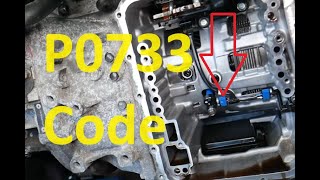
P0733 on a 2007-2012 Santa Fe means the transmission is slipping in 3rd gear. The most common causes are low/dirty transmission fluid or failing speed sensors. Start by checking the fluid level and condition; a fluid and filter change may resolve the issue. If fluid and sensors are good, the issue could be a faulty shift solenoid or internal clutch failure, which is a known issue.
- P0733 signifies a slip detected in 3rd gear.
- Always start diagnosis by checking the transmission fluid level and condition. This is the simplest and most common fix.
- If the fluid is fine, suspect the input/output speed sensors or a shift solenoid before condemning the entire transmission.
- This code can cause the vehicle to enter a 'limp mode,' making it unsafe to drive for extended periods.
- Due to the complexity and potential for expensive misdiagnosis, professional help is strongly recommended if a fluid change does not resolve the issue.
What's Unique About the 2007-2012 Hyundai Santa Fe
The 2007-2012 Hyundai Santa Fe (CM generation) uses a 5-speed (A5HF1) or a 6-speed (A6LF1/2) automatic transmission, depending on the model year and engine. For this generation, Hyundai has issued several Technical Service Bulletins (TSBs) that cover incorrect gear ratio codes, including P0733. TSB 20-AT-001H and its successor 24-AT-002H specifically address these codes. The TSBs provide a diagnostic flow chart that instructs technicians to first rule out any solenoid-specific DTCs. If none are present and an incorrect ratio code like P0733 is the primary fault, the official procedure often points towards replacing the transmission assembly, indicating that internal clutch slip is a known and common failure mode not easily repaired by external part replacement.
Symptoms You May Notice
- Check Engine Light is on
- Transmission shifts harshly or slips, especially into 3rd gear
- Vehicle gets stuck in one gear (limp mode)
- Delayed engagement when shifting into drive or reverse
- Reduced fuel economy
- Inability to shift into 3rd gear
- Engine RPMs flare up without an increase in vehicle speed
- A noticeable 'clunk' or 'lurch' when the transmission attempts to shift
- Replacing the entire transmission without first checking the fluid level/condition, speed sensors, or solenoids. These simpler fixes are far more common and much less expensive.
- Replacing a speed sensor without checking the wiring harness for damage first. A broken wire can cause the same symptoms as a bad sensor.
Most Likely Causes
- Low or Dirty Transmission Fluid 🔴 High Probability → Shop Transmission Assembly Fluid is the hydraulic lifeblood of the transmission. Over time, it degrades, loses viscosity, and can leak, leading to low levels. Burnt or contaminated fluid cannot provide the necessary hydraulic pressure for clutch engagement. This is the most common and easiest-to-check cause for any automatic transmission issue.
How to confirm: Check the transmission fluid dipstick (if equipped) for level and condition. The fluid should be bright red, not brown or black, and should not smell burnt. For sealed transmissions (common on later 6-speed models), the level must be checked from a fill plug on the transmission case with the vehicle level and at a specific temperature, which is best done by a professional.
Typical fix: Perform a transmission fluid drain-and-fill or a full fluid exchange. It is critical to use fluid that meets Hyundai's specifications. 5-speed transmissions typically use SP-III, while 6-speed models (from ~2010 onwards) require SP-IV. Using the wrong fluid can cause or worsen shifting problems.
Est. part cost: $50-$150 - Faulty Input or Output Speed Sensors 🟡 Medium Probability These sensors provide the raw data the TCM uses to detect slip. If one sensor sends an inaccurate or intermittent signal, the TCM will calculate an incorrect gear ratio and falsely trigger P0733. Wiring to these sensors can also become damaged.
How to confirm: Use a diagnostic scan tool with live data capability to monitor the input (TSS or P/G-A) and output (VSS or P/G-B) speed sensor readings while driving. Look for erratic signals, dropouts, or a reading that doesn't change with vehicle speed.
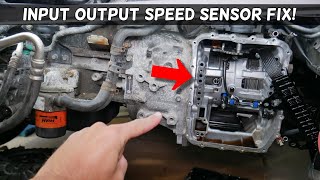
Typical fix: Replace the faulty speed sensor. The input and output sensors are often different parts. The output speed sensor is sometimes listed as part number 46517-39500 for earlier models. Always verify the correct part for your specific transmission. 🎬 Watch: How to locate and replace input and output speed sensors.
Est. part cost: $60-$120 per sensor - Faulty Transmission Shift Solenoid 🟡 Medium Probability → Shop Transmission Valve Body Solenoids are electronically controlled valves that direct fluid flow to engage different gears. A solenoid that is sticking mechanically or has failed electrically can prevent proper pressure from being applied to the 3rd gear clutch pack, causing slip.
How to confirm: A professional can test the resistance of the solenoids and command them on/off with a high-end scan tool to check for proper function. This is often diagnosed by elimination after fluid and sensors are checked. Other solenoid-specific codes (e.g., P0758, P0763) may also be present.
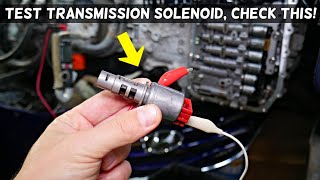
Typical fix: Replace the specific shift solenoid or the entire solenoid pack. This is located inside the transmission oil pan and requires draining the fluid and removing the valve body. 🎬 See this guide on how to test transmission solenoids yourself.
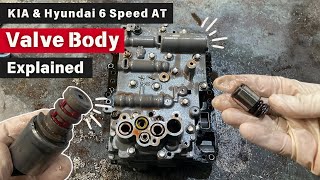
Est. part cost: $100-$300 for a solenoid or pack - Internal Transmission Failure ⚪ Low Probability → Shop Transmission Assembly If other causes are ruled out, the issue is likely internal. This could be a worn-out clutch pack for 3rd gear (specifically the UD or 3-5-R clutch), a failing torque converter, a cracked piston, or a faulty valve body. 🎬 Watch: A detailed explanation of the 6-speed transmission valve body. Hyundai's own TSBs point to transmission replacement as the final step if external diagnostics fail, acknowledging this as a known outcome.
How to confirm: This is a diagnosis of exclusion. If fluid, sensors, and solenoids are confirmed to be good, the problem is internal. A transmission specialist may perform a pressure test to confirm low pressure to a specific clutch circuit.
Typical fix: The transmission must be removed and either rebuilt or replaced with a remanufactured or new unit. Rebuilding involves replacing worn clutches, seals, and any other damaged hard parts.
Est. part cost: $2000-$4500
Rare But Worth Checking
- Faulty Transmission Control Module (TCM) or Powertrain Control Module (PCM): → Shop Transmission Assembly This is very rare. The control module should only be considered after all other possibilities, including wiring, have been thoroughly exhausted. Sometimes a software update or re-flash can resolve issues without replacing the module.
- Damaged Wiring Harness: Check the wiring going to the transmission speed sensors and the main transmission connector for any signs of damage, corrosion, or loose connections. A damaged wire can mimic a failed sensor or solenoid.
- Clogged Transmission Filter: → Shop Transmission Assembly A severely clogged internal transmission filter can restrict fluid flow enough to starve the pump and lower line pressure, causing clutch slippage. This typically happens on high-mileage vehicles where fluid has not been changed regularly. The filter is usually replaced during a fluid service.
Diagnosis Steps
- Check the transmission fluid level and condition. Top off or replace as necessary with the correct fluid type (SP-III or SP-IV). This is the first and most important step.
- Use an OBD-II scanner to check for any other pending or active trouble codes. Codes for speed sensors (P0717, P0722) or solenoids (P0750-P0770 range) can provide a direct path for diagnosis.
- With a scan tool capable of live data, monitor the Input Speed Sensor (ISS) and Output Speed Sensor (OSS) readings while driving. Verify that both sensors are providing a smooth and plausible signal that corresponds to engine and vehicle speed.
- Inspect the wiring harness connected to the transmission for any visible damage, corrosion, or loose pins, paying close attention to the connectors for the speed sensors and the main harness.
- If fluid and sensors are good, the next step is to test the shift solenoids. This is typically done by a professional who can check resistance and command the solenoids with a scan tool to listen for a 'click'.
- If all external components and electronics are verified to be working correctly, consult the relevant TSB (e.g., 20-AT-001H). The fault is likely internal to the transmission (worn clutches, valve body issues), and a transmission replacement may be required per the TSB. At this point, consult a transmission specialist.
Parts You'll Likely Need
- Automatic Transmission Fluid
(OEM #00232-19045 (SP-IV), 00232-19012 (SP-III))— Low or degraded fluid is the most common cause of slipping and incorrect gear ratio codes. Using the correct OEM-spec fluid is critical.
Trusted brands: Hyundai Genuine (SP-III or SP-IV), Idemitsu SP-III / SP-IV, AISIN ATF-SP3 / ATF-SP4, Valvoline MaxLife ATF (claims compatibility)
OEM price range: $15-$25 per quart
Aftermarket price range: $10-$20 per quart - Transmission Input/Output Speed Sensor
(OEM #46517-39500 (Output Speed Sensor, VSS, for some models))— These sensors provide the data for calculating gear ratios. A faulty sensor can trigger the code even if the transmission is mechanically sound.
Trusted brands: Hyundai Genuine, Delphi, Beck/Arnley, Standard Motor Products (SMP)
OEM price range: $80-$150
Aftermarket price range: $50-$100 - Transmission Shift Solenoid
(OEM #46313-3B665 (Part of solenoid body assembly for 6-speed A6MF1/2))— A faulty solenoid can fail to properly direct fluid pressure, causing the slip that triggers P0733.
Trusted brands: Hyundai Genuine, Standard Motor Products (SMP), Dorman
OEM price range: $150-$250
Aftermarket price range: $70-$150
Related Codes That Often Appear With This One
- P0731 — Incorrect Ratio in 1st Gear. Multiple incorrect ratio codes often point to a widespread issue like low fluid, a failing sensor providing data for all gears, or a faulty valve body.
- P0732 — Incorrect Ratio in 2nd Gear. Similar to P0731, having multiple ratio codes suggests a systemic problem rather than a single gear's clutch failure.
- P0734 — Incorrect Ratio in 4th Gear. Seeing ratio errors across multiple gears strongly indicates the problem is not isolated to one clutch pack.
- P0722 — Output Speed Sensor No Signal. This code directly points to a problem with the output speed sensor, a primary cause for P0733.
- P1529 — TCU MIL Request Signal. This is a manufacturer-specific code indicating the Transmission Control Unit has requested the check engine light be turned on. It is often seen alongside other transmission codes like P0733.
Technical Service Bulletins (TSBs) & Recalls
- TSB 24-AT-002H (April 2024): Supersedes 20-AT-001H, adds more models, and provides a diagnostic procedure for incorrect ratio DTCs. It generally leads to transmission replacement if no other sensor or solenoid codes are present.
- TSB 20-AT-001H (January 2020): Provides a diagnostic procedure for a range of incorrect ratio codes (P0731-P0736, etc.) on many Hyundai models, including the 2007-2012 Santa Fe (CM).
- TSB 19-AT-012H (June 2019): Predecessor to 20-AT-001H, outlining a similar procedure. If incorrect ratio codes are found without solenoid codes, the recommended repair is to replace the transmission.
- TSB 14-AT-012 (July 2014): Instructs technicians *not* to replace the entire transmission for specific solenoid DTCs, but instead to replace the individual solenoid or harness.
Mechanic-Grade Diagnostic Values
- Shift Solenoid Resistance (A6LF1/2 6-Speed Models) — expected: Variable Force Solenoids (VFS, 6 total): ~5.1 Ohms. On/Off Solenoids (2 total, often black): ~10-11 Ohms.. Failure: A reading significantly outside of these ranges, or an open/short circuit, indicates a failed solenoid coil.
- Input/Output Speed Sensor Resistance (A6LF1/2 6-Speed Models) — expected: Input: ~3.8 MΩ, Output: ~5.8 MΩ. Note: These values are unusually high and may be a typo in the source document; typically Hall-effect sensors are not tested by resistance. Live data is the preferred test method.. Failure: A significant deviation or open circuit. However, checking for a consistent signal via scan tool live data is more reliable.
Scan Tool Commands That Help
- Hyundai GDS (Global Diagnostic System): Resetting Auto T/A Values / Init Of TCU Learning — This function must be performed after replacing the transaxle, valve body, solenoids, or the PCM/TCM. It erases the learned shift adaptations, preventing harsh shifts or flares that can occur when new parts are installed.
- Hyundai GDS (Global Diagnostic System): AT Adaptation Mode — After resetting the adaptive values, this mode guides the technician through the specific drive cycle required for the TCM to relearn clutch application points and ensure smooth shift quality.
Wiring & Ground Locations
- G39 — Located at the left rear of the engine compartment.. A poor ground at this location can affect the Transmission Control Module (TCM) or related sensors, leading to erratic behavior and false codes.
- G40 — Located at the right rear of the engine compartment.. Similar to G39, this is another critical engine bay ground point. Corrosion or looseness here can interrupt sensor or module signals.
- I/P Junction Block — Located behind the lower left end of the dashboard.. This block is a central hub for many interior and powertrain-related circuits. A loose connection or corrosion within this block could potentially affect communication with the TCM.
- ATM Solenoid Valve Connector — Located on the top of the transaxle assembly.. This is the main electrical connection to the valve body solenoids. It is exposed to heat and vibration, making it a key point to inspect for damage, corrosion, or loose pins when diagnosing solenoid-related faults.
Real Owner Repair Stories
- Hyundai Forums user report (adapted from a similar model) (2002 Hyundai Sonata V6 with 156,000 miles (Note: Not a Santa Fe, but demonstrates a common failure pattern).) — After a transmission drain and fill with dark fluid and metal shavings found, the car became stuck in 2nd gear, would not shift past 25mph, and threw code P0733.
❌ Tried (didn't work) Adjusting the fluid level after the initial service did not resolve the issue.
✅ What actually fixed it The user's experience strongly suggests that on a high-mileage transmission with neglected fluid, a simple fluid change can dislodge debris that then clogs solenoid passages or the valve body, causing the P0733 code. The fix in these cases is often a valve body cleaning or solenoid replacement, not just a fluid adjustment. - NHTSA ODI #10576819 — An owner reported the vehicle getting stuck in only third gear, which they described as a huge distraction. Diagnostic codes P0121 and P0733 were present, relating to a throttle/accelerator position sensor and a third gear ratio mismatch.
OEM Part Supersession History
46313-3B020→46313-3B030— Part revision for improved performance or manufacturing.46313-3B000→46313-3B600— Part revision. 46313-3B000 is a widely used solenoid in many Hyundai/Kia 6-speed transmissions.
Heads up: Verify application, as these solenoids are used across many models (A6GF1, A6MF1, etc.) and may have different pressure characteristics despite looking similar.
Model Year Variations Within This Range
- 2007-2009 (approx.): These earlier models primarily used the 5-speed A5HF1 transmission. This unit has a 7-solenoid valve body and uses SP-III type fluid. Diagnostic procedures and internal parts are specific to this transmission.
- 2010-2012 (approx.): These later models switched to the 6-speed A6MF/A6LF family of transmissions (e.g., A6MF2 for 2.4L, A6LF2 for 3.5L). These have an 8-solenoid valve body with different resistance specs (~5.1 Ohm and ~11 Ohm) and require SP-IV fluid. They also have numerous sub-variants based on engine torque, making parts interchangeability difficult.
Diagnostic Flowchart
Used vs. New Parts: Buying Guide for This Vehicle
When a used part is the smart pick: A used valve body with its original solenoids can be a cost-effective repair if sourced from a verified low-mileage donor vehicle. Individual used sensors or solenoids are risky due to unknown history. A complete used transmission is a common fix, but extreme care must be taken.
Donor-vehicle mileage cap: roughly under 75000 miles for the part to have meaningful remaining life.
What to inspect on the donor part:
- Verify the exact transmission model code (e.g., A6LF2) matches your original unit. There are many similar-looking but incompatible variations.
- Ask for the donor vehicle's VIN to check its service history if possible.
- Inspect the fluid from the donor transmission. If it is dark black, burnt, or full of metal, reject the part.
- Check all electrical connectors for cracks, corrosion, or bent pins.
OEM-only on this vehicle (don't cheap out):
- Transmission Control Module (TCM): Aftermarket or incorrect used TCMs often have programming or compatibility issues. It's safest to use a new OEM part or a specialist programming service.
Aftermarket brands forum-validated for this vehicle:
- While no specific brand is universally praised on forums, parts from Standard Motor Products (SMP), Rostra, and Duralast are widely distributed and generally considered reliable OEM-equivalent options.
Brands owners have reported issues with on this vehicle:
- Avoid unbranded, no-name solenoid kits from online marketplaces. These often have high failure rates, incorrect resistance values, and can cause more problems than they solve.
Real Owner Stories
Aggregated from forums and TSBs cited above. Mileages and costs reflect what owners reported in those sources.
2012 Hyundai Santa Fe
Symptoms: The vehicle was jumping into limp mode (stuck in 4th gear) under load, triggering the P0733 code.
What fixed it: Diagnosed as a likely internal transmission issue after a fluid change and solenoid check did not resolve the problem.
Source hint: Reddit r/MechanicAdvice: P0733 on 2012 Hyundai Santa Fe
Hyundai Sonata (shares transmission architecture)
Symptoms: Experienced shifting problems, a noticeable 'clunk' or 'lurch' during shifts, and a P0733 code immediately after a transmission fluid drain and fill.
What fixed it: The issue was linked to the recent fluid service, highlighting the transmission's sensitivity to the correct fluid level and type, or the possibility that new fluid dislodged debris and worsened an existing problem.
Source hint: Hyundai Forums: Drain & fill trans fluid caused shift slip P0733
Related OBD-II Codes
Frequently Asked Questions
What type of transmission fluid should I use for my 2007-2012 Santa Fe to fix a P0733 code?
My Santa Fe has P0733 but no other codes. What do Hyundai's Technical Service Bulletins (TSBs) suggest?
Could a bad speed sensor cause the P0733 code on my Santa Fe?
My 2012 Santa Fe is stuck in one gear. Is this a symptom of P0733?
What does it mean if I have solenoid codes (like P0758) along with P0733?
Is the P0733 transmission problem common on other vehicles related to the Santa Fe?
Helpful Videos


We Have This Part in Stock

The information in this article is provided for general reference and educational purposes only. Vehicle specifications, procedures, and part compatibility can vary by production date, trim level, and region. Always consult your vehicle's factory service manual and verify part numbers before purchasing or performing repairs. Safety-critical components such as airbags, seat belts, and braking systems should be installed by a qualified professional.
- Hyundai Santa Fe:
- 🧭 Diagnostic Flowchart
- 🎬 Helpful Videos
- 🛍️ Shop This Part
- What's Unique About the 2007-2012 Hyundai Santa Fe
- Symptoms You May Notice
- Most Likely Causes
- Rare But Worth Checking
- Diagnosis Steps
- Parts You'll Likely Need
- Related Codes That Often Appear With This One
- Technical Service Bulletins (TSBs) & Recalls
- Mechanic-Grade Diagnostic Values
- Scan Tool Commands That Help
- Wiring & Ground Locations
- Real Owner Repair Stories
- OEM Part Supersession History
- Model Year Variations Within This Range
- Used vs. New Parts: Buying Guide for This Vehicle
- Real Owner Stories
- 2012 Hyundai Santa Fe
- Hyundai Sonata (shares transmission architecture)
- Related OBD-II Codes
- Frequently Asked Questions
- 🎟️ Get 5% Off