

P0733 on 1999-2009 Saab 9-5: Gear 3 Incorrect Ratio Causes and Fixes
On a 1999-2009 Saab 9-5, code P0733 is most often caused by a failing valve body or shift solenoids in the Aisin AW55-50SN transmission. Before suspecting major failure, always check the transmission fluid level and condition first, as low or dirty fluid is a common trigger. This is a well-documented failure point for this Aisin transmission, which is used in many other vehicles.
- P0733 on a Saab 9-5 means the transmission is slipping in 3rd gear.
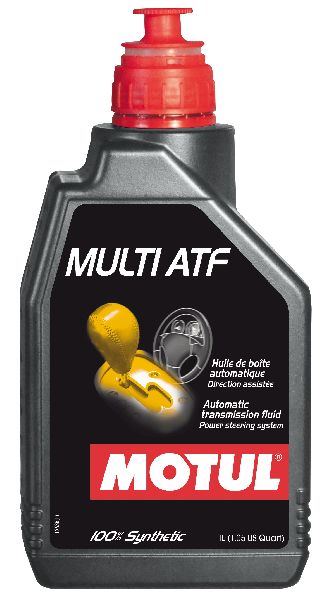
- Always check the transmission fluid level and condition first. Use only fluid meeting the JWS 3309 specification.
- The most likely mechanical cause is a faulty valve body or shift solenoids, a known weak point of this car's Aisin transmission.
- Driving with this code can lead to severe transmission damage, so address it promptly.
- Do not assume the transmission needs a full replacement until fluid and valve body issues have been ruled out.
What's Unique About the 1999-2009 Saab 9-5
The Saab 9-5 from this era uses a 5-speed Aisin Warner AW55-50SN automatic transmission, also designated AF33-5 by GM. This is a widely used transmission that is notorious for having issues with its valve body and the linear solenoids that control shift pressure (SLS, SLT, SLU). While generic causes like low fluid apply, a large percentage of P0733 codes on these specific cars eventually lead back to a worn valve body where the solenoid bores lose pressure, or a failing shift solenoid itself. This is a well-documented failure point for this Aisin unit across multiple brands, not just Saab.
Generation note: This range covers the first generation Saab 9-5 (1999-2005) and its major facelift (2006-2009). Both generations used the same Aisin AW55-50SN 5-speed automatic transmission, so the causes, symptoms, and repairs for P0733 are consistent across the entire 1999-2009 model year range. Note that the earliest models (1999-2001) used a 4-speed automatic, with the 5-speed AW55-50SN being introduced in 2002, becoming the primary source of this specific, well-documented issue.
Symptoms You May Notice
- "CHECK GEARBOX" warning light illuminated on the dashboard.
- Transmission enters a fail-safe or 'limp-home' mode, often stuck in a single gear.
- Harsh, jerky, or delayed shifts, particularly the 2-3 upshift or 4-3 downshift.
- Engine RPMs flare up during the 2-3 shift, indicating slipping.
- Noticeable loss of acceleration, especially from a standstill.
- Inability to shift into 3rd gear at all.
- A feeling of a "bang" or "thump" when the transmission attempts to shift.
- Immediately replacing the entire transmission without first checking the fluid level/condition or investigating the valve body. A simple fluid service or a valve body replacement is far cheaper and often solves the problem.
- Replacing only the fluid when the valve body is already worn beyond what fresh fluid can help. If multiple drain-and-fills don't improve symptoms, the valve body is the next logical step.
Most Likely Causes
- Low or Dirty Transmission Fluid 🔴 High Probability → Shop Transmission Assembly The AW55-50SN is very sensitive to fluid quality and level for proper hydraulic pressure. Many owners may neglect the fluid service, and the original "filled for life" recommendation has been proven incorrect. Dark, burnt, or black fluid is a common finding in cars with this issue.
How to confirm: Check the transmission fluid dipstick with the engine running and the fluid at operating temperature (80°C / 176°F), after cycling through the gears. The fluid should be bright red and not smell burnt. Dark, brown, or metallic-smelling fluid indicates a problem. Note that some later models may not have a dipstick and use a standpipe level-check plug instead.
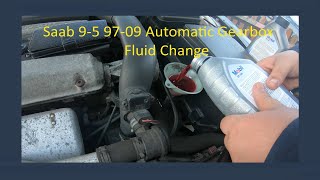
Typical fix: Perform a series of transmission fluid drain-and-fills (typically 3-4 quarts per drain). Multiple drain-and-fills are needed to replace a majority of the old fluid. Ensure the correct fluid type, meeting the JWS 3309 specification, is used.
Est. part cost: $50-$150 - Failed Transmission Valve Body or Shift Solenoids 🔴 High Probability → Shop Transmission Valve Body This is the most common major failure point on the AW55-50SN transmission. Wear in the solenoid bores within the aluminum valve body causes pressure loss, and the solenoids themselves can fail or get clogged with metallic debris, leading to erratic shifting.
How to confirm: If fluid is clean and full but symptoms persist, the next step is to test the solenoids' resistance or have a professional with a capable scan tool monitor solenoid commands vs. actual gear state. Often diagnosed by ruling out other causes after fluid changes provide no improvement.
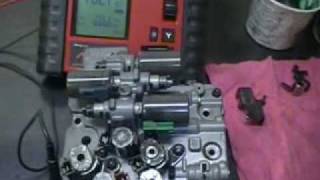
Typical fix: Replacement of the valve body, often sold as a remanufactured unit with updated solenoids. Some specialists can replace individual solenoids, but replacing the whole assembly is more common for a lasting repair. 🎬 Watch: Step-by-step tutorial for repairing the transmission solenoids Rebuild kits like the Sonnax Zip Kit (AW55-50SN-ZIP) are available to address the wear in the valve body bores.
Est. part cost: $400-$800 - Internal Transmission Mechanical Failure ⚪ Low Probability → Shop Transmission Assembly Can occur on high-mileage vehicles, especially if driven with low fluid or other issues for an extended period, leading to burnt clutches or damaged gear sets.
How to confirm: Diagnosed after fluid, solenoids, and sensors have been ruled out. Dropping the transmission pan and finding significant metal debris, clutch material, or black, burnt-smelling fluid is a definitive sign.
Typical fix: Requires a complete transmission rebuild or replacement with a used or remanufactured unit.
Est. part cost: $1500-$3500
Rare But Worth Checking
- Faulty Input/Output Speed Sensors: While less common than valve body failure, a sensor providing incorrect readings to the TCM can mimic a mechanical slip and trigger P0733. This is worth checking before condemning the entire transmission.
- Damaged Wiring or Connectors: The wiring harness to the transmission can become damaged from heat, oil, or road debris, causing intermittent signals from the speed sensors or to the solenoids. Corroded pins on the TCM or transmission connector can also cause this issue.
Diagnosis Steps
- Check the transmission fluid level and condition. This is the most critical first step. The car must be on a level surface, engine running, and transmission fluid at operating temperature (80°C/176°F). Cycle the shifter through P-R-N-D, waiting a few seconds in each gear, before checking the dipstick. 🎬 See this quick guide on checking your transmission fluid level
- If the fluid is low, top it off with fluid meeting the JWS 3309 specification and check for leaks.
- If the fluid is dark or smells burnt, perform at least one drain-and-fill (approx. 3-4 quarts). Drive the car for 20-30 miles to mix the fluid and see if symptoms improve. A series of drain-and-fills is often required. 🎬 Watch: How to perform a transmission fluid drain and fill
- Scan the TCM for any other transmission-related codes. Codes for specific solenoids (e.g., P0796 for Pressure Control Solenoid 'C') or sensors can pinpoint the faulty component.
- Using a diagnostic tool, monitor the input and output transmission speed sensors in real-time while driving to see if one is dropping out or giving erratic readings.
- If fluid and sensors are good, the next likely culprit is the valve body/solenoids. This requires removing the transmission oil pan for access.
- Inspect the old fluid and pan magnet for excessive metal shavings. A small amount of fine grey material is normal, but large flakes or chunks indicate severe internal damage requiring a rebuild.
- If no major mechanical damage is found, replace the valve body assembly with a quality remanufactured unit or rebuild the existing one using a kit like the Sonnax Zip Kit.
- After repair, it is necessary to use a Saab Tech 2 or equivalent scan tool to reset the transmission's adaptive shift settings.
- If significant metal is found, the transmission will likely need to be rebuilt or replaced.
Parts You'll Likely Need
- Transmission Valve Body
(OEM #55556963A (example part number, verify by VIN))— This is the most common point of failure on the AW55-50SN transmission that leads to shifting problems and ratio codes.
Trusted brands: Aisin (OEM), Sonnax (for Zip Kits and remanufactured units), Rostra (for individual solenoids)
OEM price range: $700-$1000
Aftermarket price range: $400-$700 (Remanufactured) - Automatic Transmission Fluid (JWS 3309)
(OEM #93160393 (Saab))— Low, old, or incorrect fluid is a primary cause of this code. A fluid change is the first step in diagnosis and repair.
Trusted brands: Mobil ATF 3309, Idemitsu TLS, ACDelco T-IV, Toyota Type T-IV
OEM price range: $15-$25 per quart
Aftermarket price range: $8-$15 per quart
Related Codes That Often Appear With This One
- P0731 — Incorrect Ratio in 1st Gear. Indicates a similar slipping issue in a different gear, strengthening the diagnosis of a systemic problem like low fluid or a failing valve body.
- P0732 — Incorrect Ratio in 2nd Gear. Similar to P0731, points towards a broader transmission health issue rather than an isolated clutch pack failure.
- P0734 — Incorrect Ratio in 4th Gear. Having multiple ratio codes (P0731, P0732, P0733, P0734, P0735) almost certainly points to a bad valve body or severe fluid issue.
- P0700 — Transmission Control System (MIL Request). This is a generic code indicating the TCM has stored a fault and has requested the main engine computer to turn on the Check Engine Light.
Technical Service Bulletins (TSBs) & Recalls
- While no specific TSB number for P0733 was found, numerous technical documents and repair guides reference the common failure of the valve body and solenoids on the AW55-50SN transmission as the primary cause for shift quality issues and ratio codes.
Platform-Specific Known Issues
- Owner Experience with Valve Body Replacement: → Shop Transmission Valve Body On Volvo forums (which share the same transmission), a user described classic P0733 symptoms of harsh shifting only when the transmission was hot. A transmission specialist immediately identified the issue as failing solenoids, a common problem on the AW55-50SN that he had repaired over 50 times. The fix was to either replace the solenoids or the entire valve body.
- The Importance of Correct Fluid and Level: A user on BobIsTheOilGuy.com with a 2007 Saab 9-5 experiencing shift flares noted that the AW55-50 transmission is extremely sensitive to the fluid level, with the difference between underfilled and overfilled being as little as 200ml. This highlights the importance of the precise fluid checking procedure at the correct temperature.
Mechanic-Grade Diagnostic Values
- Linear Solenoid Resistance (SLS, SLT, SLU) — expected: 5.0 - 5.6 Ω at 20°C (68°F). Failure: Readings outside this range indicate a faulty solenoid winding.
- On/Off Shift Solenoid Resistance (S1, S2, S3, S4, S5) — expected: 11 - 16 Ω at 20°C (68°F). Failure: Readings outside this range suggest an open or shorted solenoid.
- Input/Output Shaft Speed Sensor Resistance — expected: >10 MΩ (Mega-ohms) at 20°C (68°F). Failure: A significantly lower reading may indicate a failed sensor.
- Live Data Gear Ratio Deviation (Scan Tool) — expected: Less than 20%. Failure: The TCM will set code P0733 if the calculated gear ratio diverges by more than 20% from the expected value for 3rd gear.
Scan Tool Commands That Help
- Saab Tech 2: Adaptation, resetting — This is a mandatory step after replacing the transmission, TCM, valve body, or updating software. It clears the old learned shift parameters. The function is typically found under 'Automatic Transmission' -> 'Activate' or 'Adjustments' -> 'Reset'. A specific drive cycle must be performed afterward for the TCM to relearn shift pressures.
Wiring & Ground Locations
- G25 — Directly on the gearbox.. This is a main battery ground point. A poor connection here can cause a host of erratic electrical behaviors in the transmission, including faulty sensor readings and incorrect solenoid operation.
- G2 — On the left-hand structural member in the engine bay, behind the headlamp.. A redundant ground cable runs between the gearbox (G25) and this chassis ground point. Both must be clean and secure for reliable transmission electronics operation.
- TCM Connector Pins — At the Transmission Control Module (TCM).. Specific pins control the solenoids. For example, the SLS and SLT solenoids are controlled by pins 26(B) and 35(B) and grounded through pins 36(B) and 15(B). Knowing these allows for advanced diagnosis of the wiring harness between the TCM and transmission.
Real Owner Repair Stories
- VolvoXC.com forum user (2000 Volvo S70 (with same AW55-50SN transmission)) — Flashing transmission arrow light, P0740 code. After attempted repairs, the car would engage gears for 30-60 seconds when cold, then lose all drive.
❌ Tried (didn't work) Rebuilding linear solenoids., Multiple fluid flushes with correct Mobil 3309 fluid., Installing a used valve body from a junkyard., Swapping the TCM with a used unit.
✅ What actually fixed it The issue remained unresolved in the thread, but the story serves as a strong cautionary tale against using untested junkyard valve bodies, which can introduce new or identical problems. The user's experience points towards a likely hydraulic pressure loss issue that was not solved by swapping components without verification. - VolvoXC.com forum user 'Astro14' (2001 Volvo T5 Wagon (with same AW55-50SN transmission)) — Poor shifting performance once the transmission fluid was hot. Fluid flushes only provided temporary relief.
❌ Tried (didn't work) Fluid flushes.
✅ What actually fixed it The user successfully replaced the faulty Volvo valve body with a new GM part for a Saturn AF-33 (the same transmission). This required minor modifications: swapping the S5 solenoid from the old valve body to the new one, removing the B5 spring from the new GM body, and some wiring modification. This highlights cross-brand parts compatibility for savvy mechanics.
OEM Part Supersession History
Valve Body with no letter or 'A' casting mark→Valve Body with 'B' or 'C' casting mark— Internal design updates to improve reliability and address shift quality issues.
Heads up: These are not directly interchangeable without considering other factors. The S2 solenoid type differs between GM/Saab (domed top, normally open) and Volvo/Nissan (flat top, normally closed). A replacement valve body must match the vehicle's original S2 solenoid type.Valve Body without B5 spring→Valve Body with B5 spring— Changes in hydraulic control logic.
Heads up: It is critical to verify if the original valve body has a B5 control valve spring. Installing a valve body with a B5 spring in a car that doesn't require it (or vice-versa) will cause severe shifting problems. The 10th digit of the VIN can help identify the model year, with '5' or higher likely requiring the spring.
Model Year Variations Within This Range
- 1999-2001: These earlier models were equipped with a 4-speed automatic transmission, not the 5-speed Aisin AW55-50SN. While a P0733 code is possible, the causes and parts would be different.
- 2002-2009: These models use the Aisin AW55-50SN 5-speed automatic, which is the subject of the common valve body and solenoid failures associated with this code.
- Circa 2005+: Later versions of the AW55-50SN valve body may contain a B5 control valve spring and have a 'B' or 'C' casting mark, whereas earlier ones do not. Part compatibility is critical and must be verified before replacement.
Diagnostic Flowchart
Other Known Issues on This Vehicle
Issues unrelated to this code that are worth knowing about as an owner of this generation:
- Engine Oil Sludge (PCV System Failure) 🔴 High — Very common on 1999-2003 B205/B235 4-cylinder engines. Less common on 2004+ models which had a redesigned block. Failure to use full synthetic oil or extended oil change intervals exacerbates the problem. (Ref: Saab issued multiple PCV (Positive Crankcase Ventilation) update kits (the final being #6) to improve crankcase breathing and reduce sludge formation.)
- Direct Ignition Cassette (DIC) Failure 🔴 High — Extremely common across all 4-cylinder petrol models. The DIC is a consumable part, often failing every 60,000-100,000 miles, causing misfires, rough running, or a no-start condition. Many owners carry a spare in the trunk. Using non-OEM cassettes is known to cause further issues. (Ref: Recalls were issued for some model years related to the Ignition Discharge Module (IDM), which is part of the DIC.)
- SID and ACC Display Pixel Failure 🟡 Low — Almost guaranteed to happen on all 1999-2005 models. The ribbon cable connecting the LCD screen to the circuit board degrades over time, causing lines of pixels or the entire display to become unreadable. (Ref: No TSB or recall, but a large cottage industry exists for DIY ribbon cable replacement kits and professional repair services.)
- Electronic Throttle Body Failure 🟠 Medium — Common issue that can cause the car to enter 'Limp Home Mode' with drastically reduced power. The internal electronics or wiring can fail.
- Excessive Exhaust Flex Pipe Failure 🟡 Low — The flexible joint in the front exhaust pipe is a common failure point, leading to a loud exhaust leak.
Used vs. New Parts: Buying Guide for This Vehicle
When a used part is the smart pick: A complete used transmission from a low-mileage, verified running donor car can be a cost-effective but risky alternative to a full rebuild. A used valve body is highly discouraged due to the component's extremely high failure rate; you are very likely to buy the same problem.
Donor-vehicle mileage cap: roughly under 80000 miles for the part to have meaningful remaining life.
What to inspect on the donor part:
- Verify the donor vehicle's mileage and, if possible, service history.
- When buying a complete transmission, ask the seller to drain a small fluid sample. It should be reddish, not black or burnt-smelling.
- For a valve body, only consider professionally remanufactured units, not parts pulled directly from a junkyard car.
- Check the casting marks ('A', 'B', or 'C') and confirm the presence/absence of the B5 spring to match your original unit.
OEM-only on this vehicle (don't cheap out):
- No specific parts are strictly OEM-only, but for the valve body, a high-quality remanufactured unit is the most reliable repair.
Aftermarket brands forum-validated for this vehicle:
- Sonnax (Provides Zip Kits to rebuild a valve body and sells fully remanufactured valve bodies).
- Rostra (Sells new individual replacement solenoids).
- Mobil ATF 3309 / Toyota Type T-IV (Correct specification fluid).
Brands owners have reported issues with on this vehicle:
- Unbranded, low-cost valve bodies from online marketplaces that do not specify if they have been tested or what updates have been performed.
Real Owner Stories
Aggregated from forums and TSBs cited above. Mileages and costs reflect what owners reported in those sources.
2007 Saab 9-5
Symptoms: Experiencing shift flares.
What fixed it: The issue was identified as extreme sensitivity to fluid level, with the difference between underfilled and overfilled being as little as 200ml. The fix required a precise fluid checking procedure at the correct temperature.
Source hint: BobIsTheOilGuy.com
Volvo with AW55-50SN transmission
Symptoms: Harsh shifting only when the transmission was hot.
What fixed it: A transmission specialist immediately identified the issue as failing solenoids. The fix was to either replace the solenoids or the entire valve body.
Source hint: Volvo forums (which share the same transmission)
Volvo with AW55-50SN transmission
Symptoms: A 2-3 shift delay and 'bang'.
What fixed it: The problem was diagnosed as a worn valve body, which required replacement.
Source hint: volvoxc.com/forums/archive/index.php/t-36011.html
Saab 9-5 with an AW55-50SN — ~170000 miles
Symptoms: Showing shift flares.
What fixed it: Experts on the forum confirmed that valve body bore wear was the root cause of the issue.
Source hint: bobistheoilguy.com/forums/threads/neglected-aw55-50-plan-of-attack.323565/
Related OBD-II Codes
Frequently Asked Questions
My Saab dealer once said the transmission was "filled for life." Why do I need to change the fluid for a P0733 code?
What specific transmission fluid should I use in my 1999-2009 Saab 9-5?
I've heard about a "Sonnax Zip Kit" for my Saab 9-5's transmission. Can this fix the P0733 code?
After replacing the valve body on my Saab 9-5, is there anything else I need to do?
My mechanic is more familiar with Volvos. Can he fix the P0733 issue on my Saab 9-5?
How do I properly check the transmission fluid level on my Saab 9-5? I heard it's very sensitive.
Helpful Videos

We Have This Part in Stock



The information in this article is provided for general reference and educational purposes only. Vehicle specifications, procedures, and part compatibility can vary by production date, trim level, and region. Always consult your vehicle's factory service manual and verify part numbers before purchasing or performing repairs. Safety-critical components such as airbags, seat belts, and braking systems should be installed by a qualified professional.
- Saab 9-5:
- 🧭 Diagnostic Flowchart
- 🎬 Helpful Videos
- 🛍️ Shop This Part
- What's Unique About the 1999-2009 Saab 9-5
- Symptoms You May Notice
- Most Likely Causes
- Rare But Worth Checking
- Diagnosis Steps
- Parts You'll Likely Need
- Related Codes That Often Appear With This One
- Technical Service Bulletins (TSBs) & Recalls
- Platform-Specific Known Issues
- Mechanic-Grade Diagnostic Values
- Scan Tool Commands That Help
- Wiring & Ground Locations
- Real Owner Repair Stories
- OEM Part Supersession History
- Model Year Variations Within This Range
- Other Known Issues on This Vehicle
- Used vs. New Parts: Buying Guide for This Vehicle
- Real Owner Stories
- 2007 Saab 9-5
- Volvo with AW55-50SN transmission
- Volvo with AW55-50SN transmission
- Saab 9-5 with an AW55-50SN — ~170000 miles
- Related OBD-II Codes
- Frequently Asked Questions
- 🎟️ Get 5% Off