

P0734 on 2011-2018 Ford Focus: Gear 4 Incorrect Ratio Explained
On a 2011-2018 Ford Focus, P0734 almost always points to a problem with the DPS6 PowerShift automatic transmission. The most common causes are a failing Transmission Control Module (TCM) or internal mechanical failures like worn clutches or faulty actuator forks. This is a complex and expensive repair, often requiring professional service, and is part of a well-documented, systemic issue with this transmission that led to class-action lawsuits and multiple warranty extensions from Ford.
- P0734 on a 2011-2018 Focus is a serious code pointing to a fault in the notoriously problematic DPS6 PowerShift transmission.
- Do not assume it's a simple sensor fix. The most likely culprits are the Transmission Control Module (TCM), the dual-clutch assembly, or the clutch actuators.
- Check with a Ford dealer about potential warranty extensions for the TCM or clutch assembly before paying for repairs, as your vehicle may be covered.
- This is not a DIY-friendly repair. It requires specialized tools, diagnostic software, and deep knowledge of this specific transmission.
- Continued driving with these symptoms can lead to a complete transmission failure, leaving you stranded and facing a more expensive repair.
What's Unique About the 2011-2018 Ford Focus
The 2011-2018 Ford Focus with the 2.0L engine uses a DPS6 "PowerShift" transmission. Unlike a traditional automatic, this is a dry dual-clutch automated manual transmission, designated by Borg Warner as the 6DCT-250. This design is notoriously problematic, leading to class-action lawsuits and numerous Customer Satisfaction Programs from Ford. Code P0734 on this specific vehicle is rarely a simple sensor issue; it's almost always a symptom of the well-documented underlying flaws in the DPS6. The most common culprits are a faulty TCM (which Ford extended the warranty on), worn clutches from leaking input shaft seals, or failing clutch actuator forks/motors.
Generation note: The 2011-2018 Ford Focus in North America is primarily the third generation (Mk3). All models within this range equipped with the 2.0L GDI engine and automatic transmission use the problematic DPS6 PowerShift transmission. Earlier models (pre-2015) were particularly prone to leaking input shaft seals.
Symptoms You May Notice
- Check Engine Light is on
- Transmission warning light is on ('Transmission Malfunction Service Now')
- Harsh, jerky, or delayed shifting, especially from 3rd to 4th gear
- Vehicle shudders or vibrates on acceleration, particularly from a stop
- Transmission slipping (engine RPMs increase but vehicle speed does not)
- Failure to engage 4th gear, or getting stuck in 3rd gear
- Complete loss of ability to move forward or reverse, sometimes after the vehicle warms up
- Grinding or clicking noises from the transmission area
- Replacing only the transmission speed sensors. While a faulty sensor can cause this code on other vehicles, on the Focus DPS6 it is rarely the root cause. The problem is usually the TCM or a mechanical issue within the transmission itself.
Most Likely Causes
- Failing Transmission Control Module (TCM) 🔴 High Probability → Shop Transmission Assembly The TCM on the DPS6 transmission is a known, widespread failure point due to internal electrical circuit failures, often exacerbated by heat and vibration. Ford issued Customer Satisfaction Program 14M02, extending the warranty on the TCM to 10 years/150,000 miles for many vehicles due to the high failure rate. A bad TCM can cause erratic shifting, false sensor readings, and a complete loss of communication.
How to confirm: Diagnosis with a high-level scan tool is required to check for specific TCM-related fault codes (often U-codes like U0100, U0101, or P-codes like P0606). A common symptom is a complete loss of drive after the vehicle warms up, or a no-start condition. Poor ground connections on the chassis frame rail near the battery are a known contributing factor and should be inspected.
Typical fix: Replacement of the Transmission Control Module. The new module must be programmed to the vehicle using Ford's diagnostic software.
Est. part cost: $300-$700 - Worn or Contaminated Dual Clutch Assembly 🔴 High Probability The DPS6 is a dry-clutch design. Input shaft seals are known to leak transmission fluid, contaminating the dry clutches. This causes severe shudder, slipping, and premature wear, leading to incorrect gear ratio faults. This issue was so prevalent that Ford issued TSB 16-0109 and Customer Satisfaction Program 14M01, extending the clutch warranty to 7 years/100,000 miles for affected vehicles.
How to confirm: This is difficult to confirm without transmission disassembly. A pronounced shudder on light acceleration is a very strong indicator. A mechanic can perform a clutch slip test using a diagnostic scan tool. A visual inspection of the bell housing for fluid leaks is also a key step.
Typical fix: Replacement of the entire dual-clutch and seal assembly. This is a major repair that requires removal of the transmission. An updated clutch kit is available.
Est. part cost: $500-$1000 - Faulty or Sticking Clutch Actuator Forks/Motors 🟡 Medium Probability The electric motors that move the shift forks can fail or develop internal faults. The forks themselves can also bind or get damaged, preventing proper clutch engagement and disengagement for a set of gears (e.g., 2-4-6 or 1-3-5).
How to confirm: A diagnostic scan tool can command the actuators and monitor their position. Codes like P0902 often point to an actuator circuit problem. A mechanic may also remove the motors to manually check if the forks move freely. These motors are typically located on the front of the transmission and can sometimes be serviced without full transmission removal.
Typical fix: Replacement of the faulty clutch actuator motor. If the fork itself is damaged internally, a transmission rebuild or replacement is necessary.
Est. part cost: $150-$300 per motor
Rare But Worth Checking
- Low or Incorrect Transmission Fluid: → Shop Transmission Assembly While possible, this is less common on the DPS6 as it is a 'filled for life' sealed unit. Low fluid would indicate a leak which must be repaired. Checking the fluid is not a simple process and does not involve a dipstick.
- Internal Wiring Harness Damage: The harness connecting the TCM to the transmission can sometimes rub through and short, causing various shifting and communication errors.
- Weak or Failing Battery: The complex electronics of the DPS6, especially the TCM, are sensitive to voltage. A weak or failing battery can cause a host of seemingly unrelated electronic issues, including transmission fault codes and erratic behavior.
Diagnosis Steps
- Scan for all stored diagnostic trouble codes. Pay close attention to any other transmission (P-codes) or communication (U-codes) faults, as they are critical for diagnosis on this vehicle.
- Check for any applicable Technical Service Bulletins (TSBs) or warranty extensions from Ford. Key programs include 14M01 (Clutch/Seals), 14M02 (TCM), and 15B22 (TCM Reprogram). Check with a dealer using the VIN.
- With a professional scan tool, monitor live transmission data, including input/output speed sensor readings, commanded vs. actual gear, and clutch actuator positions.
- Inspect the main TCM ground connections. There are two key grounds on the painted chassis frame rail near the battery that are known to cause issues. Sanding the paint to ensure a solid ground is a common preventative/diagnostic step.
- Attempt a transmission adaptive learning procedure. If it fails or makes the condition worse, it strongly suggests a mechanical fault (clutch or forks).
- Inspect the transmission for any external fluid leaks, especially around the bell housing, which could indicate a leaking input shaft seal.
- If TCM failure is suspected (especially with U-codes), test power and ground circuits to the module before condemning it.
- If mechanical failure (clutch) is suspected, the next step is typically transmission removal for inspection of the clutch assembly and actuator forks.
Parts You'll Likely Need
- Transmission Control Module (TCM)
(OEM #AE8Z-7Z369-F)— This is the single most common failure point on the DPS6 transmission that leads to a wide variety of shifting issues and codes, including P0734. The -F revision is the latest updated part.
Trusted brands: Motorcraft
OEM price range: $400-$700
Aftermarket price range: $300-$500 - Dual Clutch and Input Shaft Seal Kit
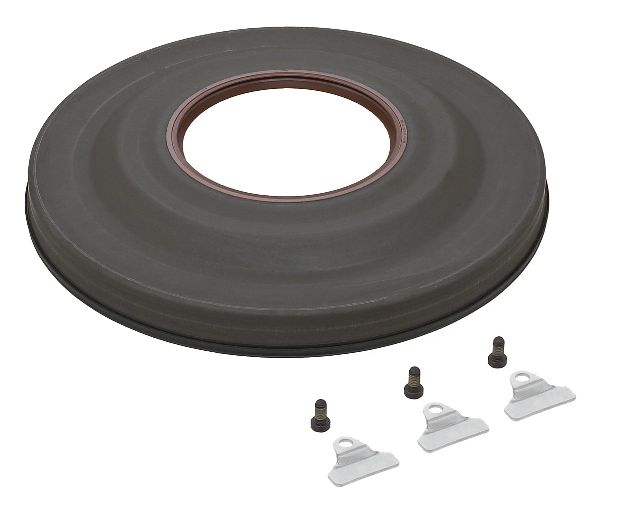
(OEM #F1FZ-7B546-B)— Leaking input shaft seals contaminate the dry clutches, causing shudder and slippage. The clutch assembly wears prematurely as a result. They are typically replaced as a set with an updated design.
Trusted brands: Motorcraft, LuK
OEM price range: $700-$1000
Aftermarket price range: $500-$800
Related Codes That Often Appear With This One
- P07A3 — Transmission Friction Element 'A' Stuck On - This often points directly to a problem with one of the clutch packs or its actuating fork.
- P0902 — Clutch 'A' Actuator Circuit Low - This indicates an electrical problem with the clutch actuator, either the motor itself or the TCM controlling it.
- U0100 — Lost Communication With ECM/PCM 'A' - Often seen with U0101, this is a very common code when the TCM itself is failing.
- U0101 — Lost Communication with TCM - This is a very common code when the TCM itself is failing.
- P0606 — ECM/PCM Processor Fault - On this platform, this code frequently points to an internal failure of the Transmission Control Module (TCM).
Technical Service Bulletins (TSBs) & Recalls
- TSB 16-0109: Supersedes earlier TSBs. Details the diagnostic and repair procedure for 'Excessive Transmission Clutch Shudder And/Or Transmission Fluid Leak', often involving clutch and seal replacement.
- TSB 16-0129: Addresses intermittent no-start, loss of engagement, or loss of power with DTCs U0100, U0101, U1013, and/or P0606, pointing to TCM failure.
- TSB 19-2120: Later TSB providing updated diagnostic procedures for the DPS6 transmission.
- TSB 14-0047 / 14-0131: Early bulletins attempting to address and define the clutch shudder issue.
Platform-Specific Known Issues
- Ford acknowledged the issues with the DPS6 transmission and has faced class-action lawsuits. This led to multiple customer satisfaction programs and extended warranties.
- Program 14M02: Extended the warranty on the TCM to 10 years/150,000 miles. For vehicles outside that window, a one-time replacement was offered through June 30, 2025.
- Program 14M01: Extended the warranty on the clutch assembly and input shaft seals to 7 years/100,000 miles to address shudder issues.
- Program 15B22: A program to reprogram the TCM to better detect and prevent failures.
- Owners should always check with a Ford dealer with their VIN to see if any of these programs are still active or if their vehicle has had the repairs performed.
Mechanic-Grade Diagnostic Values
- Clutch Actuator Motor Resistance — expected: 1.5 - 2.2 ohms. Failure: A reading outside of this range indicates a faulty motor.
- TCM Harness to Sensor/Actuator Continuity — expected: Less than 5.0 ohms. Failure: Resistance higher than 5.0 ohms indicates excessive resistance in the wiring harness, which could be from corrosion or a damaged wire.
- TCM Power Supply Voltage (Ignition ON) — expected: Greater than 10.5 volts. Failure: Voltage below this threshold suggests a problem with the battery, alternator, or the power supply wiring to the TCM, which can cause erratic behavior.
Hidden / Shadow Codes Worth Checking
- Manufacturer-Specific DTCs (U-codes, P1xxx, P2xxx): While there are no specific 'shadow codes' in the traditional sense, the DPS6 transmission can store numerous manufacturer-specific codes that a basic OBD-II scanner cannot read. These codes provide critical details about failures within the TCM, actuators, and communication networks. (see via A professional-grade scan tool like Ford's Integrated Diagnostic System (IDS) or a high-end aftermarket scanner with Ford-specific software is required to see the full list of stored codes.)
Scan Tool Commands That Help
- Ford IDS (or equivalent J2534 tool): TCM Adaptive Learning — This is a mandatory procedure after replacing the TCM or the clutch assembly. It performs a series of automated tests to calibrate the new components (clutch touch points, actuator positions) to the vehicle. Failure to perform this can result in harsh shifting or persistent codes.
- Ford IDS (or equivalent J2534 tool): Shift Drum Relearn / TR Sensor Relearn / Clutch Adapts — These are specific sub-routines within the adaptive learning process. They must be performed whenever the TCM, clutch assembly, or transmission range (TR) sensor is replaced to ensure the TCM knows the precise physical positions of the new components.
- Ford IDS (or equivalent J2534 tool): Clutch Actuator Motor Test — This bidirectional command allows a technician to individually command the A and B clutch actuators to move. Monitoring their response and position sensor feedback can help determine if a motor is slow, stuck, or has a faulty position sensor without having to remove it first.
Wiring & Ground Locations
- G104 — Located in the engine compartment on the left-hand (driver's side) frame rail, typically found under or near the air filter box assembly.. This is a primary ground point for the powertrain control system. A poor connection here due to paint or corrosion can cause unstable voltage to the TCM, leading to a wide range of erratic transmission codes, including incorrect ratio faults.
- C1750B — This is the main electrical connector on the Transmission Control Module (TCM) itself, which is mounted to the side of the transmission case.. All power, ground, and sensor/actuator signals for the transmission pass through this connector. Any diagnostic electrical tests for the TCM or its circuits (continuity, voltage, resistance) will be performed at the pins of this connector.
Real Owner Repair Stories
- YouTube channel 'Big Ben's Cars & Cycles' (General 2012-2018 Ford Focus/Fiesta with DPS6) — Codes related to clutch actuator performance or clutch being stuck (e.g., P0902, P07A3, P07A4).
❌ Tried (didn't work) Clearing codes without proper diagnosis., Assuming the TCM is always the cause without testing.
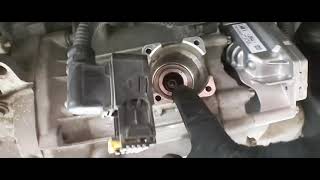
✅ What actually fixed it A common diagnostic technique is to swap the positions of the upper (A) and lower (B) clutch actuator motors, as they are identical. If the fault code follows the motor (e.g., a P0902 for Clutch 'A' becomes a P090B for Clutch 'B' after the swap), the actuator motor is faulty and needs replacement. If the code stays with the original clutch, the problem is likely a seized clutch fork or slave bearing, requiring transmission removal.
OEM Part Supersession History
F1FZ-7B546-E→F1FZ-7B546-B— The original clutch assembly was prone to premature wear and failure, often due to contamination from leaking input shaft seals. The updated '-B' kit contains an improved clutch design.
Heads up: While the old part will physically fit, installing it is not recommended as it is prone to the same failures. Always use the latest revision kit.
Model Year Variations Within This Range
- 2011-mid-2013: Vehicles built before June 6, 2013, were equipped with input shaft seals that were highly prone to leaking fluid and contaminating the dry clutch. TSB 16-0109 notes that vehicles built after this date have improved seals.
- 2012-2014 vs. 2015-2018: The transmission calibration is different between these two groups. This is physically indicated by the thickness of the input shaft speed sensor shims. Early models use thicker shims (~3.2-3.5mm), while later models use thinner shims (~0.5-2.0mm). Swapping transmissions between these groups requires reprogramming the TCM with the correct calibration file.
- 2017-2018: For clutch actuator circuit codes (like P0902/P090C), later models are more likely to have a failed actuator motor itself, whereas earlier 2012-2016 models with the same codes are more likely to have a failed TCM.
Diagnostic Flowchart
Other Known Issues on This Vehicle
Issues unrelated to this code that are worth knowing about as an owner of this generation:
- Canister Purge Valve (CPV) Failure 🔴 High — Very common across all model years. Can cause engine stalling, erratic fuel gauge readings, and difficulty starting after refueling. (Ref: Recall 18S32 / NHTSA 18V735; Customer Satisfaction Program 24N07.)
- Passenger-Side Engine Mount Collapse 🟠 Medium — Common, especially on vehicles over 60,000 miles. The hydraulic mount fails, causing the rubber to sag and make contact with the bracket, transferring excessive engine vibration into the cabin at idle and during acceleration.
- Steering Rack Failure (EPAS) 🔴 High — Less common than transmission issues but a known point of failure. The Electronic Power Assisted Steering (EPAS) rack can fail, leading to a sudden loss of power steering assist.
- Door Latch Failure 🟠 Medium — Common enough to warrant multiple recalls. The latch pawl spring can break, preventing the door from latching securely or causing it to open while driving. (Ref: Multiple recalls exist, owners should check their VIN.)
Used vs. New Parts: Buying Guide for This Vehicle
When a used part is the smart pick: A used Transmission Control Module (TCM) is a viable option, and its use is even authorized by Ford for vehicles outside of the emissions warranty period. Used clutch actuator motors can also be a cost-effective choice, as they can be tested by swapping their positions to confirm functionality.
Donor-vehicle mileage cap: roughly under 75000 miles for the part to have meaningful remaining life.
What to inspect on the donor part:
- For a complete transmission: Check the build date. Assemblies built after June 2013 are preferable as they have updated input shaft seals.
- For a complete transmission: Measure the input shaft speed sensor shims to verify its original year range (early models ~3.5mm, late models <2.0mm) to ensure you can load the correct calibration.
- For a TCM: Inspect the connector pins for any corrosion or damage. Ensure the casing is not cracked or physically damaged.
OEM-only on this vehicle (don't cheap out):
- Dual Clutch Assembly: Do not buy a used clutch assembly. The original design was flawed, and they are a primary wear item. The only reliable fix is a new, updated OEM (Motorcraft) or reputable OE supplier (LuK) kit (Part No. F1FZ-7B546-B).
Aftermarket brands forum-validated for this vehicle:
- LuK (for Dual Clutch Assembly)
Real Owner Stories
Aggregated from forums and TSBs cited above. Mileages and costs reflect what owners reported in those sources.
2015 Ford Focus 2.0L GDI I4
Symptoms: Transmission issues occurring even after a previous warranty repair; user shared the full text of the 14M02 program regarding TCM failures.
What fixed it: Reliance on Customer Satisfaction Program 14M02 for TCM-related recourse.
Source hint: Reddit r/FordFocus thread titled '2015 focus having Tran issue after warranty trans repair.'
2011-2018 Ford Focus 2.0L GDI I4
Symptoms: P0734 and related codes; owners discussing the necessity of checking for warranty extensions before paying for repairs.
What fixed it: TCM and clutch replacements performed under Ford's extended warranty programs.
Source hint: FocusFanatics.com threads regarding P0734 and DPS6 transmission issues
Related OBD-II Codes
Frequently Asked Questions
Is the Transmission Control Module (TCM) failure on my 2014 Ford Focus covered under a special warranty?
My Focus shudders badly when accelerating from a stop; is there a TSB for this?
Does the 7-year/100,000-mile warranty extension (14M01) apply to the clutch assembly?
Can a software update fix the transmission issues on my 2011-2018 Focus?
I'm seeing a 'Transmission Malfunction Service Now' warning and lost 4th gear. Could this be the TCM?
Are there any simple electrical checks I should do before replacing the transmission?
Helpful Videos

We Have This Part in Stock

The information in this article is provided for general reference and educational purposes only. Vehicle specifications, procedures, and part compatibility can vary by production date, trim level, and region. Always consult your vehicle's factory service manual and verify part numbers before purchasing or performing repairs. Safety-critical components such as airbags, seat belts, and braking systems should be installed by a qualified professional.
- Ford Focus:
- 🧭 Diagnostic Flowchart
- 🎬 Helpful Videos
- 🛍️ Shop This Part
- What's Unique About the 2011-2018 Ford Focus
- Symptoms You May Notice
- Most Likely Causes
- Rare But Worth Checking
- Diagnosis Steps
- Parts You'll Likely Need
- Related Codes That Often Appear With This One
- Technical Service Bulletins (TSBs) & Recalls
- Platform-Specific Known Issues
- Mechanic-Grade Diagnostic Values
- Hidden / Shadow Codes Worth Checking
- Scan Tool Commands That Help
- Wiring & Ground Locations
- Real Owner Repair Stories
- OEM Part Supersession History
- Model Year Variations Within This Range
- Other Known Issues on This Vehicle
- Used vs. New Parts: Buying Guide for This Vehicle
- Real Owner Stories
- 2015 Ford Focus 2.0L GDI I4
- 2011-2018 Ford Focus 2.0L GDI I4
- Related OBD-II Codes
- Frequently Asked Questions
- 🎟️ Get 5% Off