

P0734 on 2004-2009 Mazda 3: Gear 4 Incorrect Ratio Causes and Fixes
This code means your automatic transmission is failing to properly use 4th gear, often due to a faulty Transmission Control Module (TCM) or a bad shift solenoid. The TCM, mounted on the transmission case, is a known weak point on this model, susceptible to heat and vibration. A remanufactured TCM can cost $200-$400, while a shift solenoid is cheaper but requires removing the transmission pan.
- P0734 on a 2004-2009 Mazda 3 means the transmission is failing to engage or hold 4th gear correctly.
- The most likely causes are a faulty Transmission Control Module (TCM), failing shift solenoids, or low/dirty transmission fluid.
- Unlike many other vehicles, a faulty TCM is a very common cause for this code on this specific Mazda 3 generation.
- Before condemning the entire transmission, always start by checking the fluid, then investigate the solenoids and the TCM.
- Driving with this code can lead to more severe transmission damage, so it should be addressed promptly.
What's Unique About the 2004-2009 Mazda 3
The first-generation Mazda 3 (2004-2009) is notoriously prone to automatic transmission issues, specifically related to the Transmission Control Module (TCM). While many cars with a P0734 code suffer from internal mechanical wear or solenoid failure, the Mazda 3 from this era has a very high probability of the TCM itself being the root cause. The TCM is mounted directly on top of the transmission case, under the battery tray, where it is exposed to significant heat and vibration, causing internal solder joints and electronic components to fail over time. Owners and technicians frequently report that replacing or repairing the TCM resolves a host of shifting problems, including P0734, often after other simpler fixes have failed.
Symptoms You May Notice
- Check Engine Light is on
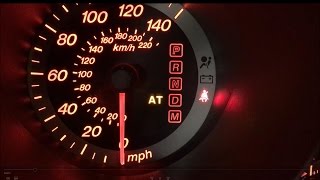
- AT (Automatic Transaxle) light is on or flashing
- Transmission fails to shift into 4th gear
- Harsh, jerky, or delayed shifting, especially the 3-4 shift
- Transmission slipping (engine RPMs increase but speed does not)
- Vehicle enters 'limp mode,' often stuck in 3rd gear
- Decreased fuel economy, especially at highway speeds
- Sudden loss of power when trying to accelerate on the highway
- Replacing the entire transmission when only the external TCM was faulty.
- Replacing input/output speed sensors when the issue is with the TCM, a solenoid, or internal wiring.
- Performing a fluid flush on a high-mileage transmission, which can dislodge sludge and clog the valve body, making the problem worse.
Most Likely Causes
- Faulty Transmission Control Module (TCM) 🔴 High Probability → Shop Transmission Assembly The TCM on 2006-2009 Mazda 3s is a widely documented failure point. Mounted directly on the hot, vibrating transmission, its internal solder joints and components crack and fail due to poor thermal design and weak solder. This leads to incorrect ratio codes and communication errors.
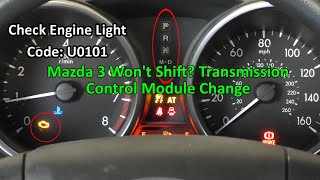
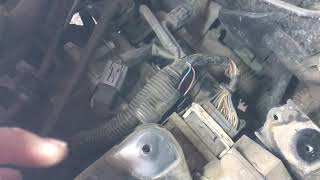
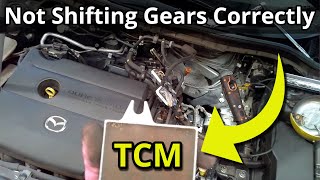
How to confirm: Often diagnosed by the presence of other codes like U0101 🎬 See how to diagnose a U0101 no communication fault (Lost Communication with TCM) or solenoid circuit faults (P0753, P0758). A technician can try to communicate with the TCM using a scan tool; a failure to connect points to a bad module. The TCM is located under the battery and battery tray. 🎬 Watch: How to locate and remove the TCM for repair
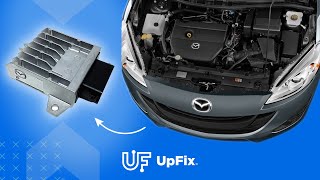
Typical fix: Replace the Transmission Control Module. The replacement must be the correct part number for the vehicle's year and engine. Some specialists offer a repair service or recommend relocating the new module to a cooler spot on the firewall to prevent repeat failure.
Est. part cost: $200-$500 (Remanufactured), $600-$900 (OEM) - Low or Dirty Transmission Fluid 🟡 Medium Probability → Shop Transmission Assembly Fluid is the hydraulic lifeblood of the transmission. If low, it can't create the pressure needed to engage clutches. If old and dirty (black or brown), it can clog solenoid passages and the valve body, causing shifting issues. Fluid turning black quickly after a change is a sign of severe internal clutch wear.
How to confirm: Check the transmission fluid level and condition using the dipstick with the engine running and warm. The fluid should be reddish and clear, not dark brown, black, or smell burnt. Finding excessive metal shavings on the dipstick magnet is a bad sign.
Typical fix: Perform a transmission fluid drain-and-fill. A full flush is sometimes debated, as it can dislodge debris and worsen problems in a high-mileage transmission. Use a fluid that meets Mazda M-V (Type M5) specifications.
Est. part cost: $50-$150 - Faulty Shift Solenoid 🟡 Medium Probability → Shop Transmission Valve Body The FN4A-EL (Ford 4F27E) transmission's solenoids can fail electrically or get stuck from contaminated fluid. A specific solenoid is responsible for commanding the 3-4 shift, and its failure will directly cause a P0734 code.
How to confirm: A diagnostic scan tool may show a specific solenoid circuit fault (e.g., P0753). A mechanic can also perform a resistance test on the solenoid with a multimeter after removing the transmission pan and valve body.
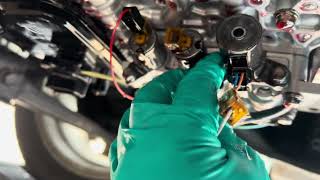
Typical fix: Remove the transmission oil pan to access and replace the faulty solenoid or the entire solenoid pack. This is often done along with a fluid and filter change. 🎬 Watch this step-by-step guide to replacing the shift solenoids
Est. part cost: $50-$250 - Internal Mechanical Failure ⚪ Low Probability If driven for a long time with slipping symptoms, the 4th gear clutch pack or band can burn out. In some cases, debris can block a critical oil passage for the 4th gear circuit within the valve body.
How to confirm: This is the diagnosis after all electronic (TCM, sensors) and hydraulic (solenoids, fluid) causes are ruled out. Finding significant clutch material or metal debris in the transmission pan is a strong indicator. A transmission pressure test may show low pressure in the 4th gear circuit.
Typical fix: The transmission must be removed from the vehicle and either rebuilt or replaced with a new or remanufactured unit.
Est. part cost: $1800-$3400
Rare But Worth Checking
- Damaged Wiring Harness:
Diagnosis Steps
- Check the transmission fluid level and condition. If it is low, top it off. If it is dark, burnt, or contains excessive debris, a fluid and filter change is a good starting point, but be aware this may not solve an underlying mechanical or electronic issue.
- Use an advanced OBD-II scanner to check for other transmission-related codes. Pay special attention to communication codes (U-codes like U0101) and specific solenoid codes (P075x), as these strongly point towards the TCM or solenoids respectively.
- Monitor live transmission data with a scanner. Watch the input speed sensor, output speed sensor, and commanded gear while driving. A slip in 4th gear will be visible as the input speed (engine RPM) flares up without a corresponding increase in output speed.
- Inspect the wiring harness and connectors going to the transmission and the TCM for any visible damage, corrosion, or loose connections. The TCM is located under the battery and battery tray.
- If fluid and wiring are good and U-codes are present, the TCM is the primary suspect. Confirm all power and ground connections to the TCM are good before condemning the module.
- If solenoid-specific codes are present, or if the TCM is ruled out, the next step is to test the shift solenoids. This involves dropping the transmission pan to access the valve body and testing the resistance of each solenoid with a multimeter.
- If all electronic components test good, a transmission pressure test can be performed to check for internal hydraulic leaks or worn clutch packs, which would indicate the need for a transmission rebuild or replacement.
Parts You'll Likely Need
- Transmission Control Module (TCM)
(OEM #L34T-18-9E1E (for 2.3L, 2007-09, supersedes A, B, C, D versions))— This is the most common failure point on 2006-2009 Mazda 3s causing a variety of shifting issues including P0734. Its location on the transmission leads to failure from heat and vibration.
Trusted brands: Mazda (OEM), UpFix (Repair Service), Module Experts (Remanufactured)
OEM price range: $600-$900
Aftermarket price range: $200-$400 (Remanufactured/Repair) - Automatic Transmission Shift Solenoid Kit — Solenoids can fail electrically or become clogged with debris, preventing proper gear engagement. They are replaced as a pack inside the transmission oil pan.
Trusted brands: Rostra, Sheng Hai Auto Parts, OEM (Refurbished)
OEM price range: $200-$350
Aftermarket price range: $85-$150
Related Codes That Often Appear With This One
- P0733 — Incorrect Ratio for 3rd gear. If seen with P0734, it points strongly towards a systemic issue like low/dirty fluid, a clogged filter, or a failing TCM rather than a single gear's clutch pack.
- U0101 — Lost Communication with TCM. This code is a smoking gun for a failing or faulty TCM, which is the most common cause of P0734 on 2006-2009 models.
- P0753 — Shift Solenoid 'A' Electrical. This indicates a circuit problem with a specific shift solenoid, which could be the root cause of the incorrect gear ratio.
Technical Service Bulletins (TSBs) & Recalls
- While no specific TSB for P0734 was found, TSB 05-005/09 addresses harsh shifting on these models, often related to the same underlying TCM and solenoid issues.
Platform-Specific Known Issues
- A well-documented issue for 2006-2009 Mazda 3 models is the failure of the Transmission Control Module (TCM), which is mounted directly on the transmission case under the battery. Heat and vibration cause internal solder joints and components to fail, leading to various error codes including P0734 and U0101. Many owners and repair shops report that replacing the TCM and relocating it to a cooler location on the firewall can be a permanent solution.
Mechanic-Grade Diagnostic Values
- Shift Solenoid A, B, C Resistance — expected: 1.0 - 4.2 ohms. Failure: Resistance outside of this range indicates a faulty solenoid coil.
- Shift Solenoid D, E Resistance — expected: 10.9 - 26.2 ohms. Failure: Resistance outside of this range indicates a faulty solenoid coil.
- Pressure Control (PC) Solenoid A Resistance — expected: 2.4 - 7.3 ohms. Failure: Resistance outside of this range indicates a faulty solenoid coil.
Scan Tool Commands That Help
- Mazda IDS (or equivalent advanced scanner): Solenoid Active Command / Bidirectional Control — After checking fluid and wiring, this command allows a technician to manually activate each shift solenoid while listening for a 'click' from the transmission pan. This helps isolate a single electrically failed or stuck solenoid without first removing the pan.
- Mazda IDS (or equivalent advanced scanner): Live Data Monitoring (Input/Output Speed Sensors) — During a test drive, monitoring the input and output shaft speeds in real-time is the definitive way to confirm slippage. When 4th gear is commanded, the input RPM will flare up without a corresponding increase in output RPM, confirming the ratio error.
Wiring & Ground Locations
- Main Transmission Ground — A ground strap is typically located on top of the transmission, bolted to the case and connecting to the chassis or engine block.. The TCM and all transmission sensors rely on a solid ground connection. A corroded or loose main ground can cause floating voltages, erratic sensor readings, and communication errors (like U-codes) that can mimic a failed TCM or sensor.
- TCM Connector — Located on the Transmission Control Module (TCM) itself, which is mounted under the battery and battery tray on top of the transmission.. This is the main junction for all sensor inputs and solenoid outputs. The connector and its pigtail are susceptible to heat damage, corrosion, and vibration, leading to poor pin connections that can cause intermittent ratio errors or solenoid circuit codes.
- Engine Block to Chassis Ground — A primary ground strap connects from the engine block to the chassis, often near the passenger side motor mount or strut tower.. This is a critical ground path for the entire powertrain. If this connection is weak, the electrical system may try to find ground through other paths, causing voltage drops and unpredictable behavior in sensitive modules like the TCM.
Real Owner Repair Stories
- Mazda3Forums user (2007 Mazda 3) — AT light on, harsh shifting, codes for incorrect gear ratio and lost communication with TCM (U0101).
❌ Tried (didn't work) Changing transmission fluid and filter.
✅ What actually fixed it Replacing the Transmission Control Module (TCM) with a remanufactured unit. After replacement, all symptoms and codes were resolved. - Reddit r/mazda3 user (2013 Mazda 3 (similar issue, later model year)) — AT light on, occasional rough shifts, P0734 (archive) and P0744 codes present.
❌ Tried (didn't work) Initial diagnosis was unclear.
✅ What actually fixed it Another user commented that these model years are known for TCM failure and that it would likely need to be replaced, confirming the pattern of failure extends beyond the 2004-2009 range.
OEM Part Supersession History
L34T-18-9E1A, L34T-18-9E1B, L34T-18-9E1C, L34T-18-9E1D→L34T-18-9E1E— Revisions to address internal component and soldering failures.
Heads up: These part numbers are specific to the 2.3L engine. The 2.0L engine uses a different series of TCMs. Using the wrong module will result in a no-start condition or immediate shifting faults. Always verify the part number on the original module.
Model Year Variations Within This Range
- 2006-2009: These years are most susceptible to the heat/vibration-induced TCM failure. The TCM is the primary suspect for P0734 in this range, especially if accompanied by U-codes.
- 2004-2005: While TCM failure is still possible, these earlier models are comparatively more likely to have the P0734 code caused by internal mechanical issues or solenoid failures, similar to the standard causes for this code on other vehicles.
Diagnostic Flowchart
Other Known Issues on This Vehicle
Issues unrelated to this code that are worth knowing about as an owner of this generation:
- Premature Body Rust 🔴 High — Extremely common, especially in the rear wheel wells and rocker panels on cars used in snow/salt regions. Can become structural.
- Failed Passenger Side Engine Mount 🟠 Medium — The hydraulic passenger-side engine mount frequently fails, causing excessive vibration at idle and while accelerating.
- Worn Suspension Components 🟠 Medium — Rear shock absorbers and front struts are known to wear out, causing a bouncy ride and clunking noises.
- Failing Thermostat 🟡 Low — The thermostat can fail, leading to a 'stuck open' condition, causing slow engine warm-up and poor heater performance, particularly in cold climates.
Used vs. New Parts: Buying Guide for This Vehicle
When a used part is the smart pick: A used shift solenoid pack from a low-mileage donor vehicle can be a cost-effective option, as they are primarily mechanical/electrical parts not prone to the same electronic degradation as the TCM. A used TCM is a significant gamble, as it is a known high-failure part and a used one is likely to have the same inherent design flaws.
Donor-vehicle mileage cap: roughly under 80000 miles for the part to have meaningful remaining life.
What to inspect on the donor part:
- For a solenoid pack, ask for the donor vehicle's mileage and check for any signs of overheating or contamination on the part.
- For a TCM, avoid any units with visible corrosion on the case or connectors, as this indicates moisture intrusion.
- Verify the part number on a used TCM EXACTLY matches your original module.
OEM-only on this vehicle (don't cheap out):
- Transmission Control Module (TCM). While OEM is expensive, a professionally remanufactured/repaired unit from a reputable specialist is the best value, as they often correct the original design flaws (e.g., by improving heat dissipation and re-soldering weak points). Avoid cheap, untested used units.
Aftermarket brands forum-validated for this vehicle:
- For TCM Repair/Remanufacturing: Circuit Board Medics, UpFix, Module Experts.
- For Solenoids: Rostra is a well-regarded aftermarket brand for transmission solenoids.
Brands owners have reported issues with on this vehicle:
- Unnamed, no-brand TCMs from online marketplaces. These are often just untested used parts being resold and carry a high risk of being faulty or incompatible.
Real Owner Stories
Aggregated from forums and TSBs cited above. Mileages and costs reflect what owners reported in those sources.
2007 Mazda 3 — ~110000 miles
Symptoms: The AT light came on and the transmission went into 'limp mode,' stuck in 3rd gear. The car would shift harshly and I got codes P0734 and U0101.
What fixed it: Replacing the Transmission Control Module (TCM) and relocating the new one to the firewall to protect it from heat.
Source hint: vehicle_specific_issues section describing TCM failure on 2006-2009 models
2004 Mazda 3 — ~145000 miles
Symptoms: Transmission was failing to shift into 4th gear and would sometimes slip. The Check Engine Light and AT light were on.
What fixed it: The owner was considering options after diagnosing a TCM failure.
Source hint: mazda3forums.com thread titled 'TCM failure what are my options'
2005 Mazda 3
Symptoms: Check Engine Light was on with Diagnostic Trouble Codes P0732 and P0734 stored.
What fixed it: Repairing the Powertrain Control Module (PCM/TCM).
Source hint: YouTube video titled 'Repair PCM Mazda 3 with DTC P0732,P0734'
2007 Mazda 3
Symptoms: Transmission was shifting erratically and the AT warning light was illuminated on the dashboard.
What fixed it: A full replacement of the Transmission Control Module (TCM).
Source hint: YouTube video titled '2007 Mazda 3 Transmission Control Module (TCM) Replacement'
Related OBD-II Codes
Frequently Asked Questions
My 2007 Mazda 3 has a P0734 and the AT light is flashing. Is this a common problem?
I have a P0734 code and also a U0101 code. What does that combination usually mean for my Mazda 3?
Where is the Transmission Control Module (TCM) located on my Mazda 3?
Is there a way to prevent the new TCM from failing again?
What kind of transmission fluid should I use for a drain-and-fill on my Mazda 3?
My Ford Focus has similar shifting problems. Is the cause the same as the Mazda 3?
Is there an official TSB from Mazda for the P0734 code?
Helpful Videos
We Have This Part in Stock

The information in this article is provided for general reference and educational purposes only. Vehicle specifications, procedures, and part compatibility can vary by production date, trim level, and region. Always consult your vehicle's factory service manual and verify part numbers before purchasing or performing repairs. Safety-critical components such as airbags, seat belts, and braking systems should be installed by a qualified professional.
- Mazda 3:
- 🧭 Diagnostic Flowchart
- 🎬 Helpful Videos
- 🛍️ Shop This Part
- What's Unique About the 2004-2009 Mazda 3
- Symptoms You May Notice
- Most Likely Causes
- Rare But Worth Checking
- Diagnosis Steps
- Parts You'll Likely Need
- Related Codes That Often Appear With This One
- Technical Service Bulletins (TSBs) & Recalls
- Platform-Specific Known Issues
- Mechanic-Grade Diagnostic Values
- Scan Tool Commands That Help
- Wiring & Ground Locations
- Real Owner Repair Stories
- OEM Part Supersession History
- Model Year Variations Within This Range
- Other Known Issues on This Vehicle
- Used vs. New Parts: Buying Guide for This Vehicle
- Real Owner Stories
- 2007 Mazda 3 — ~110000 miles
- 2004 Mazda 3 — ~145000 miles
- 2005 Mazda 3
- 2007 Mazda 3
- Related OBD-II Codes
- Frequently Asked Questions
- 🎟️ Get 5% Off