

P0740 on 1997-2004 Chevrolet Corvette: TCC Solenoid Circuit Malfunction Guide
On a C5 Corvette, code P0740 almost always points to a failed Torque Converter Clutch (TCC) Pulse Width Modulated (PWM) solenoid inside the 4L60-E transmission. The fix involves dropping the transmission pan to replace the solenoid, which is a messy but manageable DIY job. Expect to pay around $30-$50 for an ACDelco solenoid (Part No. 24227747 or 24227792). If other transmission electrical codes are present, the faulty ignition switch is a likely culprit.
- P0740 on a C5 Corvette is an electrical fault code, most often caused by a bad TCC solenoid inside the transmission.
- Symptoms include no torque converter lock-up on the highway, resulting in higher RPMs and poor fuel economy.
- The fix requires dropping the transmission pan, but is usually limited to replacing the solenoid and/or internal wiring harness.
- Always replace the transmission filter, pan gasket, and fluid when performing this repair.
- If other transmission electrical codes are present, the ignition switch should be suspected as a possible cause.
What's Unique About the 1997-2004 Chevrolet Corvette
The 1997-2004 C5 Corvette uses the ubiquitous GM 4L60-E automatic transmission. On this platform, the P0740 code is very frequently caused by the failure of the TCC PWM solenoid itself. This component is submerged in hot transmission fluid and its internal coil windings are known to fail over time, creating an open or short circuit. While the code points to an electrical fault, the repair requires accessing internal transmission components, a common scenario for owners of these vehicles as they age. The TCC solenoid is located on the front passenger side of the valve body and is accessible after removing the pan.
Symptoms You May Notice
- Check Engine Light is illuminated.
- Higher than normal engine RPM at highway speeds (converter not locking up).
- Noticeable decrease in fuel economy.
- Transmission may feel like it's slipping or shuddering, particularly during the shift that should engage lockup.
- In some cases, the PCM may prevent the transmission from shifting into 4th gear.
- Vehicle may feel like it wants to lurch forward when starting in Park.
- Intermittent loss of 1st gear or the vehicle starting in 2nd or 3rd gear, which can be dangerous when moving into traffic (NHTSA ODI #10836973).
- Replacing the entire torque converter. P0740 is an electrical circuit code, not a mechanical failure code for the converter itself. While a bad converter can cause other issues like shudder or slipping (P0741, P1870), it won't directly cause a P0740.
- Rebuilding the transmission without proper diagnosis. The issue is most often a simple, inexpensive electronic part, and a full rebuild is usually unnecessary for this code alone.
Most Likely Causes
- Failed Torque Converter Clutch (TCC) PWM Solenoid 🔴 High Probability → Shop Automatic Transmission Torque Converter The solenoid is an electronic component constantly exposed to heat cycles within the transmission fluid, leading to eventual failure of its internal coil windings. This is a very common failure point on the 4L60-E transmission across many GM platforms.
How to confirm: After dropping the transmission pan, test the solenoid's resistance with a multimeter. A healthy TCC PWM solenoid should measure between 10 and 15 ohms at approximately 68°F. Readings can vary with temperature, but a reading of infinity (open) or near zero (short) confirms failure. You can also briefly apply 12V to the solenoid terminals; a healthy solenoid will make an audible click.
Typical fix: Replace the TCC PWM solenoid. This requires removing the transmission pan and filter to access the solenoid on the valve body.
Est. part cost: $30-$60 - Damaged Internal Transmission Wiring Harness 🟡 Medium Probability → Shop Transmission Assembly Similar to the solenoid, the internal wiring harness becomes brittle over time due to constant exposure to hot transmission fluid, which can lead to cracked insulation, broken wires, and short circuits. NHTSA ODI #10023435 describes a scenario where P0740 appeared alongside P1860, which was attributed to a shift plate being grounded to the battery.
How to confirm: Visually inspect the wiring harness for signs of damage, brittleness, or burnt connectors after removing the transmission pan. Pay close attention to the connector at the TCC solenoid.
Typical fix: Replace the internal wiring harness. This is often done preventatively at the same time as the TCC solenoid.
Est. part cost: $40-$80 - Faulty Ignition Switch ⚪ Low Probability → Shop Ignition Switch A known issue on many GM platforms of this era is a faulty ignition switch causing intermittent power loss to the circuit that feeds the transmission solenoids. NHTSA ODI #10702398 notes a case where testing the ignition switch power from the red/white to white wire showed no power when the switch was on, leading to P0740 and multiple other solenoid codes.
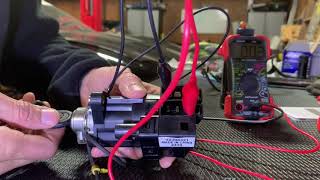
How to confirm: Scan for other transmission codes. If multiple solenoid circuit codes are present, test the ignition switch and its related circuits for voltage drops. A detailed guide for testing the C5 ignition switch is available on CorvetteForum. 🎬 See this step-by-step C5 Corvette ignition switch repair guide
Typical fix: Replace the ignition switch.
Est. part cost: $30-$60 - Damaged External Wiring or Loose PCM Connector ⚪ Low Probability
How to confirm: Inspect the main transmission wiring harness for any visible damage, corrosion, or chafing where it might rub against the chassis or engine. Check the round electrical connector at the passenger side of the transmission case and the connectors at the PCM for loose, corroded, or pushed-out pins.
Typical fix: Repair the damaged wiring section or re-seat the affected connector pin.
Est. part cost: $5-$20
Rare But Worth Checking
- Faulty Powertrain Control Module (PCM): → Shop Engine Control Module (ECM) While rare, the internal driver circuit in the PCM that grounds the TCC solenoid can fail. This should only be considered after all other possibilities (solenoid, wiring) have been definitively ruled out. A detailed diagnostic procedure involving back-probing the PCM connector (Tan/Black wire) can help isolate the fault to the PCM.
Diagnosis Steps
- Check the transmission fluid level and condition. Burnt or very dark fluid indicates a need for service and potential internal wear.
- Scan for any other trouble codes. If other solenoid codes like P0753 or P0758 are present, investigate the ignition switch first as a common power source may be at fault. NHTSA ODI #10098357 highlights that these codes often appear together on GM platforms.
- Inspect the external transmission wiring harness and the main connector on the passenger side of the transmission for any obvious damage, corrosion, or loose connections.
- Check the wiring and connector pins at the Powertrain Control Module (PCM), which on the C5 is located in the passenger footwell and is susceptible to damage from water or leaking batteries.
- If external wiring is okay, drain the transmission fluid and remove the transmission pan.
- Visually inspect the internal wiring harness for any signs of damage, such as brittle or cracked insulation.
- Locate the TCC PWM solenoid on the valve body. Disconnect it and test its resistance using a multimeter. The reading should be between 10-15 ohms at room temperature. If it's out of spec (open or shorted), the solenoid is bad.
- If the solenoid tests good, the problem is likely in the wiring harness. A more advanced step is to test the circuit from the PCM connector. A technician on a forum suggests back-probing the Tan with Black stripe wire at the PCM connector to verify if the PCM is attempting to ground the circuit.
- If the solenoid and all wiring test good, the PCM itself is the last and rarest possibility.
Parts You'll Likely Need
- Torque Converter Clutch (TCC) PWM Solenoid
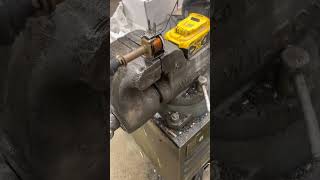
(OEM #24227747, 24227792)— This is the most common failure point for a P0740 code on the 4L60-E transmission. 🎬 Watch: Walkthrough on replacing the TCC and shift solenoids
Trusted brands: ACDelco
OEM price range: $30-$50
Aftermarket price range: $20-$40 - Automatic Transmission Filter Kit
(OEM #24208576)— The filter and pan gasket must be replaced whenever the transmission pan is removed for service.
Trusted brands: ACDelco
OEM price range: $25-$40
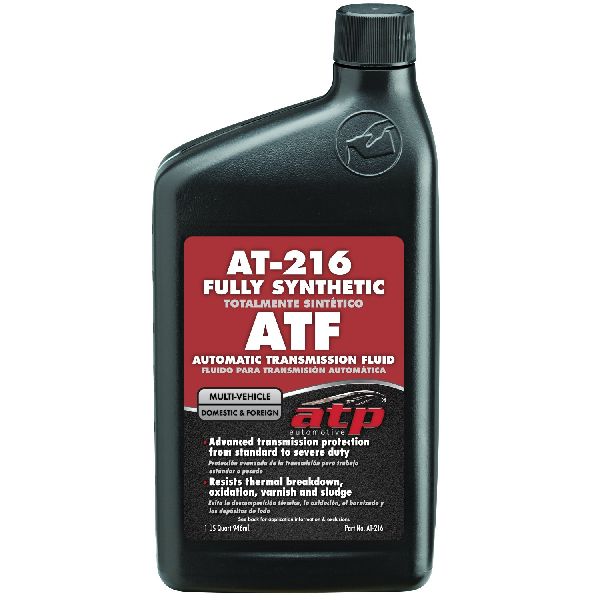
Aftermarket price range: $15-$30 - Automatic Transmission Fluid — The transmission must be refilled with the correct fluid after dropping the pan. A pan drop requires approximately 5 quarts. DEXRON-VI is the recommended fluid and is backward-compatible.
Trusted brands: ACDelco DEXRON-VI
OEM price range: $8-$12 per quart
Aftermarket price range: $7-$10 per quart
Related Codes That Often Appear With This One
- P0741 — P0741 means 'TCC System Stuck Off'. The electrical fault from P0740 prevents the TCC from engaging, causing the PCM to log a related performance fault.
- P1870 — This is a GM-specific code for 'Transmission Component Slipping'. It can be triggered by the same underlying hydraulic issues or wear in the valve body that may accompany a TCC circuit problem.
- P0700 — This is a generic code indicating the Transmission Control Module (TCM) has requested the Check Engine Light be turned on. It will always be present alongside a more specific transmission code like P0740.
- P0753, P0758, P1860 — These are circuit fault codes for other transmission solenoids. If they appear together with P0740, it strongly suggests a common power supply problem, most likely a failing ignition switch.
Technical Service Bulletins (TSBs) & Recalls
- TSB 01-07-30-002E: While not specific to Corvette, this general GM TSB notes that a faulty ignition switch can cause multiple transmission electrical codes (like P0740, P0753, P0758) to appear simultaneously. This is a critical diagnostic clue.
- TSB 01-07-30-038: Addresses related 4L60-E issues like TCC shudder and slipping. While it doesn't directly address the P0740 electrical fault, it discusses cleaning debris from the valve body and case passages, which can cause hydraulic issues that may exist alongside a P0740 fault.
Platform-Specific Known Issues
- title: Real-World Diagnostic Experience
Mechanic-Grade Diagnostic Values
- TCC PWM Solenoid Resistance — expected: 10-15 ohms at 68°F (20°C). Failure: Reading of infinity (open circuit) or near zero (short circuit).
- TCC (On/Off) Solenoid Resistance — expected: 20-40 ohms. Failure: Outside of specified range.
- 1-2 and 2-3 Shift Solenoid Resistance — expected: 20-40 ohms. Failure: Outside of specified range.
- PCM Connector C1, Pin 10 (Tan/Black wire) Voltage — expected: Near battery voltage with Key On, Engine Off. Should drop to near 0V when TCC is commanded ON by PCM.. Failure: No voltage, or voltage does not drop when commanded, points to wiring or PCM driver issue.
Scan Tool Commands That Help
- Tech2 / GDS2 or equivalent professional scanner: TCC Enable Solenoid ON/OFF Command — Use this bidirectional control to command the solenoid on and off while monitoring circuit voltage or listening for a physical click from the solenoid. This directly tests the PCM's ability to control the circuit and the solenoid's basic electrical function.
- Tech2 / GDS2 or equivalent professional scanner: Monitor TCC Slip Speed — After commanding the TCC ON, the slip speed should drop to near zero (-20 to +40 RPM). If the solenoid clicks (is electrically functional) but slip speed does not change, it indicates a hydraulic or mechanical issue, such as a stuck TCC valve or a failed torque converter.
Wiring & Ground Locations
- PCM Connector C1, Pin 10 — The PCM is located in the passenger footwell. C1 is one of the main connectors. Pin 10 has a Tan with Black stripe wire.. This is the specific wire the PCM uses to provide the ground path for the TCC solenoid. Back-probing this pin is the most direct way to test if the PCM is commanding the solenoid and if the circuit is complete.
- Transmission Case Connector, Pin T — The main round electrical connector on the passenger side of the 4L60-E transmission case.. This pin corresponds to the TCC solenoid circuit (Tan/Black wire). It's the primary point for testing the entire circuit from the PCM to the transmission, or for isolating the internal transmission harness for resistance checks.
- G104 / G108 — On the frame rail, just forward and to the side of the battery.. This is a critical ground point for the BCM and the underhood fuse block, which provides power to the transmission solenoids via the ignition switch circuit. A poor connection here can cause widespread electrical issues, including intermittent power to the transmission.
- G105 / G106 — G105 is on the lower left (driver's) side of the engine block. G106 is on the right side of the engine block above the starter.. G106 is the main ground for the PCM. A compromised PCM ground can lead to erratic sensor readings and incorrect driver operation, potentially triggering false circuit codes like P0740.
Real Owner Repair Stories
- Blazer Forum user 'ant2297' (2000 Chevrolet Blazer with 4L60-E (similar platform)) — P0740 code, transmission entering limp mode, key getting stuck in ignition.
❌ Tried (didn't work) Initially thought it was a loose connector in the steering column.
✅ What actually fixed it The user identified the root cause as a faulty ignition switch. Banging on the steering column or pushing the key/ignition cylinder inward would temporarily resolve the problem, strongly indicating a mechanical failure within the ignition switch was cutting power to the transmission circuit. - NHTSA ODI #10702398 — An owner reported that after replacing the ignition switch, the vehicle worked fine for one month before the problem recurred with codes P1860, P0758, P0753, P0740, and P0785. Testing revealed no power from the red/white to white wire when the switch was on.
OEM Part Supersession History
24212690→24227792— Part update/revision by GM.
Heads up: The newer part number 24227792 is the correct service replacement for the TCC PWM solenoid. The other listed number, 24227747, is also a valid TCC PWM solenoid for this application and appears to be interchangeable or a vendor-specific number for the same part.
Model Year Variations Within This Range
- 1997: The 1997 4L60-E was the first year in the Corvette with the removable bellhousing. While electronically similar to later C5s for the TCC circuit, it may have minor differences from the 1998-2004 models which are more standardized.
- 1998-2004: Beginning in 1998, GM standardized the 4L60-E with a 300mm input shaft and matching torque converter for LS-based engines. While this doesn't directly affect the P0740 cause, it's a key identifier for transmission interchange and core selection.
- 2005 (C6 Corvette): The 2005 Corvette was a one-year-only application of the stronger 4L65-E transmission, which has different internal components (like 5-pinion planetaries) but is externally and electronically similar regarding the TCC solenoid.
Diagnostic Flowchart
Other Known Issues on This Vehicle
Issues unrelated to this code that are worth knowing about as an owner of this generation:
- Harmonic Balancer Wobble 🔴 High — Very common failure regardless of mileage; the rubber bonding the inner and outer rings degrades over time. A visible wobble at idle or a chirping sound are key symptoms.
- Electronic Brake Control Module (EBCM) Failure 🔴 High — Extremely common. Causes 'Service ABS' and 'Service Active Handling' lights. 1997-2000 models are considered unrepairable and require a costly used replacement, while 2001-2004 modules can often be repaired by specialized services.
- Steering Column Lock Failure 🔴 High — A widespread and dangerous issue where the steering column can lock while the vehicle is in motion. It was subject to safety recall #04006A. The common fix is to disable the lock mechanism entirely. (Ref: NHTSA Recall #04006A)
- Leaking Battery Syndrome 🔴 High — Common on early C5s with the original AC Delco 'Freedom' batteries. The battery case cracks and leaks acid directly onto the PCM and main wiring harness located below, causing catastrophic electrical damage.
- Pop-Up Headlight Motor Gear Failure 🟡 Low — The plastic gears inside the headlight motors strip over time, resulting in a grinding noise and the headlights failing to open or close properly. It's a very common annoyance.
Used vs. New Parts: Buying Guide for This Vehicle
When a used part is the smart pick: For this repair, using used parts is generally not recommended for the solenoids or internal wiring harness. These parts fail due to heat and age, so a used part from a donor vehicle has likely experienced similar wear and offers no guarantee of longevity. A used valve body could be an option if a worn TCC regulator bore is diagnosed, but it carries the same risks.
Donor-vehicle mileage cap: roughly under 80000 miles for the part to have meaningful remaining life.
What to inspect on the donor part:
- For a valve body, check for clean, red fluid in the donor transmission.
- Avoid parts from transmissions with dark, burnt-smelling fluid or evidence of metal shavings in the pan.
- Inspect the internal wiring harness connector for any brittleness, cracks, or signs of overheating.
OEM-only on this vehicle (don't cheap out):
- Torque Converter Clutch (TCC) PWM Solenoid
Aftermarket brands forum-validated for this vehicle:
- ACDelco (for OEM solenoid)
- Rostra (for internal wiring harness)
Brands owners have reported issues with on this vehicle:
- No-name, unbranded solenoids from online marketplaces are a significant gamble and often have high failure rates.
Real Owner Stories
Aggregated from forums and TSBs cited above. Mileages and costs reflect what owners reported in those sources.
2000 Chevrolet Corvette LS1
Symptoms: The PCM was preventing the transmission from shifting into 4th gear and the vehicle felt like it wanted to lurch forward when starting in Park.
What fixed it: A technician suggested back-probing the Tan with Black stripe wire at the PCM connector to verify if the PCM was attempting to ground the circuit.
Source hint: CorvetteForum.com thread titled 'Lockup switch, DTC P0740 anyone get this ?'
2000 Chevrolet Blazer 4L60E
Symptoms: P0740 code present on a 4L60-E equipped vehicle.
What fixed it: Followed a detailed, step-by-step diagnostic procedure for testing the TCC circuit by back-probing the PCM connector.
Source hint: BobIsTheOilGuy.com thread titled '2000 Blazer 4L60E, P0740 code.'
1997-2004 Chevrolet Corvette LS1
Symptoms: Multiple transmission electrical codes appearing simultaneously, including P0740, P0753, and P0758.
What fixed it: Repair or replacement of the ignition switch based on a comprehensive guide by user Bill Curlee.
Source hint: CorvetteForum.com thread titled 'C5 Ignition Switch Repair'
GM Platform Owner Report
Symptoms: An owner reported intermittent trouble codes P0758 and P0740, accompanied by the vehicle starting in 2nd or 3rd gear instead of 1st.
What fixed it: This behavior is often linked to electrical circuit failures within the transmission control system. (NHTSA ODI #10836973)
Documented NHTSA Reports
NHTSA ODI #10098357 describes a scenario where a vehicle experienced error codes P0785, P1860, and P0740 simultaneously, a common pattern in GM 4L60-E electrical failures. Additionally, NHTSA ODI #10023435 notes that when P0740 and P1860 appear together, the vehicle may experience difficulty moving from a stop, though it may function normally once second gear speed is reached.
Related OBD-II Codes
Frequently Asked Questions
Can a faulty ignition switch really cause a P0740 code on my C5 Corvette?
Where is the PCM located on my 1997-2004 Corvette if I need to check the wiring for P0740?
What should the resistance be for the TCC PWM solenoid in my 4L60-E transmission?
My Corvette is lurching forward when starting in Park; is this related to P0740?
Does TSB 01-07-30-038 apply to the electrical P0740 fault?
Is the P0740 code on a C5 Corvette a hydraulic or electrical diagnostic check?
Helpful Videos

We Have This Part in Stock

The information in this article is provided for general reference and educational purposes only. Vehicle specifications, procedures, and part compatibility can vary by production date, trim level, and region. Always consult your vehicle's factory service manual and verify part numbers before purchasing or performing repairs. Safety-critical components such as airbags, seat belts, and braking systems should be installed by a qualified professional.
- Chevrolet Corvette:
- 🧭 Diagnostic Flowchart
- 🎬 Helpful Videos
- 🛍️ Shop This Part
- What's Unique About the 1997-2004 Chevrolet Corvette
- Symptoms You May Notice
- Most Likely Causes
- Rare But Worth Checking
- Diagnosis Steps
- Parts You'll Likely Need
- Related Codes That Often Appear With This One
- Technical Service Bulletins (TSBs) & Recalls
- Platform-Specific Known Issues
- Mechanic-Grade Diagnostic Values
- Scan Tool Commands That Help
- Wiring & Ground Locations
- Real Owner Repair Stories
- OEM Part Supersession History
- Model Year Variations Within This Range
- Other Known Issues on This Vehicle
- Used vs. New Parts: Buying Guide for This Vehicle
- Real Owner Stories
- 2000 Chevrolet Corvette LS1
- 2000 Chevrolet Blazer 4L60E
- 1997-2004 Chevrolet Corvette LS1
- GM Platform Owner Report
- Documented NHTSA Reports
- Related OBD-II Codes
- Frequently Asked Questions
- 🎟️ Get 5% Off