

P0740 on 2005-2007 Ford Five Hundred: TCC Circuit Causes & Fixes (FWD & AWD)
The cause of code P0740 on a Ford Five Hundred depends entirely on the drivetrain. On Front-Wheel Drive (FWD) models with the 6-speed Aisin automatic, it's often a faulty TCC solenoid or a worn valve body. On All-Wheel Drive (AWD) models with the ZF CVT, it can also be the solenoid, but may point to more significant internal CVT issues or a faulty Mechatronic unit.
- First, you MUST identify if your Five Hundred is Front-Wheel Drive (6-speed automatic) or All-Wheel Drive (CVT), as the fix is different.
- For FWD models, the most common causes are a faulty TCC solenoid or a worn valve body. Both are internal to the transmission.
- For AWD models, the cause could be the TCC solenoid, but be aware that this CVT model has known reliability issues, and this code could be a symptom of a larger problem.
- Always start diagnosis by checking the transmission fluid level and condition with the correct procedure for your transmission type.
- This is not a simple DIY fix for beginners. Accessing the faulty components requires internal transmission work, which is best left to a professional.
What's Unique About the 2005-2007 Ford Five Hundred
The 2005-2007 Ford Five Hundred is unique because it used two completely different automatic transmissions, and the diagnosis for P0740 varies significantly between them. Front-Wheel Drive (FWD) models are equipped with a conventional Aisin TF-81SC 6-speed automatic transmission (also called the AWF21). All-Wheel Drive (AWD) models use a ZF CFT30 Continuously Variable Transmission (CVT). While both can set a P0740 code for the torque converter clutch circuit, the internal components, common failure points, and repair strategies are not the same. It is essential to identify which transmission your vehicle has before attempting any diagnosis or repair.
Symptoms You May Notice
- Check Engine Light is on
- Engine RPM is higher than usual at highway speeds
- Noticeable decrease in fuel economy
- Transmission may feel like it's slipping
- Shuddering or vibration at cruising speeds, especially during gentle acceleration.
- Possible stalling when coming to a stop
- Harsh or delayed gear shifts
- Replacing the TCC solenoid on an FWD Aisin model without checking or addressing known valve body wear issues. The problem may return if the root cause is hydraulic leakage.
- Replacing the entire transmission without performing proper electrical diagnostics first. The problem could be a simple wiring issue or a relatively inexpensive solenoid.
- Confusing a shudder from a worn TCC system with an engine misfire.
Most Likely Causes
- Low or Dirty Transmission Fluid 🟡 Medium Probability → Shop Transmission Assembly Applies to both FWD and AWD models. Fluid is critical for hydraulic pressure and solenoid function. Contaminated fluid can clog solenoids and passages, leading to circuit and performance codes.
How to confirm: Check the transmission fluid level and condition. The FWD Aisin has a dipstick; the AWD CVT check is more complex and may require a technician. If the fluid is dark, burnt, or low, it needs to be addressed. Note: Ford TSB SSM 52243 indicates that MERCON V has replaced the original Motorcraft Premium ATF for service.
Typical fix: Perform a transmission fluid drain-and-fill or flush using the correct OEM-specified fluid (Motorcraft MERCON V for Aisin, specific CVT fluid for the CFT30).
Est. part cost: $50-$150 - Faulty Torque Converter Clutch (TCC) Solenoid (FWD Aisin 6-Speed) 🔴 High Probability → Shop Automatic Transmission Torque Converter The TCC solenoid is an electrical component that can fail internally over time. It is a common failure point in the Aisin TF-80/TF-81 series transmissions. It is a PWM solenoid with a black connector.
How to confirm: After checking fluid, a technician can test the solenoid's resistance with a multimeter (should be around 5.0-7.0 Ohms) and check the wiring from the TCM. This requires accessing the solenoid connector on the transmission.
Typical fix: Replace the TCC solenoid. This requires dropping the transmission pan and valve body to access the solenoid. An example part is the Rostra 52-0483.
Est. part cost: $60-$120 - Worn Valve Body (FWD Aisin 6-Speed) 🔴 High Probability → Shop Transmission Valve Body The Aisin TF-80/81 series transmissions are known for wear in the valve body bores, particularly the TCC control valve bore. This wear causes hydraulic pressure loss, which can prevent the TCC from operating correctly and may set a solenoid circuit code even if the solenoid itself is good.
How to confirm: This is difficult to confirm without specialized tools. Often, it is diagnosed after a new TCC solenoid fails to fix the issue. A transmission shop can perform a vacuum test on the valve body bores to check for wear. Sonnax makes an oversized TCC regulator valve kit (33740-03K) to address this specific wear point.
Typical fix: Replace the valve body with a new or remanufactured unit. Sometimes, oversized valve and sleeve kits (like those from Sonnax) can be installed by a specialist to repair the worn bores.
Est. part cost: $300-$800 - Faulty Torque Converter Clutch (TCC) Solenoid (AWD CVT) 🟡 Medium Probability → Shop Automatic Transmission Torque Converter Like its Aisin counterpart, the CVT's TCC solenoid can fail electrically. It is part of the Mechatronic (valve body) unit inside the CVT.
How to confirm: Diagnosis is similar to the Aisin model, involving electrical tests of the solenoid and its wiring. The solenoid resistance should be between 3.34 and 3.5 Ohms at 73°F. This is best performed by a technician familiar with the ZF CFT30.
Typical fix: Replace the TCC solenoid, which is located on the Mechatronic unit inside the CVT. This is a job for a transmission specialist.
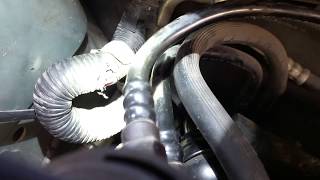
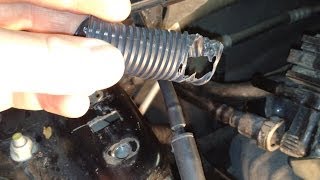
Est. part cost: $100-$250 - Damaged Wiring or Connectors ⚪ Low Probability Applies to both models. The main engine wiring harness is known to chafe on an A/C line near the power steering reservoir, which can cause shorts in various circuits, including those for the transmission. Corrosion at the main transmission connector can also cause an open or short in the TCC circuit.
How to confirm: Visually inspect the wiring harness leading to the transmission, specifically where it passes over the A/C line in the engine bay. Unplug the main connector and check for corrosion or bent pins. Perform a continuity test on the TCC solenoid circuit wires from the TCM to the transmission connector.
Typical fix: Repair the damaged section of wire or replace the connector.
Est. part cost: $20-$100
Rare But Worth Checking
- Internal CVT Failure (AWD Models): The CFT30 CVT has a reputation for internal wear. While P0740 is an electrical code, it can sometimes be triggered alongside other issues that point to a failing variator (pulley) system or chain. TSB 06-11-4 was issued for diagnosing CVT noises, which can be a symptom of these larger internal problems. If metal debris is found in the fluid, a new solenoid will not solve the underlying problem.
- Faulty Torque Converter: → Shop Automatic Transmission Torque Converter While the code points to an electrical circuit, a mechanically failing lock-up clutch inside the torque converter can sometimes cause erratic electrical readings or performance issues that lead to this code. One technician noted that in their experience with other platforms, P0740 was ultimately caused by a bad torque converter, not the solenoid.
- Faulty Powertrain/Transmission Control Module (PCM/TCM): → Shop Transmission Assembly This is rare. The module itself can fail (e.g., a failed driver transistor), but it should only be considered after all other possibilities (wiring, solenoids, mechanical parts) have been thoroughly ruled out.
Diagnosis Steps
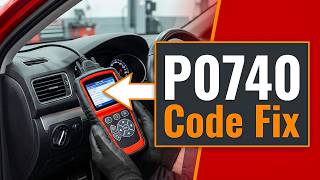
- Read the code from the PCM using an OBD-II scanner. Note any other pending or active codes, especially P0741, P0743, P2769, or P2770.
- Identify the transmission: Determine if the vehicle is FWD (Aisin 6-speed) or AWD (CVT) as all subsequent steps depend on this.
- Check Transmission Fluid: For FWD models, check the fluid level and condition using the dipstick. For AWD CVT models, this is a more complex sealed-unit check best left to a professional. If fluid is low, dark, or has a burnt smell, it must be addressed.
- Inspect External Wiring: Visually inspect the main engine wiring harness for chafing where it routes over the A/C line near the power steering reservoir. Also inspect the main transmission connector for damage or corrosion.
- Test the TCC Solenoid Circuit: Using a wiring diagram, disconnect the transmission connector and/or TCM connector. Use a multimeter to measure the resistance of the TCC solenoid. For the FWD Aisin, it should be 5.0-7.0 Ohms. For the AWD CVT, it should be 3.34-3.5 Ohms. An open circuit (infinite resistance) or a short (very low resistance) indicates a failed solenoid or internal wiring.
- Test for Power and Ground: Verify that the TCC solenoid circuit is receiving the correct voltage and has a good ground path from the TCM. A graphing multimeter or advanced scan tool can be used to check the duty cycle signal from the TCM.
- Internal Inspection (Professional Recommended): If the external wiring and solenoid resistance test okay, the issue is likely internal. For FWD models, this involves dropping the pan to inspect the valve body for wear. For AWD models, this involves inspecting the Mechatronic unit.
- Scan Tool Live Data: A professional scan tool can monitor the commanded TCC duty cycle versus the actual state and check for TCC slip RPM, which can help differentiate between an electrical, hydraulic, or mechanical failure within the torque converter.
Parts You'll Likely Need
- Torque Converter Clutch Solenoid (Aisin TF-81SC) — This is the most likely electrical component to fail for this code on FWD models.
Trusted brands: Rostra, Sonnax
OEM price range: $100-$180
Aftermarket price range: $60-$120 - Valve Body (Aisin TF-81SC) — Often the true root cause on FWD models due to wear in the solenoid bores, leading to pressure loss. Replacing it often fixes persistent solenoid codes.
Trusted brands: Motorcraft (Remanufactured), Sonnax (Repair kits)
OEM price range: $600-$900
Aftermarket price range: $400-$700 - Transmission Fluid — Correct, clean fluid is required for any transmission repair. FWD models use Motorcraft MERCON V or equivalent, while AWD CVT models require a specific CVT fluid (Motorcraft CFT Fluid).
Trusted brands: Motorcraft
OEM price range: $15-$25 per quart
Aftermarket price range: $10-$20 per quart
Related Codes That Often Appear With This One
- P0741 — P0741 indicates 'TCC System Stuck Off'. If the computer detects an electrical circuit fault (P0740), it may also log this performance code if it sees that the clutch is not engaging as commanded.
- P0743 — This code is for 'TCC Circuit Electrical' and is very similar to P0740. They often point to the same set of electrical failures in the solenoid or wiring.
- P2769 — Indicates 'Torque Converter Clutch Circuit Low'. This is another electrical fault code that can accompany P0740, pointing specifically to a short-to-ground condition.
- P2770 — Indicates 'Torque Converter Clutch Circuit High'. This points to an open circuit condition and is often seen with P0740.
Technical Service Bulletins (TSBs) & Recalls
- SSM 52243: States that MERCON V fluid supersedes and replaces Motorcraft Premium ATF for service fills.
- 06-11-4: Provides diagnostic procedures for noise coming from the CVT transmission in AWD models.
- 06-6-2: Addresses intermittent instrument cluster gauge sweeps, resets, and multiple warning lights on vehicles built before 2/17/2006.
- 11-10-21: Supersedes an earlier TSB, providing a procedure to reprogram the PCM and/or clean the throttle body to address idle fluctuations and related DTCs.
- Bulletin #SSM 46719: While issued for the Explorer, this manufacturer bulletin highlights that P0740 or P0743 can be caused by poor pin fitment in electrical connectors; specifically, it recommends checking pin 14 in connector c168 prior to replacing components.
Platform-Specific Known Issues
- The primary vehicle-specific issue is the use of two different transmissions. Misdiagnosing a CVT as a traditional automatic (or vice versa) will lead to incorrect parts and repair procedures.
- FWD models with the Aisin TF-81SC are known for premature valve body wear, which can cause a variety of shifting problems and solenoid-related trouble codes, including P0740.
- AWD models with the ZF CFT30 CVT have a documented history of reliability issues and premature failure. While P0740 points to a specific circuit, it should be diagnosed with caution, as it may be an early symptom of a larger internal problem.
Mechanic-Grade Diagnostic Values
- TCC Solenoid Resistance (FWD Aisin TF-81SC) — expected: 5.0 - 7.0 Ohms. Failure: A reading of 0 Ohms (short) or infinite/OL (open).
- TCC Solenoid Resistance (AWD ZF CFT30) — expected: 3.34 - 3.5 Ohms @ 73°F. Failure: A reading significantly outside this range.
- Scan Tool Live Data: 'Torque Converter Clutch Slip' — expected: Near 0 RPM when TCC is commanded to 100% lockup at cruising speed.. Failure: Consistently high slip RPM (e.g., 50-200 RPM) when lockup is commanded, suggesting a mechanical/hydraulic issue rather than purely electrical.
Scan Tool Commands That Help
- Ford IDS / FORScan: TCC Solenoid On/Off Bidirectional Test — This command allows a technician to manually activate and deactivate the TCC solenoid while monitoring the circuit's voltage or the transmission's response. It helps confirm if the solenoid is physically working and if the wiring between the control module and the solenoid is intact.
Wiring & Ground Locations
- Main Engine Harness Chafe Point — In the engine bay near the power steering reservoir, the main wiring harness often rests directly on top of a metal A/C line.. Engine vibration causes the harness to rub against the A/C line, eventually wearing through the insulation of multiple wires. This can cause a short or open in the TCC solenoid circuit, triggering P0740 and other seemingly unrelated electrical codes. This is a well-documented issue on this platform.
- G104 — Located at the right rear of the engine compartment.. This is a primary ground point for the engine control system. A corroded or loose connection here can cause erratic behavior and fault codes from various engine and transmission sensors and actuators, including the TCC circuit.
- G102 — Located at the right rear of the engine compartment, associated with the Powertrain Control Module (PCM).. This is the ground for the PCM itself. A poor connection at G102 can cause unpredictable PCM operation and false diagnostic trouble codes.
Diagnostic Flowchart
Other Known Issues on This Vehicle
Issues unrelated to this code that are worth knowing about as an owner of this generation:
- Electronic Throttle Body (ETB) Failure 🔴 High — Very common. Can cause the vehicle to enter a 'limp mode' with reduced power, often accompanied by a wrench light and codes like P2111 or P2112. (Ref: TSB 11-10-21 addresses reprogramming and cleaning; a customer satisfaction program (13N03) also existed.)
- Instrument Cluster Failure 🔴 High — Extremely common. Leads to intermittent or total power loss to gauges, flickering lights, and potential no-start conditions. Often requires sending the cluster out for repair. (Ref: TSB 06-6-2 was issued for intermittent gauge sweeps on early models.)
- Premature Motor Mount Wear 🟠 Medium — Common, especially the rear and right-side mounts. Causes a noticeable clunk or lurch when shifting from Park to Drive or Reverse.
- Harsh/Delayed Shifting (Both Transmissions) 🟠 Medium — Widespread complaint. On FWD models, often related to valve body wear or requires a PCM reflash. On AWD models, can be an early sign of CVT trouble. (Ref: TSB 05-24-5 for harsh downshifts on the 6-speed.)
- CVT (AWD) Unreliability 🔴 High — The ZF CFT30 CVT in AWD models has a reputation for failure, often requiring complete replacement. (Ref: TSB 06-11-4 for noise diagnosis.)
Used vs. New Parts: Buying Guide for This Vehicle
When a used part is the smart pick: A used wiring harness from a junkyard can be a cost-effective solution if the cause is a known chafe point, provided the donor harness is thoroughly inspected for similar damage. A complete used transmission assembly might be considered if multiple codes are present and a catastrophic internal failure is suspected, but this is a high-risk purchase.
Donor-vehicle mileage cap: roughly under 100000 miles for the part to have meaningful remaining life.
What to inspect on the donor part:
- For a wiring harness, check for any signs of chafing, brittle conduit, or previous repairs (e.g., excessive electrical tape).
- For a complete transmission, check the fluid color and smell if possible. Bright red fluid with no burnt smell is a good sign.
- Verify the donor vehicle's drivetrain (FWD vs. AWD) to ensure transmission compatibility.
OEM-only on this vehicle (don't cheap out):
- Transmission Control Module (TCM): Due to programming requirements, a new or professionally remanufactured and programmed OEM module is the only reliable option.
Aftermarket brands forum-validated for this vehicle:
- Sonnax: For valve body repair kits (e.g., oversized TCC regulator valve).
- Rostra: For individual transmission solenoids like the TCC solenoid.
Brands owners have reported issues with on this vehicle:
- Unbranded, no-name solenoids or valve bodies from online marketplaces can have high failure rates and are best avoided for a repair this labor-intensive.
Real Owner Stories
Aggregated from forums and TSBs cited above. Mileages and costs reflect what owners reported in those sources.
2006 Ford Five Hundred AWD — 52000 miles
Symptoms: Owner reported a clunking noise while driving.
What fixed it: Diagnosis revealed a cracked motor mount and worn stabilizer bar links.
Source hint: Car Talk Community - Motor Mount and Stabilizer Bar Wear
2006 Ford Five Hundred
Symptoms: Total instrument cluster failure where all gauges go dead, lights flash, and the car may stall.
What fixed it: Addressing the widely documented electrical problem with the instrument cluster.
Source hint: CarComplaints.com - Instrument Cluster Failure
Ford Owner Report
Symptoms: An owner reported a persistent check engine light with code P0740, accompanied by a rough ride and stalling.
What fixed it: While the owner suspected manifold or gasket issues, NHTSA ODI #10191579 notes these symptoms are common across several Ford platforms experiencing this DTC.
Source hint: NHTSA ODI #10191579
Related OBD-II Codes
Frequently Asked Questions
My 2006 Ford Five Hundred AWD has a clunking noise; is this related to the P0740 code?
Which transmission fluid should I use for my Five Hundred's Aisin 6-speed transmission to avoid solenoid issues?
Can a dirty throttle body cause transmission-related codes or shifting issues on this car?
Is there a specific part recommended for replacing the TCC solenoid in the FWD Aisin transmission?
My instrument cluster is flashing and the car stalls; could this be causing my P0740 code?
What is the specific resistance I should look for when testing the TCC solenoid on my AWD CVT?
Helpful Videos


We Have This Part in Stock

The information in this article is provided for general reference and educational purposes only. Vehicle specifications, procedures, and part compatibility can vary by production date, trim level, and region. Always consult your vehicle's factory service manual and verify part numbers before purchasing or performing repairs. Safety-critical components such as airbags, seat belts, and braking systems should be installed by a qualified professional.
- Ford Five Hundred:
- 🧭 Diagnostic Flowchart
- 🎬 Helpful Videos
- 🛍️ Shop This Part
- What's Unique About the 2005-2007 Ford Five Hundred
- Symptoms You May Notice
- Most Likely Causes
- Rare But Worth Checking
- Diagnosis Steps
- Parts You'll Likely Need
- Related Codes That Often Appear With This One
- Technical Service Bulletins (TSBs) & Recalls
- Platform-Specific Known Issues
- Mechanic-Grade Diagnostic Values
- Scan Tool Commands That Help
- Wiring & Ground Locations
- Other Known Issues on This Vehicle
- Used vs. New Parts: Buying Guide for This Vehicle
- Real Owner Stories
- 2006 Ford Five Hundred AWD — 52000 miles
- 2006 Ford Five Hundred
- Ford Owner Report
- Related OBD-II Codes
- Frequently Asked Questions
- 🎟️ Get 5% Off