

P0740 on 2021-2025 Genesis GV80: Torque Converter Clutch Circuit Causes and Fixes
Code P0740 on a Genesis GV80 often points to an issue with the torque converter or its control circuit. A key issue is a known defect with the torque converter on some 2023 2.5T models, covered by a Genesis service campaign (T27G). Other causes include low transmission fluid or a faulty TCC solenoid.
- P0740 on a GV80 indicates a problem with the torque converter lock-up system.
- Before starting any repair, check if your vehicle is covered by Service Campaign T27G, which provides for a free torque converter replacement for certain 2023 2.5T models.
- If not covered by the TSB, the most common causes are low/dirty transmission fluid or a faulty TCC solenoid.
- Diagnosis can be complex and may require specialized tools to test solenoids and monitor transmission data.
- Ignoring the code can lead to transmission overheating and more severe internal damage.
What's Unique About the 2021-2025 Genesis GV80
🎬 Watch: What typically goes wrong with a used GV80While P0740 can be caused by common issues like bad fluid or solenoids, the GV80 platform has a specific, documented problem. Genesis issued Technical Service Bulletin 23-01-003G for certain 2023 GV80 2.5T models produced between April 14, 2022, and June 14, 2022, due to 'torque converter internal rivet damage and cracks'. This mechanical failure can lead to symptoms like scratching noises, stalling, and can trigger the P0740 code. This makes a faulty torque converter a higher-probability cause on the GV80 within this specific production window compared to many other vehicles.
Symptoms You May Notice
- Check Engine Light is on
- Poor fuel economy
- Engine RPM is higher than usual at highway speeds
- Shuddering or vibration at low speeds
- Harsh or delayed gear shifts
- Engine stalling when coming to a stop or at idle
- Scratching or grinding noise from the transmission area
- Replacing the entire transmission when only a solenoid or the torque converter is at fault.
- Assuming the issue is electrical (solenoid/wiring) without first checking if the vehicle is part of the T27G Service Campaign for the known mechanical torque converter defect.
Most Likely Causes
- Faulty Torque Converter 🔴 High Probability → Shop Automatic Transmission Torque Converter Genesis Service Campaign T27G (TSB 23-01-003G) specifically addresses internal rivet damage and cracks in the torque converter for certain 2023 2.5T models built between April and June 2022. This is the most likely cause if the vehicle falls within this specific manufacturing window.
How to confirm: A technician will check the vehicle's production date and VIN against Service Campaign T27G. Diagnosis involves listening for a scratching noise and, if confirmed, replacing the torque converter under the campaign.
Typical fix: Replace the torque converter with the updated part (P/N 45100-47810QQH for the 2.5T). This is a major repair that involves removing the transmission and is covered by Genesis for affected vehicles.
Est. part cost: $500-$1200 - Low or Contaminated Transmission Fluid 🟡 Medium Probability → Shop Transmission Assembly The A8LR1/A8TR1 transmission is known to be sensitive to fluid condition.
How to confirm: Check the transmission fluid level and condition. The fluid should be at the correct level, red in color, and not smell burnt. The GV80 transmission is a sealed unit, so this check must be performed by a qualified technician following the specific manufacturer procedure.
Typical fix: Perform a transmission fluid drain and fill, or a full fluid flush, using the correct Genesis-specified fluid (SP-IV-RR ATF).
Est. part cost: $150-$300 for fluid - Faulty Torque Converter Clutch (TCC) Solenoid 🟡 Medium Probability → Shop Automatic Transmission Torque Converter
How to confirm: A technician can test the solenoid's resistance with a multimeter and command it on/off with an advanced scan tool to check its operation. This requires accessing the transmission's valve body.
Typical fix: Replace the faulty solenoid. This is typically done by removing the transmission pan and valve body.
Est. part cost: $60-$150 - Damaged Wiring or Connectors ⚪ Low Probability
How to confirm: Visually inspect the wiring harness going to the transmission for any signs of damage, corrosion, or loose connections. A technician can perform a continuity test on the TCC solenoid circuit.
Typical fix: Repair or replace the damaged section of the wiring harness.
Est. part cost: $20-$200
Rare But Worth Checking
- Faulty Transmission Control Module (TCM): → Shop Transmission Assembly While rare, a software glitch or internal failure in the TCM can incorrectly set a P0740 code. This should only be considered after all other circuit and mechanical components have been verified as good.
Diagnosis Steps
- Scan the vehicle's computer for P0740 and any other related transmission codes.
- Check the vehicle's production date. If it is a 2023 2.5T model built between April 14, 2022, and June 14, 2022, immediately consult Genesis Service Campaign T27G (TSB 23-01-003G).
- If not covered by the TSB, have a technician check the transmission fluid level and condition. This is critical as low or dirty fluid is a common cause of transmission faults.
- Inspect the transmission wiring harness and connectors for any visible damage, corrosion, or loose pins.
- Using an advanced scan tool, monitor the live data for the TCC solenoid command and the torque converter slip speed to see if the computer is attempting to lock the converter and if it's failing to do so.
- If the circuit appears to be the issue, test the TCC solenoid's resistance and check for shorts or opens in the wiring between the TCM and the transmission.
- If the electrical circuit is intact and fluid is good, the problem is likely mechanical, pointing towards the TCC solenoid itself or an internal failure of the torque converter.
Parts You'll Likely Need
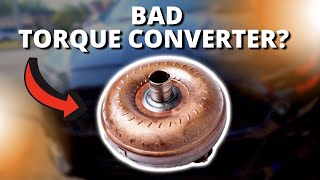
- Torque Converter
(OEM #45100-47810QQH (for 2.5T models under TSB))— A known failure point on specific 2023 GV80 2.5T models, as documented by Genesis Service Campaign T27G for internal cracks and rivet damage.
Trusted brands: Hyundai/Genesis OE
OEM price range: $500-$1200
Aftermarket price range: $400-$800 - Automatic Transmission Control Solenoid
(OEM #46313-4J100)— This is a likely electrical culprit if the torque converter itself is not faulty. A solenoid failure will cause a circuit malfunction code.
Trusted brands: Hyundai/Genesis OE
OEM price range: $60-$100
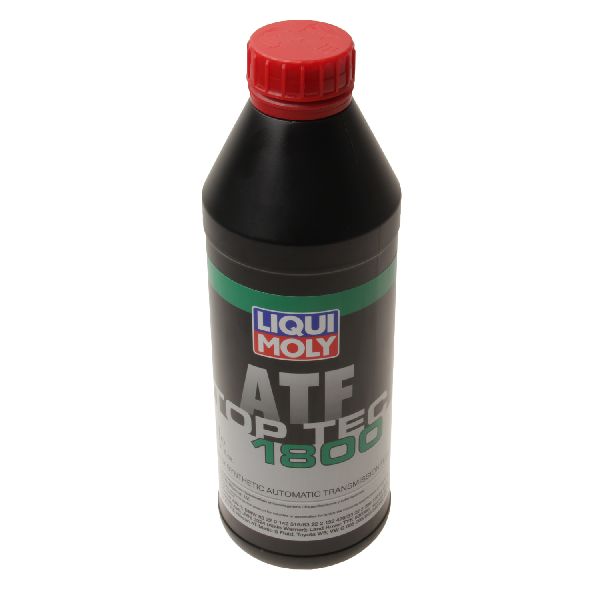
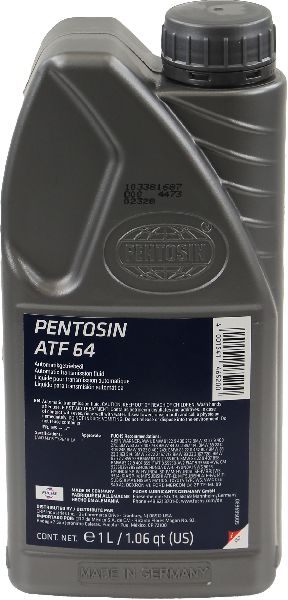
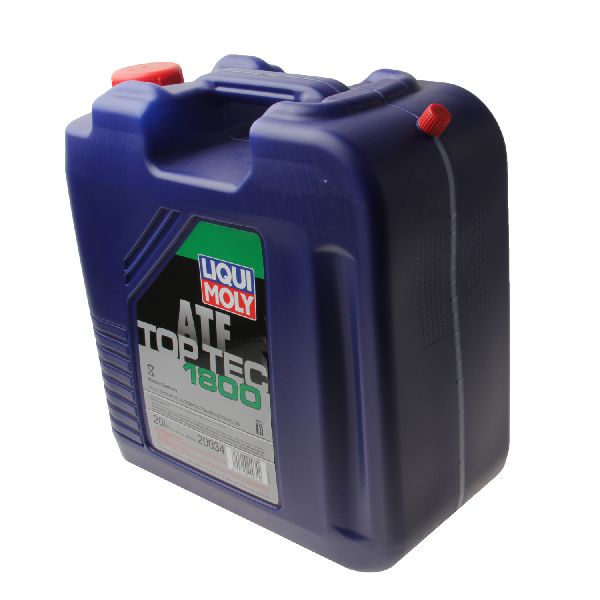
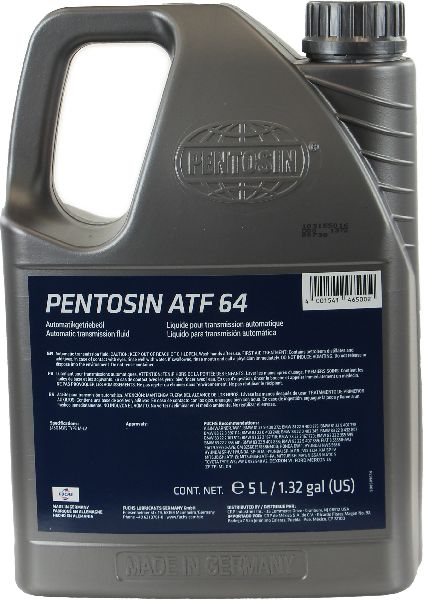
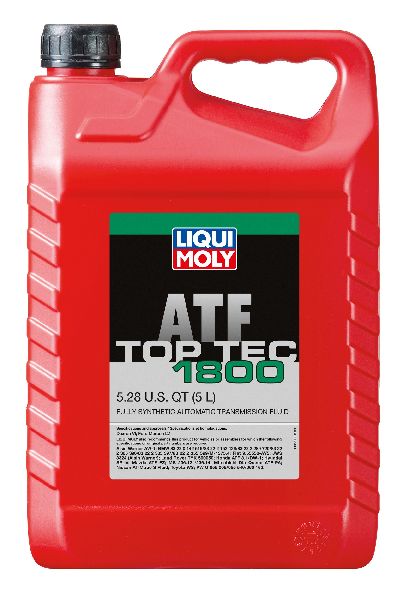
Aftermarket price range: $40-$80 - Automatic Transmission Fluid (ATF)
(OEM #00232-19052)— Required for any repair involving opening the transmission, such as replacing a solenoid or the torque converter. The specified type is SP-IV-RR.
Trusted brands: Hyundai/Genesis OE
OEM price range: $20-$30 per quart
Related Codes That Often Appear With This One
- P0741 — P0741 indicates 'Torque Converter Clutch Circuit Performance or Stuck Off'. If the circuit malfunctions (P0740), it will often lead to a performance issue (P0741).
- P0730-P0735 — These codes relate to incorrect gear ratios. A failing torque converter or fluid problem can cause slipping and trigger these codes alongside P0740.
Technical Service Bulletins (TSBs) & Recalls
- 23-01-003G (Service Campaign T27G): Torque Converter Replacement for internal rivet damage and cracks on certain 2023 2.5T models.
Platform-Specific Known Issues
- Service Campaign T27G (TSB 23-01-003G): Affects certain 2023 Genesis GV80 2.5T, GV70 2.5T, G80 2.5T, and G70 2.0T models produced between April 14, 2022 and June 14, 2022. It involves replacing the torque converter due to potential internal rivet damage and cracks, which can cause noise, stalling, and trigger fault codes like P0740.
Scan Tool Commands That Help
- Genesis GDS (or equivalent advanced scan tool): TCC Solenoid Bidirectional Test — To verify if the TCC solenoid is mechanically functional. The scan tool commands the solenoid to activate, and the technician can monitor live data (like TCC slip RPM) to see if the command results in the expected mechanical action. This helps isolate a faulty solenoid from a wiring or TCM driver issue.
- Genesis GDS: TCM Learning / Adaptive Values Reset — After replacing the transmission, valve body, or solenoids. The TCM adapts to the performance of specific components over time; resetting these learned values is necessary to ensure proper operation and shift quality with new parts.
Wiring & Ground Locations
- Transmission Wiring Harness Connector — At the transmission case.. This is the primary connection point for all transmission solenoids, including the TCC solenoid. It's a critical point to check for corrosion, moisture, or bent pins that could cause an electrical fault for the P0740 code.
- Passenger & Engine Compartment Fuse Boxes — The passenger compartment box is in the driver's side panel bolster; the engine compartment box is under the hood.. These boxes contain fuses and relays that supply power to the Transmission Control Module (TCM) and related systems. A blown fuse could cause a loss of power to the control circuit, triggering a fault.
- Transmission Ground — Typically, a primary ground wire (e.g., G1) connects the transmission housing directly to the battery or chassis.. A poor ground connection for the transmission can cause erratic behavior in all electronic components, including solenoids. Verifying a clean, tight ground is a fundamental step in diagnosing any electrical transmission code.
OEM Part Supersession History
45100-47810→45100-47810QQH— Internal structural improvements to address rivet damage and cracking as identified in Service Campaign T27G.
Heads up: CRITICAL: The original part (45100-47810) may still be available from some suppliers but should NOT be used. It contains the original defect. Only the 'QQH' version is the corrected part for the 2.5T models under the TSB. Installing the old part will lead to a repeat failure.
Model Year Variations Within This Range
- 2021-2025: The core powertrain of the 2.5T and 3.5T engines paired with the 8-speed automatic transmission (A8LR1/A8TR1 family) remains consistent. However, AWD became standard on all trims starting in 2023.
- 2021-2025 (3.5T V6 Models): The 3.5L V6 engine uses a different torque converter than the 2.5T. For example, a part number listed for a 2026 3.5L is 45100-4J560, which is distinct from the 2.5T part numbers. Ensure the correct part is ordered for the specific engine.
Diagnostic Flowchart
Other Known Issues on This Vehicle
Issues unrelated to this code that are worth knowing about as an owner of this generation:
- Rear Differential Noise / Whine 🟠 Medium — A widely reported issue on GV80, GV70, and G80 models. A whining or humming noise may develop during acceleration/deceleration. Can occur at low mileage (<10,000 miles). (Ref: TSB 23-DS-004G describes the inspection and repair procedure, which may involve tightening a lock nut or replacing the entire differential carrier assembly.)
- Low-Pressure Fuel Pump Failure 🔴 High — Affects 2021-2023 models. The fuel pump impeller can deform, leading to fuel pump failure and a sudden loss of drive power. (Ref: Multiple recalls, including NHTSA Recall No. 24V282000 and 23V622000. The fix involves replacing the fuel pump assembly.)
- Exploding Seat Belt Pretensioners 🔴 High — Affects 2020-2023 models. In a crash, the front seat belt pretensioners can deploy abnormally and explode, sending metal fragments into the cabin. (Ref: NHTSA Recall No. 23V094000. The remedy involves installing protective caps on the pretensioners.)
- Parasitic Battery Drain and Electrical Faults 🟡 Low — Owners report premature battery failure and random electrical issues. This is sometimes attributed to vehicle modules not entering a sleep state, causing a constant power draw.
- Blank Instrument Panel Display 🟠 Medium — A software error can cause the instrument panel display to fail or go blank while driving, resulting in the loss of speedometer and other critical information. (Ref: NHTSA Recall No. 25V105000. The fix is a software update to the instrument panel cluster.)
Used vs. New Parts: Buying Guide for This Vehicle
When a used part is the smart pick: For this specific code, buying a used torque converter or complete transmission is HIGHLY RISKY, especially from a 2022-2023 2.5T donor vehicle, due to the known defect in Service Campaign T27G. A used wiring harness or external connectors could be a cost-effective choice if the issue is isolated to wiring damage.
Donor-vehicle mileage cap: roughly under 50000 miles for the part to have meaningful remaining life.
What to inspect on the donor part:
- Verify the donor vehicle's VIN does not fall within the TSB production window (April-June 2022).
- If possible, request service history to see if the torque converter was already replaced under the campaign.
- For a complete transmission, check for signs of overheating (discolored case, burnt fluid smell).
- Inspect all electrical connectors on the donor part for corrosion or damage before purchase.
OEM-only on this vehicle (don't cheap out):
- Torque Converter: Due to the specific fix in the 'QQH' part number, using anything other than the updated OEM part is asking for a repeat failure.
- Transmission Fluid (ATF): The A8LR1 transmission is very sensitive to fluid properties. Use only genuine Hyundai/Genesis SP-IV-RR ATF to ensure correct solenoid operation and longevity.
Brands owners have reported issues with on this vehicle:
- Unknown/white-box torque converters or solenoids. The risk of poor quality control and premature failure is too high for a repair this labor-intensive.
Real Owner Stories
Aggregated from forums and TSBs cited above. Mileages and costs reflect what owners reported in those sources.
2023 Genesis GV80 2.5T
Symptoms: Internal rivet damage and cracks in the torque converter causing noise, stalling, and triggering fault codes like P0740.
What fixed it: Replacement of the torque converter with updated part P/N 45100-47810QQH under Service Campaign T27G.
Source hint: Service Campaign T27G (TSB 23-01-003G): Torque Converter Replacement
2021 Genesis GV80
Symptoms: Long service waits, a cracked sunroof, and two instances of a dead battery.
What fixed it: The source highlights parasitic battery drain and modules not entering a sleep state as known platform issues.
Source hint: YouTube: "My Genesis GV80 Nightmare: The Truth About After-Sales Service"
2023 Genesis GV70 2.5T
Symptoms: Recurring issues with rear differential noise, requiring multiple dealer visits and component replacements.
What fixed it: Inspection and repair involving tightening a lock nut or replacing the entire differential carrier assembly.
Source hint: Reddit r/GenesisGV70 thread: "Do the new Genesis models still have rear differential issues?"
Related OBD-II Codes
Frequently Asked Questions
Does Service Campaign T27G (TSB 23-01-003G) apply to my 2023 Genesis GV80?
What is the specific part number for the updated torque converter if my GV80 is affected by the TSB?
My GV80 is stalling when I come to a stop; could this be related to the P0740 code?
What type of transmission fluid should be used for a flush on the GV80's A8LR1/A8TR1 transmission?
Is the scratching noise from my transmission area a known issue for the 2023 models?
Can a faulty rear differential cause the P0740 code on my GV80?
Helpful Videos

Used OEM Parts in Stock
New Aftermarket Parts Available

The information in this article is provided for general reference and educational purposes only. Vehicle specifications, procedures, and part compatibility can vary by production date, trim level, and region. Always consult your vehicle's factory service manual and verify part numbers before purchasing or performing repairs. Safety-critical components such as airbags, seat belts, and braking systems should be installed by a qualified professional.
- Genesis GV80:
- 🧭 Diagnostic Flowchart
- 🎬 Helpful Videos
- 🛍️ Shop This Part
- What's Unique About the 2021-2025 Genesis GV80
- Symptoms You May Notice
- Most Likely Causes
- Rare But Worth Checking
- Diagnosis Steps
- Parts You'll Likely Need
- Related Codes That Often Appear With This One
- Technical Service Bulletins (TSBs) & Recalls
- Platform-Specific Known Issues
- Scan Tool Commands That Help
- Wiring & Ground Locations
- OEM Part Supersession History
- Model Year Variations Within This Range
- Other Known Issues on This Vehicle
- Used vs. New Parts: Buying Guide for This Vehicle
- Real Owner Stories
- 2023 Genesis GV80 2.5T
- 2021 Genesis GV80
- 2023 Genesis GV70 2.5T
- Related OBD-II Codes
- Frequently Asked Questions
- 🎟️ Get 5% Off