

P0740 on 1999-2004 Oldsmobile Alero: Torque Converter Clutch Circuit Causes and Fixes
On a 1999-2004 Oldsmobile Alero with the 4T40E or 4T45E transmission, code P0740 is almost always caused by a failed Torque Converter Clutch (TCC) solenoid inside the transmission. The fix involves replacing the solenoid, which requires removing the transmission side pan. It's highly recommended to replace all solenoids (shift, TCC, EPC), the filter, and fluid at the same time for long-term reliability.
- P0740 on your Alero almost certainly points to an electrical issue with the Torque Converter Clutch (TCC) solenoid inside the 4T40E/4T45E transmission.
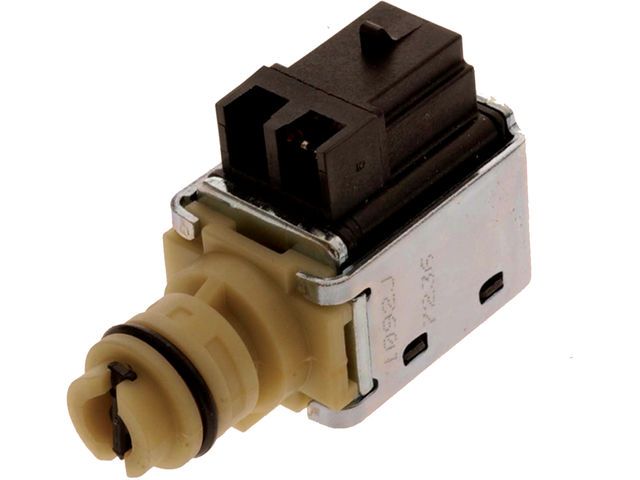
- The most likely culprit is the TCC solenoid itself, which should have a resistance of 10-12 ohms. The ACDelco part number is 24227792.
- The repair requires removing the driver-side wheel and transmission side cover, which is a messy and involved job.
- Due to the high labor involved, it is strongly recommended to replace all transmission solenoids (TCC, shift, EPC) as a kit, along with the filter and fluid, to prevent future failures.
What's Unique About the 1999-2004 Oldsmobile Alero
The Oldsmobile Alero uses either the 4T40E (on 4-cylinder models) or the stronger 4T45E (on V6 models) automatic transmission. These GM transmissions are well-known for having their internal solenoids fail over time due to heat and wear, with the TCC solenoid being a particularly common point of failure. While P0740 is a generic code, on this specific platform, it very frequently points directly to a bad TCC solenoid (often called a PWM solenoid) or the internal wiring harness, rather than more complex or external issues. The issue is so common that complete electronic rebuild kits are widely available.
Symptoms You May Notice
- Check Engine Light is on
- Engine RPMs are higher than usual at highway speeds (no 4th gear lock-up)
- Noticeable decrease in fuel economy
- Transmission may feel like it's slipping or 'hunting' for gears at cruising speeds
- Vehicle may shudder or vibrate when the TCC is supposed to engage
- In some cases, the engine may stall when coming to a stop if the TCC is stuck in the 'locked' position
- Replacing the entire transmission when only an inexpensive internal solenoid has failed.
- Replacing the torque converter when the issue is a much cheaper solenoid or wiring harness.
- Assuming the problem is mechanical when P0740 on this platform is almost always electrical.
Most Likely Causes
- Failed Torque Converter Clutch (TCC) PWM Solenoid 🔴 High Probability → Shop Automatic Transmission Torque Converter The solenoids in the 4T40E/4T45E transmissions are a very common failure point due to age, heat cycles, and internal coil burnout.
How to confirm: After removing the transmission side pan, disconnect the solenoid and test its resistance with a multimeter. For the 4T40E/4T45E, the TCC (PWM) solenoid should have a resistance of approximately 10.0-15.0 Ohms. A reading of infinity (open) or zero (short) confirms failure. A capable scan tool can also command the solenoid on/off to check for a response.
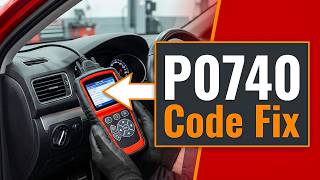
Typical fix: Replace the TCC solenoid. 🎬 Watch: Step-by-step guide to fixing the P0740 code and solenoid. It is located inside the transmission on the valve body, accessible after removing the side cover. The recommended OEM part is ACDelco 24227792.
Est. part cost: $30-$60 - Damaged Internal Wiring Harness 🟡 Medium Probability → Shop Transmission Wiring Harness The wiring inside the hot transmission fluid environment can become brittle, and insulation can crack over time, leading to shorts or open circuits, especially at the connector pins.
How to confirm: Visually inspect the wiring harness leading to the TCC solenoid for any signs of damage, brittleness, or broken wires once the transmission pan is removed. Check for continuity on each wire with a multimeter.
Typical fix: Replace the internal transmission wiring harness. This is often done as part of a master solenoid kit.
Est. part cost: $40-$80 - Low or Dirty Transmission Fluid ⚪ Low Probability → Shop Transmission Assembly
How to confirm: Check the transmission fluid level and condition using the dipstick. The fluid should be at the correct level, pink/red in color, and not smell burnt. Excessive metal shavings on the pan magnet can indicate a larger mechanical issue.
Typical fix: Perform a transmission fluid and filter change. If the fluid is very dirty, it may indicate that the solenoid failure has contaminated the system. Use DEXRON-VI fluid (which is backward compatible with the original DEXRON-III).
Est. part cost: $60-$120
Rare But Worth Checking
- Failed Torque Converter: → Shop Automatic Transmission Torque Converter While the code points to an electrical fault, a severe mechanical failure within the torque converter's internal clutch can prevent it from locking up. This is usually a last resort after solenoids and wiring have been checked and often presents with other symptoms like excessive metal debris in the pan.
- Faulty Powertrain Control Module (PCM): → Shop Engine Control Module (ECM) It is very rare for the PCM itself to fail, but the internal driver circuit that controls the TCC solenoid can burn out. This should be the absolute last consideration after all other circuit components (solenoid, wiring) have been proven to be good.
- Faulty Ignition Switch: → Shop Ignition Switch On some GM vehicles, a failing ignition switch can cause a loss of power to the fuse that supplies the transmission solenoids, triggering P0740 along with other codes like P0753 and P0758 simultaneously. If multiple solenoid codes are present, the ignition switch and related fuses should be checked first.
Diagnosis Steps
- Check the transmission fluid level and condition. If it is low, dark, or smells burnt, address this first.
- Use an OBD-II scanner to confirm P0740 is present. Note any other transmission codes, as multiple codes (e.g., P0753, P0758) can point to a common power supply issue like a fuse or ignition switch.
- With a capable scan tool, monitor the TCC command status and TCC slip speed while driving to see if the computer is attempting to lock the converter and if it is failing to do so.
- Safely raise the vehicle and inspect the external transmission wiring harness and main connector for any obvious damage or corrosion.
- Support the engine/transmission assembly and remove the driver-side wheel and splash shield. You may need to remove the side transmission mount and lower the powertrain slightly for access.
- Drain the transmission fluid and remove the side pan/cover to gain access to the valve body. Be prepared for a mess.
- Visually inspect the internal wiring harness for any signs of damage.
- Disconnect the TCC PWM solenoid and test its resistance with a multimeter. The reading should be between 10-15 ohms. An open circuit (infinite resistance) or a short (near-zero resistance) indicates a failed solenoid.
- If the solenoid tests good, test the wiring harness for continuity from the solenoid connector back to the main transmission case connector pins.
- If the solenoid and wiring are good, the problem may be a faulty torque converter or, in rare cases, the PCM.
Parts You'll Likely Need
- Transmission Solenoid Master Kit
(OEM #ACDelco 24227792 (TCC Solenoid only))— This is the most common cause of P0740. Since the labor to access the solenoids is significant, it is best practice to replace all of them at once. A master kit typically includes the TCC solenoid, both shift solenoids (A & B), and the EPC solenoid.
Trusted brands: ACDelco, Rostra, Transtar
OEM price range: $40-$60 (TCC only)
Aftermarket price range: $120-$200 (Master Kit) - Transmission Filter and Pan Gasket Kit
(OEM #ACDelco 24227477)— Required for any service that involves removing the transmission pan. Ensures a clean supply of fluid to the new solenoids and a leak-free seal.
Trusted brands: ACDelco, Wix, ATP
OEM price range: $30-$50
Aftermarket price range: $15-$30 - Automatic Transmission Fluid
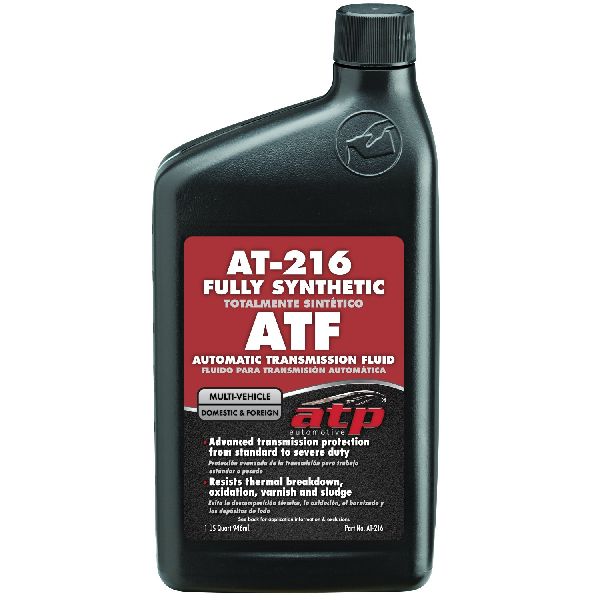
(OEM #ACDelco 10-9395 (DEXRON-VI))— The transmission must be refilled with 7-8 quarts of fresh fluid after the service. DEXRON-VI is the recommended replacement and is fully backward-compatible with the original DEXRON-III fluid.
Trusted brands: ACDelco, Valvoline, Castrol
OEM price range: $9-$14 per quart
Aftermarket price range: $7-$10 per quart
Related Codes That Often Appear With This One
- P0753: Shift Solenoid 'A' Electrical
- P0758: Shift Solenoid 'B' Electrical
- P1860: TCC PWM Solenoid Circuit Electrical
Platform-Specific Known Issues
- Accessing the side transmission pan on the 4T40E/4T45E is notoriously difficult and messy. Unlike transmissions with a bottom pan, removing the side cover releases a large amount of fluid unexpectedly if not drained properly.
- To get enough clearance to remove the side pan, the technician often needs to support the engine with an engine support fixture from above, then remove the driver-side transmission mount and carefully lower the engine/transmission assembly a few inches.
Mechanic-Grade Diagnostic Values
- TCC PWM Solenoid Resistance — expected: 10.0 - 15.0 Ohms. Failure: A reading of infinity (open circuit) or near-zero (short circuit).
- Shift Solenoid A/B Resistance — expected: 12 - 28 Ohms. Failure: Outside of the specified range, indicating a faulty shift solenoid which can sometimes be replaced preventatively during a TCC solenoid job.
- EPC (Electronic Pressure Control) Solenoid Resistance — expected: 3 - 6 Ohms. Failure: Outside of the specified range.
- Voltage at TCC Solenoid Power Pin — expected: 12V with ignition on, engine off.. Failure: No voltage suggests a problem with the power supply, such as a blown fuse or faulty ignition switch.
- Live Data: TCC Slip Speed — expected: Should drop to near zero RPM when the scan tool shows the TCC is commanded ON at cruising speed.. Failure: Slip speed remains high (e.g., > 100 RPM) when TCC is commanded ON, confirming the clutch is not locking.
Hidden / Shadow Codes Worth Checking
- P1860: TCC PWM Solenoid Circuit Electrical. This is a GM-specific code that is more precise than the generic P0740. If P1860 is present, it strongly points to an electrical fault in the TCC solenoid or its wiring, rather than a mechanical slip issue. (see via Most standard OBD-II scanners should see this code, but a GM-specific tool like a Tech2 will provide the most detailed fault information.)
Scan Tool Commands That Help
- GM Tech2 or equivalent professional scanner: TCC Solenoid Output Control — This bidirectional command allows the technician to manually command the TCC solenoid ON and OFF while the vehicle is stationary (engine on or off, depending on the test). You can listen for an audible click from the transmission pan or use a test light connected to the circuit to verify the PCM and wiring are capable of controlling the solenoid.
- GM Tech2 or equivalent professional scanner: View Live Data: TCC Duty Cycle % — While driving, this parameter shows the percentage of time the PCM is commanding the PWM solenoid to be active. It should increase as the vehicle reaches a steady cruise speed. If the command is present but lockup doesn't occur (verified by slip speed), it points to a hydraulic or mechanical issue within the transmission (solenoid, valve body, or converter).
Wiring & Ground Locations
- Transmission Main Connector (20-pin) — On the top, driver's side of the transmission case.. This is the primary external test point for the internal transmission electronics. You can test the TCC solenoid resistance and wiring continuity from here without removing the pan. The TCC solenoid circuit is typically on Pins E (12V Power from IGN/Fuse) and T (PCM Ground Control), though this can vary slightly. A wiring diagram is essential.
- TCC Solenoid Connector (Internal) — Inside the transmission, on the valve body, accessible after removing the side pan.. This is the direct connection to the solenoid. Testing resistance here isolates the solenoid from the internal wiring harness. If the solenoid tests good here but bad at the main 20-pin connector, the internal harness is faulty.
Real Owner Repair Stories
- aleromod.com forum user (2002 Oldsmobile Alero 2.2L Ecotec w/ 4T40E) — Check Engine Light with code P0740, RPMs high at highway speed, poor gas mileage.
❌ Tried (didn't work) Initially thought it might be a major transmission failure.
✅ What actually fixed it The user followed advice to replace the TCC (PWM) solenoid inside the transmission. While inside, they also replaced the two shift solenoids as a preventative measure. The fix required removing the driver's side wheel, supporting the engine, and removing the side transmission pan. After replacing the solenoids and refilling with fresh fluid, the code was cleared and did not return, restoring normal highway RPMs.
OEM Part Supersession History
24212690→24227792— Standard part update and consolidation by GM.
Heads up: The new part number (24227792) is the correct direct replacement. Using old stock of 24212690 is acceptable but the newer part is preferred.
Model Year Variations Within This Range
- 1999-2004: The 4-cylinder models (2.2L, 2.4L) use the 4T40E transmission, while the V6 models (3.4L) use the slightly more robust 4T45E. However, for the purpose of diagnosing P0740, the TCC solenoid, internal wiring, and repair procedure are virtually identical between the two.
- 2004-onward (in other GM models): Some later model year 4T45E transmissions (post-Alero) used a different pressure switch manifold. While the TCC solenoid remained similar, it's important to verify part numbers for any donor parts from vehicles outside the 1999-2004 Alero range.
Diagnostic Flowchart
Used vs. New Parts: Buying Guide for This Vehicle
When a used part is the smart pick: For this specific repair, using a used part is strongly discouraged. The primary failure part is an electronic solenoid with a finite lifespan that is subjected to intense heat and vibration. The labor cost to access the solenoid is high, making it unwise to install a used part with an unknown history that could fail shortly after installation.
What to inspect on the donor part:
- Not applicable, as used solenoids are not recommended.
OEM-only on this vehicle (don't cheap out):
- While not strictly 'OEM-only', using a genuine ACDelco TCC solenoid (24227792) or a complete master kit from a reputable transmission parts supplier is highly recommended for reliability. The cost difference is minimal compared to the labor involved.
Aftermarket brands forum-validated for this vehicle:
- Rostra
- Transtar
- Sonnax (for valve body upgrade components)
Brands owners have reported issues with on this vehicle:
- No-name, unbranded solenoid kits from online marketplaces should be avoided. There are reports of these parts being dead-on-arrival or failing prematurely.
Real Owner Stories
Aggregated from forums and TSBs cited above. Mileages and costs reflect what owners reported in those sources.
2000 Silverado
Symptoms: Owner reported a P0740 code after replacing the TCC solenoid, indicating the initial repair did not solve the problem.
What fixed it: The owner was advised that when P0740 appears with other solenoid codes (like P0753, P0758), the root cause is often a shared power issue, not the solenoid itself. The key takeaway was that proper diagnosis is critical before replacing parts.
Source hint: GM-Trucks.com thread titled 'P0740 code TCC Circuit Malfunction - GM-Trucks.com'
Related OBD-II Codes
Frequently Asked Questions
Is it difficult to replace the TCC solenoid on a 1999-2004 Oldsmobile Alero?
What part number do I need for the TCC solenoid on my Alero?
How can I test the TCC solenoid to confirm it's the problem before replacing it?
What kind of transmission fluid should I use in my Alero after this repair?
My Alero has P0740, but also P0753 and P0758. What does this mean?
Besides the Check Engine Light, what are the common symptoms of P0740 on an Alero?
Is it a good idea to buy a used TCC solenoid from a junkyard for my Alero?
Helpful Videos
We Have This Part in Stock

The information in this article is provided for general reference and educational purposes only. Vehicle specifications, procedures, and part compatibility can vary by production date, trim level, and region. Always consult your vehicle's factory service manual and verify part numbers before purchasing or performing repairs. Safety-critical components such as airbags, seat belts, and braking systems should be installed by a qualified professional.
- Oldsmobile Alero:
- 🧭 Diagnostic Flowchart
- 🎬 Helpful Videos
- 🛍️ Shop This Part
- What's Unique About the 1999-2004 Oldsmobile Alero
- Symptoms You May Notice
- Most Likely Causes
- Rare But Worth Checking
- Diagnosis Steps
- Parts You'll Likely Need
- Related Codes That Often Appear With This One
- Platform-Specific Known Issues
- Mechanic-Grade Diagnostic Values
- Hidden / Shadow Codes Worth Checking
- Scan Tool Commands That Help
- Wiring & Ground Locations
- Real Owner Repair Stories
- OEM Part Supersession History
- Model Year Variations Within This Range
- Used vs. New Parts: Buying Guide for This Vehicle
- Real Owner Stories
- 2000 Silverado
- Related OBD-II Codes
- Frequently Asked Questions
- 🎟️ Get 5% Off