

P0740 on 2003-2009 Toyota 4Runner: Torque Converter Clutch Circuit Fixes
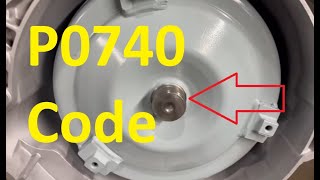
For a 4th Gen Toyota 4Runner, code P0740 is most often caused by a failed torque converter lock-up solenoid (SLU solenoid) inside the transmission pan. This is an electrical fault code, not a mechanical one. Replacing the solenoid, along with the transmission filter and fluid, is the most common fix. Expect to pay $100-$200 for an OEM solenoid. In some cases, the issue can be the torque converter itself or wiring, but starting with the solenoid is the standard diagnostic path.
- P0740 on a 4th Gen 4Runner most commonly points to a failed torque converter lock-up solenoid (SLU solenoid), which is replaceable by dropping the transmission pan.
- Before condemning the torque converter for a shudder, rule out engine issues like worn spark plugs or coils, as the symptoms can be very similar.
- Always check the transmission fluid level and condition first. The A750 transmission has a specific procedure for this that does not involve a dipstick.
- There are multiple TCC solenoids with different colored connectors. You must visually verify which one your vehicle has before ordering a replacement.
- When replacing the solenoid, it is best practice to also replace the transmission filter and perform a fluid service with the correct Toyota-specified fluid (T-IV or WS).
What's Unique About the 2003-2009 Toyota 4Runner
The 4th generation 4Runner (2003-2009) uses the highly reliable Aisin-built A750E (2WD) and A750F (4WD) 5-speed automatic transmissions. While the transmission itself is robust, this specific code is a known issue as these vehicles age. The problem is almost always electronic (the solenoid) rather than a catastrophic mechanical failure. A key issue on this platform is misdiagnosing a torque converter shudder when the actual cause is a slight engine misfire, which can feel very similar to the driver. Toyota even issued a Technical Service Bulletin (TSB-EG050-07) for other models regarding this exact confusion, highlighting the need to rule out engine issues first.
Symptoms You May Notice
- Check Engine Light is on
- Reduced fuel economy
- Engine RPMs are higher than usual at highway speeds
- A slight shudder or vibration felt during light acceleration or when going up hills, which can be mistaken for driving on a rough road.
- Stalling when coming to a stop in rare cases, if the clutch gets stuck in the 'on' position.
- Harsh or delayed shifts.
- Transmission may feel like it's slipping.
- A common misdiagnosis is replacing the torque converter when the issue is only a faulty solenoid. Another significant misdiagnosis is blaming the torque converter for a shudder that is actually caused by a slight engine misfire from a bad spark plug or ignition coil. A proper diagnosis should rule out engine performance issues before condemning expensive transmission components.
Most Likely Causes
- Failed Torque Converter Lock-Up Solenoid (SLU Solenoid) 🔴 High Probability → Shop Automatic Transmission Torque Converter As a wearable electronic component submerged in hot transmission fluid, the solenoid's internal coil can fail electrically over time, causing an open or short circuit. This is the most common point of failure for a P0740 code on this platform.
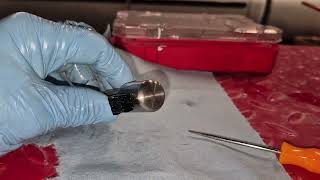
How to confirm: Use a multimeter to test the solenoid's resistance. The specified resistance for the SLU solenoid is typically 5.0 to 5.6 Ohms at 68°F (20°C). An out-of-spec reading confirms a failed solenoid. You can also command the solenoid with a high-end scan tool to check for a response. The solenoid is located inside the transmission pan on the valve body. 🎬 See how to access and replace solenoids on the A750 transmission.
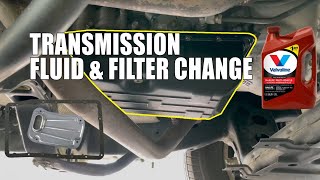
Typical fix: Replace the faulty solenoid. This involves draining the transmission fluid, dropping the pan, and replacing the solenoid. It is highly recommended to also replace the transmission filter and pan gasket 🎬 Watch: Step-by-step guide to changing your transmission fluid and filter. at the same time.
Est. part cost: $100-$200 - Failing Torque Converter 🟡 Medium Probability → Shop Automatic Transmission Torque Converter The internal lock-up clutch inside the torque converter can wear out, especially on high-mileage vehicles (150,000+ miles). This can create debris that clogs fluid passages and damages solenoids. A failure here is less common than the solenoid itself.
How to confirm: This is often a process of elimination. If the fluid is full of clutch material or metallic debris, and a new solenoid does not fix the issue, the torque converter is the likely culprit. A transmission specialist can perform a stall speed test to confirm.
Typical fix: Replace the torque converter. This is a major repair that requires removing the entire transmission from the vehicle.
Est. part cost: $300-$800 - Low or Dirty Transmission Fluid ⚪ Low Probability → Shop Transmission Assembly Many 4Runners use 'lifetime' WS (World Standard) fluid that is often neglected. Over 100,000+ miles, this fluid degrades and becomes contaminated, which can cause solenoids to stick or passages to clog. Low fluid can cause pressure issues that prevent proper lock-up.
How to confirm: Check the transmission fluid level and condition. The A750 transmission does not have a traditional dipstick and must be checked via overflow and check plugs at a specific fluid temperature (typically 97-115°F or 36-46°C). The fluid should be bright red and clear, not dark brown, black, or smelling burnt.
Typical fix: Perform a transmission fluid drain and fill, or a full fluid exchange if the fluid is very dirty. Replace the transmission filter.
Est. part cost: $60-$150 - Wiring or Connector Issues ⚪ Low Probability While less common, the wiring harness to the transmission can be damaged by road debris, or corrosion can form at the main connector where it attaches to the transmission case. Internal valve body wiring can also become brittle from heat cycles.
How to confirm: Visually inspect the wiring harness leading to the transmission. Unplug the main connector and check for corrosion or pushed-out pins. Test for continuity from the TCM/ECM to the transmission connector for the TCC solenoid circuit. If the external wiring is good, the internal harness may need to be checked.
Typical fix: Repair the damaged section of the wiring harness or clean/replace the corroded connector.
Est. part cost: $20-$100
Diagnosis Steps
- Check the transmission fluid level and condition. This is the first and most crucial step. On the A750 transmission, this requires the vehicle to be level and the fluid temperature to be between 97-115°F (36-46°C) to check via the overflow plug.
- Scan for other DTCs. Note any other transmission or engine codes that may be present, especially misfire codes.
- Inspect the external transmission wiring harness and connectors for any visible damage, chafing, or corrosion.
- With a capable scan tool, monitor the live data for the TCC lock-up command and engine RPM vs. transmission input speed to verify slip when lock-up is commanded.
- Use the scan tool's active test function to manually command the TCC/SLU solenoid on and off. You should hear a click from the transmission pan and see a change in RPM if it's working.
- If the solenoid is suspected, drain the transmission fluid and remove the transmission oil pan to access the valve body.
- Identify the TCC/SLU solenoid. It is typically the largest solenoid on the valve body and may have a brown or black electrical connector.
- Unplug the solenoid and test its resistance with a multimeter. Compare the reading to the manufacturer's specification (typically 5.0-5.6 Ohms). An open circuit (infinite resistance) or a short (zero resistance) confirms a failed solenoid.
- If the solenoid tests good, test the wiring from the solenoid connector back to the main transmission case connector for continuity.
- If all wiring and the solenoid test good, the problem may lie in the torque converter itself or the valve body. At this point, professional diagnosis is highly recommended.
Parts You'll Likely Need
- Torque Converter Clutch Lock-Up Solenoid (SLU)
(OEM #35280-30050)— This is the most common failure point for the P0740 code. It is an electro-mechanical part that wears out over time. This part number (often superseding 35280-60010) is typically for the solenoid with a brown connector, often found on V8 models. Verify the connector color on your existing solenoid before ordering.
Trusted brands: Toyota (OEM), Aisin, Rostra
OEM price range: $150-$250
Aftermarket price range: $80-$150 - Torque Converter Clutch Lock-Up Solenoid (SLU)
(OEM #35280-34010)— This is another common part number for the lock-up solenoid, typically with a black connector. It is critical to visually inspect and match the solenoid in your specific vehicle before purchasing a replacement.
Trusted brands: Toyota (OEM), Rostra
OEM price range: $150-$250
Aftermarket price range: $80-$150 - Automatic Transmission Filter Kit
(OEM #35330-60050)— Should be replaced whenever the transmission pan is removed to service a solenoid.
Trusted brands: Toyota (OEM), Wix, ATP
OEM price range: $40-$60
Aftermarket price range: $20-$40 - Toyota Type T-IV or WS Automatic Transmission Fluid
(OEM #00289-ATFWS (WS))— The correct fluid type is required when refilling the transmission. Early 4th Gen models (2003-2004) may use T-IV, while later models (2005-2009) switched to WS (World Standard). Check your owner's manual to confirm the correct fluid. Using the wrong fluid can cause shifting problems
Related Codes That Often Appear With This One
- P0741 — This code indicates a performance problem (stuck off) with the TCC circuit, which can be caused by the same root issues as P0740, such as a failing solenoid or a mechanical issue in the torque converter.
Technical Service Bulletins (TSBs) & Recalls
- TSB-EG050-07: While not directly for the 4Runner, this TSB for other Toyota models addresses a similar issue where an engine misfire can be misdiagnosed as a torque converter shudder, which is highly relevant to P0740 diagnosis.
Mechanic-Grade Diagnostic Values
- Resistance of Torque Converter Lock-Up (SLU) Solenoid — expected: 5.0 to 5.6 Ω at 20°C (68°F). Failure: A reading of infinite ohms (open circuit) or near zero ohms (short circuit). Some technicians note that a reading slightly outside this range (e.g., 5.7-5.9 ohms) can still be acceptable, but significant deviation points to failure.
- Continuity test of SLU solenoid circuit at the ECM — expected: Below 1 Ω between the two solenoid pins at the ECM connector. 10 kΩ or higher between either pin and body ground.. Failure: High resistance between the pins indicates an open in the harness; low resistance to ground indicates a short.
Scan Tool Commands That Help
- Toyota Techstream: Active Test: "Control the Lock-Up" — This function allows the technician to manually command the SLU solenoid ON and OFF while monitoring live data. When driving at a steady speed (e.g., 45-50 MPH), activating this command should cause a noticeable drop in engine RPM (50-200 RPM) as the torque converter locks. If the command is sent but no RPM drop occurs and the solenoid circuit voltage changes, it points towards a mechanical issue within the torque converter or a hydraulic blockage. If the command does not result in a voltage change at the solenoid, it points to a wiring or ECM issue.
- Toyota Techstream: Data List: "TCC Solenoid Status" — Use this to monitor the computer's commanded state (On/Off) for the lock-up solenoid in real-time during a test drive. This helps confirm if the ECM is attempting to engage lock-up under the correct conditions (steady cruising speed, light throttle). Comparing this to the actual RPM slip can confirm if the command is being ignored by the hardware.
Wiring & Ground Locations
- ECM Connector E5 (on V8 models) / E6 (on V6 models) — Located in the engine bay, typically on the passenger side near the firewall or fender.. This is the main connector on the Engine Control Module where the wires for the transmission solenoids terminate. For testing the SLU circuit from the computer side, you would back-probe the pins here. For the V8 (2UZ-FE), the SLU+ and SLU- pins are often located in this connector block, allowing a technician to test the entire circuit (ECM driver, wiring harness, and solenoid) from one point.
- SLU+ and SLU- pins — On a 2003 4Runner V8, the SL1+ (related to SLU) is Pin 19 (Green-Black wire) and SL1- is Pin 18 (Blue-Yellow wire) on the E5 ECM connector. These specific pinouts can vary slightly by year and between V6/V8 engines, so verifying with the correct year's EWD is critical.. Knowing these exact pin numbers allows for precise resistance and voltage testing of the lock-up solenoid circuit without having to access the transmission itself, which is a crucial step to differentiate a wiring problem from an internal transmission problem.
Real Owner Repair Stories
- t4r.org Forum User (2004 Toyota 4Runner V8, ~170,000 miles) — Check Engine Light with code P0740. No noticeable driving symptoms other than slightly higher RPMs on the highway.
❌ Tried (didn't work) Clearing the code (it returned within a day)., Checking transmission fluid level (it was correct).
✅ What actually fixed it The owner dropped the transmission pan, identified the lock-up (SLU) solenoid, and tested its resistance with a multimeter. The reading was out of spec. They replaced the single SLU solenoid (part number 35280-30050), the transmission filter, and the pan gasket, then refilled with fresh fluid. The P0740 code was cleared and did not return.
OEM Part Supersession History
35280-50020→35280-30050— Part consolidation and potential minor internal revisions by the manufacturer.
Heads up: While 35280-30050 (often brown connector) and 35280-34010 (often black connector) are both listed for this generation, they are not interchangeable. The correct part depends on the specific valve body and wiring harness installed in the vehicle. Visual confirmation of the connector color on the old solenoid before ordering is mandatory.
Model Year Variations Within This Range
- 2003-2004 vs 2005-2009: The specified automatic transmission fluid changed. Early models (2003-2004) often specified Toyota Type T-IV fluid, while later models (2005-2009) switched to Toyota WS (World Standard) fluid. Using the wrong fluid can lead to shift quality issues, though it is not a direct cause of the P0740 electrical code.
- V6 (1GR-FE) vs V8 (2UZ-FE): While both use the A750 series transmission, there can be minor differences in the valve body solenoid configuration and wiring harness. This is why two different part numbers for the SLU solenoid exist. The V8 models are more commonly associated with the 35280-30050 part number.
Diagnostic Flowchart
Other Known Issues on This Vehicle
Issues unrelated to this code that are worth knowing about as an owner of this generation:
- Cracked Dashboard 🟡 Low — Extremely common on 2003-2005 models, especially in sun-exposed climates. Cracks often appear above the glove box and instrument cluster. (Ref: A past Warranty Enhancement Program (ZE6) existed but has since expired for most vehicles.)
- Seized Front Brake Calipers 🟠 Medium — Very common, particularly in the rust belt. The caliper pistons corrode and stick, causing brake drag, pulling to one side, and a burning smell.
- V6 (1GR-FE) Head Gasket Failure 🔴 High — A known issue primarily affecting 2003-2005 models, with some reports on early 2006 models. Failure typically occurs between 120k-150k miles.
- Frame Rust/Corrosion 🔴 High — Widespread problem, especially for vehicles operated in the rust belt. Can lead to structural failure of the frame and suspension components. (Ref: While other Toyota trucks had frame recalls/lawsuits, the 4Runner was not officially included in the same large-scale programs, making it a major point of concern for buyers.)
- V8 (2UZ-FE) Cracked Exhaust Manifolds 🟠 Medium — Common on the V8 engine. Owners report a ticking noise on cold starts that may go away as the engine warms up.
- X-REAS Suspension Leaks 🟠 Medium — The linked hydraulic shock system on Sport and Limited trims is prone to leaking, typically after 100k miles. Repair is very expensive, so most owners replace it with a conventional shock and spring setup.
Used vs. New Parts: Buying Guide for This Vehicle
When a used part is the smart pick: For this repair, sourcing a complete, low-mileage used valve body assembly from a reputable salvage yard can be a cost-effective strategy, especially if the issue is suspected to be more than just a single solenoid (e.g., a warped valve body). A single used solenoid is generally not recommended due to the high labor involved if it fails.
Donor-vehicle mileage cap: roughly under 100000 miles for the part to have meaningful remaining life.
What to inspect on the donor part:
- Verify the donor vehicle's mileage and ensure it's under 100,000 miles.
- Ask for photos of the transmission pan fluid from the donor vehicle. Avoid any parts from a transmission with dark, burnt, or metallic fluid.
- Ensure the part comes with a warranty (even 30-90 days) from the salvage yard.
- Match the part numbers and solenoid connector colors exactly to your original part.
OEM-only on this vehicle (don't cheap out):
- Torque Converter: Due to the high labor cost of replacement, using a new OEM or a high-quality remanufactured unit from a trusted brand is strongly advised over a used one.
Aftermarket brands forum-validated for this vehicle:
- Aisin: Aisin is the original equipment manufacturer (OEM) for the Toyota transmission. An Aisin-branded solenoid is equivalent to the Toyota dealer part.
- Rostra: Rostra is a well-regarded aftermarket manufacturer of transmission solenoids and is often cited as a reliable alternative to OEM.
Brands owners have reported issues with on this vehicle:
- Unnamed/"White Box" solenoids from online marketplaces. These often have high failure rates and inconsistent quality control, making the labor-intensive repair not worth the initial parts savings.
Real Owner Stories
Aggregated from forums and TSBs cited above. Mileages and costs reflect what owners reported in those sources.
2005 Toyota 4Runner
Symptoms: The owner experienced a P0740 code and used a forum thread to guide the diagnosis of the Torque Converter Clutch solenoid.
What fixed it: Successfully replaced the SLU solenoid.
Source hint: https://www.toyota-4runner.org/4th-gen-t4rs/189989-p0740-code-torque-converter-clutch-solenoid.html
2005-2015 Toyota Tacoma (V6)
Symptoms: Owners reported the P0740 code appearing on the shared A750 transmission platform.
What fixed it: Replacement of the solenoid.
Source hint: Toyota Tacoma platform mate report
2004-2009 Toyota Tundra (V8)
Symptoms: Circuit faults leading to the P0740 code on the A750E/A750F transmission.
What fixed it: Repair of the lock-up circuit/solenoid.
Source hint: Toyota Tundra platform mate report
Documented NHTSA Reports
Toyota Platform Reports
Symptoms: On related Toyota platforms using similar transmission logic, owners have reported that the P0740 code (Torque Converter Clutch Circuit/Open) can appear alongside multiple pressure control solenoid codes (NHTSA ODI #11709274). Another report notes that a P0740 code for "Torque Converter Clutch Actuator Stuck On" can result in a vehicle feeling unsafe when pulling into traffic or intersections due to delayed acceleration (NHTSA ODI #11712764).
Related OBD-II Codes
Frequently Asked Questions
How do I check the transmission fluid level on my 2003-2009 4Runner with the A750 transmission?
What is the specific resistance for the SLU solenoid on this vehicle?
Is there a TSB for the shuddering I feel in my 4Runner that might be related to P0740?
What type of transmission fluid does my 2003-2009 4Runner use?
Where is the TCC/SLU solenoid located if I need to replace it?
Can I use a scan tool to test the solenoid before taking the transmission pan off?
Helpful Videos
We Have This Part in Stock

The information in this article is provided for general reference and educational purposes only. Vehicle specifications, procedures, and part compatibility can vary by production date, trim level, and region. Always consult your vehicle's factory service manual and verify part numbers before purchasing or performing repairs. Safety-critical components such as airbags, seat belts, and braking systems should be installed by a qualified professional.
- Toyota 4Runner:
- 🧭 Diagnostic Flowchart
- 🎬 Helpful Videos
- 🛍️ Shop This Part
- What's Unique About the 2003-2009 Toyota 4Runner
- Symptoms You May Notice
- Most Likely Causes
- Diagnosis Steps
- Parts You'll Likely Need
- Related Codes That Often Appear With This One
- Technical Service Bulletins (TSBs) & Recalls
- Mechanic-Grade Diagnostic Values
- Scan Tool Commands That Help
- Wiring & Ground Locations
- Real Owner Repair Stories
- OEM Part Supersession History
- Model Year Variations Within This Range
- Other Known Issues on This Vehicle
- Used vs. New Parts: Buying Guide for This Vehicle
- Real Owner Stories
- 2005 Toyota 4Runner
- 2005-2015 Toyota Tacoma (V6)
- 2004-2009 Toyota Tundra (V8)
- Documented NHTSA Reports
- Toyota Platform Reports
- Related OBD-II Codes
- Frequently Asked Questions
- 🎟️ Get 5% Off