

P0741 on 2007-2017 Ford Expedition 5.4L: Torque Converter Clutch Stuck Off Causes and Fixes
On a 2007-2014 Expedition with the 5.4L V8 and 6R75/6R80 transmission, code P0741 usually indicates a mechanical failure in the torque converter or a hydraulic issue in the valve body. It is rarely a simple solenoid replacement. Expect a costly repair involving transmission removal for a new torque converter or valve body work, often exceeding $1,500-$2,800.
- P0741 on a 2007-2014 Expedition 5.4L is a serious code indicating a mechanical or hydraulic problem, not a simple electrical fault.
- The most common cause is a failed torque converter, which is a major repair requiring transmission removal.
- Do not assume a cheap solenoid replacement will fix the issue; it is the least likely solution for this specific code on this truck.
- Always start diagnosis by checking the transmission fluid level and condition with the correct procedure, but be prepared for a more significant repair.
- Due to the complexity and cost, professional diagnosis is highly recommended to avoid replacing the wrong parts.
What's Unique About the 2007-2017 Ford Expedition
The 2007-2014 Ford Expedition with the 5.4L V8 uses the 6R75 or 6R80 automatic transmission, which is based on a robust ZF 6HP design. For this specific platform, Ford's diagnostic logic for P0741 classifies it as a "non-electrical" or "performance" fault. This means the computer has already confirmed the TCC solenoid's electrical circuit is functioning correctly. Therefore, the problem is almost always mechanical or hydraulic. The most common culprits are a worn TCC regulator valve bore in the main control (valve body), a worn-out torque converter clutch, or leaking internal seals like the bridge seal. Forum discussions among owners of Expeditions and platform-mate F-150s confirm that simply replacing the TCC solenoid rarely fixes the issue.
Generation note: The specified vehicle range (2007-2017) covers the entire third generation (U324) of the Ford Expedition. However, the 5.4L 3V V8 engine was only available from 2007 to 2014, paired with the 6R75 (2007-2008) or 6R80 (2009-2014) transmission. From 2015-2017, the Expedition used a 3.5L EcoBoost V6. This guide is specific to the 2007-2014 models with the 5.4L V8.
Symptoms You May Notice
- Check Engine Light is on
- Engine RPMs are higher than usual at highway speeds
- Noticeable decrease in fuel economy
- Vehicle may shudder or vibrate, especially during light acceleration at cruising speeds when lock-up is commanded 🎬 See: What a 6R80 torque converter shudder sounds and feels like.
- Transmission may overheat, potentially triggering a warning light
- In some cases, the vehicle may stall when coming to a stop if the clutch fails to disengage properly
- Slight flare or RPM jump on the 5-6 shift or when lockup is supposed to occur
- Whining noises from the engine area accompanying the code, as noted in NHTSA ODI #11376846
- Poor shifting performance after exiting expressways or during "limp mode" conditions
- Replacing only the TCC solenoid. Owners and shops often replace the solenoid first because it's a common fix on other transmissions, only to find the problem persists because the root cause was a worn torque converter, valve body bore, or leaking bridge seal.
Most Likely Causes
- Failed Internal Torque Converter 🔴 High Probability → Shop Automatic Transmission Torque Converter The internal clutch lining of the torque converter can wear out, or the lock-up piston can develop cracks, preventing it from holding hydraulic pressure and engaging. This is the most common ultimate failure for a persistent P0741 code on the 6R80 transmission. NHTSA ODI #11514302 describes a case where a dealership diagnosed the code as a bad torque converter and valve body after intermittent engine lights.
How to confirm: A technician uses a high-level scan tool to monitor TCC slip speed while commanding lock-up. If slip remains high (over ~200 RPM) and all other hydraulic/electrical causes are ruled out, the converter is condemned. A fluid pan inspection showing excessive metallic debris also points to converter failure.
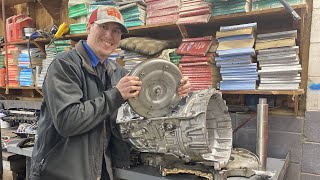
Typical fix: Replace the torque converter. This requires removing the transmission from the vehicle. It is highly recommended to also replace the front pump seal at the same time.
Est. part cost: $300-$700 - Worn Transmission Valve Body 🟡 Medium Probability → Shop Transmission Valve Body The bore for the TCC regulator valve within the aluminum valve body (main control) can wear over time. This wear allows critical hydraulic pressure to leak away from the lock-up circuit, preventing the TCC from applying with enough force. Sonnax makes oversized valve kits to repair this specific wear point.
How to confirm: This is difficult to confirm without disassembly and inspection. A transmission specialist can vacuum test the valve bores to check for wear. It's often diagnosed after a new torque converter fails to solve the problem.
Typical fix: Replace the main control valve body assembly or have the original valve body refurbished with oversized valves (e.g., Sonnax kits) by a specialist.
Est. part cost: $500-$1000 - Low or Dirty Transmission Fluid ⚪ Low Probability → Shop Transmission Assembly Extremely low fluid can cause pressure issues, while fluid contaminated with clutch material or metal shavings can clog solenoid screens and valve body passages, causing valves to stick.
How to confirm: Check the transmission fluid level and condition. The 6R80 has a small, hard-to-access dipstick near the passenger side catalytic converter. The level must be checked when the transmission is at full operating temperature (195-215°F). The fluid should be red and clear (MERCON LV), not brown, black, or burnt-smelling.
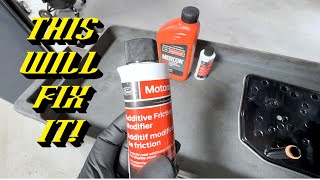
Typical fix: Perform a transmission fluid and filter change using only Motorcraft MERCON LV fluid. While this is a good first step for maintenance, forum experience shows it rarely solves a persistent P0741 code on its own.
Est. part cost: $150-$250 - Failed Torque Converter Clutch (TCC) Solenoid ⚪ Low Probability → Shop Automatic Transmission Torque Converter While the solenoid can fail, it is an uncommon cause for P0741 on this specific transmission because the code is defined as a non-electrical, mechanical/hydraulic performance issue. The PCM has likely already verified the solenoid's electrical integrity.
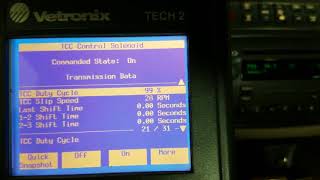
How to confirm: A technician can test the solenoid's resistance and command it with a scan tool. 🎬 Watch: How to perform a quick TCC solenoid response test. However, accessing the TCC solenoid on a 6R75/6R80 requires removing the valve body from the transmission.
Typical fix: Replace the TCC solenoid. This is often misdiagnosed as the primary problem and performed without success.
Est. part cost: $50-$100
Rare But Worth Checking
- Leaking Bridge Seal or Case Sleeves: The molded rubber seal between the valve body and the transmission case (often called a 'bridge seal' or 'pump adapter seal') can harden, crack, and leak. This causes a significant loss of hydraulic pressure to the entire valve body, which is critical for TCC operation. A failed bridge seal can cause various shifting issues, not just a P0741.
- Lead Frame Issues: As noted in NHTSA ODI #11721087, some owners suspect the lead frame when experiencing P0741 and P1744 alongside downshift issues when traveling uphill or through canyons.
Diagnosis Steps
- Verify the code with an OBD-II scanner.
- Check the transmission fluid level and condition. Ensure the check is done at the correct operating temperature (195-215°F). Note the fluid color and smell for signs of burning or contamination.
- Scan for any other transmission-related trouble codes, such as P0735 or P1744.
- Use an advanced scan tool to monitor live data while driving. Specifically watch Torque Converter Clutch Slip Speed (TCC_SLIP_ACT) while commanding lock-up. A reading that stays above 50-100 RPM indicates a failure to lock.
- Command the TCC solenoid on and off with the scan tool to check for a response. Since P0741 is a 'performance' code, an electrical response is expected, but no mechanical lock-up will occur.
- If fluid is good and the issue persists, the next step is internal inspection. Drop the transmission pan and inspect for excessive metal or clutch material.
- If the pan is relatively clean, the valve body should be removed to inspect the TCC regulator valve bore for wear and to replace the bridge/pump adapter seal.
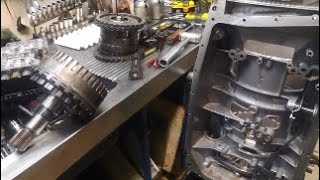
- If the valve body bores and seals appear intact, the torque converter itself is the most likely culprit 🎬 Watch: Full 6R80 teardown and P0741 repair analysis walkthrough. and should be replaced.
Parts You'll Likely Need
- Torque Converter
(OEM #7L3Z7902G)— This is the most frequent point of failure for a P0741 code on this platform, due to internal mechanical wear of the clutch components.
Trusted brands: Motorcraft, Luk, Transtar, Whatever It Takes Transmission Parts
OEM price range: $500-$700
Aftermarket price range: $250-$500 - Transmission Valve Body (Main Control)
(OEM #9L3Z-7A100-A)— Wear in the TCC regulator valve bore is a common cause of hydraulic pressure loss that prevents lock-up. Replacement is often simpler than attempting to re-sleeve the bore.
Trusted brands: Motorcraft
OEM price range: $700-$1000
Aftermarket price range: $500-$800 (Remanufactured) - Transmission Fluid and Filter Kit
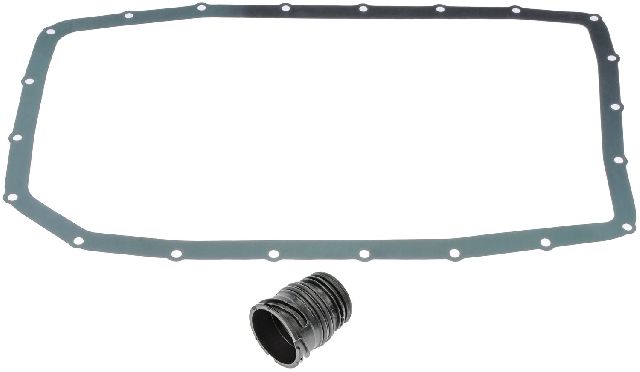
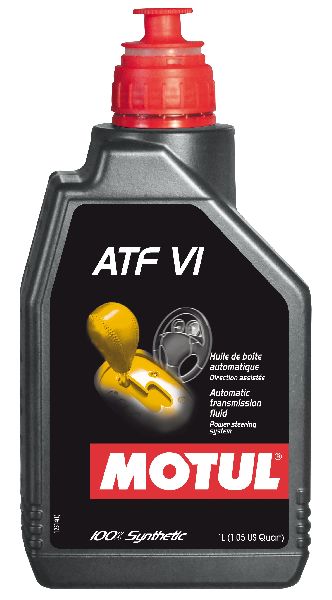
(OEM #XT-10-QLVC (Fluid), FT-188 (Filter))— Required for any repair that involves opening the transmission. The correct fluid is Motorcraft MERCON LV. Using any other fluid type can cause shifting problems and damage.
Related Codes That Often Appear With This One
- P0735 — Stands for 'Gear 5 Incorrect Ratio'. This code can appear with P0741 because the conditions that prevent the torque converter from locking up (like low hydraulic pressure from a bad seal or worn valve body) can also cause slippage in other clutch packs, leading to ratio errors.
- P1744 — Stands for 'Torque Converter Clutch System Performance'. This is a very similar code to P0741 and is often set for the same underlying mechanical or hydraulic reasons. NHTSA ODI #11195793 notes that this code often appears alongside P0741 and can be accompanied by a critical decrease in gas mileage.
Technical Service Bulletins (TSBs) & Recalls
- TSB 10-18-1: For 2007-2010 Expedition/Navigator and 2009-2010 F-150 with 5.4L and 6R75/6R80. Addresses delayed forward/reverse engagement and DTCs P0741, P0731, P0735. Instructs technicians to inspect for a cracked pump adapter seal and a sticking main oil pressure regulator valve in the valve body.
- TSB 18-2160: For later model Fords (through 2017) with 6R80 transmissions. Addresses DTCs P0741 and P1744. The fix is to replace the main control valve body assembly, indicating that valve/bore wear is a known and persistent issue with this transmission family.
Platform-Specific Known Issues
- A Ford Technical Service Bulletin (TSB 10-18-1) for 2007-2010 Expeditions and F-150s with the 5.4L and 6R75/6R80 transmission directly addresses DTCs P0741, P0731, and P0735. It points to two potential causes: a cracked front pump adapter seal (bridge seal) or a sticking main pressure regulator valve in the valve body. The prescribed fix involves removing the mechatronic/valve body, inspecting and cleaning the valve, and installing a new adapter seal.
Mechanic-Grade Diagnostic Values
- TCC Solenoid Resistance (6R80) — expected: 4.8 to 5.6 ohms. Failure: A reading outside this range indicates a faulty solenoid coil.
- SSE (Shift Solenoid E) Resistance (6R80, pre-Nov 2010) — expected: ~10.5 ohms. Failure: A significantly different reading points to a failure in this specific, early-design solenoid.
- SSE (Shift Solenoid E) Resistance (6R80, post-Nov 2010) — expected: 17.5 to 18.6 ohms. Failure: A reading outside this range indicates a faulty solenoid. This value is different from the earlier design.
- Live Data TCC Slip RPM (TCC_SLIP_ACT) — expected: Near 0 RPM when lock-up is commanded and engaged.. Failure: If the slip RPM remains high (e.g., over 200 RPM) when the PCM commands lock-up, it confirms a mechanical or hydraulic failure to engage.
Scan Tool Commands That Help
- Ford IDS, FORScan, high-end bidirectional scanners: TCC Solenoid Command (On/Off or Duty Cycle %) — This command is used to manually activate the TCC solenoid while monitoring system response. For P0741, which is a 'performance' code, the solenoid should respond electrically (a click may be heard, current will flow), but the TCC slip RPM will not drop to zero, helping to isolate the fault to the hydraulic or mechanical side (converter, valve body) rather than the solenoid's electrical circuit.
- Ford IDS: Solenoid Body Strategy Data Download/Upload — This function is required after replacing the valve body or mechatronic unit. The PCM must be programmed with the specific calibration data from the tag on the new valve body to ensure correct solenoid operation and shift quality.
- Ford IDS, FORScan: Transmission Adaptive Tables Reset — After any major transmission repair, such as replacing the torque converter or valve body, the adaptive learning tables in the PCM should be reset. This forces the computer to relearn the transmission's characteristics, which is necessary for proper shift quality.
Wiring & Ground Locations
- G104 — Located in the engine compartment, on the left front inner fender, near the fuse box.. This is a primary engine and chassis ground. A poor connection here can cause a host of electrical issues, potentially affecting sensor readings and module communication, although it is not a direct cause of a hydraulic P0741.
- Engine to Frame Ground Strap — A braided strap connecting the engine block/cylinder head to the vehicle's frame/firewall, typically on the driver's side.. This is a critical ground path for the entire powertrain. If this strap is corroded, loose, or broken, the transmission and engine control modules may not have a stable ground reference, leading to erratic behavior and potentially spurious codes. While P0741 is hydraulic, poor grounding can affect the PCM's ability to accurately diagnose and control the transmission.
- C1575 — The main transmission vehicle harness connector, where the external harness connects to the transmission's internal lead frame.. Pinpoint tests for solenoid circuits involve checking for resistance and shorts to ground at this connector. For example, a service manual might instruct a technician to measure resistance between a specific pin at this connector and the corresponding pin at the PCM connector to verify wire integrity.
Real Owner Repair Stories
- f150forum.com user (2011 F-150, 3.5L EcoBoost, 6R80 transmission, 110k miles) — Check Engine Light with code P0741, decreased gas mileage (16 MPG down to 14.3 MPG).
❌ Tried (didn't work) Replaced the TCC solenoid., Performed a transmission fluid change.
✅ What actually fixed it The user was advised by another forum member, referencing a shop manual, that P0741 on this platform is a non-electrical failure and the most likely cause was a bad torque converter, requiring diagnosis by a transmission shop. - bobistheoilguy.com user 'ripcord' (2008 Ford Expedition, ~200,000 miles) — Transmission would not shift past 2nd gear.
✅ What actually fixed it The failure was a bad bridge seal between the valve body and transmission case. A transmission shop replaced the seal and fluid, and the vehicle was still running fine 65,000 miles later. - NHTSA ODI #11705988 — An owner reported that after a P0741 diagnosis at approximately 54,618 miles, they were informed the vehicle required a completely new transmission and was unsafe to drive as it could seize up.
OEM Part Supersession History
N/A→9L3Z-7A100-A— This is the common service part number for the 6R80 valve body (main control) assembly for this application.
Heads up: When replacing the valve body, the solenoid body strategy ID from the new part must be programmed into the PCM using a tool like Ford's IDS for the transmission to function correctly.
Model Year Variations Within This Range
- 2007-2008 (6R75) vs. 2009-2014 (6R80): The 6R75 and 6R80 are very similar, but there were internal changes. For instance, the Shift Solenoid E (SSE) design and resistance value changed around November 2010. Early 6R80s had an SSE with ~10.5 ohms resistance, while later models used a solenoid with ~18 ohms resistance. They are not interchangeable.
- 2009-2010: A Ford Technical Service Bulletin (TSB 10-18-1, though not found directly in search) is frequently referenced in forums for addressing cracks in the fluid pump adapter seal on 2009-2010 models with the 6R80, which can cause P0741 and other ratio codes.
Diagnostic Flowchart
Other Known Issues on This Vehicle
Issues unrelated to this code that are worth knowing about as an owner of this generation:
- Cam Phaser Rattle / Timing System Failure 🔴 High — Extremely common, often starting after 80,000 miles. Caused by low oil pressure from worn components or clogged oil passages. Manifests as a diesel-like chatter at idle. (Ref: Multiple TSBs exist regarding diagnosis, but no recall. A full timing job is the common fix.)
- Spark Plug Breakage During Removal 🔴 High — Very common on the 5.4L 3V engine. A two-piece spark plug design allows carbon to build up, causing the lower part to seize in the cylinder head and break off during removal. (Ref: Ford issued TSBs with special removal procedures. Special extraction tools are often required.)
- Fuel Pump Driver Module (FPDM) Corrosion 🟠 Medium — Common, especially in regions with road salt. The module is mounted to the frame near the spare tire, and galvanic corrosion between its aluminum body and the steel frame causes it to crack and fail, leading to no-start or stalling conditions. (Ref: No recall, but updated parts include rubber standoffs to prevent direct contact with the frame.)
- Cracked Exhaust Manifold 🟠 Medium — Frequent issue. The factory manifolds are prone to cracking, causing a ticking noise that is most noticeable on a cold start and may quiet down as the engine warms up.
Used vs. New Parts: Buying Guide for This Vehicle
When a used part is the smart pick: For a complex internal transmission fault like P0741, buying used parts is generally risky. However, a complete used transmission from a low-mileage, verified-running donor vehicle can be a cost-effective alternative to a rebuild, especially if the original transmission has multiple issues. A used valve body is not recommended due to the high probability of it having the same wear in the TCC regulator bore that caused the original problem.
Donor-vehicle mileage cap: roughly under 80000 miles for the part to have meaningful remaining life.
What to inspect on the donor part:
- Verify the donor vehicle's VIN to confirm compatibility and check its service history if possible.
- Inspect the fluid from the donor transmission. It should be bright red (MERCON LV) and not smell burnt.
- Look for a clear warranty from the salvage yard, typically 30-90 days, covering the part itself but not labor.
- If buying a complete transmission, ensure the torque converter is included and was drained properly to avoid contamination.
OEM-only on this vehicle (don't cheap out):
- Transmission Fluid (Motorcraft MERCON LV)
- Bridge Seal and other internal gaskets
Aftermarket brands forum-validated for this vehicle:
- Sonnax (for valve body repair kits/parts)
- Luk (for torque converters)
Brands owners have reported issues with on this vehicle:
- Unbranded, no-name torque converters or solenoids from online marketplaces, as quality control can be highly variable.
Real Owner Stories
Aggregated from forums and TSBs cited above. Mileages and costs reflect what owners reported in those sources.
2009 Ford F-150 5.4L V8
Symptoms: Owner experienced codes P0741 and P0735 simultaneously.
What fixed it: The issue was identified as a failure of the pump inlet seal (bridge seal) or the lead frame/valve body.
Source hint: Ford F150 Forum - 2009 Transmission Codes P0741 and P0735
2007-2010 Ford Expedition 5.4L V8
Symptoms: Delayed forward and reverse engagement along with DTCs P0741, P0731, and P0735.
What fixed it: Technicians inspected and cleaned a sticking main oil pressure regulator valve and installed a new pump adapter seal (bridge seal).
Source hint: TSB 10-18-1
2017 Ford Expedition 5.4L V8
Symptoms: Diagnostic trouble codes P0741 and P1744 indicating torque converter performance issues.
What fixed it: Replacement of the main control valve body assembly due to valve/bore wear.
Source hint: TSB 18-2160
Related OBD-II Codes
Frequently Asked Questions
Does TSB 10-18-1 apply to my 2008 Ford Expedition with the 5.4L V8?
Can I fix P0741 on my Expedition by just changing the transmission fluid?
Is the TCC solenoid the most likely cause of P0741 on the 6R80 transmission?
What is the 'bridge seal' mentioned in Ford service bulletins for this vehicle?
My 2015 Expedition has P0741; does the same TSB for the older models apply?
Why does my Expedition shudder at highway speeds when the Check Engine Light is on?
Helpful Videos
We Have This Part in Stock

The information in this article is provided for general reference and educational purposes only. Vehicle specifications, procedures, and part compatibility can vary by production date, trim level, and region. Always consult your vehicle's factory service manual and verify part numbers before purchasing or performing repairs. Safety-critical components such as airbags, seat belts, and braking systems should be installed by a qualified professional.
- Ford Expedition:
- 🧭 Diagnostic Flowchart
- 🎬 Helpful Videos
- 🛍️ Shop This Part
- What's Unique About the 2007-2017 Ford Expedition
- Symptoms You May Notice
- Most Likely Causes
- Rare But Worth Checking
- Diagnosis Steps
- Parts You'll Likely Need
- Related Codes That Often Appear With This One
- Technical Service Bulletins (TSBs) & Recalls
- Platform-Specific Known Issues
- Mechanic-Grade Diagnostic Values
- Scan Tool Commands That Help
- Wiring & Ground Locations
- Real Owner Repair Stories
- OEM Part Supersession History
- Model Year Variations Within This Range
- Other Known Issues on This Vehicle
- Used vs. New Parts: Buying Guide for This Vehicle
- Real Owner Stories
- 2009 Ford F-150 5.4L V8
- 2007-2010 Ford Expedition 5.4L V8
- 2017 Ford Expedition 5.4L V8
- Related OBD-II Codes
- Frequently Asked Questions
- 🎟️ Get 5% Off