

P0741 on a 2005-2009 Hyundai Tucson: Torque Converter Clutch Stuck Off Causes and Fixes
For a 2005-2009 Tucson, P0741 most often points to low/dirty transmission fluid or a failing torque converter clutch (TCC) solenoid. Start by checking the fluid and ensuring it's the correct Hyundai SP-III type; if that's okay, the solenoid pack inside the transmission is the next likely culprit. This is a known issue and often doesn't require a full transmission replacement.
- P0741 on a 2005-2009 Tucson means the torque converter clutch is failing to lock up, which will hurt fuel economy and can damage the transmission over time.
- Always start your diagnosis by checking the transmission fluid level and condition. This is the simplest and most common cause.
- Do not immediately assume you need a new transmission or torque converter; a faulty solenoid is a more likely and much cheaper repair.
- This is not a beginner-friendly DIY repair. Accessing the solenoid or replacing the torque converter requires significant mechanical skill and tools.
- Ignoring this code will lead to increased heat and wear, potentially turning a relatively minor solenoid issue into a major transmission failure.
What's Unique About the 2005-2009 Hyundai Tucson
On the first-generation Hyundai Tucson, this code is a straightforward mechanical or hydraulic issue within the 4-speed automatic transmission (model A4CF2). Unlike some newer Hyundai models that have TSBs for software updates to fix P0741, this generation's issue is almost always physical. The diagnostic path is traditional, focusing on fluid, solenoids, and the torque converter itself. Owners report this code often appears alongside a general transmission fault code, P0700, which simply signals that the TCM has a specific fault stored.
Symptoms You May Notice
- Check Engine Light is illuminated.
- Engine RPM is higher than normal at highway speeds.
- A feeling of the transmission slipping, shuddering, or making a strange shifting pattern at cruising speeds.
- Noticeable decrease in fuel economy.
- Transmission may feel like it's shifting erratically.
- In some cases, the transmission may feel like it's operating normally during city driving.
- Transmission overheating, which may not be obvious without a scan tool.
- Vehicle jerking during operation, as noted in some Hyundai owner reports like NHTSA ODI #11642854.
- Immediately replacing the torque converter. The torque converter is expensive to replace, and the issue is often caused by a much cheaper and simpler problem like old fluid or a bad solenoid. Always diagnose from the simplest and cheapest fix first.
Most Likely Causes
- Low or Dirty Transmission Fluid 🔴 High Probability → Shop Transmission Assembly Transmission fluid degrades over time and mileage. Many vehicles in this age range may have missed fluid service intervals, leading to contaminated fluid that can cause hydraulic components like solenoids to stick. Using the incorrect fluid type can also cause this code.
How to confirm: Check the transmission fluid level and condition via the dipstick. The fluid should be at the correct level, bright red, and not smell burnt or contain debris. Ensure the fluid is Hyundai Genuine SP-III or a compatible equivalent.
Typical fix: Perform a transmission fluid drain-and-fill using fluid that meets Hyundai's SP-III specification. A full flush is sometimes debated on high-mileage vehicles, so a drain-and-fill is a safer first step. 🎬 Watch: A step-by-step guide to changing your transmission fluid.
Est. part cost: $50-$100 - Faulty Torque Converter Clutch (TCC) Solenoid 🟡 Medium Probability → Shop Automatic Transmission Torque Converter The solenoid is an electronic component that can fail electrically or become mechanically stuck from debris in the fluid over many years of service. This is a very common failure point for P0741 across many Hyundai models. Manufacturer Bulletin #5NP-W7J6Y-11 specifically lists solenoid and sensor replacement as a procedure for resolving DTC P0741.
How to confirm: A technician can test the solenoid's resistance with a multimeter and use a scan tool to command it on/off to verify operation. This requires accessing the solenoid on the valve body inside the transmission pan. 🎬 See how to test and replace the TCC solenoid.
Typical fix: Replace the TCC solenoid or the entire solenoid pack. This involves draining the fluid, removing the transmission pan, and replacing the solenoid(s) on the valve body.
Est. part cost: $40-$150 - Failing Torque Converter 🟡 Medium Probability → Shop Automatic Transmission Torque Converter The internal clutch material within the torque converter wears out over time, especially if the vehicle has high mileage or has been driven with other transmission issues (like low fluid or a bad solenoid) for a long time, generating excessive heat.
How to confirm: This is often diagnosed after confirming the fluid and solenoid are good. A scan tool showing high TCC slip RPMs (e.g., >200 RPM) even when the TCC is commanded on points to a worn-out internal clutch.
Typical fix: Replace the torque converter. This is a major repair that requires removing the entire transmission from the vehicle.
Est. part cost: $200-$500 - Damaged Wiring or Connectors ⚪ Low Probability
How to confirm: Visually inspect the wiring harness leading to the transmission for any signs of damage, corrosion, or loose connections. A technician can perform a continuity test on the TCC solenoid circuit.
Typical fix: Repair or replace the damaged section of the wiring harness.
Est. part cost: $20-$200
Rare But Worth Checking
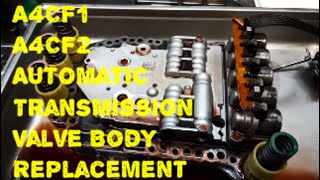
- Clogged Internal Passages or Faulty Valve Body: → Shop Transmission Valve Body Sludge from old transmission fluid can clog the small hydraulic passages within the valve body, preventing fluid from reaching the TCC. In some cases, the entire valve body may need 🎬 Watch: How to replace the valve body and solenoids. to be cleaned or replaced to resolve persistent issues.
Diagnosis Steps
- Scan for codes and confirm P0741 is present. Note any other codes, such as P0700.
- Check the transmission fluid level and condition. Ensure the vehicle is on a level surface and at operating temperature. If the fluid is low, dark, smells burnt, or is not the correct SP-III type, a fluid and filter change is the first recommended step.
- Inspect the external wiring harness and connectors going to the transmission for any obvious damage, corrosion, or loose pins.
- Using an advanced scan tool, monitor the live data for TCC slip speed while driving at a steady cruising speed. If the TCM commands the TCC to lock but the slip speed remains high (over 100-200 RPM), it confirms the lock-up is failing.
- If possible, test the TCC solenoid's resistance to see if it's within the manufacturer's specifications. This requires dropping the transmission pan and accessing the valve body.
- If the fluid is clean, the wiring is intact, and the solenoid tests good (or was replaced), the problem is likely internal to the torque converter or valve body, requiring professional transmission repair.
Parts You'll Likely Need
- Transmission Fluid
(OEM #00232-19012)— Low or degraded fluid is a primary cause. Must use fluid compatible with Hyundai specifications (SP-III for this era).
Trusted brands: Hyundai Genuine SP-III, Idemitsu TLS (SP-III compatible), Valvoline MaxLife Multi-Vehicle ATF
OEM price range: $15-$25 per quart
Aftermarket price range: $8-$15 per quart - Torque Converter Clutch (TCC) Solenoid
(OEM #46313-22700)— This solenoid is a common failure point that prevents the torque converter from locking up. It is part of a solenoid assembly on the valve body.
Trusted brands: Hyundai OE, Rostra (e.g., 52-0484), Transtar
OEM price range: $80-$150
Aftermarket price range: $40-$90 - Torque Converter — If the internal clutch is worn out, the entire torque converter must be replaced. This is a major repair.
Trusted brands: Hyundai OE, Luk, Transtar
OEM price range: $400-$600
Aftermarket price range: $200-$400
Related Codes That Often Appear With This One
- P0700 — P0700 is a generic 'Transmission Control System Malfunction' code. It simply means the TCM has stored a fault code, which in this case is the P0741. It's an informational code that points you toward the specific transmission problem.
Technical Service Bulletins (TSBs) & Recalls
- While there are Hyundai TSBs for P0741 on newer models (e.g., 23-AT-005H for 2019-20 Santa Fe, 20-AT-005H-1 for various 2018+ models), no specific TSB for the 2005-2009 Tucson addressing this code as a primary complaint was found. The issue on this older model is typically diagnosed using standard workshop procedures rather than a specific TSB-guided repair.
- Manufacturer Bulletin #23-01-019H and Bulletin #24-01-018H for other Hyundai models note that P0741 can be associated with TCU logic updates or the need for transmission replacement if software updates do not resolve the condition.
- TSB #23-AT-005H describes a procedure to update the TCU to revise the logic specifically for the P0741 torque converter clutch circuit.
Platform-Specific Known Issues
- Owner Experience: Fluid Change as a Fix: On Hyundai-Forums, multiple owners of first-gen Tucsons and platform-mate Kia Sportages have reported that performing one or two consecutive drain-and-fills with genuine Hyundai SP-III fluid successfully cleared the P0741 code and restored normal TCC lockup operation. This suggests that fluid degradation or slight contamination is a very common trigger.
- Owner Experience: Solenoid Replacement: A user on Reddit with a 2007 Tucson experiencing P0700 and P0741 was advised that the TCC solenoid is internal to the transmission, making it a job for a mechanic rather than a simple parts swap. This confirms the professional service recommendation.
Mechanic-Grade Diagnostic Values
- TCC Solenoid (PCSV-D) and other shift solenoid resistance — expected: 3.0 - 5.0 ohms. Failure: A reading outside this range (open or shorted) indicates a failed solenoid.
- Transmission Fluid Temperature (TFT) Sensor Resistance — expected: Approximately 3.5 kΩ at 77°F (25°C). Failure: An incorrect resistance value can cause the TCM to command shifts improperly, though it's a less direct cause of P0741.
- Transmission Case Connector Pin Test (TCC Solenoid) — expected: Resistance between Pin 7 (Solenoid Ground) and Pin 4 (PCSV-D / TCC) should be 3.0 - 5.0 ohms.. Failure: Infinite resistance (open) or zero resistance (short) points to a problem in the solenoid or internal harness.
Scan Tool Commands That Help
- Hyundai GDS (Global Diagnostic System): Actuation Test for Torque Converter Clutch Solenoid Valve — This bidirectional command allows a technician to manually activate the TCC solenoid with the engine running (but vehicle stationary) to verify its mechanical operation. A clicking sound should be heard from the transmission pan. It also allows monitoring of solenoid output status in the live data stream to confirm the TCM is sending the command, which helps isolate electrical vs. mechanical faults.
Wiring & Ground Locations
- Transmission Case Connector (CBG04) — On the exterior of the A4CF2 transmission case, where the main vehicle harness connects to the internal transmission harness.. This is the primary point for testing the TCC solenoid circuit externally without dropping the pan. Pin 4 is for the TCC solenoid (PCSV-D) and Pin 7 is the common ground for the solenoids. Corrosion or a loose connection here can cause P0741.
- Transmission Ground Strap — A dedicated ground wire assembly connects the transmission case to the vehicle's chassis. For the 2009 model year, the part number is 91880-2S100. Similar straps exist for earlier years.. A poor or corroded transmission ground can cause erratic electrical behavior in all transmission solenoids and sensors, leading to intermittent and hard-to-diagnose codes, including P0741.
Real Owner Repair Stories
- Reddit r/MechanicAdvice user (2007 Hyundai Tucson, 122k miles) — Check Engine Light with codes P0700 and P0741. Normal city driving, but occasional strange downshifting/upshifting on the freeway months prior.
❌ Tried (didn't work) The user was in the diagnostic phase and had not yet attempted a fix.
✅ What actually fixed it The thread did not have a final resolution posted by the original author, but another user with an '05 Tucson with the same codes at highway speeds noted that clearing the codes worked temporarily, pointing towards an intermittent hydraulic or solenoid issue rather than a hard mechanical failure. - NHTSA ODI #11642854 — An owner reported that their vehicle was producing a P0741 code and described the car as "jerking," which was attributed to a transmission-related issue.
OEM Part Supersession History
46313-22700→46313-22700 (current)— This part number has remained consistent but applies to a wide range of Hyundai/Kia vehicles with different 4-speed automatic transmissions from 1999-2011. It is a solenoid assembly.
Heads up: While the part number is shared across models like the Accent, Elantra, and Tiburon, it's crucial to ensure the specific solenoid being replaced within the assembly is correct for the A4CF2 transmission's TCC function (PCSV-D).
Model Year Variations Within This Range
- 2005-2009: The core powertrain, including the 2.0L I4 and 2.7L V6 engines and the A4CF2 4-speed automatic transmission, remained largely unchanged throughout the first generation. A minor exterior refresh occurred for the 2009 model year, but it did not affect the transmission or the common causes for P0741. Therefore, diagnostic procedures and fixes are consistent across this entire year range.
Diagnostic Flowchart
Other Known Issues on This Vehicle
Issues unrelated to this code that are worth knowing about as an owner of this generation:
- Subframe and Undercarriage Corrosion 🔴 High — Very common, especially in regions that use road salt. Can become structurally unsafe around 100,000-150,000 miles. (Ref: No official recall, but numerous owner complaints and NHTSA reports exist. Some dealers have offered goodwill repairs.)
- Crankshaft Position Sensor (CKP) Failure 🟠 Medium — A common failure item that can cause no-start or sudden stalling, often when the engine is hot. Typically triggers code P0335.
- ABS / TCS / ESC Light Illumination 🟡 Low — Frequently caused by a faulty brake light switch, which was subject to a recall, or by failing wheel speed sensors. (Ref: Recall for brake light switch (e.g., NHTSA Campaign ID: 09V122000))
- Lower Control Arm Rust 🔴 High — Related to the general corrosion issue, the front lower control arms can rust to the point of failure, causing a loss of vehicle control.
Used vs. New Parts: Buying Guide for This Vehicle
When a used part is the smart pick: For this repair, sourcing a complete used valve body with solenoids from a low-mileage donor vehicle can be a cost-effective strategy. Since the solenoids and valve body passages are the most common failure points, replacing the entire assembly is often more reliable than replacing a single solenoid.
Donor-vehicle mileage cap: roughly under 80000 miles for the part to have meaningful remaining life.
What to inspect on the donor part:
- Verify the donor vehicle's mileage. Look for a vehicle with under 80,000 miles if possible.
- Ask the dismantler if the transmission fluid was checked upon removal. Bright red fluid is a good sign; dark, burnt-smelling fluid is a major red flag.
- Inspect the electrical connector pins on the used valve body for any signs of corrosion or damage.
OEM-only on this vehicle (don't cheap out):
- Transmission Fluid (Hyundai SP-III). While compatible fluids exist, using the genuine OEM fluid eliminates a significant variable and is highly recommended by forum veterans to resolve this specific code.
Aftermarket brands forum-validated for this vehicle:
- Rostra (for individual solenoids)
- Transtar (for rebuild kits and solenoids)
Brands owners have reported issues with on this vehicle:
- Unbranded, no-name solenoid kits from online marketplaces. These often have high failure rates and incorrect resistance values, leading to repeat repairs.
Real Owner Stories
Aggregated from forums and TSBs cited above. Mileages and costs reflect what owners reported in those sources.
2007 Hyundai Tucson — 122000 miles
Symptoms: Check Engine Light with codes P0700 and P0741; normal city driving but experienced strange downshifting and upshifting patterns on the freeway.
What fixed it: The owner was advised the TCC solenoid is internal and requires professional service; forum members suggested fluid degradation is a common trigger.
Source hint: Reddit r/MechanicAdvice - 2007 Hyundai Tucson P0700/P0741
2006 Hyundai Tucson
Symptoms: Intermittent shifting problems and a P0741 code indicating the Torque Converter Clutch is stuck off.
What fixed it: Expert diagnosis pointed to potential issues with wiring, low line pressure, or the TCC solenoid itself.
Source hint: 2CarPros - 2006 Hyundai Tucson Code P0741
2005-2009 Hyundai Tucson
Symptoms: P0741 code and loss of normal TCC lockup operation.
What fixed it: Performing one or two consecutive drain-and-fills with genuine Hyundai SP-III fluid successfully cleared the code and restored operation.
Source hint: Hyundai-Forums owner experience cited in 'Fluid Change as a Fix'
Documented NHTSA Reports
Hyundai Owner Complaint
Symptoms: The vehicle displayed a P0741 code and experienced noticeable jerking while driving.
What fixed it: The owner was informed the issue was related to the transmission system.
Source hint: NHTSA ODI #11642854
Related OBD-II Codes
Frequently Asked Questions
Is there a specific TSB for the P0741 code on my 2005-2009 Hyundai Tucson?
What type of transmission fluid should I use to fix P0741 in my Tucson?
Can I replace the TCC solenoid myself on a 2007 Tucson?
My Tucson has P0741 and the ABS light is on; are they related?
Is a full transmission flush recommended for a high-mileage Tucson with this code?
Does the Kia Sportage have the same P0741 issues as my Tucson?
Helpful Videos

We Have This Part in Stock

The information in this article is provided for general reference and educational purposes only. Vehicle specifications, procedures, and part compatibility can vary by production date, trim level, and region. Always consult your vehicle's factory service manual and verify part numbers before purchasing or performing repairs. Safety-critical components such as airbags, seat belts, and braking systems should be installed by a qualified professional.
- Hyundai Tucson:
- 🧭 Diagnostic Flowchart
- 🎬 Helpful Videos
- 🛍️ Shop This Part
- What's Unique About the 2005-2009 Hyundai Tucson
- Symptoms You May Notice
- Most Likely Causes
- Rare But Worth Checking
- Diagnosis Steps
- Parts You'll Likely Need
- Related Codes That Often Appear With This One
- Technical Service Bulletins (TSBs) & Recalls
- Platform-Specific Known Issues
- Mechanic-Grade Diagnostic Values
- Scan Tool Commands That Help
- Wiring & Ground Locations
- Real Owner Repair Stories
- OEM Part Supersession History
- Model Year Variations Within This Range
- Other Known Issues on This Vehicle
- Used vs. New Parts: Buying Guide for This Vehicle
- Real Owner Stories
- 2007 Hyundai Tucson — 122000 miles
- 2006 Hyundai Tucson
- 2005-2009 Hyundai Tucson
- Documented NHTSA Reports
- Hyundai Owner Complaint
- Related OBD-II Codes
- Frequently Asked Questions
- 🎟️ Get 5% Off