

P0741 on 2014-2023 Jeep Cherokee: Torque Converter Clutch Performance Guide
P0741 on a Jeep Cherokee indicates the torque converter clutch is failing to lock up. This is often due to an internal transmission issue. For 2014-2015 models, a faulty valve body is a known problem, while on other years, a failing torque converter is also a strong possibility. This is a complex repair requiring professional service and specialized tools for the ZF 9-speed transmission.
- P0741 on a 2014-2023 Cherokee is a serious transmission code that should be addressed immediately to prevent further damage.
- The most likely causes are internal to the transmission: a faulty valve body (especially on 2014-2015 models) or a worn-out torque converter.
- This is not a DIY-friendly repair. It requires advanced diagnostics, specialized tools, and likely a software re-flash from a dealer or qualified transmission shop.
- Always start diagnosis by checking for TCM software updates and verifying the transmission fluid level and condition with the proper procedure.
What's Unique About the 2014-2023 Jeep Cherokee
The 2014-2023 Jeep Cherokee (KL generation) uses a ZF 9-speed automatic transmission (model 948TE or 9HP48), which has a well-documented history of complex issues and software updates. While P0741 can occur for many reasons, early models (2014-2015) are known to have issues with the transmission valve body, which contains the solenoids that control fluid flow. Unlike older, simpler transmissions, a fix often involves replacing the entire valve body assembly and requires a software re-flash by a dealer or specialized shop, rather than just a single solenoid. The transmission's design was innovative, using unique construction to fit nine gears, but its launch was delayed due to software issues, and it has been the subject of numerous owner complaints.
Symptoms You May Notice
- Check Engine Light is on
- Engine RPM is higher than usual at highway speeds
- Reduced fuel economy
- Shuddering or vibrations at cruising speeds
- Transmission overheating, potentially triggering a warning light
- Vehicle may feel like it's slipping or has delayed/harsh shifts
- Transmission may get stuck in one gear or go into emergency/limp mode
- Replacing only the TCC solenoid. On the ZF 9-speed transmission, the solenoids are typically serviced as part of the complete valve body assembly.
- Assuming it's an engine problem causing the shudder or high RPMs, when it's actually the transmission failing to lock up.
- Replacing the torque converter when the actual fault lies in a failing valve body, or vice-versa. Proper scan tool diagnosis is critical.
Most Likely Causes
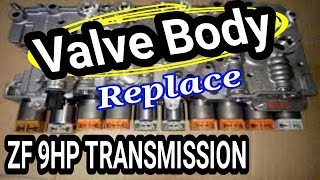
- Faulty Transmission Valve Body 🔴 High Probability → Shop Transmission Valve Body The valve body on 2014 and some 2015 models with the 9-speed transmission is a known issue. The solenoids, including the TCC solenoid, are integrated into this unit, and internal wear or contamination can disrupt the hydraulic pressure needed to lock the torque converter. This part is often replaced as a complete assembly with the TCM.
How to confirm: A technician will use a professional scan tool to monitor TCC slip speed and solenoid commands. If the command is sent but the slip remains high and the fluid is clean, the valve body is a primary suspect, especially on early KL models.
Typical fix: Replacement of the entire transmission valve body assembly, followed by a fluid fill and a mandatory software re-flash/relearn procedure.
Est. part cost: $1000-$2000 - Worn or Failed Torque Converter 🟡 Medium Probability → Shop Automatic Transmission Torque Converter This is a common cause for P0741 across many vehicle makes. The internal clutch lining can wear out, or the lock-up piston can develop cracks, preventing it from holding pressure and engaging properly. Debris from a failing converter can contaminate the entire transmission.
How to confirm: This is typically diagnosed after ruling out fluid issues, the valve body, and wiring. If all other components function correctly, the torque converter is the likely point of mechanical failure. A diagnostic step can involve dropping the transmission pan to check for excessive metal debris.
Typical fix: Complete removal of the transmission from the vehicle to replace the torque converter. This is a major, labor-intensive repair. If metal shavings are found, the valve body may also need to be cleaned or replaced.
Est. part cost: $400-$1000 - Low or Degraded Transmission Fluid ⚪ Low Probability → Shop Transmission Assembly The ZF 9-speed transmission is extremely sensitive to fluid level and condition. Incorrect fluid type or fluid that is old, burnt, or contaminated with debris can prevent the TCC solenoid and valve body from operating correctly.
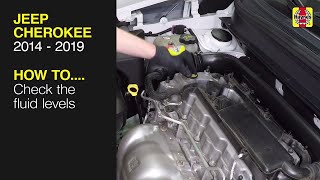
How to confirm: The fluid level and condition must be checked. This transmission does not have a dipstick, so it requires a specific procedure on a vehicle lift to check the level at the correct temperature. Dark, burnt-smelling fluid or fluid with metal particles indicates a problem.
Typical fix: Perform a transmission fluid drain and fill using the correct Mopar ZF 8&9 Speed ATF or an equivalent approved fluid. A full flush may be recommended if the fluid is very dirty, though some mechanics advise against this on high-mileage transmissions.
Est. part cost: $150-$300
Rare But Worth Checking
- TCM Software/Calibration Issue: Sometimes, the Transmission Control Module (TCM) may have outdated software that can cause improper TCC operation. Checking for available software updates (like TSB 21-013-16 for shift quality) should be an early step in diagnosis, as multiple updates have been released for this transmission.
- Damaged Wiring or Connectors: An open or short in the wiring harness leading to the transmission can interrupt the signal to the TCC solenoid. This is less common than internal component failure but should be inspected for corrosion or damage.
Diagnosis Steps
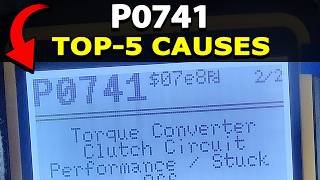
- Use a professional OBD-II scanner to confirm P0741 is present and check for other codes like P0700. 🎬 Watch: Understanding P0741 causes and diagnostic steps
- Check for any available Technical Service Bulletins (TSBs) or software updates for the Powertrain Control Module (PCM) or Transmission Control Module (TCM). TSB 21-013-16 addresses shift quality and may be relevant.
- With the vehicle on a lift and at the correct operating temperature, have a professional check the transmission fluid level and condition. This transmission has no dipstick and requires a specific procedure.
- Use a scan tool to monitor live data while driving. Observe the 'TCC Commanded State' and 'Torque Converter Slip Speed'. When lockup is commanded, the slip speed should drop to near zero. If it remains high (e.g., >200 RPM), a mechanical or hydraulic fault is likely.
- Inspect the transmission housing and electrical connector for any visible damage, corrosion, or fluid leaks.
- If the fluid is clean and the wiring is intact, the next step is to suspect a faulty valve body (especially on 2014-2015 models) or an internal failure of the torque converter.
- Further diagnosis involves dropping the transmission pan to inspect for excessive metal debris on the magnet. Significant debris points towards torque converter or other internal mechanical failure.
- If the valve body is ruled out and debris is minimal, the transmission must be removed to replace the torque converter.
Parts You'll Likely Need
- Transmission Valve Body w/ Solenoids
(OEM #68441770AB (check specific VIN))— This is a known failure point on early model KL Cherokees and contains the TCC solenoid. It is often replaced as a complete unit.
Trusted brands: Mopar
OEM price range: $1500-$2200
Aftermarket price range: $800-$1200 - Automatic Transmission Torque Converter — If the valve body and fluid are not at fault, the internal lock-up clutch within the torque converter has likely failed mechanically.
Trusted brands: Mopar, ZF, Pro-King (remanufactured)
OEM price range: $500-$1000
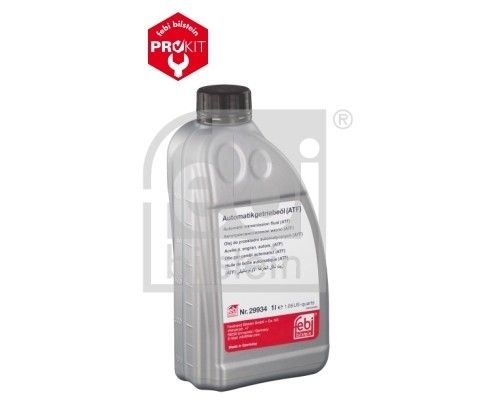
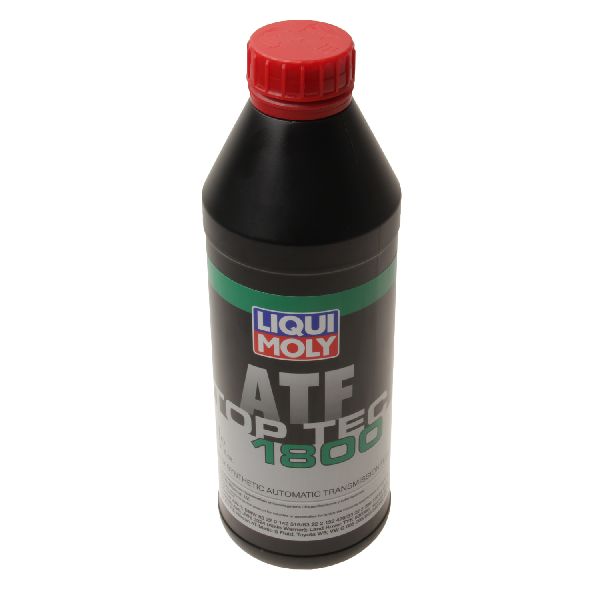
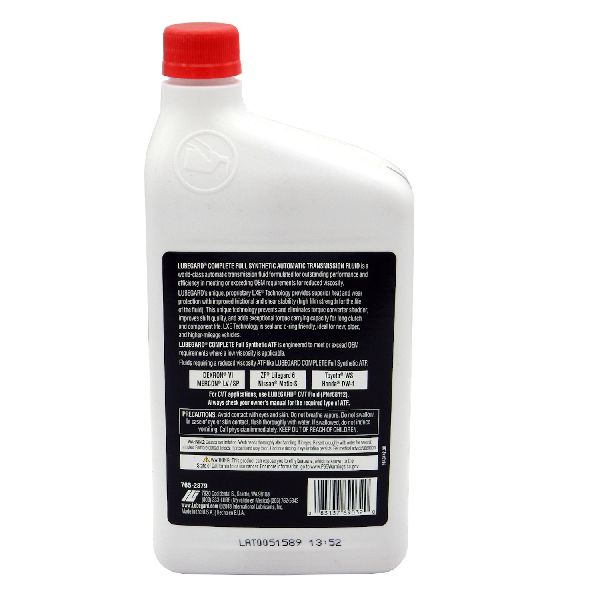
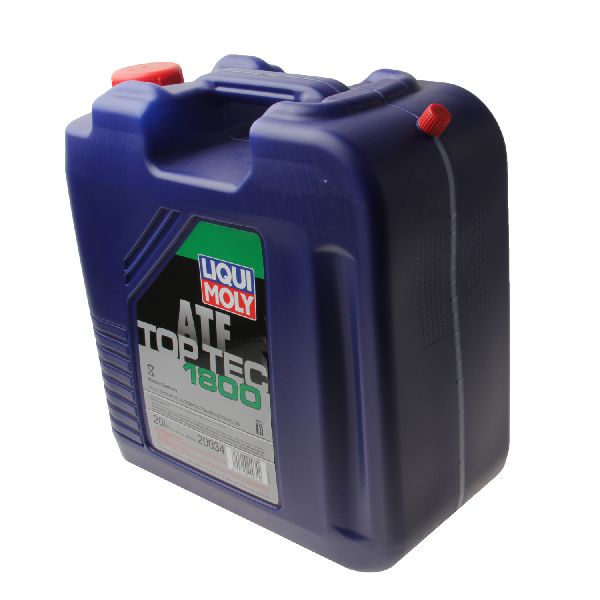
Aftermarket price range: $300-$600 - Mopar ZF 8&9 Speed ATF
(OEM #68218925AA)— The correct fluid is required for any repair involving opening the transmission. Using the wrong fluid can cause further damage.
OEM price range: $25-$40 per quart
Related Codes That Often Appear With This One
- P0700 — P0700 is a generic code that means the Transmission Control Module (TCM) has stored a fault. It will almost always be present alongside a specific transmission code like P0741.
Technical Service Bulletins (TSBs) & Recalls
- TSB 21-013-16: This TSB from 2016 provides a 'Quick Learn' procedure for the 948TE transmission to address customer complaints of erratic or poor shift quality. While not a direct fix for a mechanical P0741 fault, it's an example of the many software-related procedures for this transmission and should be performed after major repairs.
Platform-Specific Known Issues
- The ZF 9-speed transmission (948TE/9HP48) in these vehicles has been subject to numerous complaints, software updates, and even delayed the vehicle's launch for various shifting issues. While no recall directly addresses P0741, the transmission's general reputation for problems is a key context for this code.
- Valve body failure is a specifically noted problem on 2014-2015 models, often leading to P0741 and other transmission faults.
- Some owners on forums report dealers opting to replace the entire transmission rather than attempting a valve body or torque converter repair, with costs running from $6,500 to $8,500 CAD.
Mechanic-Grade Diagnostic Values
- TCC Solenoid Resistance — expected: 5 - 6 ohms. Failure: A reading significantly outside this range, or an open/infinite reading, points to a faulty solenoid coil.
- TCC Solenoid Circuit Voltage (Key On, Engine Off) — expected: ~12 V (+/- 0.5 V). Failure: A voltage reading below 9V at the transmission connector can indicate a wiring issue or a problem with the TCM's driver circuit.
- TCC Actual Slip vs. TCC Desired Slip (Live Scan Tool Data) — expected: Actual slip should closely follow desired slip, dropping to near zero when lockup is commanded.. Failure: If TCC Actual Slip exceeds TCC Desired Slip by more than 60 RPM when lockup is commanded, it indicates a hydraulic or mechanical failure (slipping clutch).
Scan Tool Commands That Help
- wiTECH or equivalent professional scanner: TCC Solenoid Activation / Duty Cycle Command — This bidirectional command allows a technician to manually command the TCC solenoid on and off while the vehicle is stationary (or on a lift) to check for a response. Listening for a click or monitoring line pressure can help determine if the solenoid is electrically functional and capable of moving, isolating it from a hydraulic or mechanical issue.
- wiTECH or equivalent professional scanner: Transmission Quick Learn Procedure — This function must be performed after replacing the valve body, TCM, or entire transmission. It allows the TCM to learn the specific hydraulic and mechanical characteristics of the new components to ensure proper shift timing and feel. Skipping this step can lead to harsh shifts or persistent codes.
Wiring & Ground Locations
- Main Transmission Connector (TCC Solenoid Circuit) — The main round electrical connector on the 948TE transmission case.. To test the TCC solenoid's resistance without removing the transmission pan, a technician can probe pins 1 and 10 at this connector. This provides a quick, non-invasive check of the solenoid coil's integrity.
- Engine Block to Chassis Ground — A primary ground strap typically runs from the engine block (often near a motor mount or the starter) to the vehicle's chassis/frame.. A poor engine ground can cause electrical noise and voltage drops, potentially affecting the TCM's ability to accurately control transmission solenoids and interpret sensor readings. While not a direct cause of P0741, ensuring this ground is clean and tight is a crucial step in diagnosing any electronic transmission issue.
- Firewall Grounds — Multiple ground points are often located on the firewall, which separates the engine bay from the passenger compartment.. These grounds are often used by control modules, including the PCM and TCM. A corroded or loose firewall ground can lead to erratic module behavior and phantom codes.
OEM Part Supersession History
Varies by year→Varies by year— Valve Body and Solenoid Configuration Change
Heads up: Early models (approx. 2014-2015) often use a 9-solenoid valve body for a 'Park by Cable' system. Later models may use a 10-solenoid version for 'Park by Wire' systems. These are not interchangeable. It is critical to verify the exact configuration by VIN or by inspecting the original part before ordering a replacement.
Model Year Variations Within This Range
- 2014-2015: These early model years are particularly known for valve body failures leading to P0741. The valve body for these years is typically the 9-solenoid, 'Park by Cable' version.
- 2016-2023: Later models may feature revised valve bodies and software. They may use a 10-solenoid 'Park by Wire' configuration, making parts incompatible with earlier models. While still susceptible to P0741, the cause may be less likely to be the specific valve body defect seen in early models and more related to general wear on the torque converter or fluid degradation.
Diagnostic Flowchart
Other Known Issues on This Vehicle
Issues unrelated to this code that are worth knowing about as an owner of this generation:
- Excessive Oil Consumption (2.4L Tigershark Engine) 🔴 High — Widespread issue, can start as early as 20,000 miles. Owners report adding 1 quart of oil every 1,000-3,000 miles. (Ref: Covered by warranty extensions (e.g., W80) and TSB 09-018-24, which outlines an oil consumption test. Failure often leads to a long block engine replacement.)
- Unpredictable Transmission Behavior (ZF 9-Speed) 🔴 High → Shop Transmission Assembly — Common across all model years, especially 2014-2016. Includes harsh 1-2 shifts, lunging, and random shifts to neutral. (Ref: Multiple software updates and TSBs (e.g., 21-013-16) have been released to improve shift logic, but mechanical issues often persist.)
- Power Transfer Unit (PTU) Failure 🟠 Medium — A known failure point on AWD models, can cause grinding noises, a 'service 4WD' light, and in some cases, cause the vehicle to shift into neutral. (Ref: Often covered under the powertrain warranty. Failure requires replacement of the PTU.)
- Vehicle 'Wobble' or 'Shimmy' 🟠 Medium — Some owners report a persistent vibration or 'wobble' at highway speeds, often incorrectly called 'death wobble'. It's typically related to axle shafts, wheel bearings, or tire balance issues, not the solid-axle problem seen in Wranglers.
- Uconnect Infotainment System Glitches 🟡 Low — Common complaints include screen freezing, bluetooth connectivity issues, and unresponsive controls. Usually resolved by a software update or a system reset. (Ref: Various software updates have been released by Jeep to address these bugs.)
Used vs. New Parts: Buying Guide for This Vehicle
When a used part is the smart pick: A complete, low-mileage transmission assembly from a documented donor vehicle (e.g., a rear-end collision) can be a cost-effective alternative to a full rebuild. However, buying a used, individual valve body or torque converter is very high-risk due to the known failure patterns of these components.
Donor-vehicle mileage cap: roughly under 60000 miles for the part to have meaningful remaining life.
What to inspect on the donor part:
- Verify the donor vehicle's VIN to ensure compatibility of the transmission model and valve body version (9 vs. 10 solenoid).
- Inspect the transmission case for any cracks, damage, or signs of extreme heat (discoloration).
- If possible, check the color and smell of the transmission fluid from the donor. Dark, burnt-smelling fluid is a major red flag.
- Obtain any available history on the donor vehicle.
OEM-only on this vehicle (don't cheap out):
- Mopar ZF 8&9 Speed ATF (P/N 68218925AA): The use of correct, manufacturer-specified fluid is absolutely critical in this transmission. Do not use generic 'universal' ATF.
Aftermarket brands forum-validated for this vehicle:
- Sonnax: For valve body repair, Sonnax offers 'Zip Kits' (P/N 948TE-ZF9-HONDA-ZIP) that contain improved seals and components to fix common wear points and pressure leaks in the original valve body, which can be a cost-effective alternative to a full replacement.
- ATK Engines: Offers remanufactured torque converters (e.g., P/N TQC81) that can be a reliable alternative to a more expensive OEM unit.
Real Owner Stories
Aggregated from forums and TSBs cited above. Mileages and costs reflect what owners reported in those sources.
2014-2015 Jeep Cherokee
Symptoms: The vehicle experienced erratic ZF 9-speed behavior, including shifting to neutral and harsh bangs.
What fixed it: The final diagnosis required replacing the PTU and shifter module.
Source hint: Reddit r/KLCherokee - Alright ya'll, the ZF-9 Gremlins have entered the chat
2014-2023 Jeep Cherokee
Symptoms: Owner received a high-cost quote for repairs involving solenoids, sensors, and a torque converter due to P0741.
What fixed it: Repair involving solenoids, sensors, and the torque converter.
Cost: $3000-$3000
Source hint: Reddit r/MechanicAdvice - Need Advice ASAP Code P0741 Transmission Issue
2014-2015 Jeep Cherokee
Symptoms: P0741 and other transmission faults related to valve body failure.
What fixed it: Replacement of the entire transmission valve body assembly, followed by a fluid fill and a mandatory software re-flash/relearn procedure.
Source hint: vehicle_specific_issues
Documented NHTSA Reports
Jeep Transmission Failure
Symptoms: An owner reported that the vehicle would not drive at all despite having power. Diagnostic codes included P0777 (Pressure Control Solenoid B Stuck On), P0741 (Torque Converter Clutch Solenoid Stuck Off), and P0730 (Incorrect Gear Ratio) at approximately 112,000 miles.
Source hint: NHTSA ODI #11388639
Transmission Replacement Recommendation
Symptoms: A report describes a vehicle that failed to move with the accelerator pedal depressed. A mechanic located failure codes P0777 and P0741 and informed the owner that the transmission required replacement.
Source hint: NHTSA ODI #11302529
Related OBD-II Codes
Frequently Asked Questions
Does TSB 21-013-16 fix the P0741 code on my 2016 Jeep Cherokee?
Why is the valve body a common suspect for P0741 on 2014-2015 Cherokee models?
Can I check the transmission fluid myself to see if it's causing the P0741 code?
Is it true that dealers often replace the entire transmission for this code?
What are the symptoms of a failing torque converter on a 2014-2023 Cherokee?
Helpful Videos


We Have This Part in Stock

The information in this article is provided for general reference and educational purposes only. Vehicle specifications, procedures, and part compatibility can vary by production date, trim level, and region. Always consult your vehicle's factory service manual and verify part numbers before purchasing or performing repairs. Safety-critical components such as airbags, seat belts, and braking systems should be installed by a qualified professional.
- Jeep Cherokee:
- 🧭 Diagnostic Flowchart
- 🎬 Helpful Videos
- 🛍️ Shop This Part
- What's Unique About the 2014-2023 Jeep Cherokee
- Symptoms You May Notice
- Most Likely Causes
- Rare But Worth Checking
- Diagnosis Steps
- Parts You'll Likely Need
- Related Codes That Often Appear With This One
- Technical Service Bulletins (TSBs) & Recalls
- Platform-Specific Known Issues
- Mechanic-Grade Diagnostic Values
- Scan Tool Commands That Help
- Wiring & Ground Locations
- OEM Part Supersession History
- Model Year Variations Within This Range
- Other Known Issues on This Vehicle
- Used vs. New Parts: Buying Guide for This Vehicle
- Real Owner Stories
- 2014-2015 Jeep Cherokee
- 2014-2023 Jeep Cherokee
- 2014-2015 Jeep Cherokee
- Documented NHTSA Reports
- Jeep Transmission Failure
- Transmission Replacement Recommendation
- Related OBD-II Codes
- Frequently Asked Questions
- 🎟️ Get 5% Off