

P0741 on 2019-2024 Mazda 3: Torque Converter Clutch Stuck Off Causes and Fixes
P0741 on a 2019-2024 Mazda 3 most often indicates an internal transmission issue, likely with the torque converter itself or the valve body. While starting with a fluid check is wise, this code frequently requires professional diagnosis and potentially replacing the torque converter, a costly repair. This code is notably rare on this specific vehicle generation.
- P0741 means the torque converter clutch is failing to lock, which will hurt your fuel economy and can cause transmission damage over time.
- The first and easiest thing to check is the transmission fluid level and condition, though this requires a specific procedure on a Mazda 3.
- Unlike some other cars, there isn't a known, common defect causing this code on the 2019-2024 Mazda 3. Diagnosis must be thorough.
- More often than not, this code points to a serious internal issue like a bad torque converter, which is a major repair requiring transmission removal.
- This is not a DIY-friendly repair; professional diagnosis is strongly recommended to avoid replacing the wrong expensive parts.
What's Unique About the 2019-2024 Mazda 3
The 2019-2024 Mazda 3 uses the reliable Skyactiv-Drive 6-speed automatic transmission. Unlike some other manufacturers that have issued specific Technical Service Bulletins (TSBs) for P0741 related to manufacturing defects in the torque converter, there are no widespread, documented patterns of this failure on this specific generation of Mazda 3. Extensive searches of owner forums like Reddit and Mazda-specific communities show a distinct lack of P0741 complaints for this model. Therefore, the appearance of this code should be treated as a serious but isolated internal transmission fault that requires a full diagnostic procedure rather than being a known common failure point.
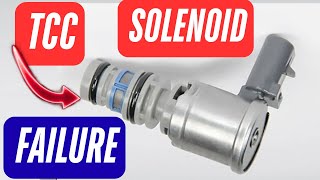
🎬 Watch: A quick 3-minute breakdown of the P0741 code.Symptoms You May Notice
- Check Engine Light is on
- AT (Automatic Transmission) warning light may be on
- Noticeable decrease in fuel economy
- Engine RPM is higher than usual at highway speeds
- Transmission may feel like it's slipping or has delayed shifts
- Shuddering or vibration at highway speeds
- Transmission overheating
- Replacing only the TCC solenoid when the root cause is a failing torque converter shedding debris that clogs the new solenoid.
- Assuming a major mechanical failure before checking for a simple TCM software update, which a dealer can perform.
Most Likely Causes
- Low or Degraded Transmission Fluid 🟡 Medium Probability → Shop Transmission Assembly While not a specific vehicle flaw, fluid is the lifeblood of the transmission. Low levels or fluid that is old, burnt, or contaminated with debris can prevent the hydraulic pressure needed to engage the TCC solenoid and clutch. Using the incorrect fluid type can also cause this issue.
How to confirm: Check the transmission fluid level and condition. Mazda's Skyactiv-Drive transmission does not have a traditional dipstick; the level must be checked via a fill/check plug on the transmission case, typically when the fluid is at a specific temperature (e.g., 40-50°C). The fluid should be bright red and clear, not dark, brown, or smelling burnt.
Typical fix: Perform a transmission fluid drain-and-fill or a full fluid exchange using the correct Mazda-specific fluid (ATF FZ). 🎬 Watch: Step-by-step guide to replacing your Mazda 3 transmission fluid.
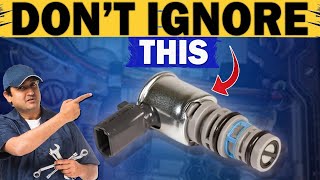
Est. part cost: $75-$150 for fluid - Faulty Torque Converter Clutch (TCC) Solenoid / Valve Body Issue 🟡 Medium Probability → Shop Automatic Transmission Torque Converter The TCC solenoid is an electro-hydraulic valve that directs fluid to apply the clutch. It can fail electrically or become stuck due to debris in the fluid. On Skyactiv transmissions, these solenoids are part of the valve body inside the transmission oil pan. TSBs for other DTCs on this transmission point to contamination causing pressure switches in the valve body to stick. In a cross-manufacturer reference, NHTSA ODI #10536609 notes a case where a Mazda owner reported the torque converter solenoid needed to be replaced to address the P0741 code.
How to confirm: A professional technician can use a high-end scan tool to command the TCC solenoid on and off while monitoring live data (TCC slip RPM) to see if it responds. The solenoid's electrical resistance can also be tested once the transmission pan is removed.
Typical fix: Replacement of the faulty solenoid or the entire valve body assembly. This requires removing the transmission oil pan.
Est. part cost: $200-$800 for a solenoid or valve body - Internal Torque Converter Failure 🔴 High Probability → Shop Automatic Transmission Torque Converter This is often the ultimate cause if the fluid and solenoids are good. The internal clutch lining of the torque converter can wear out, or internal seals can fail, preventing it from holding pressure and locking up. TSBs for other makes show this is a common failure mode for this code. NHTSA ODI #10162479 describes a "slipping torque converter" associated with P0741, while NHTSA ODI #738516 specifically identifies the code as "TCC stuck." Debris from a failing converter is a primary cause for repeat failures of new solenoids.
How to confirm: This is typically diagnosed by exclusion. If the fluid is good, the solenoids test correctly, and wiring is intact, the torque converter itself is the most likely culprit. A technician may also observe excessive metallic debris in the transmission pan, pointing to internal wear.
Typical fix: The transmission must be removed from the vehicle to replace the torque converter.
Est. part cost: $400-$900 for a remanufactured torque converter
Rare But Worth Checking
- Wiring or Connector Issues: Damage to the wiring harness leading to the transmission can interrupt the signal to the TCC solenoid. This is less common but should be checked, especially if there is any sign of physical damage under the vehicle or rodent activity.
- Faulty Transmission Control Module (TCM): → Shop Transmission Assembly It is very rare for the TCM itself to fail. This should only be considered after all other possibilities (fluid, mechanical parts, and wiring) have been exhaustively ruled out by a professional. Sometimes a software update is all that is needed.
Diagnosis Steps
- Scan the vehicle's computer for P0741 and any other related trouble codes. Check for any available TCM software updates with a dealer-level tool.
- Check the transmission fluid level and condition. This is a critical first step, as low or dirty fluid is a common cause of transmission problems. Note: This requires the vehicle to be level and the fluid to be at a specific temperature. NHTSA ODI #751990 mentions a case where a technician recommended a transmission service as a "wait and see" approach after P0741 was detected.
- Use an advanced scan tool to monitor live transmission data, specifically engine RPM, transmission input speed, and TCC slip RPM. Command the TCC to lock up at cruising speed and verify if the slip RPM drops to near zero.
- Inspect the transmission wiring harness and connectors for any visible damage, corrosion, or loose connections.
- If fluid and wiring are okay, the next step is to drop the transmission pan to inspect for excessive metal debris on the pan magnet. A fine metallic paste is normal, but large flakes or chunks indicate a significant mechanical failure.
- With the pan off, the TCC solenoid and other valve body solenoids can be electrically tested for correct resistance using a multimeter.
- If the solenoids test good but debris is present, or if all other tests pass, the torque converter is the primary suspect and likely needs replacement.
Parts You'll Likely Need
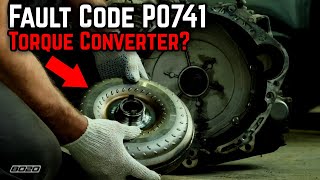
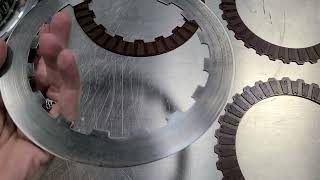
- Torque Converter — Often the root cause of P0741 when fluid and solenoids are confirmed to be good. The internal clutch fails, preventing lock-up. 🎬 See inside: A teardown of the Mazda Skyactiv torque converter clutches.
Trusted brands: Mazda OE, Luk
OEM price range: $700-$1100
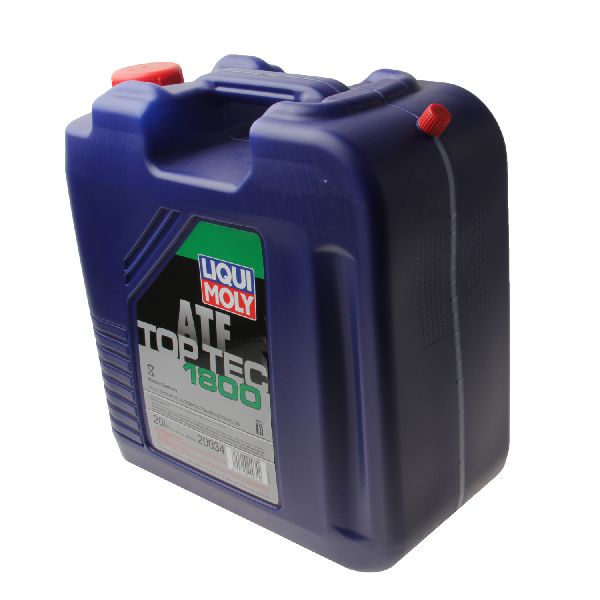
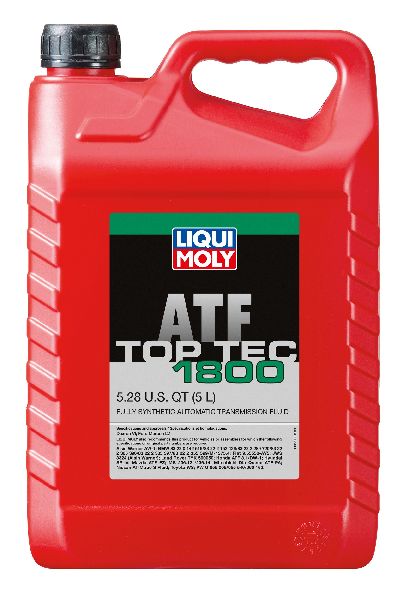
Aftermarket price range: $400-$700 - Automatic Transmission Fluid (Mazda ATF-FZ)
(OEM #0000-FZ-113E-01)— Correct fluid is essential. Low or degraded fluid can cause this code, and new fluid is required for any internal repair.
Trusted brands: Mazda OE
OEM price range: $20-$30 per quart - Valve Body Assembly
(OEM #FZ21-21-100J)— If diagnosis points to a failed TCC solenoid or a blockage within the valve body, the entire assembly is often replaced. The solenoids are integrated into this part.
Trusted brands: Mazda OE, Rostra
OEM price range: $800-$1200
Aftermarket price range: $300-$600
Technical Service Bulletins (TSBs) & Recalls
- TSB 05-004/19: While not for P0741, this TSB addresses other transmission DTCs (P0842, P0847, etc.) on SKYACTIV 6ATs caused by contamination leading to stuck oil pressure switches in the valve body. This highlights a potential sensitivity of the valve body to fluid contamination.
Platform-Specific Known Issues
- The P0741 code is exceptionally rare on the 2019-2024 Mazda 3. Forum and TSB searches show no pattern of this failure. Its appearance suggests an isolated, serious fault rather than a common defect.
Mechanic-Grade Diagnostic Values
- TCC Slip RPM (Live Data) — expected: Near 0 RPM when TCC lockup is commanded by the scan tool.. Failure: A difference of 200 RPM or more between the target slip and actual slip for over 5 seconds when lockup is commanded.
- TCC Feedback Hydraulic Pressure (Live Data) — expected: Pressure should rise significantly when the TCC is commanded to lock.. Failure: The P0741 code can be set if the slip is high while feedback pressure is simultaneously 200 kPa (29.0 psi) or more, indicating the command was sent but the clutch isn't holding.
- TCC Solenoid Resistance — expected: Approximately 9.8 - 11.2 Ohms at 20°C (68°F).. Failure: A reading significantly outside this range (open circuit or short) indicates a failed solenoid coil.
Scan Tool Commands That Help
- Mazda M-MDS / MDARS: TCC Dynamic Test / Solenoid Simulation — To manually command the TCC solenoid on and off during a road test while monitoring live data (like TCC Slip RPM) to verify if the solenoid is responding to commands from the TCM.
- Mazda M-MDS / MDARS: Initial Learning Procedure — This is a required transmission adaptation reset that must be performed after replacing the valve body or the entire transmission to ensure proper shift quality and operation.
Wiring & Ground Locations
- Transmission Case Ground — A primary ground strap is typically bolted directly from the vehicle's chassis or negative battery cable run to a bolt on the transmission bell housing.. A poor ground connection at the transmission case can cause erratic behavior and incorrect readings for all transmission sensors and solenoids, including the TCC solenoid, leading to performance codes.
- Engine Block / Cylinder Head Ground — Additional grounds are often found connecting the engine block or cylinder head to the chassis, often near the strut towers.. The TCM relies on a stable ground reference shared with the engine. A faulty engine ground can create voltage offsets that interfere with the TCM's ability to correctly control the transmission solenoids.
"I Checked Everything" — The Actual Cause
- In older but mechanically similar transaxles, P0741 has occurred when all solenoids and wiring test perfectly. The root cause was found to be worn stator support bushings inside the transmission oil pump. This internal wear creates a hydraulic leak, preventing sufficient pressure from reaching the TCC apply circuit, even though the solenoid is functioning correctly. This type of failure is impossible to diagnose without transmission disassembly.
OEM Part Supersession History
FZ21-21-100J→FZA1-21-100— Part revision or manufacturer change.
Heads up: This supersession is noted for the Skyactiv-Drive transmission family in other models like the CX-5. While FZ21-21-100J is listed for the 2019+ Mazda 3, it's crucial to verify the correct part number with a VIN at the time of purchase, as running changes are common.
Diagnostic Flowchart
Other Known Issues on This Vehicle
Issues unrelated to this code that are worth knowing about as an owner of this generation:
- Rocker Arm and Hydraulic Lash Adjuster Failure 🔴 High — Affects a specific subset of 2021 models, leading to a recall (SSPC4). Can cause engine misfire, ticking noise, and potential engine damage if ignored. (Ref: Recall SSPC4 / NHTSA Campaign 24V149000)
- Phantom Braking (Smart Brake Support Malfunction) 🟠 Medium — Reported by numerous owners across forums; the vehicle's automatic emergency braking system may activate unexpectedly without an obstacle present. Often triggered by shadows, bridges, or reflective signs.
- Fragile Paint (Especially Soul Red Crystal) 🟡 Low — A widely discussed complaint among owners is that the paint, particularly the signature Soul Red Crystal color, is prone to chipping and scratching easily.
- Leaking/Weeping Shock Absorbers 🟠 Medium — Some owners report premature failure of front or rear shock absorbers, evidenced by visible oil residue. Mazda has issued TSBs for other models like the CX-5 for this issue (e.g., TSB 02-003-23). (Ref: TSB 02-003-23 (for CX-5, but indicates a potential supplier issue))
- Carbon Buildup on Intake Valves 🟠 Medium — As a direct-injection engine, the PY-VPS can be susceptible to carbon buildup over time, typically after 60,000-80,000 miles. Symptoms include rough idle and reduced performance. Some later models supplement with port injection to mitigate this.
Used vs. New Parts: Buying Guide for This Vehicle
When a used part is the smart pick: For a high-cost repair like this, sourcing a complete, low-mileage used transmission from a reputable salvage yard (e.g., from a rear-end collision) can be significantly more economical than paying for the labor to replace individual internal components like the torque converter and valve body.
Donor-vehicle mileage cap: roughly under 50000 miles for the part to have meaningful remaining life.
What to inspect on the donor part:
- Verify the donor vehicle's VIN to check for accident history and maintenance records if possible.
- Inspect the transmission fluid from the donor unit. It should be bright red (ATF-FZ color) and not smell burnt.
- Check for any physical damage to the transmission case, wiring connectors, and cooling line ports.
- Ensure a warranty is provided by the salvage yard (typically 30-90 days).
OEM-only on this vehicle (don't cheap out):
- Automatic Transmission Fluid (ATF-FZ): The use of non-specified fluid is a known cause of shift problems and internal damage in Skyactiv transmissions.
- Internal Seals and Gaskets: For any internal repair, using OEM seals is critical for ensuring proper hydraulic integrity.
Aftermarket brands forum-validated for this vehicle:
- LuK: Generally considered a reliable source for remanufactured torque converters if an OEM unit is unavailable or too costly.
Brands owners have reported issues with on this vehicle:
- Avoid unbranded, 'white-box' solenoids or valve bodies from online marketplaces, as their quality control and calibration are often poor and can lead to repeat failures.
Real Owner Stories
Aggregated from forums and TSBs cited above. Mileages and costs reflect what owners reported in those sources.
2020 Kia Sorento
Symptoms: The user noted the Check Engine Light was on for P0741. The vehicle remained drivable, though they were advised it would result in reduced fuel economy.
What fixed it: The consensus for this specific code was a failing TCC solenoid.
Source hint: https://www.reddit.com/r/MechanicAdvice/comments/zvb5g8/p0741_code/
Mazda Owner Reports
Symptoms: An owner reported that their vehicle reset after being shut off and restarted, but the P0741 error code remained with no immediate problem found (NHTSA ODI #747289).
What fixed it: In another instance involving multiple codes including P1744 and P0741, the owner was informed of transmission failure and advised to perform a transmission service (NHTSA ODI #751990).
Related OBD-II Codes
Frequently Asked Questions
Does TSB 05-004/19 apply to my Mazda 3 if I have code P0741?
How do I check the transmission fluid on my 2019-2024 Mazda 3 to rule out P0741?
Is P0741 a common defect for this generation of Mazda 3?
Can I use any synthetic ATF to fix this code in my Mazda 3?
Could my Mazda 3's carbon buildup issue be related to the P0741 code?
If I need a new torque converter for my 2.5L Mazda 3, what are the estimated costs?
Helpful Videos


We Have This Part in Stock


The information in this article is provided for general reference and educational purposes only. Vehicle specifications, procedures, and part compatibility can vary by production date, trim level, and region. Always consult your vehicle's factory service manual and verify part numbers before purchasing or performing repairs. Safety-critical components such as airbags, seat belts, and braking systems should be installed by a qualified professional.
- Mazda 3:
- 🧭 Diagnostic Flowchart
- 🎬 Helpful Videos
- 🛍️ Shop This Part
- What's Unique About the 2019-2024 Mazda 3
- Symptoms You May Notice
- Most Likely Causes
- Rare But Worth Checking
- Diagnosis Steps
- Parts You'll Likely Need
- Technical Service Bulletins (TSBs) & Recalls
- Platform-Specific Known Issues
- Mechanic-Grade Diagnostic Values
- Scan Tool Commands That Help
- Wiring & Ground Locations
- "I Checked Everything" — The Actual Cause
- OEM Part Supersession History
- Other Known Issues on This Vehicle
- Used vs. New Parts: Buying Guide for This Vehicle
- Real Owner Stories
- 2020 Kia Sorento
- Mazda Owner Reports
- Related OBD-II Codes
- Frequently Asked Questions
- 🎟️ Get 5% Off