

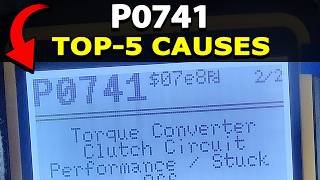
P0741 on 2003-2007 Volvo XC70: Torque Converter Clutch Solenoid Causes and Fixes
On a 2003-2007 Volvo XC70, code P0741 is almost always caused by a failing torque converter clutch (TCC) solenoid inside the transmission valve body. This transmission, the Aisin AW55-50/51SN, is known for this issue. The most common fix is to replace the linear solenoids, not the entire transmission. Expect to pay $150-$250 for a quality aftermarket solenoid kit.
- P0741 on a 2003-2007 XC70 points strongly to a faulty TCC (lock-up) solenoid in the transmission's valve body.
- Do not immediately assume the torque converter or the entire transmission has failed; the solenoids are a much more likely and cheaper fix.
- When replacing the faulty solenoid, it is best practice to replace all three linear solenoids as a set.
- This is a complex repair that requires removing the valve body from the transmission; professional service is highly recommended.
- Always use the correct JWS 3309 specification transmission fluid.
What's Unique About the 2003-2007 Volvo XC70
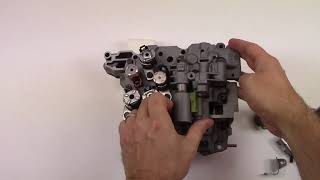
The 2003-2007 Volvo XC70 uses an Aisin-Warner AW55-50/51SN automatic transmission, which is notorious for issues within its valve body. While P0741 can have many causes on other vehicles, on this specific Volvo platform, the problem is very frequently traced back to wear and failure of the linear solenoids that control hydraulic pressure, particularly the TCC lock-up solenoid (often called the SLU solenoid). This is so common that replacing the solenoids is the go-to repair, often before considering a more expensive torque converter or transmission replacement. 🎬 Watch: How to diagnose and fix P0741 codes Many owners on forums like SwedeSpeed and Matthews Volvo Site have successfully resolved P0741 by replacing the solenoid pack.
Symptoms You May Notice
- Check Engine Light is on
- A sensation of shuddering or vibration, like driving over rumble strips, especially at highway speeds (45-65 mph) under light throttle.
- Engine RPMs are higher than usual at cruising speeds, as the torque converter fails to lock.
- Noticeable decrease in fuel economy.
- Harsh or delayed gear shifts, sometimes described as a 'bang' or 'clunk', especially when coming to a stop.
- Transmission overheating warning message may appear on the dash.
- In some cases, the engine may stall when coming to a stop if the clutch fails to disengage properly.
- Replacing the entire torque converter when only the TCC solenoid in the valve body was faulty. This is a significantly more expensive repair and may not solve the issue if the root cause is the solenoid or worn valve body bores.
- Replacing the entire transmission. This is the most expensive option and is often unnecessary, as the core issue is almost always serviceable by replacing the valve body or its solenoids.
Most Likely Causes
- Failing Torque Converter Clutch (TCC/SLU) Solenoid 🔴 High Probability → Shop Automatic Transmission Torque Converter The solenoids in the Aisin AW55-50 valve body are a known weak point. Over time, their internal seals degrade and the valve mechanism wears, preventing them from regulating hydraulic pressure accurately for the TCC to engage. Debris in old fluid accelerates this wear.
How to confirm: A technician can monitor the commanded TCC duty cycle versus the actual slip RPM using a professional scan tool (like Volvo's VIDA). If the computer is commanding lock-up but slip remains high, and the wiring is good, the solenoid is the prime suspect. The solenoid can also be removed and bench-tested for resistance (typically 11-15 ohms) and for mechanical operation by applying 12v power.
Typical fix: Replace the TCC/SLU solenoid. It is highly recommended to replace all three linear solenoids (SLU, SLT, SLS) at the same time, as they wear at a similar rate. This requires removing the transmission valve body. Aftermarket kits from brands like Rostra are a popular and effective fix.
Est. part cost: $150-$250 for a complete aftermarket linear solenoid kit (e.g., Rostra 52-9036). 🎬 Watch: Step-by-step AW55-50SN shift solenoid replacement guide
- Worn Transmission Valve Body 🟡 Medium Probability → Shop Transmission Valve Body Besides the solenoids, the bores within the aluminum valve body itself can wear over time from the constant movement of the valves. This wear allows hydraulic fluid to leak past the valves, causing pressure drops that prevent the TCC from engaging properly, even with a new solenoid.
How to confirm: This is difficult to confirm without disassembly and vacuum testing of the valve body bores by a transmission specialist. It is often diagnosed after replacing the solenoids does not solve the problem, or if shifting remains harsh.
Typical fix: Replace the valve body with a new or remanufactured unit. Some specialists can ream the bores and install oversized valves and sleeves, such as those found in a Sonnax Zip Kit (AW55-50SN-ZIP), to restore hydraulic integrity.
Est. part cost: $500-$900 for a remanufactured valve body. A Sonnax Zip Kit costs around $350 for the parts. - Dirty, Low, or Incorrect Transmission Fluid ⚪ Low Probability → Shop Transmission Assembly These transmissions are extremely sensitive to fluid type and condition. The required fluid must meet the JWS 3309 specification. Using a generic multi-vehicle fluid can cause shifting problems and solenoid damage. Old, degraded fluid loses its hydraulic properties and carries abrasive particles that clog solenoid screens and wear valve body bores.
How to confirm: Check the transmission fluid level and condition via the dipstick. The fluid should be reddish-pink and clear, not dark brown, black, or smelling burnt. Ensure the correct fluid type is being used by checking service records.
Typical fix: Perform a series of transmission fluid drain-and-fills (Gibbons method) to replace 🎬 See this DIY Volvo XC70 transmission flush walkthrough most of the old fluid. A full machine "flush" is controversial on high-mileage transmissions and can sometimes cause more harm than good if not done correctly. Using the correct fluid (JWS 3309) is critical.
Est. part cost: $80-$150 for fluid.
Rare But Worth Checking
- Internal Torque Converter Failure: → Shop Automatic Transmission Torque Converter While possible, the torque converter itself is durable. It is more often misdiagnosed when the actual problem is the valve body solenoids. This should only be considered after the valve body and solenoids have been ruled out.
- Wiring Harness Damage: Damage to the wiring leading to or inside the transmission can cause electrical faults, but P0741 is a 'performance' code, meaning the electrical circuit often tests fine, but the mechanical action isn't happening. Still, it's worth a visual inspection of the main connector at the transmission.
- Outdated TCM Software: Volvo released several software updates for the Transmission Control Module (TCM) to improve shift quality and address harshness issues. While not a direct cause of P0741, ensuring the TCM has the latest software is a good practice, especially if other shift quality problems are present. Volvo TSB 43-0039 addresses some of these updates.
Diagnosis Steps
- Verify the code with an OBD-II scanner. Note any other transmission-related codes.
- Check the transmission fluid level and condition. Ensure the fluid is at the correct level, does not smell burnt, and is the correct JWS 3309 type.
- Use a professional scan tool (Volvo VIDA is ideal) to monitor live data. Observe the commanded TCC lock-up percentage and compare it to the actual torque converter slip RPM while driving. If the slip is high (>200 RPM) when lock-up is commanded, a hydraulic/mechanical issue is likely.
- Check with a dealer or specialized shop if any TCM software updates are available for your vehicle's VIN, referencing TSB 43-0039 or similar.
- Inspect the external transmission wiring harness for any visible damage, corrosion, or loose connections.
- If fluid, software, and wiring are good, the next logical step is to access the valve body.
- Drop the transmission pan/cover and remove the valve body. Inspect the TCC (SLU) solenoid. Test its resistance with a multimeter (typically 11-15 ohms for this model) and check for mechanical binding by applying a 12V source.
- Given the high failure rate, it is strongly recommended to replace the linear solenoids (SLU, SLT, SLS) as a set while the valve body is out. A Rostra kit (p/n 52-9036) is a common choice.
- After reinstallation, perform a transmission fluid level check and a TCM adaptation procedure to allow the computer to relearn the shift points with the new components.
Parts You'll Likely Need
- Transmission Solenoid Kit (Linear Solenoids) — This is the most common failure point for P0741 on the AW55-50 transmission. The TCC/SLU solenoid fails, preventing lock-up. It's best practice to replace all three linear solenoids at once.
Trusted brands: Rostra (p/n 52-9036), Sonnax
OEM price range: $400-$600
Aftermarket price range: $150-$250 - Remanufactured Valve Body — If the solenoid bores in the original valve body are worn, simply replacing the solenoids won't fix the hydraulic pressure loss. A remanufactured valve body with restored bores and new solenoids is the next step.
Trusted brands: Sonnax, RevMax, TransGo (for rebuild kits), Xemodex
OEM price range: $1200+
Aftermarket price range: $500-$900 - Transmission Fluid (JWS 3309)
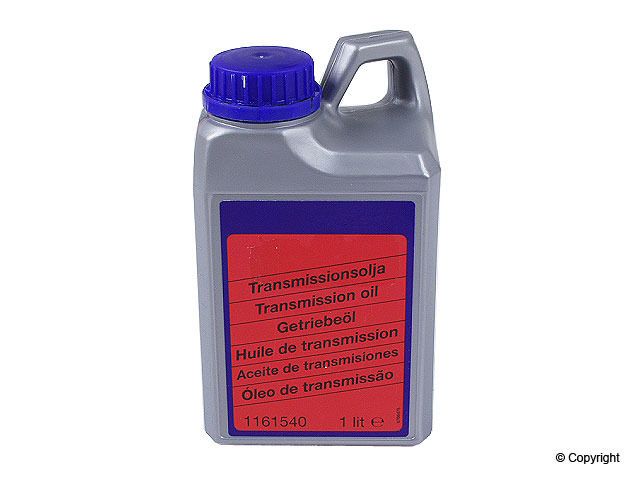
(OEM #1161540 / 1161640)— The correct fluid is required for any service involving draining the transmission. Using non-spec fluid is a common cause of failure for these transmissions.
Technical Service Bulletins (TSBs) & Recalls
- Volvo TSB 43-0039 (also US16761.1.12): Addresses harsh 2-3 upshifts and 3-2 downshifts on the AW55-50SN transmission. The fix often involves a TCM software update and, in some cases, valve body inspection or replacement. While not directly for P0741, it addresses the underlying hydraulic control issues.
Platform-Specific Known Issues
- The Aisin AW55-50SN transmission is widely known for premature valve body and solenoid failure, leading to a variety of shifting problems, with P0741 being a common trouble code associated with this failure.
Mechanic-Grade Diagnostic Values
- Resistance of Linear Solenoids (SLU, SLT, SLS) — expected: 5.0 - 7.0 Ohms. Failure: A reading of open circuit (OL) or significantly outside the 5-7 Ohm range indicates a failed solenoid coil.
- Resistance of On/Off Shift Solenoids (S1-S5) — expected: 11 - 15 Ohms at 68°F (20°C). Failure: A reading outside this range suggests a problem with that specific shift solenoid. While not the direct cause of P0741, it indicates overall valve body health.
- Torque Converter Slip RPM (Live Data) — expected: Near 0 RPM when TCC is commanded to lock at cruising speed.. Failure: A consistent slip of over 200 RPM when the TCM is commanding lock-up strongly suggests a hydraulic or mechanical failure (solenoid, valve body, or converter), not an electrical one.
Hidden / Shadow Codes Worth Checking
- TCM-xxxx: While a generic scanner only shows P0741 from the engine module, Volvo's VIDA software can pull more specific codes from the Transmission Control Module (TCM). For example, a user reported a 'TCM-0113 Pressure solenoid SLS signal missing' code, which points to a specific solenoid circuit fault that a P-code would not specify. P0740 is another related code that may appear, indicating a TCC circuit malfunction. (see via Volvo VIDA/DiCE diagnostic tool or a high-end professional scanner with Volvo-specific software.)
Scan Tool Commands That Help
- Volvo VIDA/DiCE: Control Module Adaptation — This is a mandatory step after replacing the valve body or solenoids. It puts the TCM into a relearning mode to adapt to the new components' hydraulic characteristics. Failure to perform this can result in continued poor shifting even with new parts.
- Volvo VIDA/DiCE: Resetting Transmission Fluid Change Counter — After performing a fluid change, the TCM's internal fluid wear counter must be reset. The TCM adjusts shift pressures based on this counter, so failing to reset it can cause harsh shifts as the module applies pressures intended for old, degraded fluid.
- Volvo VIDA/DiCE: Solenoid Activation Test — VIDA allows for bidirectional control to command individual solenoids on and off while the vehicle is stationary. This can help isolate a specific solenoid that is mechanically stuck or electrically failed without having to remove the valve body first.
Wiring & Ground Locations
- Main Engine Ground Strap — Connects from the top of the engine, near the timing belt cover, to the chassis on the driver's side.. A corroded or broken main engine ground can cause a host of electrical issues, including erratic sensor readings and improper module function that could indirectly affect transmission operation.
- Transmission Case Ground — A primary ground cable from the battery negative terminal attaches to a stud on the front of the transmission case, about halfway down.. This is a critical ground point for the transmission itself. A poor connection here can cause incorrect solenoid operation and communication errors with the TCM.
- TCM Connector — The Transmission Control Module (TCM) is located under the vehicle, mounted near the transmission. Its connectors are susceptible to corrosion and moisture.. All signals to and from the solenoids pass through this connector. Checking for corrosion or bent pins is a crucial step before condemning internal parts.
- SLU Solenoid Wiring — Inside the transmission, connecting the valve body to the main harness pass-through connector. The SLU solenoid has a black connector body.. Allows for targeted resistance testing at the main transmission connector without dropping the pan, by identifying the correct pins for the SLU solenoid.
Real Owner Repair Stories
- Reddit user in r/Volvo (2004 Volvo XC70 AWD) — Transmission slip.
❌ Tried (didn't work) A repair shop quoted $4,000 for a new transmission.
✅ What actually fixed it The owner performed a simple drain and fill of the JWS-3309 transmission fluid, which resolved the light shift flares. Another user emphasized the importance of also resetting the transmission fluid counter in the TCM using VIDA after the fluid change. - VolvoXC.com forum user (2001 V70XC (uses same AW55-50/51SN)) — Poor shifting, occasional flare shifts.
❌ Tried (didn't work) Fluid flush and inline filter installation., Replacing B4 servo cover., Replacing individual solenoids.
✅ What actually fixed it The user noted that while these fixes provided a 110% improvement, the underlying issue on early 2001-2002 models is often significant wear in the valve body bores themselves. The final fix is implied to be a valve body overhaul or replacement, as the 'cheap fixes' did not fully resolve the issue due to the known early-model defect.
OEM Part Supersession History
Early Valve Body (No Letter or 'A' Stamp)→Late Valve Body ('B' or 'C' Stamp)— Design improvements to address bore wear issues that were common in early models.
Heads up: While a late valve body can be used in an early car, it's critical to order the correct part. A remanufacturer will need the casting stamp to provide the correct unit.Valve Body without B5 Spring→Valve Body with B5 Spring— Internal design change by Aisin-Warner.
Heads up: This is a critical identification point when ordering a replacement valve body. The 10th digit of the VIN (5 or higher) indicates a 2005+ model year, but physical inspection for the spring is the only 100% certain method. Installing the wrong version will cause severe shifting problems.N/A→Rostra 52-9036 Solenoid Kit— This aftermarket kit was designed to be a universal replacement for the three linear solenoids (SLU, SLT, SLS).
Heads up: The kit is designed to fit both early and late style valve bodies, simplifying the repair process.
Model Year Variations Within This Range
- 2003-2004: These models typically use the 'early' style valve body, which may have a casting mark of 'A' or no letter at all. These are more prone to bore wear than later versions.
- 2005-2007: These models use the 'late' style valve body with a 'B' or 'C' casting mark. Crucially, they may also contain a B5 control valve spring that is absent in earlier years. This must be verified before ordering a replacement valve body.
- 2003-2007: The XC70 uses the AW55-51SN (AWD) variant of the transmission, while FWD Volvos used the AW55-50SN. The internal valve body and solenoids are the same, but the transmission case is different to accommodate the angle gear for the AWD system.
Diagnostic Flowchart
Other Known Issues on This Vehicle
Issues unrelated to this code that are worth knowing about as an owner of this generation:
- Angle Gear Collar Sleeve Failure 🔴 High — Common on AWD models, especially over 100,000 miles. The splines on the sleeve connecting the transmission to the angle gear strip, resulting in a loss of all-wheel drive.
- Driver Information Module (DIM) Failure 🟠 Medium — Very common on 2002-2004 models. Solder joints on the circuit board fail, causing flickering gauges, dead instrument cluster, false warning messages (like 'SRS Airbag Service Urgent'), and a fast-running clock.
- Clogged PCV/Oil Trap System 🟠 Medium — Commonly requires service every 100,000 miles. The system clogs with sludge, leading to increased crankcase pressure that can blow out engine seals (like the rear main seal), causing major oil leaks.
- Front Suspension Compliance Bushings and Spring Seats 🟠 Medium — Control arm bushings and upper strut spring seats are common wear items. Failure leads to clunking noises, poor handling, wandering steering, and uneven tire wear.
- Electronic Throttle Module (ETM) Failure 🔴 High — More prevalent on earlier 1999-2002 P2 models, but can still affect early 2003s. A non-contact sensor was introduced later. Failure causes erratic idle, limp mode, and stalling. A yellow sticker on the ETM indicates the original, failure-prone unit. (Ref: Volvo extended warranty coverage for this issue, but it has since expired.)
Used vs. New Parts: Buying Guide for This Vehicle
When a used part is the smart pick: For this specific repair, a used part is almost never a smart choice. The primary failure is wear and tear on solenoids and valve body bores. A used valve body from a junkyard is highly likely to have the same or developing issues. The only exception might be sourcing a known-good, low-mileage complete transmission if the cost is comparable to a remanufactured valve body installation.
Donor-vehicle mileage cap: roughly under 75000 miles for the part to have meaningful remaining life.
What to inspect on the donor part:
- For a complete transmission: Verify the donor vehicle's mileage and check for a service history indicating regular fluid changes.
- Inspect the fluid from the donor transmission. If it is dark, burnt, or contains metal particles, reject the part.
- For a valve body: There are no reliable external cues. It is not recommended to buy used.
OEM-only on this vehicle (don't cheap out):
- Transmission Fluid: While not a 'part', strictly adhering to the JWS 3309 specification is mandatory. Using generic multi-vehicle ATF is a leading cause of failure. The genuine Volvo fluid is reported by some to have slightly different viscosity that can help with shift quality.
Aftermarket brands forum-validated for this vehicle:
- Solenoid Kits: Rostra (p/n 52-9036) is the most frequently cited and trusted complete kit.
- Valve Body Rebuild Kits/Remanufactured Units: Sonnax is the gold standard for high-quality internal components (Zip Kits, oversized valves) and remanufactured valve bodies.
Brands owners have reported issues with on this vehicle:
- Unbranded eBay/Amazon Valve Bodies: Sources strongly warn against purchasing cheap, unbranded valve bodies, especially those shipped from overseas, claiming they are often just cleaned-up used parts that will fail quickly.
Real Owner Stories
Aggregated from forums and TSBs cited above. Mileages and costs reflect what owners reported in those sources.
2003 Volvo XC70
Symptoms: The owner replaced the solenoids but found that the shifting actually became worse afterward.
What fixed it: The owner highlighted that a worn valve body may require a full remanufactured unit rather than just solenoid replacement to truly solve the problem.
Source hint: Volvo XC Forums: 2003 Xc70 - Solenoids replaced - Shifting worse
Related OBD-II Codes
Frequently Asked Questions
Does Volvo TSB 43-0039 apply to my XC70's transmission issues?
What specific transmission fluid should I use for my 2003-2007 XC70 to avoid P0741?
Can I just replace the TCC solenoid (SLU) to fix the 'rumble strip' vibration?
Is there a specific software procedure required after replacing the solenoids?
What is the 'Gibbons method' mentioned for this Volvo?
If I replace the solenoids and the P0741 code persists, what is the next step?
Helpful Videos


We Have This Part in Stock

The information in this article is provided for general reference and educational purposes only. Vehicle specifications, procedures, and part compatibility can vary by production date, trim level, and region. Always consult your vehicle's factory service manual and verify part numbers before purchasing or performing repairs. Safety-critical components such as airbags, seat belts, and braking systems should be installed by a qualified professional.
- Volvo XC70:
- 🧭 Diagnostic Flowchart
- 🎬 Helpful Videos
- 🛍️ Shop This Part
- What's Unique About the 2003-2007 Volvo XC70
- Symptoms You May Notice
- Most Likely Causes
- Rare But Worth Checking
- Diagnosis Steps
- Parts You'll Likely Need
- Technical Service Bulletins (TSBs) & Recalls
- Platform-Specific Known Issues
- Mechanic-Grade Diagnostic Values
- Hidden / Shadow Codes Worth Checking
- Scan Tool Commands That Help
- Wiring & Ground Locations
- Real Owner Repair Stories
- OEM Part Supersession History
- Model Year Variations Within This Range
- Other Known Issues on This Vehicle
- Used vs. New Parts: Buying Guide for This Vehicle
- Real Owner Stories
- 2003 Volvo XC70
- Related OBD-II Codes
- Frequently Asked Questions
- 🎟️ Get 5% Off