

P0746 on 2011-2019 Hyundai Sonata: Pressure Control Solenoid 'A' Causes and Fixes
On a 2011-2019 Hyundai Sonata, code P0746 is most often caused by low/dirty transmission fluid or a failed pressure control solenoid 'A'. Start by checking the fluid; if it's clean and full, the solenoid itself is the next likely culprit, requiring removal of the transmission pan to replace.
- P0746 on your Sonata indicates a serious transmission issue that should be addressed promptly to avoid further damage.
- The most likely causes are old, dirty transmission fluid or a failed pressure control solenoid.
- Always start diagnosis by checking the transmission fluid level and condition. Use only Hyundai-specified SP-IV fluid.
- Repairing this code requires removing the transmission pan to access the solenoid and/or valve body.
- Due to the complexity and risk of further damage, professional service is highly recommended for this repair.
What's Unique About the 2011-2019 Hyundai Sonata
Both generations of Sonata in this range (2011-2014 YF and 2015-2019 LF) use a 6-speed automatic transmission (A6MF1 family) that is known to be sensitive to fluid condition and prone to internal wiring harness issues. For these specific models, P0746 is frequently traced back to degraded transmission fluid causing blockages or outright failure of the solenoid. Hyundai has issued technical service bulletins (like TSB 23-AT-003H-1) for this transmission family related to solenoid and wiring harness issues, confirming that these are known weak points. The internal harness also contains the transmission temperature sensor, which can fail and necessitate replacing the entire harness, sometimes triggering pressure-related codes.
Generation note: This guide covers the YF (2011-2014) and LF (2015-2019) generations of the Hyundai Sonata. Both use a 6-speed automatic transmission (A6MF1) susceptible to this code. A Hyundai TSB notes that earlier models may have a 'Generation 1' valve body with 8 solenoids, while later models have a 'Generation 2' with 7 solenoids, which could affect part numbers and diagnostic procedures.
Symptoms You May Notice
- Check Engine Light is illuminated
- Harsh, jerky, or delayed gear shifts
- Vehicle gets stuck in one gear (limp mode)
- Noticeable loss of power or transmission 'slipping'
- Increased fuel consumption
- Transmission may feel like it's overheating
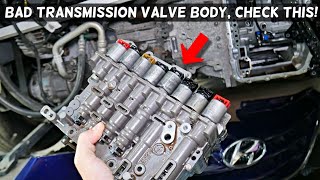
- Transmission warning lamp on the dashboard may be lit 🎬 Watch: Common symptoms of a failing transmission valve body
- Replacing the entire transmission without first diagnosing the fluid, solenoid, and wiring.
- Replacing the TCM when the problem is a much cheaper solenoid or wiring fault.
- Mistaking a faulty vehicle speed sensor for an internal transmission failure, as it can also cause shifting issues.
Most Likely Causes
- Low or Dirty Transmission Fluid 🔴 High Probability → Shop Transmission Assembly The A6MF1 transmission is sensitive to fluid quality and level. Degraded fluid loses its hydraulic properties and can't be pressurized correctly, and contaminants can clog solenoid passages. Many owners neglect the 60,000-mile service interval.
How to confirm: Check the transmission fluid via the fill plug (no dipstick on these models). The fluid should be at the correct level, bright red, and not smell burnt. Dark, brown, or gritty fluid indicates a problem. This should be the very first check.
Typical fix: Perform a transmission fluid drain and fill, or a full fluid exchange. Use only Hyundai-specified fluid (SP-IV).
Est. part cost: $75-$150 - Failed Pressure Control Solenoid 'A' 🔴 High Probability → Shop Transmission Valve Body This is the component directly identified by the code. Over time, the solenoid can fail electrically (internal coil breaks) or mechanically stick due to contamination or wear.
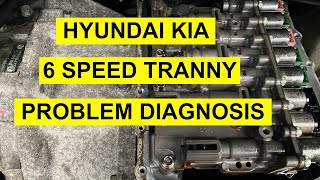
How to confirm: After confirming fluid is good, a technician will test the solenoid's electrical resistance with a multimeter and may use a scan tool to command it on/off to check for a response. This requires accessing the valve body. 🎬 See how to diagnose and test solenoids on these models
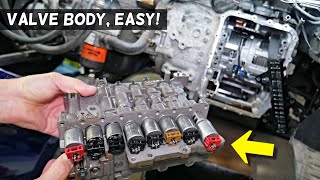
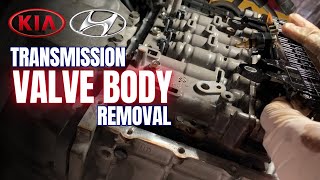
Typical fix: Replace the faulty solenoid. This is located on the transmission's valve body and requires removing the transmission oil pan. 🎬 Watch: Step-by-step guide to replacing the transmission solenoid The solenoids are often replaced as a pack.
Est. part cost: $120-$250 - Faulty Internal Transmission Wiring Harness 🟡 Medium Probability → Shop Transmission Assembly Hyundai issued TSBs (e.g., 23-AT-003H-1) that involve replacing the internal transmission wiring harness for various solenoid codes, indicating this is a known failure point. Wires inside the transmission become brittle from heat and fluid exposure, leading to shorts or open circuits. The transmission fluid temperature sensor is also integrated into this harness and is a common failure point that requires replacing the entire harness.
How to confirm: Inspect the wiring harness inside the transmission pan for any visible damage, brittle insulation, or loose pins at the solenoid connectors. Test for continuity from the TCM connector to the solenoid connector.
Typical fix: Repair the damaged section of wire or, more commonly, replace the entire internal transmission wiring harness (OEM Part # 46307-3B650 is a common example).
Est. part cost: $100-$200 for a new harness - Clogged Transmission Filter or Valve Body Passages 🟡 Medium Probability → Shop Transmission Assembly This is a direct result of running with old, contaminated fluid. Metallic debris and sludge restrict fluid flow, preventing the solenoid from controlling pressure even if it's working correctly.
How to confirm: This is typically found during a solenoid replacement. A visual inspection of the valve body will show sludge or debris in the small hydraulic channels. The transmission pan may have excessive metallic shavings on the magnet.
Typical fix: Replace the transmission filter. In severe cases, the valve body may need to be removed and professionally cleaned or replaced.
Est. part cost: $30-$80 for filter; $500+ for valve body service
Rare But Worth Checking
- Failing Transmission Control Module (TCM): → Shop Transmission Assembly This is rare and should only be considered after all other possibilities (fluid, solenoid, wiring) have been definitively ruled out. The TCM is the computer that controls the transmission.
- Internal Transmission Pump Failure: → Shop Transmission Assembly A failing pump can't generate the baseline hydraulic pressure for the solenoids to control, which can trigger this code. This usually comes with other symptoms like whining noises from the transmission.
Diagnosis Steps
- Check the transmission fluid level and condition. If low, top it off and check for leaks. If dark or burnt, a fluid and filter change is the first step.
- Use an OBD-II scanner to check for any other transmission-related codes.
- Inspect the external transmission wiring harness and connectors for any visible damage or corrosion.
- If fluid and external wiring are okay, the next step is to gain access to the valve body by removing the transmission pan.
- Visually inspect the internal wiring harness for brittle wires, cracked connectors, or signs of overheating.
- Test the resistance of Pressure Control Solenoid 'A' using a multimeter. Compare the reading to the manufacturer's specification (typically around 5 ohms for this PWM-type solenoid).
- If resistance is out of spec, replace the solenoid. If it's within spec, the solenoid may be mechanically stuck. Replacement is still the most common fix.
- If the solenoid and wiring test good, the issue may be a blockage in the valve body or a failing TCM.
Parts You'll Likely Need
- Pressure Control Solenoid (VFS)
(OEM #46313-3B030)— This is the component directly implicated by the code and is a very common failure point. It is a Variable Force Solenoid.
Trusted brands: Hyundai Genuine, Rostra
OEM price range: $150-$250
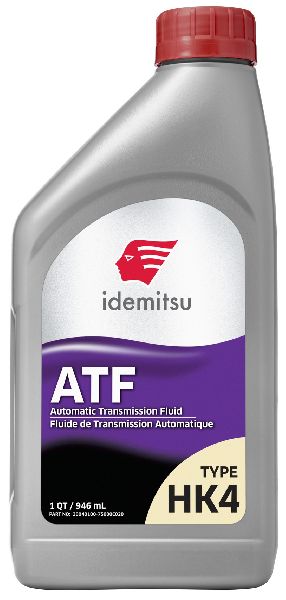
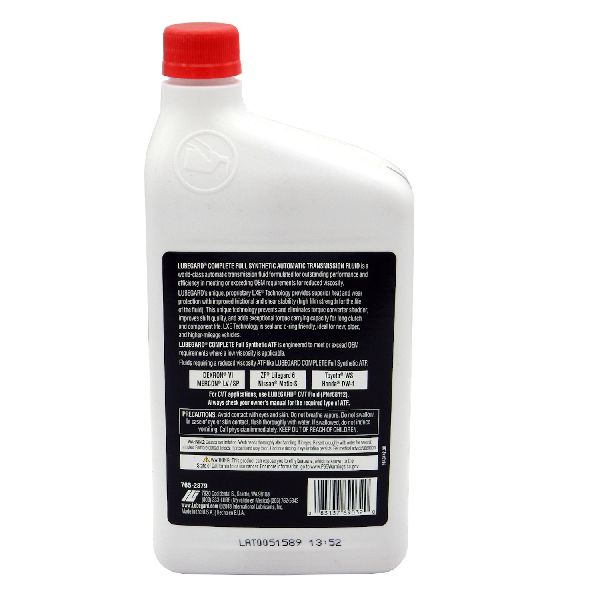
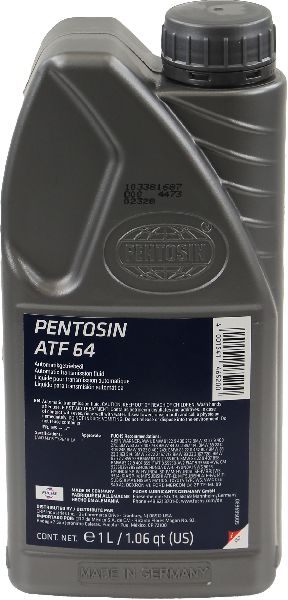
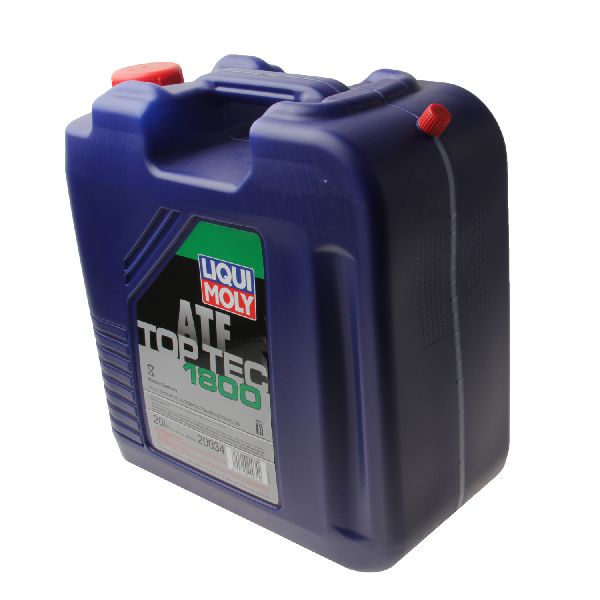
Aftermarket price range: $80-$150 - Automatic Transmission Fluid (Hyundai SP-IV)
(OEM #00232-19045)— A fluid change is required for the repair and is often the root cause of the problem. Using the correct OEM-specified fluid is critical for Hyundai transmissions.
Trusted brands: Hyundai Genuine, Idemitsu TLS-LV, Valvoline MaxLife ATF
OEM price range: $15-$25 per quart
Aftermarket price range: $8-$15 per quart - Internal Transmission Wiring Harness
(OEM #46307-3B650)— A known failure point according to TSBs. Wires become brittle, and the integrated temperature sensor can fail, necessitating replacement of the whole harness.
Trusted brands: Hyundai Genuine
OEM price range: $120-$200
Aftermarket price range: $70-$130 - Transmission Filter and Pan Gasket
(OEM #46321-3B600 (Filter), 45285-3B610 (Gasket))— Should be replaced whenever the transmission pan is removed. A clogged filter can cause pressure issues on its own.
Trusted brands: Hyundai Genuine, WIX, ATP
OEM price range: $40-$70
Aftermarket price range: $25-$50
Related Codes That Often Appear With This One
- P0700 — P0700 is a generic code indicating the Transmission Control Module (TCM) has stored a fault. It acts as a 'check engine light' for the transmission and will almost always appear with specific transmission codes like P0746.
- P0745, P0747, P0748 — These codes all relate to Pressure Control Solenoid 'A'. P0745 is a general electrical fault, P0747 means 'Stuck On', and P0748 is a specific circuit electrical failure. Seeing them together helps pinpoint whether the issue is mechanical (stuck) or electrical (wiring/coil).
Technical Service Bulletins (TSBs) & Recalls
- TSB 23-AT-003H-1: Addresses various solenoid DTCs and provides a detailed diagnostic and replacement procedure, often pointing to the internal harness or the solenoids themselves.
- TSB 09-AT-018: An older bulletin that lists diagnostic procedures for a wide range of solenoid codes, including P0746, across many Hyundai models.
Platform-Specific Known Issues
- A common repair story on forums involves a 2012 Sonata getting stuck in 3rd gear (limp mode) with P0746. After a fluid change didn't fix it, the owner took it to a shop that replaced the internal wiring harness and all solenoids, which resolved the issue. The original harness wires were found to be brittle and cracked.
- On hyundai-forums.com, a user with a 2011 Sonata reported P0746 and harsh shifting. The dealer diagnosed a faulty solenoid pack and replaced it under warranty, which fixed the problem. This highlights that it's often more efficient to replace the entire set of solenoids rather than just one.
- The transmission fluid temperature sensor is integrated into the internal wiring harness. A failure of this sensor can cause erratic shifting and may trigger various transmission codes, including P0746. Mechanics often replace the entire harness as a preventative measure when working inside the transmission pan.
Mechanic-Grade Diagnostic Values
- Resistance of Pressure Control Solenoid (PWM/VFS type) — expected: Approximately 5.0 ohms at room temperature.. Failure: A reading of infinite resistance (open circuit), zero resistance (short circuit), or a value significantly different from 5 ohms.
- Bench Test of Solenoid Actuation — expected: A distinct 'click' sound when voltage is applied and removed, indicating the internal valve is moving.. Failure: No click, a weak click, or an inconsistent click, suggesting the solenoid is mechanically stuck or failing.
Scan Tool Commands That Help
- Hyundai GDS (Global Diagnostic System) or equivalent professional scan tool (e.g., Autel): Resetting Auto T/A values / Resetting PCM/TCM Adaptive Values — This function is critical after replacing the transmission, valve body, solenoids, or TCM. It erases the old learned values that compensate for wear. Failure to perform this reset can result in poor shift quality even with new parts, as the TCM will be operating on incorrect assumptions.
- Hyundai GDS or equivalent: Solenoid Active Test — To command the specific pressure control solenoid 'A' on and off while monitoring transmission pressure data. This helps determine if the solenoid is responding to electrical commands from the TCM, isolating a wiring or TCM driver issue from a failed solenoid.
Wiring & Ground Locations
- Transmission Harness Connector — On top of the transaxle case, accessible from the engine bay after removing the battery and battery tray.. This is the main connection point between the TCM and all internal transmission components, including the solenoids. It's a primary location to test for power, ground, and signal continuity between the computer and the transmission.
- Wiring Assy-T/M Ground — A ground wire assembly that connects the transmission case to the vehicle's chassis, typically near the transmission mount.. A poor or corroded ground connection can cause erratic electrical behavior in all transmission sensors and solenoids, leading to incorrect readings and fault codes like P0746. Part numbers for this assembly include 91860-3S110 and 91860-3S120 for the 2011-2014 YF Sonata.
When the Usual Fixes Don't Work
- In cases where a P0746 code persists after replacing the Pressure Control Solenoid 'A', the root cause is often not another faulty solenoid. Technicians report that the next most likely culprit is either a blockage within the small passages of the valve body that the new solenoid cannot overcome, or a failing internal wiring harness. Contaminated fluid creates sludge that can clog these passages, preventing proper pressure regulation even with a functional solenoid. Similarly, the internal wiring harness is a known weak point that becomes brittle over time, and a visual inspection may not be sufficient to find an intermittent short or open circuit. Therefore, if a new solenoid doesn't fix the issue, the next step should be a thorough inspection and potential replacement of the valve body and/or the updated internal wiring harness (P/N 46307-3B650), not simply trying another solenoid.
OEM Part Supersession History
46307-3B610, 46307-3B620→46307-3B650— This is the internal transmission wiring harness. The part has been revised by Hyundai, likely to improve durability and resistance to heat and fluid, addressing the known issue of wires becoming brittle.
Heads up: The newest part number (46307-3B650) should be used for all repairs to ensure the most updated and reliable component is installed.
Model Year Variations Within This Range
- 2011-2019 (approximate): The A6MF1 transmission family used in these Sonatas has at least two major valve body designs. Earlier models may use a 'Generation 1' valve body with eight solenoids, while later models use a 'Generation 2' design with seven solenoids. This affects which solenoids are present and their function, making it critical to identify the correct valve body before ordering parts.
Diagnostic Flowchart
Other Known Issues on This Vehicle
Issues unrelated to this code that are worth knowing about as an owner of this generation:
- Theta II Engine Seizure/Failure 🔴 High — Very common on 2011-2014 models with the 2.4L and 2.0T engines, typically between 70,000 and 130,000 miles. (Ref: Multiple recalls (e.g., NHTSA #17V226000) and a class-action lawsuit settlement led to lifetime engine warranties for affected vehicles, provided a specific software update (KSDS) was performed.)
- Flexible Steering Coupler Disintegration 🟠 Medium — Extremely common across many Hyundai/Kia models of this era. Causes a distinct clicking noise in the steering column when turning the wheel. Onset can be as early as 50,000 miles. (Ref: Hyundai extended the warranty for this part (P/N 56315-2K000-FFF) on many vehicles. It's a cheap part but labor-intensive to replace.)
- Peeling White Paint 🟡 Low — Widespread issue on Sonatas (and other Hyundai models) painted with certain shades of white (e.g., Pearl White). The paint delaminates and peels in large sheets, often starting on the roof and hood. (Ref: Hyundai extended the warranty coverage for this issue on affected vehicles after numerous complaints.)
- Excessive Oil Consumption 🔴 High — Common on the 2.4L GDI engine, often becoming noticeable after 60,000 miles. Can lead to engine damage if the oil level is not monitored closely. (Ref: Related to the overall Theta II engine issues, but sometimes occurs even on engines that don't seize.)
Used vs. New Parts: Buying Guide for This Vehicle
When a used part is the smart pick: A complete valve body assembly or the entire transmission from a verified low-mileage donor vehicle can be a cost-effective option, but it carries risks. This is most sensible if your current transmission has a confirmed major mechanical failure beyond just the solenoid.
Donor-vehicle mileage cap: roughly under 60000 miles for the part to have meaningful remaining life.
What to inspect on the donor part:
- Verify the donor vehicle's mileage and history (e.g., accident, not flood damage).
- If possible, inspect the transmission fluid from the donor; it should be reddish and clear, not dark brown, black, or smelling burnt.
- Check the magnet in the donor transmission's oil pan for excessive metallic dust or shavings. A fine gray paste is normal, but large flakes are a red flag.
OEM-only on this vehicle (don't cheap out):
- Internal Transmission Wiring Harness: Use the latest superseded OEM part (46307-3B650) as it's a known failure point that has been updated by the manufacturer.
- Transmission Fluid: Strictly use Hyundai Genuine SP-IV or a fully compatible, high-quality aftermarket equivalent. These transmissions are very sensitive to fluid type.
Aftermarket brands forum-validated for this vehicle:
- Solenoids: Rostra
- Valve Body Repair Kits: TransGo
Brands owners have reported issues with on this vehicle:
- Unbranded, generic solenoids and wiring harnesses from online marketplaces with no reputation or warranty. The initial savings are often lost to premature failure and repeated labor costs.
Real Owner Stories
Aggregated from forums and TSBs cited above. Mileages and costs reflect what owners reported in those sources.
2012 Sonata
Symptoms: Vehicle was stuck in 3rd gear (limp mode) and had the P0746 code.
What fixed it: After a fluid change did not work, a shop replaced the internal wiring harness and all the solenoids, which resolved the issue. The original harness wires were found to be brittle and cracked.
Source hint: sonataforums.com thread titled 'Transmission problem stuck in 3rd gear'
2011 Sonata
Symptoms: Harsh shifting and a P0746 trouble code.
What fixed it: The dealer diagnosed and replaced a faulty solenoid pack under warranty, which fixed the problem.
Source hint: hyundai-forums.com thread titled '2012 sonata 2.0t transmission failure p0746'
Related OBD-II Codes
Frequently Asked Questions
My 2012 Sonata is stuck in 3rd gear. Is this a symptom of the P0746 code?
Are there any official Hyundai TSBs that address the P0746 code?
My mechanic wants to replace the entire internal wiring harness for a single solenoid code. Is this necessary?
What type of transmission fluid should I use in my 2011-2019 Sonata?
The repair shop suggested replacing the entire solenoid pack instead of just the one for P0746. Is this a good idea?
I have a 2016 Kia Optima with the same symptoms. Does this article apply to my car?
Helpful Videos


We Have This Part in Stock



The information in this article is provided for general reference and educational purposes only. Vehicle specifications, procedures, and part compatibility can vary by production date, trim level, and region. Always consult your vehicle's factory service manual and verify part numbers before purchasing or performing repairs. Safety-critical components such as airbags, seat belts, and braking systems should be installed by a qualified professional.
- Hyundai Sonata:
- 🧭 Diagnostic Flowchart
- 🎬 Helpful Videos
- 🛍️ Shop This Part
- What's Unique About the 2011-2019 Hyundai Sonata
- Symptoms You May Notice
- Most Likely Causes
- Rare But Worth Checking
- Diagnosis Steps
- Parts You'll Likely Need
- Related Codes That Often Appear With This One
- Technical Service Bulletins (TSBs) & Recalls
- Platform-Specific Known Issues
- Mechanic-Grade Diagnostic Values
- Scan Tool Commands That Help
- Wiring & Ground Locations
- When the Usual Fixes Don't Work
- OEM Part Supersession History
- Model Year Variations Within This Range
- Other Known Issues on This Vehicle
- Used vs. New Parts: Buying Guide for This Vehicle
- Real Owner Stories
- 2012 Sonata
- 2011 Sonata
- Related OBD-II Codes
- Frequently Asked Questions
- 🎟️ Get 5% Off