

P0746 on 2010-2015 Hyundai Tucson: Pressure Control Solenoid 'A' Causes and Fixes
This code indicates a problem with a transmission pressure control solenoid, often leading to harsh shifting or getting stuck in gear. The most common causes are low/dirty transmission fluid or a failed solenoid. A fluid and filter change is the first step; if that fails, solenoid replacement is likely needed.
- P0746 on a 2010-2015 Tucson points to a transmission pressure problem, usually causing poor shifting.
- Before attempting expensive repairs, always check the transmission fluid level and condition first. Low or dirty fluid is a very common cause.
- The most likely failed part is the pressure control solenoid itself, which is located inside the transmission oil pan.
- This is not a simple DIY job for beginners. Accessing the solenoids requires removing the valve body, which is complex and requires care to avoid further damage.
- Ignoring this code can lead to severe transmission damage, overheating, and potentially a complete transmission failure.
What's Unique About the 2010-2015 Hyundai Tucson
The 2010-2015 Hyundai Tucson (LM generation) is equipped with a 6-speed automatic transmission known as the A6MF1. While generally reliable, this transmission can be sensitive to fluid condition. On this specific platform, the P0746 code is frequently triggered not just by a failed solenoid, but by degraded or low transmission fluid that clogs the tiny passages within the valve body, causing the solenoid to stick. Owners often find that a simple fluid and filter service can sometimes resolve the issue if caught early. Another related issue is the potential for the transmission fluid temperature sensor, located inside the transmission on the valve body, to fail, which can also contribute to shifting problems.
Symptoms You May Notice
- Harsh, abrupt, or delayed gear shifts.
- Transmission getting stuck in a single gear (limp mode).
- Engine RPMs are higher than usual at cruising speeds.
- Increased fuel consumption.
- Transmission overheating warning light may illuminate.
- Check Engine Light is on.
- Transmission slipping between gears.
- Replacing the entire transmission when only a fluid change or a single solenoid was needed.
- Assuming the solenoid is bad without first checking the transmission fluid level and condition, which is a much cheaper and easier fix.
- Replacing the high-pressure pump when the issue is more likely a faulty solenoid or wiring.
Most Likely Causes
- Low or Dirty Transmission Fluid 🔴 High Probability → Shop Transmission Assembly The A6MF1 transmission's valve body has very small passages that can easily become restricted by old, contaminated fluid or debris. This is the leading cause of P0746.
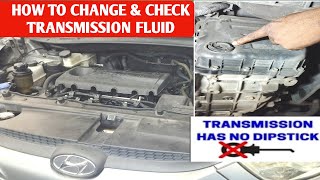
How to confirm: Check the transmission fluid level and condition using the dipstick (if equipped) or service port. The fluid should be bright red and clear, not dark brown, black, or smelling burnt.
Typical fix: Perform a transmission fluid and filter change. Use fluid that meets Hyundai's SP-IV specification. A full fluid flush may be more effective than a simple drain and fill.
Est. part cost: $50-$150 - Failed Pressure Control Solenoid 'A' 🔴 High Probability → Shop Transmission Valve Body The solenoid is a moving part that operates under high pressure and can wear out or fail electrically over time. Debris in the fluid can cause the internal plunger to jam.
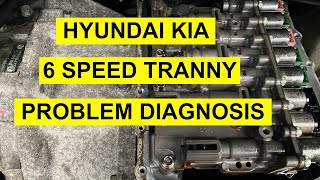
How to confirm: A mechanic can use a professional scan tool to command the solenoid on and off. If it doesn't respond, or if its electrical resistance (measured with a multimeter) 🎬 Watch: How to clean and test your A6MF1 transmission solenoids. is out of specification, it has failed. The solenoid can be accessed after removing the transmission oil pan and valve body.
Typical fix: Replace the faulty solenoid. This requires removing the transmission oil pan and valve body. Often, mechanics replace the entire solenoid pack (8 solenoids for this transmission) as a preventative measure.
Est. part cost: $50-$250 - Clogged Transmission Valve Body 🟡 Medium Probability → Shop Transmission Valve Body Sludge and metallic debris from normal wear can accumulate in the valve body, blocking fluid flow to and from the solenoids.
How to confirm: This is typically diagnosed after replacing a solenoid doesn't fix the problem. The valve body must be removed and inspected for blockages or stuck valves. Excessive metal shavings in the transmission pan are a strong indicator.
Typical fix: The valve body can sometimes be professionally cleaned and serviced. In severe cases, the entire valve body assembly must be replaced.
Est. part cost: $400-$900 - Wiring or Connector Issues ⚪ Low Probability
How to confirm: Visually inspect the wiring harness going to the transmission for any signs of damage, corrosion, or loose connections. Test for continuity between the TCM and the solenoid connector with a multimeter.
Typical fix: Repair the damaged section of the wire or clean/replace the corroded connector. Applying dielectric grease can prevent future corrosion.
Est. part cost: $10-$100
Rare But Worth Checking
- Faulty Transmission Control Module (TCM): → Shop Transmission Assembly This is rare, but the TCM can fail and stop sending the correct signal to the solenoid. It should only be considered after all other possibilities (fluid, solenoid, wiring) have been ruled out.
- Failed Transmission Pump: → Shop Transmission Assembly A failing internal transmission pump can cause low line pressure, triggering this code. This is a major internal failure and is often accompanied by whining noises from the transmission.
Diagnosis Steps
- Check and record any other stored fault codes with an OBD-II scanner.
- Inspect the transmission fluid level and condition. If it is low, top it off and check for leaks. If it is dark, burnt, or full of debris, a fluid and filter change is the first recommended step.
- Using a bi-directional scan tool, monitor the commanded versus actual transmission line pressure.
- Command the Pressure Control Solenoid 'A' on and off with the scan tool to check for a response (an audible click may be heard).
- If the solenoid does not respond, inspect the wiring harness and connector at the transmission for damage or corrosion.
- If wiring is intact, drop the transmission oil pan to access the valve body and solenoids. Inspect the pan magnet for excessive metal shavings.
- Test the resistance of the suspect solenoid with a multimeter and compare it to the manufacturer's specifications.
- If the resistance is out of spec, the solenoid is bad and must be replaced. It is often recommended to replace the entire set of 8 solenoids.
- If the solenoid tests good, the issue may be an internal blockage in the valve body or, rarely, a faulty TCM.
- After repairs, the transmission adaptive learning values may need to be reset using a scan tool, as per Hyundai TSB 14-AT-008.
Parts You'll Likely Need
- Transmission Solenoid Kit
(OEM #46313-3B030)— This is the most common hardware failure for P0746. The solenoids are located inside the transmission on the valve body. Often, the entire set of 8 solenoids is replaced at once. 🎬 See this walkthrough on how to replace the transmission solenoids. Part number 46313-3B030 is a common valve solenoid for this application and replaces the older 46313-3B020.
Trusted brands: Hyundai Genuine Parts, Rostra, Mopar (for 6F24)
OEM price range: $70-$100 per solenoid
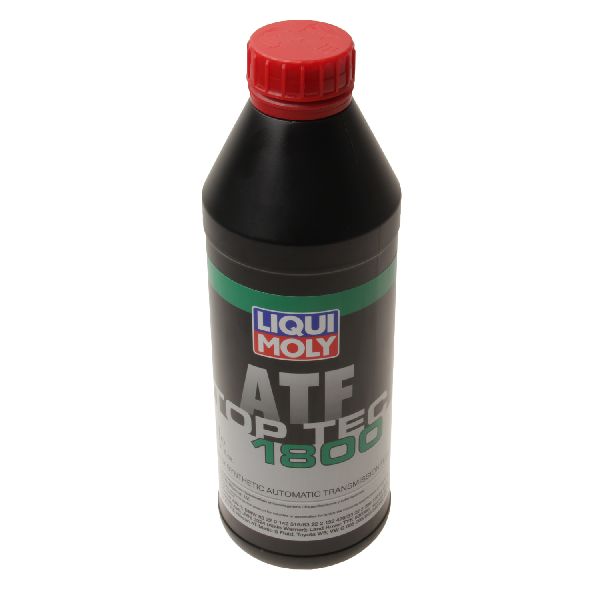
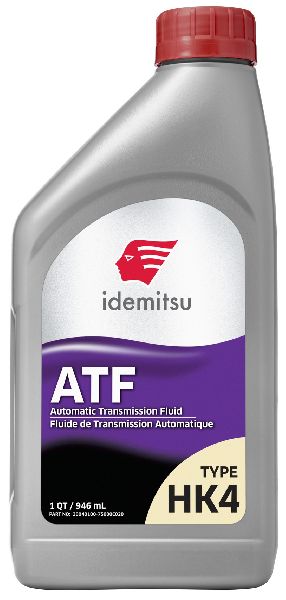
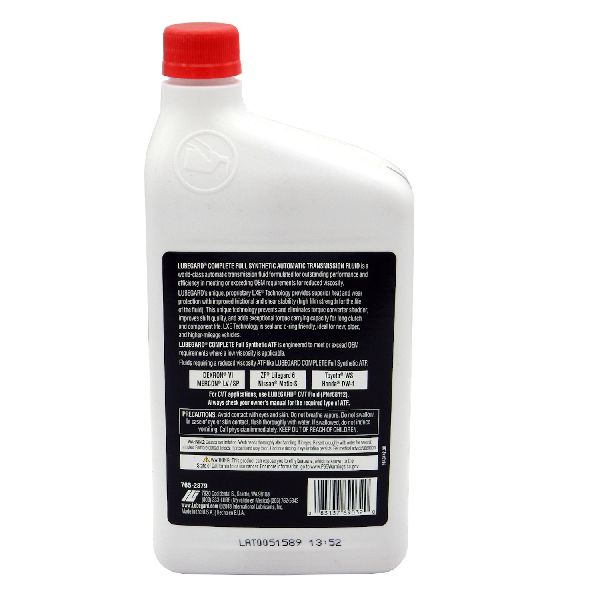
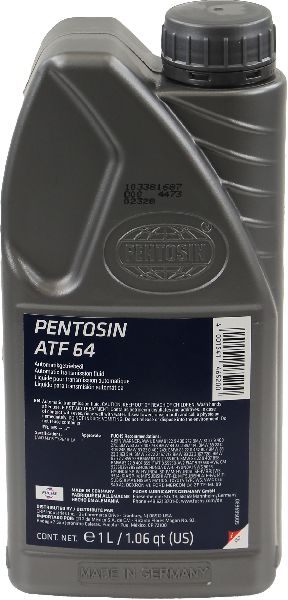
Aftermarket price range: $80-$200 for a full kit - Automatic Transmission Fluid (Hyundai SP-IV) — Low or dirty fluid is a primary cause of this code. A fluid change is required when replacing the solenoids or filter. The A6MF1 transmission requires approximately 7.5 quarts (7.1 liters) for a full fill.
Trusted brands: Hyundai/Kia Genuine SP-IV, Idemitsu TLS-LV, ENEOS ECO ATF
OEM price range: $15-$25 per quart
Aftermarket price range: $10-$18 per quart - Automatic Transmission Filter and Pan Gasket — Should be replaced whenever the transmission pan is removed for service to ensure proper fluid filtration and prevent leaks.
Trusted brands: Wix, ATP, Fram
OEM price range: $40-$70
Aftermarket price range: $20-$40
Related Codes That Often Appear With This One
- P0700 — P0700 is a generic code that simply means the Transmission Control Module (TCM) has stored a fault. It acts as a 'heads-up' to the main engine computer and will almost always appear alongside a more specific transmission code like P0746.
- P0745, P0747, P0748 — These codes all relate to Pressure Control Solenoid 'A'. P0745 indicates an electrical circuit failure, while P0747 indicates the solenoid is stuck 'On'. Seeing them together points directly to an issue with this specific solenoid or its circuit.
- P0711, P0712, P0713 — These codes relate to the Transmission Fluid Temperature Sensor. A faulty sensor can provide incorrect data to the TCM, leading to improper pressure commands and potentially triggering P0746. Hyundai issued TSB 20-AT-014H for this issue on the Tucson (LM).
Technical Service Bulletins (TSBs) & Recalls
- TSB 20-AT-008H: Addresses various solenoid-related DTCs, including P0748 (Pressure Control Solenoid 'A' Electrical), for the 2010-2015 Tucson (LM). It recommends replacing the related solenoid and oil pressure harness.
- TSB 14-AT-008: Describes the procedure to reset and relearn the transmission's adaptive values after a repair like replacing the valve body or solenoids. This is crucial for restoring proper shift quality.
- TSB 20-AT-014H: Pertains to DTCs P0711, P0712, and P0713 for the Transmission Fluid Temperature Sensor on 2010-2015 Tucsons. A faulty sensor can cause shifting issues that may be related to P0746.
- TSB 19-AT-015H: Mentioned as a related TSB for Generation 1 valve bodies with 8 solenoids, relevant to the 2010-2015 Tucson. It advises replacing the solenoid and harness for a list of DTCs.
Platform-Specific Known Issues
- Owner Experience: Solenoid Replacement Fix: Multiple owners on forums like hyundai-forums.com report that after experiencing harsh shifting and the P0746 code, a replacement of the entire solenoid pack resolved the issue. Some attempted a fluid change first, which did not solve the problem, pointing to a definitive solenoid failure rather than just a fluid quality issue.
Mechanic-Grade Diagnostic Values
- Resistance of linear pressure control solenoids (VFS) — expected: 5.1 Ohms. Failure: A reading significantly higher or lower than 5.1 Ohms, or an open/infinite reading, indicates a failed solenoid coil.
- Resistance of on/off shift solenoids — expected: 10-11 Ohms. Failure: This is for reference; P0746 relates to a linear pressure control solenoid, not an on/off type. A reading outside this range indicates failure.
- Scan Tool Live Data: Commanded vs. Actual Line Pressure — expected: Actual pressure should closely track commanded pressure as engine load and speed change.. Failure: If the TCM commands a pressure increase (e.g., duty cycle > 0%) but the actual pressure PID does not rise, it points to a stuck solenoid or a hydraulic blockage.
Scan Tool Commands That Help
- Hyundai GDS or equivalent bi-directional scanner: Transmission Adaptive Learning Reset — After replacing solenoids, the valve body, or the entire transmission, this function must be performed to clear old learned values and allow the TCM to adapt to the new components.
- Hyundai GDS or equivalent bi-directional scanner: Drive Relearn Procedure — Part of the adaptive learning process. After a reset, accelerate from a stop through all gears while keeping throttle input between 15-20%. Repeat at least four times to teach the TCM the new shift points.
- Hyundai GDS or equivalent bi-directional scanner: Garage Shift / Stationary Relearn Procedure — A stationary procedure to help the TCM relearn clutch pressures. It involves shifting between Park, Neutral, and Drive in a specific sequence while the vehicle is stopped.
Wiring & Ground Locations
- Transmission Main Connector — External connector on the transmission case.. The solenoids receive power and control signals through this connector. Specific pins supply power to groups of solenoids. For example, pin #10 powers the SSA, 3-5-R, OD, and TCC solenoids, while pin #5 powers the SSB, 2-6, and UD solenoids. A problem at this single connector can affect multiple components.
OEM Part Supersession History
46313-3B020→46313-3B030— Standard part revision and improvement by the manufacturer.
Heads up: None found. The new part number is a direct replacement for the original.
Model Year Variations Within This Range
- 2010-2012: Early production models of the A6MF1 transmission (approx. 2010-2012) were more prone to an issue where a rough surface on the 2-6 brake piston housing would cause the inner piston seal to wear out prematurely. This problem was reportedly corrected in later model years.
Diagnostic Flowchart
Other Known Issues on This Vehicle
Issues unrelated to this code that are worth knowing about as an owner of this generation:
- Theta II Engine Failure 🔴 High — Widespread across multiple model years, leading to recalls and lifetime warranties. Typically presents as engine knocking, which can lead to seizure. (Ref: Hyundai Recall 198, 209; NHTSA Campaign 21V-727. A class-action lawsuit resulted in a lifetime warranty for the engine short block for certain vehicles that received a Knock Sensor Detection System (KSDS) update.)
- Worn Steering Coupler 🟡 Low — Extremely common. Owners report a distinct clicking or clunking noise from the steering column when turning the wheel. Onset can be as early as 50,000 miles. (Ref: No recall, but it is a widely documented failure. The flexible rubber coupler disintegrates over time.)
- Transmission Shifting Issues (Hesitation) 🟠 Medium → Shop Transmission Assembly — Common complaint of hesitation or delayed engagement, particularly when accelerating from a rolling stop. Often related to software calibration. (Ref: TSB 20-AT-025H was issued for 2016-2018 models but the issue is also reported on earlier Tucsons.)
- Door Lock Actuator Failure 🟡 Low — Fairly common for actuators to fail, preventing doors from locking or unlocking with the remote or interior switch. (Ref: No recall, requires replacement of the individual failed actuator.)
- Brake Light Switch Failure 🟠 Medium — A faulty brake light switch could cause the brake lights to not illuminate, prevent the shifter from moving out of Park, and cause the ESC light to come on. (Ref: Recall 11V259000 was issued for this problem.)
Used vs. New Parts: Buying Guide for This Vehicle
When a used part is the smart pick: A complete, used or remanufactured valve body assembly from a reputable seller can be a smart choice. These units often come with solenoids installed and have been tested, potentially saving significant cost over a new OEM valve body.
Donor-vehicle mileage cap: roughly under 80000 miles for the part to have meaningful remaining life.
What to inspect on the donor part:
- If possible, check the fluid from the donor transmission; it should be red and clear, not black or burnt-smelling.
- Ask the dismantler to inspect the transmission pan magnet for excessive, large metal shavings, which indicate severe internal wear.
- Prefer parts from vehicles with documented service histories.
OEM-only on this vehicle (don't cheap out):
- Transmission Control Module (TCM) - Due to programming requirements, a new or professionally reprogrammed OEM unit is the only reliable option if the TCM is confirmed faulty.
Aftermarket brands forum-validated for this vehicle:
- Rostra (for complete solenoid kits)
- TransGo (for valve body repair kits, addresses worn bores)
- Sonnax (for valve body repair kits and oversized valves)
Real Owner Stories
Aggregated from forums and TSBs cited above. Mileages and costs reflect what owners reported in those sources.
2011 Hyundai Tucson 2.4L
Symptoms: Experienced harsh shifting and the P0746 code. A transmission fluid change was attempted first but did not solve the problem.
What fixed it: Replacement of the entire transmission solenoid pack resolved the issue completely.
Source hint: Owner Experience: Solenoid Replacement Fix
Related OBD-II Codes
Frequently Asked Questions
My mechanic wants to replace all 8 solenoids for my 2011 Tucson, not just the one causing the P0746 code. Is this necessary?
I changed the transmission fluid in my Tucson, but the P0746 code came back. What's the next step?
What is the correct transmission fluid for my 2010-2015 Hyundai Tucson when addressing a P0746 code?
Are there any official Hyundai Technical Service Bulletins (TSBs) that apply to the P0746 code?
After replacing the solenoids, does my Tucson's transmission need any special procedure?
My 2012 Kia Sportage has a P0746 code. Is the information for the Tucson relevant to my vehicle?
Helpful Videos


We Have This Part in Stock


The information in this article is provided for general reference and educational purposes only. Vehicle specifications, procedures, and part compatibility can vary by production date, trim level, and region. Always consult your vehicle's factory service manual and verify part numbers before purchasing or performing repairs. Safety-critical components such as airbags, seat belts, and braking systems should be installed by a qualified professional.
- Hyundai Tucson:
- 🧭 Diagnostic Flowchart
- 🎬 Helpful Videos
- 🛍️ Shop This Part
- What's Unique About the 2010-2015 Hyundai Tucson
- Symptoms You May Notice
- Most Likely Causes
- Rare But Worth Checking
- Diagnosis Steps
- Parts You'll Likely Need
- Related Codes That Often Appear With This One
- Technical Service Bulletins (TSBs) & Recalls
- Platform-Specific Known Issues
- Mechanic-Grade Diagnostic Values
- Scan Tool Commands That Help
- Wiring & Ground Locations
- OEM Part Supersession History
- Model Year Variations Within This Range
- Other Known Issues on This Vehicle
- Used vs. New Parts: Buying Guide for This Vehicle
- Real Owner Stories
- 2011 Hyundai Tucson 2.4L
- Related OBD-II Codes
- Frequently Asked Questions
- 🎟️ Get 5% Off