

P0747 on 2002-2016 Toyota Camry: Pressure Control Solenoid 'A' Stuck On Causes and Fixes
P0747 on a Toyota Camry indicates the line pressure control solenoid 'A' (SL1) is stuck on, causing harsh, banging shifts. The most common fixes are replacing dirty transmission fluid and the filter, or replacing the faulty solenoid itself. In many cases, especially on higher mileage vehicles, the root cause is contaminated fluid causing mechanical components to stick. Expect to pay $200-$500 for a solenoid replacement.
- P0747 means the line pressure solenoid is stuck on, causing dangerously harsh shifts.
- DO NOT continue to drive the vehicle, as this can quickly destroy the transmission.
- The most likely cause on a Camry is either old, dirty transmission fluid or a failed pressure control solenoid (SL1).
- Always start diagnosis by checking the transmission fluid condition and level.
- This repair is not recommended for DIYers due to its complexity; professional diagnosis is highly advised.
What's Unique About the 2002-2016 Toyota Camry
For the 2002-2016 Camry, this code spans several vehicle generations and multiple automatic transmissions (like the U241E, U250E, U660E, and U760E). While the code's meaning is the same, the specific solenoid part number and location will vary. On higher-mileage Camrys, this issue is frequently traced back to degraded transmission fluid causing the solenoid or valves in the valve body to stick, rather than a primary electronic failure. The U660E (V6 models 2007+) and U760E (I4 models 2010+) are particularly noted for developing shift quality issues with age that can lead to solenoid codes.
Generation note: This guide covers the 5th (2002-2006, XV30), 6th (2007-2011, XV40), and 7th (2012-2016, XV50) generations of the Toyota Camry. The underlying causes are similar, but the specific transmission model and solenoid part numbers differ. The XV30 generation often used the U241E/U250E, while the XV40 and XV50 V6 models used the U660E and later 4-cylinder models used the U760E.
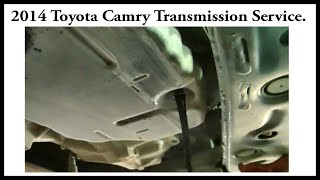
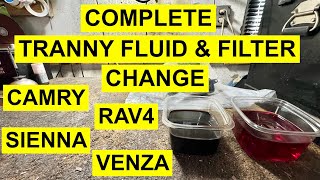
🎬 Watch: 2014 Camry U760E transmission fluid change guideSymptoms You May Notice
- Extremely harsh or banging gear shifts, especially during upshifts at low RPM.
- Transmission getting stuck in one gear (limp mode).
- Delayed engagement when shifting from Park to Drive or Reverse.
- Engine stalling when coming to a stop.
- Illuminated Check Engine Light.
- Transmission overheating.
- Transmission slipping, where engine RPMs rise without a corresponding increase in vehicle speed.
- Replacing the entire transmission when only a fluid change, solenoid, or valve body repair was needed.
- Replacing the high-pressure transmission pump when the issue is electronic or hydraulic within the valve body.
Most Likely Causes
- Dirty, Low, or Incorrect Transmission Fluid 🔴 High Probability → Shop Transmission Assembly Over time, transmission fluid degrades and collects clutch material and other debris. This contamination can clog the small passages in the valve body and cause the solenoid's internal plunger to stick. Many owners neglect fluid changes on 'lifetime fill' transmissions, leading to premature failures.
How to confirm: Check the transmission fluid level and condition. If the fluid is dark brown/black, smells burnt, or contains visible particles, it is contaminated. Note that many later model Camrys have sealed transmissions without a dipstick, requiring a more involved check procedure at a workshop.
Typical fix: Perform a transmission fluid and filter change. If the fluid is heavily contaminated, a simple drain-and-fill may not be enough; a full fluid flush or cleaning of the valve body may be needed.
Est. part cost: $50-$150 for fluid and a filter kit. - Faulty Pressure Control Solenoid 'A' (SL1) 🔴 High Probability → Shop Transmission Valve Body The solenoid is a mechanical part with a moving plunger that can wear out and stick over time. It can also fail electrically from an internal short circuit in its coil.
How to confirm: After dropping the transmission pan, the solenoid can be tested. A mechanic will check its resistance with a multimeter against OEM specifications (typically 5.0-5.6 ohms at 68°F for many Toyota solenoids). A more advanced test involves using a scan tool to command the solenoid on and off while monitoring pressure readings.
Typical fix: Replace the faulty solenoid. The solenoid is located on the transmission valve body, requiring removal of the transmission pan to access it.
Est. part cost: $100-$250 for an aftermarket solenoid, $200-$400 for an OEM part. - Worn or Sticking Transmission Valve Body 🟡 Medium Probability → Shop Transmission Valve Body Wear in the aluminum bores of the valve body can cause the control valves to stick, leading to pressure regulation problems that mimic a failed solenoid. This is more common in higher-mileage vehicles (over 100,000 miles) or those with a history of poor fluid maintenance.
How to confirm: This is difficult to confirm without expertise. It's typically diagnosed after replacing the solenoid doesn't fix the issue. A transmission specialist may use a vacuum tester on the valve body bores to check for wear or inspect for scoring and debris after removal.
Typical fix: The valve body can be removed and sent to a specialist for rebuilding (e.g., with oversized valves and reamed bores), or it can be replaced with a new or remanufactured unit.
Est. part cost: $500-$1200 for a remanufactured valve body.
Rare But Worth Checking
- Wiring Harness Damage: A short circuit in the wiring harness leading to the solenoid can provide constant power, forcing it to stay on. Check the harness for any visible damage, especially where it might rub against the chassis or engine components.
- Faulty Transmission Control Module (TCM): → Shop Transmission Assembly In rare cases, the driver circuit within the TCM (sometimes integrated into the PCM) can fail, continuously sending a signal to the solenoid. This is unlikely and should only be considered after all other possibilities, including wiring, have been exhausted.
Diagnosis Steps
- Check the transmission fluid level and condition. If it's low, dirty, or smells burnt, address this first as it's a primary cause.
- Use a professional scan tool to check for other transmission-related codes and review freeze-frame data to understand the conditions when the code was set.
- Inspect the transmission wiring harness and connectors for any signs of damage, corrosion, or loose connections.
- If possible, use the scan tool to command the Pressure Control Solenoid 'A' on and off to see if it responds. Listen for a click from the transmission pan and watch live data for pressure changes.
- If the fluid and wiring are good, the next step is to drop the transmission pan to access the valve body.
- Identify and test the resistance of the SL1 solenoid with a multimeter. Compare the reading to the manufacturer's specification (e.g., 5.0-5.6 ohms). A reading outside this range indicates a failed solenoid.
- If the solenoid tests bad, replace it. If it tests good, the problem is likely a stuck valve within the valve body or a blockage in a hydraulic passage.
- Inspect the valve body for scoring or debris. If wear is suspected, the valve body should be professionally tested, rebuilt, or replaced.
Parts You'll Likely Need
- Pressure Control Solenoid 'A' (SL1)
(OEM #U660E/U760E: 35210-33030 or 35210-73010. Part number varies by specific transmission and year, always verify with VIN.)— This is the component identified by the code. It can fail mechanically (sticking) or electrically (shorted coil).
Trusted brands: Aisin (OEM), Denso, Rostra, Standard Motor Products
OEM price range: $200-$400
Aftermarket price range: $100-$250 - Automatic Transmission Filter Kit
(OEM #Varies by transmission (e.g., 35330-0W021 for some U-series).)— Should always be replaced when the transmission pan is removed. A clogged filter can cause pressure issues and is indicative of contaminated fluid.
Trusted brands: Toyota (OEM), Wix, ATP, Beck/Arnley
OEM price range: $40-$70
Aftermarket price range: $20-$40 - Toyota Type T-IV or WS Automatic Transmission Fluid
(OEM #00279-000T4 (T-IV), 00289-ATFWS (WS))— Using the correct OEM-specified fluid is critical for Toyota transmissions. T-IV is for older 4/5-speeds (U241E/U151E), while WS (World Standard) is for the 6-speeds (U660E/U760E). Dirty fluid is a primary cause of this code.
Trusted brands: Toyota (OEM), Idemitsu (OEM supplier), Valvoline MaxLife (WS compatible)
OEM price range: $10-$15 per quart
Aftermarket price range: $8-$12 per quart (ensure it meets spec)
Related Codes That Often Appear With This One
- P0748 — This code indicates an electrical circuit fault for the same solenoid ('A'). If seen with P0747, it strongly points to a wiring problem or a failed solenoid coil rather than a purely mechanical sticking issue.
- P0715 — Input/Turbine Speed Sensor Malfunction. The TCM may set this code if the harsh shifting from the P0747 fault causes erratic speed sensor readings.
- P0746 — Indicates Pressure Control Solenoid 'A' Performance or Stuck Off. Seeing this code alongside P0747 could indicate an intermittent problem or a more complex hydraulic/electronic issue.
Technical Service Bulletins (TSBs) & Recalls
- While no specific TSB for P0747 was found, several related TSBs exist for shift quality issues on these transmissions. For example, T-SB-0330-17 was issued for harsh shifting on later model Camrys and involved a PCM reprogram. TSB TC002-06 addressed harsh shifts and other solenoid codes (P075x, P1760) on some models, recommending ECM replacement in some cases. These indicate that Toyota is aware of control system issues affecting shift quality.
Platform-Specific Known Issues
- U660E/U760E Transmission Hesitation and Shifting Issues: → Shop Transmission Assembly The 6-speed U660E (V6) and U760E (I4) transmissions used from 2007 onwards are known to develop drivability issues with age, including harsh shifts and TCC shudder. These problems are often linked to wear within the valve body bores, particularly the primary pressure regulator valve, lock-up control valve, and solenoid modulator valve. Using the correct Toyota WS fluid is critical, as the transmission's pressure control strategy is tied to fluid temperature and characteristics.
Mechanic-Grade Diagnostic Values
- Pressure Control Solenoid 'A' (SL1) Coil Resistance — expected: 5.0 - 5.6 Ohms at 68°F (20°C). Some sources state a wider acceptable range of 5-7 Ohms.. Failure: A reading of 0 ohms (short circuit) or infinite/OL (open circuit). A reading significantly outside the 5-7 Ohm range suggests a failing coil.
- Solenoid Supply Voltage — expected: Approximately 12V (Battery Voltage) at the power feed wire in the solenoid connector with key on.. Failure: Low or no voltage indicates a problem in the wiring harness or the power source from the TCM/PCM.
- Transmission Lubrication Pressure (U660E/U760E) — expected: 6 - 11 PSI.. Failure: Pressure outside this range can indicate internal hydraulic leaks, a failing pump, or blockages, which can contribute to solenoid performance codes.
Hidden / Shadow Codes Worth Checking
- Check Mode Function: This is not a specific code, but a diagnostic mode available in Toyota's Techstream scan tool. It places the TCM into a high-sensitivity state where it will set fault codes on the first detection of a problem, rather than waiting for two or more consecutive drive cycles. (see via Activate 'Check Mode' within the ECT (Electronically Controlled Transmission) menu of a Toyota Techstream or compatible professional scan tool. All existing codes are typically erased upon entering this mode.)
Scan Tool Commands That Help
- Toyota Techstream: Active Test: Control the Solenoid (SL1) ON/OFF — Used to functionally test the solenoid after verifying wiring and resistance. With the engine running and pan on, commanding the solenoid should produce an audible click and a change in line pressure visible in live data. This helps differentiate a stuck solenoid from a wiring or TCM issue.
- Toyota Techstream: Utility: Reset Memory (Compensation Code Reset) — This is a critical step after replacing a solenoid or the entire valve body. The TCM stores adaptive learning values for shift timing and pressure. Failing to reset this memory can cause continued poor shifting even with new parts.
- Toyota Techstream: Data List — Monitor 'A/T Oil Temperature 1' and 'Engine Speed' when performing the official fluid level check procedure on sealed transmissions like the U660E/U760E, as the correct level can only be determined within a specific temperature range.
Wiring & Ground Locations
- Engine Harness Grounds (2GR-FE V6) — There are two primary harness grounds located on top of the valve covers. Each has a wire that runs from a bolt on the valve cover to a ground point on the chassis frame, near the strut towers.. A poor engine or transmission ground can cause electrical noise and voltage drops, leading to erratic sensor readings and incorrect operation of electronic components like solenoids. The TCM may misinterpret these signals and set false codes.
- Main Transmission Ground (2GR-FE V6) — A large ground cable is attached to a bolt on the top of the transmission housing.. This is the primary ground path for the transmission case and all components within it. Corrosion or a loose connection here can directly impact the electrical return path for the solenoids, causing them to malfunction.
- U760E Solenoid Harness Caution — Internal valve body wiring harness for the U760E (4-cylinder, 2010+).. On the U760E, the connectors for the SL3 (blue wire) and SL4 (green wire) solenoids are easily crossed during reassembly. While not the SL1 solenoid for P0747, this highlights the potential for wiring mistakes inside the pan and the importance of careful routing and connection.
Real Owner Repair Stories
- Reddit user, r/MechanicAdvice (2012 Toyota Camry 3.5L (U660E)) — Solenoid fault code.
❌ Tried (didn't work) Replacing only the single bad solenoid.
✅ What actually fixed it The user replaced the entire valve body with a remanufactured unit but then experienced hesitation, stalling, and shift flares. The root cause was an incompatibility between the original single-pressure-switch valve body (used from 2012+) and some reman/used units which may be the older three-pressure-switch design. The final fix required not only the correct part but also reprogramming the transmission compensation code and performing a TCM relearn procedure with a scan tool. - YouTube user, Curmudgeon Transmission (Toyota with U660E transmission) — Harsh engagements, flared shifts, binding on downshifts.
❌ Tried (didn't work) Installing a Sonnax Zip Kit into the original valve body., Installing a used valve body.
✅ What actually fixed it A remanufactured valve body ultimately solved the problem. The story highlights the complexity of swapping parts, noting that a 3-switch valve body was successfully installed in a car originally equipped with a 1-switch system by using the car's original wiring harness. This indicates the valve body casting may be the same, but the electronics (harness and switch plate) must match the vehicle's original configuration.
"I Checked Everything" — The Actual Cause
- This code pattern is more accurately described as 'Solenoid Tests Good, But Problem Persists'. A technician may remove the SL1 solenoid and confirm its coil resistance is within spec (e.g., 5.0-5.6 ohms) and that it clicks when 12V is applied. However, the P0747 code returns immediately. The actual cause is often mechanical wear inside the aluminum valve body, specifically in the bore where the solenoid's corresponding regulator valve moves. Debris or wear creates friction or a hydraulic leak, causing the valve to stick even when the solenoid itself is functioning perfectly. This requires vacuum testing the valve body bores or replacing the valve body assembly.
Model Year Variations Within This Range
- 2007-2011 vs 2012-2016 (U660E V6 Models): The number of pressure switches on the valve body changed. Early models (approx. pre-2012) used a three-switch assembly, while later models (approx. 2012+) used a single-switch assembly. The valve body casting may be interchangeable, but the electronic switch plate and wiring harness must match the vehicle's original configuration to avoid new faults.
- 2007+ (V6) vs 2010+ (I4): The V6 engine is paired with the U660E transmission, while the 4-cylinder engine (from 2010) is paired with the U760E. While functionally similar 6-speeds, they have differences. For example, U660E valve bodies often have identification numbers embossed on the casting, whereas U760E valve bodies typically do not.
Diagnostic Flowchart
Other Known Issues on This Vehicle
Issues unrelated to this code that are worth knowing about as an owner of this generation:
- Excessive Oil Consumption (2.4L 2AZ-FE Engine) 🔴 High — Very common on 2007-2011 4-cylinder models. Caused by defective piston ring design. (Ref: Toyota issued TSB #SB-0094-11 and a warranty enhancement program (ZE7) to address this, but it has since expired.)
- Melting / Sticky Dashboard 🟠 Medium — Widespread on 2007-2011 models in areas with high heat and humidity. The dashboard material degrades, becomes shiny and sticky. (Ref: Toyota initiated a Warranty Enhancement Program (ZE6) to replace affected dashboards.)
- Torque Converter Shudder (2012-2014 models) 🟠 Medium — Common on early XV50 generation Camrys, causing a shudder or vibration during light acceleration at cruising speeds. (Ref: Toyota addressed this with a Limited Service Campaign that involved either a software update or torque converter replacement.)
- Stripped Head Bolts (2.4L 2AZ-FE Engine) 🔴 High — A known issue on 2002-2006 models where the cylinder head bolt threads in the engine block can strip, leading to head gasket failure and overheating.
- Water Pump Failure (V6 2GR-FE Engine) 🟠 Medium — The water pump on the V6 engine, particularly in the 2007-2011 generation, is a known failure point that can lead to coolant leaks and overheating.
Used vs. New Parts: Buying Guide for This Vehicle
When a used part is the smart pick: A complete, low-mileage used valve body can be a cost-effective solution if the original is confirmed to have bore wear. However, this is a high-risk purchase due to model-year variations in pressure switches. It is critical to match the part to the vehicle's exact year and configuration. A used solenoid is generally not recommended due to the low cost of a new aftermarket unit.
Donor-vehicle mileage cap: roughly under 80000 miles for the part to have meaningful remaining life.
What to inspect on the donor part:
- Verify the donor vehicle's year and engine to ensure compatibility (U660E vs. U760E).
- Crucially, confirm if the valve body is a 1-switch or 3-switch design to match your original.
- If possible, inspect the transmission fluid from the donor; it should be red/pink and not burnt-smelling or full of metal.
- Avoid parts from vehicles with obvious signs of major accidents or flood damage.
OEM-only on this vehicle (don't cheap out):
- Transmission Fluid: Always use Toyota Genuine ATF WS (World Standard). The transmission's control logic is specifically calibrated to this fluid's properties. Using a 'universal' or incorrect fluid is a common cause of shift quality problems.
Aftermarket brands forum-validated for this vehicle:
- Solenoids: Aisin (OEM manufacturer), Rostra, Denso.
- Valve Body Repair Kits: Sonnax (specifically their 'Zip Kit' U660E-ZIP) is highly regarded by transmission specialists for addressing valve body bore wear.
Brands owners have reported issues with on this vehicle:
- Unbranded, 'no-name' solenoids and complete valve bodies from online marketplaces. Repair stories often involve these parts failing to fix the issue or introducing new problems, leading to doing the job twice.
Real Owner Stories
Aggregated from forums and TSBs cited above. Mileages and costs reflect what owners reported in those sources.
8th Gen Toyota Camry
Symptoms: Dramatically harsh shifting.
What fixed it: A software update via TSB T-SB-0330-17.
Source hint: Reddit r/Camry - Discussion on Transmission Fixes
2007+ Toyota Camry (U660E/U760E) — ~110000 miles
Symptoms: Harsh downshifts and drivability issues linked to wear within the valve body bores.
What fixed it: Professional diagnosis using the scan tool's 'Check Mode' and potentially rebuilding the valve body with oversized valves.
Source hint: Gears Magazine - Common Issues with U660E and U760E
Related OBD-II Codes
Frequently Asked Questions
My 2007+ Camry with the U660E transmission is shifting harshly; is there a software fix?
I have a 2012 Camry with no transmission dipstick. How do I check for P0747 causes?
What is the specific resistance for the SL1 solenoid on a Toyota Camry?
Does the 'lifetime fill' transmission fluid in my Camry really last forever?
Could my Camry's 2.4L 2AZ-FE engine oil consumption issue be related to P0747?
Is the U760E transmission in my 4-cylinder Camry prone to the same pressure issues as the V6?
Helpful Videos
We Have This Part in Stock

The information in this article is provided for general reference and educational purposes only. Vehicle specifications, procedures, and part compatibility can vary by production date, trim level, and region. Always consult your vehicle's factory service manual and verify part numbers before purchasing or performing repairs. Safety-critical components such as airbags, seat belts, and braking systems should be installed by a qualified professional.
- Toyota Camry:
- 🧭 Diagnostic Flowchart
- 🎬 Helpful Videos
- 🛍️ Shop This Part
- What's Unique About the 2002-2016 Toyota Camry
- Symptoms You May Notice
- Most Likely Causes
- Rare But Worth Checking
- Diagnosis Steps
- Parts You'll Likely Need
- Related Codes That Often Appear With This One
- Technical Service Bulletins (TSBs) & Recalls
- Platform-Specific Known Issues
- Mechanic-Grade Diagnostic Values
- Hidden / Shadow Codes Worth Checking
- Scan Tool Commands That Help
- Wiring & Ground Locations
- Real Owner Repair Stories
- "I Checked Everything" — The Actual Cause
- Model Year Variations Within This Range
- Other Known Issues on This Vehicle
- Used vs. New Parts: Buying Guide for This Vehicle
- Real Owner Stories
- 8th Gen Toyota Camry
- 2007+ Toyota Camry (U660E/U760E) — ~110000 miles
- Related OBD-II Codes
- Frequently Asked Questions
- 🎟️ Get 5% Off