

P0750 on 2000-2007 Ford Focus: Shift Solenoid 'A' Malfunction Causes and Fixes
On a 2000-2007 Ford Focus, code P0750 almost always means the Shift Solenoid 'A' (SSA) inside the 4F27E transmission has failed. This is a very common and well-documented issue for this vehicle. Replacing the solenoid, transmission filter, and fluid is the standard fix, costing around $40-$80 for parts and is a popular DIY repair due to the solenoid's easy accessibility after removing the transmission pan.
- P0750 on a 2000-2007 Focus is almost certainly a failed Shift Solenoid 'A'.
- The repair is accessible to an experienced DIYer and involves dropping the transmission pan.
- Always replace the transmission filter and use the correct Mercon V fluid during the repair.
- The vehicle may be stuck in one gear (limp mode), so driving should be limited until the repair is made.
- Clearing the PCM's memory after the repair can help the transmission relearn shift points with the new part.
What's Unique About the 2000-2007 Ford Focus
The 4F27E automatic transmission, a joint design between Ford and Mazda (where it is known as the FN4A-EL), is notorious for the high failure rate of its shift solenoids, particularly Shift Solenoid 'A' (SSA). While many cars can get a P0750 code from various issues, on the first-generation Focus, the solenoid itself is so frequently the culprit that it's the immediate and primary suspect. The repair is straightforward because the solenoids are easily accessible after removing the transmission pan, making it a popular DIY job for this specific car.
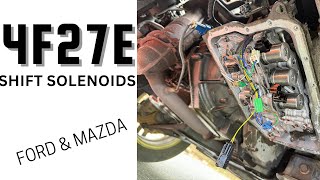
🎬 Watch this walkthrough of the 4F27E solenoid replacement process.Generation note: The 2000-2007 year range covers the entire first North American generation (Mk1), including the 2005-2007 facelift. All automatic models in this period used the same 4F27E transmission, so the causes, symptoms, and repair process for P0750 are identical across these years. This issue is also seen in Focus models up to 2011 which continued to use this transmission.
Symptoms You May Notice
- Check Engine Light is on
- Flashing Overdrive (O/D) light on the instrument cluster or gear selector
- Harsh or erratic shifting, especially between 1st and 2nd gear
- Transmission will not shift into 4th gear (overdrive)
- Vehicle is stuck in a single gear (failsafe or 'limp' mode)
- Delayed or sluggish gear engagement
- Reduced fuel economy
- Replacing the entire transmission when only a simple, inexpensive solenoid is needed.
- Replacing the wrong shift solenoid (Solenoid 'A' and 'B' are identical parts but control different shifts; 'A' is the common failure for P0750).
- Assuming a bad PCM before thoroughly testing the solenoid and its wiring harness.
Most Likely Causes
- Faulty Shift Solenoid 'A' (SSA) 🔴 High Probability → Shop Transmission Valve Body This specific solenoid is a known weak point on the 4F27E transmission due to electrical failure (internal short or open circuit) from age and heat cycles. It is the most common cause for P0750 on this platform.
How to confirm: After removing the transmission pan, the solenoid can be tested with a multimeter for resistance. It should measure between 10.9 and 26.2 ohms. However, failure is often intermittent (failing when hot), so replacement is recommended even if it tests within spec. Visually, it is one of two smaller solenoids and often has a white electrical connector.
Typical fix: Replace the Shift Solenoid 'A'. It is held by a single 8mm bolt and an electrical connector. It is often recommended to replace both Shift Solenoid 'A' and 'B' at the same time as they are identical parts and fail similarly.
Est. part cost: $25-$50 - Low or Dirty Transmission Fluid 🟡 Medium Probability → Shop Transmission Assembly Neglected maintenance can lead to fluid breakdown and low levels, causing poor hydraulic pressure and solenoid issues. The 4F27E does not have a factory drain plug, making fluid changes less convenient and often skipped by owners. This can lead to debris clogging the solenoid's internal passages.
How to confirm: Check the transmission fluid dipstick for level and condition. The fluid should be bright red (for Mercon V) and not smell burnt. If it is dark brown/black or low, it needs service.
Typical fix: Perform a transmission fluid and filter change. This is done as part of the solenoid replacement anyway. A pan drop and fill requires about 4 quarts of Mercon V fluid. 🎬 See how to perform a full transmission service and solenoid swap.
Est. part cost: $40-$70 for fluid and a filter kit - Damaged Internal Wiring Harness ⚪ Low Probability → Shop Transmission Wiring Harness The wiring inside the transmission is submerged in hot fluid and can become brittle or damaged over time, causing an open or short in the solenoid circuit. The plastic connectors can also become brittle and break.
How to confirm: Visually inspect the wiring leading to the shift solenoid for any signs of cracking, breaks, or burnt connectors once the pan is removed.
Typical fix: Repair the damaged wire or replace the internal transmission harness.
Est. part cost: $50-$100 for a new harness
Rare But Worth Checking
- Faulty Powertrain Control Module (PCM): → Shop Engine Control Module (ECM) A failure of the driver circuit within the PCM can mimic a solenoid fault. This is uncommon and should only be considered after the solenoid and wiring have been confirmed to be good.
- Clogged Passages in the Valve Body: → Shop Transmission Valve Body Sludge and debris from old fluid can block the small hydraulic passages in the valve body, preventing the solenoid from functioning correctly even if it's electrically sound. This usually points to severe neglect and may require a valve body cleaning or replacement.
Diagnosis Steps
- Verify the code with an OBD-II scanner.
- Check the transmission fluid level and condition using the dipstick. If the fluid is very low, dark, or smells burnt, a fluid and filter service is necessary.
- Safely raise and support the vehicle on jack stands and chock the wheels.
- Place a large drain pan underneath the transmission pan.
- Loosen all the transmission pan bolts, then remove all but two on one side. Carefully pry the opposite side of the pan to break the seal and allow fluid to drain in a controlled manner.
- Once drained, remove the remaining bolts and the pan.
- Locate Shift Solenoid 'A'. It is one of the two smaller, identical solenoids, often identified by a white or light-colored electrical connector.
- Disconnect the electrical connector by pressing the release tab. Remove the single 8mm bolt holding the solenoid in place.
- Wiggle the old solenoid to pull it out. It is sealed by two O-rings and may require some effort.
- (Optional but Recommended) Test the old solenoid's resistance with a multimeter. A reading outside of 10.9-26.2 ohms confirms failure, but an intermittent fault may still test good.
- Install the new solenoid, ensuring it seats fully. Reinstall and tighten the 8mm bolt. Reconnect the electrical connector until it clicks.
- Replace the transmission filter.
- Clean the transmission pan and its magnet of all metal shavings and old gasket material. Clean the mating surface on the transmission case.
- Install the pan with a new gasket or specified RTV sealant (like Permatex Automatic Transmission RTV) and torque the bolts to specification (typically 10-12 ft-lbs) in a crisscross pattern to ensure an even seal.
- Refill the transmission with approximately 4 quarts of Motorcraft Mercon V fluid through the dipstick tube.
- Start the engine, and with your foot on the brake, cycle through all the gears (P-R-N-D-2-1), pausing for a few seconds in each to circulate the new fluid.
- With the engine running and the transmission warm, check the fluid level and top off as needed.
- Clear the trouble codes with the scanner and perform a test drive to ensure proper shifting and that the Check Engine Light does not return.
Parts You'll Likely Need
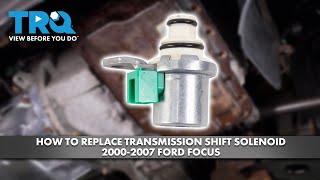
- Transmission Shift Solenoid 'A'/'B' (On/Off)
(OEM #XS4Z-7H148-AA)— This is the most common failure point for code P0750 on this vehicle. Solenoids A and B are the same part.
Trusted brands: Motorcraft, Pioneer, Rostra, TRQ
OEM price range: $40-$60
Aftermarket price range: $25-$45 - Automatic Transmission Filter Kit (Filter and Gasket)
(OEM #XS4Z-7A098-AB)— The filter should always be replaced when the transmission pan is removed to ensure clean fluid and proper flow.
Trusted brands: Motorcraft, Wix, ATP
OEM price range: $25-$40
Aftermarket price range: $15-$25 - Mercon V Automatic Transmission Fluid
(OEM #XT-5-QMC)— This is the Ford-specified fluid for the 4F27E transmission for these model years. Using the wrong fluid type can cause damage. A pan drop requires approximately 4-5 quarts.
Trusted brands: Motorcraft, Valvoline, Castrol
OEM price range: $8-$12 per quart
Aftermarket price range: $6-$10 per quart
Related Codes That Often Appear With This One
- P0753 — This code indicates 'Shift Solenoid A Electrical,' which is a more specific electrical fault (like a direct short or open) in the same circuit. It is often triggered alongside P0750.
- P0972 — This code points to 'Shift Solenoid A Control Circuit Range/Performance,' also related to an electrical issue in the same circuit.
- P0755 — This is for 'Shift Solenoid 'B' Malfunction.' It is common for these solenoids to fail around the same time, so seeing both codes together is possible. Solenoid 'B' is an identical part to 'A'.
Platform-Specific Known Issues
- source — A user on FordForums.com describes getting code P0750 and having no 4th gear. They confirm the repair is simple and that even if the solenoid tests good with a multimeter, it can still be bad due to an intermittent fault. This reinforces the 'replace on sight' recommendation for this code.
- source — Multiple YouTube videos, including one from FordTechMakuloco, detail the step-by-step replacement of Shift Solenoid 'A' on a Focus. They visually confirm it's the solenoid with the white connector, held by an 8mm bolt, and is the most common failure for P0750, P0753, and P0972 codes.
Mechanic-Grade Diagnostic Values
- Shift Solenoid 'A' (SSA) and 'B' (SSB) resistance — expected: 10.9 - 26.2 Ohms. Failure: A reading of 0 ohms (short) or infinite/OL (open). However, a solenoid can test good when cold but still fail intermittently when hot.
- Voltage at Shift Solenoid 'A' connector (internal) — expected: Approximately 12V (battery voltage) when commanded ON by the PCM.. Failure: No voltage when commanded ON points to a wiring or PCM driver issue. Voltage present but solenoid not activating points to a bad solenoid.
- Ground continuity of solenoid circuit — expected: Less than 0.2 Ω. Failure: High resistance indicates a poor ground connection, which can cause erratic solenoid operation.
Scan Tool Commands That Help
- Ford IDS (Integrated Diagnostic System) or equivalent professional scanner: Solenoid Activation Test / Output State Control — This bidirectional command allows a technician to manually command Shift Solenoid 'A' ON and OFF while monitoring the circuit. It's used to confirm if the PCM driver, wiring, and solenoid are all capable of functioning. Listening for an audible 'click' from the transmission pan area during activation can confirm the solenoid is mechanically actuating.
Wiring & Ground Locations
- Transaxle Case Connector (C167) — The main electrical connector on the outside of the 4F27E transmission case.. This is the primary point for testing the solenoid circuit from outside the transmission. Shift Solenoid 'A' (SSA) is controlled via Pin 1 (White wire) on this connector. Pin 2 (Purple wire) is for Shift Solenoid 'B'.
- Shift Solenoid 'A' (SSA) Connector (Internal) — Inside the transmission, on the valve body. Accessible after removing the pan.. This connector is often white or a light natural color. It connects directly to the solenoid and is where you would test the solenoid's resistance directly or check for voltage during a bidirectional test.
- PCM Connector — Located in the engine bay, typically near the firewall or battery.. The wire from Pin 1 of the transaxle connector runs to a specific pin on the PCM. Testing for continuity between the PCM connector pin and the transaxle connector pin can identify a break or short in the main vehicle harness, ruling out an internal transmission wiring fault.
Real Owner Repair Stories
- YouTube user comment on FordTechMakuloco video (2005 Ford Focus) — Flashing O/D light and P0750 code.
✅ What actually fixed it Replaced both shift solenoids (A and B) along with the transmission filter and fluid. The problem was resolved and did not return. - YouTube video by 'L8R-HP' (2005 Ford Focus) — Flashing 'O-D off' light, intermittent transmission issues, code P0732 initially, but procedure is identical for P0750.
✅ What actually fixed it Replaced Shift Solenoid 'A' inside the transmission. The video details the entire process from draining the fluid to torquing the pan bolts and clearing the PCM, which fixed the issue.
OEM Part Supersession History
XS4Z-7H148-AA→The part number remains largely the same, but aftermarket manufacturers have improved designs.— The original Ford/Motorcraft solenoids are known for the internal coil wire breaking. Some aftermarket brands like Rostra have redesigned the solenoid to be more robust.
Heads up: Shift Solenoids 'A' and 'B' are identical on/off solenoids. However, they must not be confused with the PWM solenoids (C, D, E) in the same valve body, which are physically larger.
Diagnostic Flowchart
Other Known Issues on This Vehicle
Issues unrelated to this code that are worth knowing about as an owner of this generation:
- Sticking/Failing Ignition Lock Cylinder 🔴 High — Very common across 2000-2005 models. The key may become difficult to turn or get stuck, preventing the car from starting.
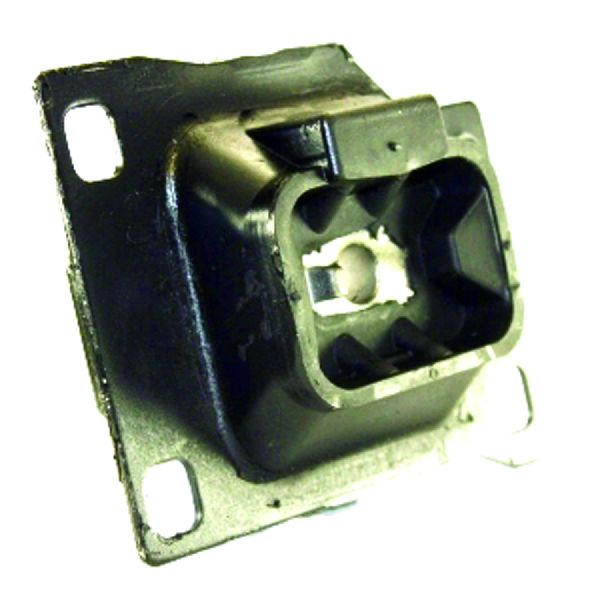
- Passenger Side Engine Mount Failure 🟠 Medium — The hydraulic passenger-side engine mount is prone to leaking and collapsing, causing excessive engine vibration and noise.
- Rear Wheel Bearing Failure 🟠 Medium — Rear wheel bearings often become noisy and fail prematurely, typically between 90,000 and 130,000 miles, requiring replacement.
- Melting Fuel Pump Electrical Connector 🔴 High — The electrical plug on the in-tank fuel pump module can overheat and melt, causing a loss of electrical connection and leading to a no-start or engine stalling condition. (Ref: Related to recalls on later models for fuel system issues (e.g., 18S32), but this specific failure is a known issue on early 2000s models.)
- Cracked Plastic Thermostat Housing 🟠 Medium — On 2.0L engines, the plastic thermostat housing is prone to cracking, especially at the inner lip, leading to coolant leaks and potential overheating.
- Broken Front Coil Springs 🔴 High — Particularly common in regions with heavy road salt use (the 'Salt Belt'), the front coil springs can rust and break unexpectedly.
Used vs. New Parts: Buying Guide for This Vehicle
When a used part is the smart pick: For this specific repair, buying a used solenoid is almost never a smart choice. The part is inexpensive new (under $40 for a quality aftermarket unit) and is a known high-failure item. The labor to drop the pan and replace it is the main effort, so using a new part with a warranty is the most logical path.
What to inspect on the donor part:
- Not applicable, as a used solenoid is not recommended.
OEM-only on this vehicle (don't cheap out):
- While not strictly 'OEM-only', using the correct fluid (Motorcraft Mercon V) is critical. Using a universal or incorrect ATF type can cause seal damage and shifting problems.
Aftermarket brands forum-validated for this vehicle:
- Rostra (often cited in forums as a reliable, improved-design alternative)
- Pioneer
- TRQ
Brands owners have reported issues with on this vehicle:
- Unnamed, no-brand kits from online marketplaces should be treated with caution. Given the low cost of reputable brands, the savings are not worth the risk of premature failure.
Real Owner Stories
Aggregated from forums and TSBs cited above. Mileages and costs reflect what owners reported in those sources.
2000-2007 Ford Focus
Symptoms: Check Engine Light on with code P0750 and the transmission would not shift into 4th gear (overdrive).
What fixed it: Replacing Shift Solenoid 'A' resolved the issue. The owner noted that even if the solenoid tests good with a multimeter, it can still be bad due to an intermittent fault.
Source hint: Real Owner Experience on FordForums.com
Related OBD-II Codes
Frequently Asked Questions
My mechanic tested my Focus's shift solenoid and said its resistance was in spec. Could it still be the cause of my P0750 code?
Which solenoid is Shift Solenoid 'A' on the 4F27E transmission in my Ford Focus?
I'm replacing Shift Solenoid 'A' to fix P0750. Should I replace Solenoid 'B' at the same time?
How much transmission fluid do I need for a pan drop and filter change on my 2000-2007 Focus?
Does the information for the Ford Focus P0750 code also apply to my Mazda Protegé?
My transmission is shifting harshly and the O/D light is flashing. Is this related to the P0750 code?
Helpful Videos
We Have This Part in Stock

The information in this article is provided for general reference and educational purposes only. Vehicle specifications, procedures, and part compatibility can vary by production date, trim level, and region. Always consult your vehicle's factory service manual and verify part numbers before purchasing or performing repairs. Safety-critical components such as airbags, seat belts, and braking systems should be installed by a qualified professional.
- Ford Focus:
- 🧭 Diagnostic Flowchart
- 🎬 Helpful Videos
- 🛍️ Shop This Part
- What's Unique About the 2000-2007 Ford Focus
- Symptoms You May Notice
- Most Likely Causes
- Rare But Worth Checking
- Diagnosis Steps
- Parts You'll Likely Need
- Related Codes That Often Appear With This One
- Platform-Specific Known Issues
- Mechanic-Grade Diagnostic Values
- Scan Tool Commands That Help
- Wiring & Ground Locations
- Real Owner Repair Stories
- OEM Part Supersession History
- Other Known Issues on This Vehicle
- Used vs. New Parts: Buying Guide for This Vehicle
- Real Owner Stories
- 2000-2007 Ford Focus
- Related OBD-II Codes
- Frequently Asked Questions
- 🎟️ Get 5% Off