

P0751 on 2011-2018 Hyundai Sonata: Shift Solenoid 'A' Causes and Fixes
P0751 on a 2011-2018 Sonata usually points to a failed shift solenoid ('A') or the internal wiring harness inside the A6MF 6-speed automatic transmission. The harness insulation becomes brittle and fails, often taking the integrated Transmission Fluid Temperature (TFT) sensor with it. The most common and recommended fix is to replace both the solenoid pack and the internal wiring harness (Part No. 46307-3B650) at the same time. Expect a shop repair to cost between $400 and $800.
- P0751 on a 2011-2018 Sonata indicates a failure in the Shift Solenoid 'A' circuit, often causing the car to go into 'limp mode'.
- Always start by checking the transmission fluid level and condition; low or dirty fluid is a primary cause.
- The most likely parts to fail are the shift solenoid itself and the internal transmission wiring harness, which gets brittle from heat.
- It is highly recommended to replace the internal wiring harness (Part # 46307-3B650) at the same time as the solenoids to prevent the code from returning.
- This is not a beginner-friendly DIY repair. It requires accessing internal transmission components and can lead to major damage if done incorrectly.
What's Unique About the 2011-2018 Hyundai Sonata
The 2011-2018 Hyundai Sonata uses the A6MF family of 6-speed automatic transmissions. While P0751 is a generic code, on this specific platform, it's very frequently caused by more than just the solenoid itself. The internal transmission wiring harness is a known weak point, where the plastic and wire insulation becomes brittle from constant heat cycles and can cause shorts or open circuits. This harness also contains the Transmission Fluid Temperature (TFT) sensor, which is another common failure point. A bad TFT sensor can provide incorrect data to the TCM, leading to harsh shifting, improper line pressure, and ultimately triggering a solenoid performance code like P0751. Because of this, many technicians recommend replacing the harness (Part No. 46307-3B650) whenever the transmission pan is off for solenoid work. A less common but notable issue on the A6MF family is premature wear in the valve body bores, specifically the reducing valve bores, which can cause erratic shifting and solenoid performance codes even with low mileage.
Generation note: This guide covers the YF (2011-2014) and LF (2015-2018) generations of the Hyundai Sonata. Both generations use the same family of 6-speed automatic transmissions (A6MF1/A6MF2), and the causes and fixes for P0751 are consistent across this year range. These transmissions are also shared with many Kia models, which exhibit the same failures.
Symptoms You May Notice
- Check Engine Light is on
- Transmission is stuck in one gear (limp mode)
- Harsh, delayed, or erratic shifting
- Transmission slipping between gears
- Transmission overheating
- Reduced fuel economy
- Vehicle won't move when put in gear
- Replacing only the shift solenoid without inspecting or replacing the brittle internal wiring harness, leading to the code returning.
- Mistaking the internal transmission shift solenoid for the 'shift interlock solenoid' in the center console, which only prevents shifting from Park without the brake applied.
- Replacing the transmission without first diagnosing the less expensive and more common solenoid/harness failure.
Most Likely Causes
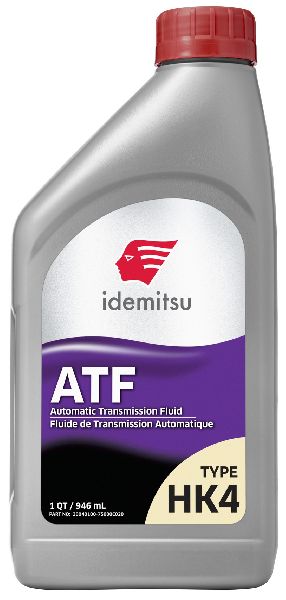
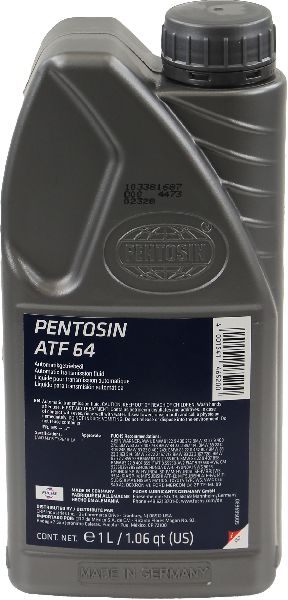
- Low or Dirty Transmission Fluid 🔴 High Probability → Shop Transmission Assembly The A6MF transmission is sensitive to fluid condition and level. Debris from normal wear can clog the small passages within the solenoids, causing them to stick. Hyundai specifies SP-IV fluid, and using incorrect fluid can cause shifting problems.
How to confirm: Check the transmission fluid level and condition via the check plug (there is no dipstick). The fluid should be bright red and not smell burnt. Dark, brown, or gritty fluid indicates a problem and likely internal wear.
Typical fix: Perform a transmission fluid and filter change. Use only Hyundai-specified SP-IV fluid or a compatible equivalent. This is often a good first step, but may not resolve the issue if a component has already failed.
Est. part cost: $75-$150 - Failed Shift Solenoid 'A' 🔴 High Probability → Shop Transmission Valve Body The solenoids are electro-mechanical parts that cycle thousands of times and wear out. They can fail electrically (coil burns out) or mechanically (the internal valve plunger gets stuck).
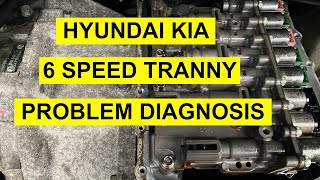
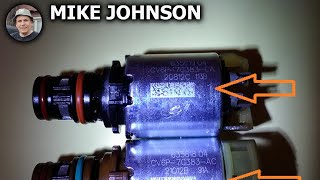
How to confirm: A mechanic can test the solenoid's resistance with a multimeter (typically 10-11 ohms for on/off solenoids) and use a professional scan tool to command the solenoid on and off to check its function by listening for a click. 🎬 Watch: How to diagnose and test solenoids on most models. Visual inspection may show clogged screens on the solenoid body.
Typical fix: Replace the faulty shift solenoid. Solenoids are often replaced as a complete pack/assembly located on the valve body, as they have similar life expectancies.
Est. part cost: $150-$300 - Faulty Internal Transmission Wiring Harness 🔴 High Probability → Shop Transmission Assembly This is a very common failure point on the A6MF transmission. The wiring harness inside the transmission is exposed to constant heat, which makes the wire insulation and plastic connectors brittle over time. This can lead to cracks and short circuits, causing intermittent solenoid faults.
How to confirm: Visually inspect the harness for brittle, cracked, or exposed wiring when the transmission pan is removed. Wiggle testing the harness while monitoring solenoid data with a scan tool can also reveal intermittent connections.
Typical fix: Replace the internal transmission wiring harness (OEM Part No. 46307-3B650). This is strongly recommended whenever the valve body is accessed for solenoid replacement.
Est. part cost: $80-$150 - Failed Transmission Fluid Temperature (TFT) Sensor 🟡 Medium Probability → Shop Transmission Assembly The TFT sensor is integrated into the internal wiring harness and is a known failure point. A bad sensor provides incorrect data to the TCM, which relies on temperature for shift strategy and line pressure calculations. This can cause harsh shifting and trigger performance codes like P0751.
How to confirm: Monitor the transmission fluid temperature on a scan tool. If the reading is erratic, stuck at an extreme value (-40°F or 300°F), or doesn't change as the vehicle warms up, the sensor is likely bad. This will often be accompanied by codes P0711, P0712, or P0713.
Typical fix: The sensor is part of the internal wiring harness, so the entire harness must be replaced. The sensor itself is not available separately.
Est. part cost: $80-$150
Rare But Worth Checking
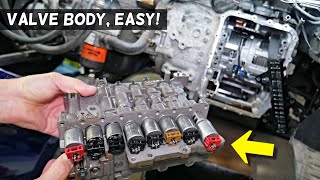
- Valve Body Malfunction: → Shop Transmission Valve Body Debris can clog the hydraulic passages within the valve body, or a check ball may not seat correctly. A known weak point in A6MF transmissions is wear in the reducing valve bores, which can cause pressure regulation issues mimicking a solenoid failure. A valve body cleaning, repair with an oversized valve kit, or full replacement may be necessary. 🎬 Watch: Step-by-step guide for removing and replacing the valve body.
- Faulty Transmission Control Module (TCM): → Shop Transmission Assembly While rare, the TCM itself can fail, sending incorrect signals to the solenoid. This should only be considered after all other possibilities (fluid, solenoid, wiring) have been ruled out with 100% certainty.
Diagnosis Steps
- Check and record any stored fault codes. Note if other solenoid or temperature sensor codes are present.
- Check the transmission fluid level and condition. This must be done at a specific temperature (122°F-140°F or 50°C-60°C) via the side fill/check plug. If the fluid is low, dark, or smells burnt, a fluid and filter change is the first step.
- Visually inspect the external transmission wiring harness and connectors for any damage, corrosion, or loose pins.
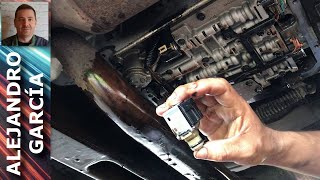
- If fluid and external wiring are okay, the next step is to remove the transmission oil pan. 🎬 See this walkthrough on how to replace the transmission solenoid.
- Visually inspect the internal wiring harness for signs of brittle, cracked, or discolored insulation. Pay close attention to the connectors.
- Using a multimeter, test the resistance of Shift Solenoid 'A'. On/off solenoids should read 10-11 ohms, while VFS (linear) solenoids should read around 5.1 ohms. Compare the reading to the manufacturer's specification.
- If possible, use a scan tool to perform an active test, commanding the solenoid on and listening for an audible click from the valve body.
- If the solenoid and wiring test good, the issue may lie within the valve body (blockage, worn bores) or, rarely, the TCM itself.
Parts You'll Likely Need
- Transmission Shift Solenoid Set — This is the most direct cause of the code. The solenoids are typically replaced as a complete set as they are housed together on the valve body and have similar life expectancies.
Trusted brands: Hyundai (OEM), Rostra
OEM price range: $250-$400
Aftermarket price range: $150-$250 - Internal Transmission Wiring Harness
(OEM #46307-3B650)— This harness is a known weak point that becomes brittle with heat, causing electrical faults that trigger solenoid codes. It also contains the TFT sensor. It's highly recommended to replace it whenever the valve body is accessed.
Trusted brands: Hyundai (OEM)
OEM price range: $80-$150
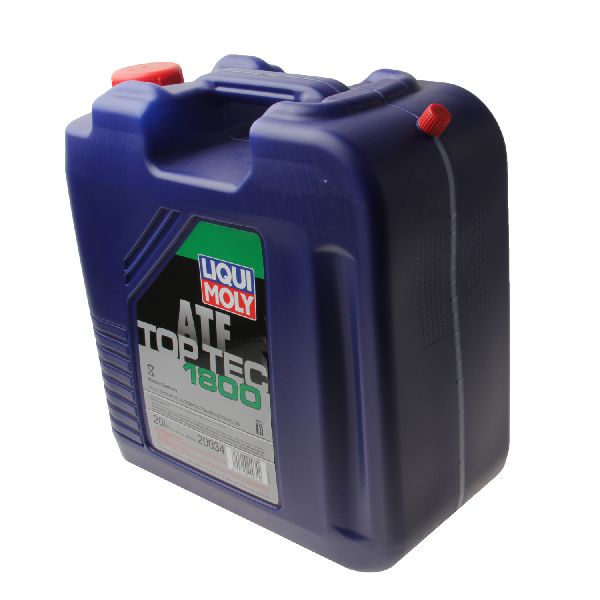
Aftermarket price range: $60-$100 - Automatic Transmission Fluid (ATF)
Related Codes That Often Appear With This One
- P0756, P0761, etc. — These codes point to failures in other shift solenoids ('B', 'C'). Since all solenoids and the harness are exposed to the same conditions, it's common for multiple faults to appear around the same time.
- P0711, P0712, P0713 — These codes are for the Transmission Fluid Temperature Sensor. A failing sensor is a common related issue on this platform and can cause the erratic shifting that triggers a P0751 code. The sensor is part of the internal wiring harness.
- P0700 — This is a generic code that simply means the Transmission Control Module (TCM) has stored a fault. It will almost always appear alongside a more specific code like P0751.
Technical Service Bulletins (TSBs) & Recalls
- TSB 18-AT-004: Addresses diagnosis of harsh/delayed shifts in A6MF transmissions using GDS to measure shift times.
- TSB 20-AT-011H (supersedes 16-AT-003): Procedure for diagnosing and replacing input/output speed sensors, which involves removing the valve body and harness.
- TSB 19-BE-010H: Instructions for clearing DTCs in the BlueLink system after a repair.
Platform-Specific Known Issues
- { "title": "Owner Experience: Intermittent Limp Mode", "description": "An owner of a 2013 Sonata reported intermittent limp mode and harsh shifting. The codes were P0751 and P0711. The repair shop replaced the internal wiring harness and the solenoid pack, which resolved the issue completely. The old harness was visibly brittle and cracked upon removal." }
- { "title": "Repair Story: DIY Harness and Solenoid Replacement", "description": "A user on hyundai-forums.com documented their DIY repair on a 2011 Sonata with 130,000 miles. After experiencing limp mode and code P0751, they followed online guides to replace the harness (46307-3B650) and a set of aftermarket solenoids. The total cost was under $300 in parts and the repair fixed the shifting problems." }
Mechanic-Grade Diagnostic Values
- On/Off Shift Solenoid (e.g., SSA, SSB) Resistance — expected: 10-11 Ohms. Failure: A reading significantly higher (open circuit) or lower (short circuit) than the specified range.
- Variable Force Solenoid (VFS / PWM) Resistance — expected: 5.1 Ohms. Failure: A reading significantly higher (open circuit) or lower (short circuit) than the specified range.
- Transmission Fluid Temperature (TFT) Sensor Resistance — expected: Approximately 2.51k Ohms at 68°F (20°C) or 1.9k Ohms at 76°F (24.4°C).. Failure: Readings that are open, shorted, or do not correlate with the actual fluid temperature. Voltage should be around 3.2V at 104°F and 0.29V at 302°F.
Scan Tool Commands That Help
- Hyundai GDS (Global Diagnostic System) or compatible professional scanner (e.g., Autel): Resetting Auto T/A Values (Resetting Adaptive Values) — This function must be performed after replacing the transmission, valve body, solenoids, or TCM. It erases the learned shift compensation values, which is critical for preventing harsh shifting with new parts.
- Hyundai GDS or compatible professional scanner: Adaptive Learning Procedure — Immediately after resetting the adaptive values, a specific drive cycle must be performed to allow the TCM to relearn shift points. This typically involves gentle acceleration (e.g., 10-20% throttle) through all upshifts and then gentle deceleration for downshifts, repeated multiple times until shifts are smooth.
Wiring & Ground Locations
- Main Transmission Ground Strap — On early YF Sonatas (around 2011), a key body ground point was known to be poorly prepared from the factory, with the strap bolted to a painted surface. While not directly for the TCM, poor grounding can cause widespread electrical issues. The main transmission ground strap is typically bolted from the transmission case to the vehicle's frame rail.. A poor ground can cause erratic voltage and unpredictable behavior from electronic components, including the TCM and its solenoids, potentially triggering performance codes. Ensuring a clean, metal-to-metal contact for main grounds is a crucial step in diagnosing electrical faults.
- GF01 / GF02 — GF01 is a ground point located under the center console. GF02 is located at the driver's side 'B' pillar.. These are interior ground points that serve various modules. While not a primary suspect, checking for corrosion or looseness at these points is wise when chasing intermittent electrical issues that could affect TCM operation.
- External Transmission Harness Connector — The main round electrical connector that passes through the transmission case, connecting the internal harness (and solenoids) to the main vehicle harness and TCM.. This is the single point of failure for all communication to the solenoids. Damage, corrosion, or pushed-out pins at this connector can directly cause a P0751 code by interrupting the command or feedback signal for solenoid 'A'.
Real Owner Repair Stories
- Hyundai Forums (2011 Hyundai Sonata) — Transmission stuck in 3rd gear (limp mode), Check Engine Light on with code P0751.
❌ Tried (didn't work) The user did not report trying other fixes first.
✅ What actually fixed it The user replaced the internal transmission wiring harness (part number 46307-3B650). The original harness wires were noted to be brittle and breaking. This resolved the P0751 code and the limp mode issue.
OEM Part Supersession History
46307-3B610, 46307-3B620→46307-3B650— Revision to address the common issue of wire insulation becoming brittle and cracking from heat exposure inside the transmission.
Heads up: While older part numbers may physically fit, using the latest superseded part (46307-3B650) is critical to ensure the most durable and revised materials are used.
Model Year Variations Within This Range
- 2011-2018: The Sonata uses the A6MF1 or A6MF2 transmission depending on the engine. The A6MF1 is typically paired with the 2.0L/2.4L engines, while the A6MF2 is a slightly more robust version for higher torque applications. However, for the purposes of diagnosing P0751, the solenoids, internal harness, and common failure points are functionally identical across both versions.
Diagnostic Flowchart
Other Known Issues on This Vehicle
Issues unrelated to this code that are worth knowing about as an owner of this generation:
- Theta II Engine Failure 🔴 High — Very common on 2011-2014 models with the 2.0L Turbo and 2.4L GDI engines. Can occur from 60,000 miles onward. Less frequent on later model years. (Ref: Multiple recalls (e.g., NHTSA 15V568000, 17V226000) and a class-action lawsuit settlement have been issued. Hyundai extended the engine warranty for affected vehicles.)
- Steering Coupler Failure 🟠 Medium — Extremely common on YF generation (2011-2014). Owners report a clicking or clunking noise in the steering wheel, especially when turning. Typically occurs after 50,000 miles. (Ref: Hyundai extended the warranty for this part to 10 years/100,000 miles (Warranty Extension T1G). The part is a small, inexpensive flexible rubber coupler (Part #56315-2K000-FFF).)
- Steering Column/Shaft Separation 🔴 High — Primarily affected early-production 2011 models. Not widespread but extremely dangerous. (Ref: Recall NHTSA 10V426000 was issued to inspect and properly tighten steering column intermediate shaft connections.)
- Peeling 'Self-Healing' Paint 🟡 Low — Common on dark-colored Sonatas from 2011-2016. The clear coat begins to delaminate and peel, particularly on the roof and trunk. (Ref: No specific recall, but numerous owner complaints exist. Some owners have had success with goodwill repairs from Hyundai on a case-by-case basis.)
- Connecting Rod Bearing Wear (Knock Sensor Update) 🔴 High — Affects a wide range of 2011-2018 Sonatas. Precursor to full engine failure. (Ref: Hyundai released a product improvement campaign to install a Knock Sensor Detection System (KSDS) via a software update to give an early warning of bearing failure. The engine warranty was also extended.)
Used vs. New Parts: Buying Guide for This Vehicle
When a used part is the smart pick: A complete used valve body assembly from a very low-mileage, verified-running donor vehicle *might* be a cost-effective option if the entire valve body is confirmed to be faulty. However, this is risky due to the common bore wear issues. Buying a complete used transmission is generally not recommended unless the cost is extremely low, as they are prone to the same harness/solenoid issues.
Donor-vehicle mileage cap: roughly under 50000 miles for the part to have meaningful remaining life.
What to inspect on the donor part:
- Verify the donor vehicle's mileage and ensure it was running and shifting correctly before being dismantled.
- Inspect the fluid from the donor transmission if possible; it should be bright red and not burnt-smelling.
- Avoid parts from vehicles that had a major front-end collision, which can damage the transmission case or internals.
OEM-only on this vehicle (don't cheap out):
- Internal Transmission Wiring Harness (Part No. 46307-3B650): Given the high failure rate and the critical nature of the part, using a genuine Hyundai OEM harness is strongly recommended to get the latest material revisions.
Aftermarket brands forum-validated for this vehicle:
- Rostra: Often cited as a reliable aftermarket manufacturer for transmission solenoids.
- TransGo: Produces valve body repair kits (e.g., SK A6MF) that include oversized valves to fix the common worn bore issue, which is a high-quality repair if performed correctly.
Brands owners have reported issues with on this vehicle:
- Unbranded, no-name solenoid kits from online marketplaces should be avoided. The quality control is often poor, and they can fail quickly or be out-of-spec from the start, causing more diagnostic headaches.
Real Owner Stories
Aggregated from forums and TSBs cited above. Mileages and costs reflect what owners reported in those sources.
2013 Hyundai Sonata
Symptoms: Intermittent limp mode and harsh shifting accompanied by codes P0751 and P0711.
What fixed it: The repair shop replaced the internal wiring harness and the solenoid pack. The old harness was found to be visibly brittle and cracked.
Source hint: Owner Experience: Intermittent Limp Mode
2011 Hyundai Sonata — 130000 miles
Symptoms: Vehicle entered limp mode and triggered code P0751.
What fixed it: DIY replacement of the internal harness (46307-3B650) and a set of aftermarket solenoids.
Cost: $0-$300
Source hint: Repair Story: DIY Harness and Solenoid Replacement
2012 Hyundai Sonata
Symptoms: Combination of a transmission fluid temperature sensor code and a solenoid performance code.
What fixed it: Replacing the internal harness which contains the integrated TFT sensor.
Source hint: hyundai-forums.com thread titled 'P0713 and P0751 on 2012 Sonata'
Related OBD-II Codes
Frequently Asked Questions
Is there a specific TSB for diagnosing shifting issues on the A6MF transmission in my Sonata?
Can I check the transmission fluid level with a dipstick on my 2011-2018 Sonata?
What specific transmission fluid should I use for my Sonata to avoid P0751 performance issues?
Is there a specific part number for the internal wiring harness often blamed for P0751?
Why does my Sonata go into 'limp mode' when this code triggers?
If I replace the solenoids, should I also replace the internal harness?
Helpful Videos


![What is P0751 Engine Code [Quick Guide]](https://img.youtube.com/vi/hZRaG1OVVY4/mqdefault.jpg)
We Have This Part in Stock




The information in this article is provided for general reference and educational purposes only. Vehicle specifications, procedures, and part compatibility can vary by production date, trim level, and region. Always consult your vehicle's factory service manual and verify part numbers before purchasing or performing repairs. Safety-critical components such as airbags, seat belts, and braking systems should be installed by a qualified professional.
- Hyundai Sonata:
- 🧭 Diagnostic Flowchart
- 🎬 Helpful Videos
- 🛍️ Shop This Part
- What's Unique About the 2011-2018 Hyundai Sonata
- Symptoms You May Notice
- Most Likely Causes
- Rare But Worth Checking
- Diagnosis Steps
- Parts You'll Likely Need
- Related Codes That Often Appear With This One
- Technical Service Bulletins (TSBs) & Recalls
- Platform-Specific Known Issues
- Mechanic-Grade Diagnostic Values
- Scan Tool Commands That Help
- Wiring & Ground Locations
- Real Owner Repair Stories
- OEM Part Supersession History
- Model Year Variations Within This Range
- Other Known Issues on This Vehicle
- Used vs. New Parts: Buying Guide for This Vehicle
- Real Owner Stories
- 2013 Hyundai Sonata
- 2011 Hyundai Sonata — 130000 miles
- 2012 Hyundai Sonata
- Related OBD-II Codes
- Frequently Asked Questions
- 🎟️ Get 5% Off