

P0751 on 2016-2021 Hyundai Tucson: Shift Solenoid 'A' Causes and Fixes
P0751 on a 2016-2021 Tucson indicates a problem with Shift Solenoid 'A', often causing poor shifting. The most common causes are low/dirty transmission fluid or a failing solenoid. For models with the 7-speed DCT, a software update may be required to fix similar symptoms.
- P0751 means Shift Solenoid 'A' isn't working correctly, leading to shifting problems.
- First, check your transmission type. If you have a 7-speed DCT (common on 2016 Eco/Sport/Limited), investigate software updates (Recall 149) before replacing parts, as this can fix similar symptoms.
- For all models, the most likely physical causes are low/dirty transmission fluid or a failed shift solenoid.
- This is not a simple DIY fix. Accessing the solenoid requires removing the transmission pan and valve body, which is best left to a professional.
- Do not ignore this code. Continued driving can cause severe, expensive damage to your transmission.
What's Unique About the 2016-2021 Hyundai Tucson
The 2016-2021 Hyundai Tucson (Third Generation, TL) was offered with two different automatic transmissions: a conventional 6-speed automatic (A6MF1) and a 7-speed Dual-Clutch Transmission (DCT) (D7UF1) on Eco, Sport, and Limited trims. The P0751 code is specific to the hydraulic 6-speed automatic. The 7-speed DCT uses a different mechanism with electronic actuators and will not set this specific code. However, the DCT is known for exhibiting *symptoms* that mimic a solenoid failure, such as hesitation, shuddering, and delayed engagement from a stop. A well-documented issue on 2016 DCT models prompted a recall (Campaign 149) for a Transmission Control Module (TCM) software update to address these drivability complaints. It's critical to distinguish which transmission your Tucson has, as DCT issues are often software or clutch-actuator related, whereas P0751 on the 6-speed points to an internal hydraulic or electrical fault.
Symptoms You May Notice
- Delayed, harsh, or erratic gear shifts.
- Transmission slipping or failing to engage a gear.
- Vehicle enters 'limp mode', often stuck in one gear (e.g., 3rd gear).
- Hesitation or lack of acceleration from a stop (Note: on DCT models, this is a common symptom but for different reasons).
- Check Engine Light is illuminated.
- Reduced fuel economy.
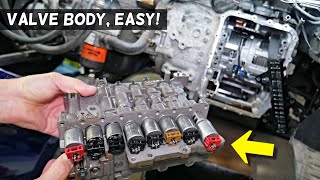
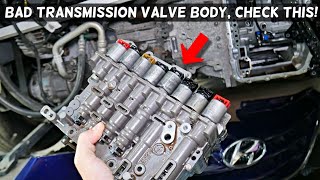
- Transmission overheating. 🎬 See common symptoms of a failing Hyundai transmission valve body.
- Replacing the shift solenoid pack when the actual cause is the internal wire harness/temperature sensor. The symptoms are nearly identical, but diagnosing the temperature sensor first can save hundreds in parts and labor.
- For 2016 models with the 7-speed DCT, owners may experience hesitation and delayed engagement from a stop. This is a known issue addressed by Hyundai Recall 149, which involves a software update to the TCM. Replacing hardware components without first checking for this software update can be a costly mistake.
Most Likely Causes
- Faulty Internal Wire Harness / Temperature Sensor 🔴 High Probability A very common failure point on the Hyundai/Kia A6MF1 transmission is the internal wire harness, which includes the transmission fluid temperature sensor. The sensor can fail or provide incorrect readings, causing the TCM to calculate incorrect line pressures, leading to harsh shifts and triggering a P0751 code even if the solenoid itself is functional. The harness becomes brittle over time due to heat cycles.
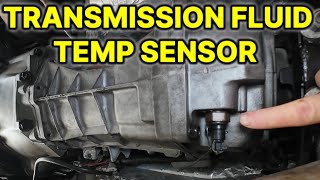
How to confirm: A technician with an advanced scan tool can monitor the transmission fluid temperature reading. If the temperature is erratic, stuck at an extreme value (e.g., -40°F), or doesn't change as the vehicle warms up, the sensor/harness is likely faulty. This is a primary diagnostic step before condemning the solenoids. 🎬 Watch: How to test and replace the fluid temperature sensor.
Typical fix: Replace the internal transmission wire harness. This requires draining the fluid, removing the transmission oil pan, and dropping the valve body to access the harness. The OEM part is often replaced as a complete assembly.
Est. part cost: $150-$250 - Low or Dirty Transmission Fluid 🟡 Medium Probability → Shop Transmission Assembly Hyundai's 6-speed automatic transmissions are sensitive to fluid condition. Over time, fluid breaks down and can't properly lubricate and cool, causing solenoids to stick or passages to clog. Many owners neglect fluid changes due to the lack of a dipstick.
How to confirm: Check the transmission fluid level and condition via the service port. The fluid should be bright red and not have a burnt smell. This is a sealed transmission, so checking it requires a specific procedure, often on a lift with the vehicle level.
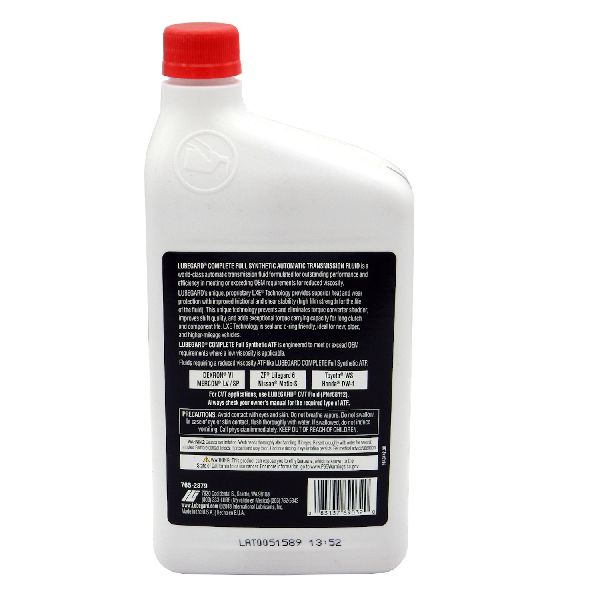
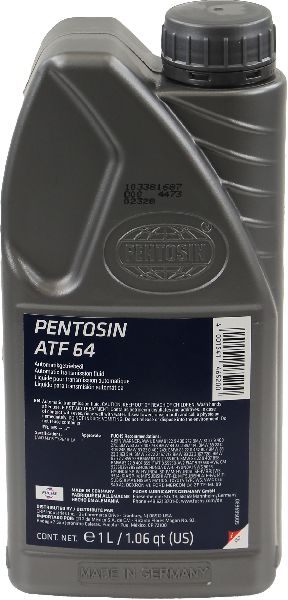
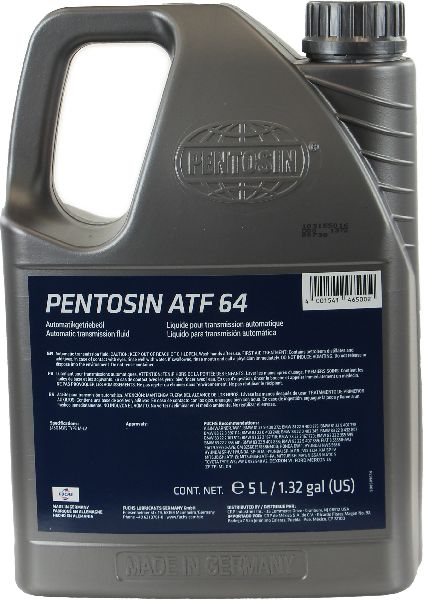
Typical fix: Perform a transmission fluid drain and fill or a full fluid exchange using Hyundai-specific fluid (SP-IV). A simple drain and fill may not be enough if the fluid is heavily contaminated.
Est. part cost: $75-$150 - Faulty Shift Solenoid 'A' or Solenoid Pack 🟡 Medium Probability → Shop Transmission Valve Body
How to confirm: A technician can test the solenoid's electrical resistance with a multimeter and command it on/off with a diagnostic scan tool to check its mechanical function. This requires accessing the valve body inside the transmission. Often, the solenoid is part of a larger solenoid block assembly.
Typical fix: Replace the faulty shift solenoid or the entire solenoid block. This involves draining the fluid, removing the transmission oil pan and valve body to access the solenoid pack.
Est. part cost: $50-$200 - Damaged Wiring or Connectors ⚪ Low Probability
How to confirm: Visually inspect the external wiring harness leading to the transmission for any signs of damage, corrosion, or loose connections. A technician can perform a continuity test from the TCM to the transmission's main connector.
Typical fix: Repair or replace the damaged section of the wiring harness or the connector.
Est. part cost: $20-$300 - Internal Valve Body Issue ⚪ Low Probability → Shop Transmission Valve Body
How to confirm: This is typically diagnosed after ruling out fluid, sensor, solenoid, and wiring issues. A technician may use a pressure gauge to check hydraulic pressures or visually inspect the valve body for blockages, stuck spools, or scoring once removed.
Typical fix: Clean, rebuild, or replace the transmission valve body.
Est. part cost: $400-$1200
Rare But Worth Checking
- Faulty Transmission Control Module (TCM) or Powertrain Control Module (PCM): → Shop Transmission Assembly A module failure is rare but possible. It should only be considered after all other causes have been exhaustively ruled out. The module may require programming by a dealer or specialist.
Diagnosis Steps
- Check and verify the transmission type (6-speed automatic or 7-speed DCT). This procedure only applies to the 6-speed.
- Use an OBD-II scanner to confirm P0751 and check for any other related transmission codes, especially temperature sensor codes (P0711-P0713).
- With an advanced scan tool, monitor the live data for the Transmission Fluid Temperature. Check for logical values that increase as the car warms up. If it's stuck or irrational, the internal harness is the prime suspect.
- Check the transmission fluid level and condition. If the fluid is low, dark, or has a burnt smell, it needs to be changed.
- Visually inspect the external transmission wiring harness and connectors for any visible damage, corrosion, or loose pins.
- If the temperature sensor appears to be working correctly, proceed to test the solenoid. Test the resistance of Shift Solenoid 'A' at the transmission connector. Compare the reading to the manufacturer's specification (typically 10-11 ohms).
- Using an advanced scan tool, command the solenoid on and off to see if it clicks and if the transmission state changes. This confirms if the solenoid is mechanically functioning.
- If the solenoid, sensor, and wiring test good, the problem may lie within the valve body or, in rare cases, the TCM/PCM.
Parts You'll Likely Need
- Internal Transmission Wire Harness
(OEM #46307-3B650)— This is the most common point of failure for P0751 on this platform. It contains the transmission fluid temperature sensor, which fails and causes the TCM to command incorrect shifts.
Trusted brands: Hyundai (OEM)
OEM price range: $160-$250
Aftermarket price range: $100-$180 - Shift Solenoid / Solenoid Block — This is the component identified by the code. It can fail electrically or mechanically, preventing proper gear shifts. Often replaced when the harness fails, but may not be the root cause.
Trusted brands: Hyundai (OEM)
OEM price range: $70-$150
Aftermarket price range: $40-$100 - Automatic Transmission Fluid
(OEM #00232-19045 (SP-IV))— Low or degraded fluid is a primary cause of solenoid malfunction. A fluid change is required when replacing internal components like the harness or solenoids.
Related Codes That Often Appear With This One
- P0711, P0712, P0713 — These codes relate to the Transmission Fluid Temperature Sensor. Since the sensor is part of the internal wire harness that is a common failure point for P0751, seeing these codes together strongly suggests the harness is the root cause.
- P073x (e.g., P0732, P0733, P0734) — Incorrect Gear Ratio codes often accompany solenoid codes, as the failed solenoid prevents the transmission from achieving the correct gear, leading to a ratio mismatch detected by the PCM.
- P0756, P0761, etc. — Codes for other shift solenoids (B, C, etc.) may appear if there is a widespread electrical issue, a problem with the valve body, or severe fluid contamination affecting multiple solenoids.
Technical Service Bulletins (TSBs) & Recalls
- NHTSA ID: 10115675 (Recall 149 / TSB #16-01-038-1) - Describes the DCT control logic update for 2016 Tucson models to fix delayed engagement.
- Hyundai TSB 20-AT-011H: Supersedes an earlier TSB and addresses DTCs P0717, P0721, and P0722 (speed sensor codes) by recommending replacement of the oil pressure harness, which is the same part (46307-3BXXX) that is known to cause P0751.
- Hyundai TSB 17-AT-003: Addresses shift quality issues on 6-speed automatic transmissions, sometimes involving software updates or checks related to the temperature sensor.
Platform-Specific Known Issues
- 2016 models with the 7-speed DCT were subject to Recall 149 for a software issue in the Transmission Control Module causing hesitation and delayed acceleration from a stop. The symptoms can be mistaken for a P0751 fault.
- The 6-speed A6MF1 transmission is highly susceptible to setting P0751 due to a faulty internal wire harness (46307-3B650) that contains an unreliable transmission temperature sensor. This is a more frequent cause than the solenoid itself failing.
- Class-action lawsuits have been filed against Hyundai for issues with the 7-speed DCT, citing dangerous hesitation, shuddering, and stalling, separate from the P0751 code on the 6-speed automatic.
Mechanic-Grade Diagnostic Values
- Shift Solenoid 'A' (SSA) Resistance — expected: 10 - 11 Ohms. Failure: A reading outside this range indicates a faulty solenoid coil.
- VFS Linear Solenoid Resistance — expected: 5.1 - 5.3 Ohms. Failure: This applies to the other variable force solenoids in the valve body, not SSA. A reading outside this range indicates a fault in one of those solenoids.
- Transmission Fluid Temperature Sensor Voltage — expected: Approx. 3.2 Volts at 104°F (40°C). Failure: Voltage stuck at an extreme (e.g., 5V or 0V) or not changing as the fluid warms up points to a failed sensor, which is part of the internal harness.
Scan Tool Commands That Help
- Hyundai GDS (Global Diagnostic System): Solenoid Activation Test — After checking resistance, this bidirectional command allows a technician to manually activate Shift Solenoid 'A' to listen for a mechanical 'click' from inside the transmission pan. This helps verify if the solenoid is mechanically stuck or just electrically failed.
- Hyundai GDS (Global Diagnostic System): Flight Record / Data Logging — For intermittent shifting problems that don't set a code immediately. The 'Flight Record' function can capture transmission data during a test drive when the fault occurs, allowing the technician to analyze sensor readings, commanded gears, and solenoid states leading up to the event.
- Hyundai GDS (Global Diagnostic System): Transmission Adaptation Reset — After replacing the valve body, solenoids, or the entire transmission, the learned shift parameters must be cleared. This function resets the TCM's adaptive learning to factory defaults, allowing it to relearn shift points and clutch fill times with the new components.
Wiring & Ground Locations
- TCM Location — The Transmission Control Module (TCM) for the A6MF1 in this generation Tucson is integrated into the valve body, inside the transmission oil pan.. This is critical because unlike a separate, externally mounted module, you cannot test wiring directly at the TCM without dropping the transmission pan and valve body. All external electrical tests must be done at the main transmission case connector.
- Main Transmission Connector — On the top or side of the transmission case, where the main vehicle harness connects to the transmission's internal harness.. This is the primary access point for testing the electrical integrity of Shift Solenoid 'A' and the temperature sensor from outside the transmission. A technician would use a pinout diagram to test resistance and continuity between the specific pins for SSA and the TFT sensor at this connector.
- Transmission Ground Strap — A braided wire connecting the transmission case directly to the vehicle's chassis frame rail.. While not a direct cause of a single solenoid code, a corroded or loose transmission ground can cause a host of erratic electronic issues, including communication errors (like U0101) and incorrect sensor readings, which could potentially contribute to shifting problems. Ensuring this ground is clean and tight is a fundamental step in any electrical diagnosis.
Real Owner Repair Stories
- AliExpress Review / Technical Write-up (2015 Hyundai Sonata with A6MF1 transmission) — Delayed shifts, harsh engagements, erratic gear behavior. Scanned and found P0750 (Shift Solenoid A Malfunction).
❌ Tried (didn't work) Replacing two shift solenoids with OEM parts.
✅ What actually fixed it The root cause was not the solenoids themselves, but worn internal passages within the valve body. The final fix was a complete valve body replacement, which resolved the hydraulic pressure regulation issues that were causing the solenoid codes.
OEM Part Supersession History
46307-3B610, 46307-3B620→46307-3B650— The internal wire harness was updated. The new harness has the transmission fluid temperature sensor integrated directly into it, whereas some older styles had a disconnectable sensor. The update addresses reliability issues.
Heads up: It is recommended to always update to the latest harness (46307-3B650) when performing a repair.
Diagnostic Flowchart
Other Known Issues on This Vehicle
Issues unrelated to this code that are worth knowing about as an owner of this generation:
- Theta II Engine Failure 🔴 High — Widespread across multiple model years. Caused by manufacturing debris leading to connecting rod bearing failure, often resulting in engine seizure. Can occur at various mileages. (Ref: Multiple recalls (e.g., Recall 162) and a class-action lawsuit settlement extended the engine warranty to 15 years/150,000 miles for affected vehicles and required installation of a Knock Sensor Detection System (KSDS).)
- 7-Speed Dual-Clutch Transmission (DCT) Drivability 🟠 Medium → Shop Transmission Assembly — Very common on 1.6T models (Eco, Sport, Limited). Symptoms include hesitation from a stop, shuddering, jerky shifts at low speeds, and in some cases, complete loss of motion. (Ref: Recall 149 (NHTSA 16V628000) was issued for a TCM software update on 2016 models. Multiple class-action lawsuits were also filed regarding the DCT's performance.)
- Excessive Oil Consumption 🔴 High — Commonly reported on the 2.0L Nu and 2.4L Theta II engines. Often a precursor to catastrophic engine failure. Owners report needing to add oil between changes. (Ref: Related to the engine failure lawsuits and extended warranties. The root cause is often tied to piston ring or cylinder wall issues.)
- ABS Module Fire Risk 🔴 High — Affects a large number of 2016-2021 models. The Anti-lock Brake System (ABS) module can malfunction and short-circuit, creating a fire risk even when the vehicle is turned off. (Ref: Recall 195 (NHTSA 20V543000) was issued. Owners were advised to park their vehicles outside and away from structures until the repair was completed.)
- Peeling Exterior Paint 🟡 Low — Frequently reported, especially on vehicles with white or other light-colored paint. The paint can delaminate and peel off in large sheets, particularly on the roof and hood. (Ref: No specific recall, but widely discussed in owner forums. Repairs are often handled on a case-by-case basis by dealers, sometimes under goodwill policies.)
Used vs. New Parts: Buying Guide for This Vehicle
When a used part is the smart pick: A complete used valve body assembly from a low-mileage donor vehicle can be a cost-effective option, as it includes all solenoids and often the internal harness. This can be cheaper than buying a new valve body or individual new solenoids.
Donor-vehicle mileage cap: roughly under 60000 miles for the part to have meaningful remaining life.
What to inspect on the donor part:
- Verify the donor vehicle's mileage.
- Ask for a return policy in case the part is faulty.
- Inspect the used part for any visible damage, corrosion, or signs of excessive sludge.
- If possible, test the resistance of the solenoids on the used valve body before installation to confirm they are within spec (10-11 Ohms for on/off, ~5.3 Ohms for VFS).
OEM-only on this vehicle (don't cheap out):
- Internal Wire Harness: Given that this part's failure mode is becoming brittle from heat cycles, installing a used one is a significant risk. The cost savings are minimal compared to the labor required to replace it again if it fails. New OEM (part 46307-3B650) is strongly recommended.
- Transmission Fluid: Use only Hyundai/Kia SP-IV specification fluid. Using a universal or incorrect fluid type can cause shifting problems and long-term damage.
Aftermarket brands forum-validated for this vehicle:
- Sonnax: Known for producing valve body repair kits and oversized valves to fix wear in the valve body bores.
- TransGo: Offers shift kits and valve body repair components that address common wear points.
Brands owners have reported issues with on this vehicle:
- Unbranded, low-cost solenoid kits from online marketplaces can have high failure rates and incorrect resistance values, leading to repeat repairs.
Real Owner Stories
Aggregated from forums and TSBs cited above. Mileages and costs reflect what owners reported in those sources.
2016 Hyundai Tucson 1.6T (DCT)
Symptoms: The car feels like it skips 2nd gear and has significant drivability issues.
What fixed it: Software update for the Transmission Control Module (Recall 149 / TSB #16-01-038-1).
Source hint: Reddit
2016 Hyundai Tucson
Symptoms: Hesitation, lurching, and jerky shifting.
What fixed it: Control logic update for the DCT (Recall 149).
Source hint: CarComplaints.com
Hyundai Tucson (A6MF1 Transmission)
Symptoms: P0751 and other shifting issues; mechanics initially suspected the solenoids.
What fixed it: Replacing the internal wire harness (P/N 46307-3B650).
Source hint: hyundai-forums.com
Related OBD-II Codes
Frequently Asked Questions
My 2016 Tucson is hesitating and lurching from a stop; is this definitely a P0751 solenoid failure?
What specific part is usually responsible for the P0751 code on the Tucson's A6MF1 6-speed transmission?
Is there a TSB for the transmission temperature sensor issues related to this code?
Can I check the transmission fluid level myself to rule out a P0751 cause?
Does the P0751 code affect the Tucson's platform mates like the Kia Sportage?
Helpful Videos


We Have This Part in Stock


The information in this article is provided for general reference and educational purposes only. Vehicle specifications, procedures, and part compatibility can vary by production date, trim level, and region. Always consult your vehicle's factory service manual and verify part numbers before purchasing or performing repairs. Safety-critical components such as airbags, seat belts, and braking systems should be installed by a qualified professional.
- Hyundai Tucson:
- 🧭 Diagnostic Flowchart
- 🎬 Helpful Videos
- 🛍️ Shop This Part
- What's Unique About the 2016-2021 Hyundai Tucson
- Symptoms You May Notice
- Most Likely Causes
- Rare But Worth Checking
- Diagnosis Steps
- Parts You'll Likely Need
- Related Codes That Often Appear With This One
- Technical Service Bulletins (TSBs) & Recalls
- Platform-Specific Known Issues
- Mechanic-Grade Diagnostic Values
- Scan Tool Commands That Help
- Wiring & Ground Locations
- Real Owner Repair Stories
- OEM Part Supersession History
- Other Known Issues on This Vehicle
- Used vs. New Parts: Buying Guide for This Vehicle
- Real Owner Stories
- 2016 Hyundai Tucson 1.6T (DCT)
- 2016 Hyundai Tucson
- Hyundai Tucson (A6MF1 Transmission)
- Related OBD-II Codes
- Frequently Asked Questions
- 🎟️ Get 5% Off