

P0751 on 2014-2023 Jeep Cherokee: Shift Solenoid 'A' Performance Causes and Fixes
On a 2014-2023 Jeep Cherokee, code P0751 often points to a software issue with the Transmission Control Module (TCM) or an internal problem with the ZF 9-speed transmission's valve body. Before replacing parts, check for available software updates, as this is a common and well-documented fix. If software updates don't resolve the issue, a valve body replacement, which can cost over $1,500, is the next likely step.
- For a 2014-2023 Jeep Cherokee, P0751 is a serious code that requires professional diagnosis.
- The first and most important diagnostic step is to check if a transmission software update is available, as this is a very common fix.
- If hardware has failed, the most likely part to be replaced is the entire valve body assembly, not just a single solenoid.
- Do not allow a shop to replace major hardware without first verifying the TCM software is up to date.
- Continued driving with this fault can lead to severe and expensive transmission damage.
What's Unique About the 2014-2023 Jeep Cherokee
The 2014-2023 Jeep Cherokee (KL generation) uses a sophisticated ZF 9HP 9-speed automatic transmission, which was known for problematic behavior in its early years. Unlike older, simpler transmissions, this unit is highly dependent on complex software. Many shifting issues, including those that can trigger a P0751 code, are often linked to outdated software in the Transmission Control Module (TCM). Chrysler (now Stellantis) has released multiple software updates (TSBs) to address shift quality and diagnostic issues. Therefore, checking for and applying a TCM software update is a critical first step before assuming a hardware failure.
Symptoms You May Notice
- Check Engine Light is on
- Transmission warning light may be illuminated
- Harsh, delayed, or erratic shifting
- Transmission getting stuck in one gear (limp mode)
- Vehicle may not accelerate properly from a stop
- Reduced fuel economy
- Sudden shift to Neutral while driving (in some related ZF 9HP issues)
- Replacing the entire transmission when only a software update or valve body was needed.
- Replacing the valve body before checking for and applying available TCM software updates, which is the most common fix.
Most Likely Causes
- Outdated Transmission Control Module (TCM) Software 🔴 High Probability → Shop Transmission Assembly The ZF 9HP transmission's performance is heavily reliant on software. FCA released numerous updates to improve shift logic and correct diagnostic faults. TSBs like 21-015-16 and others specifically address DTCs with a reflash.
How to confirm: A Jeep dealership or a well-equipped independent shop using a wiTECH scan tool can check the vehicle's current software calibration ID against the latest version available from Stellantis.
Typical fix: Reprogramming (flashing) the TCM with the latest software version and performing a 'Quick Learn' procedure.
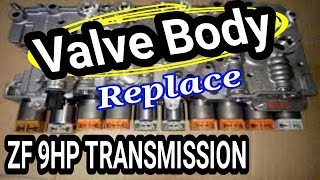
Est. part cost: $0-$250 - Faulty Transmission Valve Body 🟡 Medium Probability → Shop Transmission Valve Body On the ZF 9HP transmission, the shift solenoids are integrated into the valve body assembly. A mechanical failure or internal short in Solenoid 'A' requires replacing the entire valve body. 🎬 Watch: ZF 9HP transmission valve body replacement walkthrough This has been a common failure point after software issues are ruled out.
How to confirm: After ruling out software and wiring issues, a technician can use a high-end scan tool to command the solenoid and monitor its response. If it fails to actuate correctly or its internal resistance is out of spec, the valve body is the likely culprit.
Typical fix: Replacement of the transmission valve body assembly. This requires partially draining the transmission and is a complex job.
Est. part cost: $800-$1500 - Low or Contaminated Transmission Fluid ⚪ Low Probability → Shop Transmission Assembly While possible, the ZF 9HP is a 'filled for life' unit without a dipstick, making fluid issues less common unless there is a leak. However, contamination from internal wear can cause solenoids to stick or passages to clog.
How to confirm: A technician must check the fluid level and condition via a specific procedure involving the fill plug on the transmission while the vehicle is at a specific temperature. This is more involved than a traditional dipstick check.
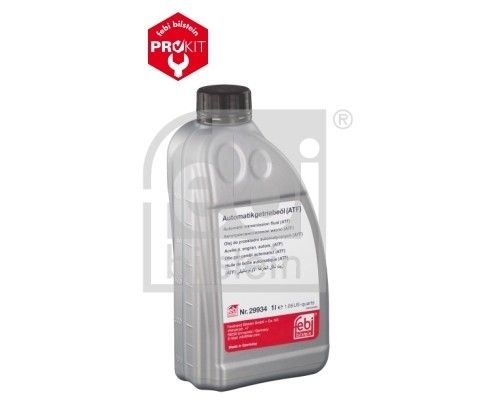
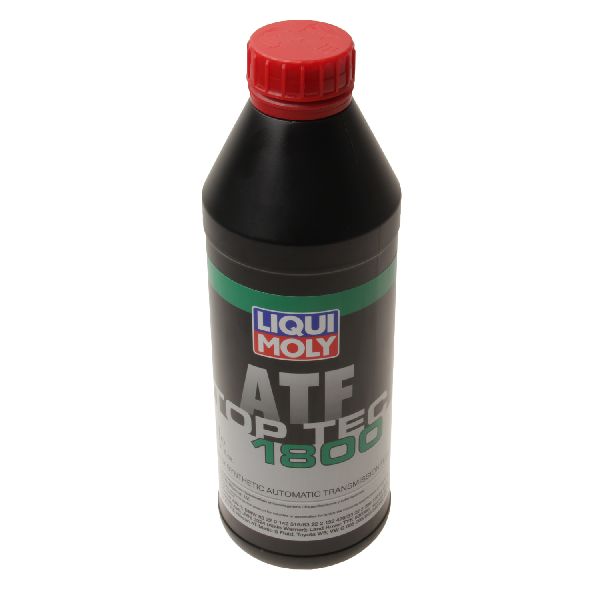
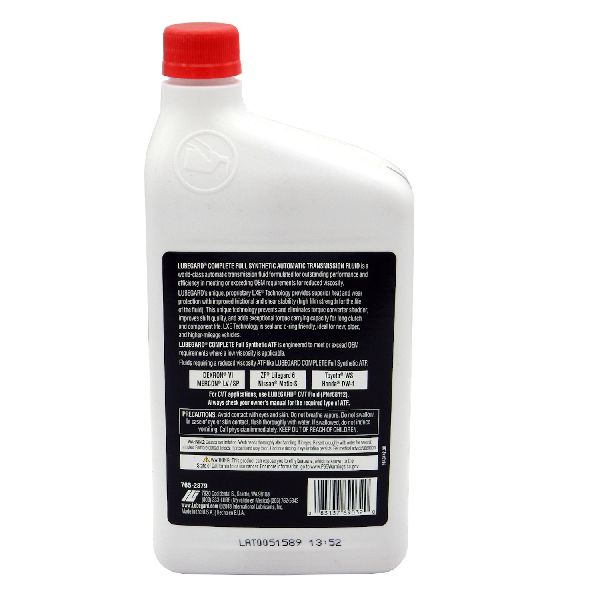
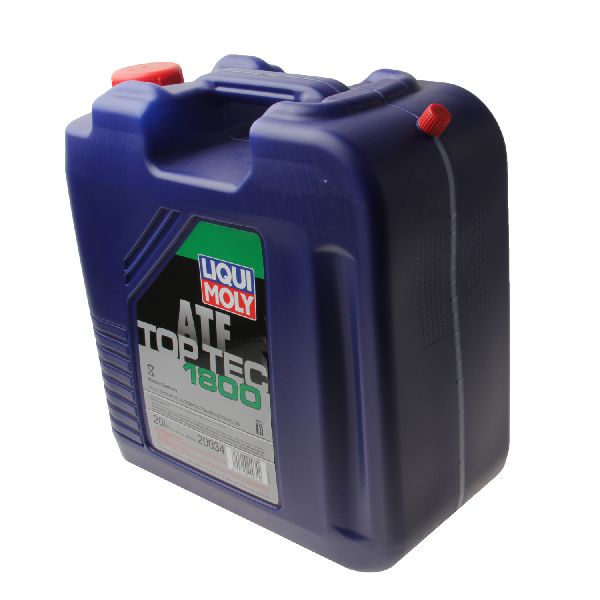
Typical fix: Correcting the fluid level or performing a fluid and filter change with the specified Mopar ZF 8&9 Speed ATF (or ZF Lifeguard 9 equivalent).
Est. part cost: $200-$400 - Wiring Harness or Connector Issue ⚪ Low Probability
How to confirm: Visually inspect the wiring harness going to the transmission for any signs of damage, corrosion, or loose connections. A multimeter can be used to check for continuity and shorts in the circuit for Shift Solenoid 'A'. A major recall (S55) was issued for 2014-2015 models for insufficient crimps in the harness that could cause a shift to neutral.
Typical fix: Repairing the damaged section of the wiring harness or cleaning/replacing the connector. In some cases, the internal transmission harness must be replaced.
Est. part cost: $50-$500
Rare But Worth Checking
- Internal Mechanical Transmission Failure: → Shop Transmission Assembly If metal debris is found in the transmission fluid, it indicates a more severe internal failure beyond the valve body, such as a failed clutch pack or pump. This may require a complete transmission replacement.
- Failed Transmission Control Module (TCM): → Shop Transmission Assembly This is rare. The TCM hardware itself can fail, but this should only be considered after all software, wiring, and component-level faults have been definitively ruled out. Codes like P1634 often accompany a true TCM hardware failure.
Diagnosis Steps
- Scan the TCM for P0751 and any other related codes. Note that P0700 is expected.
- Using a dealership-level scan tool (wiTECH), check for any available software updates for the Transmission Control Module (TCM). Reference TSBs 21-015-16, 21-043-16, or later revisions.
- After flashing, clear the codes and perform the 'Quick Learn' procedure as directed by the TSB.
- Perform an extensive test drive, allowing the transmission to reach full operating temperature and cycle through all gears to see if the code returns. If it does not, the issue is resolved.
- If the code returns, have a professional check the transmission fluid level and condition. This is critical as low or dirty fluid can cause performance issues.
- Inspect the transmission wiring harness and main connector for any visible damage, corrosion, or loose pins. Check if recall S55 for the wiring harness applies and was completed.
- If software, fluid, and wiring are good, the next step is to test the solenoid itself. This is done with a scan tool that can command Shift Solenoid 'A' on and off while monitoring the circuit's voltage and ground.
- If the solenoid fails to respond to commands and the wiring is confirmed to be good, the valve body assembly (which contains the solenoid) needs to be replaced.
- If a new valve body does not resolve the issue, a deeper internal transmission problem or a faulty TCM is likely.
Parts You'll Likely Need
- Transmission Valve Body Assembly
(OEM #68378949AA (superceded by 68378949AB))— For the ZF 9HP transmission, the shift solenoids are integrated into the valve body. If Solenoid 'A' is mechanically faulty or stuck, the entire assembly is typically replaced. This part number is a common replacement for this transmission family, but always verify with VIN.
Trusted brands: Mopar, ZF
OEM price range: $1000-$1600
Aftermarket price range: $800-$1200 - Mopar ZF 8&9 Speed ATF
(OEM #68218925AB)— This is the required fluid for any service involving draining the transmission, such as a valve body replacement. Using the correct fluid is critical for the ZF 9HP's performance.
Trusted brands: Mopar, ZF Lifeguard 9
OEM price range: $25-$35 per quart
Aftermarket price range: $20-$30 per quart
Related Codes That Often Appear With This One
- P0700 — P0700 is a generic code indicating that the Transmission Control Module (TCM) has stored a fault. It almost always appears alongside more specific transmission codes like P0751 to illuminate the Check Engine Light.
Technical Service Bulletins (TSBs) & Recalls
- 21-015-16 - Flash: Transmission Diagnostic And Shift Enhancements. This TSB involves reprogramming the TCM with updated software to fix various issues, including DTCs and shift quality.
- 21-043-16
- 21-034-14 - Flash: 948TE 9 Speed Shift Enhancements And Quick Learn Enable.
Platform-Specific Known Issues
- Early models of the KL Cherokee with the 9-speed transmission were subject to numerous customer complaints about shift quality, which led to multiple software updates and warranty extensions from FCA (now Stellantis).
- Technical Service Bulletin 21-015-16 was released to address various transmission diagnostic and shift enhancements by reprogramming the TCM. This is a crucial first step for many transmission-related codes on this platform.
- A recall (S55 / NHTSA 16V-529) was issued for 2014-2015 models due to a wiring harness issue that could cause the transmission to unexpectedly shift into neutral. The fix involved a software update and, in some cases, harness replacement.
Mechanic-Grade Diagnostic Values
- Shift Solenoid 'A' (internal to valve body) resistance — expected: No specific Ohm value is published by ZF or FCA for public use. Diagnosis relies on scan tool functional tests rather than direct resistance measurement.. Failure: Unlike older transmissions (e.g., Jeep AW4 with a clear 11-15 Ohm spec), a failure is determined by the solenoid's lack of response to wiTECH scan tool commands, not a specific resistance reading.
Scan Tool Commands That Help
- wiTECH: Reset Adaptive Values — This function is used to clear the transmission's learned shift timing and pressure data. It should be performed before a 'Quick Learn' after a software update or major hardware replacement.
- wiTECH: Quick Learn — This is a mandatory procedure after replacing the valve body, transmission, or flashing the TCM. It allows the TCM to quickly re-learn the clutch fill times and pressures for smooth shifting. Failure to perform this can result in poor shift quality even with new parts.
- wiTECH: PROXI Configuration Alignment — This routine is required after reprogramming the TCM to ensure all vehicle modules are correctly configured and communicating with each other.
- wiTECH: VIN Verification — After flashing or replacing the TCM, this function ensures the module is correctly paired to the vehicle's Vehicle Identification Number.
Real Owner Repair Stories
- Reddit user on r/CherokeeXJ (1998 Jeep Cherokee XJ (Note: This is the older, simpler AW4 transmission, used to contrast repair complexity)) — Check Engine Light with codes P0700 and P0758 (Solenoid 'B'). Vehicle would not shift into 1st gear from a stop unless the shifter was manually moved to the '1-2' position.
❌ Tried (didn't work) The user went straight to the most likely cause.
✅ What actually fixed it Replacing all three transmission solenoids (A, B, and TCC/Lockup) as a preventative measure. The parts cost around $80 and the job took about an hour. This highlights the dramatic difference in repair cost and complexity compared to the modern ZF 9HP, where the solenoid is integral to the >$1000 valve body.
OEM Part Supersession History
68378949AA→68378949AB— Component revision and improvement by the manufacturer to address reliability or performance issues.
Model Year Variations Within This Range
- 2014-2015: These model years were subject to Recall S55 (NHTSA 16V-529) for insufficient crimps in the transmission wiring harness that could cause an unexpected shift to neutral. The fix involved a software update and, if necessary, harness replacement.
- 2015: TSB 21-034-14 was released specifically for 2015 models to update the TCM software. A key purpose of this flash was to enable the 'Quick Learn' procedure, which was not available on earlier software versions. This is critical for post-repair success.
Diagnostic Flowchart
Other Known Issues on This Vehicle
Issues unrelated to this code that are worth knowing about as an owner of this generation:
- Excessive Oil Consumption (2.4L Tigershark Engine) 🔴 High — Widespread on 2014-2019 models with the 2.4L engine. Can lead to engine stalling if oil level drops too low. (Ref: Multiple Customer Satisfaction Notifications (W20, W80) and a warranty extension (XB1) were issued, not a formal recall. TSB 09-018-24 provides diagnostic guidance.)
- Electronic Parking Brake Malfunction 🔴 High — Common on 2014-2020 models. The parking brake may engage unexpectedly while driving or fail to engage/disengage when parked. (Ref: NHTSA launched a preliminary investigation (PE22-010) in July 2022 due to numerous complaints, often linked to water intrusion into the module.)
- Vehicle 'Wobble' or Shimmy at Highway Speeds 🟠 Medium — Reported by many owners, typically between 40-65 mph. The cause is debated, often attributed to axle shafts, tires, or other driveline components. (Ref: No single recall, but various TSBs have addressed related driveline components. It remains a persistent complaint on owner forums.)
- Power Transfer Unit (PTU) Failure 🔴 High — Affects 4x4 models, where the PTU can fail, leading to a loss of drive. Spline wear is a common cause. (Ref: Recall Z49 (NHTSA 23V-398) was issued for some 2014-2017 models. An earlier campaign also involved software updates to mitigate failure.)
Used vs. New Parts: Buying Guide for This Vehicle
When a used part is the smart pick: For the integrated valve body and TCM assembly, a used part is a high-risk but potentially high-reward option due to the high cost of a new OEM part. It should only be considered if it's from a low-mileage, verified running and driving donor vehicle that was not involved in a major accident.
Donor-vehicle mileage cap: roughly under 60000 miles for the part to have meaningful remaining life.
What to inspect on the donor part:
- Obtain the VIN of the donor vehicle to check for accident history or reported transmission issues.
- Visually inspect the part for any physical damage, cracks in the housing, or bent connector pins.
- Ensure all electrical connectors are clean and free of corrosion.
- If possible, get a warranty or return period from the salvage yard.
OEM-only on this vehicle (don't cheap out):
- Transmission Valve Body / Mechatronic Assembly: Due to the integrated electronics and need for precise software compatibility, a new OEM (Mopar/ZF) or a professionally remanufactured unit is strongly recommended over aftermarket alternatives.
- Transmission Fluid: Only use the specified Mopar ZF 8&9 Speed ATF (Part# 68218925AB) or the OEM ZF Lifeguard 9 fluid. Using incorrect fluid is a known cause of shift problems and long-term damage in the ZF 9HP.
Aftermarket brands forum-validated for this vehicle:
- ZF: As the Original Equipment Manufacturer, ZF-branded parts are identical to Mopar parts.
Brands owners have reported issues with on this vehicle:
- Unknown/unbranded valve bodies from online marketplaces. The complex programming and sensitive electronics of the ZF 9HP make these a significant gamble that often fails.
Real Owner Stories
Aggregated from forums and TSBs cited above. Mileages and costs reflect what owners reported in those sources.
2014 Jeep Cherokee
Symptoms: Multiple owners reported shift quality issues and diagnostic codes including P0751.
What fixed it: A TCM flash at the dealership resolved the problem for many owners.
Source hint: https://www.jeepcherokeeforum.com/
2015 Jeep Cherokee
Symptoms: Sudden shift to Neutral while driving.
What fixed it: Software update and, in some cases, harness replacement as part of Recall S55.
Source hint: Recall (S55 / NHTSA 16V-529)
2014 Jeep Cherokee
Symptoms: Harsh shifting and P0751 code that persisted after software updates.
What fixed it: Valve body replacement.
Source hint: https://www.jeepcherokeeforum.com/
Related OBD-II Codes
Frequently Asked Questions
Does TSB 21-015-16 apply to my Jeep Cherokee if I have a P0751 code?
My 2015 Cherokee keeps shifting into Neutral unexpectedly; is there a recall for this?
Can I check the transmission fluid level myself on the ZF 9HP?
If the software update doesn't fix P0751, do I have to replace the whole transmission?
What is a 'Quick Learn' procedure mentioned in the TSBs?
Helpful Videos
We Have This Part in Stock

The information in this article is provided for general reference and educational purposes only. Vehicle specifications, procedures, and part compatibility can vary by production date, trim level, and region. Always consult your vehicle's factory service manual and verify part numbers before purchasing or performing repairs. Safety-critical components such as airbags, seat belts, and braking systems should be installed by a qualified professional.
- Jeep Cherokee:
- 🧭 Diagnostic Flowchart
- 🎬 Helpful Videos
- 🛍️ Shop This Part
- What's Unique About the 2014-2023 Jeep Cherokee
- Symptoms You May Notice
- Most Likely Causes
- Rare But Worth Checking
- Diagnosis Steps
- Parts You'll Likely Need
- Related Codes That Often Appear With This One
- Technical Service Bulletins (TSBs) & Recalls
- Platform-Specific Known Issues
- Mechanic-Grade Diagnostic Values
- Scan Tool Commands That Help
- Real Owner Repair Stories
- OEM Part Supersession History
- Model Year Variations Within This Range
- Other Known Issues on This Vehicle
- Used vs. New Parts: Buying Guide for This Vehicle
- Real Owner Stories
- 2014 Jeep Cherokee
- 2015 Jeep Cherokee
- 2014 Jeep Cherokee
- Related OBD-II Codes
- Frequently Asked Questions
- 🎟️ Get 5% Off