

P0751 on 2014-2018 Kia Forte: Shift Solenoid 'A' Performance Causes and Fixes
P0751 on a 2014-2018 Kia Forte indicates that Shift Solenoid 'A' is not operating correctly. The most common causes are low or dirty transmission fluid, or a failing shift solenoid. Addressing this often involves a fluid and filter change and potentially replacing the shift solenoid pack.
- P0751 on a 2014-2018 Forte is a serious code that requires prompt attention to avoid severe transmission damage.
- Always start your diagnosis by checking the transmission fluid level and condition, as this is a very common and simple cause.
- The most likely mechanical culprit is a failed shift solenoid. It is best practice to replace the entire solenoid pack, not just the single faulty one.
- Due to the complexity and need for a clean working environment, this repair is recommended for experienced DIYers or a professional mechanic.
What's Unique About the 2014-2018 Kia Forte
The 2014-2018 Kia Forte uses a 6-speed automatic transmission (A6MF family) that is common across many Hyundai and Kia models. While P0751 is a generic code, these specific transmissions are known to be susceptible to issues with the internal wiring harness becoming brittle from heat and the transmission fluid temperature sensor failing, both of which can lead to solenoid performance codes. Kia has also issued Technical Service Bulletins for related solenoid electrical fault codes on these transmissions, pointing to a known weakness in the solenoid hardware and providing procedures for replacement without removing the entire transaxle.
Generation note: This range covers the second generation (YD) of the Kia Forte. No major transmission differences related to this code have been noted within these model years. The A6MF1 transmission is used with the 2.0L and other engines in this generation.
Symptoms You May Notice
- Check Engine Light is on
- Harsh, delayed, or missed shifts
- Transmission getting stuck in one gear (limp mode)
- Transmission slipping or engine RPMs flaring between shifts
- Transmission overheating
- Reduced fuel economy
- Inability to shift into higher gears
- Replacing only a single solenoid when the entire pack or internal harness is failing.
- Assuming the transmission needs a full rebuild without first diagnosing the fluid, solenoids, and wiring.
- Replacing the shift solenoid when the root cause is simply low or dirty transmission fluid.
Most Likely Causes
- Low or Dirty Transmission Fluid 🔴 High Probability → Shop Transmission Assembly Over time, fluid breaks down and collects clutch material and other debris. Contaminated fluid can clog the small passages within the solenoid and valve body, causing it to stick. Low fluid levels reduce the hydraulic pressure needed for the solenoids to operate correctly.
How to confirm: Check the transmission fluid level and condition. The fluid should be at the correct level, pinkish-red, and not smell burnt. Dark, brown, or burnt-smelling fluid indicates it is degraded and needs to be replaced.
Typical fix: Perform a transmission fluid and filter change using the correct Kia-specified fluid (SP-IV or equivalent). A simple fluid change is often the first and most effective step.
Est. part cost: $50-$100 - Failed Shift Solenoid 'A' 🔴 High Probability → Shop Transmission Valve Body The solenoids inside the A6MF family of transmissions are a known failure point, often due to electrical issues within the solenoid coil or mechanical sticking from debris. This is a primary failure point in vehicles over 100,000 miles.
How to confirm: After checking the fluid, the next step is to test the solenoid's resistance with a multimeter (compare to OEM specs) and check for power and ground at the connector. This requires accessing the solenoid by removing the transmission pan. A professional scan tool can also be used to command the solenoid on and off to check its response.
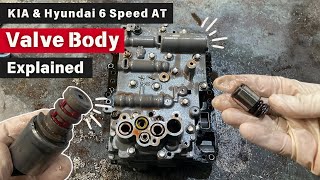
Typical fix: Replace the shift solenoid. It is highly recommended to replace the entire solenoid pack/assembly, 🎬 See this step-by-step solenoid replacement walkthrough as the other solenoids have experienced the same wear and tear. Kia has issued TSBs that detail this replacement procedure.
Est. part cost: $150-$400 - Clogged Transmission Filter 🟡 Medium Probability → Shop Transmission Assembly A clogged filter restricts fluid flow, starving the solenoids of the hydraulic pressure they need to operate correctly. This is a direct consequence of degraded or contaminated fluid.
How to confirm: The filter is typically inspected and replaced during a transmission fluid service when the pan is removed. If the fluid is very dark or contains debris, the filter is almost certainly clogged.
Typical fix: Replace the transmission filter and pan gasket.
Est. part cost: $30-$60 - Damaged Internal Wiring Harness ⚪ Low Probability → Shop Transmission Wiring Harness The internal transmission wiring harness can become brittle from constant heat cycles, leading to poor connections or shorts. This can cause intermittent electrical faults that mimic a failing solenoid.
How to confirm: Visually inspect the harness for cracks, melted plastic, or broken wires when the transmission pan is off. Check for continuity from the TCM connector to the solenoid connector with a multimeter.
Typical fix: Replace the internal transmission wiring harness.
Est. part cost: $100-$200
Rare But Worth Checking
- Faulty Transmission Control Module (TCM): → Shop Transmission Assembly This is rare and should only be considered after all other possibilities (fluid, solenoids, wiring) have been thoroughly ruled out. A failure of the TCM's internal driver for solenoid 'A' can mimic a solenoid failure. A scan tool can be used to check for proper command signals from the TCM.
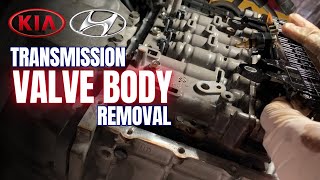
- Internal Valve Body Issue: → Shop Transmission Valve Body Debris can cause passages or valves within the transmission valve body to become blocked or stick, preventing proper fluid flow even if the solenoid is working correctly. In some cases, the valve body may need to be removed for cleaning or replacement. 🎬 Watch: How to replace the transmission valve body
Diagnosis Steps
- Check the transmission fluid level and condition. Top off or change the fluid and filter if it's low, dirty, or burnt. This simple step resolves the issue in many cases.
- Use a professional scan tool to check for other transmission-related codes and review freeze-frame data to understand the conditions when the code was set.
- Inspect the external transmission wiring harness and connectors for any visible damage, corrosion, or loose connections.
- If the fluid is okay, drop the transmission pan to access the valve body and solenoids.
- Perform an electrical resistance test on Shift Solenoid 'A' using a multimeter. Compare the reading to the manufacturer's specifications (typically a low ohm reading, not an open circuit).
- With the key on, verify battery voltage at the solenoid's power supply wire and a good ground on the return wire.
- Visually inspect the internal wiring harness for any signs of heat damage, brittleness, or broken wires.
- If the solenoid and wiring test good, the issue may be a mechanical blockage in the valve body or, in rare cases, a faulty TCM.
Parts You'll Likely Need
- Transmission Shift Solenoid Kit — This is the most common mechanical or electrical failure point for the P0751 code on this transmission. Replacing the full set is recommended.
Trusted brands: Hyundai/Kia (OEM), Rostra, Standard Motor Products
OEM price range: $250-$400
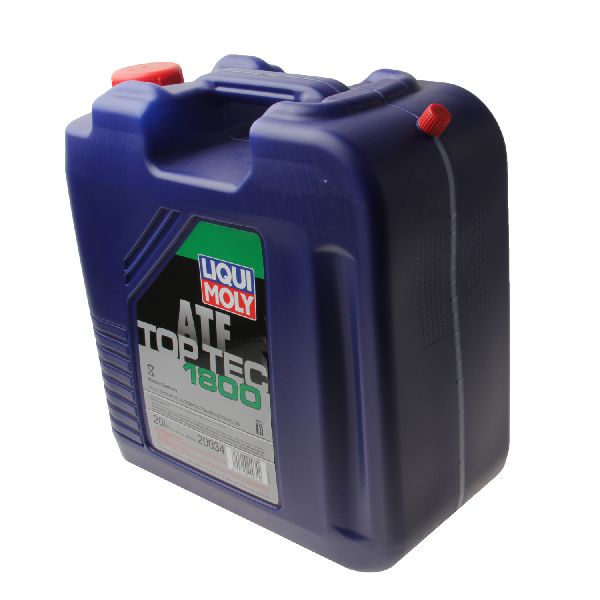
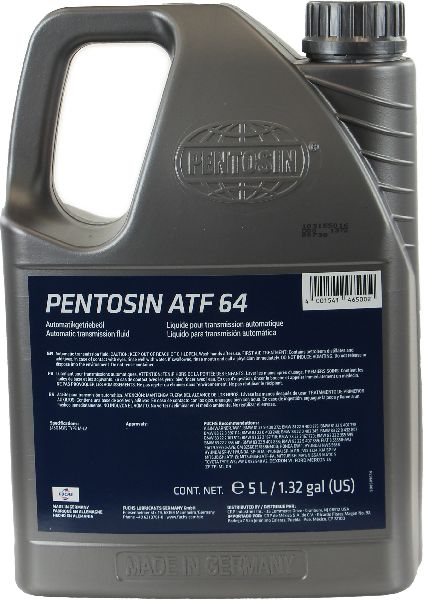
Aftermarket price range: $150-$250 - Automatic Transmission Fluid
(OEM #UM010-CH046)— The correct fluid is required for any service. Low or contaminated fluid is a primary cause of the code.
Trusted brands: Kia/Hyundai (OEM SP-IV), Idemitsu TLS-LV, ENEOS Eco ATF
OEM price range: $15-$25 per quart
Aftermarket price range: $10-$18 per quart - Automatic Transmission Filter and Gasket
(OEM #46321-3B600 (Filter), 45285-3B610 (Gasket))— These must be replaced whenever the transmission pan is removed for service to ensure proper filtration and prevent leaks.
Trusted brands: Hyundai/Kia (OEM), WIX, ATP
OEM price range: $40-$70
Aftermarket price range: $20-$40
Related Codes That Often Appear With This One
- P0700 — This is a generic code that simply means the Transmission Control Module (TCM) has stored a fault. It will almost always appear alongside a more specific transmission code like P0751.
- P0753 — This code indicates a purely electrical fault (short or open) in the Shift Solenoid 'A' circuit. Seeing both P0751 and P0753 together strongly points to a failed solenoid coil or a wiring issue.
- P0756 — This is a similar performance code but for Shift Solenoid 'B'. Seeing multiple solenoid codes together strongly suggests a systemic issue like contaminated fluid, a clogged filter, or low system pressure affecting the entire valve body.
Technical Service Bulletins (TSBs) & Recalls
- TSBTRA051R1: While not for P0751 specifically, this TSB addresses other solenoid electrical fault codes (P0753, P0758, etc.) in the same transmission family, confirming a known issue with solenoid hardware and recommending replacement of individual solenoids rather than the entire transaxle
Platform-Specific Known Issues
- Owner Experiences: Owners on forums frequently report that a transmission fluid and filter change resolves shifting issues. In cases where the P0751 code persists, replacing the entire solenoid pack is the next common and successful repair, often fixing hard shifting between gears and preventing the code from returning.
Mechanic-Grade Diagnostic Values
- Shift Solenoid 'A' (Underdrive Solenoid) Coil Resistance — expected: 5.0 - 5.6 Ohms. Failure: A reading of infinite resistance (open circuit) or near zero ohms (short circuit).
- Other Linear (Variable Force) Solenoids Coil Resistance — expected: 5.1 Ohms. Failure: A reading significantly outside of this value.
- On/Off Type Solenoids Coil Resistance — expected: 10 - 11 Ohms. Failure: A reading significantly outside of this range.
- Transmission Fluid Temperature Sensor Resistance — expected: 2.51K Ohms at 68°F (20°C). Failure: A reading far from the expected value at a known temperature, or an open/short circuit.
Scan Tool Commands That Help
- Kia GDS (Global Diagnostic System) or equivalent professional scan tool: Solenoid Activation Test / Bidirectional Control — This command manually energizes and de-energizes individual solenoids with the engine off. A technician can listen for an audible 'click' from the transmission pan, which helps confirm the solenoid is mechanically moving and the control circuit is functional. No click points to a failed solenoid or wiring issue.
- Kia GDS (Global Diagnostic System): Reset Auto T/A Values (Transmission Adaptive Values) — This function must be performed after replacing the valve body or solenoid assembly. It clears the learned shift pressures and timing from the TCM, forcing it to relearn the characteristics of the new components to ensure smooth shifting.
- Kia GDS (Global Diagnostic System): ECU Upgrade / TCM Software Update — Before replacing hardware, it's crucial to check for available TCM software updates. Kia has released logic improvements that can resolve shift strategy problems which may contribute to setting performance codes like P0751.
OEM Part Supersession History
46313-3B072→46313-3B075— Part revision or manufacturer change for a common solenoid in the A6MF1/A6GF1 transmission.46313-3B020→46313-3B030— Part revision for an automatic transmission control solenoid.
Diagnostic Flowchart
Other Known Issues on This Vehicle
Issues unrelated to this code that are worth knowing about as an owner of this generation:
- Theta II Engine Failure and Fires 🔴 High — Widespread across multiple model years, particularly those with the 2.0L and 2.4L GDI/MPI engines. Problems can arise around 90,000 miles. (Ref: Multiple recalls (e.g., NHTSA 20V750000) and a major class-action lawsuit settlement exist for this issue, providing extended warranties and potential engine replacements.)
- Failing Steering Coupler 🟠 Medium — A very common issue causing a distinct clicking or clunking noise when turning the steering wheel. The part itself is inexpensive, but labor can be significant. (Ref: Kia extended the warranty for this part to 10 years/unlimited mileage for some models under a customer satisfaction program (e.g., CS1604 for Optima, similar issues reported on Forte).)
- Air Bag Control Unit (ACU) Malfunction 🔴 High — Affects certain 2017-2018 Forte models. The ACU cover can damage a circuit board, potentially deactivating the airbags. (Ref: NHTSA Recall 21V260000 was issued to inspect the ACU and either update software or replace the unit.)
- Oil Pump Failure (2.0L Nu MPI Engine) 🔴 High — Foreign particles can cause the oil pump to fail, leading to engine damage on 2017-2018 models. (Ref: NHTSA Recall 21V622000 was issued to replace the oil pan.)
- Faulty Ignition Coils 🟠 Medium — Can occur between 20,000 to 40,000 miles, causing symptoms like stalling, shaking, misfiring, and engine knocking.
Used vs. New Parts: Buying Guide for This Vehicle
When a used part is the smart pick: For this repair, a complete used valve body assembly from a low-mileage donor vehicle can be a cost-effective option, as it includes all solenoids and the internal harness. This is often cheaper than buying a new OEM solenoid pack.
Donor-vehicle mileage cap: roughly under 70000 miles for the part to have meaningful remaining life.
What to inspect on the donor part:
- Verify the donor vehicle's mileage and ensure it had no reported transmission issues.
- Inspect the electrical connector pins for any corrosion or damage.
- Check the fluid passages for any signs of heavy sludge or metal debris, which would indicate a more severe failure in the donor transmission.
OEM-only on this vehicle (don't cheap out):
- Transmission Control Module (TCM) - Used TCMs often have VIN-locking issues and are best purchased new and programmed by a dealer or specialist.
Aftermarket brands forum-validated for this vehicle:
- Rostra
- Sonnax (for valve body repair kits)
- Transgo (for valve body repair kits)
Brands owners have reported issues with on this vehicle:
- Unbranded, no-name solenoid kits from online marketplaces can have high failure rates and incorrect resistance values.
Real Owner Stories
Aggregated from forums and TSBs cited above. Mileages and costs reflect what owners reported in those sources.
2014-2018 Kia Forte — ~105000 miles
Symptoms: Hard shifting between gears and the P0751 code persisting.
What fixed it: Replacing the entire solenoid pack, along with a fluid and filter change.
Source hint: vehicle_specific_issues section under 'Owner Experiences'
Kia Forte (A6MF Transmission)
Symptoms: Hard shifts and gear slipping; after initial repair, hard shifts became more frequent.
What fixed it: The owner replaced the solenoids, filter, and fluid, though the persistence of symptoms suggested deeper issues in the valve body or wiring.
Source hint: Car Talk Community - 'Transmission shift solenoid' - community.cartalk.com/t/transmission-shift-solenoid/189396/23
Related OBD-II Codes
Frequently Asked Questions
Does TSB TRA051R1 apply to my Kia Forte's P0751 code?
Is there a specific transmission fluid I should use for my 2014-2018 Forte to fix this code?
My Forte is also making a clicking noise when I turn the steering wheel; is this related to P0751?
Could my 2017 Kia Forte's airbag light be related to the transmission issues?
Is it better to replace just solenoid 'A' or the whole pack in the A6MF transmission?
Can a bad oil pump cause the P0751 transmission code?
Helpful Videos


We Have This Part in Stock





The information in this article is provided for general reference and educational purposes only. Vehicle specifications, procedures, and part compatibility can vary by production date, trim level, and region. Always consult your vehicle's factory service manual and verify part numbers before purchasing or performing repairs. Safety-critical components such as airbags, seat belts, and braking systems should be installed by a qualified professional.
- Kia Forte:
- 🧭 Diagnostic Flowchart
- 🎬 Helpful Videos
- 🛍️ Shop This Part
- What's Unique About the 2014-2018 Kia Forte
- Symptoms You May Notice
- Most Likely Causes
- Rare But Worth Checking
- Diagnosis Steps
- Parts You'll Likely Need
- Related Codes That Often Appear With This One
- Technical Service Bulletins (TSBs) & Recalls
- Platform-Specific Known Issues
- Mechanic-Grade Diagnostic Values
- Scan Tool Commands That Help
- OEM Part Supersession History
- Other Known Issues on This Vehicle
- Used vs. New Parts: Buying Guide for This Vehicle
- Real Owner Stories
- 2014-2018 Kia Forte — ~105000 miles
- Kia Forte (A6MF Transmission)
- Related OBD-II Codes
- Frequently Asked Questions
- 🎟️ Get 5% Off