

P0751 on 2010-2013 Mazda 3 (MZR 2.0L/2.5L): Causes and Fixes for Shift Solenoid 'A'
On a 2010-2013 Mazda 3 with the MZR engine, code P0751 typically points to low/dirty transmission fluid or a faulty Shift Solenoid 'A'. Unlike the SkyActiv models, this is not the widely known valve body issue. Always check fluid first. A solenoid replacement by a professional may cost between $300 and $600. In some cases, the Transmission Control Module (TCM) itself can be the culprit.
- First, confirm if your 2012-2013 Mazda 3 has the MZR or SkyActiv engine, as the fix for P0751 is completely different for each.
- For the MZR engine, the most common and easiest fix is servicing the automatic transmission fluid. Check the level and condition before attempting more complex repairs.
- Unlike SkyActiv models, P0751 on an MZR is not a known widespread valve body issue. The fault is more likely to be the solenoid itself or its wiring.
- Do not drive the vehicle with this code. You risk causing serious, expensive damage to the transmission.
What's Unique About the 2010-2013 Mazda 3
It is critical to distinguish the MZR engine's 5-speed automatic (FS5A-EL) from the SkyActiv engine's 6-speed automatic (FW6A-EL) offered from 2012-2013. A widely known issue involving P0751 on Mazda 3s is related to sticking oil pressure switches in the valve body of the SkyActiv's transmission, documented in multiple TSBs. This guide is for the MZR engine's 5-speed, which does NOT have this specific widespread valve body problem. For the MZR platform, the causes of P0751 are more traditional and often point to the solenoid itself, fluid condition, or in some cases, the TCM.
Symptoms You May Notice
- Check Engine Light illuminated
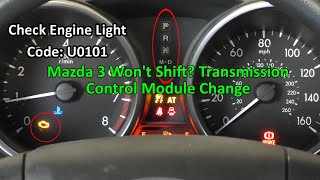
- AT (Automatic Transmission) warning light on
- Harsh or delayed shifting
- Transmission stuck in one gear (limp mode, often 3rd gear)
- Inability to shift into certain gears
- Vehicle may not move
- Reduced fuel economy
- Assuming the issue is the same as on SkyActiv models and unnecessarily replacing valve body pressure switches. The TSBs for SkyActiv transmissions do not apply to the MZR's 5-speed automatic.
- Replacing the shift solenoid without first checking the transmission fluid level and condition, which is a simpler and more common cause.
- Replacing the shift solenoid when the actual fault lies with the Transmission Control Module (TCM).
Most Likely Causes
- Low or Dirty Automatic Transmission Fluid (ATF) 🔴 High Probability → Shop Transmission Assembly Fluid is the lifeblood of the transmission; low levels or fluid that is degraded and contaminated can prevent solenoids from operating correctly under hydraulic pressure. Many owners neglect ATF service, leading to issues.
How to confirm: Check the transmission fluid dipstick for level and inspect the fluid's color and smell. It should be bright red and not smell burnt. If it is dark, brown, or contains metallic debris, it needs service and may indicate internal wear.
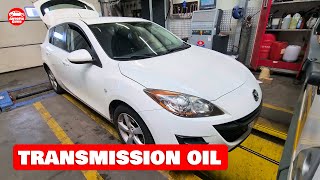
Typical fix: Perform a transmission fluid drain and fill, or a complete fluid flush. 🎬 Watch: Step-by-step transmission oil and filter change guide Use Mazda M-V (M5) ATF or a compatible equivalent.
Est. part cost: $50-$150 - Faulty Shift Solenoid 'A' 🟡 Medium Probability → Shop Transmission Valve Body
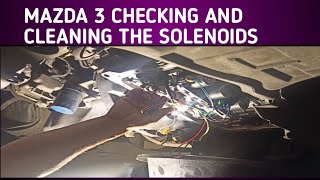
How to confirm: After confirming fluid is okay, a technician can test the solenoid's resistance with a multimeter or command it on/off with a professional scan tool to listen for a click. This requires accessing the solenoid by dropping the transmission pan. 🎬 See how to check solenoid resistance and replace the TCM The resistance for Shift Solenoid 'A' should be between 1.0 and 4.2 ohms.
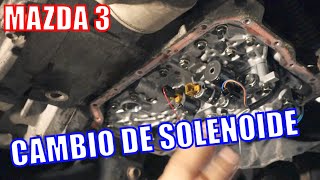
Typical fix: Replace the faulty shift solenoid. This part is located on the valve body inside the transmission.
Est. part cost: $60-$150 - Wiring or Connector Issue ⚪ Low Probability A safety recall (5409D) was issued for some 2010 models (produced Oct 2008 - Apr 2009) where the emission harness could rub against the starter motor, causing a short and 'poor shift quality'. This highlights a potential vulnerability in the harness routing.
How to confirm: Visually inspect the transmission wiring harness from the TCM to the transmission case for any signs of damage, corrosion, melting, or chafing, particularly near the starter motor on affected 2010 models.
Typical fix: Repair the damaged section of wiring and secure the harness with the protector clip specified in the recall.
Est. part cost: $10-$50
Rare But Worth Checking
- Clogged Transmission Filter or Fluid Passages: → Shop Transmission Assembly If the fluid is very dirty or contains debris, the filter can become clogged, starving the system of pressure. This usually happens along with degraded fluid.
- Faulty Valve Body: → Shop Transmission Valve Body While not the common failure point it is on the SkyActiv models, the valve body can still fail due to internal wear or blockage, though it's less likely than a single solenoid.
- Faulty Transmission Control Module (TCM): → Shop Transmission Assembly This is a notable cause for this platform and should be considered if a new solenoid does not fix the issue. Some owners have reported that solenoid codes were ultimately traced back to a faulty TCM. A refurbished TCM can be a cost-effective solution. This should be considered after other possibilities are ruled out.
Diagnosis Steps
- Read all stored trouble codes with an OBD-II scanner to see if other codes are present.
- Check the automatic transmission fluid (ATF) level using the dipstick. Note the fluid's color and smell. Dark, burnt-smelling fluid indicates a problem.
- Drain a small amount of fluid and inspect it for metal debris. Excessive metallic particles suggest significant internal wear.
- If the fluid is low or dirty, perform a transmission fluid and filter change. Use the correct fluid type (Mazda M-V or equivalent).
- Clear the codes and test drive the vehicle to see if P0751 returns. If it does, proceed with further diagnosis.
- Inspect the transmission wiring harness and connectors for any visible damage, corrosion, or loose connections. Pay special attention to the area around the starter motor on 2010 models due to Recall 5409D.
- If wiring and fluid are good, the next step is to test the solenoid itself. This requires draining the fluid and removing the transmission pan to access the valve body.
- With a multimeter, test the resistance of Shift Solenoid 'A' and compare it to manufacturer specifications. The expected resistance is 1.0–4.2 ohms. A reading that is out of spec indicates a failed solenoid.
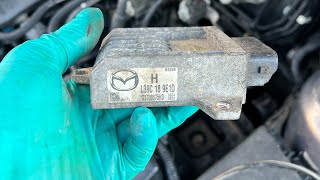
- If the solenoid tests good and the wiring is intact, the problem may lie with the Transmission Control Module (TCM), a known but less common failure point on this platform. The TCM is located under the battery box.
Parts You'll Likely Need
- Shift Solenoid 'A'
(OEM #FN21-21-1F1)— This is the solenoid directly identified by the code. If fluid and wiring are good, the solenoid itself is the most likely failed component. The part number FN01-21-1F1 was superseded by FN21-21-1F1.
Trusted brands: Rostra, Genuine Mazda
OEM price range: $100-$180
Aftermarket price range: $60-$120 - Automatic Transmission Fluid (Mazda M-V) — Fluid must be replaced when servicing internal transmission components like the solenoid, and low or dirty fluid is a primary cause of the code.
Trusted brands: Mazda OE, Idemitsu, Valvoline MaxLife
OEM price range: $15-$25 per quart
Aftermarket price range: $8-$15 per quart - Transmission Pan Gasket — Required to re-seal the transmission pan after accessing the solenoid and valve body.
Trusted brands: Fel-Pro, Victor Reinz, Mahle
OEM price range: $20-$40
Aftermarket price range: $10-$25
Platform-Specific Known Issues
- A portion of 2010 Mazda 3 models (built Oct 2008 - Apr 2009) were subject to Safety Recall 5409D, where the emission harness could chafe on the starter motor housing. This could cause a short, leading to various issues including 'poor shift quality'. While not directly calling out P0751, it's a known wiring vulnerability on this platform that can cause transmission control malfunctions.
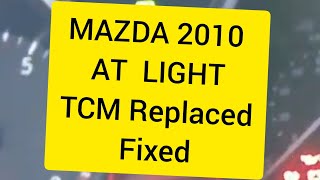
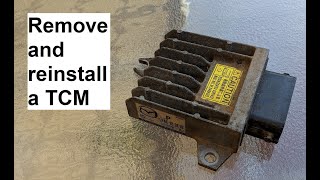
- Some owners have found that solenoid-related fault codes are not caused by the solenoid or wiring, but by a failing Transmission Control Module (TCM). A Reddit user with a 2010 2.0L model ultimately fixed a P0753 code (an electrical fault for the same solenoid) by replacing the TCM after other attempts failed. These TCMs are known to have a high failure rate due to their mounting location on the hot transmission, which causes internal components and solder joints to fail from heat stress. 🎬 Watch: How to repair and relocate your TCM to prevent heat failure
- Manufacturer service bulletins, including TSB Bulletin #05-003-14-2898 and TSB Bulletin #05-003-14-2898A, note that P0751:00 may be stored in memory alongside P1738 (Automatic Transaxle Internal Malfunction) or U0401.
Mechanic-Grade Diagnostic Values
- Shift Solenoid 'A' Resistance — expected: 1.0–4.2 ohms. Failure: A reading outside this range (open circuit or short) indicates a failed solenoid coil.
- Shift Solenoid 'A' Functional Test — expected: An audible 'click' should be heard from the solenoid.. Failure: No operating sound indicates a mechanically stuck or electrically failed solenoid.
Scan Tool Commands That Help
- Mazda M-MDS or equivalent (e.g., FORScan): PID/Data Monitor — To monitor transmission-related PIDs like Turbine Speed Sensor (TSS) and Line Pressure Sensor (LPS) to see if the transmission is responding to commands, which can help differentiate a mechanical vs. electrical problem.
- Mazda M-MDS or equivalent (e.g., FORScan): Solenoid On/Off Command — To directly command Shift Solenoid 'A' on and off while listening for the corresponding click from the transmission pan. This is a direct test of the solenoid's mechanical function without having to remove it.
Wiring & Ground Locations
- Transmission Control Module (TCM) — Mounted directly to the transmission housing, located under the battery and battery tray in the engine compartment.. This is the computer that controls the shift solenoids. It is a common failure point due to heat exposure. All control signals for the solenoids originate here, making its connectors a key test point.
- Transmission Main Connector — The main electrical connector on the FS5A-EL transmission case.. This is the primary point for testing the resistance of the internal solenoids and wiring without dropping the transmission pan. For Shift Solenoid 'A', you would measure resistance between terminal 'A' and ground at this connector.
Real Owner Repair Stories
- YouTube user 'The Skid Factory' (2010 Mazda 3) — Multiple transmission fault codes, including communication errors and solenoid faults. AT light on.
❌ Tried (didn't work) The owner was facing an expensive repair or replacement from the dealer.
✅ What actually fixed it The owner replaced the faulty Transmission Control Module (TCM) with a second-hand unit. Critically, he relocated the replacement TCM away from its original position on top of the hot gearbox to a cooler location to prevent a repeat failure due to overheating. After clearing the codes, the car ran smoothly with no further issues. - NHTSA ODI #11596026 — An owner reported that the check engine light came on along with the AT and traction lights, resulting in absolutely no power to the transmission with codes P0780 and P0751 stored.
OEM Part Supersession History
FN01-21-1F1→FN21-21-1F1— Manufacturer revision or part update.
Heads up: The new part number FN21-21-1F1 is the correct replacement and is backward compatible.
Diagnostic Flowchart
Other Known Issues on This Vehicle
Issues unrelated to this code that are worth knowing about as an owner of this generation:
- Dashboard Separation/Warping 🟠 Medium — Very common, especially in warmer climates. The dashboard material lifts and separates above the central information display. (Ref: A warranty extension program was offered, but it has since expired for most vehicles. Many owners report dealerships refusing to cover the expensive repair.)
- Failed Passenger-Side Engine Mount 🟠 Medium — Extremely common. The fluid-filled passenger side engine mount fails, causing excessive vibration in the cabin, especially when in gear at a stop.
- Premature Clutch Failure (Manual Transmission) 🔴 High — A significant issue on 2010-2012 models with manual transmissions, often requiring replacement before 50,000 miles.
- Melting/Sticky Dashboard 🟡 Low — In hot climates, the dashboard surface can degrade, becoming sticky and difficult to clean. This was the subject of TSB 09-038/12, which advised dealers it was a normal characteristic. (Ref: TSB 09-038/12)
- Failing Transmission Control Module (TCM) 🔴 High → Shop Transmission Assembly — Some owners report that solenoid codes (like P0753, electrically similar to P0751) are ultimately caused by a failed TCM, not the solenoid itself. This seems to be a notable, though not widespread, issue.
Used vs. New Parts: Buying Guide for This Vehicle
When a used part is the smart pick: A used Transmission Control Module (TCM) can be a viable, cost-effective option, especially since new OEM units can be expensive or hard to find. If purchasing used, it is critical to source one from a reputable seller and consider relocating it to a cooler spot in the engine bay to prevent the heat-related failure that likely killed the original.
Donor-vehicle mileage cap: roughly under 80000 miles for the part to have meaningful remaining life.
What to inspect on the donor part:
- Verify the part number on the used TCM matches your original unit exactly.
- Ask the seller if the donor vehicle had any transmission-related trouble codes.
- Inspect the connectors for any signs of corrosion, bent pins, or heat damage.
- Prefer sellers who offer a short warranty or return period.
OEM-only on this vehicle (don't cheap out):
- Transmission Control Module (TCM) - While used OEM is an option, avoid unverified aftermarket TCMs as they can have compatibility and programming issues. A rebuilt original unit from a specialist is often the best balance of cost and reliability.
Aftermarket brands forum-validated for this vehicle:
- Rostra (for shift solenoids)
Brands owners have reported issues with on this vehicle:
- Generic, unbranded TCMs from online marketplaces should be avoided due to high failure rates and potential programming incompatibilities.
Real Owner Stories
Aggregated from forums and TSBs cited above. Mileages and costs reflect what owners reported in those sources.
2010 Mazda 3 2.0L
Symptoms: Persistent solenoid fault code and Check Engine Light.
What fixed it: Replacing the Transmission Control Module (TCM) with a refurbished unit after other attempts failed.
Source hint: Reddit r/mazda3 - [SOLVED] 2010-12 Mazda 3 - CEL - P0753 / Shift Solenoid A - TCM issue
Related OBD-II Codes
Frequently Asked Questions
My 2010 Mazda 3 is shifting poorly; is there a recall that might cover this?
What type of transmission fluid should I use for my 2010-2013 Mazda 3 to fix P0751?
Where is the Transmission Control Module (TCM) located on the 2010 Mazda 3?
What is the specific resistance range for Shift Solenoid 'A' on this vehicle?
Can I use parts from a Ford Fusion to fix my Mazda 3 transmission?
Is P0751 always caused by a bad solenoid in the Mazda 3?
Helpful Videos



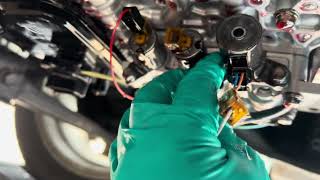
We Have This Part in Stock

The information in this article is provided for general reference and educational purposes only. Vehicle specifications, procedures, and part compatibility can vary by production date, trim level, and region. Always consult your vehicle's factory service manual and verify part numbers before purchasing or performing repairs. Safety-critical components such as airbags, seat belts, and braking systems should be installed by a qualified professional.
- Mazda 3:
- 🧭 Diagnostic Flowchart
- 🎬 Helpful Videos
- 🛍️ Shop This Part
- What's Unique About the 2010-2013 Mazda 3
- Symptoms You May Notice
- Most Likely Causes
- Rare But Worth Checking
- Diagnosis Steps
- Parts You'll Likely Need
- Platform-Specific Known Issues
- Mechanic-Grade Diagnostic Values
- Scan Tool Commands That Help
- Wiring & Ground Locations
- Real Owner Repair Stories
- OEM Part Supersession History
- Other Known Issues on This Vehicle
- Used vs. New Parts: Buying Guide for This Vehicle
- Real Owner Stories
- 2010 Mazda 3 2.0L
- Related OBD-II Codes
- Frequently Asked Questions
- 🎟️ Get 5% Off