

P0751 on 1999-2004 Oldsmobile Alero: Shift Solenoid 'A' Causes and Fixes
On a 1999-2004 Alero, code P0751 is almost always caused by a failed 'A' shift solenoid inside the 4T40-E or 4T45-E transmission. This is a very common failure point for this platform. The most effective repair is to replace the 'A' and 'B' shift solenoids and the TCC solenoid as a kit, which costs about $75-$150 in parts. This is a moderately difficult DIY job that involves removing the transmission side cover, not the bottom pan.
- P0751 on a 1999-2004 Alero very likely means you need a new shift solenoid 'A'.
- Always check your transmission fluid level and condition first, as it's the simplest and most crucial diagnostic step.
- Due to the difficult labor involved in accessing the solenoids by removing the transmission side cover, it is highly recommended to replace both shift solenoids ('A' and 'B') and the TCC solenoid as a kit.
- Ignoring this code can lead to severe transmission damage, turning a relatively inexpensive part replacement into a costly transmission rebuild.
What's Unique About the 1999-2004 Oldsmobile Alero
The Oldsmobile Alero from this era uses the GM 4T40-E (on 4-cylinder models) or the heavier-duty 4T45-E (on V6 models) automatic transmission. A well-documented and very common issue on this specific transmission family is the failure of the shift solenoids. The 1-2 shift solenoid ('A') is particularly prone to failure because it is energized 90-95% of the time during city driving, leading to accelerated wear from heat. Unlike some vehicles where wiring or fluid condition are the primary suspects for this code, on the Alero and its platform-mates like the Pontiac Grand Am and Chevrolet Malibu, the solenoid itself is frequently the point of failure. The repair is also somewhat unique as it requires accessing the transmission's side cover, not the bottom pan, making it a more involved job that may require lowering the subframe.
Symptoms You May Notice
- Harsh, abrupt, or delayed shifting
- Transmission getting stuck in one gear (usually 2nd or 3rd)
- Vehicle entering 'limp mode'
- Check Engine Light is on
- Reduced fuel economy
- Transmission slipping
- Inability to shift into 1st gear from a stop
- Inability to shift into 4th (overdrive) gear
- Replacing only the 'A' solenoid. Because the labor to access the solenoids is significant, replacing just the one that failed often leads to a repeat repair in the near future when the 'B' or TCC solenoid fails.
- Replacing the solenoid without first checking the fluid condition. If the fluid is burnt or full of debris, the new solenoid may fail quickly or the underlying issue may be a larger mechanical failure.
Most Likely Causes
- Failed Shift Solenoid 'A' 🔴 High Probability → Shop Transmission Valve Body The solenoids in the 4T40-E/4T45-E transmissions are a known common failure point due to electronic failure from constant heat and vibration over many miles. The 1-2 solenoid ('A') is the most common to fail due to its high duty cycle in normal driving.
How to confirm: After checking fluid, test the solenoid's electrical resistance with a multimeter at the transmission's main connector. A good solenoid should read between 20-30 ohms at room temperature. An open circuit (infinite resistance) or a short circuit (near-zero resistance) confirms a bad solenoid. 🎬 See how to test and replace shift solenoid valves A high-end scan tool can also command the solenoid on and off to check its response.
Typical fix: Replace the shift solenoid. It is highly recommended to replace both the 'A' (1-2) and 'B' (2-3) shift solenoids, as well as the Torque Converter Clutch (TCC) solenoid, at the same time since they are all accessed by removing the transmission side cover and the labor is intensive. 🎬 Watch: Step-by-step 4T40-E/4T45-E shift solenoid replacement walkthrough
Est. part cost: $40-$80 for a single solenoid, $75-$150 for a complete kit - Low or Dirty Transmission Fluid 🟡 Medium Probability → Shop Transmission Assembly
How to confirm: The Alero does not have a traditional dipstick. The fluid level must be checked via a fill plug on the side of the transmission case. The fluid should be bright red and clear. If it is brown, black, or smells burnt, it is contaminated and can cause solenoids to stick or passages to clog.
Typical fix: Perform a transmission fluid and filter change using DEXRON-VI fluid. This is a critical first step in diagnosis. If the fluid is heavily contaminated with metal particles, it may indicate a more severe internal failure requiring a rebuild.
Est. part cost: $50-$100 - Damaged Wiring or Connectors ⚪ Low Probability
How to confirm: Visually inspect the wiring harness leading to the transmission for any signs of cracking, chafing, or corrosion, paying close attention to the main connector. Check for continuity and voltage at the connector pins corresponding to Solenoid 'A'.
Typical fix: Repair or replace the damaged section of the wiring harness or the connector.
Est. part cost: $20-$100
Rare But Worth Checking
- Internal Transmission Mechanical Failure: → Shop Transmission Assembly If the transmission fluid is full of metal shavings, it's a sign of a more serious internal problem like a failing clutch pack or torque converter. In this case, simply replacing the solenoid will not fix the issue and a transmission rebuild may be necessary.
- Faulty Transmission Control Module (TCM): → Shop Transmission Assembly While rare, the TCM itself can fail, causing it to incorrectly report a solenoid issue. This should only be considered after all other possibilities, including wiring, have been thoroughly ruled out.
Diagnosis Steps
- Check the transmission fluid level and condition. This is the most important first step. The fluid check plug is on the side of the transmission case. The fluid should be red and not smell burnt.
- If the fluid is low, top it off and check for leaks. If the fluid is dirty or old, perform a fluid and filter change.
- Scan for other transmission-related codes to see if other solenoids are reporting faults. Note codes like P0753, P0756, and P1811. 🎬 Watch: Understanding the P0751 shift solenoid performance code
- Inspect the main transmission wiring harness and connector for any visible damage, corrosion, or loose connections.
- Using a multimeter, test the resistance of the Shift Solenoid 'A' circuit. You can do this from the main transmission connector to avoid opening the transmission initially. A reading between 20-30 ohms is expected. A reading of infinity (open) or near zero (short) indicates a failed solenoid or wiring.
- If the solenoid resistance is out of spec, the next step is to remove the transmission side cover to access and replace the solenoids. This may require supporting the engine and lowering the subframe on the driver's side for access.
- During reassembly, it is critical to ensure the manual valve is correctly engaged with the shift linkage inside the side cover. Failure to do so will result in a no-move condition after the repair.
Parts You'll Likely Need
- Automatic Transmission Shift Solenoid Kit
(OEM #24227792 (superseded by 24207236))— This is the most common cause of P0751 on the 4T40-E/4T45-E transmission. It is highly recommended to replace both shift solenoids ('A' and 'B') and the TCC solenoid as a kit due to the labor required to access them. The original part number 24227792 has been superseded by 24207236. Note that the individual shift solenoids 'A' and 'B' are often identical parts.
Trusted brands: ACDelco, ATP, Dorman, Standard Motor Products (SMP)
OEM price range: $50-$80 per solenoid
Aftermarket price range: $75-$150 for a full kit - Transmission Filter Kit — The transmission fluid must be drained to perform the repair, so it is the perfect time to replace the filter, which is located in the bottom pan.
Trusted brands: ACDelco, Wix, Fram
OEM price range: $20-$40
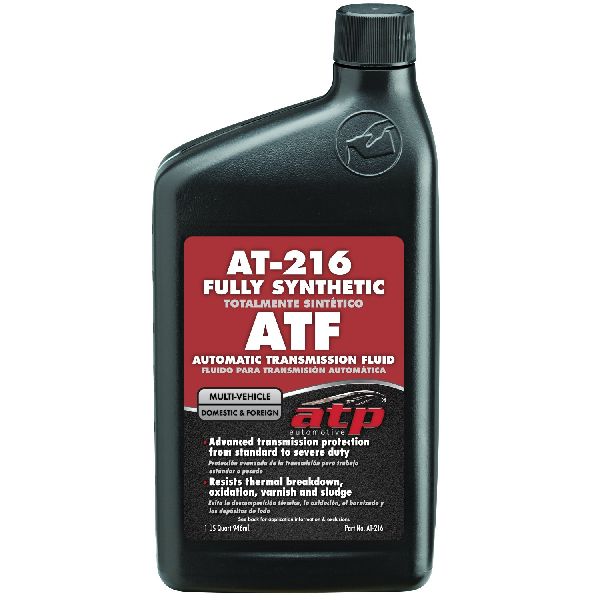
Aftermarket price range: $15-$30 - DEXRON-VI Automatic Transmission Fluid — A complete fluid drain and refill is required for the job. You will typically need 7-9 quarts for a drain and fill that includes the side cover removal.
Trusted brands: ACDelco, Valvoline, Castrol
OEM price range: $8-$12 per quart
Aftermarket price range: $7-$10 per quart
Related Codes That Often Appear With This One
- P0756 — This code indicates a fault with Shift Solenoid 'B'. It's common to see both codes if the transmission fluid is very dirty or if the solenoids are failing due to age. This reinforces the recommendation to replace them as a set.
- P0753 — This code points to an electrical fault (open or short) in the Shift Solenoid 'A' circuit, which is the root cause of the P0751 performance code.
- P0700 — This is a generic code that simply means the Transmission Control Module (TCM) has stored a fault code. It will almost always be present alongside a more specific transmission code like P0751.
- P1811 — This is a GM-specific code for 'Maximum Adapt and Long Shift'. It is often triggered by the same root causes as P0751, such as a failing solenoid causing delayed, harsh shifts.
Technical Service Bulletins (TSBs) & Recalls
- GM TSB #070730025 - While not a direct fix, this TSB links the P1811 (Max Adapt and Long Shift) code to the same conditions that cause P0751, often pointing to a failing pressure control solenoid or shift solenoid.
Platform-Specific Known Issues
- Alero owners on forums frequently confirm that replacing the shift solenoid pack resolves the P0751 code and associated shifting problems. Many DIY-ers note the difficulty of accessing the side cover, which often requires lowering the engine cradle/subframe for clearance.
- One owner of a 2002 Alero with P0751 and P0756 codes reported fixing the issue by replacing the 1-2 and 2-3 shift solenoids. They described the job as taking several hours but being manageable for a home mechanic.
Mechanic-Grade Diagnostic Values
- Shift Solenoid 'A' or 'B' Coil Resistance — expected: 20-30 Ohms at room temperature (approx. 68°F / 20°C). Some sources specify a tighter range of 19-24 Ohms.. Failure: A reading of near-zero ohms indicates a short circuit. A reading of infinity (OL) indicates an open circuit. Either confirms a failed solenoid.
- TCM Ground Circuit Voltage Drop — expected: Less than 0.2 Volts (200 millivolts). Failure: A reading above 0.2V indicates high resistance in the ground circuit, often due to corrosion at a ground point like G103. This can cause the TCM to misinterpret sensor data and set false codes.
Scan Tool Commands That Help
- GM Tech2 / High-End Bidirectional Scanner: Solenoid Control / Output Control — This function allows a technician to command Shift Solenoid 'A' on and off manually while monitoring transmission data. It's used to confirm if the solenoid is mechanically stuck or if the TCM driver circuit is functional. If the scanner commands the solenoid on and a 'click' is heard or a change in pressure is observed, but the P0751 code persists during driving, it points towards a hydraulic blockage or internal leak rather than a failed solenoid.
Wiring & Ground Locations
- G103 — On a transmission stud, on the left side of the engine.. This is a notorious failure point on the Alero and its platform mates. It is often a splice pack where multiple grounds combine. Internal corrosion in this splice pack can cause high resistance, leading to intermittent and incorrect signals for the TCM, potentially triggering false solenoid codes.
- G102 — On the left rear of the engine for the 2.2L engine, or in front of the starter for the 3.4L V6 engine.. This is a primary engine ground. A poor connection here can affect the Powertrain Control Module (PCM), which works in conjunction with the TCM, causing a variety of electrical issues.
- Transmission Main Connector — On the top or side of the transmission case, where the main vehicle harness connects to the transmission.. This is the primary external point for electrical testing of the solenoids without opening the transmission. Technicians test resistance and voltage for the Shift Solenoid 'A' circuit at the pins within this connector to quickly determine if the fault is internal (solenoid) or external (wiring/TCM).
Real Owner Repair Stories
- YouTube channel '99bravology' (Pontiac G6 (uses the same 4T45-E transmission)) — Vehicle was stuck in 2nd gear, would shift to 3rd, but would not go into 1st or 4th (overdrive) gear. Check Engine Light was on.
❌ Tried (didn't work) The owner first tried a transmission fluid and filter change, which did not resolve the issue.
✅ What actually fixed it The problem was a bad Shift Solenoid 'A'. The owner replaced both shift solenoids ('A' and 'B') by removing the transmission side cover, which resolved all symptoms and the trouble code. - Chevy HHR Network forum (2011 Chevrolet HHR with 4T45-E transmission at 214,xxx miles) — Transmission would not shift into 4th gear, causing high RPMs (3000) at highway speed (65 mph). Triggered codes P0700, P0974, and P0751.
✅ What actually fixed it The final repair was not posted by the original user, but forum administrators and senior members immediately diagnosed the issue based on the codes as a sticking or failed 1-2 shift solenoid (Solenoid 'A'). They strongly recommended replacing all solenoids and noted that the internal wiring harness can become brittle and should be inspected.
OEM Part Supersession History
24212690→24227792— Component revision and improvement by the manufacturer.24227792→24207236— Component revision and improvement by the manufacturer. This is the most current OEM part number commonly available.
Heads up: The 'A' (1-2) and 'B' (2-3) shift solenoids are the same part.
Model Year Variations Within This Range
- 1999-2001 vs 2002-2004: The standard 4-cylinder engine changed. 1999-2001 models used the 2.4L LD9 'Twin Cam' engine. 2002-2004 models used the 2.2L L61 'Ecotec' engine. Both were paired with the 4T40-E automatic transmission, but there may be minor differences in the engine-to-transmission wiring harness or PCM/TCM software calibration between these engine generations. The 3.4L LA1 V6 with the 4T45-E was available through the entire model run.
Diagnostic Flowchart
Other Known Issues on This Vehicle
Issues unrelated to this code that are worth knowing about as an owner of this generation:
- Failed Passlock Anti-Theft Sensor 🔴 High — Extremely common. The sensor in the ignition lock cylinder fails, causing a no-start or start-and-stall condition, often with a flashing 'Security' light.
- Leaking Intake Manifold Gaskets (V6) 🔴 High — Very common on the 3.1L and 3.4L V6 engines. The original plastic/silicone gaskets degrade, causing coolant to leak externally or internally into the engine oil.
- Premature Front Wheel Bearing Failure 🟠 Medium — Commonly reported failure, often starting around 50,000-75,000 miles. Symptoms include a loud humming or growling noise from the front wheels that changes with turning.
- Failed Turn Signal / Hazard Flasher Switch 🟡 Low — A common annoyance where the multifunction switch fails, causing the turn signals to stop working or the hazard lights to click intermittently on their own.
- Ignition Switch Failure (Recall) 🔴 High — Part of a major GM recall (14V346000). The ignition switch can be knocked out of the 'Run' position by a heavy keychain or jarring event, shutting off the engine and disabling airbags. (Ref: NHTSA Recall 14V346000)
Used vs. New Parts: Buying Guide for This Vehicle
When a used part is the smart pick: For this specific repair, using a used part is strongly discouraged. The shift solenoids are a known high-failure-rate item due to heat and high duty cycles. A used solenoid from a junkyard has an unknown history and is likely to fail in a short amount of time, forcing you to repeat the labor-intensive repair. The cost of a new, quality aftermarket solenoid kit is low enough that it represents a much better value.
Donor-vehicle mileage cap: roughly under 50000 miles for the part to have meaningful remaining life.
What to inspect on the donor part:
- If you must consider a used part (e.g., a complete valve body assembly), source it from a vehicle with the lowest possible mileage.
- Check the color and smell of the transmission fluid from the donor vehicle if possible. Dark, burnt-smelling fluid is a major red flag.
- Avoid parts from vehicles that show signs of a major collision, which could have caused unseen internal damage.
Aftermarket brands forum-validated for this vehicle:
- ACDelco (OEM supplier)
- Standard Motor Products (SMP)
- ATP
- Rostra
- Superior Transmission Parts (offers a 'SURE-COOL' upgrade kit to address the heat-related failure of the 1-2 solenoid)
Brands owners have reported issues with on this vehicle:
- Unnamed, no-brand 'white box' kits from online marketplaces. While cheap, they have a high rate of out-of-box failure and are not worth the risk given the labor involved.
Real Owner Stories
Aggregated from forums and TSBs cited above. Mileages and costs reflect what owners reported in those sources.
2002 Oldsmobile Alero
Symptoms: Vehicle had P0751 and P0756 codes present simultaneously.
What fixed it: Replacing the 1-2 and 2-3 shift solenoids. The owner noted the job took several hours but was manageable for a home mechanic.
Source hint: vehicle_specific_issues
1999-2005 Pontiac Grand Am
Symptoms: 1-2 Shift Solenoid Valve Performance issues resulting in no first or fourth gear.
What fixed it: Replacing the shift solenoid.
Source hint: automotiveforums.com - In a thread titled 'P0751 - 1-2 Shift Solenoid Valve Performance - No First or Fourth Gear'
Related OBD-II Codes
Frequently Asked Questions
How do I check the transmission fluid on my Alero since there is no dipstick?
Is there a recall for the ignition switch on my 1999-2004 Oldsmobile Alero?
Does GM TSB #070730025 apply to the shifting issues I'm having with P0751?
Can I just replace the single failed 'A' solenoid to save money?
Why is my Alero stuck in 2nd or 3rd gear and won't shift into 1st from a stop?
Should I use a used solenoid from a junkyard to fix my P0751 code?
Helpful Videos
We Have This Part in Stock


The information in this article is provided for general reference and educational purposes only. Vehicle specifications, procedures, and part compatibility can vary by production date, trim level, and region. Always consult your vehicle's factory service manual and verify part numbers before purchasing or performing repairs. Safety-critical components such as airbags, seat belts, and braking systems should be installed by a qualified professional.
- Oldsmobile Alero:
- 🧭 Diagnostic Flowchart
- 🎬 Helpful Videos
- 🛍️ Shop This Part
- What's Unique About the 1999-2004 Oldsmobile Alero
- Symptoms You May Notice
- Most Likely Causes
- Rare But Worth Checking
- Diagnosis Steps
- Parts You'll Likely Need
- Related Codes That Often Appear With This One
- Technical Service Bulletins (TSBs) & Recalls
- Platform-Specific Known Issues
- Mechanic-Grade Diagnostic Values
- Scan Tool Commands That Help
- Wiring & Ground Locations
- Real Owner Repair Stories
- OEM Part Supersession History
- Model Year Variations Within This Range
- Other Known Issues on This Vehicle
- Used vs. New Parts: Buying Guide for This Vehicle
- Real Owner Stories
- 2002 Oldsmobile Alero
- 1999-2005 Pontiac Grand Am
- Related OBD-II Codes
- Frequently Asked Questions
- 🎟️ Get 5% Off