

P0751 on 2005-2009 Subaru Outback: Shift Solenoid 'A' Causes and Fixes
On a 2005-2009 Outback, P0751 usually indicates a problem with the automatic transmission's valve body or low/dirty fluid. The first step is always to check the transmission fluid. If the fluid is healthy, the valve body assembly is the next likely culprit, which can be a costly repair. A less common but notable cause is contamination from a failing front differential bearing, which shares fluid with the transmission.
- Code P0751 on a 2005-2009 Outback indicates a performance problem with Shift Solenoid 'A' in the automatic transmission.
- Always check the transmission fluid level and condition first. Low, dirty, or contaminated fluid is a common and relatively inexpensive cause to fix.
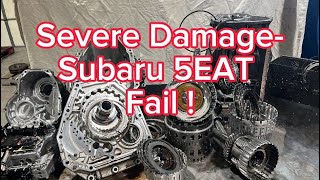
- On models with the 5-speed (5EAT) automatic transmission, a failing valve body is a very common cause for this code.
- Inspect the transmission pan magnet for excessive 'glitter' which points to a more serious front differential bearing failure contaminating the fluid.
- Do not ignore this code. Driving with a transmission fault can lead to overheating and catastrophic internal damage.
- Due to the complexity of the repair, which involves accessing internal transmission components, professional service is highly recommended.
What's Unique About the 2005-2009 Subaru Outback
The 2005-2009 Outback uses either a 4-speed (4EAT) or 5-speed (5EAT) automatic transmission. On the 5EAT, often found in XT and 3.0R models, valve body failures are a known issue that frequently triggers the P0751 code. For these models, Subaru often recommends replacing the entire valve body assembly rather than individual solenoids, as the solenoids are not typically sold separately by dealers. A critical and unique failure pattern for this platform is the failure of the front differential carrier bearing. This bearing can disintegrate, sending fine metallic particles into the shared automatic transmission fluid. This debris then clogs the tiny passages and screens within the valve body, leading to solenoid performance codes like P0751.
Symptoms You May Notice
- Check Engine Light is on
- Flashing 'AT OIL TEMP' light
- Transmission slipping between gears
- Harsh, delayed, or 'clunking' shifts
- Vehicle gets stuck in one gear (limp mode)
- Transmission overheating
- Decreased fuel economy
- Vehicle hesitates or refuses to move from a stop
- Replacing only the shift solenoid when the entire valve body is clogged or failing.
- Mistaking a torque converter shudder for a solenoid or valve body issue.
- Replacing the valve body without addressing the root cause of contamination, such as a failing front differential bearing. The new valve body will soon fail as well.
Most Likely Causes
- Low, Dirty, or Incorrect Transmission Fluid 🔴 High Probability → Shop Transmission Assembly Subaru automatic transmissions are sensitive to fluid level and condition. Old or incorrect fluid (Subaru ATF-HP is specified for the 5EAT) can cause poor solenoid performance. Contaminated fluid is a major cause of this code.
How to confirm: With the engine running and the transmission warm, check the fluid level and condition on the dipstick. The fluid should be reddish and clear, not brown, black, or burnt-smelling. Look for excessive metallic 'glitter' on the dipstick, which could indicate bearing failure.
Typical fix: Perform a transmission fluid drain-and-fill. In some cases, a full fluid flush may be necessary to remove contamination, as recommended by Subaru TSB 16-80-11R.
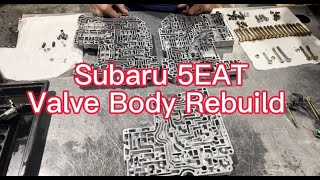
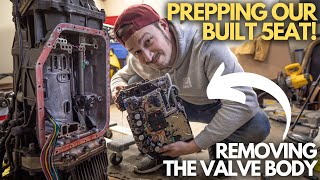
Est. part cost: $50-$150 for fluid - Failing Transmission Valve Body 🔴 High Probability → Shop Transmission Valve Body The valve body on the 5EAT transmission is a known failure point for this generation of Outback, often leading to P0751. Internal passages can get clogged with debris, or the solenoids mounted on it can fail mechanically.
How to confirm: This usually requires professional diagnosis. A technician will check transmission line pressures and may test the solenoid's resistance. If fluid is good and the solenoid circuit tests okay electrically, the valve body is the likely mechanical failure.
Typical fix: Replacement of the entire valve body assembly. While individual solenoids can sometimes be sourced aftermarket, Subaru dealers typically replace the unit as a whole. Remanufactured units are also a common option.
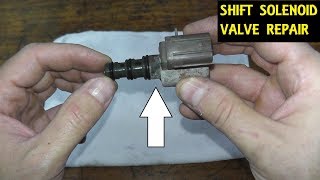
Est. part cost: $800-$1300 - Failed Shift Solenoid 'A' 🟡 Medium Probability → Shop Transmission Valve Body The solenoid itself can fail electrically (coil burns out) or mechanically (plunger gets stuck). Debris in the fluid is a primary cause of mechanical failure.
How to confirm: After removing the transmission pan, the solenoid's resistance can be tested with a multimeter. A reading outside the manufacturer's specification (or an open circuit) confirms electrical failure. A visual inspection may show the plunger is stuck.
Typical fix: Replace the individual shift solenoid. This is often done as part of a valve body replacement on 5EAT models, as sourcing individual OEM solenoids can be difficult.
Est. part cost: $50-$200 for a single solenoid
Rare But Worth Checking
- Wiring Harness or Connector Issue: The wiring harness leading to the transmission can become damaged or corroded, causing an electrical fault. This is more likely if other electrical-fault codes (like P0753) are present. A user on a forum reported that an improperly routed internal harness was crushed by the pan during reinstallation, causing a short.
- Faulty Transmission Control Module (TCM): → Shop Transmission Assembly While uncommon, the TCM itself can fail, sending incorrect signals or no signal at all. Subaru has issued software updates for the TCM to address shifting issues, so ensuring the software is current is a valid diagnostic step. This is typically diagnosed only after all other possibilities have been ruled out.
- Front Differential Bearing Failure: A known, though less common, root cause is the failure of the front differential carrier bearing. This failure introduces metallic debris into the shared transmission fluid, which then clogs the valve body and solenoids, causing P0751. If a large amount of fine, glitter-like metal is found on the transmission pan magnet, this is a strong possibility and requires a full transmission teardown to fix.
Diagnosis Steps
- Check the transmission fluid level and condition. This is the easiest and most important first step. Look for a burnt smell or excessive metallic debris.
- Scan for other transmission-related codes. Note if P0700 or any electrical fault codes like P0753 are present.
- If the fluid is low or dirty, perform a drain-and-fill (or flush) with the correct Subaru-specific ATF (ATF-HP) and clear the codes to see if the problem returns.
- Inspect the external transmission wiring harness and connector for any visible damage, corrosion, or loose pins.
- If the problem persists, drop the transmission pan to inspect for debris. A large amount of fine, glittery metal on the magnet points towards internal bearing failure. Clean the pan and magnet thoroughly.
- With the pan off, test the resistance of Shift Solenoid 'A' with a multimeter to check for an electrical failure. Compare the reading to the manufacturer's specification.
- If the solenoid tests good electrically, the issue is likely a mechanical fault within the valve body (clogged passage or stuck valve).
- At this stage, replacement of the valve body assembly is the most common professional repair. If significant metal debris was found, a full transmission inspection is warranted before replacing the valve body.
Parts You'll Likely Need
- Transmission Valve Body Assembly
(OEM #31705AA683 (supersedes 31705AA682, 31705AA620, 31705AA690, 31705AA621))— This is the most common point of failure for the 5EAT transmission in this generation Outback that causes a P0751 code, especially if the fluid is clean.
Trusted brands: Subaru (OEM)
OEM price range: $900-$1300
Aftermarket price range: $450-$1000 (Remanufactured) - Automatic Transmission Fluid (Subaru ATF-HP)
(OEM #SOA868V9241 (quart))— Low or degraded fluid is a primary cause of solenoid performance issues. A fluid change is the first diagnostic step and is required for any internal repair.
Trusted brands: Subaru (OEM), Idemitsu ATF-HP, ENEOS Import ATF Model S
OEM price range: $15-$25 per quart
Aftermarket price range: $10-$20 per quart - Transmission Pan Gasket
(OEM #31338AA020)— Required to be replaced anytime the transmission pan is removed to access the valve body or solenoids.
Trusted brands: Subaru (OEM), Fel-Pro, Mahle
OEM price range: $20-$40
Aftermarket price range: $10-$25
Related Codes That Often Appear With This One
- P0700 — This is a generic code indicating that the Transmission Control Module (TCM) has stored a fault. It's an informational code that almost always appears with specific transmission codes like P0751.
- P0753 — This code indicates a purely electrical fault (short or open circuit) with Shift Solenoid 'A'. If you see both P0751 and P0753, the problem is almost certainly the solenoid's coil or the wiring, not a mechanical blockage.
- P0756, P0761, P0766, P0771 — These are performance codes for the other shift solenoids (B, C, D, etc.). If multiple solenoid codes appear together, it strongly suggests a systemic problem like widespread fluid contamination or a failing valve body, rather than several individual solenoid failures.
Technical Service Bulletins (TSBs) & Recalls
- TSB 16-80-11R: Addresses the AT OIL TEMP light flashing with codes including P0751 on 5AT models. It outlines a specific procedure to flush the transmission fluid and perform a 'Dynamic Check Mode' to attempt to clear debris from the valve body before resorting to a full replacement.
- TSB 16-86-12: Announces a TCM software update (reprogramming) to address the AT Oil Temp light coming on with P0751 and other related codes. This suggests that in some cases, the fault logic could be overly sensitive.
Platform-Specific Known Issues
- Front Differential Bearing Contamination: As discussed on legacygt.com forums, a known failure pattern involves the front differential carrier bearing failing. This sends fine metal particles throughout the shared transmission fluid, which then clog the valve body solenoids, causing codes like P0751. If you find excessive metallic 'glitter
Mechanic-Grade Diagnostic Values
- Shift Solenoid 'A' (Low Clutch Timing Solenoid) Resistance (5EAT) — expected: 5.7 Ohms at room temperature. Failure: A reading that is significantly higher (open circuit) or lower (short circuit) indicates a failed solenoid coil.
- Shift Solenoid #1 / #2 Resistance (4EAT) — expected: 18 - 33 Ω. Failure: A reading outside this range indicates a faulty solenoid coil.
- Live Data: Shift Solenoid 'A' Voltage — expected: ~12V when commanded ON, ~0V when commanded OFF. Failure: Voltage that is erratic or does not change when a shift is commanded by a scan tool points to a wiring or TCM driver issue.
- Valve Body to Transmission Case Bolt Torque (5EAT) — expected: 80 inch-pounds (9 Nm). Failure: Improper torque can lead to pressure leaks (under-torqued) or damage to the valve body or case (over-torqued).
Scan Tool Commands That Help
- Subaru Select Monitor (SSM) or equivalent (e.g., Autel, Launch): AT Learning Mode — This is a mandatory procedure required after replacing the valve body, the entire transmission, or the TCM. The function allows the TCM to calibrate and learn the hydraulic and electrical characteristics of the new solenoids. Failure to perform this relearn can result in persistent poor shift quality even after the hardware has been replaced. The procedure typically requires warming the ATF to a specific temperature (e.g., 60-80°C) and following on-screen prompts to shift through gears while the vehicle is lifted off the ground.
Wiring & Ground Locations
- Transmission Control Module (TCM) — Located on the left side of the dash, often near the steering column.. This is the computer that controls the shift solenoids. All wiring for the solenoids originates here, making its connector a key point for testing solenoid resistance and voltage without dropping the transmission pan.
- Transmission Ground Strap — There are multiple grounds, but a key one for the transmission is often connected from the transmission case to the firewall or chassis frame rail.. A poor ground connection can cause erratic voltage and unpredictable behavior from transmission solenoids and sensors, potentially triggering performance codes like P0751. Ensuring this connection is clean and tight is a crucial step in diagnosing electrical issues.
Real Owner Repair Stories
- legacygt.com forums (2005-2009 Subaru Legacy GT / Outback XT (5EAT)) — Flashing 'AT OIL TEMP' light, P0751 code stored.
❌ Tried (didn't work) Initial diagnosis often points to a bad valve body. Some owners replace the valve body assembly.
✅ What actually fixed it The root cause was a failed front differential carrier bearing. The bearing disintegrated, sending fine metallic particles ('glitter') into the shared transmission fluid. This debris clogged the passages in the new valve body, causing the P0751 code to return. The final fix required a full transmission teardown to replace the failed bearing and thoroughly clean all internal components before installing another new valve body.
OEM Part Supersession History
31705AA620, 31705AA621, 31705AA682, 31705AA690→31705AA683— Standard revisions by the manufacturer to improve reliability, address known failure modes, or change suppliers.
Heads up: The latest part number, 31705AA683, is the correct service replacement for all previous versions on models like the 2008-2009 Outback and Legacy with the 2.5L Turbo or 3.0L H6 engines.
Model Year Variations Within This Range
- 2007/2008-2009: According to forum discussions, Subaru may have altered the 5EAT's shift logic and hydraulic control in later years of this generation to produce 'smoother' but less firm shifts. This was a design change that resulted in more clutch slip between gears by intention. This means a 2009 model may feel different from a 2006 model, which is normal and not necessarily a sign of a fault.
Diagnostic Flowchart
Other Known Issues on This Vehicle
Issues unrelated to this code that are worth knowing about as an owner of this generation:
- Head Gasket Failure (2.5L Non-Turbo EJ253 Engine) 🔴 High — Very common, typically between 100,000 and 150,000 miles. The issue is primarily external oil and coolant leaks.
- Front Lower Control Arm Bushing Failure 🟠 Medium — The large, fluid-filled rear bushing on the front lower control arm commonly fails around 90,000-100,000 miles, causing clunking noises and steering wander. (Ref: NHTSA 11V-464 (Recall for control arm rust, but bushing failure is a separate common wear item))
- Catalytic Converter Heat Shield Rattle 🟡 Low — Extremely common at any mileage. The spot welds on the thin metal heat shields around the exhaust components break, causing a metallic rattling or buzzing noise, especially at certain RPMs.
- Wheel Bearing Failure 🟠 Medium — Many owners report needing to replace one or more wheel bearings. The primary symptom is a loud humming or roaring noise that increases with vehicle speed.
- Catalytic Converter Failure (P0420 Code) 🟠 Medium — Fairly common at higher mileage, often associated with oil consumption from aging engines. Results in a Check Engine Light for 'Catalyst System Efficiency Below Threshold'.
Used vs. New Parts: Buying Guide for This Vehicle
When a used part is the smart pick: For this specific P0751 issue, a used valve body from a junkyard is a high-risk option. The failure rate of this part is high, and there's no way to know the internal condition or if it came from a vehicle with the same front differential contamination issue. A professionally remanufactured valve body is a more viable, cost-effective alternative to a new OEM part.
Donor-vehicle mileage cap: roughly under 80000 miles for the part to have meaningful remaining life.
What to inspect on the donor part:
- Verify the donor vehicle was not in a severe front-end collision that could have damaged the transmission.
- If possible, ask for the VIN to check the vehicle's service history for transmission-related complaints.
- Inspect the electrical connector pins for any signs of corrosion or damage.
- Avoid any parts that have been stored outdoors or exposed to the elements.
OEM-only on this vehicle (don't cheap out):
- Transmission Valve Body Assembly (New or Remanufactured OEM)
Aftermarket brands forum-validated for this vehicle:
- Idemitsu ATF-HP (Fluid)
- ENEOS Import ATF Model S (Fluid)
Brands owners have reported issues with on this vehicle:
- Individual aftermarket solenoids (not part of a complete remanufactured valve body) are reported to have very high failure rates.
Real Owner Stories
Aggregated from forums and TSBs cited above. Mileages and costs reflect what owners reported in those sources.
2005-2009 Subaru Outback XT 2.5L Turbo — 100000 miles
Symptoms: Check engine light with code P0751, flashing 'AT OIL TEMP' light, and transmission issues.
What fixed it: Replacing the entire automatic transmission valve body assembly.
Cost: $1,000+
Source hint: owner_reports
2006 Subaru Legacy GT 2.5L Turbo
Symptoms: P0751 and P0753 codes appearing after changing shift solenoids.
What fixed it: Checking for pinched wires or an incorrectly installed manual valve lever during reassembly.
Source hint: Reddit r/subaru
2005-2009 Subaru Legacy GT (2.5L Turbo)
Symptoms: Valve body failure and contamination from metal particles.
What fixed it: Addressing a failing front differential carrier bearing that was sending debris into the valve body.
Source hint: legacygt.com
Related OBD-II Codes
Frequently Asked Questions
My 2005 Outback has a flashing 'AT OIL TEMP' light and code P0751. Is there a software fix for this?
Subaru recommended a 'Dynamic Check Mode' for my P0751 code. What is that?
What specific transmission fluid should I use for my 5-speed automatic (5EAT) Outback to avoid solenoid issues?
I found metal 'glitter' in my transmission fluid along with the P0751 code. What does this mean for my Outback?
Can I just replace the single Shift Solenoid 'A' instead of the whole valve body?
Helpful Videos
We Have This Part in Stock

The information in this article is provided for general reference and educational purposes only. Vehicle specifications, procedures, and part compatibility can vary by production date, trim level, and region. Always consult your vehicle's factory service manual and verify part numbers before purchasing or performing repairs. Safety-critical components such as airbags, seat belts, and braking systems should be installed by a qualified professional.
- Subaru Outback:
- 🧭 Diagnostic Flowchart
- 🎬 Helpful Videos
- 🛍️ Shop This Part
- What's Unique About the 2005-2009 Subaru Outback
- Symptoms You May Notice
- Most Likely Causes
- Rare But Worth Checking
- Diagnosis Steps
- Parts You'll Likely Need
- Related Codes That Often Appear With This One
- Technical Service Bulletins (TSBs) & Recalls
- Platform-Specific Known Issues
- Mechanic-Grade Diagnostic Values
- Scan Tool Commands That Help
- Wiring & Ground Locations
- Real Owner Repair Stories
- OEM Part Supersession History
- Model Year Variations Within This Range
- Other Known Issues on This Vehicle
- Used vs. New Parts: Buying Guide for This Vehicle
- Real Owner Stories
- 2005-2009 Subaru Outback XT 2.5L Turbo — 100000 miles
- 2006 Subaru Legacy GT 2.5L Turbo
- 2005-2009 Subaru Legacy GT (2.5L Turbo)
- Related OBD-II Codes
- Frequently Asked Questions
- 🎟️ Get 5% Off