

P0751 on 2003-2008 Toyota Matrix: Shift Solenoid 'A' Causes and Fixes
On a 2003-2008 Toyota Matrix, code P0751 is most often caused by low/dirty transmission fluid or a failed Shift Solenoid 'A' (S1). A fluid and filter change may fix it; otherwise, replacing the solenoid is the next step. Expect to pay $40-$90 for an aftermarket solenoid or $250-$370 for an OEM part.
- Always check the transmission fluid level and condition first; low or burnt fluid is a common and inexpensive fix.
- P0751 on this vehicle points specifically to Shift Solenoid 'A' (S1).
- The solenoid can be tested with a multimeter for resistance (11-15 ohms) and with a 12V source to check for a 'click'.
- This is a serious code that can lead to further transmission damage; driving should be limited until the issue is resolved.
- The correct OEM part number for Shift Solenoid 'A' is 35250-12010.
What's Unique About the 2003-2008 Toyota Matrix
The 2003-2008 Toyota Matrix shares its entire powertrain, including the A245E/A246E automatic transmission, with the Toyota Corolla and Pontiac Vibe of the same years. This makes diagnostic and repair information for all three models interchangeable. The issue is almost always mechanical (fluid or solenoid) rather than a complex electronic failure, making it a common and well-documented repair for this platform. The solenoids are relatively easy to access after removing the transmission pan.
Symptoms You May Notice
- Check Engine Light is on
- Harsh, delayed, or erratic shifting
- Transmission gets stuck in gear (limp mode), often not shifting past 2nd gear
- Transmission slipping between gears
- Vehicle may not move when put in gear
- Decreased fuel economy
- Replacing the solenoid without first checking the transmission fluid level and condition. Dirty fluid is a very common cause and a much cheaper fix.
- Assuming the transmission needs to be completely replaced. A dealership quoted a user $3800 for a replacement when a fluid change or solenoid replacement might have fixed it.
Most Likely Causes
- Low or Dirty Transmission Fluid 🔴 High Probability → Shop Transmission Assembly Over time, fluid breaks down and can become contaminated with clutch material, causing solenoids to stick or passages to clog. These transmissions do not have a 'lifetime' fluid.
How to confirm: With the engine warm and running in Park on a level surface, check the transmission fluid dipstick. The fluid should be at the 'HOT' mark and be a transparent pink/red color, not brown, black, or smell burnt.
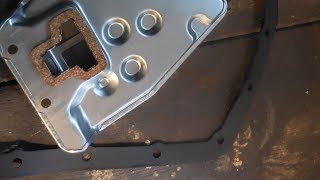
Typical fix: Perform a transmission fluid and filter change. A simple drain-and-fill replaces about 3.3 quarts. Use Toyota Type T-IV fluid or a compatible equivalent. If the fluid is very dirty, multiple drain-and-fills may be necessary. 🎬 Watch: Step-by-step transmission fluid and filter change guide.
Est. part cost: $40-$80 - Failed Shift Solenoid 'A' (S1) 🔴 High Probability → Shop Transmission Valve Body The solenoid is an electromechanical part that can fail electrically (coil burnout) or mechanically (plunger sticking) after many cycles. It is the most common component failure for this code after fluid issues are ruled out.
How to confirm: After removing the transmission pan, test the solenoid. Check its resistance with a multimeter; it should be between 11 and 15 ohms when cool. Apply 12V power to the solenoid's pin and ground its body; you should hear an audible 'click' as the plunger actuates. This can be done with the solenoid still installed on the valve body. 🎬 Watch: A simple guide to testing transmission solenoids.
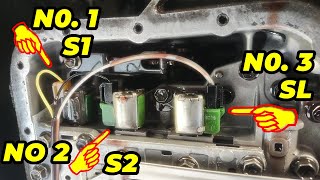
Typical fix: Replace the faulty Shift Solenoid 'A' (S1). This requires removing the transmission pan. The S1 and S2 solenoids are often replaced together as a preventative measure. 🎬 See how to replace both S1 and S2 solenoids.
Est. part cost: $40-$370 - Damaged Wiring or Connectors ⚪ Low Probability
How to confirm: Visually inspect the wiring harness leading to the transmission for any signs of damage, corrosion, or loose connections, both at the transmission connector and at the ECM. Check for continuity between the ECM connector and the solenoid connector.
Typical fix: Repair or replace the damaged section of the wiring harness or clean the connectors.
Est. part cost: $10-$100
Rare But Worth Checking
- Clogged Transmission Valve Body: → Shop Transmission Valve Body If the fluid is extremely dirty or contains metal shavings, passages within the valve body that the solenoid controls can become blocked. This usually requires a more intensive cleaning or replacement of the valve body.
- Faulty Powertrain/Engine Control Module (PCM/ECM): This is very rare. The module that commands the solenoid can fail, but all other potential causes should be ruled out before considering ECM replacement. Toyota issued a recall (SSC 90D) for some 2005-2008 models for a harsh shift condition that required ECM replacement, though it was typically associated with code P2716.
Diagnosis Steps
- Scan for all stored trouble codes to see if other codes are present.
- Check the transmission fluid level and condition. The engine must be fully warmed up, level, and running in Park.
- If the fluid is low, top it off with Toyota Type T-IV fluid, clear the codes, and test drive. If the fluid is very dark, burnt, or contains debris, perform a fluid and filter change.
- If the fluid and level are correct, the next step is to test the solenoid itself. This requires draining the fluid and removing the transmission pan.
- Locate Shift Solenoid 'A' (S1) on the valve body. It is typically one of three identical-looking solenoids. Disconnect its electrical connector.
- Test for mechanical operation while installed: Apply a 12V source to the pin and ground the body. A good solenoid will make a distinct 'click' sound each time power is applied.
- If it doesn't click, remove the solenoid for bench testing. Measure the resistance between the solenoid's electrical pin and its metal body. A good solenoid will read between 11-15 ohms.
- If the solenoid fails either the click test or the resistance test, it must be replaced.
- If the solenoid tests good, inspect the internal and external wiring harness for any breaks, corrosion, or loose pins. Check for continuity from the transmission connector back to the ECM.
- If all the above are good, the issue may be a blockage in the valve body or a fault in the ECM, which typically requires professional diagnosis.
Parts You'll Likely Need
- Automatic Transmission Shift Solenoid 'A' (S1)
(OEM #35250-12010)— This is the solenoid directly identified by the P0751 code and is the most common part to fail after ruling out fluid issues. It is identical to the 'B' (S2) solenoid.
Trusted brands: Toyota (Genuine), Aisin, Rostra, Beck/Arnley
OEM price range: $250-$370
Aftermarket price range: $40-$90 - Automatic Transmission Filter and Pan Gasket Kit
(OEM #35330-0W020 (Filter), 35168-12091 (Gasket))— Required when replacing the solenoid, as the transmission pan must be removed. It's best practice to replace the filter and gasket at the same time.
Trusted brands: Wix, ATP, Fram
OEM price range: $50-$70
Aftermarket price range: $20-$40 - Toyota Type T-IV Automatic Transmission Fluid
(OEM #00279-000T4)— The correct fluid type is essential for Toyota transmissions. You will need approximately 4 quarts for a drain and refill.
Trusted brands: Toyota (Genuine), Idemitsu (OEM supplier), Valvoline MaxLife ATF (compatible)
OEM price range: $10-$15 per quart
Aftermarket price range: $7-$12 per quart
Related Codes That Often Appear With This One
- P0756 — This code is for Shift Solenoid 'B' (S2). It's common for these solenoids to fail around the same time, and they are located next to each other on the valve body. Many owners replace them as a pair.
- P0750 — This is an electrical circuit malfunction code for the same Shift Solenoid 'A'. If you see this code, it points more directly to a wiring problem or a completely failed solenoid coil rather than a mechanical 'stuck' condition.
Technical Service Bulletins (TSBs) & Recalls
- TC005-07 (Supersedes TC002-06): A TSB for the 2005-2007 Corolla and Matrix with the A245E/A246E transmission addresses a condition where the vehicle may not move in forward or reverse. While not directly for P0751, it involves inspecting the valve body, which is relevant.
- SSC 90D: A recall/warranty extension for some 2005-2008 models for harsh shifting (specifically a 2-3 upshift/3-2 downshift issue with code P2716) that required ECM replacement. While a different code, it highlights that the ECM can be a source of shifting problems on this platform.
Platform-Specific Known Issues
- Real Owner Experience: P0751 Fix: An owner on the Car Talk Community forum with a P0751 code described hard shifting and gear slipping. After clearing the code, it would return immediately after a hard shift. They replaced the solenoids, filter, and fluid, but the problem persisted with the same code, indicating the issue might be deeper, such as in the valve body or wiring, not just the solenoid itself.
Mechanic-Grade Diagnostic Values
- Shift Solenoid S1 (SST) Resistance — expected: 11 to 15 ohms at 68°F (20°C). Failure: A reading of infinite resistance (open circuit) or near zero ohms (short circuit).
- Voltage at Shift Solenoid 'A' Connector — expected: Approximately 12V (Battery Voltage) with key on, engine off.. Failure: Significantly lower voltage or no voltage indicates a wiring issue between the power source and the solenoid.
- ECM Pin Voltage for Solenoid S1 — expected: Pulse-width modulated (PWM) signal that varies with gear selection commands.. Failure: Absence of a PWM signal when a shift is commanded points to a potential ECM or wiring fault.
Scan Tool Commands That Help
- Toyota Techstream: Active Test for Shift Solenoids — This function allows a technician to command the Shift Solenoid 'A' (S1) on and off directly from the scan tool. This is used to verify if the solenoid clicks and operates when commanded, helping to isolate the fault between the solenoid itself, the wiring, or the ECM without having to immediately drop the transmission pan.
Wiring & Ground Locations
- ECM Connector Pins (Solenoids) — On the Engine Control Module (ECM), which is located behind the glove box.. The ECM uses specific pins to control the transmission solenoids. For this generation, pins 9, 10, 11, 12, and 13 are typically used for the shift solenoids. Checking for a signal at these pins can confirm if the ECM is sending the command to shift, helping to diagnose a bad ECM vs. a wiring or solenoid issue.
- Ground Point EB — At the left rear of the engine compartment, near the transaxle.. This is a primary ground point for the transmission and engine components. A corroded or loose connection at this ground can cause a variety of electrical issues, including erratic solenoid operation that could trigger a P0751 code.
- Transmission Main Connector — On the top or side of the transaxle case, where the main vehicle harness connects to the transmission's internal wiring.. This is the critical junction for all electronic signals going to the transmission. Inspecting this connector for corrosion, bent pins, or moisture is a key step before suspecting an internal transmission or ECM failure. The wire for Shift Solenoid 'A' passes through this connector.
Real Owner Repair Stories
- YouTube user 'vuaeco' (Toyota Corolla/Matrix/Pontiac Vibe (exact year not specified, but same platform)) — P0751 code present.
❌ Tried (didn't work) Replacing the shift solenoid 'A' (S1)., Checking fluid level and condition.
✅ What actually fixed it The wire leading from the ECM to the transmission connector for the S1 solenoid was broken internally. The owner ran a new, separate wire from the correct ECM pin directly to the transmission connector pin for the S1 solenoid, bypassing the break in the main harness. This resolved the code.
OEM Part Supersession History
35250-12010→N/A, still active— This part number remains the primary OEM part for Shift Solenoid 'A' (S1) for the 2003-2008 Matrix/Corolla.
Heads up: The S1 solenoid (35250-12010) is physically identical to the S2 solenoid (35250-12020) and the SL solenoid (35250-12030), and they are often sold in a kit. However, ensure you are replacing the correct one on the valve body.
Model Year Variations Within This Range
- 2003-2008: The platform uses both the A245E and A246E transaxles. A key difference is that the earlier A245E may use a mechanical throttle cable for line pressure control, while the A246E uses a pressure control solenoid. While the P0751 fault relates to a shift solenoid, not the main pressure control, awareness of the different transmission versions is important for comprehensive diagnostics.
Diagnostic Flowchart
Other Known Issues on This Vehicle
Issues unrelated to this code that are worth knowing about as an owner of this generation:
- Excessive Oil Consumption (1ZZ-FE Engine) 🔴 High — Very common on 2003-2005 models. Caused by faulty piston ring design, leading to oil burning. Can cause catalytic converter failure and engine damage if oil level is not monitored closely. (Ref: Toyota issued TSB 0094-11 and a warranty enhancement program (ZE7), but these have long since expired.)
- Stripped Cylinder Head Bolt Threads (1ZZ-FE Engine) 🔴 High — A known weakness, especially after an overheating event. The aluminum block threads can pull out, preventing the head gasket from sealing properly, leading to coolant leaks and repeat head gasket failure.
- VVTL-i Lift Bolt Failure (2ZZ-GE Engine) 🟠 Medium — The bolts that enable the high-lift cam profile can shear off, causing a loss of high-RPM power ('lift'). Toyota released updated bolts to fix the issue.
- Intake Manifold Gasket Leak (1ZZ-FE Engine) 🟡 Low — The original black gasket can degrade, causing vacuum leaks and lean codes (e.g., P0171). An updated orange gasket resolves the issue. (Ref: Toyota TSB EG045-07)
- Failing Mass Airflow (MAF) Sensor 🟡 Low — Can become contaminated or fail, causing lean codes (P0171), rough idle, and shifting problems that can be mistaken for a transmission issue.
Used vs. New Parts: Buying Guide for This Vehicle
When a used part is the smart pick: A used OEM solenoid from a low-mileage donor vehicle can be a cost-effective and reliable alternative to a new, unverified aftermarket part. Given that the failure is often electrical, a used part that tests correctly (11-15 ohms) is a viable option.
Donor-vehicle mileage cap: roughly under 120000 miles for the part to have meaningful remaining life.
What to inspect on the donor part:
- Verify the donor vehicle's mileage if possible.
- Test the solenoid's resistance with a multimeter before purchase; it must be between 11-15 ohms.
- Inspect the connector pins for any corrosion or damage.
- If possible, ask for fluid history; a part from a well-maintained transmission is preferable.
OEM-only on this vehicle (don't cheap out):
- Engine Control Module (ECM) - Due to programming and security synchronization requirements, a used ECM is difficult to integrate without dealer tools. Aftermarket ECMs are not commonly available or recommended.
Aftermarket brands forum-validated for this vehicle:
- Aisin (often the original OEM supplier)
- Rostra
- Beck/Arnley
Brands owners have reported issues with on this vehicle:
- Unbranded, 'no-name' solenoids from online marketplaces should be avoided. Forum discussions and mechanic experiences suggest these parts have a high failure rate and may not meet the precise resistance specifications, causing the code to return.
Real Owner Stories
Aggregated from forums and TSBs cited above. Mileages and costs reflect what owners reported in those sources.
2005 Toyota Matrix
Symptoms: Hard shifting and gear slipping; the P0751 code would return immediately after a hard shift even after being cleared.
What fixed it: The owner replaced the solenoids, filter, and fluid, but the problem persisted, suggesting a deeper issue in the valve body or wiring.
Source hint: Car Talk Community thread titled 'Transmission shift solenoid'
2005 Toyota Matrix
Symptoms: Vehicle was throwing a large cluster of codes including P0301, P0420, P0500, P0751, P2714, and P2757.
What fixed it: The shop recommended total transmission replacement.
Source hint: Reddit r/MechanicAdvice
Related OBD-II Codes
Frequently Asked Questions
Does the 2003-2008 Toyota Matrix have 'lifetime' transmission fluid?
My 2005 Matrix is shifting harshly; is there a specific TSB or recall for this?
Can a bad Mass Airflow (MAF) sensor cause shifting issues on my Matrix?
What are the specific resistance specs for testing the Shift Solenoid 'A' (S1)?
Is the Pontiac Vibe's transmission the same as my Toyota Matrix for troubleshooting P0751?
What type of transmission fluid should I use for my 2003-2008 Matrix?
Helpful Videos
We Have This Part in Stock

The information in this article is provided for general reference and educational purposes only. Vehicle specifications, procedures, and part compatibility can vary by production date, trim level, and region. Always consult your vehicle's factory service manual and verify part numbers before purchasing or performing repairs. Safety-critical components such as airbags, seat belts, and braking systems should be installed by a qualified professional.
- Toyota Matrix:
- 🧭 Diagnostic Flowchart
- 🎬 Helpful Videos
- 🛍️ Shop This Part
- What's Unique About the 2003-2008 Toyota Matrix
- Symptoms You May Notice
- Most Likely Causes
- Rare But Worth Checking
- Diagnosis Steps
- Parts You'll Likely Need
- Related Codes That Often Appear With This One
- Technical Service Bulletins (TSBs) & Recalls
- Platform-Specific Known Issues
- Mechanic-Grade Diagnostic Values
- Scan Tool Commands That Help
- Wiring & Ground Locations
- Real Owner Repair Stories
- OEM Part Supersession History
- Model Year Variations Within This Range
- Other Known Issues on This Vehicle
- Used vs. New Parts: Buying Guide for This Vehicle
- Real Owner Stories
- 2005 Toyota Matrix
- 2005 Toyota Matrix
- Related OBD-II Codes
- Frequently Asked Questions
- 🎟️ Get 5% Off