

P0755 on 1999-2004 Oldsmobile Alero: Shift Solenoid 'B' Causes and Fixes
On a 1999-2004 Alero, code P0755 is almost always caused by a failed shift solenoid inside the transmission. Due to the labor involved, it's highly recommended to replace both shift solenoids (A & B) and the TCC solenoid at the same time, which costs about $75-$150 in parts for a complete kit.
- P0755 on an Alero points directly to a problem with the 2-3 shift solenoid ('B') inside the transmission.
- The most likely fix is replacing the shift solenoids. To save on future labor costs, it is highly recommended to replace the 'A', 'B', and TCC solenoids as a kit.
- Always check the transmission fluid level and condition first, as low or dirty fluid is a common cause of solenoid problems.
- This repair requires removing the transmission side pan and is best left to an experienced DIYer or a professional shop.
- No computer reprogramming is required after replacing the solenoids on this vehicle.
What's Unique About the 1999-2004 Oldsmobile Alero
The Oldsmobile Alero uses the GM 4T40E (on 4-cylinder models) or 4T45E (on V6 models) automatic transmission. On this specific platform and its N-body siblings like the Pontiac Grand Am and Chevy Malibu, the shift solenoids are a very common failure point, leading to harsh shifting, delayed engagement, and transmission codes. The 'A' (1-2) and 'B' (2-3) shift solenoids are identical, interchangeable parts, and the most common and recommended repair strategy is to replace them as a set to prevent a repeat failure.
Symptoms You May Notice
- Harsh, banging, or jerky shifts, especially the 2-3 shift
- Delayed gear engagement after accelerating
- Transmission is stuck in one gear (usually 2nd or 3rd)
- Check Engine Light is on
- Inability to shift into or out of a specific gear
- Reduced fuel economy
- Transmission slips or revs high between gears
- Replacing only the single failed solenoid. While this may fix the code temporarily, the other original solenoids are of the same age and are likely to fail soon after, requiring the same labor-intensive job to be performed again.
- Condemning the entire transmission for a rebuild when only the accessible solenoid pack is at fault. This is a common and relatively inexpensive failure point that doesn't always signify deeper internal damage.
Most Likely Causes
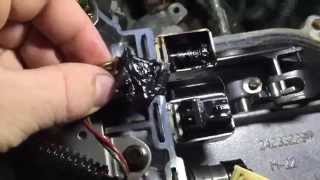
- Failed Shift Solenoid 'B' 🔴 High Probability → Shop Transmission Valve Body The solenoids in the 4T40E/4T45E transmissions are a known weak point that can fail either electrically (coil burns out) or mechanically (plunger gets stuck from debris). They are constantly working and subject to heat and vibration, leading to a finite lifespan. One of the shift solenoids is positioned high in the case and is not always submerged in fluid, which can lead to it melting or overheating. 🎬 Watch: See what a melted shift solenoid looks like.
How to confirm: After confirming fluid level and condition are good, a technician can test the solenoid's resistance with a multimeter. For the 4T40E/4T45E, the resistance for the shift solenoids should be between 19-24 ohms at 68°F (20°C). A reading far outside this range indicates a bad solenoid. A bi-directional scan tool can also command the solenoid on and off to check for an audible click from inside the transmission.
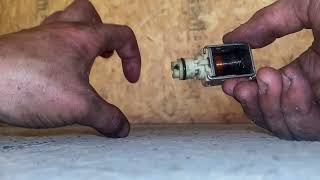
Typical fix: Replace the shift solenoid. It is strongly recommended to replace both shift solenoids (A and B) and the TCC solenoid at the same time using a kit. 🎬 Watch: How to install a complete solenoid kit properly. This prevents having to perform the same labor-intensive job again when the next original solenoid fails.
Est. part cost: $25-$50 for a single aftermarket solenoid, $75-$150 for a complete kit with all solenoids. - Low or Dirty Transmission Fluid 🟡 Medium Probability → Shop Transmission Assembly This is a common cause of general transmission problems. Low fluid reduces hydraulic pressure needed to operate the solenoids, while dirty, burnt, or debris-filled fluid can clog the tiny passages inside them, causing them to stick.
How to confirm: Check the transmission fluid dipstick. The fluid should be at the 'FULL' mark, reddish in color, and not smell burnt. Dark, brown, or metallic-flecked fluid indicates a problem that needs immediate attention.
Typical fix: If low, top off the fluid and check for leaks. If dirty or burnt, perform a transmission fluid and filter change. This may sometimes resolve the issue if the solenoid is merely stuck and not electrically failed.
Est. part cost: $50-$100 for fluid and a new filter. - Damaged Wiring or Corroded Connector ⚪ Low Probability
How to confirm: Visually inspect the wiring harness leading to the transmission. Check the main connector for pushed-out pins, corrosion, or fluid intrusion. A known issue is corrosion at Splice #107 (pink wire) in the harness, about 13 inches from the transmission breakout. Test for continuity and voltage at the solenoid connector inside the transmission side pan.
Typical fix: Repair the damaged section of the wire harness or clean/replace the affected connector. Ensure a solid connection with dielectric grease.
Est. part cost: $10-$50 for wiring repair supplies.
Rare But Worth Checking
- Faulty Powertrain/Transmission Control Module (PCM/TCM): → Shop Transmission Assembly This is very rare. The PCM/TCM should only be suspected after all other possibilities, including wiring and the solenoid itself, have been definitively ruled out.
- Clogged Internal Hydraulic Passages / Faulty Valve Body: → Shop Transmission Valve Body If the transmission fluid is extremely dirty or contains metal shavings, debris can block passages in the valve body, preventing the solenoid from functioning even if the solenoid itself is good. In some high-mileage cases, the valve body itself can be worn, and replacing solenoids may not fix the issue.
Diagnosis Steps
- Check Transmission Fluid: Verify the fluid level is correct and the fluid is clean and red. If it's low, dark, or smells burnt, address this first.
- Scan for Codes: Use an OBD-II scanner to confirm P0755 and check for any other related codes like P0700 or P0750.
- Inspect External Wiring: Check the main transmission harness connector for any visible damage, corrosion, or loose connections. Pay special attention to Splice #107 (pink wire) in the harness loom near the transmission.
- Command Solenoid with Scan Tool: Use a bidirectional scan tool (like a GM Tech2) to perform an active test on Shift Solenoid 'B'. Command the solenoid 'On' and 'Off' while listening for an audible click from the transmission case. A lack of a click points to a failed solenoid or wiring issue.
- Drop the Transmission Side Pan: To access the solenoids, you must drain the fluid and remove the side cover of the transmission. This may require supporting the engine and lowering the driver's side of the subframe for access.
- Test the Solenoid Circuit: With the pan off, disconnect the solenoid. Use a multimeter to check the resistance of the solenoid coil. A reading between 19 and 24 ohms at 68°F is correct for this transmission's shift solenoids. An open (infinite resistance) or shorted (zero resistance) reading indicates a bad solenoid.
- Inspect Internal Wiring: While the pan is off, visually inspect the internal wiring harness for any signs of brittleness, breaks, or chafing against the case.
- Replace Components: If the solenoid is confirmed bad, replace it. It is highly recommended to replace the 'A' and 'B' shift solenoids, TCC solenoid, and pressure control solenoid as a kit. Also, install a new transmission filter and pan gasket.
- Refill and Relearn: Reinstall the pan, refill with the correct type and amount of transmission fluid (DEXRON-VI is the updated, backward-compatible fluid), clear the codes with a scanner, and test drive the vehicle to allow the computer to adapt to the new parts.
Parts You'll Likely Need
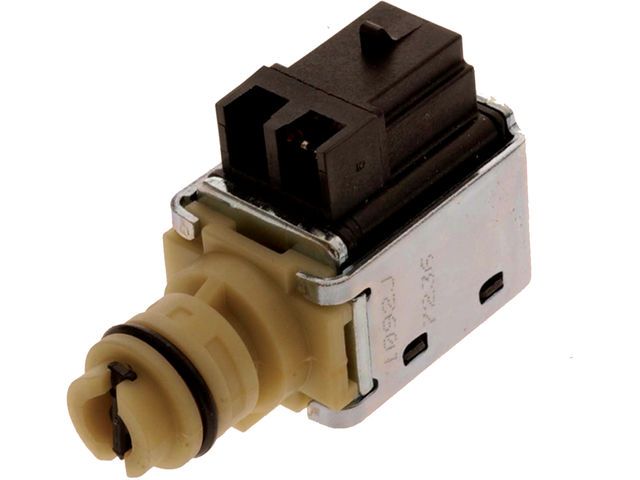
- Transmission Shift Solenoid Kit (A & B, TCC, PCS)
(OEM #24227792 (Single Shift Solenoid))— This is the most common point of failure for code P0755. The 'A' and 'B' solenoids are identical and should be replaced as a set to prevent repeat repairs. Kits often include the TCC and Pressure Control Solenoids, which are also prone to failure.
Trusted brands: ACDelco, ATP, Duralast, Rostra Precision Controls
OEM price range: $60-$80 (per solenoid)
Aftermarket price range: $75-$150 (for a complete kit) - Transmission Filter and Gasket Kit — This must be replaced whenever the transmission pan is removed for service.
Trusted brands: ACDelco, Wix, Fram
OEM price range: $25-$40
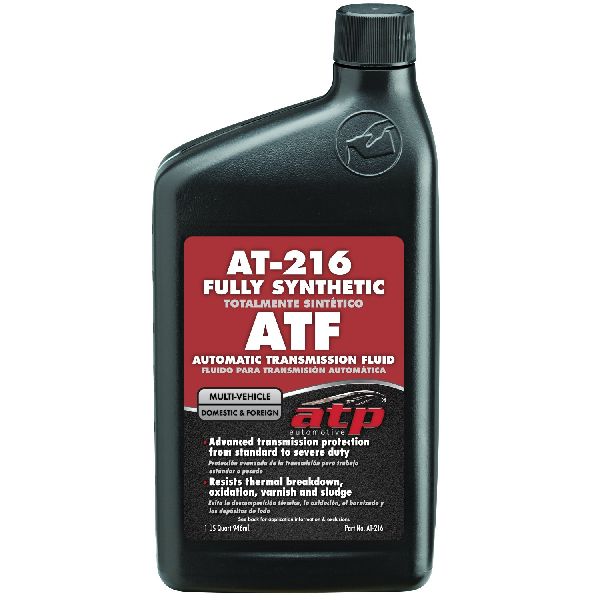
Aftermarket price range: $15-$30 - DEXRON-VI Automatic Transmission Fluid — The transmission must be refilled with fresh fluid after the repair. DEXRON-VI is the updated, fully synthetic, backward-compatible fluid that replaced DEXRON-III.
Trusted brands: ACDelco, Valvoline, Castrol
OEM price range: $8-$12 per quart
Aftermarket price range: $6-$10 per quart
Related Codes That Often Appear With This One
- P0700 — P0700 is a generic code that simply means the Transmission Control Module (TCM) has stored a fault code. It will almost always be present alongside a specific transmission code like P0755.
- P0750 — This code is for a malfunction in Shift Solenoid 'A'. Since the 'A' and 'B' solenoids are a common failure point and are often replaced together, seeing both codes is possible.
- P1810 — This GM-specific code for 'Transmission Fluid Pressure Manual Valve Position Switch' is often caused by a failing pressure control solenoid, another common issue in this transmission that produces similar harsh shifting symptoms. It points to the general weakness of solenoids and switches on the 4T40E/4T45E valve body.
Technical Service Bulletins (TSBs) & Recalls
- 03-07-30-021A: Related to harsh shifting and code P1810, often caused by a failing pressure control solenoid.
Platform-Specific Known Issues
- General Motors issued Technical Service Bulletin (TSB) #03-07-30-021A for harsh shifting and code P1810 on some Alero models, which is often caused by a failing pressure control solenoid—a related component that also lives on the valve body. This TSB reinforces the fact that the various solenoids on the 4T40E/4T45E valve body are a known service item.
- Owner forums for the Alero and its platform mates are filled with threads documenting P0755 and the successful repair by replacing the solenoid pack. A common theme is the surprise harshness of the shift when the solenoid fails, often described as a 'bang' or 'slam' into gear.
Mechanic-Grade Diagnostic Values
- 1-2 Shift Solenoid ('A') and 2-3 Shift Solenoid ('B') Resistance — expected: 19 - 24 Ohms at 68°F (20°C). Failure: A reading of infinite ohms (open) or near-zero ohms (short) indicates a failed solenoid coil.
- Pressure Control Solenoid (PCS) Resistance — expected: 3.0 - 5.0 Ohms at 68°F (20°C). Failure: A reading outside this range suggests a faulty PCS, which can cause harsh shifting and other pressure-related codes.
- Torque Converter Clutch (TCC) Solenoid Resistance — expected: 10 - 11 Ohms at 68°F (20°C). Failure: A reading outside this range indicates a faulty TCC solenoid, which should be replaced along with the shift solenoids.
Scan Tool Commands That Help
- GM Tech2 or equivalent bidirectional scanner: Active Test: 1-2 Solenoid / 2-3 Solenoid Command — Use this function before disassembling the transmission. With the engine off but key on, command the solenoid 'On' and 'Off'. You should hear a distinct 'click' from the transmission side pan each time. If no click is heard for Solenoid 'B', it strongly suggests the solenoid has failed electrically or is mechanically stuck.
Wiring & Ground Locations
- Transmission Case Connector — The main 20-pin electrical connector on the top or side of the transmission case.. This is where the PCM communicates with all internal transmission components. Pin E is the power feed (Pink wire) for both shift solenoids. Pin A is the control for Shift Solenoid 'B' (Yellow/Black wire), and Pin B is for Shift Solenoid 'A' (Light Green wire). Testing for voltage and continuity at these pins can diagnose external wiring issues.
- Splice #107 — Located in the engine wiring harness, approximately 13 inches forward from where the harness breaks out to the transmission.. This splice provides power (Circuit 439, Pink wire) to the transmission solenoids. It is a known weak point for water intrusion and corrosion, which can cause an open circuit and lead to solenoid codes like P0755. The conduit holding the wires may face upwards, trapping moisture.
- Engine/Transmission Ground — A major ground point is often located on a bell housing bolt that is a stud with a nut, connecting the engine/transmission assembly to the chassis ground cables.. A poor ground connection between the engine/transmission and the chassis can cause a variety of electrical issues, including erratic solenoid operation and incorrect sensor readings from the TCM.
Real Owner Repair Stories
- YouTube video by 'Just a Dude' (Pontiac G6 with 4T40E/4T45E transmission (similar platform)) — Car was stuck in gear, throwing code P0750 for Shift Solenoid 'A'.
❌ Tried (didn't work) Initial diagnosis pointed directly to the solenoid.
✅ What actually fixed it The creator replaced the faulty 1-2 (A) shift solenoid. The connector on the old solenoid was brittle and broke upon removal, and the coil windings were visibly burnt. After replacement, a bidirectional scan tool confirmed the new solenoid was clicking when commanded, and a test drive showed all gears shifted correctly. - Car Talk Community forum user 'mark9207' (2002 Pontiac Grand Am GT with 4T45E (same platform)) — Shift flutter between 3rd and 4th gear around 40 mph.
❌ Tried (didn't work) Replaced both shift solenoids (A & B), the TCC solenoid, the pressure control solenoid, and the manifold pressure switch with new ACDelco parts. This made the problem worse, causing slipping in reverse and no overdrive.
✅ What actually fixed it A transmission shop diagnosed the transmission as internally failed and unable to maintain sufficient pressure, likely due to valve body wear. The owner was told the new solenoids and fluid likely aggravated an already marginal transmission. The final fix was replacing the entire transmission with a low-mileage used unit for $150.
When the Usual Fixes Don't Work
- In cases of high-mileage vehicles (over 150k miles) that have had questionable maintenance history, simply replacing the shift solenoids for a P0755 code may not be the final solution. As documented in owner forums, if the transmission's internal components like the valve body or clutches are significantly worn, the change in hydraulic pressure from new solenoids can expose these deeper issues, leading to new symptoms like slipping or loss of gears. In these scenarios, the code was a symptom of a larger internal failure, and the ultimate fix was a complete transmission replacement or rebuild, not just the solenoid pack.
OEM Part Supersession History
10478124→24207236, 24227792 (current ACDelco)— Part number consolidation and design updates over time.
Heads up: The 1-2 ('A') and 2-3 ('B') shift solenoids are identical parts for this transmission. Always verify the part number with the vehicle's VIN, but most kits for the 4T40E/4T45E will include the correct, interchangeable solenoids.
Model Year Variations Within This Range
- 1995-2002 vs 2003 vs 2004+: Aftermarket solenoid and electronics kits often have different part numbers for these year ranges, suggesting potential changes in the internal wiring harness, pressure switch manifold, or other electronic components. While the core shift solenoid resistance specifications appear consistent from 1999-2004, it is crucial to buy a kit specified for your exact model year to ensure compatibility of all included components.
Diagnostic Flowchart
Other Known Issues on This Vehicle
Issues unrelated to this code that are worth knowing about as an owner of this generation:
- Leaking Intake Manifold Gaskets 🔴 High — Very common, especially on the 3.4L V6 engine. Can occur at any mileage but is frequently seen around 80,000-100,000 miles. The original gaskets are prone to degradation from Dex-Cool coolant, leading to coolant leaking externally or internally into the engine oil.
- GM Passlock Security System Failure 🟠 Medium — A widespread and frustrating issue where the vehicle fails to start, and the 'Security' light flashes. It's caused by a failure in the ignition lock cylinder's sensor. Owners often resort to a '10-minute relearn procedure' or permanent bypass methods.
- Faulty Ignition Switch 🔴 High — Subject to a major GM recall (NHTSA Campaign ID: 14V400000). The switch can unexpectedly move out of the 'Run' position while driving, causing the engine to shut off and disabling airbags. (Ref: 14V400000)
- Malfunctioning Multifunction (Turn Signal) Switch 🟡 Low — Common failure causing turn signals or cruise control to work intermittently or not at all. The switch contacts wear out over time.
Used vs. New Parts: Buying Guide for This Vehicle
When a used part is the smart pick: A complete, low-mileage used transmission from a junkyard is a smart choice if diagnosis reveals deeper internal problems beyond the solenoids, such as a worn valve body or burnt clutches. It can be more cost-effective than rebuilding the original unit.
Donor-vehicle mileage cap: roughly under 80000 miles for the part to have meaningful remaining life.
What to inspect on the donor part:
- Check the donor vehicle's mileage if possible.
- Pull the dipstick or check plug on the donor transmission; the fluid should be reddish/pink and not smell burnt.
- Avoid transmissions from vehicles that show signs of a major front-end collision, which could have damaged the case or torque converter.
- Ask for a warranty, even if it's only 30-90 days.
Aftermarket brands forum-validated for this vehicle:
- ACDelco (OEM)
- Rostra Precision Controls
- ATP Automotive
- Duralast (AutoZone)
Brands owners have reported issues with on this vehicle:
- Avoid no-name, unbranded solenoid kits from online marketplaces, as quality control can be poor, leading to premature failure.
Real Owner Stories
Aggregated from forums and TSBs cited above. Mileages and costs reflect what owners reported in those sources.
Oldsmobile Alero
Symptoms: A surprisingly harsh shift, often described as a 'bang' or 'slam' into gear, accompanied by a Check Engine Light for P0755.
What fixed it: The successful repair was replacing the solenoid pack inside the transmission.
Source hint: Owner forums for the Alero and its platform mates (from vehicle_specific_issues)
Oldsmobile Alero
Symptoms: Vehicle presented with a P0755 shift solenoid problem.
What fixed it: After confirming fluid level was correct, the fix was replacing the solenoid itself. The faulty solenoid was confirmed bad by testing its resistance with a multimeter after dropping the transmission pan.
Source hint: bobistheoilguy.com: In a thread titled 'P0755 Shift solenoid problem?'
Oldsmobile Alero / Pontiac Grand Am
Symptoms: Owners described the exact symptoms of P0755, including harsh shifting and delayed gear engagement.
What fixed it: The issue was resolved via a solenoid replacement, a process which required supporting the engine and lowering the subframe for access.
Source hint: pontiacgrandam.net / aleroownersclub.com
Related OBD-II Codes
Frequently Asked Questions
My 2002 Alero is shifting with a harsh 'bang' from 2nd to 3rd gear. Is this a typical symptom for code P0755?
I have a P0755 code. Should I just replace the single 'B' solenoid, or are there other parts I should replace at the same time on my Alero's transmission?
How can I test the shift solenoid on my Alero to be sure it's the problem before I buy parts?
Is it a difficult job to access the shift solenoids on a 1999-2004 Alero?
I heard about a TSB for harsh shifting on the Alero. Does TSB #03-07-30-021A apply to my P0755 code?
What kind of transmission fluid should I use to refill my Alero after replacing the solenoids?
My mechanic found a corroded pink wire near the transmission. Could this be causing my P0755 code?
Helpful Videos

We Have This Part in Stock

The information in this article is provided for general reference and educational purposes only. Vehicle specifications, procedures, and part compatibility can vary by production date, trim level, and region. Always consult your vehicle's factory service manual and verify part numbers before purchasing or performing repairs. Safety-critical components such as airbags, seat belts, and braking systems should be installed by a qualified professional.
- Oldsmobile Alero:
- 🧭 Diagnostic Flowchart
- 🎬 Helpful Videos
- 🛍️ Shop This Part
- What's Unique About the 1999-2004 Oldsmobile Alero
- Symptoms You May Notice
- Most Likely Causes
- Rare But Worth Checking
- Diagnosis Steps
- Parts You'll Likely Need
- Related Codes That Often Appear With This One
- Technical Service Bulletins (TSBs) & Recalls
- Platform-Specific Known Issues
- Mechanic-Grade Diagnostic Values
- Scan Tool Commands That Help
- Wiring & Ground Locations
- Real Owner Repair Stories
- When the Usual Fixes Don't Work
- OEM Part Supersession History
- Model Year Variations Within This Range
- Other Known Issues on This Vehicle
- Used vs. New Parts: Buying Guide for This Vehicle
- Real Owner Stories
- Oldsmobile Alero
- Oldsmobile Alero
- Oldsmobile Alero / Pontiac Grand Am
- Related OBD-II Codes
- Frequently Asked Questions
- 🎟️ Get 5% Off