

P0756 on 2010-2013 Ford Transit Connect: Shift Solenoid 'B' Causes and Fixes
This code indicates that Shift Solenoid 'B' in the 4F27E transmission is stuck off. The most common fixes are replacing the low/dirty transmission fluid or replacing the faulty shift solenoid itself. Expect to pay $150-$350 for a DIY solenoid replacement. In some cases, it can be a symptom of a more serious internal clutch failure.
- P0756 on your Transit Connect points to a problem with Shift Solenoid 'B' in the transmission.
- Always start by checking the transmission fluid level and condition. Low or dirty fluid is a very common cause.
- The most likely failed part is the shift solenoid itself, which is located inside the transmission oil pan.
- This is a moderately difficult DIY job (3/5) but is risky if you are not careful about cleanliness.
- Since solenoids 'A' and 'B' are identical and have the same amount of wear, it is wise to replace them as a pair.
What's Unique About the 2010-2013 Ford Transit Connect
The 2010-2013 Transit Connect uses the 4-speed 4F27E automatic transmission, a unit also shared with the Ford Focus and some Mazda vehicles. While many P0756 cases on this platform are a straightforward solenoid or fluid issue, Ford issued TSB 12-6-15 for 2010-2012 models. This TSB addresses symptoms like 2-3 upshift flares and related codes (P0733, P0734, P0751), pointing to a more severe internal direct clutch failure that requires transmission removal to repair, not just a simple pan-drop service.
Symptoms You May Notice
- Check Engine Light is on
- Harsh, delayed, or failed shifts, especially the 1-2 or 2-3 shift
- Transmission gets stuck in one gear (limp mode)
- Inability to engage 2nd gear
- Transmission slipping
- Engine RPMs flare between shifts
- Transmission overheating
- Reduced fuel economy
- Replacing the entire transmission when only a simple fluid change or solenoid replacement was needed.
- Replacing the shift solenoid without first checking the fluid condition. If the fluid is full of debris, the new solenoid may fail quickly or the problem may lie in a clogged valve body passage.
Most Likely Causes
- Low or Dirty Transmission Fluid 🔴 High Probability → Shop Transmission Assembly Over time, transmission fluid degrades and collects clutch material and metal shavings. The Transit Connect does not have an easily accessible dipstick, so fluid level and condition are often neglected, leading to blockages.
How to confirm: Check the fluid level and condition via the check/fill plug on the side of the transmission. The fluid should be bright red and not smell burnt. Dark, brown, or glittery fluid indicates a problem.
Typical fix: Perform a transmission fluid drain and fill. If the fluid is very dirty, a full fluid flush may be recommended. Use fluid that meets Ford's MERCON V specification. 🎬 See how to perform a fluid and filter change.
Est. part cost: $60-$150 - Failed Shift Solenoid 'B' 🔴 High Probability → Shop Transmission Valve Body The solenoids are electromechanical parts that cycle thousands of times and can fail electrically (coil burns out) or mechanically (plunger gets stuck). Debris in the fluid is a primary cause of the solenoid jamming.
How to confirm: After dropping the transmission pan, the solenoid can be tested. Check the resistance of the solenoid with a multimeter; it should be within the manufacturer's specified range (typically 10.9 - 26.2 ohms for this type). You can also apply 12V power to see if it 'clicks'.
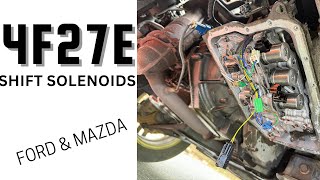
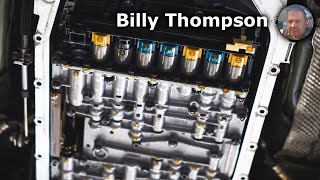
Typical fix: Replace the faulty shift solenoid. In the 4F27E transmission, Shift Solenoids 'A' and 'B' are identical on/off solenoids and are easily accessible after removing the pan and filter. Many owners replace both at the same time as a preventative measure. 🎬 Watch: Step-by-step guide to replacing the 4F27E shift solenoids.
Est. part cost: $40-$90 for a single solenoid, $80-$150 for a pair. - Damaged Wiring or Connectors 🟡 Medium Probability The wiring harness leading to the transmission is exposed to road debris, heat, and moisture, which can cause corrosion at the main connector or damage to the wires themselves, interrupting the signal to the solenoid.
How to confirm: Inspect the external transmission wiring harness and connector for any signs of damage, corrosion, or loose pins. Test for continuity and proper voltage at the solenoid connector inside the transmission pan.
Typical fix: Repair the damaged section of the wiring harness or clean/replace the corroded connector.
Est. part cost: $10-$100
Rare But Worth Checking
- Clogged Valve Body Passages or Sticking Valves: → Shop Transmission Valve Body If the fluid is very dirty, it can clog the small hydraulic passages within the valve body or cause the shift valves themselves to stick in their bores. One owner reported replacing the solenoid did not fix the issue, but later found the 2-3 shift valve was stuck in the valve body. This requires removing and cleaning the valve body. 🎬 Watch: How to remove the valve body for cleaning.
- Internal Direct Clutch Failure: As per Ford TSB 12-6-15, symptoms like a 2-3 upshift flare can be caused by a failure of the direct clutch pack. This is a major internal failure that requires transmission removal and overhaul to replace the clutch cylinder, seals, and plates. This should be considered if fluid and solenoids are confirmed good.
- Faulty Transmission Control Module (TCM) / Powertrain Control Module (PCM): → Shop Transmission Assembly This is very rare. The module that commands the solenoid may fail, but all other potential causes should be ruled out before condemning the TCM/PCM.
Diagnosis Steps
- Check the transmission fluid level and condition. This is the first and most important step.
- Use an OBD-II scanner to check for any other transmission-related codes. Note codes like P0751, P0732, or P0733.
- Inspect the external transmission wiring harness and main connector for any visible damage, corrosion, or loose connections.
- Safely raise the vehicle and remove the transmission oil pan to access the internal components.
- Visually inspect the fluid in the pan for excessive metal shavings or clutch material. A small amount of fine grey material on the magnet is normal, but large flakes are a sign of internal damage.
- Locate Shift Solenoid 'B'. It is an on/off solenoid, identical to Solenoid 'A'.
- Test the solenoid's resistance with a multimeter. It should be between 10.9 and 26.2 ohms. An open or shorted coil indicates a failed solenoid.
- If the solenoid tests good, consider applying a 12V source to listen for a 'click', but be aware that it may still stick under hydraulic pressure.
- If a new solenoid does not fix the issue, the problem may be a blockage in the valve body or a stuck shift valve. At this point, professional diagnosis is recommended to investigate potential issues like the direct clutch failure mentioned in TSB 12-6-15.
Parts You'll Likely Need
- Transmission Shift Solenoid (A/B)
(OEM #XS4Z-7H148-AA)— This is the most common part to fail electrically or mechanically, causing the P0756 code. It is a shared part with the Ford Focus.
Trusted brands: Motorcraft, Rostra, ATP
OEM price range: $70-$120
Aftermarket price range: $40-$90 - Transmission Filter and Pan Gasket Kit
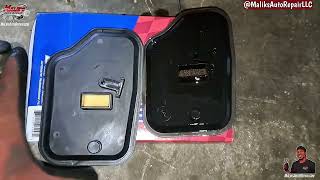
(OEM #XS4Z-7A098-AC (Filter))— This must be replaced whenever the transmission pan is removed to service the solenoids. A new filter is critical if the old fluid was dirty.
Trusted brands: Motorcraft, Wix, ATP
OEM price range: $40-$70
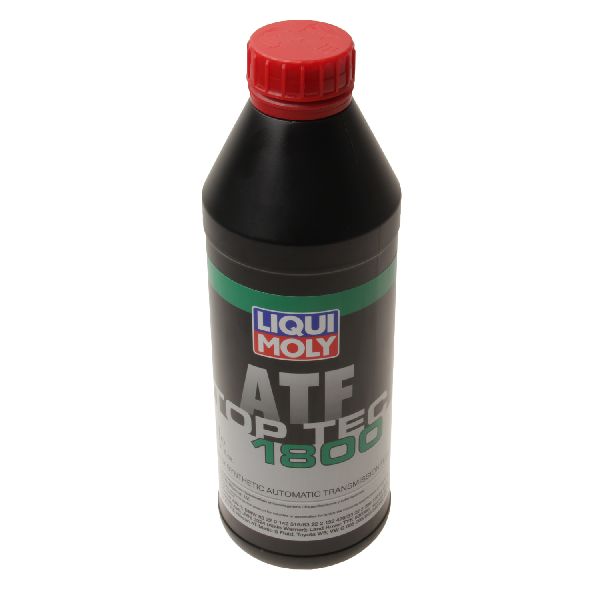
Aftermarket price range: $20-$40 - Automatic Transmission Fluid
(OEM #XT-5-QMC (MERCON V))— The transmission must be refilled with the correct type and amount of fluid after service. The 4F27E typically uses Motorcraft MERCON V.
Trusted brands: Motorcraft, Valvoline, Castrol
OEM price range: $10-$15 per quart
Aftermarket price range: $8-$12 per quart
Related Codes That Often Appear With This One
- P0751 — This code is for 'Shift Solenoid 'A' Performance/Stuck Off'. Since solenoids A and B are identical and live in the same environment, they often fail around the same time. It is also listed in TSB 12-6-15 as a related code.
- P0732 — This code means 'Gear 2 Incorrect Ratio'. Since Shift Solenoid 'B' is involved in achieving second gear, a failure can directly cause this gear ratio error.
- P0733 — This code for 'Gear 3 Incorrect Ratio' is mentioned in TSB 12-6-15 as a potential companion code when a direct clutch failure occurs.
Technical Service Bulletins (TSBs) & Recalls
- TSB 12-6-15: This TSB applies to 2010-2012 Transit Connects. It addresses symptoms of upshift flares or no 3rd/4th gear, potentially with codes P0733, P0734, or P0751. The cause is identified as a direct clutch failure. The fix involves removing the transmission to replace the direct clutch cylinder (AS4Z-7F283-A) and end cover (5S4Z-7222-C), and reprogramming the PCM.
Platform-Specific Known Issues
- Helpful DIY Video (Ford Focus): This YouTube video from 'Fix It All' titled 'Ford Focus 4F27E Transmission Shift Solenoids Replacement' shows the complete process of draining the fluid, dropping the pan, and replacing the solenoids on the identical 4F27E transmission. It provides a clear visual guide for the repair. URL: https://www.youtube.com/watch?v=bC-K5kY_p2w
Mechanic-Grade Diagnostic Values
- Shift Solenoid 'A' or 'B' (On-Off Type) Coil Resistance — expected: 10.9 - 26.2 Ohms at 20°C (70°F). Failure: A reading outside this range (e.g., open circuit/infinite resistance or short circuit/zero resistance) indicates a failed solenoid coil.
- Voltage test at Transaxle Case Connector Pin 8 — expected: 12V when commanded ON by TCM, 0V when OFF.. Failure: No voltage when commanded on suggests a wiring or PCM driver issue. Constant voltage suggests a short to power or failed PCM driver.
Scan Tool Commands That Help
- Ford IDS (Integrated Diagnostic System) / FORScan: Transmission Characterization / Solenoid Body Strategy — This function is required after replacing the transmission or the valve body/solenoid pack. The PCM/TCM needs to learn the specific electrical characteristics of the new solenoids to ensure smooth shifting. Failure to perform this procedure can result in harsh shifts or persistent codes even with new parts.
Wiring & Ground Locations
- Transaxle Case Connector (C167) — On the top of the transaxle case, where the main vehicle harness connects to the transmission's internal wiring.. This is the primary connector for all solenoid and sensor signals. Pin 8 is the control wire for Shift Solenoid 'B' and Pin 6 is for Shift Solenoid 'A'. Testing for voltage and continuity at these specific pins can quickly determine if the fault is in the external harness or internal to the transmission.
- Solenoid Ground Wire — Inside the transmission, a single ground wire is bolted to the valve body. The bolt is a 10mm hex head.. All solenoids share this common ground point. If this bolt is loose or the connection is corroded, it can cause intermittent and erratic operation of any or all of the solenoids, leading to various shift codes including P0756.
Real Owner Repair Stories
- Reddit user on r/MechanicAdvice (2012 Ford Transit Connect) — Initially, no 3-4 shift with codes P0772 (Solenoid E) and P0751 (Solenoid A).
❌ Tried (didn't work) Replaced shift solenoids A & B and changed fluid/filter. This did not resolve the issue., Replaced ALL shift solenoids (A-F) and another new filter.
✅ What actually fixed it The problem persisted after replacing all solenoids. The vehicle would not shift out of 1st gear and eventually set codes P0733 (Gear 3 Incorrect Ratio) and P0732 (Gear 2 Incorrect Ratio). This indicates the initial problem was not the solenoids themselves, but a deeper hydraulic or mechanical failure within the transmission (like the direct clutch failure noted in TSB 12-6-15) that prevented the gears from engaging even when commanded by new, functional solenoids. The final fix would require a transmission rebuild or replacement. - Reddit user on r/AskAMechanic (2013 Ford Transit Connect, 54k miles) — P0756 code. After a transmission 'rebuild', experienced RPMs flaring to 4-6k on the highway, followed by a harsh gear engagement.
❌ Tried (didn't work) A professional transmission rebuild.
✅ What actually fixed it The user reported the issue resolved itself after a day of driving. The mechanic had noted they had to reuse the old solenoid. This suggests the issue may have been an intermittent electrical connection or a sticky valve in the reused solenoid that eventually freed itself. However, it highlights the risk of reusing old electronic components during a rebuild.
OEM Part Supersession History
XS4Z-7H148-AA→The part number remains current.— N/A
Heads up: Shift Solenoids 'A' and 'B' are identical on/off solenoids. However, they are physically and functionally different from the PWM solenoids (C, D, E) which have a different part number (XS4Z-7G484-AA). Do not interchange them.
Model Year Variations Within This Range
- 2010-2012: These model years are specifically called out in Ford TSB 12-6-15 regarding the potential for an internal direct clutch failure. While a 2013 model could theoretically experience this, it is not officially covered by that specific service bulletin, which may affect warranty or dealer service considerations.
Diagnostic Flowchart
Other Known Issues on This Vehicle
Issues unrelated to this code that are worth knowing about as an owner of this generation:
- Sill and Underbody Rust 🔴 High — Very common, especially in regions that use road salt. Sills (especially near the sliding door) and rear subframe/bumper areas are prone to significant corrosion, often leading to MOT/inspection failure.
- Sliding Door Mechanism and Wiring Failure 🟠 Medium — Common issue due to the high-use nature of these doors. Problems include broken cables, faulty latches, and broken wiring within the flexible cable track, leading to inoperable locks or windows.
- Front Suspension Knocking/Clunking 🟠 Medium — Frequently reported noise when driving over bumps at low speeds. Typically caused by worn front sway bar (anti-roll bar) drop links, but can also be due to worn struts or control arm bushings.
- Dirty or Failing Throttle Body 🟡 Low — Can cause intermittent stalling, sluggish acceleration, and check engine light codes P2111 or P2135. Often resolved by cleaning the throttle body plate and bore.
- Cooling Fan Malfunction 🟠 Medium — Owners report cooling fans that run intermittently or not at all, causing the temperature gauge to rise. This can be caused by a faulty Cylinder Head Temperature (CHT) sensor, wiring, or the fan module itself.
Used vs. New Parts: Buying Guide for This Vehicle
When a used part is the smart pick: A used valve body assembly with solenoids from a low-mileage donor vehicle can be a cost-effective alternative to buying six individual new solenoids, especially if the issue is suspected to be a sticky valve or clogged passage in the valve body itself. A complete used transmission is also a viable option if a major internal failure (like the direct clutch) is confirmed, as the cost of a rebuild often exceeds the cost of a used unit.
Donor-vehicle mileage cap: roughly under 80000 miles for the part to have meaningful remaining life.
What to inspect on the donor part:
- Check the donor vehicle's VIN to confirm it wasn't involved in a severe front-end collision that could have damaged the transmission case.
- Ask for a video of the donor car running and driving, if possible, to verify smooth shifts.
- When inspecting the part, check the fluid color and smell from the cooler line ports. It should be reddish and not smell burnt.
- Inspect the main electrical connector for any bent, corroded, or broken pins.
OEM-only on this vehicle (don't cheap out):
- Transmission Control Module (TCM/PCM) - Aftermarket or improperly programmed modules are a common source of issues.
Aftermarket brands forum-validated for this vehicle:
- Rostra
- ATP Automotive
Brands owners have reported issues with on this vehicle:
- Unbranded, no-name solenoid kits from online marketplaces are a gamble; they often have high failure rates or incorrect electrical specifications, leading to repeat work.
Real Owner Stories
Aggregated from forums and TSBs cited above. Mileages and costs reflect what owners reported in those sources.
2013 Ford Transit Connect — 54000 miles
Symptoms: When shifting from third to fourth gear on the highway, there was a significant delay, followed by the engine RPMs skyrocketing to 4000-6000, which caused the van to lurch forward violently before settling into gear.
What fixed it: The owner took the vehicle for a transmission rebuild, but the symptoms returned shortly after, indicating the initial repair was not successful. The final resolution was not reported.
Source hint: Reddit: r/AskAMechanic - 2013 ford transit connect with P0756
Related OBD-II Codes
Frequently Asked Questions
My 2012 Transit Connect has a harsh 2-3 shift. Does a TSB address this?
I'm replacing Shift Solenoid 'B' for code P0756. Is Solenoid 'A' the same part?
What kind of transmission fluid should I use in my 2010 Transit Connect?
How do I check the transmission fluid level on my Transit Connect? I can't find a dipstick.
What is the correct electrical resistance for Shift Solenoid 'B'?
Are repair guides for the Ford Focus useful for my Transit Connect's transmission?
Helpful Videos
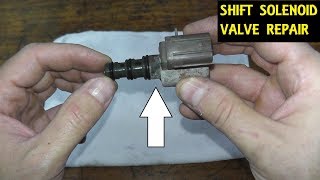
We Have This Part in Stock
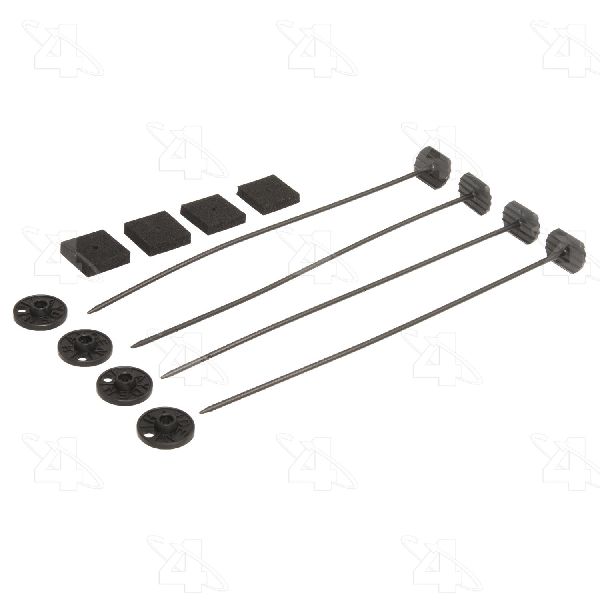
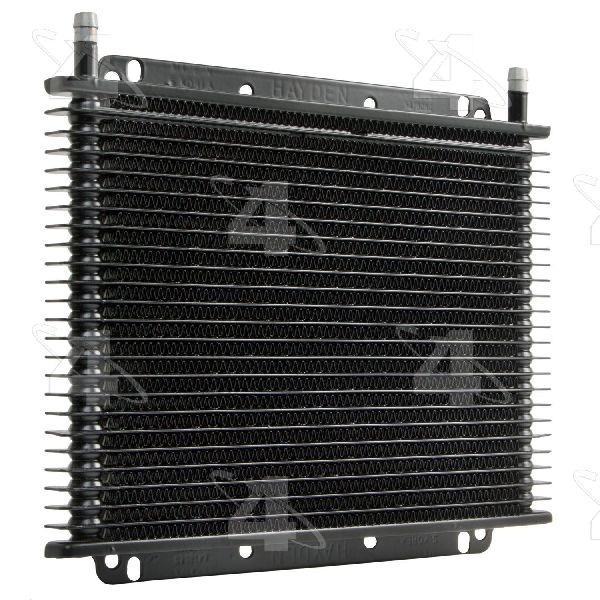
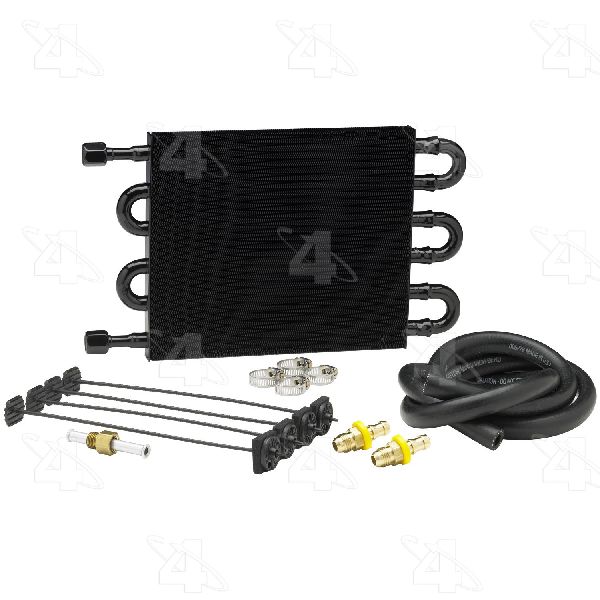

The information in this article is provided for general reference and educational purposes only. Vehicle specifications, procedures, and part compatibility can vary by production date, trim level, and region. Always consult your vehicle's factory service manual and verify part numbers before purchasing or performing repairs. Safety-critical components such as airbags, seat belts, and braking systems should be installed by a qualified professional.
- Ford Transit Connect:
- 🧭 Diagnostic Flowchart
- 🎬 Helpful Videos
- 🛍️ Shop This Part
- What's Unique About the 2010-2013 Ford Transit Connect
- Symptoms You May Notice
- Most Likely Causes
- Rare But Worth Checking
- Diagnosis Steps
- Parts You'll Likely Need
- Related Codes That Often Appear With This One
- Technical Service Bulletins (TSBs) & Recalls
- Platform-Specific Known Issues
- Mechanic-Grade Diagnostic Values
- Scan Tool Commands That Help
- Wiring & Ground Locations
- Real Owner Repair Stories
- OEM Part Supersession History
- Model Year Variations Within This Range
- Other Known Issues on This Vehicle
- Used vs. New Parts: Buying Guide for This Vehicle
- Real Owner Stories
- 2013 Ford Transit Connect — 54000 miles
- Related OBD-II Codes
- Frequently Asked Questions
- 🎟️ Get 5% Off