

P0756 on 2012-2013 Mazda 3 Skyactiv: Shift Solenoid 'B' Causes and Fixes
On a 2012-2013 Mazda 3 with a Skyactiv engine, code P0756 is most often caused by a faulty transmission valve body, not just a single solenoid. A fluid check is the first step, but expect a valve body replacement, which can cost $1,500-$2,500 at a shop. This is a well-documented issue on the FW6A-EL transmission.
- For a 2012-2013 Mazda 3 Skyactiv, P0756 is a strong indicator of a known valve body problem, not just a bad solenoid.
- Always check for related codes like P0780 or P1738, as their presence makes the valve body failure almost certain.
- The first step is always to check the transmission fluid level and condition. Use only Mazda ATF FZ fluid.
- Due to the complexity and need for post-repair programming, this is not a recommended DIY job. Seek a qualified transmission shop or dealer.
- Simply replacing the individual solenoid is likely a temporary fix that will not solve the underlying issue.
What's Unique About the 2012-2013 Mazda 3
For the 2012-2013 Mazda 3 with the Skyactiv-Drive 6-speed automatic (model FW6A-EL), this code is a well-documented issue that often points beyond a simple solenoid failure. Mazda issued a series of Technical Service Bulletins (TSBs), including 05-003-14-2898A and the superseding 05-002/15, for these early Skyactiv transmissions. These bulletins acknowledge that P0756 and other related codes (like P0780, P1738, P0842, P0847) are frequently symptoms of an internal malfunction within the main control valve body. The root cause is often contamination from torque converter clutch wear products that cause pressure switches and valves to stick. Due to this known issue, the standard dealer repair is to replace the entire valve body assembly rather than attempting to service an individual solenoid.
Symptoms You May Notice
- Harsh or abrupt shifting
- Delayed gear engagement
- Transmission getting stuck in one gear (limp mode)
- Illuminated Check Engine Light
- Illuminated AT (Automatic Transaxle) warning light on the dashboard
- Transmission slipping
- Reduced fuel economy
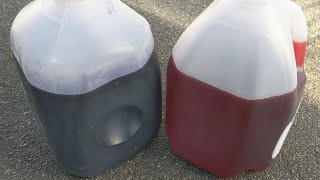
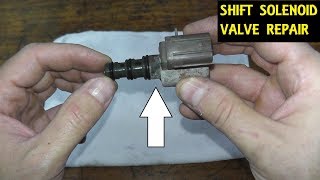
- Clumsy or hesitant shifting at very low speeds, especially under light acceleration. 🎬 Watch: This guide explains how to fix jerky shifts and slipping.
- Replacing only the individual Shift Solenoid 'B' without addressing the underlying, common valve body problem. The code may return if the failure is within the valve body's hydraulic circuits or other integrated components like the pressure switches.
- Assuming a full transmission replacement is needed when only the valve body assembly is faulty. This is a significantly less expensive repair.
Most Likely Causes
- Faulty Control Valve Body 🔴 High Probability → Shop Transmission Valve Body A known issue on early FW6A-EL Skyactiv transmissions, as documented in Mazda TSBs #05-003-14-2898A and #05-002/15. Internal wear products from the torque converter lock-up clutch can contaminate the fluid and cause the sensitive pressure switches and spool valves within the assembly to fail or stick.
How to confirm: Scan for other codes like P0780, P1738, P0842, or P0847, which strongly point to the TSB. If fluid level and condition are good, the valve body is the next logical point of failure according to Mazda's own diagnostic procedure.
Typical fix: Replace the entire control valve body assembly with a new, pre-programmed unit. Perform the 'Initial Learning Procedure' after installation.
Est. part cost: $1000-$1400 - Low or Contaminated Transmission Fluid 🟡 Medium Probability → Shop Transmission Assembly All transmissions are susceptible, but the FW6A-EL can be sensitive to fluid degradation. Wear particles can clog passages in the valve body, leading to solenoid and pressure switch malfunctions.
How to confirm: Check the transmission fluid level and condition. The fluid should be bright red and clear, not dark, burnt-smelling, or full of debris. This is the first and most crucial diagnostic step. Note: The correct fluid for this transmission is Mazda ATF-FZ, which is blue when new. 🎬 See how to perform a Skyactiv transmission fluid change yourself.
Typical fix: Perform a transmission fluid and filter change using the correct Mazda ATF FZ fluid. This may resolve the issue if it's caught early before permanent damage to the valve body occurs.
Est. part cost: $80-$150 - Failed Shift Solenoid 'B' ⚪ Low Probability → Shop Transmission Valve Body While possible, it's less likely to be an isolated solenoid failure on this specific platform due to the known valve body issues. The solenoid itself may be functional, but unable to operate due to a clogged passage or faulty pressure switch within the valve body.
How to confirm: Requires dropping the transmission pan to access the valve body. The solenoid's resistance can be tested with a multimeter; for the FW6A-EL, it should be between 11-14 ohms. However, a good resistance reading does not rule out a mechanical failure (stuck valve).
Typical fix: Replace the individual shift solenoid. However, given the high probability of a larger valve body issue, this may not be a permanent fix and the code may return.
Est. part cost: $50-$100
Rare But Worth Checking
- Wiring Harness or Connector Issue: Damage to the wiring leading to the transmission can interrupt the signal to the solenoid. Inspect the main harness connector on the transmission case for corrosion or damage before committing to expensive internal parts.
- Faulty Transmission Control Module (TCM): → Shop Transmission Assembly On this vehicle, the TCM is integrated into the valve body assembly. Therefore, a TCM failure is synonymous with a valve body failure and requires replacing the entire unit. A dealership was unable to communicate with the TCM in one documented case, necessitating a valve body replacement.
Diagnosis Steps
- Scan for all diagnostic trouble codes. Note if P0756 is accompanied by P0700, P0780, P1738, or any oil pressure switch codes (P0842, P0847, etc.).
- Check the transmission fluid level and condition. The fluid must be at the correct level and should be clean. If it is low, dark, or smells burnt, a fluid and filter change using Mazda ATF-FZ is the necessary first step.
- If the fluid is fine or a fluid change does not resolve the issue, consult the family of Mazda TSBs related to the FW6A-EL transmission, specifically 05-003-14-2898A and 05-002/15.
- According to the official Mazda diagnostic procedure for the FW6A-EL, if the ATF level is correct and codes related to internal valve body malfunction are present, the next step is to replace the control valve body.
- Inspect the transmission wiring harness and connectors for any visible damage, corrosion, or loose connections.
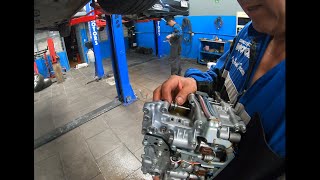
- If the valve body is replaced, the mandatory 'Initial Learning Procedure' must be performed with a compatible diagnostic tool like the Mazda IDS. 🎬 Watch: A quick video on resetting the SkyActiv transmission learning.
Parts You'll Likely Need
- Transmission Control Valve Body Assembly
(OEM #FZ21-21-100J)— This is the most common point of failure for this code on this specific vehicle, as documented by multiple Mazda TSBs. It contains the integrated TCM, solenoids, and pressure switches. Online OEM parts dealers list this part for around $950-$1100. Note: This part is often non-returnable and may require a VIN to order.
Trusted brands: Mazda (OEM)
OEM price range: $950-$1400
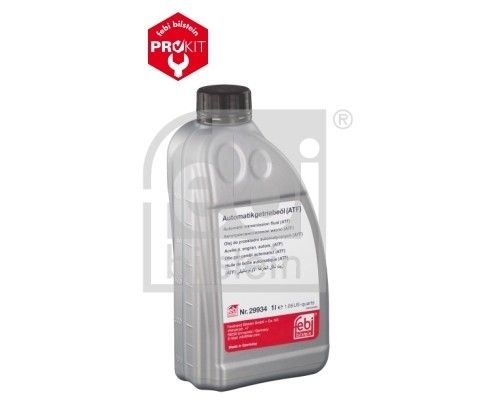
Aftermarket price range: $300-$700 - Automatic Transmission Fluid (ATF) — Required for any service. Low or dirty fluid is a potential cause, and the system must be refilled after a valve body replacement. Use only Mazda Type FZ fluid.
Trusted brands: Mazda ATF-FZ
OEM price range: $20-$30 per quart
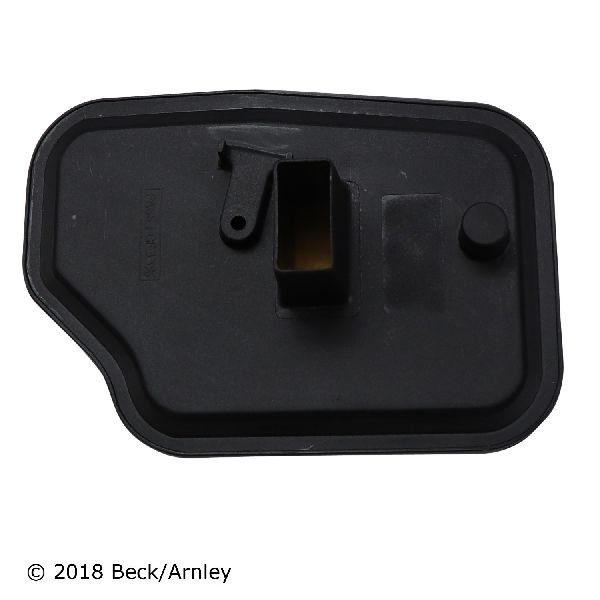
Aftermarket price range: $15-$25 per quart - Transmission Filter Kit
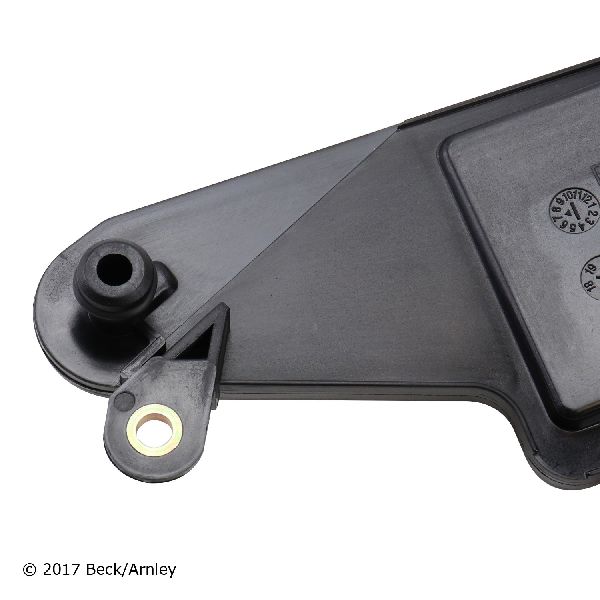
(OEM #FZ01-21-500)— Should be replaced whenever the transmission pan is removed for service.
Trusted brands: Mazda (OEM), Wix, ATP, Beck/Arnley
OEM price range: $40-$60
Aftermarket price range: $20-$40
Related Codes That Often Appear With This One
- P0700 — This is a generic transmission fault code indicating that the TCM has stored a specific fault, such as P0756.
- P0780 — Stands for 'Gear Shifting Malfunction'. Its presence alongside P0756 strongly points to the internal valve body issue described in Mazda's TSBs.
- P1738 — This is a manufacturer-specific code for 'Automatic Transaxle Internal Malfunction'. If you see this with P0756, it is almost certainly the valve body failure covered by the TSB.
- P0842, P0847, P0872, P0877 — These are codes for oil pressure switches 'A' and 'B' being stuck on or off. TSB 05-002/15 directly links these codes to contamination within the valve body, the same root cause often behind P0756.
Technical Service Bulletins (TSBs) & Recalls
- 05-003-14-2898A: Addresses MIL on with DTCs P0780 and/or P1738, but also lists P0756 as a related code. The fix is to replace the control valve body assembly. This bulletin notes that P0756 may appear alongside manufacturer-specific codes for internal transaxle malfunctions.
- 05-003-14-2898: An earlier manufacturer bulletin that similarly identifies P0756 as a stored DTC associated with automatic transaxle internal malfunctions and potential U0401 communication codes.
- 05-002/15: Supersedes earlier bulletins and addresses DTCs for oil pressure switches (P0842, P0847, etc.) caused by contamination sticking the switches. This points to the same root cause (internal contamination) and repair (valve body replacement) as the P0756 issue.
Platform-Specific Known Issues
- Early production Skyactiv-Drive (FW6A-EL) transmissions in 2012-2013 Mazda 3s are prone to internal valve body failures, which trigger a range of shift solenoid and gear ratio codes, including P0756. This is a known issue addressed by Mazda TSBs 05-003-14-2898A and 05-002/15.
Mechanic-Grade Diagnostic Values
- Shift Solenoid 'B' (On/Off Type) Resistance — expected: 11-14 Ohms. Failure: A reading outside this range (open or shorted) indicates a faulty solenoid coil.
- Linear Type Solenoid Resistance (for comparison) — expected: 5-7 Ohms. Failure: The FW6A-EL uses multiple solenoid types. Confusing an on/off solenoid with a linear solenoid during testing will lead to misdiagnosis, as their resistance specifications are different.
- ATF Temperature for Initial Learning Procedure — expected: 60–110 °C {140–230 °F}. Failure: The learning procedure will not initiate or complete correctly if the transmission fluid is not within this specified temperature range.
Scan Tool Commands That Help
- Mazda IDS (M-MDS): Initial Learning Procedure — This procedure is mandatory after replacing the control valve body, oil pressure switches, or the entire transaxle. It calibrates the TCM to the hydraulic and mechanical characteristics of the new components to ensure proper shift quality and prevent damage.
Wiring & Ground Locations
- G20 — On the right side of the transmission (transaxle) housing.. This is a primary ground point for multiple components, including potentially the TCM and its related sensors. A corroded or loose G20 ground can cause erratic voltage, leading to incorrect sensor readings and false solenoid performance codes like P0756.
- TCM Main Connector — On top of the transmission case, underneath the battery and air cleaner assembly.. This is the main electrical interface for the entire transmission. Solenoid resistance and voltage tests can be performed at this connector's pins (after disconnecting it) to diagnose the entire circuit from the TCM to the solenoid without dropping the transmission pan.
Real Owner Repair Stories
- Forum user report (sniderjr1 on coloradofans.com) (GMC Canyon with 4L60-E (Illustrates a universal principle applicable to P0756)) — P0756 code, loss of power, harsh shifting.
❌ Tried (didn't work) Replacing both shift solenoids ('A' and 'B').
✅ What actually fixed it The user removed the valve body and found a small piece of metal physically jamming the 2-3 shift valve in its bore. Cleaning the debris from the mechanical valve's path and reassembling the valve body resolved the code. This proves the solenoid's electrical test can be perfect, but a mechanical blockage in the hydraulic circuit it controls can be the true root cause. - NHTSA ODI #11597248 (Cross-model reference) — An owner reported that their dashboard lit up with a transmission error; a mechanic's diagnosis found code P0756 for a shift solenoid B stuck off, rendering the car unsafe to drive.
When the Usual Fixes Don't Work
- While the Mazda TSBs and high failure rate strongly point to replacing the entire valve body assembly, it is mechanically possible for the P0756 code to be caused by a simple piece of debris lodging in a hydraulic channel or sticking a single valve. In one documented case on a different vehicle, a technician found a metal fragment jamming a shift valve after replacing the solenoids did not fix the issue. This suggests that a full valve body teardown and cleaning could theoretically fix the issue without replacing the entire expensive assembly, but this is a highly skilled, labor-intensive procedure that most shops will not attempt.
OEM Part Supersession History
FZ21-21-100 (Blank)→Various pre-programmed part numbers (e.g., FZ21-21-100H, FZ21-21-100J, etc.)— To simplify repairs and address known issues in early transmissions, Mazda stopped providing un-programmed 'blank' valve bodies for vehicles produced on or before March 31, 2013.
Heads up: A new valve body must be ordered using the vehicle's VIN to ensure it comes with the correct pre-installed software for that specific vehicle configuration. Installing a used or incorrectly programmed valve body will likely result in shifting problems or a no-start condition.
Model Year Variations Within This Range
- 2012-2013 (vehicles produced on or before March 31, 2013): The service part for the valve body was changed from a 'blank' unit requiring programming to a 'pre-programmed' unit. This affects the repair procedure, as a new part does not require the same configuration steps as the old part would have.
Diagnostic Flowchart
Other Known Issues on This Vehicle
Issues unrelated to this code that are worth knowing about as an owner of this generation:
- Melting, Sticky, or Warped Dashboard 🟠 Medium — Very common, especially in climates with high heat and humidity. Can occur at any mileage. (Ref: Mazda issued a warranty extension program (SSP A9) for this issue, extending coverage to 7-10 years with no mileage limit, depending on the specific program.)
- Intake Valve Carbon Buildup 🟠 Medium — Common on all Skyactiv-G direct injection engines, typically becoming noticeable after 80,000-100,000 miles. Leads to misfires, rough idle, and reduced power/MPG. (Ref: A Mazda bulletin exists for a decarbonization procedure using a chemical cleaner.)
- Noisy Belts, Pulleys, and Tensioners 🟡 Low — A common owner complaint is persistent squeaking or rattling from the serpentine belt area, sometimes traced to a failing hydraulic belt tensioner.
- Rear Tire Cupping and Road Noise 🟡 Low — Owners report issues with rear wheel alignment causing uneven 'cupped' tire wear, which results in a loud rumbling or humming noise from the rear of the car.
Used vs. New Parts: Buying Guide for This Vehicle
When a used part is the smart pick: For this specific repair (valve body), a used part is NOT recommended. The integrated and programmed TCM makes compatibility a significant risk.
What to inspect on the donor part:
- Not applicable due to the high risk of incompatibility.
OEM-only on this vehicle (don't cheap out):
- Transmission Control Valve Body Assembly: Due to the integrated TCM which is programmed specifically to the vehicle's VIN and options, Mazda OEM is the only guaranteed-to-work solution. Mazda even switched to selling pre-programmed units for this model year range to avoid compatibility issues in the field.
Aftermarket brands forum-validated for this vehicle:
- While some companies offer remanufactured valve bodies, they often require you to send in your original unit ('core') to transfer programming or require extremely precise VIN matching. This is a viable but more complex alternative to a new OEM part.
Brands owners have reported issues with on this vehicle:
- Avoid any used or 'as-is' valve bodies from junkyards or unknown online sellers. The risk of receiving an incompatible or equally faulty unit is extremely high.
Real Owner Stories
Aggregated from forums and TSBs cited above. Mileages and costs reflect what owners reported in those sources.
2015 Mazda 3
Symptoms: Dealer confirmed no communication with the internal Transmission Control Module (TCM) after a PCM replacement failed to fix unspecified issues.
What fixed it: Dealer diagnosed a faulty valve body and quoted an OEM replacement (part number FZ21-21-100J).
Cost: $1700-$1900
Source hint: r/mazda3 on Reddit (January 2024)
Related OBD-II Codes
Frequently Asked Questions
My mechanic suggests just replacing Shift Solenoid 'B' for my 2013 Mazda 3. Is this the right fix?
Are there any official Mazda recalls or TSBs for the P0756 code on my 2012 Mazda 3 Skyactiv?
I have codes P0780 and P0842 along with P0756. What does this combination mean?
What is the correct transmission fluid for a 2012-2013 Mazda 3 Skyactiv?
Can I save money by installing a used control valve body from a junkyard?
I have a 2015 Mazda CX-5 with the same harsh shifting. Does this P0756 information apply to my car?
Helpful Videos


We Have This Part in Stock

The information in this article is provided for general reference and educational purposes only. Vehicle specifications, procedures, and part compatibility can vary by production date, trim level, and region. Always consult your vehicle's factory service manual and verify part numbers before purchasing or performing repairs. Safety-critical components such as airbags, seat belts, and braking systems should be installed by a qualified professional.
- Mazda 3:
- 🧭 Diagnostic Flowchart
- 🎬 Helpful Videos
- 🛍️ Shop This Part
- What's Unique About the 2012-2013 Mazda 3
- Symptoms You May Notice
- Most Likely Causes
- Rare But Worth Checking
- Diagnosis Steps
- Parts You'll Likely Need
- Related Codes That Often Appear With This One
- Technical Service Bulletins (TSBs) & Recalls
- Platform-Specific Known Issues
- Mechanic-Grade Diagnostic Values
- Scan Tool Commands That Help
- Wiring & Ground Locations
- Real Owner Repair Stories
- When the Usual Fixes Don't Work
- OEM Part Supersession History
- Model Year Variations Within This Range
- Other Known Issues on This Vehicle
- Used vs. New Parts: Buying Guide for This Vehicle
- Real Owner Stories
- 2015 Mazda 3
- Related OBD-II Codes
- Frequently Asked Questions
- 🎟️ Get 5% Off