

P0757 on 2011-2014 Chrysler 300 5.7L: Shift Solenoid 'B' Stuck On Fixes
This code typically means the transmission is stuck in 'limp mode' (2nd gear) due to a fault with the 2-3 shift solenoid. The most common fix is replacing the transmission conductor plate, which houses the solenoids, along with a fluid and filter change. Expect to pay $500-$1200 for a professional repair.
- P0757 on your 5.7L Chrysler 300 points to a problem with the 2-3 shift solenoid, which will almost certainly put the car in 'limp mode' (stuck in 2nd gear).
- The root cause is very often a failure of the internal transmission conductor plate, a known issue with the 5-speed NAG1 transmission.
- The standard, most reliable repair is to have a professional replace the conductor plate, transmission filter, fluid, and electrical connector sleeve all at once.
- This is not a DIY-friendly job for beginners. It requires dropping the transmission valve body, which can lead to major damage if done incorrectly.
What's Unique About the 2011-2014 Chrysler 300
The 2011-2014 Chrysler 300 with the 5.7L V8 uses a Mercedes-Benz designed 5-speed automatic transmission known as the NAG1 or W5A580 (also 722.6). A well-documented weak point in this transmission is the conductor plate, which is an internal circuit board that holds all the shift solenoids and speed sensors. While a single solenoid can fail, it is often a problem with the conductor plate's internal circuitry or integrated speed sensors, making its replacement a common and often recommended solution for solenoid-related codes like P0757.
Symptoms You May Notice
- Transmission is stuck in one gear (typically 2nd gear), also known as 'limp mode'.
- Harsh, erratic, or failed shifts, particularly between 2nd and 3rd gear.
- Check Engine Light or Transmission Warning Light is illuminated.
- Vehicle feels sluggish and accelerates slowly from a stop.
- Reduced fuel economy due to inefficient gear use.
- Transmission may slip, where engine RPMs rise without an increase in vehicle speed.
- Replacing only the single 2-3 shift solenoid when the underlying problem is a cracked or failing conductor plate. The issue may return with another solenoid code.
- Condemning the entire transmission for a rebuild when the issue is isolated to the external electronics (conductor plate/valve body).
- Replacing the conductor plate without also replacing the leaking 13-pin connector sleeve, leading to persistent fluid loss or future electrical issues.
Most Likely Causes
- Faulty Transmission Conductor Plate 🔴 High Probability → Shop Transmission Assembly The NAG1 transmission has a known history of conductor plate failures. The plate contains all solenoids and integrated speed sensors, and its plastic body and internal electronics are a common point of failure due to constant heat cycles and age.
How to confirm: A professional scan tool can monitor solenoid command and status. However, since the solenoids and speed sensors are part of the plate, a failure often points to the entire assembly. Visual inspection of the old plate may show cracks or damage. Codes for speed sensors (like P0716) often accompany solenoid codes when the plate is the root cause.
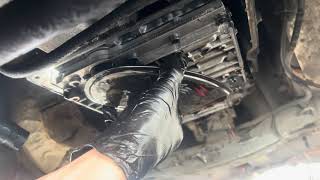
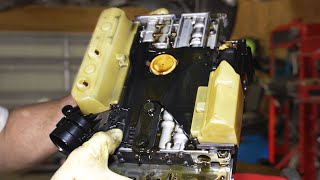
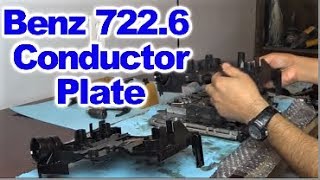
Typical fix: Replace the entire conductor plate assembly. This is done by dropping the transmission pan and valve body. 🎬 Watch: Step-by-step guide to replacing the NAG1 conductor plate. It is highly recommended to also replace the filter, pan gasket, and the electrical connector sleeve at the same time to prevent future leaks.
Est. part cost: $150-$350 - Low or Dirty Transmission Fluid 🟡 Medium Probability → Shop Transmission Assembly Fluid is the lifeblood of the transmission. If it's low, it can't create the necessary hydraulic pressure. If it's dirty or full of debris, it can clog the small passages in the valve body or cause solenoids to stick. The NAG1 transmission is sensitive to fluid type and condition.
How to confirm: Check the transmission fluid level using the special service tool (this transmission does not have a conventional dipstick). Note the color and smell of the fluid; it should be bright red and not smell burnt. Metal shavings on the dipstick or in the pan are a sign of serious internal wear.
Typical fix: Perform a transmission fluid and filter change using the correct ATF specified for the NAG1 transmission (Shell ATF 134, Fuchs Titan ATF 4134, or equivalent meeting MB 236.14 spec).
Est. part cost: $100-$200 - Failed 2-3 Shift Solenoid 🟡 Medium Probability → Shop Transmission Valve Body The solenoid itself can fail electrically (coil burns out) or mechanically (plunger gets stuck from debris). While possible, it's often a symptom of a failing conductor plate on which it resides, or contamination in the fluid.
How to confirm: A technician can test the solenoid's resistance with a multimeter, either at the transmission connector or directly at the solenoid after removing the valve body. 🎬 Watch: How to test and replace shift solenoid valves. A professional scan tool can also attempt to actuate the solenoid and monitor its response.
Typical fix: Replace the individual solenoid. However, due to the labor involved to access it, it is often more cost-effective and preventative to replace the entire conductor plate which includes all new solenoids.
Est. part cost: $50-$100 - Leaking Electrical Connector Sleeve ⚪ Low Probability The O-rings on the 13-pin connector sleeve are a very common and well-known leak point on the NAG1 transmission. Transmission fluid can leak out, causing low fluid levels, or wick up the wiring harness, potentially reaching and damaging the TCM.
How to confirm: Visually inspect the round electrical connector on the front-right side of the transmission for signs of ATF leakage. If fluid is present, the sleeve is leaking.
Typical fix: Replace the connector sleeve, which contains new O-rings. This part is inexpensive and is typically replaced whenever the pan is dropped for other service, such as a conductor plate or filter change.
Est. part cost: $15-$30
Rare But Worth Checking
- Faulty Valve Body: → Shop Transmission Valve Body While less common than the conductor plate, a valve body with clogged passages or sticking valves from sludge or debris can cause hydraulic pressure issues that trigger a P0757 code.
- Damaged Wiring Harness or Faulty TCM: Damage to the wiring between the TCM and the transmission can cause a short or open circuit. A failure of the Transmission Control Module (TCM) itself is possible but very rare and should be considered only after all other possibilities are exhausted.
Diagnosis Steps
- Check and verify the transmission fluid level and condition using the appropriate dipstick tool. The fluid must be at the correct level and not appear dark, burnt, or full of debris. The fluid type should meet MB 236.14 specification.
- Use a professional-grade scan tool to confirm P0757 is the primary code and check for any other transmission-related codes, especially speed sensor codes like P0716 or P2767.
- Inspect the main 13-pin electrical connector on the transmission for any signs of fluid leakage. If wet, the connector sleeve O-rings have failed and the part must be replaced.
- Using a wiring diagram, test the resistance of the 2-3 solenoid circuit from the TCM connector to check for opens or shorts in the wiring harness.
- If wiring is good, the next step is to drop the transmission pan to inspect for excessive metal debris. A small amount of fine gray material on the magnet is normal, but large metal chunks indicate a severe mechanical failure.
- If the pan is relatively clean, the most likely cause is the conductor plate or the solenoid itself. Given the high failure rate of the conductor plate, replacing it is the standard procedure.
- While the valve body is removed, inspect it for scoring, debris, or stuck valves. Clean the valve body passages with an appropriate solvent before reinstalling with the new conductor plate.
Parts You'll Likely Need
- Transmission Conductor Plate Kit
(OEM #52108308AC (Mopar))— This is the most common point of failure for solenoid and speed sensor codes on the NAG1 transmission. A kit usually includes the plate, filter, pan gasket, and connector sleeve.
Trusted brands: Mopar, Dorman (926-133), Standard Motor Products (SMP), Rostra
OEM price range: $250-$400
Aftermarket price range: $150-$250 - NAG1 / W5A580 Automatic Transmission Fluid
(OEM #Mopar ATF (meets MB 236.14))— The system must be refilled with 5-6 quarts of the correct type of fluid after dropping the pan. Using the wrong fluid can cause shifting problems.
Trusted brands: Mopar (Shell ATF 134), Valvoline SYNPOWER ATF 134, Fuchs Titan ATF 4134, Shell Spirax S4 ATF 3403
OEM price range: $20-$30 per quart
Aftermarket price range: $10-$18 per quart - Transmission Electrical Connector Sleeve
(OEM #68021352AA (Mopar))— This is a mandatory replacement part due to its high leak rate. It should be replaced anytime the transmission pan is removed to prevent future leaks.
Trusted brands: Mopar
Related Codes That Often Appear With This One
- P0716 — This code relates to the Input Speed Sensor. On the NAG1 transmission, this sensor is integrated into the conductor plate, so a failing plate can trigger both codes simultaneously.
- P0762 — This code is for 'Shift Solenoid C Stuck On'. If the conductor plate has a systemic failure or there is widespread debris in the valve body, multiple solenoid codes can appear together.
- P2767 — This code for 'Input/Turbine Speed Sensor 'B' Circuit No Signal' also points directly to a failure of the sensors integrated into the conductor plate.
Platform-Specific Known Issues
- Owner Experience with Conductor Plate Replacement: A user on a Ram forum with a similar transmission described getting a quote of $1500 for a shift solenoid issue. He opted to do the repair himself after watching a YouTube video, purchasing the part for $300. He noted the main difficulty was the mess from draining the transmission fluid without a proper drain plug, but he successfully saved over $1000.
Mechanic-Grade Diagnostic Values
- Shift Solenoid Resistance — expected: 2.5 - 6.5 Ohms (typically around 4.0-4.5 Ohms). Failure: A reading of 0 Ohms (short) or infinite Ohms (open circuit).
- Torque Converter Clutch (TCC) Solenoid Resistance — expected: 2.0 - 4.0 Ohms (typically around 2.5-2.7 Ohms). Failure: A reading outside of the specified range.
- Valve Body to Transmission Case Bolt Torque — expected: 8 Nm (71 in-lbs). Failure: Over or under-torquing can cause valve body warping, internal leaks, and shifting issues.
- Transmission Pan Bolt Torque — expected: 8 Nm (71 in-lbs). Failure: Over-torquing can damage the pan or gasket, leading to leaks.
Scan Tool Commands That Help
- wiTECH (or compatible advanced scanner): Reset Learned Adaptives (NAG1) / Quick Learn — This procedure is mandatory after replacing the conductor plate, valve body, or entire transmission. It resets the transmission's adaptive memory and forces it to relearn clutch fill times and pressures, which is essential for proper shift quality.
- wiTECH (or compatible advanced scanner): Store Learned Adaptives — After performing the adaptation drive cycle, the TCM stores the new values every 10 minutes. This function can be used to force the TCM to save the newly learned values immediately, ensuring the procedure is not lost if the vehicle is shut off too soon.
Wiring & Ground Locations
- TCM C2 Connector — The Transmission Control Module (TCM) is typically located in the engine compartment or under the dashboard. The C2 connector is one of the main harness connections to the module.. Allows for testing the solenoid and its circuit without dropping the transmission pan. The 2-3 Shift Solenoid (Solenoid 'B') circuit is between Pin 16 (T74 20YL/LG) and Pin 38 (T78 20YL, Solenoid Supply Voltage).
- 13-Pin Transmission Connector — On the front-right side of the transmission case, oriented horizontally.. This is the main electrical interface to the transmission's internal components, including the conductor plate and all solenoids. It is a common leak point, and fluid wicking up the harness from this connector can damage the TCM.
Real Owner Repair Stories
- BobIsTheOilGuy forum user 'Bailey28' (2005+ Chrysler/Dodge with NAG1 (specific vehicle had a P0741, but the repair process is identical for solenoid codes)) — Torque converter shudder in higher gears (3, 4, 5) and a P0741 code.
❌ Tried (didn't work) Multiple drain and fills of the transmission fluid., Adding a tube of Lubegard shudder fix additive (provided temporary, partial relief).
✅ What actually fixed it The user dropped the valve body and replaced the conductor plate (using Dorman part 917-678) and the TCC solenoid. This resolved the shudder and shifting issues.
OEM Part Supersession History
52108308AB→52108308AC— Part revision by the manufacturer, likely for improved reliability or minor design changes.
Heads up: The new part number (52108308AC) is the correct and current replacement for the older version.
Model Year Variations Within This Range
- 2011-2014 (5.7L V8): All 2011-2014 Chrysler 300 models with the 5.7L V8 engine were equipped with the 5-speed NAG1 (W5A580) transmission. The 8-speed ZF transmission was introduced on V6 models in 2012 and became standard across all engines, including the 5.7L V8, starting with the 2015 model year facelift. Therefore, this P0757 fault and its associated repairs are specific to the NAG1 transmission found in this 2011-2014 V8 platform.
Diagnostic Flowchart
Other Known Issues on This Vehicle
Issues unrelated to this code that are worth knowing about as an owner of this generation:
- 5.7L Hemi 'Tick' (Lifter/Camshaft Failure) 🔴 High — Common issue, often appearing after 80,000-100,000 miles. Can be caused by oil starvation to the lifter rollers, especially with extended idling.
- Alternator Failure 🔴 High — A widespread issue leading to a recall (NHTSA #14V634000). The 160, 180, or 220 amp alternator can fail suddenly, causing a loss of electrical power and potential stalling. (Ref: NHTSA Recall 14V634000)
- Uconnect 8.4-inch Screen Delamination 🟠 Medium — Very common after 2-4 years. The screen layers separate, causing bubbles, 'ghost touch' (phantom inputs), and eventual non-responsiveness of the infotainment and climate controls.
- Broken Exhaust Manifold Bolts 🟠 Medium — Extremely common on the 5.7L Hemi. The bolts break due to heat cycles, causing an exhaust leak that creates a ticking noise, especially on cold starts. This is often confused with the 'Hemi Tick'.
Used vs. New Parts: Buying Guide for This Vehicle
When a used part is the smart pick: For this specific repair, using used parts is generally not recommended. The primary failure component, the conductor plate, is an electronic part with a known wear-and-tear failure mode due to heat cycles. A used valve body could be considered if it comes from a verified low-mileage vehicle and is thoroughly cleaned and inspected, but the risk of it having clogged passages or worn components is high.
Donor-vehicle mileage cap: roughly under 40000 miles for the part to have meaningful remaining life.
What to inspect on the donor part:
- Verify the donor vehicle's mileage; lower is always better.
- Ask for the vehicle's history to ensure it wasn't in a major accident or flood.
- For a valve body, inspect all passages for debris or scoring before purchase.
- Never buy a used conductor plate. The plastic becomes brittle and the internal electronics are a common failure point; a used one has no reliable remaining lifespan.
OEM-only on this vehicle (don't cheap out):
- Transmission Conductor Plate: While some aftermarket brands exist, the OEM Mopar part is widely considered the most reliable, albeit most expensive, option to ensure longevity and prevent repeat failures.
- Transmission Fluid: Only use fluid that explicitly meets the MB 236.14 (or equivalent Shell ATF 134) specification. Using a generic or incorrect fluid type like ATF+4 (for other Chrysler transmissions) will cause shifting problems.
Aftermarket brands forum-validated for this vehicle:
- Dorman (for conductor plate, e.g., 926-133, though some forum users have mixed reviews, it is a common alternative).
- Valvoline, Fuchs, Shell (for transmission fluid that meets the correct MB 236.14 spec).
Brands owners have reported issues with on this vehicle:
- Unbranded, no-name conductor plates from online marketplaces. These often have high failure rates and may not be manufactured to the correct tolerances, leading to immediate or premature failure.
Real Owner Stories
Aggregated from forums and TSBs cited above. Mileages and costs reflect what owners reported in those sources.
Ram with similar NAG1 transmission
Symptoms: Owner received a quote of $1500 for a shift solenoid issue.
What fixed it: The owner opted to perform the repair himself, purchasing the part for $300 and saving over $1000.
Cost: $300-$300
Source hint: Owner Experience with Conductor Plate Replacement
2006 Dodge Magnum with NAG1 transmission
Symptoms: Vehicle was showing a P0757 trouble code.
What fixed it: The owner resolved the issue by replacing the conductor plate, solenoids, and the connector plug.
Source hint: https://www.lxforums.com/board/threads/p0757-shift-solenoid-b-stuck-on.369878/
Related OBD-II Codes
Frequently Asked Questions
My 2012 Chrysler 300 is stuck in limp mode with P0757. Is it more likely the solenoid or the whole conductor plate?
What kind of transmission fluid should I use for my 2013 Chrysler 300 5.7L? Can I just use ATF+4?
I have a P0757 code on my Chrysler 300 and noticed a fluid leak. Could these be related?
My mechanic says I need a new conductor plate for my 300. What other parts should I replace at the same time?
My 2011 300 doesn't have a transmission dipstick. How do I check the fluid level to diagnose P0757?
I have a P0757 code. Are there any other codes I should look for that point to a specific problem?
Helpful Videos

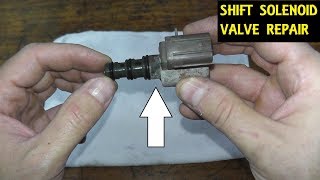
![[EN] Mercedes 722.6 Automatic Transmission conductor plate inspection and replacement.](https://img.youtube.com/vi/lMAqz0LxNj8/mqdefault.jpg)

We Have This Part in Stock

The information in this article is provided for general reference and educational purposes only. Vehicle specifications, procedures, and part compatibility can vary by production date, trim level, and region. Always consult your vehicle's factory service manual and verify part numbers before purchasing or performing repairs. Safety-critical components such as airbags, seat belts, and braking systems should be installed by a qualified professional.
- Chrysler 300:
- 🧭 Diagnostic Flowchart
- 🎬 Helpful Videos
- 🛍️ Shop This Part
- What's Unique About the 2011-2014 Chrysler 300
- Symptoms You May Notice
- Most Likely Causes
- Rare But Worth Checking
- Diagnosis Steps
- Parts You'll Likely Need
- Related Codes That Often Appear With This One
- Platform-Specific Known Issues
- Mechanic-Grade Diagnostic Values
- Scan Tool Commands That Help
- Wiring & Ground Locations
- Real Owner Repair Stories
- OEM Part Supersession History
- Model Year Variations Within This Range
- Other Known Issues on This Vehicle
- Used vs. New Parts: Buying Guide for This Vehicle
- Real Owner Stories
- Ram with similar NAG1 transmission
- 2006 Dodge Magnum with NAG1 transmission
- Related OBD-II Codes
- Frequently Asked Questions
- 🎟️ Get 5% Off