

P0762 on 2011-2017 Honda Pilot: Shift Solenoid 'C' Stuck On Causes and Fixes
P0762 on a 2011-2017 Honda Pilot means Shift Solenoid 'C' is stuck on. The most common first step is checking and changing the transmission fluid, as dirty or low fluid is a primary cause. If a fluid service doesn't resolve the issue, replacing the faulty shift solenoid 'C' is the next logical step. On many of these Pilots, the solenoids are located externally on the transmission case, making it a feasible DIY repair for those with mechanical experience.
- P0762 means Shift Solenoid 'C' is stuck on, causing serious shifting problems.
- The first and most important diagnostic step is to check the transmission fluid level and condition. Use only genuine Honda fluid for changes.
- If the fluid is okay, the Shift Solenoid 'C' itself has likely failed and needs to be replaced.
- On many Honda Pilots, the solenoids are external, making this a manageable DIY job for those with mechanical experience.
- Be aware of which transmission your Pilot has (5-speed, 6-speed, or 9-speed), as parts and procedures will vary.
What's Unique About the 2011-2017 Honda Pilot
The 2011-2017 Honda Pilot spans two different generations with different transmissions, which is key to understanding this code. The 2011-2015 models use a 5-speed automatic, while the 2016-2017 models use either a 6-speed or a 9-speed automatic (ZF 9HP). On many of these Honda transmissions, the shift solenoids are located externally on the transmission case, which makes them much easier to access and replace compared to vehicles where they are located inside the transmission oil pan. However, both generations have a history of transmission-related issues. The 5-speed and 6-speeds are sensitive to fluid condition, while the 9-speed ZF transmission has been the subject of numerous complaints and even class-action lawsuits for harsh shifting and software-related problems.
Generation note: This range covers the end of the second generation (2011-2015) and the beginning of the third generation (2016-2017). The second generation uses a 5-speed automatic transmission. The third generation introduced a 6-speed automatic and a 9-speed automatic (ZF 9HP). While the code's meaning is the same, the specific solenoid part number and location will differ between these transmissions. The 9-speed, in particular, has been noted for software and shifting issues, which have been addressed by Honda through various Technical Service Bulletins (TSBs) and warranty extensions.
Symptoms You May Notice
- Harsh, jerky, or delayed shifts
- Transmission getting stuck in a single gear (limp mode)
- Transmission slipping
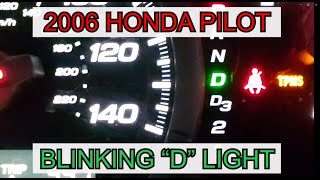
- Check Engine Light or flashing 'D' (Drive) indicator is on
- Decreased fuel economy
- Unusual whining or clunking sound during shifts
- Replacing the entire transmission when only a simple external solenoid or fluid change was needed.
- Replacing the Powertrain Control Module (PCM) or TCM when the issue is with the solenoid, wiring, or fluid.
- Replacing the wrong shift solenoid due to misidentification.
Most Likely Causes
- Low, Dirty, or Incorrect Transmission Fluid 🔴 High Probability → Shop Transmission Assembly Honda automatic transmissions are notoriously sensitive to fluid condition. Deteriorated fluid can lose its hydraulic properties and contain contaminants that cause solenoids to stick or hydraulic passages to become restricted.
How to confirm: Check the transmission fluid level and condition using the dipstick (if equipped). The fluid should be at the correct level, red in color, and not smell burnt. Dark, brown, or contaminated fluid is a clear indicator for a fluid change. For the 9-speed, the fluid level check is more complex and does not use a dipstick.
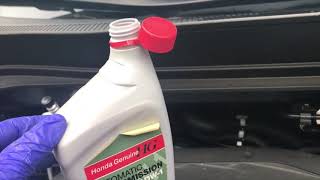
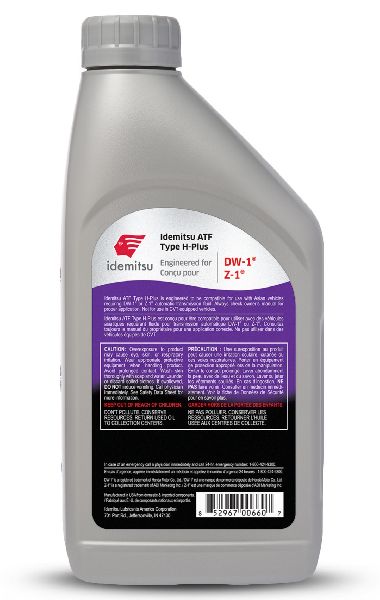
Typical fix: Perform a transmission fluid drain and fill using the correct Honda Genuine ATF-DW1 (for 5/6-speed) or ATF Type 3.1 (for 9-speed). Sometimes multiple drain-and-fills are needed to replace a majority of the old fluid. This is often the first and most successful step in resolving solenoid-related codes.
Est. part cost: $40-$120 for fluid - Failed Shift Solenoid 'C' 🟡 Medium Probability → Shop Transmission Valve Body Solenoids can fail electrically (internal short/open circuit) or mechanically (plunger gets stuck from debris or wear) over time due to heat cycles and constant use.
How to confirm: A factory service manual procedure involves testing the solenoid's resistance with a multimeter (a good solenoid typically reads between 13.8 and 17.1 Ohms). A bidirectional scan tool can also be used to command the solenoid on and off while listening for an audible 'click'. The faulty solenoid can be identified and tested once removed.
Typical fix: Replace the faulty shift solenoid 'C'. On many Honda Pilots, this is an external part bolted to the transmission case, making it accessible without removing the transmission. For the 5-speed transmission, the Linear Solenoid Assembly (which includes multiple solenoids) is a common replacement part. 🎬 Watch: How to replace the dual linear shift solenoid
Est. part cost: $50-$250 - Wiring or Connector Issue ⚪ Low Probability Not specific to this vehicle, but wiring harnesses can become damaged from heat, vibration, or road debris, leading to shorts, open circuits, or corroded connections that disrupt the signal from the TCM.
How to confirm: Visually inspect the wiring harness leading to the shift solenoid for any signs of damage, corrosion, or loose connections. Use a multimeter to check for continuity and for shorts to power or ground.
Typical fix: Repair the damaged section of the wiring harness or replace the connector.
Est. part cost: $10-$50 for repair materials
Rare But Worth Checking
- Faulty Transmission Control Module (TCM): → Shop Transmission Assembly This is rare, but the TCM can fail and continuously command the solenoid to stay on. This should only be considered after all other possibilities (fluid, solenoid, wiring) have been thoroughly ruled out. Often, a faulty TCM will be accompanied by other communication-related trouble codes.
- Internal Transmission Failure: → Shop Transmission Assembly If the transmission fluid is found to have significant metal debris or excessive clutch material, it indicates a more severe internal problem like clutch pack failure or a clogged valve body. In this case, simply replacing the solenoid will not fix the root cause, and a transmission rebuild or replacement may be necessary.
Diagnosis Steps
- Check the transmission fluid level and condition. Top off or replace if low, dirty, or burnt. This is the most critical first step.
- Use a quality OBD-II scanner to confirm P0762 and check for any other related transmission codes. Record the freeze frame data to understand the conditions under which the code was set.
- Inspect the wiring and connector at Shift Solenoid 'C' for any visible damage, corrosion, or loose pins.
- Using a service manual, locate Shift Solenoid 'C'. For 2011-2015 models, this is often part of the Linear Solenoid Assembly on the front of the transmission case.
- Test the solenoid's resistance with a multimeter. A typical Honda solenoid should measure between 13.8-17.1 ohms. A reading outside this range indicates a failed solenoid. 🎬 Watch: Diagnostic steps for a P0762 code
- If you have a bidirectional scanner, command the solenoid on and off while listening for a distinct 'click' to test its mechanical operation.
- If the solenoid fails testing, replace it. Be sure to also replace any associated gaskets.
- If the solenoid and wiring are good, the problem may be a clogged hydraulic passage in the valve body or, in rare cases, the TCM itself.
- After any repair, clear the code, perform a PCM idle learn procedure if required (especially for 2016 models), and perform a test drive, allowing the transmission to shift through all gears to ensure the problem is resolved.
Parts You'll Likely Need
- Shift Solenoid 'C' / Linear Solenoid Assembly
(OEM #28250-R97-004 (For many 2009-2015 5-speed models))— This is the component directly identified by the fault code as being stuck on. For the 5-speed transmission, Solenoid 'C' is often integrated into this larger assembly.
Trusted brands: Honda (OEM), Rostra, Standard Motor Products
OEM price range: $150-$250
Aftermarket price range: $70-$150 - Automatic Transmission Fluid — Low or degraded fluid is a primary cause of solenoid and general transmission issues. Using the correct OEM fluid is critical for Honda transmissions.
Trusted brands: Honda Genuine ATF-DW1 (5/6-speed), Honda Genuine ATF Type 3.1 (9-speed)
OEM price range: $10-$15 per quart
Related Codes That Often Appear With This One
- P0700 — P0700 is a generic code indicating that the Transmission Control Module (TCM) has stored a fault. It acts as a 'master light' and will almost always appear alongside a specific transmission code like P0762.
- P0761, P0763, P0764 — These are all codes related to Shift Solenoid 'C'. P0761 means 'Stuck Off', while P0763 and P0764 indicate electrical or intermittent faults with the same solenoid. Seeing them together can help pinpoint whether the issue is mechanical or electrical.
- P0729 - P0736 (Incorrect Gear Ratio Codes) — These codes indicate a mismatch between the commanded gear and the actual gear ratio achieved. A stuck solenoid like in P0762 is a direct cause for these types of codes.
Technical Service Bulletins (TSBs) & Recalls
- TSB 20-029: Addresses harsh or jerky upshifts on 9-speed transmissions with a TCM software update.
- TSB 17-040: Pertains to a vibration or judder under light acceleration, often fixed with software updates, fluid changes, and potentially torque converter replacement.
- TSB 17-035: Warranty extension for the 9-speed transmission ATF warmer due to potential internal leaks causing fluid cross-contamination.
- TSB 15-086: An initial TSB for transmission judder, recommending a software update and fluid change.
Platform-Specific Known Issues
- 9-Speed ZF Transmission Issues (2016-2017): → Shop Transmission Assembly The 9-speed ZF transmission in Touring and Elite trims has been subject to complaints, TSBs, and class-action lawsuits regarding harsh shifting, delayed engagement, and software issues. Honda has released software updates (e.g., TSB 20-029) to address harsh upshifts. While not a direct cause of P0762, a technician should be aware of the history of software-related fixes for this transmission, as a TCM reflash might be part of a comprehensive repair.
Mechanic-Grade Diagnostic Values
- Shift Solenoid 'C' Resistance — expected: 13.8 - 17.1 Ohms. Failure: A reading of 0 Ohms (short circuit), infinite Ohms (open circuit), or any value outside the specified range.
Scan Tool Commands That Help
- Honda Diagnostic System (HDS): Shift Solenoid Valve A, B, C, D, and E Test (in Miscellaneous Test Menu) — Use this bidirectional command after checking fluid and wiring. It allows the technician to individually command each solenoid on and off to listen for an audible 'click', confirming mechanical operation without removal. If no click is heard from Solenoid C, it points to a failed solenoid or a wiring issue preventing the command from reaching it.
Wiring & Ground Locations
- G101 — Top of the transmission.. This is a primary ground point for many engine and transmission components. A loose or corroded G101 ground can cause a variety of intermittent electrical issues, including erratic solenoid behavior. It should be inspected for tightness and cleanliness during any electrical diagnosis for transmission codes.
- G2 / G3 — G2 is on the right side of the engine compartment; G3 is under the left front of the engine compartment.. These are major chassis grounds. While less direct than G101, poor connections at these points can create floating grounds and voltage issues that may affect the PCM/TCM's ability to accurately control the transmission solenoids.
- Shift Solenoid 'C' Connector — For 2011-2015 5-speed models, Solenoid C is part of the linear solenoid assembly on the front or top of the transmission case. For 2016+ 6-speed/9-speed models, individual solenoids are often located on the valve body, which may be internal or external. The connector for Solenoid C is typically green.. This is the direct connection point for testing. Technicians will probe the pins at this connector to measure resistance and check for voltage from the TCM. Corrosion or damage here is a common cause of electrical solenoid codes.
OEM Part Supersession History
28250-R97-003→28250-R97-004— Standard part revision by the manufacturer for improvements or supplier changes.
Heads up: The newer part number (28250-R97-004) is the correct and backward-compatible replacement for the linear solenoid assembly on 2011-2015 Honda Pilots with the 5-speed automatic transmission.
Model Year Variations Within This Range
- 2011-2015: These models use a 5-speed automatic transmission. Shift Solenoid 'C' is typically part of a larger linear solenoid assembly located externally on the top or front of the transmission case, often requiring removal of the battery and air intake for access.
- 2016-2017: These models use a 6-speed or 9-speed (ZF) automatic transmission. The location of Shift Solenoid 'C' is different from the 5-speed models. It is an individual solenoid, and depending on the transmission, it may be located externally or internally, requiring removal of the transmission pan for access. Part numbers are not interchangeable with the 2011-2015 models.
Diagnostic Flowchart
Other Known Issues on This Vehicle
Issues unrelated to this code that are worth knowing about as an owner of this generation:
- Variable Cylinder Management (VCM) Issues 🔴 High — Common across all J35 engines with VCM. Can lead to fouled spark plugs, excessive oil consumption, and engine vibrations. A class-action lawsuit was filed regarding these issues. (Ref: Honda extended the warranty on some models for engine misfires related to VCM, but no formal recall was issued to disable the system.)
- Timing Belt Maintenance 🔴 High — The J35 is an interference engine, requiring timing belt and water pump replacement typically around 7 years or 100,000 miles. Failure to do so can result in catastrophic engine damage.
- Excessive Oil Consumption 🟠 Medium — Often linked to the VCM system causing oil to bypass the piston rings on deactivated cylinders. Can lead to premature catalytic converter failure and engine damage if the oil level is not monitored.
- Fuel Injector Failures (2016+ models) 🟠 Medium — More common on the third-generation Pilot with direct injection. Failure can cause misfires and drivability issues, and can be an expensive repair.
- Infotainment System Glitches 🟡 Low — Owners of third-generation Pilots (2016-2017) frequently report issues with the infotainment screen freezing, going black, or being unresponsive. (Ref: Software updates were released to address some of these concerns.)
Used vs. New Parts: Buying Guide for This Vehicle
When a used part is the smart pick: A used OEM linear solenoid assembly from a reputable salvage yard can be a cost-effective option, especially for the 2011-2015 models. The failure is often electrical in one part of the assembly, so a used unit from a lower-mileage, non-collision donor vehicle is a reasonable gamble.
Donor-vehicle mileage cap: roughly under 80000 miles for the part to have meaningful remaining life.
What to inspect on the donor part:
- Verify the donor vehicle's mileage if possible.
- Inspect the electrical connectors for any corrosion, cracks, or broken locking tabs.
- Check the small filter screens on the solenoid body. They should be clean and free of any metallic debris. Heavy contamination suggests the donor transmission had internal problems.
- Ask about the salvage yard's return policy in case the part is DOA.
OEM-only on this vehicle (don't cheap out):
- Transmission Fluid (ATF-DW1 or ATF Type 3.1). Using non-Honda fluid is a well-documented cause of shifting problems and solenoid failure in these transmissions.
Aftermarket brands forum-validated for this vehicle:
- Standard Motor Products (SMP)
- Rostra
- Beck/Arnley
Brands owners have reported issues with on this vehicle:
- No-name, unbranded solenoids from online marketplaces should be avoided. They often have high failure rates and may not meet OEM specifications for resistance and hydraulic flow, leading to persistent codes or poor shift quality.
Real Owner Stories
Aggregated from forums and TSBs cited above. Mileages and costs reflect what owners reported in those sources.
2017 Honda Pilot 9-Speed
Symptoms: Premature ATF wear-out and a noticeable transmission judder.
What fixed it: The dealer performed a triple drain-and-fill procedure as outlined in Honda's TSBs.
Source hint: BobIsTheOilGuy.com - 2017 Honda Pilot ATF Experience
2016 Honda Pilot Touring/Elite
Symptoms: Harsh upshifts and jerky gear engagement.
What fixed it: TCM software update (TSB 20-029).
Source hint: TSB 20-029
2011-2015 Honda Pilot
Symptoms: Transmission issues related to fluid condition and solenoid sticking; members often discuss the 'D' indicator flashing.
What fixed it: Replacement of the Linear Solenoid Assembly and using genuine Honda ATF-DW1 fluid.
Source hint: Piloteers.org
Related OBD-II Codes
Frequently Asked Questions
My 2016 Honda Pilot Touring is shifting very harshly. Is there a software fix for this?
What specific transmission fluid should I use for my 2012 Honda Pilot to fix solenoid-related codes?
I have a 2017 Pilot Elite with a transmission 'judder.' Is this covered under warranty?
Can I test Shift Solenoid 'C' myself on a 2013 Pilot?
Is the 9-speed transmission fluid check the same as the 5-speed model?
Helpful Videos
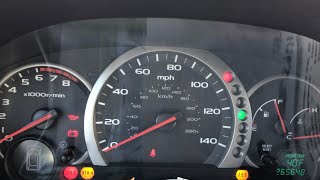



Used OEM Parts in Stock
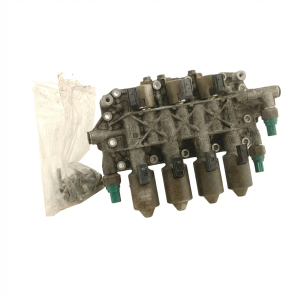
New Aftermarket Parts Available


The information in this article is provided for general reference and educational purposes only. Vehicle specifications, procedures, and part compatibility can vary by production date, trim level, and region. Always consult your vehicle's factory service manual and verify part numbers before purchasing or performing repairs. Safety-critical components such as airbags, seat belts, and braking systems should be installed by a qualified professional.
- Honda Pilot:
- 🧭 Diagnostic Flowchart
- 🎬 Helpful Videos
- 🛍️ Shop This Part
- What's Unique About the 2011-2017 Honda Pilot
- Symptoms You May Notice
- Most Likely Causes
- Rare But Worth Checking
- Diagnosis Steps
- Parts You'll Likely Need
- Related Codes That Often Appear With This One
- Technical Service Bulletins (TSBs) & Recalls
- Platform-Specific Known Issues
- Mechanic-Grade Diagnostic Values
- Scan Tool Commands That Help
- Wiring & Ground Locations
- OEM Part Supersession History
- Model Year Variations Within This Range
- Other Known Issues on This Vehicle
- Used vs. New Parts: Buying Guide for This Vehicle
- Real Owner Stories
- 2017 Honda Pilot 9-Speed
- 2016 Honda Pilot Touring/Elite
- 2011-2015 Honda Pilot
- Related OBD-II Codes
- Frequently Asked Questions
- 🎟️ Get 5% Off