

P0767 on 2012-2016 Hyundai Elantra 1.8L: Shift Solenoid 'D' Stuck On Causes and Fixes
This code means a transmission shift solenoid is stuck on, likely causing harsh shifting or getting stuck in gear. The most common fixes are replacing the low/dirty transmission fluid and filter, or replacing the faulty shift solenoid itself, which is located inside the transmission.
- P0767 means Shift Solenoid 'D' is stuck on, which will cause noticeable shifting problems.
- Always start diagnosis by checking the transmission fluid level and condition, as low or dirty fluid is a very common cause.
- The solenoid is located inside the transmission oil pan, making replacement a job that requires some significant labor.
- Due to the complexity and risk of damage, professional diagnosis and repair are strongly recommended for this code.
- Do not immediately assume the transmission needs to be replaced; the fault is often a much cheaper component like a single solenoid or even just the fluid.
What's Unique About the 2012-2016 Hyundai Elantra
The 2012-2016 Elantra uses a 6-speed automatic transmission (A6MF1). While P0767 is not an exceptionally common, well-documented complaint on this specific model, the repair is notable because the solenoids are located inside the transmission on the valve body. This makes replacement more labor-intensive than an external sensor. Hyundai has issued service bulletins for general shift quality on this transmission, often pointing towards software updates and resetting adaptive values as a first step for shift issues, highlighting the importance of proper computer diagnostics before assuming a hard part has failed. A related TSB for Kia models with the same transmission (TSBTRA051R1) explicitly advises against replacing the entire transaxle for solenoid codes, instead directing technicians to test and replace the individual solenoid.
Symptoms You May Notice
- Check Engine Light is on
- Harsh, delayed, or erratic shifting
- Transmission gets stuck in a single gear (limp mode)
- Vehicle feels sluggish or has weak acceleration
- Increased fuel consumption
- Transmission overheating
- Transmission slipping
- Replacing the entire transmission when only a fluid change or a single solenoid was needed.
- Replacing the TCM before verifying the solenoid and its wiring circuit are functioning correctly.
- Mistaking a simple fluid level or quality issue for a major component failure.
Most Likely Causes
- Low, Dirty, or Contaminated Transmission Fluid 🔴 High Probability → Shop Transmission Assembly Over time, fluid degrades and collects clutch material, which can clog the small passages within the shift solenoids, causing them to stick. This is often the simplest cause and should be checked first.
How to confirm: Check the transmission fluid level and condition. On the A6MF1, this may require a specific procedure as there is no traditional dipstick. The fluid should be at the correct level, pink/red in color, and not smell burnt.
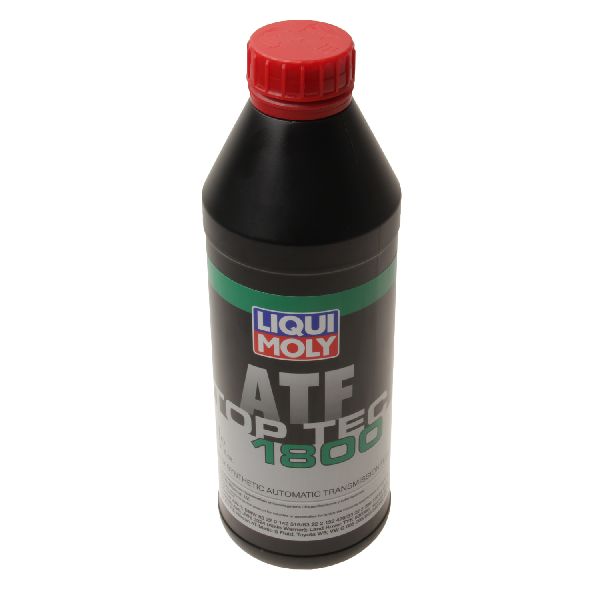
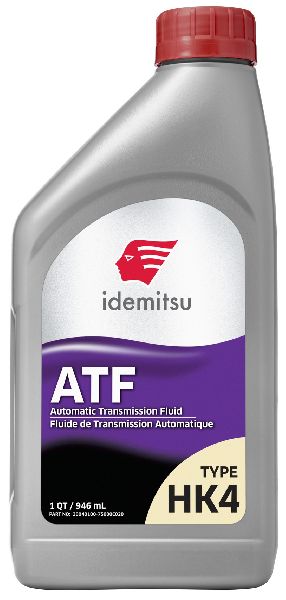
Typical fix: Perform a transmission fluid and filter change. Use fluid that meets Hyundai's SP-IV specification.
Est. part cost: $50-$100 - Failed Shift Solenoid 'D' 🟡 Medium Probability → Shop Transmission Valve Body Solenoids can fail electrically (internal short/open) or mechanically (sticking pintle) due to age and heat cycles. This is a known pattern failure on the A6MF1/A6GF1 family of transmissions.
How to confirm: After confirming fluid is good, a technician can test the solenoid's resistance with a multimeter or use a bi-directional scan tool to command the solenoid on/off and watch for a response. For the A6MF1, VFS (linear) solenoids should measure approximately 5.1-5.3 ohms. This requires accessing the solenoid connector on the transmission. 🎬 Watch: How to clean and test A6MF1 solenoids
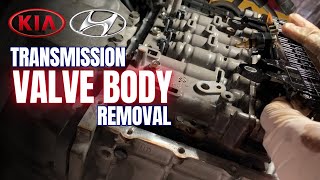
Typical fix: Replace the faulty shift solenoid. The solenoids are located on the valve body inside the transmission pan. It is often recommended to replace the entire solenoid pack or valve body assembly.
Est. part cost: $50-$150 for an individual aftermarket solenoid, or $250-$500+ for a complete solenoid pack or valve body assembly. - Wiring Harness or Connector Issue ⚪ Low Probability While less common, wires in the transmission harness can become shorted to power, causing the solenoid to stay energized constantly. Corrosion or damage to the main transmission connector can also cause this fault.
How to confirm: Visually inspect the external transmission harness for damage. A technician would test the circuit for a short-to-voltage from the TCM connector to the transmission connector.
Typical fix: Repair the damaged section of the wiring harness.
Est. part cost: $10-$50 for wiring supplies.
Rare But Worth Checking
- Faulty Transmission Control Module (TCM): → Shop Transmission Assembly This is rare. The TCM's internal driver circuit for solenoid 'D' can fail, sending constant power to the solenoid. This should only be considered after all other possibilities (fluid, solenoid, wiring) have been exhaustively ruled out.
- Internal Valve Body Failure: → Shop Transmission Valve Body A blockage in the hydraulic passages of the valve body or a sticking valve can mimic a solenoid failure. Often, the valve body is replaced as an assembly with new solenoids.
Diagnosis Steps
- Check Transmission Fluid: Verify the fluid level is correct and inspect its condition. Dirty, dark, or burnt-smelling fluid indicates a need for a fluid and filter change.
- Scan for Codes: Use an OBD-II scanner to confirm P0767 and check for any other related transmission codes.
- Inspect External Wiring: Visually inspect the transmission wiring harness and connectors for any obvious signs of damage, corrosion, or loose connections.
- Test the Solenoid Circuit: Using a multimeter, test the resistance of the Shift Solenoid 'D' at the transmission connector. Compare the reading to the manufacturer's specification (typically 5.1-5.3 ohms for VFS solenoids in this transmission). Also, check for a short to power on the control wire, which would indicate a wiring fault or a failed TCM driver.
- Command the Solenoid: A professional-grade scan tool can be used to command the solenoid on and off. A lack of an audible click from the transmission pan or no change in operation may point to a faulty solenoid.
- Internal Inspection: If the circuit tests good, the next step is to drain the fluid, remove the transmission pan, and visually inspect the solenoid and its wiring inside the transmission. At this point, the solenoid can be removed and bench-tested.
- Consider TCM: If the solenoid and wiring are confirmed to be good, the final step is to investigate the Transmission Control Module (TCM) as the potential source of the fault.
Parts You'll Likely Need
- Automatic Transmission Shift Solenoid
(OEM #46313-3B030 (Verify by VIN, often for Shift A/B, but illustrates part number series))— This is the component directly identified by the code. It can fail electrically or mechanically, causing it to stick. Solenoid failure is a known issue on the A6MF1 transmission.
Trusted brands: Standard Motor Products, Rostra, Genuine Hyundai
OEM price range: $250-$500 (for a valve body assembly)
Aftermarket price range: $50-$150 (for an individual solenoid) - Automatic Transmission Fluid (SP-IV)
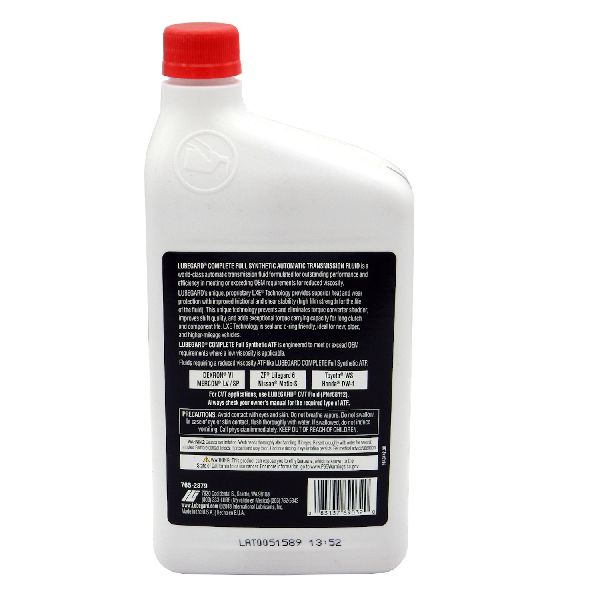
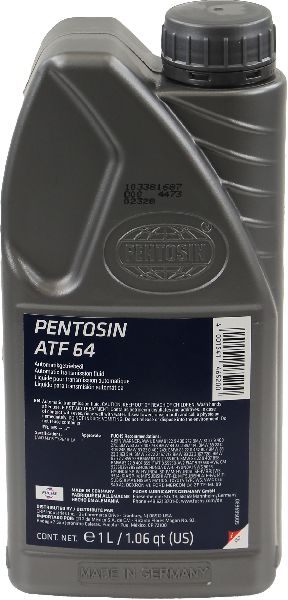
(OEM #UM090-CH042 (example))— Low or degraded fluid is a primary cause of solenoid issues and must be replaced when servicing internal transmission components.
Trusted brands: Hyundai/Kia Genuine, Idemitsu, Castrol Transmax
OEM price range: $15-$25 per quart
Aftermarket price range: $10-$18 per quart - Automatic Transmission Filter Kit — Should be replaced whenever the transmission pan is removed to ensure the new fluid stays clean.
Trusted brands: Wix, ATP, Beck/Arnley
OEM price range: $30-$60
Aftermarket price range: $20-$40
Related Codes That Often Appear With This One
- P073x (e.g., P0734) — Incorrect gear ratio codes can appear alongside solenoid codes because a stuck solenoid prevents the transmission from achieving the correct gear, leading to a mismatch between expected and actual gear ratios.
- P0750-P0774 — Other shift solenoid codes may appear if there is a widespread electrical issue, a problem with the shared power/ground circuit, or significant fluid contamination affecting multiple solenoids.
Technical Service Bulletins (TSBs) & Recalls
- 18-AT-004: Addresses harsh/delayed shifts for the A6MF1 transmission by providing a procedure to measure shift engagement times using the GDS diagnostic tool.
- 19-AT-010H: Provides a procedure for transferring oil pressure data to a new ECU/TCU or after a transmission replacement to improve shift quality and reduce learning time.
- TSBTRA051R1 (Kia): While for Kia, it applies to the same A6GF1/A6MF1 transmissions and is highly relevant. It advises against replacing the entire transaxle for solenoid codes like P0763/P0768, instead directing technicians to replace the specific faulty solenoid.
Platform-Specific Known Issues
- The A6MF1 transmission has eight solenoids located on the valve body, which can make identifying the correct 'D' solenoid tricky without a proper diagram.
- A relearn procedure may be necessary after replacing solenoids or the valve body to ensure proper shift quality. This typically involves a specific drive cycle.
Mechanic-Grade Diagnostic Values
- Shift Solenoid Resistance (VFS / Linear type) — expected: 5.1 - 5.3 ohms. Failure: A reading significantly higher (open circuit) or lower (short circuit) than this range indicates a failed solenoid coil.
- Shift Solenoid Resistance (On/Off type) — expected: 10 - 11 ohms. Failure: A reading outside this range points to a failure in the on/off solenoid's coil.
- Solenoid Actuation Current (VFS / Linear type) — expected: 50 mA (low current) to 850 mA (high current). Failure: This is a live data value to be monitored with a scan tool. If the TCM commands a current change but the solenoid's hydraulic function doesn't respond, it indicates a mechanical (sticking) failure.
Scan Tool Commands That Help
- Hyundai GDS (Global Diagnostic System): Resetting Auto T/A values — This function must be performed after replacing the transaxle, valve body, or individual solenoids. It erases the learned shift adaptation values from the TCM, which is a mandatory first step before the relearn procedure.
- Hyundai GDS (Global Diagnostic System): AT Adaptation Mode (Relearn Procedure) — After resetting the adaptive values, this guided procedure allows the TCM to relearn the clutch engagement points and solenoid operation. It involves a specific drive cycle of accelerating and decelerating through all gears multiple times until the ATF is at operating temperature. Failure to perform this can result in harsh or erratic shifting.
Wiring & Ground Locations
- Transmission Main Connector — On top of the transaxle case. The harness connector must be released, and a retainer bolt removed to push the internal harness connector down into the case before dropping the oil pan.. This is the primary point for testing solenoid resistance and checking for wiring faults (shorts/opens) between the TCM and the transmission without having to drop the pan first. A damaged pin or corrosion here can cause a variety of solenoid codes, including P0767.
OEM Part Supersession History
46313-3B072→46313-3B075— Part revision for improved reliability or manufacturing process change.
Heads up: The new part number (46313-3B075) is a direct replacement for the old one. This specific part is often listed as the '2-6 Brake' solenoid.
Model Year Variations Within This Range
- Early vs. Late A6MF1: Early A6MF1 transmissions used a valve body with 8 solenoids. Later versions, often referred to as Generation 2, use a valve body with 7 solenoids. It is critical to verify the vehicle's specific configuration before ordering parts.
Diagnostic Flowchart
Other Known Issues on This Vehicle
Issues unrelated to this code that are worth knowing about as an owner of this generation:
- Engine Ticking / Piston Slap (1.8L Nu Engine) 🔴 High — Commonly reported between 60,000 and 100,000 miles. Can lead to scored cylinder walls and eventual engine failure. (Ref: While no direct recall, this issue is widely documented in owner forums and by mechanics. A class-action lawsuit was filed concerning these engines.)
- Steering Coupler Failure 🟠 Medium — Very common. A clicking or thudding noise from the steering column when turning is the primary symptom. The rubber coupler disintegrates over time. (Ref: Hyundai extended the warranty for this part to 10 years/100,000 miles via TSB 17-ST-002, but it was not a formal recall. Many vehicles are now outside this warranty period.)
- Peeling Paint 🟡 Low — Widespread complaints, particularly on white and light-colored vehicles, where the paint delaminates and peels in large sheets. (Ref: No recall, but numerous owner complaints and some goodwill repairs from dealers on a case-by-case basis.)
- Brittle Camshaft Position Sensor Connectors 🟡 Low — The plastic connectors for the camshaft position sensors can become brittle from engine heat, leading to poor connections and fault codes like P0365.
Used vs. New Parts: Buying Guide for This Vehicle
When a used part is the smart pick: A used valve body assembly from a low-mileage donor vehicle can be a cost-effective option, as it includes all solenoids. This is often preferable to replacing a single solenoid on a high-mileage valve body, which may have other worn components or clogged passages.
Donor-vehicle mileage cap: roughly under 60000 miles for the part to have meaningful remaining life.
What to inspect on the donor part:
- Verify the donor vehicle's mileage and ensure it had no reported transmission issues.
- Inspect the fluid color from the donor transmission if possible; it should be red/pink, not dark brown or black.
- Look for a clean valve body with no signs of heavy sludge or debris on the exterior.
- Ensure all electrical connectors and plastic tabs are intact and not brittle.
OEM-only on this vehicle (don't cheap out):
- Transmission Control Module (TCM)
Aftermarket brands forum-validated for this vehicle:
- Rostra (for individual solenoids)
- Transgo (for valve body repair kits)
Brands owners have reported issues with on this vehicle:
- Unbranded, no-name valve body assemblies from online marketplaces can have poor quality control and may not be properly tested.
Real Owner Stories
Aggregated from forums and TSBs cited above. Mileages and costs reflect what owners reported in those sources.
2012-2016 Hyundai Elantra 1.8L
Symptoms: Harsh, delayed, or erratic shifting and the transmission getting stuck in a single gear (limp mode).
What fixed it: Replacement of the specific faulty shift solenoid on the valve body rather than replacing the entire transaxle.
Source hint: TSBTRA051R1 (Kia) / TSB 18-AT-004
Related OBD-II Codes
Frequently Asked Questions
Does TSB 18-AT-004 apply to my 2012-2016 Hyundai Elantra with the A6MF1 transmission?
My Elantra is stuck in one gear and feels sluggish; is this a common failure for the A6MF1/A6GF1 transmission family?
Can I just replace the faulty Shift Solenoid 'D' instead of the whole transmission?
What kind of transmission fluid should I use for my 2012-2016 Elantra to prevent P0767?
Is there a specific procedure required after I replace the solenoid or valve body?
How can I tell if my P0767 code is a solenoid failure or a wiring issue?
Helpful Videos


We Have This Part in Stock


The information in this article is provided for general reference and educational purposes only. Vehicle specifications, procedures, and part compatibility can vary by production date, trim level, and region. Always consult your vehicle's factory service manual and verify part numbers before purchasing or performing repairs. Safety-critical components such as airbags, seat belts, and braking systems should be installed by a qualified professional.
- Hyundai Elantra:
- 🧭 Diagnostic Flowchart
- 🎬 Helpful Videos
- 🛍️ Shop This Part
- What's Unique About the 2012-2016 Hyundai Elantra
- Symptoms You May Notice
- Most Likely Causes
- Rare But Worth Checking
- Diagnosis Steps
- Parts You'll Likely Need
- Related Codes That Often Appear With This One
- Technical Service Bulletins (TSBs) & Recalls
- Platform-Specific Known Issues
- Mechanic-Grade Diagnostic Values
- Scan Tool Commands That Help
- Wiring & Ground Locations
- OEM Part Supersession History
- Model Year Variations Within This Range
- Other Known Issues on This Vehicle
- Used vs. New Parts: Buying Guide for This Vehicle
- Real Owner Stories
- 2012-2016 Hyundai Elantra 1.8L
- Related OBD-II Codes
- Frequently Asked Questions
- 🎟️ Get 5% Off