

P0776 on 2010-2017 GMC Terrain: Pressure Control Solenoid 'B' Causes and Fixes
On a 2010-2017 GMC Terrain, code P0776 is most often caused by a broken internal '3-5-R waved plate,' not just a bad solenoid. This is a major transmission repair requiring disassembly and is not a simple DIY fix. Expect costs to be significant, often involving a partial or full transmission rebuild.
- P0776 on a 2010-2017 Terrain is a serious code that points to a probable internal mechanical failure, not just a bad sensor.
- The most likely culprit is a broken 3-5-R waved plate, as documented in a GM Technical Service Bulletin.
- Symptoms often include harsh shifting and the loss of Reverse, 3rd, and 5th gears.
- This is not a DIY-friendly repair. It requires transmission removal and disassembly by a qualified professional.
- Simply replacing the solenoid or flushing the fluid will not fix the underlying mechanical problem.
What's Unique About the 2010-2017 GMC Terrain
For the first-generation GMC Terrain (and its sibling, the Chevy Equinox), P0776 is very frequently a symptom of a well-documented mechanical failure inside the 6T40/6T45 transmission, rather than a simple electrical solenoid fault. A specific internal component, the 3-5-R clutch waved plate, is known to break. The resulting metal fragments contaminate the fluid, clog passages, and cause the pressure loss that the computer detects as a solenoid performance issue. This transforms the diagnosis from a potential solenoid swap to a probable transmission teardown. This failure is so common that GM issued Technical Service Bulletin PI0780A for 2010-2011 models and a Special Coverage Adjustment (14404B) for earlier related transmissions. Manufacturer Bulletin #PI0780A specifically notes that this condition results in a slip, no reverse, or no 3rd gear condition alongside the illuminated MIL and DTC P0776.
Symptoms You May Notice
- Harsh, delayed, or slamming shifts
- Inability to shift into 3rd, 5th, or Reverse gear
- Transmission slipping between gears
- Vehicle enters 'limp mode' (stuck in a lower gear, often 3rd)
- Check Engine Light is illuminated
- No Reverse gear engagement
- Replacing only the pressure control solenoid without checking for a broken waved plate. The new solenoid will soon fail or the code will return due to ongoing contamination and pressure loss.
- Performing a transmission fluid flush. A power flush can dislodge large debris and force it into sensitive areas like the valve body, worsening the problem if the root mechanical failure isn't fixed.
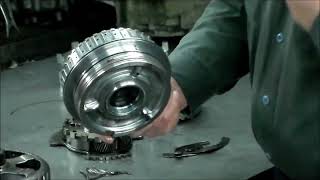
- Replacing the entire transmission without cause. While often necessary, TSB 09-07-30-012F notes that in many cases, the transmission can be successfully repaired by replacing the failed components and thoroughly cleaning the case, pump, and valve body, which can be more cost-effective. 🎬 Watch: How to fix your 6T45 transmission for cheap
Most Likely Causes
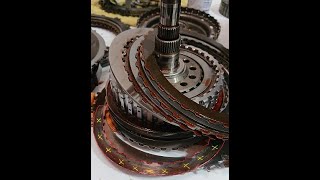
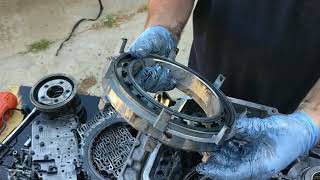
- Broken 3-5-R Apply (Waved) Plate 🔴 High Probability This is a known design flaw in the 6T40/6T45/6T50 series transmissions 🎬 Watch: A breakdown of common 6T40 transmission failure points, documented in GM TSBs PI0780A and 09-07-30-012F. The plate fractures, sending metallic debris throughout the transmission, which clogs filters and damages other components.
How to confirm: A professional must drop the transmission pan. Finding significant metallic debris (chunks, not just fine dust) in the pan or on the magnet is a definitive indicator. Ultimate confirmation requires transmission disassembly to visually inspect the plate.
Typical fix: The transmission must be removed and completely disassembled. The broken waved plate and the related 3-5-R piston must be replaced with updated parts. The entire transmission, valve body, and cooler lines must be thoroughly cleaned of all debris, and internal filters replaced to prevent a repeat failure.
Est. part cost: $150-$400 for the updated internal hard parts, seals, and fluids. - Low or Contaminated Transmission Fluid 🟡 Medium Probability → Shop Transmission Assembly The fluid becomes heavily contaminated with sharp metal fragments from the failing waved plate. While low fluid can cause issues on its own, on this vehicle it's almost always a symptom of the larger mechanical failure rather than the root cause.
How to confirm: Check the transmission fluid level and condition. Fluid that is dark, burnt-smelling, or contains visible metallic particles indicates a serious internal problem.
Typical fix: A fluid and filter change is only a diagnostic first step. If the fluid is heavily contaminated, the root cause (the broken waved plate) must be addressed. A simple fluid change will not fix the problem.
Est. part cost: $75-$150 for fluid and a filter. - Faulty Pressure Control Solenoid 'B' ⚪ Low Probability → Shop Transmission Valve Body The solenoid itself rarely fails electrically. It is far more likely to be clogged or physically damaged by the metal debris from the broken waved plate, causing it to stick in the 'off' position. Manufacturer Bulletin #PIP4831E advises technicians to specifically look for debris in the valve body when codes like P0776 and P0777 are present.
How to confirm: A professional can use a bi-directional scan tool to command the solenoid on and off while monitoring pressure. However, even if the solenoid tests bad, it is likely a symptom. The key is to inspect for debris in the pan.
Typical fix: Replacement of the solenoid, which is located on the valve body inside the transmission. This is almost always done as part of the larger waved plate repair, not as a standalone fix.
Est. part cost: $40-$90 for the individual solenoid.
Rare But Worth Checking
- Damaged Transmission Pump: → Shop Transmission Assembly As per TSB PI0324F, a damaged transmission pump can cause low line pressure, which may trigger P0776 along with other codes.
- Faulty Transmission Control Module (TCM): → Shop Transmission Assembly It is rare for the TCM to fail, but it can happen. Bulletin #PIP4831E suggests reviewing the date code on the Transmission Control Module when diagnosing P0776.
- Wiring Harness Damage: A damaged wire or corroded connector between the TCM and the transmission can interrupt the signal to the solenoid. This is uncommon but possible.
Diagnosis Steps
- Check the transmission fluid level and condition. Note any dark color, burnt smell, or visible metallic particles. This is a critical first step.
- Scan the TCM for all stored trouble codes. Note if P0776 appears with other transmission codes like P0700 or other solenoid codes. Manufacturer Bulletin #PIP4379N notes that P0776 may appear alongside a range of codes including P0701, P0731, P0733, P0734, P0736, and P0894.
- With a professional scan tool, monitor the live data for commanded vs. actual transmission pressure and gear states.
- Have a professional drop the transmission oil pan and inspect for metal shavings on the magnet and in the bottom of the pan. This is the key diagnostic step for this vehicle. The presence of sizable metal chunks confirms the waved plate failure.
- If significant debris is found, the transmission must be removed for inspection and repair of the 3-5-R clutch assembly.
- If no debris is found (which is unlikely for this code on this vehicle), proceed with testing the solenoid's resistance and checking the wiring harness for continuity and shorts.
- Command the solenoid with a scan tool to verify its mechanical operation, but be aware that debris can cause intermittent sticking.
Parts You'll Likely Need
- 3-5-R Apply (Waved) Plate
(OEM #24254103)— This is the primary point of failure. This part number corresponds to the updated, more durable plate designed by GM to fix the issue.
Trusted brands: ACDelco (GM Genuine)
OEM price range: $20-$40
Aftermarket price range: $15-$30 - 3-5-R Piston
(OEM #24259061)— GM TSB PI0780A recommends replacing this piston along with the waved plate during the repair to ensure durability and proper function, as the original design was also updated.
Trusted brands: ACDelco
OEM price range: $40-$70
Aftermarket price range: $30-$60 - Transmission Overhaul Seal & Gasket Kit — Required for reassembling the transmission after it has been taken apart for the waved plate repair. Includes critical one-time-use seals and gaskets.
Trusted brands: ACDelco, Mahle, Transtar
OEM price range: $150-$250
Aftermarket price range: $100-$200 - Control Solenoid Filter Plate — This filter plate for the valve body must be replaced as it becomes clogged with debris from the failure. Failure to replace it can lead to a repeat failure.
Trusted brands: ACDelco
OEM price range: $25-$50
Aftermarket price range: $20-$40 - Pressure Control Solenoid 'B' (PC Solenoid 2) — Replaced preventatively or if it fails testing. It can be damaged by debris from the primary failure, but is rarely the root cause.
Trusted brands: ACDelco, Bosch
OEM price range: $50-$100
Aftermarket price range: $30-$70
Related Codes That Often Appear With This One
- P0700 — This is a generic transmission fault code. It simply means the Transmission Control Module (TCM) has stored a more specific code (like P0776) and has requested the Check Engine Light.
- P0796 — This code is for Pressure Control Solenoid 'C'. If significant debris is present from a mechanical failure, it can affect multiple solenoids and passages, causing several codes to appear at once.
- P0777, P2723, P0717, P0716, P2715, P2714 — TSB 09-07-30-012F explicitly states that any of these codes can be set as a direct result of the 3-5-R wave plate breaking, as the debris affects other components and sensors.
Technical Service Bulletins (TSBs) & Recalls
- PI0780A: Addresses a condition of slip, no reverse, or no 3rd gear, often accompanied by DTC P0776, caused by a broken 3-5-R apply (waved) plate in 2010-2011 models.
- 09-07-30-012F: A detailed bulletin explaining the P0776 code, the cause (broken 3-5-R wave plate), and the critical importance of cleaning all debris from the transmission during repair to prevent a comeback.
- 14404B: A Special Coverage Adjustment (extended warranty) for earlier models (2007-2009) with the related 6T70/6T75 transmission for the exact same wave plate failure, demonstrating the history of this issue.
- 14-07-30-001D: Details the transmission adaptive learn procedure that must be performed with a scan tool after major transmission repairs or replacement to ensure proper shift quality.
- Bulletin #PIP4379N: Notes that technicians may find P0776 alongside codes P0701, P0731, P0732, P0733, P0734, P0736, P0751, P0756, P0761, P0843, P0848, P0873, P0877, P0894 or P2723.
- Bulletin #PIP4831E: Advises technicians to look for debris in the valve body for codes P0751, P0752, P0756, P0757, P0776, P0777, P0796, P0797, P2714 or P2715.
Platform-Specific Known Issues
- A broken 3-5-R apply (waved) plate inside the 6T40/6T45 transmission is the widely documented cause for P0776 on 2010-2011 models, per TSB PI0780A. While the TSB targets these years, the issue is known to affect later models as well, though potentially at a lower rate.
Mechanic-Grade Diagnostic Values
- Pressure Control Solenoid (PCS) Resistance — expected: 3-5 Ohms. Failure: A reading outside this range, or an open/short circuit (OL/0 Ohms), indicates a failed solenoid. A reading of ~5.3 Ohms is common for a good solenoid.
- Shift Solenoid (SS) Resistance — expected: 16-20 Ohms. Failure: A reading outside this range indicates a failed shift solenoid. While not the direct cause of P0776, it can point to general TEHCM health issues.
- Pressure Switch Laminate Disc Resistance (Gen 1 models only) — expected: 0.5 - 10 Ohms (switch not pressed/closed). Failure: An O.L. (open) reading when the switch is not pressed, or resistance when it is pressed, indicates a failed switch laminate. Loose rivets can also cause intermittent open circuits.
Scan Tool Commands That Help
- GDS2 / Tech2 (or capable professional scanner): Automated Solenoid Cleaning Procedure — This should be one of the first diagnostic steps. The tool commands the TCM to cycle all solenoids under pressure to dislodge small amounts of debris. If this temporarily resolves the issue, it strongly points to contamination as the cause (likely from a failing waved plate).
- GDS2 / Tech2 (or capable professional scanner): Transmission Adaptive Values Learn — This procedure is mandatory after replacing the transmission, valve body, or the entire TEHCM (TCM/solenoid assembly). It allows the control module to learn the hydraulic characteristics of the new components for smooth shifting.
- GDS2 / Tech2 (or capable professional scanner): Solenoid Activation Test / Output Controls — Used to command a specific solenoid (like PC Solenoid 'B') on and off to verify its mechanical function. This is often done with the valve body on a bench and connected to a test plate (like Kent Moore DT48616) and shop air to see if the solenoid can correctly open and close its corresponding fluid passage.
- GDS2 / Tech2 with SPS (Service Programming System): TCM Reprogramming / Solenoid Characterization — When replacing the TEHCM, the new module must be programmed with the correct software and calibration data for the specific vehicle. This process downloads factory-calibrated data for the individual solenoids to ensure precise operation.
Wiring & Ground Locations
- TEHCM (Transmission Electro-Hydraulic Control Module) — Inside the transmission, bolted to the valve body.. The TCM, all pressure control solenoids, and pressure switches (on Gen 1) are integrated into this single unit. This means there is no external wiring between the TCM and the P0776-related solenoid to fail. The primary electrical failure points become the main transmission case connector or the internal TEHCM components themselves.
Real Owner Repair Stories
- AR15.com forum user (2009 Saturn Outlook (uses related 6T75 transmission)) — No symptoms reported; owner was performing preventative maintenance.
✅ What actually fixed it Owner preemptively replaced the 3-5-R wave plates to prevent the well-known failure before handing the car down to his son. This highlights the 'ticking time bomb' nature of the original part and the wisdom of replacing it before it fails and destroys other transmission components. - NHTSA ODI #10860285 (GMC Acadia) — An owner reported the check engine light came on and a repair shop found P0700 and P0776 codes. The owner noted these codes reference a well-known problem where the waveplate may be broken.
- NHTSA ODI #11723283 (GMC Yukon XL) — An owner reported driving in limp mode with diagnostic codes for no reverse, P0700, P0776, and P18A1. A mechanic recommended removing and replacing the valve body assembly at a cost of $2,862.40.
OEM Part Supersession History
24223806→24254103— The original 3-5-R waved plate was prone to fracturing. The updated part (24254103) is made of more durable material to prevent this failure.Unknown (Early-style piston)→24259061 (or equivalent aftermarket)— The original 3-5-R piston design was updated for better durability alongside the waved plate. The early-style piston is approximately 1.105" tall, while the updated piston is 1.132" tall. Reusing the early-style piston is not recommended.
Heads up: Using the early-style piston with the new plates may result in incorrect clutch pack clearance and premature failure.
Model Year Variations Within This Range
- 2010-2012 (approx.): These are 'Gen 1' 6T40/45 transmissions. They contain pressure switch laminate discs on the TEHCM that are a known failure point. These switches were eliminated in the 'Gen 2' design starting around 2012.
- 2012+ (approx.): These 'Gen 2' transmissions do not have the failure-prone pressure switches. They also feature different solenoids that are not interchangeable with Gen 1 parts. While the waved plate issue is less prevalent, it can still occur.
Diagnostic Flowchart
Other Known Issues on This Vehicle
Issues unrelated to this code that are worth knowing about as an owner of this generation:
- Excessive Oil Consumption (2.4L Ecotec) 🔴 High — Very common in 2010-2013 models. Caused by worn piston rings, leading to oil consumption rates greater than 1 quart per 2,000 miles. Can lead to low oil levels and engine damage if not monitored. (Ref: Multiple Special Coverage Adjustments (e.g., 15285, 16118, N192291100) were issued to cover piston assembly replacement. A class-action lawsuit was also settled regarding this issue.)
- Stretched Timing Chain (2.4L & 3.0L/3.6L) 🔴 High — Common around 100,000-120,000 miles. Symptoms include engine rattle on startup, and codes like P0011, P0016, or P0017. If the chain fails, it can cause catastrophic engine damage.
- Frozen/Clogged PCV System (2.4L) 🟠 Medium — Occurs in freezing temperatures. Moisture in the PCV orifice and hoses freezes, causing crankcase over-pressurization. This can blow out engine seals, most commonly the rear main seal, leading to a massive oil leak and expensive repairs. (Ref: TSB 14882 was issued for earlier models. Owners in cold climates are advised to proactively clean the PCV orifice or install an updated vented oil cap.)
- StabiliTrak/Wheel Speed Sensor Faults 🟡 Low — Commonly causes 'Service StabiliTrak' warnings and ABS lights. Often caused by corrosion in the wiring harness leading to the front wheel hub assemblies or a failed wheel speed sensor, which is integrated into the hub. (Ref: TSBs like #10139278 and #10135242 were issued to address these problems.)
Used vs. New Parts: Buying Guide for This Vehicle
When a used part is the smart pick: A complete, low-mileage used transmission from a 2013 or newer donor vehicle can be a viable, cost-effective alternative to a full rebuild, as it will likely contain the updated factory parts. However, this is a gamble on the donor's history and condition.
Donor-vehicle mileage cap: roughly under 80000 miles for the part to have meaningful remaining life.
What to inspect on the donor part:
- Verify the donor vehicle's model year is 2013 or newer.
- Check available history reports for maintenance records.
- Inspect the fluid if possible. Bright red, clear fluid is a good sign; dark, burnt, or metallic fluid is a major red flag.
- Look for external damage to the transmission case, connectors, and axle seals.
OEM-only on this vehicle (don't cheap out):
- 3-5-R Apply (Waved) Plate (PN: 24254103)
- 3-5-R Piston (PN: 24259061)
- Control Solenoid Filter Plate
Aftermarket brands forum-validated for this vehicle:
- Sonnax (for rebuild kits, pressure switch repair kits, and other improved internal components)
Brands owners have reported issues with on this vehicle:
- Unbranded, no-name clutch/seal kits or individual solenoids from online marketplaces. The labor for an internal transmission repair is too high to risk using parts of unknown quality.
Real Owner Stories
Aggregated from forums and TSBs cited above. Mileages and costs reflect what owners reported in those sources.
2012 Chevrolet Malibu
Symptoms: The vehicle set a P0776 trouble code, leading to a professional diagnosis.
What fixed it: A mechanic confirmed the code pointed to an internal failure and that a fluid change would be ineffective. The owner was quoted $3,950 for a replacement transmission with a warranty.
Cost: $3950-$3950
Source hint: 2CarPros Forum - P0776 requires new transmission
Related OBD-II Codes
Frequently Asked Questions
My 2011 GMC Terrain has a P0776 code. What do TSBs PI0780A and 09-07-30-012F say about this?
Why is the P0776 code so common on the GMC Terrain? Is there a design flaw?
Can I fix the P0776 code on my Terrain by just changing the transmission fluid and filter?
My mechanic says the Pressure Control Solenoid 'B' is bad. Is replacing just the solenoid enough to fix P0776?
My friend's 2015 Chevy Equinox has the same shifting problems. Could it be the same P0776 issue?
After having the transmission rebuilt for the waved plate failure, is there anything special that needs to be done?
Is the waved plate failure on my 2012 Terrain covered by a recall or special warranty like 14404B?
Helpful Videos

We Have This Part in Stock

The information in this article is provided for general reference and educational purposes only. Vehicle specifications, procedures, and part compatibility can vary by production date, trim level, and region. Always consult your vehicle's factory service manual and verify part numbers before purchasing or performing repairs. Safety-critical components such as airbags, seat belts, and braking systems should be installed by a qualified professional.
- GMC Terrain:
- 🧭 Diagnostic Flowchart
- 🎬 Helpful Videos
- 🛍️ Shop This Part
- What's Unique About the 2010-2017 GMC Terrain
- Symptoms You May Notice
- Most Likely Causes
- Rare But Worth Checking
- Diagnosis Steps
- Parts You'll Likely Need
- Related Codes That Often Appear With This One
- Technical Service Bulletins (TSBs) & Recalls
- Platform-Specific Known Issues
- Mechanic-Grade Diagnostic Values
- Scan Tool Commands That Help
- Wiring & Ground Locations
- Real Owner Repair Stories
- OEM Part Supersession History
- Model Year Variations Within This Range
- Other Known Issues on This Vehicle
- Used vs. New Parts: Buying Guide for This Vehicle
- Real Owner Stories
- 2012 Chevrolet Malibu
- Related OBD-II Codes
- Frequently Asked Questions
- 🎟️ Get 5% Off