

P0780 on 2011-2014 Honda CR-V: Shift Malfunction Causes and Fixes
On a 2011-2014 Honda CR-V, code P0780 indicates a general transmission shift fault, often caused by low/dirty fluid or a failing shift solenoid. Always check for other, more specific transmission codes first, as P0780 is a secondary code set to confirm other faults.
- This code applies only to 2011-2014 Honda CR-Vs with the 5-speed automatic transmission, not the 2015-2016 models with the CVT.
- P0780 is a general 'Shift Malfunction' code; you MUST scan for other, more specific codes to find the root cause.
- The most common and simple first step is to check the transmission fluid level and condition. Use only Honda ATF DW-1 fluid.
- Ignoring this code can lead to severe transmission damage, so it should be addressed promptly.
What's Unique About the 2011-2014 Honda CR-V
The 2011-2016 CR-V range spans two different transmissions. This P0780 code applies specifically to the 5-speed automatic transmission found in the 2011 (3rd Gen) and 2012-2014 (4th Gen) models equipped with the 2.4L K24Z7 engine. The 2015-2016 models use a Continuously Variable Transmission (CVT) with a different 'Earth Dreams' engine and do not use the same shifting logic, so they will not typically display this code for the same reasons. For the affected models, Honda's diagnostic logic uses P0780 as a confirmation code for other, more detailed shift solenoid or pressure switch faults.
Generation note: The specified 2011-2016 range covers two generations and two different automatic transmissions. This P0780 guide is only for the models with the 5-speed conventional automatic: the 2011 (end of 3rd generation) and the 2012-2014 (start of 4th generation). It does NOT apply to the 2015-2016 CR-V, which uses a CVT.
Symptoms You May Notice
- Check Engine Light is on
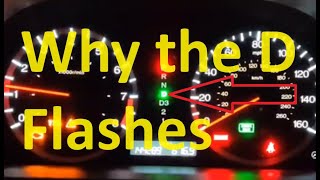
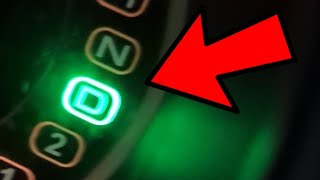
- Flashing 'D' (Drive) indicator light on the instrument cluster
- Harsh or delayed shifting between gears
- Transmission slipping (engine RPMs increase without a corresponding increase in speed)
- Vehicle feels sluggish or has poor acceleration
- Transmission gets stuck in one gear (limp-home mode)
- Inability to shift into a specific gear
- Replacing the entire transmission without first checking fluid, solenoids, or scanning for specific sub-codes.
- Replacing a random shift solenoid without a specific diagnostic code pointing to it.
- Using a generic OBD-II scanner that cannot read Honda-specific transmission codes, thereby missing the root cause.
Most Likely Causes
- Low or Dirty Transmission Fluid 🔴 High Probability → Shop Transmission Assembly Transmission fluid degrades over time, and neglecting the 30,000-60,000 mile service interval is common on higher-mileage vehicles. Incorrect fluid level or contaminated fluid is the most common cause of shifting problems in any automatic transmission.
How to confirm: Check the transmission fluid dipstick for level and color with the engine warm and turned OFF. Honda transmission fluid should be reddish-pink and clear. If it is dark brown, black, or smells burnt, it is contaminated and should be changed. If it is low, there is a leak that must be found.
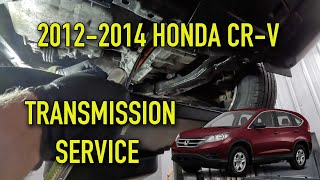
Typical fix: Perform 1 to 3 transmission fluid drain-and-fills using only Honda Genuine ATF DW-1. 🎬 Watch: How to drain and fill your transmission fluid to fix shuddering Do NOT use a high-pressure flush, as this can dislodge debris and cause more issues. If the fluid was low, the source of the leak must be found and repaired.
Est. part cost: $40-$80 - Faulty Shift Solenoid or Clutch Pressure Control Solenoid 🟡 Medium Probability → Shop Transmission Clutch Pressure Control Solenoid Solenoids are electro-mechanical valves that wear out over time. They can get stuck open, closed, or become slow to respond, disrupting the flow of fluid needed to change gears. Debris from old fluid can also clog the small screens on the solenoids.
How to confirm: Scan the vehicle for other codes with a Honda-capable scanner. A code like P0756 (Shift Solenoid B Stuck Off) or a clutch pressure solenoid code will point to a specific solenoid. The solenoid's resistance can be tested with a multimeter to see if it's within spec (typically 13.8-17.1 Ohms for many Honda solenoids). The small filter screens on the solenoid assembly can also be inspected for clogging.
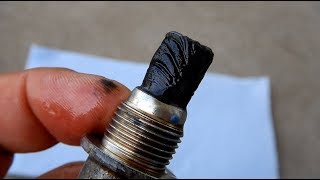
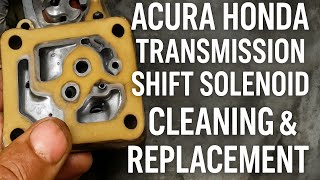
Typical fix: Replace the faulty shift solenoid or solenoid assembly. These are often located on the exterior of the transmission case, accessible after removing the battery and airbox. 🎬 See this walkthrough on cleaning or replacing shift solenoids
Est. part cost: $50-$200 - Clogged External Transmission Filter/Strainer ⚪ Low Probability → Shop Transmission Assembly This transmission uses a replaceable, in-line paper filter (Part No. 25430-PLR-003) that can become clogged with clutch material and other debris over many miles, restricting fluid flow. It is often overlooked during service.
How to confirm: This is difficult to confirm without replacing it. It is usually suspected when new fluid and solenoids do not fix the issue. A visual inspection of a removed filter may show it is saturated with dark, gritty material.
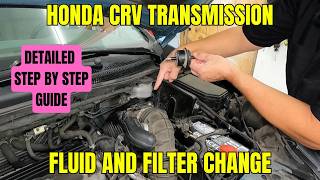
Typical fix: Replace the external transmission filter. It is located on the front of the transmission 🎬 Watch: Detailed step-by-step guide to changing the fluid and filter and can be accessed from underneath the vehicle.
Est. part cost: $25-$50
Rare But Worth Checking
- Faulty Powertrain Control Module (PCM) or Outdated Software: → Shop Engine Control Module (ECM) A faulty PCM is rare, but can cause a P0780 code if it's not commanding the solenoids correctly. Honda service information suggests checking if the PCM has the latest software update if no other cause is found. Honda also issued TSB 15-086 for the 2012-14 CR-V to address a vibration/judder with an A/T software update.
- Internal Mechanical Failure: Worn clutch packs or other internal hard-part failures can prevent the transmission from engaging a gear correctly, leading to a shift error code. This is a worst-case scenario requiring a transmission rebuild or replacement, which can cost $2,500-$3,500.
Diagnosis Steps
- Scan for all stored DTCs using a Honda-capable scanner. Pay close attention to any other transmission codes besides P0780, as they will guide your diagnosis.
- Check the transmission fluid level and condition. The engine should be warm and off for an accurate reading. The fluid should be pink/red and not smell burnt.
- If the fluid is low, top it off with Honda ATF DW-1 and check for leaks. If it's dirty or burnt, perform at least one drain-and-fill.
- If other codes are present (e.g., for a specific solenoid), follow the diagnostic procedure for that code. This usually involves testing the solenoid's resistance (expect 13.8-17.1 Ohms) and checking its wiring and connectors for damage.
- If only P0780 is present, consult Honda service information. The procedure may involve a PCM software update (see TSB 15-086 for 2012-14 models) or a specific drive cycle test to try and reproduce the fault.
- Consider replacing the external transmission filter (25430-PLR-003) if it has not been changed in over 60,000 miles, as it can get clogged.
- If solenoids, wiring, and fluid are good, the issue may be a clogged internal passage or a mechanical problem, which requires professional service.
Parts You'll Likely Need
- Automatic Transmission Fluid
(OEM #08200-9008)— Incorrect or degraded fluid is a primary cause of shifting issues. Using the correct Honda Genuine ATF DW-1 is critical. A drain and fill requires about 3 quarts.
Trusted brands: Honda Genuine
OEM price range: $10-$15 per quart
Aftermarket price range: N/A - Shift Solenoid / Clutch Pressure Control Solenoid Assembly
(OEM #28250-R97-004)— A specific solenoid is often the electrical component that fails, causing the shift error. Part 28250-R97-004 is listed as 'Solenoid Assy., Linear' and fits many 2007-2015 Hondas, but always verify with VIN.
Trusted brands: Honda Genuine, WVE, Rostra
OEM price range: $150-$250
Aftermarket price range: $40-$120 - External Automatic Transmission Filter
(OEM #25430-PLR-003)— This filter is a maintenance item that is often forgotten. It can become clogged with debris, starving the transmission of fluid pressure.
Trusted brands: Honda Genuine
OEM price range: $25-$40
Aftermarket price range: $10-$20
Related Codes That Often Appear With This One
- P1730 - P1734 — P0780 is a general code that is set specifically when one of these more detailed shift fault codes is detected.
- P0752, P0756, P0757, etc. — These codes point to specific shift solenoid malfunctions (e.g., 'Shift Solenoid B Stuck On'). They provide the specific information needed to diagnose the general P0780 fault.
Technical Service Bulletins (TSBs) & Recalls
- TSB 15-086: Addresses a surge, vibration, or judder under light acceleration on 2012-14 CR-Vs. The fix is an A/T software update and an ATF change.
Platform-Specific Known Issues
- source — A user with a 2002 CR-V (older but similar principle) had P0780 with shifting issues after the car warmed up. The expert advice was that P0780 on a Honda is caused by an electrical circuit problem, not a mechanical one, and to look for other codes first. If no other codes are present, the procedure involves replacing clutch pressure control solenoids A, B, and C.
- Judder/Vibration TSB: Honda released TSB 15-086 for 2012-2014 CR-Vs that experience a surge, vibration, or judder under light acceleration. The fix is to update the automatic transmission software and replace the ATF. While not a direct fix for P0780, it shows that software plays a key role in this transmission's operation and could be a related factor.
Mechanic-Grade Diagnostic Values
- Shift Solenoid Resistance — expected: 13.8 - 17.1 Ohms. Failure: A reading outside this range (e.g., infinite for an open circuit, near zero for a short) indicates a faulty solenoid coil.
- Shift Solenoid Activation Test — expected: An audible 'click' should be heard from the solenoid.. Failure: No clicking sound when 12V is carefully applied to the solenoid's terminals indicates it is mechanically stuck.
- Transmission Drain Plug Torque — expected: 49 N·m (36 lb-ft). Failure: Under-torquing can lead to leaks; over-torquing can damage the threads in the transmission case.
Hidden / Shadow Codes Worth Checking
- P1730 - P1734: These are Honda-specific DTCs related to shift control system failures. The generic P0780 code is specifically set as a confirmation code whenever one of these more detailed codes is detected. (see via A Honda-capable scanner, such as the Honda Diagnostic System (HDS), is required to reliably read these codes. Basic OBD-II readers may only show P0780.)
Scan Tool Commands That Help
- Honda Diagnostic System (HDS): Clear DTCs — Used at the beginning of diagnosis to reset the system and after a repair is completed to clear fault codes before a verification test drive.
- Honda Diagnostic System (HDS): A/T Software Update — This is the corrective action specified by Honda if P0780 is present without any other accompanying DTCs, and is also the fix for TSB 15-086 on 2012-2014 models.
- Honda Diagnostic System (HDS): Monitor OBD STATUS for P0780 — After clearing codes or performing a repair, a specific test drive (shifting through all 5 gears) is performed while monitoring the status to see if the test passes, fails, or remains incomplete, confirming the fix.
Wiring & Ground Locations
- Transmission Housing Ground Strap — Typically runs from a bolt on the transmission case to a point on the vehicle's frame or chassis. On many Hondas, this is accessible after removing the air filter box assembly.. A corroded or loose transmission ground can cause erratic voltage signals for all transmission sensors and solenoids, leading to incorrect operation and fault codes like P0780. The PCM and TCM rely on a clean ground reference.
- G101 — A primary engine bay ground point. On many Hondas of this era, it is located on or near the thermostat housing or on the left side of the engine.. This is a major ground point for many engine and transmission-related components. Corrosion here can cause a host of seemingly unrelated electrical issues, including transmission faults.
Model Year Variations Within This Range
- 2012-2014 only: Honda TSB 15-086, which addresses a judder or vibration under light acceleration, specifically applies to these years. The fix requires an A/T software update and a fluid change. While the 2011 model has a similar 5-speed automatic, it is not included in this specific bulletin.
Diagnostic Flowchart
Other Known Issues on This Vehicle
Issues unrelated to this code that are worth knowing about as an owner of this generation:
- VTC Actuator Rattle on Cold Start 🟠 Medium — Very common on K24Z7 (2012-14) and K24W (2015-16) engines. A brief, loud rattle for 1-2 seconds after sitting overnight. (Ref: Honda TSB 16-088 (for 2015+ models) and others describe the issue and replacement procedure.)
- Excessive Oil Consumption 🟠 Medium — Affects some 2015-2016 models with the 'Earth Dreams' direct-injection engine. Can be exacerbated by neglected maintenance. (Ref: No official recall, but a known issue. Some owners find replacing the PCV valve (Part No. 17130-5A2-A01) helps reduce consumption.)
- CVT Vibration/Judder (2015-2016 models) 🟡 Low — Common complaint on the first-generation CVT models. A vibration can be felt at idle, during light acceleration, or at highway speeds. (Ref: Honda TSB 15-086 and TSB 15-046 were issued to address the vibration with software updates and in some cases, new engine/transmission mounts and radiator cushions.)
- Starter Motor Failure 🟠 Medium — A grinding noise upon starting can indicate a failing starter, a known weak point on 2012-2014 models.
- Failing Air Conditioning Compressor/Clutch 🟠 Medium — A common failure point across many Honda models of this era, including the CR-V. The system may blow warm air or the compressor clutch may fail to engage.
- Parasitic Battery Drain 🟡 Low — Some owners report the battery dying after the vehicle sits for a few days. A common cause is a faulty/stuck A/C compressor relay.
Used vs. New Parts: Buying Guide for This Vehicle
When a used part is the smart pick: For a faulty shift solenoid assembly (e.g., part 28250-R97-004), a used OEM part from a reputable salvage yard can be a good value. It is often more reliable than a cheap, new aftermarket part and significantly less expensive than a new OEM part.
Donor-vehicle mileage cap: roughly under 80000 miles for the part to have meaningful remaining life.
What to inspect on the donor part:
- Verify the mileage and year of the donor vehicle.
- Inspect the electrical connectors for any corrosion, cracks, or broken locking tabs.
- Check the small metal filter screens on the solenoid assembly to ensure they are intact and not clogged with excessive metal debris.
- Ask for a short warranty period (e.g., 30-90 days) from the salvage yard.
OEM-only on this vehicle (don't cheap out):
- Automatic Transmission Fluid (ATF): Only Honda Genuine ATF DW-1 (P/N 08200-9008) should be used. Honda transmissions are extremely sensitive to fluid type, and using non-OEM fluid is a leading cause of failure.
- External Transmission Filter (P/N 25430-PLR-003): This part is inexpensive to buy new from the dealer, making the risk of using a used, potentially clogged filter not worthwhile.
Aftermarket brands forum-validated for this vehicle:
- Rostra
- WVE (Wells Vehicle Electronics)
Brands owners have reported issues with on this vehicle:
- Be cautious of unbranded, generic solenoid kits from online marketplaces, as quality control can be inconsistent and lead to premature failure.
Real Owner Stories
Aggregated from forums and TSBs cited above. Mileages and costs reflect what owners reported in those sources.
2002 Honda CR-V
Symptoms: The vehicle experienced shifting issues specifically after the car warmed up.
What fixed it: The expert recommendation for this electrical/control fault was to replace clutch pressure control solenoids A, B, and C.
Source hint: 2CarPros thread titled 'Honda CRV 2002 Honda CRV it shows a DTC P0780'
2012 Honda CR-V — ~140000 miles
Symptoms: The external transmission filter was found to be completely saturated and filled with dark, gritty debris.
What fixed it: Replacement of the external transmission filter (Part No. 25430-PLR-003).
Source hint: Bob Is The Oil Guy forum thread 'elusive honda transmission filter c-p'
2013 Honda CR-V
Symptoms: Surge, vibration, or judder felt under light acceleration.
What fixed it: Updated the automatic transmission software and performed an ATF change as per TSB 15-086.
Source hint: TSB 15-086
NHTSA Reported Shifting Issues
Symptoms: An owner reported the clutch slipped between the first 3 gears below 40 MPH, despite the transmission fluid being pink and not smelling burnt (NHTSA ODI #10298588). Another report described the vehicle lurching forward after stops while other gear changes functioned normally (NHTSA ODI #11034501).
What fixed it: In cases of severe malfunction, such as a flashing PRNDL indicator and P0780, some service departments recommended full transmission replacement (NHTSA ODI #10246981), while others reported total transmission failure shortly after the code appeared (NHTSA ODI #10667300).
Documented NHTSA Reports
NHTSA ODI #11702634 describes a diagnostic result where P0780 appeared alongside P0741 (Torque Converter Clutch Circuit Performance), P0746 (Pressure Control Solenoid A Stuck Off), and P1898 (CVT Drive Pulley Pressure). This highlights how P0780 often acts as a confirmation code for specific solenoid and pressure faults.
Related OBD-II Codes
Frequently Asked Questions
My 2013 CR-V has a vibration during light acceleration; is this related to the P0780 code?
Can I use any transmission fluid to fix the P0780 code in my 2015 CR-V?
Is there a specific filter I should replace on my high-mileage CR-V to prevent shifting issues?
What are the specific resistance specs for testing the solenoids on a Honda CR-V?
My 'D' indicator is flashing along with the Check Engine Light. What does that mean for my Honda?
I have a 2015 CR-V with a vibration at idle; is there a fix for this?
Helpful Videos

We Have This Part in Stock

The information in this article is provided for general reference and educational purposes only. Vehicle specifications, procedures, and part compatibility can vary by production date, trim level, and region. Always consult your vehicle's factory service manual and verify part numbers before purchasing or performing repairs. Safety-critical components such as airbags, seat belts, and braking systems should be installed by a qualified professional.
- Honda CR-V:
- 🧭 Diagnostic Flowchart
- 🎬 Helpful Videos
- 🛍️ Shop This Part
- What's Unique About the 2011-2014 Honda CR-V
- Symptoms You May Notice
- Most Likely Causes
- Rare But Worth Checking
- Diagnosis Steps
- Parts You'll Likely Need
- Related Codes That Often Appear With This One
- Technical Service Bulletins (TSBs) & Recalls
- Platform-Specific Known Issues
- Mechanic-Grade Diagnostic Values
- Hidden / Shadow Codes Worth Checking
- Scan Tool Commands That Help
- Wiring & Ground Locations
- Model Year Variations Within This Range
- Other Known Issues on This Vehicle
- Used vs. New Parts: Buying Guide for This Vehicle
- Real Owner Stories
- 2002 Honda CR-V
- 2012 Honda CR-V — ~140000 miles
- 2013 Honda CR-V
- NHTSA Reported Shifting Issues
- Documented NHTSA Reports
- Related OBD-II Codes
- Frequently Asked Questions
- 🎟️ Get 5% Off