

P0841 on 2014-2017 Honda Odyssey: Transmission Pressure Switch Causes and Fixes
On a 2014-2017 Honda Odyssey, code P0841 most often points to a failed 2nd or 3rd clutch transmission fluid pressure switch or low/dirty transmission fluid. Replacing a single switch is a relatively inexpensive DIY fix, but ignoring the issue can lead to severe, costly transmission damage.
- Do not ignore P0841; stop driving as soon as possible to prevent severe transmission damage.
- The most likely cause on a 2014-2017 Odyssey is a faulty 2nd or 3rd clutch pressure switch.
- Always check the transmission fluid level and condition first, as it's a simple and common cause.
- Only use Honda Genuine ATF DW-1 transmission fluid. Using the wrong fluid can cause more problems.
- When replacing a pressure switch, always use a new 18mm crush washer (90471-PW7-A00) to prevent leaks.
What's Unique About the 2014-2017 Honda Odyssey
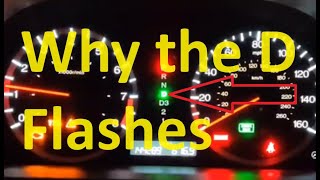
The 6-speed automatic transmission in the fourth-generation (2014-2017) Odyssey relies on a series of pressure switches to confirm that hydraulic commands from the computer are being carried out correctly. While the switches themselves can fail, this code can also be triggered by internal transmission issues like a clogged valve body, which prevents proper pressure from reaching the switch. Therefore, it's crucial to diagnose whether the problem is electrical (the switch/wiring) or hydraulic (an internal blockage or leak) before replacing parts. The flashing "D" (Drive) indicator is Honda's specific way of alerting the driver to a transmission-related fault stored in the computer.
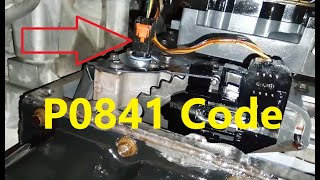
🎬 Watch: Why the D light flashes and how to fix itSymptoms You May Notice
- Harsh or delayed shifting
- Transmission slipping between gears
- Illuminated Check Engine Light
- Flashing "D" (Drive) indicator light on the dashboard
- Vehicle may enter "limp mode," getting stuck in a single gear (often 2nd or 3rd)
- Decreased fuel economy
- Vehicle feels sluggish or has no power, as if starting in a higher gear
- Replacing the transmission's high-pressure pump when the issue is electrical (a sensor or wiring).
- Replacing the wrong pressure switch, as there are several in the transmission. The 2nd and 3rd clutch switches are visually similar but have different part numbers and are not interchangeable.
Most Likely Causes
- Failed Transmission Fluid Pressure Switch (2nd or 3rd Clutch) 🔴 High Probability → Shop Transmission Assembly These switches are a widely documented common failure item on Honda V6 transmissions of this era. They operate in a high-heat, high-pressure environment and can fail electronically over time.
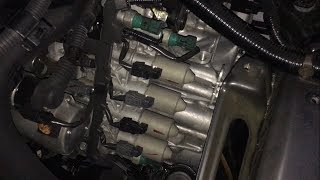
How to confirm: Test the switch's operation with a multimeter. Check for continuity and resistance according to the service manual. You can also swap the suspect switch with a known good one from a different circuit to see if the code changes. The switches are located on the exterior of the transmission case, making them accessible for testing.
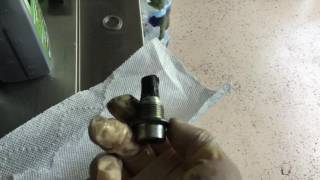
Typical fix: Replace the faulty pressure switch. There are multiple switches, so it's critical to identify the correct one. The 2nd clutch switch is part #28600-RKE-004 and the 3rd clutch switch is part #28610-RKE-004. Always use a new crush washer (Part # 90471-PW7-A00) to prevent leaks. 🎬 See this step-by-step pressure switch replacement walkthrough
Est. part cost: $40-$80 - Low or Dirty Transmission Fluid 🟡 Medium Probability → Shop Transmission Assembly Honda TSBs 17-043 and 17-044 note that the transmission fluid in these vehicles can deteriorate quicker than expected under certain driving conditions, leading to judder and other shifting issues. This degraded fluid can cause debris to clog passages and affect pressure readings.
How to confirm: Check the transmission fluid level and condition using the dipstick. The fluid should be at the correct level, red in color, and not smell burnt. Dark, brown, or gritty fluid indicates a problem.
Typical fix: Perform a transmission fluid drain-and-fill (or multiple, if very dirty) using only Honda Genuine ATF DW-1 fluid. 🎬 Watch: How to fix hard shifting with a proper drain and fill A full flush is sometimes recommended by dealers for severe fluid degradation.
Est. part cost: $50-$150 for fluid - Clogged Valve Body Passages or Failing Solenoid ⚪ Low Probability → Shop Transmission Valve Body
How to confirm: This requires more advanced diagnostics, including a line pressure test with a mechanical gauge to see if the actual hydraulic pressure matches what the computer commands. This is best performed by a professional.
Typical fix: The valve body may need to be removed, cleaned, and inspected. In some cases, a specific shift solenoid or the entire valve body assembly may need replacement. Debris from the fluid can clog the small screens on the solenoids.
Est. part cost: $200-$800 - Damaged Wiring or Corroded Connector ⚪ Low Probability
How to confirm: Visually inspect the wiring harness and connector going to the pressure switch for any signs of damage, corrosion, or loose connections. Use a multimeter to check for proper voltage and ground at the connector.
Typical fix: Repair the damaged section of the wiring harness or clean/replace the corroded connector.
Est. part cost: $10-$100
Rare But Worth Checking
- Failing Powertrain Control Module (PCM): This is extremely rare. The PCM should only be considered after all other possibilities, including sensors, wiring, and internal transmission mechanics, have been definitively ruled out.
- Internal Mechanical Transmission Failure: → Shop Transmission Assembly A more serious internal issue, such as a failing clutch pack or oil pump, can cause pressure-related codes. This is usually accompanied by more severe symptoms like loud noises or significant slipping.
Diagnosis Steps
- Retrieve all stored trouble codes with an OBD-II scanner. Note any other transmission-related codes.
- Check the transmission fluid level and condition. Top off or replace as necessary with Honda Genuine ATF DW-1. This is the simplest first step.
- Inspect the wiring and connector for the relevant pressure switch ('A' circuit) for any visible damage or corrosion. The switches are located on the exterior of the transmission housing.
- Using a scan tool with live data, monitor the status of the pressure switch while driving to see if it changes state as expected during shifts.
- If the switch signal is erratic or incorrect, test the switch itself with a multimeter for proper resistance and continuity. The switch should have continuity when pressure is applied and no continuity when it is not.
- If the switch and wiring test good, the next step is to perform a hydraulic pressure test using a mechanical gauge to verify if the transmission is actually producing the correct pressure in that circuit.
- If the mechanical pressure is incorrect, the issue is likely internal (e.g., valve body, solenoid, or clutch pack). If the pressure is correct, the fault lies with the sensor or electrical circuit.
Parts You'll Likely Need
- Transmission Fluid Pressure Switch (2nd Clutch)
(OEM #28600-RKE-004)— This is one of the most common failure points for pressure-related codes on this platform. It often has a tan or light-colored connector.
Trusted brands: Honda (Genuine), Standard Motor Products (Intermotor)
OEM price range: $60-$90
Aftermarket price range: $30-$50 - Transmission Fluid Pressure Switch (3rd Clutch)
(OEM #28610-RKE-004)— Another common failure point that can trigger a pressure circuit performance code. It often has a black connector.
Trusted brands: Honda (Genuine), Standard Motor Products (Intermotor)
OEM price range: $60-$90
Aftermarket price range: $30-$50 - Honda Genuine ATF DW-1 Automatic Transmission Fluid
(OEM #08200-9008)— Low or degraded fluid is a primary cause of pressure issues. Using the correct OEM fluid is critical for Honda transmissions.
OEM price range: $10-$15 per quart - Pressure Switch Gasket / Crush Washer (18mm)
(OEM #90471-PW7-A00)— This crush washer is required for each pressure switch replacement to ensure a proper seal and prevent transmission fluid leaks.
Trusted brands: Honda (Genuine)
OEM price range: $2-$5
Related Codes That Often Appear With This One
- P0700 — This is a generic transmission fault code that simply indicates the Transmission Control Module (TCM) has stored a specific fault code, like P0841.
- P0868 — This code indicates 'Transmission Fluid Pressure Low'. If seen with P0841, it could point more strongly towards a fluid level/condition issue or an internal hydraulic problem rather than just a faulty sensor.
- P0847 — This code indicates 'Transmission Fluid Pressure Sensor/Switch 'B' Circuit Low'. It's common to see multiple pressure switch codes together, which could point to a widespread electrical issue or a more significant internal hydraulic problem.
Technical Service Bulletins (TSBs) & Recalls
- TSB 17-043 & 17-044: These bulletins address a judder (vibration) from the torque converter lock-up clutch felt between 20-60 mph. The cause is identified as deteriorated transmission fluid that breaks down faster than expected. The fix involves a software update and potentially flushing the transmission fluid multiple times. While not directly for P0841, it establishes that fluid-related issues are a known problem for this transmission.
Platform-Specific Known Issues
- Owner Experience: DIY Switch Replacement: A user on Reddit with a 2018 Odyssey (with a different transmission but the same code) reported the P0841 code caused the vehicle to be stuck in park. While a battery disconnect did not fix it, it highlights the severity of the fault. For the 6-speed in the 2014-2017 models, owners on forums like Odyclub frequently report successfully replacing the 2nd and 3rd gear pressure switches themselves to resolve the
Mechanic-Grade Diagnostic Values
- Voltage at the pressure switch connector (disconnected) with Key On, Engine Off. — expected: 5V or 12V. Failure: 0V indicates an open wire or PCM fault. Voltage significantly lower than 5V or 12V could indicate a short or wiring issue.
Scan Tool Commands That Help
- Honda HDS (Honda Diagnostic System): SCS Line Jump / Continuity Test — This function is used to bypass the switch and test the integrity of the wiring circuit directly to the PCM. If the HDS shows the switch as 'ON' with the jumper wire in place, it confirms the wiring and PCM are good, isolating the fault to the switch itself.
Wiring & Ground Locations
- Transmission Ground Strap — A braided or insulated cable connecting the transmission case to the vehicle's chassis/frame rail, often near the front or side of the transmission assembly.. Honda vehicles are known for issues with corroded or frayed main ground straps. A poor ground can cause erratic voltage signals and intermittent electrical faults in transmission sensors, potentially triggering a P0841 code even if the sensor itself is functional.
- Pressure Switch Connector — Directly on the external pressure switch. It is a single-pin connector.. This is the primary point for electrical testing. The single wire carries the voltage signal from the PCM that needs to be tested. The switch body provides the ground through the transmission case.
OEM Part Supersession History
28600-RAY-003, 28600-RAY-013, 28600-RGR-004→28600-RKE-004— Part has been updated by Honda over time for improved reliability or manufacturing changes.
Model Year Variations Within This Range
- 2014-2017: All models from 2014-2017 received the 6-speed automatic transmission as standard. However, Honda released Technical Service Bulletins (TSB A17-043 and A17-044) for a transmission judder issue, which involves a software update and transmission flush. While not directly for P0841, this indicates that software updates exist that can affect transmission behavior and diagnostics. It's possible a software update could address logic related to pressure switch monitoring.
Diagnostic Flowchart
Other Known Issues on This Vehicle
Issues unrelated to this code that are worth knowing about as an owner of this generation:
- Variable Cylinder Management (VCM) System Issues 🔴 High — Extremely common, often manifests after 80,000 miles. Leads to fouled spark plugs (especially on cylinders 1-3), excessive oil consumption, and eventual piston ring damage. (Ref: A class-action lawsuit was settled for 2008-2013 models, but the issue persists in later years.)
- Torque Converter Judder/Shudder 🟠 Medium — Commonly reported between 20-60 mph under light acceleration. (Ref: TSB 17-043 and 17-044 address this, blaming deteriorated ATF and recommending a software update and fluid flush.)
- Electric Sliding Door Failure 🟠 Medium — Widespread issue where the cables for the power sliding doors fray or snap, preventing the door from operating automatically.
- Warped Front Brake Rotors 🟡 Low — A common complaint leading to vibration or pulsation in the steering wheel and brake pedal during braking.
- Failing Active Engine Mounts 🟠 Medium — The VCM system's constant engagement/disengagement puts extra wear on the active engine mounts, causing them to leak and fail, leading to engine vibration.
Used vs. New Parts: Buying Guide for This Vehicle
When a used part is the smart pick: For this specific repair, a used OEM pressure switch from a low-mileage donor vehicle is a reasonable choice. Since it's an external electronic part, it's easy to inspect and replace if it fails. Complete used transmissions or valve bodies are also common, but carry more risk.
Donor-vehicle mileage cap: roughly under 80000 miles for the part to have meaningful remaining life.
What to inspect on the donor part:
- Check the donor vehicle's history for accidents, especially front-end collisions that could damage the transmission case or wiring.
- Inspect the connector on the used switch for any signs of corrosion, cracking, or bent pins.
- If possible, ask the salvage yard about the condition of the transmission fluid from the donor vehicle (e.g., was it clean and red, or dark and burnt?).
OEM-only on this vehicle (don't cheap out):
- Automatic Transmission Fluid (Honda Genuine ATF DW-1 is mandatory)
- Internal transmission seals and clutch packs
Aftermarket brands forum-validated for this vehicle:
- Standard Motor Products (SMP) / Intermotor
Brands owners have reported issues with on this vehicle:
- Unbranded, no-name sensors from online marketplaces should be avoided, as their quality control and longevity can be highly questionable.
Real Owner Stories
Aggregated from forums and TSBs cited above. Mileages and costs reflect what owners reported in those sources.
2014-2017 Honda Odyssey V6
Symptoms: Flashing 'D' light and associated pressure switch codes on the dashboard.
What fixed it: Replacing the 2nd, 3rd, and 4th gear pressure switches based on DIY guides.
Source hint: Odyclub.com forum threads regarding flashing 'D' light and pressure switch codes
2018 Honda Odyssey
Symptoms: P0841 code caused the vehicle to be stuck in park; a battery disconnect did not resolve the issue.
What fixed it: Replacement of the pressure switch (though this model uses a different transmission, the code severity was noted).
Source hint: Reddit user report mentioned in vehicle_specific_issues
Documented NHTSA Reports
Internal Transmission Failure
Symptoms: An owner reported the vehicle required a tow to the dealer and was cited for an internal failure in the transmission. Confirmed related DTCs included P0841 for the transmission fluid pressure sensor/switch A circuit range/performance and P0844 for a dog clutch malfunction.
Source hint: NHTSA ODI #11720874
Non-Serviceable Internal Parts
Symptoms: A report regarding a similar Honda platform noted that the transmission failed internally with code P0841. The report claimed that all solenoids, sensors, and switches were internal, non-serviceable parts, making external sensor replacement impossible in that specific instance.
Source hint: NHTSA ODI #11568181
Related OBD-II Codes
Frequently Asked Questions
Which specific pressure switches do I need to buy for my 2014-2017 Odyssey to fix P0841?
Does TSB 17-043 or 17-044 apply to my P0841 code?
How can I tell the difference between the 3rd and 4th gear pressure switches during replacement?
Can I test the transmission fluid pressure switch myself before buying a new one?
What type of transmission fluid should I use for my 2015 Honda Odyssey?
My 'D' light is flashing and the car feels sluggish. Is this related to P0841?
Helpful Videos
We Have This Part in Stock

The information in this article is provided for general reference and educational purposes only. Vehicle specifications, procedures, and part compatibility can vary by production date, trim level, and region. Always consult your vehicle's factory service manual and verify part numbers before purchasing or performing repairs. Safety-critical components such as airbags, seat belts, and braking systems should be installed by a qualified professional.
- Honda Odyssey:
- 🧭 Diagnostic Flowchart
- 🎬 Helpful Videos
- 🛍️ Shop This Part
- What's Unique About the 2014-2017 Honda Odyssey
- Symptoms You May Notice
- Most Likely Causes
- Rare But Worth Checking
- Diagnosis Steps
- Parts You'll Likely Need
- Related Codes That Often Appear With This One
- Technical Service Bulletins (TSBs) & Recalls
- Platform-Specific Known Issues
- Mechanic-Grade Diagnostic Values
- Scan Tool Commands That Help
- Wiring & Ground Locations
- OEM Part Supersession History
- Model Year Variations Within This Range
- Other Known Issues on This Vehicle
- Used vs. New Parts: Buying Guide for This Vehicle
- Real Owner Stories
- 2014-2017 Honda Odyssey V6
- 2018 Honda Odyssey
- Documented NHTSA Reports
- Internal Transmission Failure
- Non-Serviceable Internal Parts
- Related OBD-II Codes
- Frequently Asked Questions
- 🎟️ Get 5% Off