

P0841 on 2014-2017 Toyota Camry: Transmission Pressure Sensor Causes and Fixes
On a 2014-2017 Toyota Camry, code P0841 is most often caused by low or dirty transmission fluid. If the fluid is fine, the next likely cause is a failed transmission fluid pressure sensor, which is located inside the transmission pan and is part of an internal wiring harness. This is a common code for the U760E transmission used in this vehicle.
- The most likely cause of P0841 on a 2014-2017 Camry is low or dirty transmission fluid.
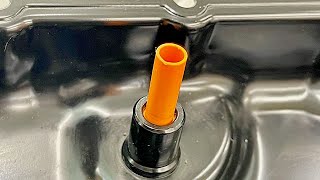
- This vehicle has a sealed transmission, so checking the fluid is not a simple DIY task and requires a specific procedure.
- If the fluid is correct, the pressure sensor is the next suspect. It is sold as part of an internal wiring harness (OEM P/N: 35490-33020) located inside the transmission pan.
- Due to the complexity of the diagnosis and repair, professional service is highly recommended to avoid causing further damage to the transmission.
- This transmission (U760E) is also known for a torque converter shudder, which has its own set of TSBs and warranty extensions.
What's Unique About the 2014-2017 Toyota Camry
The 2014-2017 Toyota Camry with the 4-cylinder engine uses a U760E 6-speed automatic transmission which is a sealed unit without a traditional dipstick. This makes checking the fluid level a more complex procedure that requires specific tools and knowledge of the overflow method at a specific fluid temperature. Additionally, the pressure sensor that triggers the P0841 code is not an easily accessible external part; it is integrated into the transmission's internal wiring harness, which is mounted to the valve body inside the transmission oil pan. This design means that replacing the sensor is a more involved job than on many other vehicles.
Symptoms You May Notice
- Check Engine Light is on
- Harsh or erratic shifting
- Transmission slipping or hesitating during acceleration
- Vehicle entering 'limp mode' (stuck in a single gear)
- Decreased fuel economy
- Transmission fails to shift
- Replacing the entire transmission when only a fluid service or a new internal harness was needed.
- Replacing high-pressure pumps when the issue is electrical.
Most Likely Causes
- Low or Dirty Transmission Fluid 🔴 High Probability → Shop Transmission Assembly The sealed transmission design can lead to neglected fluid service. Leaks can go unnoticed, and old, degraded fluid can cause pressure issues and clog filters.
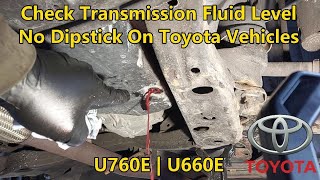
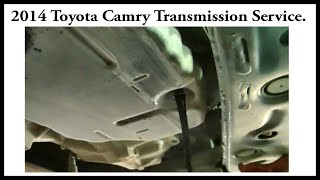
How to confirm: A technician must follow a specific procedure to check the fluid level and condition via the overflow and fill plugs, with the transmission at a specific temperature (typically between 95-113°F). 🎬 Watch: How to check fluid levels without a dipstick
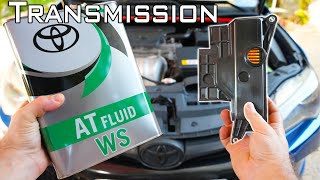
Typical fix: Perform a transmission fluid drain and fill, or a full fluid exchange using the correct Toyota World Standard (WS) automatic transmission fluid.
Est. part cost: $50-$150 for fluid - Faulty Transmission Fluid Pressure Sensor / Internal Wiring Harness 🟡 Medium Probability → Shop Transmission Assembly The sensor is an electronic component located inside the hot environment of the transmission, making it susceptible to failure over time. Corrosion on external connectors can also be a factor.
How to confirm: After confirming the fluid is correct, a technician would need to drop the transmission pan to access and test the sensor and harness assembly with a multimeter for correct resistance and voltage signals according to the service manual.
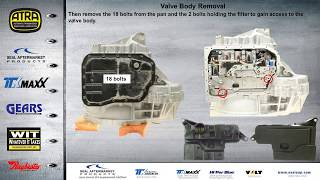
Typical fix: Replace the internal transmission wiring harness, which includes the pressure sensors. This requires draining the fluid and removing the transmission pan.
Est. part cost: $150-$300 for the harness assembly - Faulty Transmission Valve Body or Solenoids ⚪ Low Probability → Shop Transmission Valve Body Debris in old fluid can cause solenoids to stick or passages in the valve body to become clogged, leading to incorrect pressure readings. Valve body wear is a growing concern on higher mileage U760E units.
How to confirm: This is typically diagnosed after fluid and sensor/harness replacement do not resolve the issue. It may involve pressure testing specific ports or a complete valve body inspection.
Typical fix: Cleaning or replacing the affected shift solenoid(s) or the entire valve body assembly.
Est. part cost: $200-$800 for a valve body
Rare But Worth Checking
- Transmission Control Module (TCM) or Powertrain Control Module (PCM) Fault: → Shop Transmission Assembly This is an uncommon cause. All other possibilities, especially fluid, wiring, and sensor issues, should be thoroughly ruled out before considering a faulty control module.
Diagnosis Steps
- Check for any other stored trouble codes with an OBD-II scanner.
- Perform a thorough check of the transmission fluid level and condition. This must be done following Toyota's specific procedure for sealed transmissions, which involves monitoring fluid temperature.
- If the fluid is low, top it off, clear the code, and test drive. If the fluid is dirty or degraded, perform a drain-and-fill or fluid exchange.
- Inspect the transmission pan and casing for any signs of leaks.
- If the fluid level and condition are correct, inspect the external transmission wiring and connectors for any damage or corrosion.
- If external wiring is okay, the next step is to drop the transmission pan to access the internal components.
- Visually inspect the internal wiring harness and pressure sensors for any obvious damage.
- Using a multimeter and the factory service manual, test the pressure sensor circuit for proper voltage (typically a 5V or 12V reference) and resistance.
- If the sensor or harness tests faulty, replace the internal wiring harness assembly.
- If the sensor and wiring are good, the issue may lie within the valve body or, in rare cases, the TCM.
Parts You'll Likely Need
- Toyota Genuine ATF WS Automatic Transmission Fluid
(OEM #00289-ATFWS)— Low or dirty fluid is the most common cause. This is the required fluid for any service.
Trusted brands: Toyota (OEM)
OEM price range: $10-$15 per quart - Transmission Internal Wire Harness
(OEM #35490-33020)— This harness contains the transmission fluid pressure sensor that triggers P0841. It is the most likely component to fail after fluid issues are ruled out.
Trusted brands: Toyota (OEM)
OEM price range: $200-$300
Aftermarket price range: $100-$200 - Automatic Transmission Pan Gasket
(OEM #35168-73010)— Required whenever the transmission pan is removed to prevent leaks.
Trusted brands: Toyota (OEM), Fel-Pro, Mahle
OEM price range: $25-$40
Aftermarket price range: $15-$25
Related Codes That Often Appear With This One
- P0700 — This is a generic transmission fault code that indicates the TCM has stored a specific code, like P0841.
- P0868 — This code indicates 'Transmission Fluid Pressure Low'. If seen with P0841, it strongly points towards a low fluid level or an internal leak.
- P0842 — Indicates the pressure sensor 'A' circuit voltage is low, pointing to a specific electrical fault like a short in the wiring or a failed sensor.
- P0843 — Indicates the pressure sensor 'A' circuit voltage is high, suggesting an open circuit or different sensor failure mode.
Technical Service Bulletins (TSBs) & Recalls
- T-SB-0034-14: Addresses a torque converter flex lock-up shudder on 2012-2014 models by modifying the torque converter and reprogramming the ECM.
- T-SB-0312-17: Supersedes the previous TSB, updating parts information for the torque converter shudder fix.
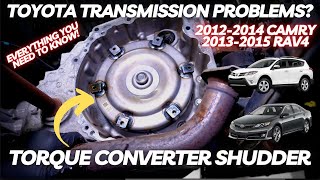
- Warranty Enhancement Program ZH1: 🎬 Watch: Everything you need to know about torque converter shudder Extended warranty coverage for the U760E torque converter shudder issue.
Platform-Specific Known Issues
- The U760E transmission in this generation of Camry is known to be sensitive to fluid level and condition. It is also widely known for a torque converter shudder that occurs under light load between 25-50 mph. Toyota issued TSBs (T-SB-0034-14, T-SB-0312-17) and a warranty extension program to address this, which could involve a software update, fluid flush, or torque converter replacement. While not a direct cause of P0841, it highlights the sensitivity of this transmission's hydraulic control system.
Mechanic-Grade Diagnostic Values
- Transmission Fluid Pressure Sensor Voltage — expected: 0.5V (low pressure) to 4.5V (high pressure). Failure: Voltage is stuck at 0V, 5V, or does not change with engine RPM and gear changes.
- Shift Solenoid Resistance (SLT, SL1, SL2, etc.) — expected: Approximately 5.0 - 5.6 ohms at 68°F (20°C). Failure: Resistance is significantly higher or lower than the specified range, or is an open circuit.
Scan Tool Commands That Help
- Toyota Techstream: Data List — To monitor live data from the transmission, including fluid temperature and pressure sensor voltage, to see if the readings are logical and change with driving conditions.
- Toyota Techstream: Active Test: Control the Shift Position — To command specific gear shifts while monitoring the pressure sensor data. This helps determine if the hydraulic circuit is responding correctly to electronic commands.
- Toyota Techstream: Utility: Reset Memory — This function should be used after replacing the valve body or the entire transmission assembly. It clears the learned shift adaptations from the PCM, forcing it to relearn.
- Toyota Techstream: Utility: A/T Code Registration — When replacing the entire transmission assembly, a unique 60-digit compensation code from the new unit must be programmed into the PCM to ensure proper shift quality.
Wiring & Ground Locations
- Transmission Case Connector — The main external electrical plug on the U760E transmission case.. This is the primary point for testing the pressure sensor circuit's voltage and resistance from outside the transmission. Corrosion, moisture, or bent pins in this connector are a common cause of electrical faults and should be checked before removing the oil pan.
Real Owner Repair Stories
- YouTube channel 'Gary Ferraro' (2010 Toyota Camry 2.5L with U760E (similar transmission and logic)) — Check Engine Light with code P2716 (Pressure Control Solenoid 'D' Electrical), which is for the SLT (line pressure) solenoid.
❌ Tried (didn't work) Replaced the SLT solenoid., Replaced the internal transmission wiring harness.
✅ What actually fixed it The Powertrain Control Module (PCM/ECM) was faulty and was replaced. The technician noted that the PCM constantly monitors the line pressure solenoid, and if it sees a fault for more than one second, it triggers the code. After replacing the solenoid and harness didn't work, the PCM was the final, successful repair.
Model Year Variations Within This Range
- 2014-2017: Unlike earlier models (pre-2012), this generation of Camry does not have a separate Transmission Control Module (TCM). The transmission control logic is integrated into the main Powertrain Control Module (PCM), which also controls the engine.
Diagnostic Flowchart
Other Known Issues on This Vehicle
Issues unrelated to this code that are worth knowing about as an owner of this generation:
- Torque Converter Shudder 🟠 Medium — Common between 25-50 mph under light load, typically after 80,000 miles. Feels like driving over rumble strips. (Ref: T-SB-0034-14, T-SB-0312-17, Warranty Enhancement Program ZH1.)
- Melting / Sticky Dashboard 🟡 Low — Common in regions with high heat and sun exposure. The dashboard surface becomes sticky, shiny, and can create a dangerous glare on the windshield. (Ref: Warranty Enhancement Program (LSC ZLD))
- Musty or Moldy Smell from A/C Vents 🟡 Low — Commonly caused by moisture and mold buildup on the evaporator core or a clogged A/C drain line.
Used vs. New Parts: Buying Guide for This Vehicle
When a used part is the smart pick: A complete used transmission assembly from a low-mileage donor vehicle can be a cost-effective alternative to a full rebuild, especially if the failure is major internal hard parts. However, it is a significant gamble due to the known issues with the U760E. A used valve body could also be considered if a specific solenoid is not available, but it carries the risk of inheriting sludge or wear issues.
Donor-vehicle mileage cap: roughly under 75000 miles for the part to have meaningful remaining life.
What to inspect on the donor part:
- Verify the donor vehicle's mileage and service history if possible.
- Ask the seller to drain a small sample of fluid; it should be red, not dark brown or black, and should not have a burnt smell.
- Inspect the transmission case for any cracks or damage from the donor vehicle's accident.
- Ensure all electrical connectors and pins are intact and free of corrosion.
OEM-only on this vehicle (don't cheap out):
- Toyota World Standard (WS) ATF: The use of correct fluid is critical for the U760E's longevity and performance.
- Internal Wire Harness: This is an electronic part living in a harsh environment. Given the labor to access it, installing a new OEM part is the most reliable choice to avoid repeat failures.
Aftermarket brands forum-validated for this vehicle:
- Sonnax: Known for producing valve body repair kits and improved replacement parts for transmissions like the U760E.
Brands owners have reported issues with on this vehicle:
- Unbranded, low-cost internal wire harnesses from online marketplaces can have poor quality control and may fail prematurely.
Real Owner Stories
Aggregated from forums and TSBs cited above. Mileages and costs reflect what owners reported in those sources.
2012 Toyota Camry
Symptoms: Check engine light with P0841 code and harsh shifting.
What fixed it: The issue was identified as either low/dirty fluid or a bad pressure sensor within the internal harness.
Source hint: Toyota Nation Forum thread titled 'P0841 Code on 2012 Camry'
2014 Toyota Camry (U760E Transmission) — ~80000 miles
Symptoms: Transmission shudder occurring under light load between 25-50 mph, feeling like driving over rumble strips.
What fixed it: Software update (reprogramming the ECM) and fluid flush, or torque converter replacement as per TSB guidelines.
Source hint: T-SB-0034-14 and Bob Is The Oil Guy discussion 'Toyota Transmission Shudder TSB'
Documented NHTSA Reports
While reported on a different model with a similar powertrain architecture, NHTSA ODI #11439707 describes a problem with the transmission at low speeds triggered by code P0841. In that instance, the owner was informed by a technician that a full transmission replacement was required at approximately 35,000 miles.
Related OBD-II Codes
Frequently Asked Questions
My 2014 Camry is shuddering between 25-50 mph; is this related to the P0841 code?
Is there a warranty extension for transmission issues on the 2014-2017 Camry?
Can I check the transmission fluid level myself on my 2015 Camry?
What type of transmission fluid does my 2017 Camry require to prevent pressure codes?
If I need to replace the pressure sensor, do I have to buy the whole valve body?
Why is my Camry stuck in one gear (limp mode) with the Check Engine Light on?
Helpful Videos

We Have This Part in Stock

The information in this article is provided for general reference and educational purposes only. Vehicle specifications, procedures, and part compatibility can vary by production date, trim level, and region. Always consult your vehicle's factory service manual and verify part numbers before purchasing or performing repairs. Safety-critical components such as airbags, seat belts, and braking systems should be installed by a qualified professional.
- Toyota Camry:
- 🧭 Diagnostic Flowchart
- 🎬 Helpful Videos
- 🛍️ Shop This Part
- What's Unique About the 2014-2017 Toyota Camry
- Symptoms You May Notice
- Most Likely Causes
- Rare But Worth Checking
- Diagnosis Steps
- Parts You'll Likely Need
- Related Codes That Often Appear With This One
- Technical Service Bulletins (TSBs) & Recalls
- Platform-Specific Known Issues
- Mechanic-Grade Diagnostic Values
- Scan Tool Commands That Help
- Wiring & Ground Locations
- Real Owner Repair Stories
- Model Year Variations Within This Range
- Other Known Issues on This Vehicle
- Used vs. New Parts: Buying Guide for This Vehicle
- Real Owner Stories
- 2012 Toyota Camry
- 2014 Toyota Camry (U760E Transmission) — ~80000 miles
- Documented NHTSA Reports
- Related OBD-II Codes
- Frequently Asked Questions
- 🎟️ Get 5% Off