

P0841 on 2008-2013 Volkswagen Golf: Transmission Pressure Sensor Fault Explained
This code indicates a problem with the Transmission Fluid Pressure Sensor 'A'. The most common causes are low or dirty transmission fluid, a faulty pressure sensor, or wiring issues. Expect to start by checking the fluid level and condition, as this is the most frequent and simplest fix.
- P0841 points to a problem with the 'A' transmission fluid pressure sensor circuit, most commonly caused by low/dirty fluid.
- On the VW Golf with the 09G transmission, this code is frequently linked to known issues with the valve body.
- Diagnosis should always start with checking the transmission fluid level and condition before moving to more complex electrical or mechanical tests.
- Driving with this code can lead to poor performance, limp mode, and potentially severe transmission damage.
What's Unique About the 2008-2013 Volkswagen Golf
The 2008-2013 Volkswagen Golf (primarily the Mk6 generation) often uses the Aisin-Warner TF-60SN 6-speed automatic transmission, which VW designates as the 09G. For this specific transmission, the P0841 code often points to issues with the valve body or the pressure sensor (designated as G193 in service literature) located within it. While low fluid is a universal cause, these 09G transmissions are known to be sensitive to fluid condition and can develop wear in the valve body bores over time, leading to pressure control problems and harsh shifting.
Generation note: This range covers the end of the Mk5 generation (sold as the Rabbit in North America until 2009) and the entire Mk6 generation (2010-2013 in North America). Both generations could be equipped with the 09G 6-speed automatic transmission where this fault is relevant. Diagnostic procedures are similar for both.
Symptoms You May Notice
- Harsh, erratic, or delayed gear shifts
- Transmission slipping or getting stuck in one gear (limp mode)
- Illuminated Check Engine Light or Transmission Warning Light
- Increased fuel consumption
- Torque converter clutch may not engage or disengage properly
- Vehicle feels sluggish or has no power, as if starting in a higher gear
- Replacing the entire transmission when only a fluid service, sensor, or valve body repair was needed.
- Replacing the pressure sensor (G193) when the root cause is a worn valve body bore, causing the new sensor to fail or the code to return.
Most Likely Causes
- Low or Dirty Transmission Fluid 🔴 High Probability → Shop Transmission Assembly Many of these vehicles have 'lifetime' fluid that is often neglected, leading to degradation, contamination, and low levels over many miles. Dirty fluid can clog passages and interfere with sensor readings.
How to confirm: Check the transmission fluid level and condition. The fluid should be at the correct level, red in color, and not smell burnt. This often requires the vehicle to be level and at a specific temperature (typically 35°C to 45°C), using a fill plug rather than a dipstick.
Typical fix: Perform a transmission fluid and filter change. If the fluid is very dirty or burnt, this may be a sign of more significant internal wear. As noted in NHTSA ODI #11397620, a repair shop found the transmission fluid was dark and contaminated with a burnt smell alongside the P0841 code.
Est. part cost: $50-$150 for fluid and a filter kit - Faulty Transmission Fluid Pressure Sensor (Switch 'A' / G193) 🟡 Medium Probability → Shop Transmission Assembly The sensor is an electronic component located inside the transmission on the valve body, exposed to heat and fluid, and can fail over time.
How to confirm: This requires testing the sensor's circuit with a multimeter for correct voltage (typically a 5V or 12V reference) and ground. A diagnostic scan tool can also monitor the sensor's live data to see if its readings are erratic or incorrect.
Typical fix: Replace the faulty pressure sensor. This typically involves removing the transmission pan and valve body to access the sensor.
Est. part cost: $70-$200 - Wiring or Connector Issues ⚪ Low Probability The wiring harness leading to the transmission is exposed to the elements and can be damaged by road debris, heat, or corrosion over time, especially in areas with harsh winters.
How to confirm: Visually inspect the wiring harness and connectors going to the transmission for any signs of damage, corrosion (green crust), or loose connections. Perform a continuity test on the sensor circuit wires.
Typical fix: Repair or replace the damaged section of the wiring harness or the connector.
Est. part cost: $20-$100 - Failing Valve Body 🟡 Medium Probability → Shop Transmission Valve Body The 09G transmission's valve body is a known weak point. Wear in the solenoid bores and valves can cause internal hydraulic leaks and pressure control issues, triggering various codes including P0841.
How to confirm: This is typically diagnosed after ruling out fluid issues, the sensor, and wiring. It may involve specialized pressure testing by a transmission shop. Symptoms like harsh shifts that are sensitive to temperature changes often point to the valve body. 🎬 Watch: Why these 09G transmissions fail
Typical fix: Replace or rebuild the valve body. Rebuilt units from specialists often have oversized valves and other modifications to correct original design flaws.
Est. part cost: $500-$1200
Rare But Worth Checking
- Faulty Transmission Control Module (TCM) or Powertrain Control Module (PCM): → Shop Transmission Assembly This is a rare cause. All other possibilities, especially fluid, sensor, wiring, and valve body, should be thoroughly exhausted before considering replacing the control module.
Diagnosis Steps
- Check the transmission fluid level and condition. This is the most important first step.
- Scan the TCM for any other related trouble codes. Note any gear ratio or other pressure codes.
- Use a scan tool to monitor the live data from the Transmission Fluid Pressure Sensor 'A'. Check if the voltage reading is erratic or out of specification.
- Inspect the transmission wiring harness and connectors for any visible damage, corrosion, or loose pins.
- If wiring is okay, test the sensor's circuit for proper voltage, ground, and signal integrity using a digital multimeter.
- If the sensor and wiring test good, the problem is likely internal to the transmission. The next most probable cause is a failing valve body.
- Consider checking for any available TCM software updates (TSBs), as some shifting issues can be resolved with a reflash.
Parts You'll Likely Need
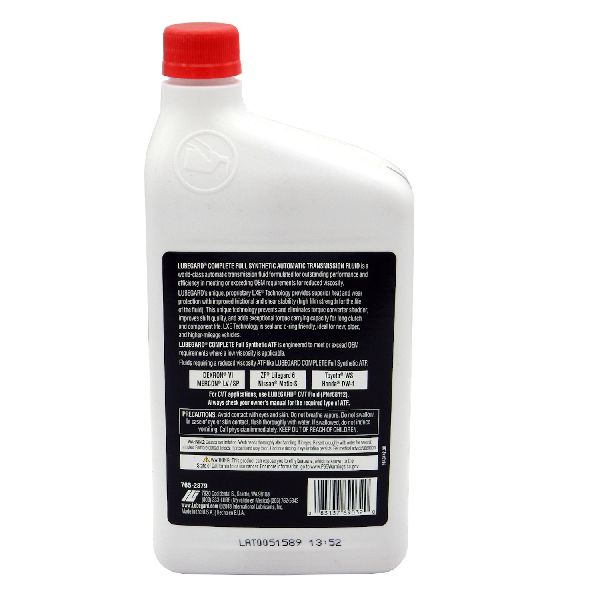
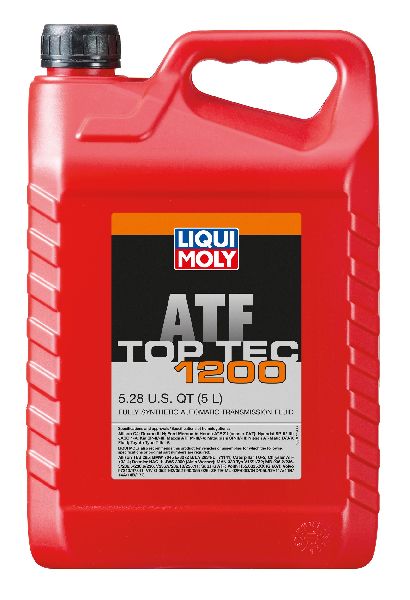
- Transmission Fluid and Filter Kit
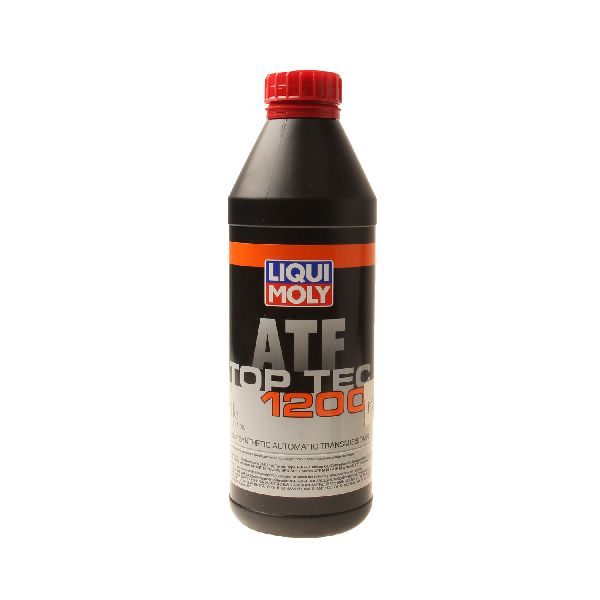
(OEM #G055025A2 (Fluid), 09G325429E (Filter))— Low or degraded fluid is a primary cause of this code. A fluid and filter service is often the first and sometimes only necessary repair.
Trusted brands: Vaico, Febi, Meyle, Genuine VW
OEM price range: $100-$180
Aftermarket price range: $50-$120 - Transmission Fluid Pressure Sensor (G193) — If the fluid is fine, the sensor itself is the next most likely component to have failed electronically or mechanically. Note: Some later model 09G valve bodies eliminated this sensor.
Trusted brands: Bosch, Genuine VW
OEM price range: $150-$250
Aftermarket price range: $70-$150 - Valve Body — On the 09G transmission, valve body failure is a known issue that can cause a wide range of pressure-related codes, including P0841.
Trusted brands: Genuine VW, Sonnax (for rebuild kits), Revmax (remanufactured) 🎬 See: How to rebuild and upgrade the 09G valve body
OEM price range: $1000-$1500
Aftermarket price range: $500-$900 (remanufactured)
Related Codes That Often Appear With This One
- P0868 — This code indicates 'Transmission Fluid Pressure Low' and often appears with P0841 when the root cause is low or degraded fluid, or a major internal leak.
- P0730-P0735 — Incorrect gear ratio codes for specific gears can accompany P0841, indicating that the pressure problem is causing slippage or failure to engage a particular gear.
- P17BF — This code, relating to the hydraulic pump, has been documented to appear alongside P0841 in Volkswagen vehicles as noted in NHTSA ODI #11500369 and #11456871.
Technical Service Bulletins (TSBs) & Recalls
- VW TSB 37 07 18 - Addresses a knocking noise under load in the 09G transmission due to loose pendulum support bolts, which while not directly causing P0841, is a known issue with this transmission.
Platform-Specific Known Issues
- Valve Body Cross-Compatibility Issues: → Shop Transmission Valve Body Owners attempting to swap valve bodies from different model years have run into issues. Some later 09G valve bodies eliminated the G193 and G194 pressure sensors. Installing a later valve body into an earlier car that expects to see those sensors will immediately trigger a P0841 code. The fix requires either swapping the sensors to the new valve body (if possible) or sourcing a compatible TCM from the donor vehicle's model year.
Documented NHTSA Reports
- NHTSA ODI #11534529: An owner reported that their vehicle failed state inspection due to code P0841. A dealer diagnosis indicated a failure in the power train requiring a full replacement.
- NHTSA ODI #11459039: A dealer diagnosis for this record explicitly stated that the Mechatronic unit failed internally and was inseparable from the transmission, specifically citing code P0841.
- NHTSA ODI #11456871: This report describes a scenario where a vehicle required a second transmission replacement after the computer triggered codes P17BF (hydraulic pump) and P0841 (transmission fluid pressure sensor A performance).
Hidden / Shadow Codes Worth Checking
- 17225 (VAG-specific code): This is the Volkswagen-specific fault code number that corresponds to the generic OBD-II code P0841. It means 'Transmission pressure sensor 1 G193 open or short/implausible'. Seeing this on a VCDS scan confirms the issue is with the 'A' / G193 sensor circuit. (see via VCDS (VAG-COM), ODIS, or other advanced VW/Audi group diagnostic scan tools.)
Scan Tool Commands That Help
- VCDS (VAG-COM): Basic Settings - Group 001 — After replacing the valve body or solenoids, this function is used to clear the learned values for Tiptronic and Kickdown. This forces the TCM to relearn adaptations. This should be performed with the ignition on and engine off.
- VCDS (VAG-COM): Basic Settings - Group 002 — Used to clear the learned pressure adaptation values. This is often performed immediately after clearing Group 001. Some forum users report that the tool may not give explicit confirmation but the reset is performed.
- Advanced Scan Tools (e.g., Autel MaxiDAS): Adaptation - Channel 00 (Reset to Factory Defaults) — This is a more comprehensive reset that erases all learned values and returns the TCM to its factory state. It is highly recommended after a valve body repair or replacement to ensure the transmission relearns shifting behavior from a clean slate.
Wiring & Ground Locations
- TCM 52-pin Connector — On the 2008-2013 Golf, the Transmission Control Module (TCM) J217 is often located beneath the left front wheel housing cover.. This is the main connection point for all transmission sensors and solenoids. Pin 24 on this connector is specifically for the G193 hydraulic pressure sender. Any corrosion or damage here can directly cause P0841.
- Transmission Main Ground — There is a primary ground point (designated as '14' in some diagrams) on the gearbox housing itself, where the main negative battery cable often attaches.. A poor ground connection at this point can cause erratic behavior and incorrect readings from all electronic sensors within the transmission, including the G193 pressure sensor.
- Internal Valve Body Harness Connector — Inside the transmission oil pan, there is a 14-pin connector that links the internal components (sensors, solenoids) on the valve body to the main external harness.. This internal connector is submerged in transmission fluid. If the harness insulation degrades, fluid can contaminate the pins, causing shorts or open circuits that can trigger P0841 and other transmission codes.
Real Owner Repair Stories
- Ross-Tech Forums (2004 Volkswagen New Beetle (uses same 09G transmission)) — Harsh shifting, followed by the gear indicator display lighting up fully.
❌ Tried (didn't work) Initially swapped the original valve body with a known-good, low-mileage unit from a later model year.
✅ What actually fixed it The replacement valve body was from a later model that did not have the G193 and G194 pressure sensors. This immediately caused code P0841 because the car's original TCM expected to see those sensors. The final fix was to source a TCM from a later model vehicle (part number 09G 927 750 AP) that was programmed for a valve body without those sensors. After installing the matching TCM, the code did not return.
Model Year Variations Within This Range
- 2008-~2009 (Early Models): Early production 09G transmissions were equipped with two hydraulic pressure senders on the valve body: G193 (for K1 clutch) and G194 (for B2 brake). The P0841 code specifically relates to the G193 sensor.
- ~2010-2013 (Later Models): Volkswagen and Aisin eliminated the G193 and G194 pressure sensors from the valve body design in later production models (around June 2004 for the platform, but this carried into the Golf's model years). These later transmissions rely on calculated pressure values from other sensors. Installing a later valve body into an early car without changing the TCM will cause a P0841 fault code because the TCM is looking for a sensor that is no longer there.
Diagnostic Flowchart
Other Known Issues on This Vehicle
Issues unrelated to this code that are worth knowing about as an owner of this generation:
- Timing Chain Tensioner Failure (TSI Engines) 🔴 High — Common failure point, can occur as early as 10k miles but more typical around 60k-80k. Affects 2.0TSI engines from 2008-2013. Failure is catastrophic, leading to engine destruction. (Ref: VW TSB 15-12-01)
- DSG Mechatronic Unit Failure 🔴 High → Shop Transmission Valve Body — A well-known issue on models equipped with the DSG (Direct-Shift Gearbox). Symptoms include harsh shifting, juddering, and loss of power. Can be very expensive to repair. (Ref: Recalls were issued for certain DSG-equipped vehicles in this range.)
- Water Pump Failure (TSI Engines) 🟠 Medium — The plastic housing of the water pump on TSI engines is prone to cracking and leaking coolant, often exacerbated by oil leaks from above that degrade the plastic.
- Carbon Buildup on Intake Valves (TSI Engines) 🟠 Medium — As a direct-injection engine, fuel doesn't wash over the intake valves, leading to significant carbon buildup over time. This restricts airflow and causes misfires and poor performance. Typically requires manual cleaning every 40k-60k miles.
- Vacuum Pump Oil Leak (2.5L Engine) 🟡 Low — The gasket on the engine-driven vacuum pump on the 2.5L 5-cylinder engine commonly fails, causing an oil leak that drips onto the top of the transmission. This is often misdiagnosed as a more serious rear main seal leak.
Used vs. New Parts: Buying Guide for This Vehicle
When a used part is the smart pick: A used Transmission Control Module (TCM) can be a cost-effective solution, especially if you are intentionally matching it to a different-year valve body to resolve a compatibility issue. A complete used transmission from a low-mileage, rear-ended donor vehicle can also be viable, but it carries inherent risks.
Donor-vehicle mileage cap: roughly under 80000 miles for the part to have meaningful remaining life.
What to inspect on the donor part:
- For a valve body: Ask for service history; avoid units from cars with known transmission issues or burnt fluid.
- For a TCM: Ensure the part number is an exact match for what you need. Check for any signs of water damage or corrosion on the casing and pins.
- For a complete transmission: Check the color and smell of the fluid from the donor car if possible. Bright red and sweet-smelling is good; dark brown/black and burnt-smelling is a major red flag.
OEM-only on this vehicle (don't cheap out):
- Transmission Fluid Pressure Sensor (G193): While aftermarket sensors exist, the internal location and labor involved make using a Genuine VW or OEM-supplier (e.g., Bosch) part a safer bet to avoid repeat repairs.
Aftermarket brands forum-validated for this vehicle:
- Sonnax: Does not sell complete valve bodies, but their rebuild kits and individual components are highly regarded by transmission specialists for addressing the 09G's known design flaws.
- Revmax, Street Smart Transmission: These companies offer remanufactured valve bodies that often include upgrades (like those from Sonnax) to improve durability and performance over the original OEM unit.
Brands owners have reported issues with on this vehicle:
- Unbranded, low-cost valve bodies from online marketplaces. These are often just cleaned-up used parts with no corrections for the inherent wear issues and have a very high failure rate.
Real Owner Stories
Aggregated from forums and TSBs cited above. Mileages and costs reflect what owners reported in those sources.
2004 Volkswagen New Beetle (09G Transmission)
Symptoms: After swapping in a later-model valve body that was missing the pressure sensors, the car immediately triggered a P0841 code.
What fixed it: The owner had to install a matching later-model TCM (Transmission Control Module) to work with the sensor-less valve body.
Source hint: Ross-Tech Forums: Thread '2004 New Beetle 09G Transmission Pressure Switch Question'
Volkswagen Jetta (Shared Platform)
Symptoms: An owner reported the car failed state inspection due to error code P0841. The dealer reported a failure in the power train, estimating a full replacement cost at over $7,000 (NHTSA ODI #11534529).
What fixed it: Another owner facing P0841 and P17BF codes noted that the Mechatronic unit had failed internally and could not be sourced separately from the transmission (NHTSA ODI #11459039).
Related OBD-II Codes
Frequently Asked Questions
I heard there is a knocking noise issue with the 09G transmission in these cars; is that related to my P0841 code?
Can I swap a valve body from a newer model year into my 2008-2013 Golf to fix this?
Is the P0841 code related to the DSG Mechatronic unit failures I've read about?
How do I check the transmission fluid level on my Golf to rule out the most common cause?
Why is my Golf prone to P0841 due to dirty fluid if VW says the fluid is 'lifetime'?
Diagnostic Flowchart
Helpful Videos
We Have This Part in Stock

The information in this article is provided for general reference and educational purposes only. Vehicle specifications, procedures, and part compatibility can vary by production date, trim level, and region. Always consult your vehicle's factory service manual and verify part numbers before purchasing or performing repairs. Safety-critical components such as airbags, seat belts, and braking systems should be installed by a qualified professional.
- Volkswagen Golf:
- 🧭 Diagnostic Flowchart
- 🎬 Helpful Videos
- 🛍️ Shop This Part
- What's Unique About the 2008-2013 Volkswagen Golf
- Symptoms You May Notice
- Most Likely Causes
- Rare But Worth Checking
- Diagnosis Steps
- Parts You'll Likely Need
- Related Codes That Often Appear With This One
- Technical Service Bulletins (TSBs) & Recalls
- Platform-Specific Known Issues
- Documented NHTSA Reports
- Hidden / Shadow Codes Worth Checking
- Scan Tool Commands That Help
- Wiring & Ground Locations
- Real Owner Repair Stories
- Model Year Variations Within This Range
- Other Known Issues on This Vehicle
- Used vs. New Parts: Buying Guide for This Vehicle
- Real Owner Stories
- 2004 Volkswagen New Beetle (09G Transmission)
- Volkswagen Jetta (Shared Platform)
- Related OBD-II Codes
- Frequently Asked Questions
- 🎟️ Get 5% Off