

P0842 on 2015-2020 Honda Fit: CVT Pressure Sensor Circuit Low Causes and Fixes
On a 2015-2020 Honda Fit, code P0842 is most often caused by a faulty CVT fluid pressure sensor. This is typically an inexpensive part and a straightforward repair, often costing between $200 and $400 at a shop. It is an electrical fault and almost never requires transmission replacement.
- P0842 on a 2015-2020 Fit is an electrical code for the CVT pressure sensor and rarely indicates a need for a new transmission.
- The most probable cause is a failed sensor (Part No. 28600-R36-004), which is an accessible and relatively inexpensive part to replace.
- Always check the wiring for a short to ground before replacing parts, as this is another common cause.
- Only use Honda HCF-2 fluid for the CVT. Using the wrong fluid will lead to costly damage.
- Do not let a shop convince you to rebuild the transmission without first thoroughly diagnosing the sensor and its electrical circuit.
What's Unique About the 2015-2020 Honda Fit
The 2015-2020 Honda Fit belongs to the third generation (GK series) and uses an 'Earth Dreams' CVT instead of a traditional multi-gear automatic transmission. Therefore, code P0842 relates to a specific sensor monitoring the hydraulic pressure on one of the CVT's pulleys. Owner and technician experiences confirm that this is a common and usually simple-to-fix issue, often misdiagnosed by shops unfamiliar with Honda's guidance, who may suggest a costly transmission rebuild when only a sensor or wiring repair is needed.
Symptoms You May Notice
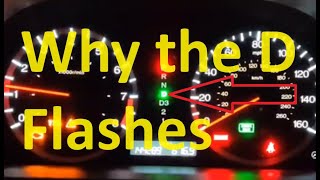
- Flashing 'D' (Drive) indicator light on the instrument cluster. 🎬 Watch: Why the D light flashes and how to fix it
- Check Engine Light is illuminated.
- Vehicle enters 'limp mode' with significantly reduced acceleration.
- Erratic, harsh, or delayed transmission performance.
- Decreased fuel economy.
- Transmission may feel stuck in one gear.
- Replacing the entire transmission. Many shops unfamiliar with this specific Honda code may quote a full transmission replacement or rebuild, when the actual issue is a simple, external sensor or wiring fault.
Most Likely Causes
- Faulty CVT Fluid Pressure Sensor 🔴 High Probability Pressure switches are a common failure point on many Honda vehicles over time due to heat cycles and constant use. It is the most frequent cause of P0842 after ruling out fluid issues.
How to confirm: After confirming the wiring and fluid are good, the sensor is the next logical point of failure. A technician can test the sensor's output voltage with a scan tool. A reading below the specified threshold (e.g., <0.21V) points to a faulty sensor or a shorted circuit. Replacement is often the most direct confirmation if the circuit tests okay.
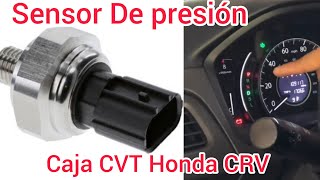
Typical fix: Replace the faulty CVT fluid pressure sensor and its sealing washer. The sensor is typically located on the outside of the transmission housing, making it accessible.
Est. part cost: $50-$150 - Wiring or Connector Issue 🟡 Medium Probability The wiring harness to the transmission can be exposed to road debris, moisture, and heat, leading to corrosion, chafing, or a short to ground.
How to confirm: Visually inspect the wiring harness and connector leading to the pressure sensor for any signs of damage. A multimeter is used to test for continuity between the PCM connector and the sensor connector, checking for a short to ground and proper reference voltage (typically 5V) at the connector.
Typical fix: Repair the damaged section of the wire or replace the corroded connector. Ensure a secure, weatherproof connection.
Est. part cost: $5-$50 - Low or Dirty CVT Fluid ⚪ Low Probability While less common for causing a 'circuit low' code (which is electrical), extremely low or degraded fluid can affect hydraulic pressure and potentially contribute to erratic sensor readings.
How to confirm: Check the transmission fluid level and condition using the dipstick. The fluid should be at the correct level and have a reddish/pink hue, not dark brown or black, and should not smell burnt. This should be the very first check.
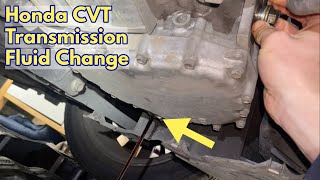
Typical fix: Perform a transmission fluid 'drain and fill' using only Honda HCF-2 fluid. Never 'flush' a Honda CVT.
Est. part cost: $40-$80
Rare But Worth Checking
- Faulty Powertrain Control Module (PCM): → Shop Engine Control Module (ECM) This is extremely rare. The PCM should only be considered after all other possibilities (sensor, wiring, fluid) have been exhaustively ruled out by a qualified technician using advanced diagnostics.
- Internal CVT Mechanical Issue: Very unlikely for a P0842 code, as Honda service literature explicitly states it is an electrical circuit fault. However, a severe internal hydraulic blockage could theoretically cause a pressure drop, but other symptoms and codes would likely be present.
Diagnosis Steps
- Read the code with an OBD-II scanner to confirm P0842 is present. Note any other codes.
- Check the level and condition of the CVT fluid. If it is low, top it off with Honda HCF-2 fluid. If it is very dirty or burnt, perform a drain and fill.
- With a capable scan tool (like the Honda HDS), check the live data for the CVT driven pulley pressure sensor. If the voltage is below the threshold (approx. 0.21V) with the key on, the fault is active.
- Visually inspect the wiring harness and connector for the CVT driven pulley pressure sensor. Look for any signs of corrosion, damage, loose pins, or chafing against the chassis or other components.
- Disconnect the sensor and the PCM connector. Using a multimeter, check for continuity on the signal wire between the two connectors. Then, check for continuity between the signal wire terminal at the sensor connector and a good ground. If continuity exists, there is a short to ground in the harness that must be repaired.
- Check for the 5V reference voltage at the sensor connector with the key on. This is typically done by measuring between pin 3 of the connector and a good body ground.
- If the wiring and connector are in good condition and the circuit tests correctly, the pressure sensor itself is the most likely cause of the fault.
- Replace the CVT fluid pressure sensor and the sealing washer. A 27mm wrench or deep socket is often required.
- Clear the trouble code with the scanner and perform a test drive to ensure the code does not return.
Parts You'll Likely Need
- CVT Fluid Pressure Sensor / Switch 'A'
(OEM #28600-R97-013 (superseded by 28600-R36-004))— This sensor is the most common failure point for code P0842 on this vehicle. Part number 28600-R97-013 has been superseded by 28600-R36-004, which is the current replacement.
Trusted brands: Honda (Genuine OEM)
OEM price range: $80-$120
Aftermarket price range: $40-$90 - Pressure Switch Sealing Washer / Gasket (14mm)
(OEM #90471-PW7-A00)— This crush washer must be replaced whenever the pressure sensor is removed to ensure a leak-free seal.
Trusted brands: Honda (Genuine OEM)
OEM price range: $2-$5 - Honda HCF-2 Continuously Variable Transmission Fluid
(OEM #08200-HCF2)— This is the only fluid specified for use in the 2015-2020 Fit's CVT. Using any other fluid can cause severe damage. A drain and fill may be necessary during diagnosis or repair.
Trusted brands: Honda (Genuine OEM)
OEM price range: $15-$25 per quart
Technical Service Bulletins (TSBs) & Recalls
- TSB 16-053: While for code P1890 on Accord/CR-V, it is relevant context as it deals with CVT pressure problems caused by incorrect PCM learning values, which can be fixed with a software update.
Platform-Specific Known Issues
- Sensor Accessibility: On the Honda Fit, the relevant pressure switch is located on the exterior of the transmission case, often accessible from underneath or through the driver's side wheel well after removing a plastic splash shield. This makes it a much easier repair than sensors located inside the transmission pan.
- Software Updates and Other CVT Issues: While P0842 is an electrical code, Honda has issued TSBs for other CVT issues on related platforms, like TSB 16-053 for code P1890 on CR-Vs and Accords, which involves a software update due to incorrect pressure learning values. This highlights that the PCM's software plays a critical role in CVT operation and that keeping it updated can be part of a comprehensive diagnostic approach.
Mechanic-Grade Diagnostic Values
- CVT Driven Pulley Pressure Sensor Signal Voltage — expected: Greater than 0.21 Volts with key on, engine off.. Failure: A voltage reading of less than 0.21V indicates a short to ground or a faulty sensor.
- CVT Driven Pulley Pressure Sensor Reference Voltage — expected: Approximately 5 Volts. Failure: Significantly less than 5V indicates an open in the VCC2 wire from the PCM.
Scan Tool Commands That Help
- Honda Diagnostic System (HDS): Live Data Monitoring / DTCs Menu — Used to monitor the live voltage from the 'driven pulley pressure sensor' to see if it falls below the 0.21V threshold, which confirms an active fault. It is also used to clear the code after repair and verify the fix.
Wiring & Ground Locations
- CVT Driven Pulley Pressure Sensor Connector — On the exterior of the CVT housing, accessible from the driver's side wheel well after removing the splash shield.. This is the primary connection point to test. Pin 3 is the 5V reference wire, which is critical for confirming the circuit's integrity from the PCM.
- Transmission Ground Cable (G3) — On top of the transmission housing, connecting the transmission case to the chassis. Access often requires removing the battery and air intake assembly.. A poor transmission ground can cause a variety of electrical issues, including erratic sensor readings. While not the most common cause for P0842, it's a critical check if direct circuit testing is inconclusive.
- Interior Ground Point — A metal frame point under the steering wheel, near the interior fuse box.. Provides a known-good, easily accessible ground point for performing multimeter tests on the sensor circuit wiring that runs into the cabin to the PCM.
Real Owner Repair Stories
- YouTube channel 'Codemansauto' (2016 Honda CR-V (shares similar Honda architecture and fault logic)) — Check engine light on and the 'D' (Drive) indicator light was flashing continuously, even in Park.
❌ Tried (didn't work) Checking the transmission fluid level, which was found to be full.
✅ What actually fixed it The transmission fluid pressure sensor was replaced. The mechanic accessed it by removing the driver's side front wheel and plastic fender liner, unplugged the connector, and used a 27mm wrench to remove and replace the sensor. After clearing the codes, the flashing 'D' light was gone and the issue was resolved. - Reddit user 'IcemanYVR' in r/Honda (Commentary on a 2011 Honda Accord V6, in response to a question about a 2015 Fit.) — Flashing 'D' light and Check Engine Light with code P0842.
✅ What actually fixed it The user, a technician, stated the most likely cause is the 'Transmission Fluid Pressure Switch A (2nd clutch)' assuming the wiring is okay. They confirmed it's a straightforward repair on the front of the transmission. They also specifically advised to only perform a 'drain and fill' with Honda fluid and to never 'flush' a Honda transmission.
OEM Part Supersession History
28600-R97-013→28600-R36-004— Standard part revision by Honda.
Heads up: The new part number (28600-R36-004) is the correct and direct replacement for the older numbers, including 28600-R97-003 and 28600-R97-013. No known incompatibilities exist.
Model Year Variations Within This Range
- 2015: The 2015 model year was the first year of production at Honda's Celaya, Mexico plant and had more documented quality control complaints than later years. Additionally, early 2015 models were subject to NHTSA recall 15V-574 for a CVT software issue that could cause high hydraulic pressure and break the drive pulley shaft, highlighting the transmission's sensitivity to software and pressure control.
- 2018-2020: A mid-cycle refresh occurred for the 2018 model year. While the core engine and CVT are mechanically identical to earlier years, these models feature revised styling, the addition of a physical volume knob, and the availability of the Honda Sensing safety suite. A minor horsepower re-rating from 130 to 128 hp for CVT models also occurred but is not mechanically significant.
Diagnostic Flowchart
Other Known Issues on This Vehicle
Issues unrelated to this code that are worth knowing about as an owner of this generation:
- Premature Starter Motor Failure 🔴 High — Commonly reported between 45,000 and 70,000 miles, especially on the 2015 model year. Symptoms include a single click with no crank. (Ref: No recall, but a known common failure item discussed widely in owner forums.)
- Fuel Injector and Direct Injection Carbon Buildup 🟠 Medium — Can occur at various mileages (e.g., 40k-80k miles), causing misfires (P0300-P0304) and rough idle. The 2015 model year had more injector complaints. (Ref: Honda TSB 21-007 describes cleaning carbon buildup, and TSB A18-027 addresses faulty injectors causing P0420.)
- VTC Actuator Rattle on Cold Start 🟠 Medium — A brief, loud rattle for about 2 seconds on a cold start. It is a known issue with Honda's L-series engines. (Ref: Honda Service Bulletin 16-088 addresses this, recommending the replacement of the VTC actuator.)
- Flashing 'D' (Drive) Light 🟠 Medium — A general transmission fault indicator. While often linked to P0842, it can also be caused by other issues like failing speed sensors or other pressure switches.
Used vs. New Parts: Buying Guide for This Vehicle
When a used part is the smart pick: A used wiring harness pigtail from a junkyard is a smart choice if only the connector is damaged. The main sensor itself is a common failure point, so buying a used one is a significant gamble and generally not recommended.
Donor-vehicle mileage cap: roughly under 60000 miles for the part to have meaningful remaining life.
What to inspect on the donor part:
- For a wiring pigtail, inspect for any brittleness, cracking in the insulation, or corrosion on the pins.
- Ensure the connector's locking tab is intact and not broken.
- Avoid parts from vehicles with visible signs of major front-end or undercarriage damage.
OEM-only on this vehicle (don't cheap out):
- Honda HCF-2 CVT Fluid (08200-HCF2): Using any other fluid is a well-documented cause of CVT damage.
- Pressure Switch Sealing Washer (90471-PW7-A00): This is a single-use crush washer; reusing it will likely cause a leak.
- CVT Fluid Pressure Sensor (28600-R36-004): Given its critical role in transmission function and the electrical sensitivity, Genuine Honda OEM is strongly recommended over aftermarket alternatives to avoid repeat failures.
Brands owners have reported issues with on this vehicle:
- Unbranded or 'white-box' sensors from online marketplaces are a high risk for premature failure or being out-of-spec from the factory.
Related OBD-II Codes
Frequently Asked Questions
Where is the CVT fluid pressure sensor located on my 2015-2020 Honda Fit?
What is the correct transmission fluid to use if I need to top off or change the fluid in my Fit's CVT?
My 'D' drive indicator light is flashing. Does this definitely mean I have a P0842 code?
I'm getting P0842 and my Fit has gone into 'limp mode'. Is this normal for this code?
I heard about TSB 16-053 for Honda CVT pressure problems. Does it apply to my Fit for code P0842?
Besides the sensor itself, what is a common electrical cause for P0842?
How can a technician confirm the pressure sensor is bad?
Helpful Videos
We Have This Part in Stock

The information in this article is provided for general reference and educational purposes only. Vehicle specifications, procedures, and part compatibility can vary by production date, trim level, and region. Always consult your vehicle's factory service manual and verify part numbers before purchasing or performing repairs. Safety-critical components such as airbags, seat belts, and braking systems should be installed by a qualified professional.
- Honda Fit:
- 🧭 Diagnostic Flowchart
- 🎬 Helpful Videos
- 🛍️ Shop This Part
- What's Unique About the 2015-2020 Honda Fit
- Symptoms You May Notice
- Most Likely Causes
- Rare But Worth Checking
- Diagnosis Steps
- Parts You'll Likely Need
- Technical Service Bulletins (TSBs) & Recalls
- Platform-Specific Known Issues
- Mechanic-Grade Diagnostic Values
- Scan Tool Commands That Help
- Wiring & Ground Locations
- Real Owner Repair Stories
- OEM Part Supersession History
- Model Year Variations Within This Range
- Other Known Issues on This Vehicle
- Used vs. New Parts: Buying Guide for This Vehicle
- Related OBD-II Codes
- Frequently Asked Questions
- 🎟️ Get 5% Off