

P0847 on 2007-2012 Dodge Caliber 2.4L: Secondary Pressure Sensor Fixes
This code means the secondary pressure sensor in your CVT transmission has failed. Because the sensor is built into the valve body, the most common fix is replacing the entire transmission valve body, which is a complex job. Expect a shop to charge between $800 and $2200 for parts and labor. This is a very common failure on the Jatco JF011E transmission used in this vehicle.
- P0847 on a Dodge Caliber points to an electrical fault with the secondary pressure sensor in the CVT.
- The sensor is not sold separately; the fix requires replacing the entire transmission valve body.
- This is a complex and expensive repair that is not recommended for most DIY mechanics.
- Using the correct Mopar CVTF+4 fluid is absolutely essential for the health of this transmission.
- Ensure the small ROM chip is swapped from the old valve body to the new one to avoid further issues.
What's Unique About the 2007-2012 Dodge Caliber
The Dodge Caliber uses a Jatco JF011E (also called CVT2) transmission, which is notorious for issues, particularly with overheating and valve body failures. Unlike many other vehicles where a pressure sensor is a simple, externally-mounted part, the sensor for this code is integrated directly into the transmission's valve body, inside the oil pan. This means you cannot buy just the sensor; the entire valve body assembly must be replaced, making the repair significantly more complex and expensive. All Chrysler-built vehicles with this CVT, including the Caliber, use the two-sensor version of the valve body.
Symptoms You May Notice
- Check Engine Light is on
- Transmission overheating warning light, especially at highway speeds or under load
- A distinct whining or groaning noise from the transmission that may increase with speed
- Harsh or erratic shifting
- Vehicle feels stuck in a single gear (limp mode), often with very poor acceleration from a stop
- Noticeable loss of power
- Reduced fuel economy
- Replacing only the external transmission speed sensors. This code is for an internal pressure sensor, not the input or output speed sensors.
- Assuming the transmission is completely failed. While the code is serious, it often points to the serviceable valve body rather than a catastrophic failure of the pulleys or chain.
- Attempting to fix the issue with a fluid flush alone. While correct fluid is critical, it will not repair a failed electronic sensor inside the valve body.
Most Likely Causes
- Faulty Secondary Pressure Sensor (Internal to Valve Body) 🔴 High Probability The pressure sensors on the Jatco CVT valve body are a well-documented, high-failure-rate item. The sensor itself is not sold separately from the valve body assembly by Mopar.
How to confirm: After confirming the wiring, 5V supply, and ground to the sensor are all good, the sensor itself is condemned. The service manual procedure points to this as the final step after electrical checks pass. A scan tool will show the sensor voltage reading near zero, below the 0.09V threshold.
Typical fix: Replace the entire transmission valve body assembly located inside the transmission oil pan. The specific Mopar CVTF+4 fluid and both internal and external filters must also be replaced.
Est. part cost: $300-$700 for a remanufactured valve body, $1600+ for a new OEM one. - Wiring Harness or Connector Issue 🟡 Medium Probability The wiring harness to the transmission is exposed to heat and road debris, which can cause wires to become brittle, corroded, or damaged over time. The main connector at the transmission case is a common point for inspection.
How to confirm: Perform a continuity and resistance check on the sensor's signal (T50 circuit), power (T72 5V supply), and ground circuits between the TCM and the main transmission connector, as outlined in the service manual. Check for shorts to ground and open circuits. Resistance on the signal wire should be under 5.0 ohms.
Typical fix: Repair the specific damaged wire or replace the affected connector. Mopar offers connector repair kits.
Est. part cost: $20-$100 for wiring repair supplies or connector pigtails. - Low or Contaminated CVT Fluid ⚪ Low Probability The Jatco JF011E CVT is very sensitive to fluid level and condition. Overheating, a common issue with the Caliber, can degrade the fluid quickly, causing it to lose its hydraulic properties and potentially clog passages in the valve body.
How to confirm: Check the CVT fluid level and condition. The fluid should be at the correct level, clear, and not smell burnt. Note: The Caliber does not have a traditional dipstick; checking the level is a specific procedure requiring the vehicle to be at a certain temperature and often a special service tool (dipstick).
Typical fix: Perform a complete CVT fluid and filter change using only Mopar CVTF+4 or a compatible equivalent. This is often done with the valve body replacement but can be tried first if the fluid is suspect, though it is unlikely to fix a persistent P0847 code.
Est. part cost: $100-$200 for fluid and filters.
Rare But Worth Checking
- Faulty Transmission Control Module (TCM): → Shop Transmission Assembly This is rare and should only be considered after the sensor, wiring, and fluid have been completely ruled out. The service manual lists this as the final step if all other diagnostics fail.
- Worn Oil Pump Flow Control Valve: → Shop Engine Oil Pump A worn flow control valve in the oil pump can cause widespread low pressure issues, potentially triggering this code. This is a more in-depth transmission repair and usually presents with other pressure-related codes. Aftermarket specialist Sonnax makes an oversized replacement valve to address bore wear.
Diagnosis Steps
- Scan the TCM for any other stored trouble codes. Address those first if they are present.
- Using a capable scan tool, monitor the live data for 'Secondary Pulley Pressure Sensor Voltage'. Confirm it is reading abnormally low (below 0.09V).
- Inspect the main transmission wiring harness and connector for any visible damage, corrosion, or loose pins.
- Following the service manual, disconnect the transmission connector and check for 5 volts (± 0.2V) at the supply wire (T72 circuit) from the TCM.
- Check the signal wire (T50 circuit) for a short to ground by measuring resistance between the signal pin at the connector and a known good ground. Resistance should be very high (open circuit).
- Check for an open circuit by measuring resistance on the signal wire between the TCM connector and the transmission connector. Resistance should be very low (under 5 ohms).
- If all wiring tests pass, the fault lies within the valve body's integrated pressure sensor.
- Before replacing parts, check the CVT fluid level and condition. If it is low, burnt, or very dirty, a fluid and filter change may be attempted, but the code will likely return if the sensor has failed electronically.
Parts You'll Likely Need
- Transmission Valve Body
(OEM #RL070618AA (supersedes 68070618AA))— The secondary pressure sensor that causes code P0847 is integrated into this assembly and is not sold separately.
Trusted brands: Mopar (OEM, Remanufactured), Rostra, Sonnax (offers rebuild kits for specialists), Berkeley Standard (Remanufactured)
OEM price range: $1600-$1900
Aftermarket price range: $300-$700 (Remanufactured) - CVT Fluid (CVTF+4)
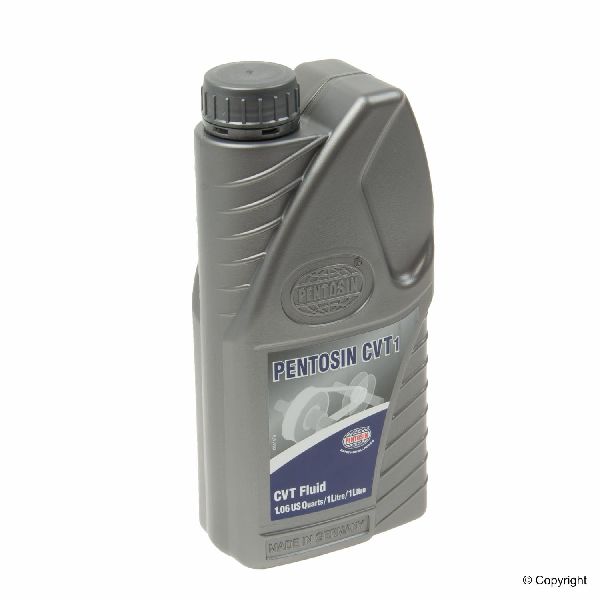
(OEM #5191184AA)— The transmission must be drained to replace the valve body. Using the correct Mopar-spec fluid is critical for CVT longevity.
Trusted brands: Mopar, Valvoline CVT, Idemitsu CVTF Type N
OEM price range: $25-$35 per quart
Aftermarket price range: $15-$25 per quart - CVT Filter Kit — Includes the internal pan filter (sump filter) and the external cartridge filter (cooler return filter). These should always be replaced during this service.
Trusted brands: Mopar, Wix, Fram
OEM price range: $50-$80
Aftermarket price range: $30-$50
Related Codes That Often Appear With This One
- P0842 — This code is for the 'Primary Oil Pressure Sensor Circuit Low', the other main pressure sensor in the CVT. They are part of the same valve body assembly and can fail for similar reasons.
- P0741 — This code relates to the Torque Converter Clutch (TCC) circuit. Pressure issues within the transmission, often originating in the valve body, can prevent the TCC from locking up correctly.
- P0868 — This code indicates 'Transmission Fluid Pressure Low', a more general pressure problem. A failing secondary sensor can contribute to or be accompanied by this code.
Platform-Specific Known Issues
- A critical step during valve body replacement is transferring the small ROM chip from the original valve body to the replacement unit. This chip contains calibration data specific to your transmission. Failure to do so will result in a no-communication error with the TCM, and the vehicle will not operate correctly. If the ROM is not swapped, a dealer-level scan tool is required to perform a relearn procedure.
- The Caliber does not have a transmission dipstick from the factory. Checking the fluid level requires a special service tool (a long, graduated dipstick) and a specific procedure where the fluid temperature must be within a certain range.
Mechanic-Grade Diagnostic Values
- Secondary Pulley Pressure Sensor Voltage (Live Data) — expected: Above 0.09 Volts. Failure: Voltage drops below 0.09 Volts for five seconds or more.
- T72 5 Volt Supply Circuit Voltage — expected: 5.0 Volts ± 0.2 Volts. Failure: Voltage is significantly lower than 4.8V or higher than 5.2V, indicating a TCM or wiring issue.
- T50 Secondary Pressure Sensor Signal Circuit Resistance — expected: Under 5.0 Ohms. Failure: Resistance is higher than 5.0 Ohms, indicating an open or high-resistance in the signal wire.
- Secondary Pressure Sensor Voltage to Pressure Correlation — expected: 0.5V ≈ 0 psi; 4.5V ≈ 870 psi. Failure: Voltage does not correlate with expected pressure, or is stuck at a low value (near 0V for P0847).
Scan Tool Commands That Help
- Chrysler WiTech or equivalent high-end scan tool: Clear Learning Memory / Reset Shift Adaptations — This should be performed after replacing the valve body or transmission. It resets the adaptive learning values stored in the TCM to factory defaults, which is necessary for the transmission to function correctly with the new components.
- Chrysler WiTech or equivalent J2534 programmer: TCM Relearn / Reprogramming — This is a more intensive procedure required if the original valve body's ROM chip is not transferred to the new valve body. The TCM must be programmed to accept the calibration data from the new ROM.
Wiring & Ground Locations
- Transmission Solenoid/Pressure Switch Assembly Connector — On the outside of the CVT transmission case, where the main harness connects to the internal components.. This is the primary connector for testing the sensor's power (T72 circuit), signal (T50 circuit), and ground circuits without opening the transmission.
- TCM C2 Harness Connector — At the Transmission Control Module (TCM). The TCM is typically located in the engine bay, near the firewall or strut tower.. This is the other end of the circuit. Testing for continuity between this connector and the transmission connector confirms the integrity of the wiring harness.
Real Owner Repair Stories
- Reddit user on r/MechanicAdvice (2018 Mazda6 (different vehicle, but same principle)) — Rough and early shifting.
❌ Tried (didn't work) A temporary fix was achieved by performing a TCU relearn procedure, but symptoms returned after a few days.
✅ What actually fixed it The user replaced the transmission valve body themselves. Initially, the car threw a speed sensor code after being driven hard, which was resolved by reprogramming the TCM with a programming interface. The car has been fine for over a month since.
OEM Part Supersession History
68070618AA→RL070618AA— Standard part revision by the manufacturer.
Heads up: The new part number is a direct replacement for the old one. Both are the two-sensor valve body required for all Chrysler applications of the JF011E.
Diagnostic Flowchart
Other Known Issues on This Vehicle
Issues unrelated to this code that are worth knowing about as an owner of this generation:
- Front and Rear Subframe Corrosion 🔴 High — Very common in salt-belt states, can occur regardless of mileage. Often leads to vehicle being scrapped if not repaired. (Ref: TSB 23-007-17 REV. B (extends warranty to 10 years for this issue).)
- Premature Failure of Lower Control Arms / Ball Joints 🔴 High — Extremely common, with failures reported as early as 30,000-50,000 miles. A major safety concern as it affects steering and suspension integrity. (Ref: RRT-08-070 (addresses improperly tightened mounting bolts from the factory).)
- Electronic Throttle Body Failure 🟠 Medium — Common issue causing the vehicle to enter 'limp mode' with a flashing electronic throttle control light, limiting power and creating unsafe driving conditions. (Ref: TSB 9004268 (notes limited supply of a specific part number for 2010 and earlier models).)
- CVT Overheating and General Failure 🔴 High — A systemic issue with the Jatco JF011E transmission, often appearing between 80,000-120,000 km. Symptoms include whining, slipping, and eventual total failure.
- Sunroof Drain Tube Clogging 🟡 Low — Common problem where clogged drain tubes cause water to leak into the cabin, potentially damaging interior electronics like the dome light or radio.
Used vs. New Parts: Buying Guide for This Vehicle
When a used part is the smart pick: A used valve body is a high-risk option and generally not recommended. The failure is electronic and wear-related, and a used part may have the same issue or develop it shortly after installation. It should only be considered as a last resort if a remanufactured unit is unavailable or unaffordable, and only if you are confident in your ability to swap the ROM chip from your original valve body.
Donor-vehicle mileage cap: roughly under 80000 miles for the part to have meaningful remaining life.
What to inspect on the donor part:
- Verify the donor vehicle was not involved in a severe front-end collision.
- Ask for the donor vehicle's VIN to check its service history, if possible.
- Inspect the electrical connector pins for any corrosion or damage.
- Ensure the unit comes with a short-term warranty or return policy from the salvage yard.
OEM-only on this vehicle (don't cheap out):
- Transmission Control Module (TCM) ROM Chip - This part is unique to your specific transmission and MUST be transferred from your old valve body to the new one. It is not sold separately.
Aftermarket brands forum-validated for this vehicle:
- Rostra (often sells new, not remanufactured, components)
- Sonnax (specializes in high-quality rebuild kits and upgraded components for transmission shops)
- Berkeley Standard (Remanufactured)
Brands owners have reported issues with on this vehicle:
- Unbranded, no-name valve bodies from online marketplaces should be treated with extreme caution, as quality control is unknown and warranty support may be non-existent.
Real Owner Stories
Aggregated from forums and TSBs cited above. Mileages and costs reflect what owners reported in those sources.
2009 Dodge Caliber 2.4L
Symptoms: The transmission started making a loud whining noise, the check engine light came on, and the transmission overheating light would appear at highway speeds. Eventually, it went into limp mode and had very poor acceleration.
What fixed it: After diagnosing code P0847, the entire transmission valve body was replaced, which resolved all symptoms.
Cost: $300-$700
Source hint: caliberforumz.com - Multiple threads discuss P0847 and related CVT issues, confirming valve body replacement as the common fix.
2010 Dodge Caliber 2.4L — ~65000 miles
Symptoms: The CVT began whining and slipping, especially when warm. The car felt sluggish and the transmission would overheat on long drives.
What fixed it: The root cause was a failing valve body pressure sensor (P0847). The valve body assembly was replaced, along with a full CVT fluid and filter service.
Source hint: CVT Overheating and General Failure known issue, often appearing between 80,000-120,000 km.
Related OBD-II Codes
Frequently Asked Questions
My 2008 Caliber is stuck in one gear and makes a whining noise. Is this the P0847 issue?
The mechanic says I need a whole new valve body for my Caliber. Can't they just replace the faulty pressure sensor?
I'm replacing the valve body myself. Is there a special step I need to be aware of for the Caliber?
How do I check the transmission fluid level on my 2011 Dodge Caliber before starting repairs?
My 2012 Jeep Patriot has the P0847 code. Is the repair the same as for the Dodge Caliber?
What specific type of transmission fluid should I use when replacing the valve body on my Caliber?
We Have This Part in Stock

The information in this article is provided for general reference and educational purposes only. Vehicle specifications, procedures, and part compatibility can vary by production date, trim level, and region. Always consult your vehicle's factory service manual and verify part numbers before purchasing or performing repairs. Safety-critical components such as airbags, seat belts, and braking systems should be installed by a qualified professional.
- Dodge Caliber:
- 🧭 Diagnostic Flowchart
- 🛍️ Shop This Part
- What's Unique About the 2007-2012 Dodge Caliber
- Symptoms You May Notice
- Most Likely Causes
- Rare But Worth Checking
- Diagnosis Steps
- Parts You'll Likely Need
- Related Codes That Often Appear With This One
- Platform-Specific Known Issues
- Mechanic-Grade Diagnostic Values
- Scan Tool Commands That Help
- Wiring & Ground Locations
- Real Owner Repair Stories
- OEM Part Supersession History
- Other Known Issues on This Vehicle
- Used vs. New Parts: Buying Guide for This Vehicle
- Real Owner Stories
- 2009 Dodge Caliber 2.4L
- 2010 Dodge Caliber 2.4L — ~65000 miles
- Related OBD-II Codes
- Frequently Asked Questions
- 🎟️ Get 5% Off