

P0868 on 2013-2020 Nissan Pathfinder: Transmission Fluid Pressure Low Causes and Fixes
On a 2013-2020 Pathfinder, code P0868 almost always points to a problem with the CVT transmission, often starting with low or degraded fluid. This code indicates the actual hydraulic pressure is lower than what the TCM is commanding. If a fluid and filter service doesn't fix it, you are likely looking at a more serious issue like a faulty valve body or a complete CVT replacement, which can cost thousands. This is a very common and well-documented failure on this platform.
- P0868 on a 2013-2020 Pathfinder is a serious code that should be addressed immediately to prevent catastrophic transmission failure.
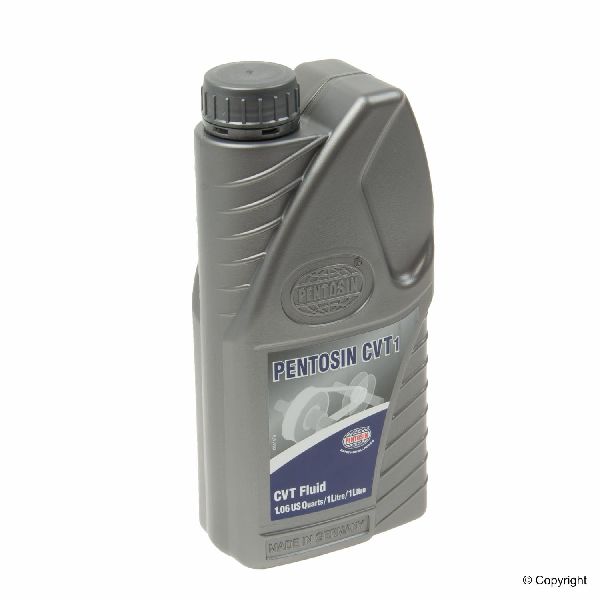
- The first step is always to check the CVT fluid level and condition, and to service it with genuine Nissan NS-3 fluid and new filters.
- Do not let a shop replace only the pressure sensor without a full diagnosis; the sensor is usually reporting a real problem.
- Due to the high failure rate of this specific CVT, be prepared for the possibility that a full transmission replacement is the only long-term solution, with costs often exceeding $6,000.
What's Unique About the 2013-2020 Nissan Pathfinder
The 2013-2020 (R52 generation) Pathfinder uses a Jatco-supplied CVT8 (specifically the JF017E model) that is known for having significant reliability issues. Code P0868 is a very common and serious indicator of problems within this specific transmission. Unlike a simple sensor failure on other cars, on this Pathfinder, P0868 often signals the beginning of a cascade of failures that can include a bad valve body, clogged coolers, or complete internal failure requiring a costly replacement. The issue is so widespread that it has been the subject of multiple class-action lawsuits across various Nissan models using these CVTs. Nissan has also issued software updates (like TSB NTB15-014C) for other models with similar CVTs to better diagnose conditions that lead to this code by creating new DTCs for 'CVT Judder' (P17F0/P17F1).
Symptoms You May Notice
- Check Engine Light is on
- Vehicle enters 'limp mode' (failsafe mode) with reduced acceleration and power
- Shuddering, juddering, or vibration during acceleration
- Hesitation or delay when pressing the gas pedal
- Engine RPMs flare without a corresponding increase in speed (slipping)
- A burning smell from the transmission area due to overheating fluid
- Whining noise from the transmission area, indicative of a failing fluid pump
- Replacing only the pressure sensor without confirming the actual fluid pressure is normal.
- Assuming the transmission is bad without first performing a complete fluid and filter service with the correct Nissan NS-3 fluid and inspecting the pan for debris.
- Replacing the valve body when the root cause is a clogged external cooler or a failing internal pump.
Most Likely Causes
- Low, Degraded, or Incorrect CVT Fluid 🔴 High Probability The Jatco CVT8 is extremely sensitive to fluid level, condition, and type. Overheating, a common issue, degrades the fluid quickly, reducing its hydraulic properties. Using anything other than the specified Nissan NS-3 fluid is a known cause of pressure problems and can void warranties.
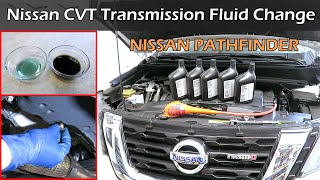
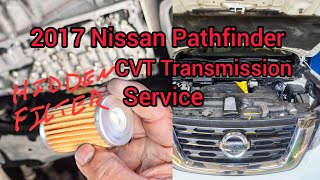
How to confirm: Check the transmission fluid level and condition. This is complex as there is no dipstick. The vehicle must be level, at a specific operating temperature (around 104°F/40°C), with the engine running. The check plug is on the transmission oil pan. 🎬 Watch: Step-by-step guide to changing your Pathfinder's CVT fluid. Dark, burnt-smelling fluid or fluid with metallic particles indicates a serious problem. The Pathfinder has two transmission filters: a paper cartridge filter on the side and a mesh screen inside the oil pan that should be inspected for debris.
Typical fix: Perform a transmission fluid drain and fill, or a full fluid exchange, using only genuine Nissan NS-3 CVT fluid. Replace both the external cartridge filter (Nissan P/N 31726-28X0A) and the internal pan filter/strainer at the same time.
Est. part cost: $150-$300 for fluid and filters - Faulty Transmission Valve Body or Solenoids 🟡 Medium Probability → Shop Transmission Valve Body The valve body contains solenoids that control hydraulic pressure. These can fail electronically or, more commonly, become clogged with metallic debris from fluid breakdown and internal wear, a frequent issue in these CVTs.
How to confirm: A professional mechanic will use a diagnostic scan tool (like Nissan's CONSULT or an advanced tool like Autel) to monitor commanded vs. actual secondary pressure and test solenoid function. This is not a simple DIY check. Advanced DIYers sometimes use apps like CVTz50 to monitor these pressures.
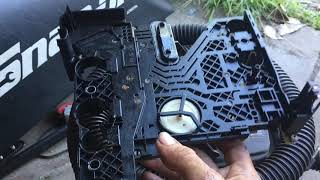
Typical fix: Replace the entire valve body assembly. This often requires reprogramming to match the vehicle's TCM, although some remanufactured units come pre-programmed. This is a professional-level job. 🎬 Watch this walkthrough of the transmission valve body removal.
Est. part cost: $800-$1500 for a remanufactured valve body - Internal CVT Failure (Pump, Belt, Pulleys) 🟡 Medium Probability This is the ultimate result of prolonged low pressure, overheating, or high mileage. The internal oil pump can wear out, or the steel chain and pulleys can be damaged, generating debris that clogs the system and prevents it from holding pressure. This is the catastrophic failure these CVTs are known for.
How to confirm: If a fluid change and valve body replacement do not resolve the code, and if there are significant metal shavings found in the transmission pan during the fluid service, internal failure is confirmed. A whining noise that changes with engine RPM is a strong indicator of a failing pump.
Typical fix: Complete replacement of the CVT assembly with a new or remanufactured unit. This is the most common final resolution.
Est. part cost: $4500-$7000+
Rare But Worth Checking
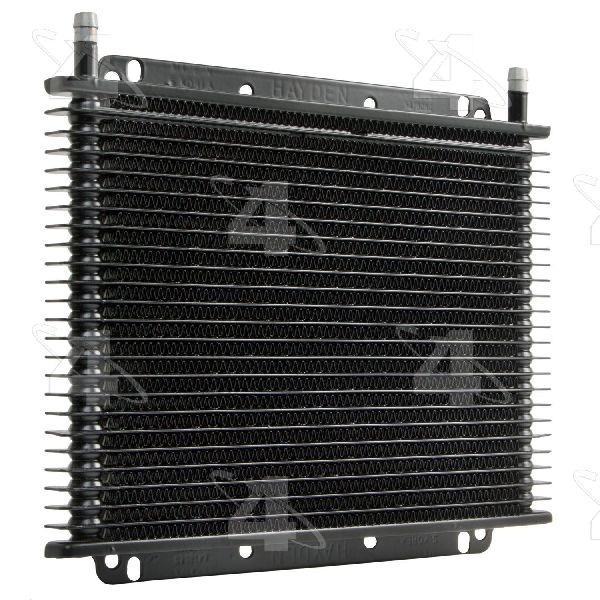
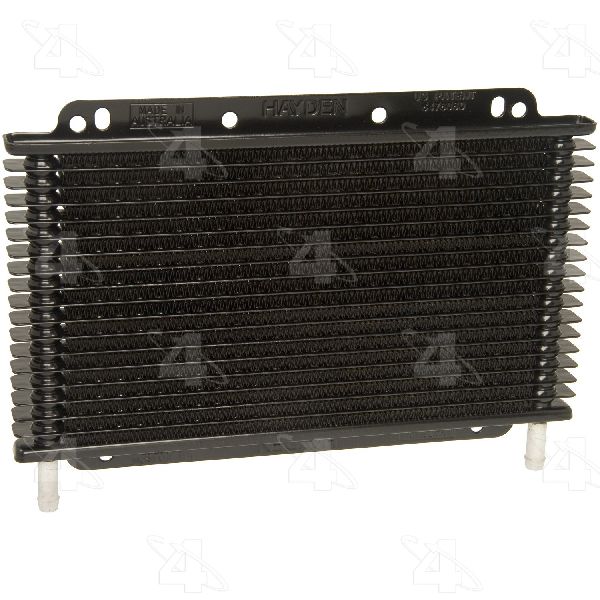
- Clogged External CVT Cooler: The Pathfinder has an external transmission cooler, and some models also have a warmer/cooler attached to the transmission. If the external cooler or its lines become clogged with debris, it can restrict fluid flow, leading to overheating and low pressure. It's often overlooked but should be inspected or flushed during a fluid service, and it is a required step when replacing the CVT assembly.
- Faulty Transmission Fluid Pressure Sensor: → Shop Transmission Assembly While the sensor itself can fail, it is far less common than actual low pressure on this platform. It's often misdiagnosed as the primary problem when it's actually reporting a real pressure issue. Replacing the sensor alone without addressing the root cause of the low pressure will not fix the problem.
Diagnosis Steps
- Scan the vehicle for all diagnostic trouble codes. Note any other codes that appear with P0868, especially P0746, P17F0, or P17F1.
- Check the CVT fluid level and condition using the correct procedure: vehicle level, engine running, transmission fluid at 104°F (40°C), and removing the overflow plug on the pan. Note fluid color, smell, and look for excessive metallic debris.
- If fluid is low or dirty, perform a complete fluid and filter service using only Nissan NS-3 CVT fluid. Replace both the external cartridge filter and the internal pan strainer. 🎬 See how to properly service the CVT and filters. Carefully inspect the pan magnets for metal chunks (not just fine paste).
- Clear the codes and perform a test drive, trying to replicate the conditions that set the code.
- Using an advanced scan tool (like Nissan CONSULT or a capable alternative like Autel/CVTz50), monitor the 'SEC PRESS' (Secondary Pressure) data to compare commanded pressure with actual pressure while driving. A significant and consistent lag or low reading in actual pressure points to a hydraulic issue.
- If actual pressure is consistently low, inspect the external CVT cooler and lines for blockages or kinks.
- If the cooler is clear and the fluid service didn't help, the next likely culprit is the valve body. This is a professional-level diagnosis and repair.
- If a new valve body does not fix the issue, or if large amounts of metal were found in the pan, the CVT assembly has failed internally and requires replacement.
Parts You'll Likely Need
- CVT Transmission Assembly — This is the most common 'final fix' when P0868 appears on a higher-mileage Pathfinder, as it addresses all potential internal failures (pump, belt, pulleys).
Trusted brands: Nissan OEM, Jatco (remanufactured)
OEM price range: $6000-$7500
Aftermarket price range: $4500-$6000 (remanufactured) - CVT Transmission Valve Body
(OEM #31705-29X0C (supersedes 31705-29X0A, 31705-29X0B, 31705-29X0E))— If the failure is isolated to pressure control and not a mechanical part, replacing the valve body can resolve the P0868 code. It's a common failure point due to clogged solenoids.
Trusted brands: Nissan OEM, Street Smart Transmission (remanufactured)
OEM price range: $1200-$1800
Aftermarket price range: $800-$1500
Related Codes That Often Appear With This One
- P0746 — Stands for 'Pressure Control Solenoid 'A' Performance/Stuck Off'. It often appears with P0868 and strongly indicates an internal CVT issue, frequently related to the valve body or a mechanical failure.
- P17F0, P17F1 — These are Nissan-specific codes for 'CVT Judder'. They indicate a problem with the torque converter or belt/pulley system and often precede or accompany the P0868 pressure code. TSB NTB15-014C specifically addresses reprogramming the TCM to better detect these conditions.
Technical Service Bulletins (TSBs) & Recalls
- NTB17-039: Addresses CVT judder with codes P17F0/P17F1 on 2013-2014 Pathfinders, outlining a complex diagnostic procedure involving chain inspection and potential valve body or CVT replacement.
- NTB15-083: Details an enhanced diagnostic logic for CVT judder in other Nissan models, which introduced the P17F0/P17F1 codes.
- NTB17-034: A bulletin for other Nissan models (Sentra, Versa) that also addresses CVT judder and codes P0746/P0965/P17F0, showing the widespread nature of these issues across Nissan's CVT lineup.
Platform-Specific Known Issues
- The Jatco CVT8 (JF017E) used in the R52 Pathfinder was the subject of a class-action lawsuit due to a high rate of failure, often preceded by symptoms like shuddering and codes like P0868.
- Nissan extended the CVT warranty for some earlier models (e.g., 2013-2014) to 7 years/84,000 miles, but many 2013-2020 Pathfinders are now outside this extended coverage, leaving owners with very expensive repair bills.
- The lack of a traditional dipstick makes it difficult for owners to monitor fluid level and condition, which can allow a small problem to become a catastrophic failure before it is noticed.
- TSB NTB17-039 was issued for the 2013-2014 Pathfinder to address CVT judder with codes P17F0 or P17F1, which often involves inspecting the CVT chain with a borescope and potentially replacing the valve body or the entire transmission.
Mechanic-Grade Diagnostic Values
- Secondary Pressure, Line Pressure, and Primary Pressure Solenoid Resistance — expected: 5.5 - 8.5 Ohms. Failure: A reading outside this range indicates a faulty solenoid coil.
- Torque Converter Clutch (TCC) Solenoid Resistance — expected: 6.1 - 7.7 Ohms. Failure: A reading outside this range indicates a faulty TCC solenoid coil.
- CVT Fluid Temperature Sensor Resistance — expected: Approximately 6.5 kOhms at 68°F (20°C). Failure: A significantly different reading indicates a faulty temperature sensor, which can affect pressure calculations.
- Live Data - Secondary Pressure (SEC PRESS) at idle in Drive — expected: 40 - 100 psi. Failure: A reading below 30 psi confirms the low-pressure condition indicated by code P0868.
Hidden / Shadow Codes Worth Checking
- P17F1 (CVT_JUDDER [C/U INSPECTION]): This is a Nissan-specific DTC indicating the control unit has detected judder/shudder. It often precedes or accompanies pressure codes like P0868 and points towards a need for chain/belt and pulley inspection or replacement. (see via Nissan CONSULT-II/III or an advanced aftermarket scan tool. It may be stored in the TCM history even if not actively displayed.)
- P17F0 (CVT_JUDDER [T/M INSPECTION]): Similar to P17F1, this code also indicates judder but specifically points to a transmission mechanical inspection being required. It is part of an enhanced diagnostic logic Nissan implemented to better diagnose CVT issues. (see via Nissan CONSULT-II/III or an advanced aftermarket scan tool. TSB NTB15-014C details the software update that enables this more specific code.)
Scan Tool Commands That Help
- Nissan CONSULT-II/III: TCM Reprogramming — Required after replacing the valve body or the entire transmission assembly to ensure the TCM has the correct calibration data for the new components. TSBs like NTB05-084a detail this procedure.
- Nissan CONSULT-II/III: DATA MONITOR for TRANSMISSION — This is the primary function used to diagnose P0868. It allows a technician to view 'SEC PRESS' (Secondary Pressure) and compare the commanded value from the TCM to the actual reading from the sensor in real-time while driving.
- CVTz50 (or similar advanced app): CVT Data Monitor — For advanced DIYers, this app can read Nissan-specific PIDs, including commanded and actual secondary pressures. This allows for monitoring the pressure drop that triggers P0868 without needing a dealer-level tool.
Wiring & Ground Locations
- Transmission Control Module (TCM) — Located under the passenger side dashboard, often requiring the glove box to be removed for access.. The TCM is the brain that commands and monitors transmission pressure. All sensor signals and solenoid commands route through its connectors. A poor connection or faulty ground at the TCM itself could mimic pressure-related fault codes.
- Transmission Case Connector (F121 on some diagrams) — A large, 22-pin connector on the exterior of the CVT assembly where the main vehicle harness connects to the transmission's internal wiring.. This is the primary point of failure for external wiring issues. Corrosion or a loose pin at this connector can interrupt the signal from the secondary pressure sensor to the TCM, causing false codes or intermittent issues.
- Main Chassis/Fusebox Ground — The mounting screws for the interior fuse box on the passenger side are typically good ground points, as they connect to the main steering crossmember.. A poor ground for the TCM or related circuits can cause floating voltages and incorrect sensor readings, potentially triggering a P0868 code even if hydraulic pressure is normal.
Real Owner Repair Stories
- PathfinderTalk Forum Member (2014 Nissan Pathfinder) — Vehicle would shudder and hesitate on acceleration, eventually throwing code P0868 and going into limp mode.
❌ Tried (didn't work) A full transmission fluid drain and fill with NS-3 fluid and filter replacement did not solve the issue.
✅ What actually fixed it The owner found that the external transmission cooler was clogged. After replacing the CVT cooler and topping off the fluid, the code was cleared and did not return. The shuddering and hesitation were resolved. - NICOclub Forums Member (2013 Nissan Pathfinder SV, ~110,000 miles) — P0868 code, whining noise from transmission, and severe hesitation/limp mode.
❌ Tried (didn't work) Initial diagnosis from a general mechanic suggested a complete CVT replacement.
✅ What actually fixed it The owner took it to a transmission specialist. They dropped the pan and found significant metal debris. A remanufactured valve body was installed, but the code returned. The final fix was a complete replacement with a remanufactured CVT assembly. The specialist noted that once significant debris is present, a valve body alone is rarely enough. - NHTSA ODI #11109927 — An owner reported that a dealership found multiple diagnostic codes related to the transmission, including P1700, P1778, P1740, P0868, and P0746. The dealership determined they needed to replace the transmission to fix the issue.
- NHTSA ODI #10434048 — A manufacturer report describes a vehicle leaking transmission fluid due to a leak in the transfer housing case, triggering code P0868. The vehicle would speed up, slow down, and rev over 5,000 RPMs while lacking power to pull.
OEM Part Supersession History
3102M-3WX0D, 3102M-3WX2D, 3102M-3WX5D→310CM-3WX6A-RE— These are part numbers for the complete remanufactured FWD CVT assembly. The supersessions reflect internal updates and revisions made by Nissan/Jatco to improve reliability.
Heads up: It is critical to match the transmission part number to the vehicle's VIN and drivetrain (FWD vs AWD), as they are not interchangeable.31705-29X0A, 31705-29X0B→31705-29X0C, 31705-29X0E— Revisions to the valve body assembly, likely involving solenoid and casting updates to address clogging and failure issues.
Model Year Variations Within This Range
- 2017-2020: The 2017 model year marked a significant mid-cycle refresh. The 3.5L V6 engine received direct injection and other revisions, boosting power from 260 hp to 284 hp and torque from 240 to 259 lb-ft. While the CVT model (JF017E) remained the same, Nissan claimed the CVT's software was updated to provide simulated shift points for a more traditional feel. These changes did not, however, eliminate the underlying reliability issues that cause P0868.
- 2013-2016: Earlier models in this generation are more likely to have the original, less reliable valve body and TCM software. Later TSBs, like NTB15-014C, introduced updated software to better diagnose judder with specific codes (P17F0/P17F1), which may not be present on un-updated earlier models.
Diagnostic Flowchart
Other Known Issues on This Vehicle
Issues unrelated to this code that are worth knowing about as an owner of this generation:
- CVT Transmission Failure 🔴 High → Shop Transmission Assembly — Very common, especially on 2013-2014 models, but affects all years. Can occur anywhere from 60,000 to 120,000 miles. (Ref: Multiple TSBs (e.g., NTB17-039) and a warranty extension for early models.)
- Cracked Radiator / Cross-Contamination (Older Generations) 🔴 High — This was a catastrophic issue for the previous generation (2005-2010) Pathfinder, but is not a common problem for the 2013-2020 R52 generation.
- Failing Wheel Bearings 🟠 Medium — Fairly common. Owners report a humming noise that changes pitch when turning. Can occur as early as 50,000 miles.
- Sun Visor Won't Stay Up 🟡 Low — Extremely common across many Nissan models of this era. The internal mechanism fails, causing the visor to droop and obstruct vision.
- A/C Compressor or Condenser Fan Failure 🟠 Medium — Numerous owners report the A/C system failing to blow cold air, particularly at idle. Often requires expensive compressor or condenser replacement.
- Hood Latch Failure 🔴 High — Affects 2013-2014 models. The secondary hood latch can fail, potentially allowing the hood to fly up while driving. (Ref: NHTSA Campaign Number: 16V029000 (Recall))
- Brake Judder / Premature Wear 🟡 Low — Some owners report premature warping of brake rotors causing vibration during braking, and faster-than-expected brake pad wear.
Used vs. New Parts: Buying Guide for This Vehicle
When a used part is the smart pick: A used CVT assembly is a very high-risk purchase for this vehicle and is generally not recommended. It only makes sense if the donor vehicle has documented, very low mileage (under 60,000 miles), comes with a detailed service history showing regular NS-3 fluid changes, and includes a warranty from the seller (e.g., a reputable auto recycler).
Donor-vehicle mileage cap: roughly under 80000 miles for the part to have meaningful remaining life.
What to inspect on the donor part:
- Verify the donor vehicle's mileage; anything over 80,000 miles is a significant gamble.
- Ask explicitly if the donor vehicle had any transmission codes, slipping, or shuddering before it was taken out of service. Do not buy a transmission that was already failing.
- Check service records for proof of fluid changes with genuine Nissan NS-3 fluid. Use of incorrect fluid is a primary cause of failure.
- Inspect the fluid from the donor transmission if possible. If it's dark, burnt, or contains metallic flecks, reject the part.
OEM-only on this vehicle (don't cheap out):
- CVT Fluid (Nissan NS-3)
- Transmission Control Module (TCM) - Aftermarket/used units often have programming and compatibility issues.
Aftermarket brands forum-validated for this vehicle:
- TD Reman (Specializes in Nissan CVTs, often includes proprietary reliability updates)
- Xtreme Performance (Offers remanufactured units with upgraded components and warranty)
- Sonnax (Provides valve body repair kits and individual components for transmission rebuilders)
Brands owners have reported issues with on this vehicle:
- Generic, unbranded valve bodies or solenoids from online marketplaces. These often fail quickly or are dead on arrival.
- Any remanufacturer that does not offer a substantial, multi-year/unlimited mileage warranty.
Real Owner Stories
Aggregated from forums and TSBs cited above. Mileages and costs reflect what owners reported in those sources.
2013-2020 Nissan Pathfinder
Symptoms: Vehicle entered failsafe mode, exhibited a whining noise, and had high transmission temperatures, triggering code P0868.
What fixed it: The dealer recommended a full CVT replacement. The owner was investigating an external cooler as an alternative attempt to manage temperatures.
Source hint: NICOclub Forums - 'CVT Transmission Issues. (Fail safe, Whining, Temps, & FIX!)'
Nissan Versa
Symptoms: Check Engine Light on with code P0868.
What fixed it: Forum members recommended a pan drop, cleaning the filter/screen, and performing a fluid change as the first diagnostic step. NHTSA ODI #11643169 notes a case where P0868 appeared with P0965 and P17F0, causing the vehicle to hold up traffic at lights for 30 seconds after stopping.
Source hint: NICOclub Forums - 'p0868 cvt'
Nissan Sentra
Symptoms: Loss of power and driving pressure.
What fixed it: NHTSA ODI #11567449 reports that the CVT transmission caused the vehicle to lose power, with diagnostic codes P0846 and P0868 indicating transmission fluid pressure and low pressure issues.
Nissan Maxima
Symptoms: Transmission fluid pressure code P0868 and heating system issues.
What fixed it: NHTSA ODI #10892198 describes a vehicle with approximately 67,000 miles that required nearly $3,000 in repairs for code P0868 and other engine/heating codes while outside of the warranty period.
Related OBD-II Codes
Frequently Asked Questions
My 2014 Pathfinder is juddering. Does TSB NTB17-039 apply to my vehicle?
Is this expensive CVT repair covered by any extended warranty on my 2015 Pathfinder?
Do I really have to use the specific Nissan NS-3 CVT fluid for a fluid change?
How can I check the CVT fluid level myself on my Pathfinder?
I found a lot of metal shavings in my transmission pan. What does that mean?
My mechanic says the valve body is bad. Is that a common failure on these Pathfinders?
Does my family's Infiniti QX60 have the same risk of this P0868 code and CVT failure?
Helpful Videos
We Have This Part in Stock




The information in this article is provided for general reference and educational purposes only. Vehicle specifications, procedures, and part compatibility can vary by production date, trim level, and region. Always consult your vehicle's factory service manual and verify part numbers before purchasing or performing repairs. Safety-critical components such as airbags, seat belts, and braking systems should be installed by a qualified professional.
- Nissan Pathfinder:
- 🧭 Diagnostic Flowchart
- 🎬 Helpful Videos
- 🛍️ Shop This Part
- What's Unique About the 2013-2020 Nissan Pathfinder
- Symptoms You May Notice
- Most Likely Causes
- Rare But Worth Checking
- Diagnosis Steps
- Parts You'll Likely Need
- Related Codes That Often Appear With This One
- Technical Service Bulletins (TSBs) & Recalls
- Platform-Specific Known Issues
- Mechanic-Grade Diagnostic Values
- Hidden / Shadow Codes Worth Checking
- Scan Tool Commands That Help
- Wiring & Ground Locations
- Real Owner Repair Stories
- OEM Part Supersession History
- Model Year Variations Within This Range
- Other Known Issues on This Vehicle
- Used vs. New Parts: Buying Guide for This Vehicle
- Real Owner Stories
- 2013-2020 Nissan Pathfinder
- Nissan Versa
- Nissan Sentra
- Nissan Maxima
- Related OBD-II Codes
- Frequently Asked Questions
- 🎟️ Get 5% Off