

P0877 on 2012-2013 Chevrolet Impala: Transmission Pressure Switch 'D' Circuit Low Causes and Fixes
On a 2012-2013 Impala with the 6T70/6T75 transmission, P0877 almost always means the internal transmission pressure switch diaphragms have failed. These are small, orange, laminated discs located on the TEHCM (the transmission's computer) inside the transmission. The common fix is to replace these discs with an aftermarket kit, which is a moderately difficult DIY job requiring removal of the transmission side cover and costs around $50-$100 in parts. Ignoring this can lead to severe shifting pro
- P0877 on this Impala is an internal transmission issue, not an external sensor problem.
- The most likely cause is the failure of small, orange, plastic pressure switch discs inside the transmission.
- The fix is to replace these discs with a rebuild kit, which is much cheaper than replacing the entire control module or transmission.
- This repair is moderately difficult for a DIYer as it requires opening the transmission, but it is well-documented and achievable with care.
- Always use a new gasket and the correct DEXRON-VI fluid when performing the repair.
What's Unique About the 2012-2013 Chevrolet Impala
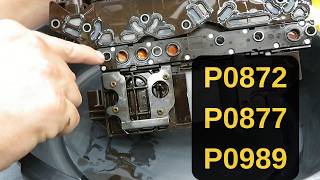
The 2012-2013 Impala uses a GM 6T70/6T75 6-speed automatic transmission. A widely documented weakness in this transmission family is the failure of the laminated pressure switch discs located on the Transmission Electro-Hydraulic Control Module (TEHCM). These small, orange, plastic-and-rubber discs are known to tear, rupture, or become dislodged from their bores, causing pressure sensing errors and triggering codes like P0877. 🎬 Watch this walkthrough on fixing P0877 and P0989 fault codes. Unlike many other vehicles where this code might point to a simple external sensor, on this Impala, the problem is almost always internal to the transmission housing, requiring removal of the side cover to access the TEHCM.
Symptoms You May Notice
- Harsh or erratic shifting, sometimes described as 'slamming' into gear.
- Delayed engagement when shifting from Park to Drive or Reverse
- Transmission stuck in one gear (limp mode).
- Check Engine Light or Malfunction Indicator Lamp (MIL) is on
- Inability to use manual shift mode (Tap Shift).
- A whining noise from the transmission area, especially on cold starts.
- Vehicle hesitates or feels like it's binding up on acceleration.
- Replacing the entire transmission when only the TEHCM pressure switches are bad.
- Replacing shift solenoids, which are also on the valve body but are a separate component from the pressure switches that cause this specific code.
- Assuming the TEHCM is electronically faulty and replacing it, when only the inexpensive mechanical discs have failed.
Most Likely Causes
- Failed Transmission Fluid Pressure (TFP) Switch Diaphragms 🔴 High Probability → Shop Transmission Assembly The laminated discs used for the pressure switches in the 6T70/6T75 TEHCM are a known common failure point. They become brittle, tear, or get pushed out of their bores over time due to heat and hydraulic pressure cycles.
How to confirm: Visually inspect the TEHCM pressure switch diaphragms after removing the transmission side cover. Failed discs will be visibly torn, ruptured, discolored, or pushed out of their bores. In many cases, multiple discs will show damage.
Typical fix: Replace the set of laminated pressure switch discs and their seals using an aftermarket rebuild kit (e.g., Sonnax 124740-30K). This requires removing the transmission side cover and the TEHCM. The discs themselves are replaced on the TEHCM unit.
Est. part cost: $40-$80 for a rebuild kit. - Low or Burnt Transmission Fluid 🟡 Medium Probability → Shop Transmission Assembly While not a specific proneness, GM's original 'fill for life' recommendation is now considered inadequate by many technicians, leading to fluid breakdown over time which can contribute to component failure.
How to confirm: Check the transmission fluid level and condition. The fluid should be at the correct level, red in color, and not smell burnt. Low or dirty fluid can cause erratic hydraulic pressure and shifting issues.
Typical fix: Perform a transmission fluid drain and fill, or a full fluid exchange if the fluid is heavily degraded. The 6T70 requires about 4-6 quarts for a pan drop. Fix any leaks found. Use only DEXRON-VI fluid.
Est. part cost: $60-$150 for DEXRON-VI fluid. - Faulty Transmission Electro-Hydraulic Control Module (TEHCM) ⚪ Low Probability → Shop Transmission Assembly While the discs are the most common failure, the entire TEHCM can fail electronically. This is less common than the physical discs failing, but the rebuild kits will not fix an electrical issue.
How to confirm: If the pressure switch discs are visually intact and wiring is good, the TEHCM itself may be faulty. This usually requires a professional diagnosis with advanced scan tools to test the internal circuitry. Before re-installing a rebuilt TEHCM, its electrical integrity should be verified with an ohmmeter.
Typical fix: Replace the entire TEHCM assembly. This part must be programmed to the vehicle's VIN using specialized tools like GM's Techline Connect.
Est. part cost: $300-$600 for a new or remanufactured TEHCM.
Rare But Worth Checking
- Wiring Harness Issue: Damage to the wiring between the main vehicle harness and the transmission connector, or internal harness damage, can cause a low voltage signal. It's less common than the internal switches but should be checked for corrosion or pushed pins.
- Debris in Valve Body: → Shop Transmission Valve Body A GM Technical Service Bulletin (PIP5100A) for similar transmissions notes that debris, sometimes from aftermarket filter packaging, can block fluid passages in the valve body separator plate, leading to pressure-related codes like P0877.
Diagnosis Steps
- Verify the code with an OBD-II scanner capable of reading transmission codes.
- Check the transmission fluid level and condition. Top off or change the fluid if necessary. This is the easiest and cheapest first step.
- Inspect the main transmission electrical connector for corrosion, damage, or pushed-out pins.
- If the fluid and connector are good, the next step is to access the TEHCM. This involves draining the fluid (approx. 4-6 quarts) and removing the transmission's side cover (driver's side).
- Once the TEHCM is removed, visually inspect the five orange laminated pressure switch discs. Look for tears, ruptures, or any signs that they are not perfectly flat and sealed. The failed discs are often visibly pushed out or broken.
- If the discs are damaged, replace them using a specialized rebuild kit (like Sonnax 124740-30K) and the required installation tools (like Sonnax 124740-TL30). 🎬 See how to properly repair the pressure switches step-by-step. This involves carefully removing the old seals and discs and pressing in the new ones.
- If the discs appear intact, the issue may be with the TEHCM's internal circuitry or the wiring harness. Further electrical testing would be required.
- Reassemble the transmission with a new side cover gasket, torquing the bolts to specification (106 in-lbs). Refill with the correct amount of DEXRON-VI fluid, clear the codes, and perform a test drive. A transmission adaptive learn procedure may be required for optimal shifting.
Parts You'll Likely Need
- Transmission Pressure Switch Rebuild Kit
(OEM #N/A (GM does not sell the discs separately))— This is the most common failure point. The kit contains the replacement laminated discs and seals needed to repair the TEHCM.
Trusted brands: Sonnax (P/N: 124740-30K), TransGo (P/N: PSR-5)
OEM price range: N/A (GM typically sells the full TEHCM)
Aftermarket price range: $40-$80 - Transmission Side Cover Gasket
(OEM #ACDelco 24264222)— The side cover must be removed to access the TEHCM, and the gasket is a one-time-use part that should always be replaced to prevent leaks.
Trusted brands: ACDelco, Fel-Pro
OEM price range: $25-$50
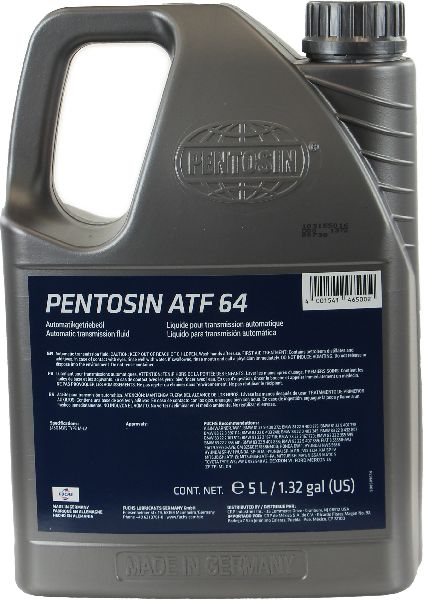
Aftermarket price range: $15-$30 - DEXRON-VI Automatic Transmission Fluid
(OEM #ACDelco 10-9395 (or equivalent))— The transmission fluid must be drained to perform the repair (approx. 4-6 quarts), so it will need to be refilled with the correct specification fluid.
Trusted brands: ACDelco, Valvoline, Castrol
OEM price range: $15-$25 per quart
Aftermarket price range: $10-$20 per quart
Related Codes That Often Appear With This One
- P0989 — This is the code for 'Transmission Fluid Pressure Switch 5 Circuit Low'. Since the pressure switches are all on the same module and prone to the same failure, it's extremely common for multiple switches to fail and set codes simultaneously.
- P0872 — This is the code for 'Transmission Fluid Pressure Switch 3 Circuit Low'. Like P0989, it indicates another pressure switch on the same TEHCM has failed and often appears in combination with P0877.
- P0700 — This is a generic code that simply means the Transmission Control Module (TCM) has requested the check engine light to be turned on. It will always be present with other specific transmission codes like P0877.
Technical Service Bulletins (TSBs) & Recalls
- PIP5100A: While not for the Impala specifically, this TSB for other GM vehicles with similar transmissions and code P0877 advises inspecting the valve body separator plate for blockage from aftermarket filter debris as a potential cause.
- 14-07-30-001D: This bulletin details the transmission adaptive learn procedure that may be necessary after a repair to ensure smooth shifting. It involves specific driving patterns to allow the TCM to relearn clutch apply pressures.
- Bulletin #PIP4379N: This manufacturer bulletin notes that a technician may find P0877 along with other codes like P0701 or P0894, which can lead to a range inhibit condition. It advises following published Service Information diagnostics for P0701 first.
Platform-Specific Known Issues
- source — An owner of a GMC Acadia with the same 6T75 transmission and codes P0877/P0989 documented their successful repair by replacing the pressure switch screens on the TEHCM. They noted the job was straightforward after removing the side cover and that the transmission drove nicely afterward, clearing the codes on its own.
- source — A user on Reddit reported getting codes P0877 and P0989 on their 2013 Impala, describing symptoms of 'hiccuping' on acceleration and deceleration. This is a classic real-world example of the symptoms caused by failing pressure switches.
Mechanic-Grade Diagnostic Values
- TEHCM Shift Solenoid (On/Off type) Resistance — expected: 20-40 Ohms. Failure: A reading outside this range indicates a failed solenoid, requiring TEHCM replacement.
- TEHCM PWM Solenoid Resistance — expected: 3-8 Ohms (or 4-7 Ohms per another source). Failure: A reading outside this range suggests a faulty solenoid within the TEHCM.
- TFP Switch State on Scan Tool — expected: Parameter for TFP Switch 4 should change state (e.g., from LOW to HIGH) when gently pushed with a pencil eraser (with TEHCM removed but connected).. Failure: If the switch state does not change, the switch is mechanically or electrically stuck, confirming a fault.
Scan Tool Commands That Help
- GM GDS2 / Tech2 or equivalent professional scan tool: Transmission Adaptive Values Learn (also called Service Fast Learn Adapts) — This procedure must be performed after replacing the TEHCM or valve body to allow the TCM to learn the new components' hydraulic characteristics for smooth shifting. Failure to do so can result in poor shift quality or new DTCs.
- GM GDS2 / Tech2 or equivalent professional scan tool: Reset Transmission Adapts — Used to reset learned shift pressure values to their base settings. This should be done after internal transmission service or if addressing a shift quality complaint before starting the relearn process.
- GM GDS2 / Tech2 or equivalent professional scan tool: Replace and Reprogram — When installing a new, blank TEHCM, this function in GM's SPS2 (Service Programming System) is used to load the correct VIN and calibration software into the module.
Wiring & Ground Locations
- X1 20-way connector — The main electrical connector at the transmission case for the control solenoid valve assembly (TEHCM).. This is the primary connection point between the vehicle's main harness and the TEHCM. A diagnostic procedure involves connecting a special harness (DT-47825-20) here to test the TFP switches directly. Poor connections or corrosion at this plug can mimic internal faults.
- General Grounds — Various connection locations under the hood.. Service documents note that erratic transmission performance and codes can be caused by faulty or corroded ground connections, which can affect the voltage readings seen by the TCM. Verifying all engine and transmission grounds are clean and tight is a crucial, though often overlooked, diagnostic step.
Real Owner Repair Stories
- YouTube video by 'Pads Auto Repair' (2012 Buick Enclave (uses the same 6T70 transmission and TEHCM)) — Intermittent shutter while shifting, codes P0877 and P0989 stored.
❌ Tried (didn't work) The video directly proceeds to the known common fix, so no other failed attempts were documented.
✅ What actually fixed it The technician removed the TEHCM and found the pressure switch diaphragms for the corresponding codes were visibly pushed out and damaged. After replacing all the diaphragms and seals with an aftermarket kit, the issue was resolved. - YouTube video by 'Car Issues' (2014 Chevrolet Impala (uses the same 6T70 transmission and TEHCM)) — Vehicle would bind up as if going into reverse and drive at the same time; traction and ABS lights flashing; codes P0877 and P0989 stored.
✅ What actually fixed it The TEHCM was removed, and the technician pointed out that the seals for the two solenoids corresponding to the codes were completely blown out or missing pieces. Replacing all the seals and diaphragms with a kit and special tools fixed the problem.
OEM Part Supersession History
24252363, 25798353, 24256670, 24257038, 24261308, among others→24256861 (current as of searches)— Standard part evolution and consolidation for the TEHCM assembly.
Heads up: While many part numbers will physically fit, the TEHCM must be programmed with the vehicle's specific VIN and latest calibration files using GM's SPS2 software to function correctly.
Model Year Variations Within This Range
- 2012-2013: The 3.6L LFX V6 used in the 2012+ Impala is a significant update over the earlier 3.6L LY7 engine used in other GM vehicles. The LFX features corrected timing chain components, addressing a major failure point of the earlier design. The transmission (6T70) and its common failure points remain consistent for this model range.
Diagnostic Flowchart
Other Known Issues on This Vehicle
Issues unrelated to this code that are worth knowing about as an owner of this generation:
- Premature Timing Chain Stretch 🔴 High — Common on 3.6L engines, particularly earlier versions. The LFX in the 2012-2013 Impala is improved but still susceptible, often appearing after 100,000 miles. Caused by long oil change intervals and PCV system issues.
- Intake Valve Carbon Buildup 🟠 Medium — A common issue on all direct-injection (DI) engines like the LFX. Fuel doesn't wash over the intake valves, allowing carbon to build up over 50,000-100,000 miles, causing misfires and rough idle. Requires manual cleaning.
- Service Stabilitrak / ABS Light 🟠 Medium — Frequently reported problem. Often caused by a faulty wheel speed sensor or, more commonly, a damaged wiring harness leading to the front wheel speed sensors. The wiring can chafe or break, especially during turns, causing intermittent warnings and traction control activation.
- Clogged PCV Orifice 🟡 Low — The PCV orifice on the rear valve cover is known to be undersized and can clog with sludge, increasing crankcase pressure and oil consumption. Many owners drill the orifice to a larger size as a preventative measure.
- Power Steering Hose Leak (2012 models) 🔴 High — A recall (NHTSA Campaign ID: 11V401000) was issued for over 10,000 2012 Impalas because a power steering hose could be routed too close to the catalytic converter, potentially melting and leaking fluid, causing loss of steering assist and a fire risk. (Ref: 11V401000)
Used vs. New Parts: Buying Guide for This Vehicle
When a used part is the smart pick: For this specific repair, obtaining a used TEHCM from a junkyard is NOT recommended. The pressure switch diaphragms are a common failure item due to age and heat cycles, so a used part is highly likely to have the same defect or fail soon. The only part where a used component might be considered is the external transmission side cover itself, if it were damaged during removal.
Donor-vehicle mileage cap: roughly under 50000 miles for the part to have meaningful remaining life.
What to inspect on the donor part:
- If sourcing a complete used transmission, look for one from a vehicle with the lowest possible mileage.
- Check for evidence of a recent TEHCM replacement (e.g., a cleaner-looking side pan and TEHCM connector).
- Avoid parts from vehicles that show signs of heavy front-end collision damage, which could have shocked the transmission components.
OEM-only on this vehicle (don't cheap out):
- Transmission Electro-Hydraulic Control Module (TEHCM): While the root cause is often the cheap internal discs, if the entire module's electronics have failed, a new GM OE or professionally remanufactured and tested unit is the only reliable option. A used unit carries a high risk of failure and still requires expensive programming.
Aftermarket brands forum-validated for this vehicle:
- Sonnax (P/N: 124740-30K): Widely cited in repair videos and forums as the go-to kit for replacing the failed pressure switch diaphragms.
- TransGo (P/N: PSR-5): Another reputable brand offering a nearly identical pressure switch repair kit.
Brands owners have reported issues with on this vehicle:
- Unbranded, no-name pressure switch disc kits from online marketplaces have been reported by some users to be made of thinner material that may not hold up to the hydraulic pressure, leading to repeat failures.
Real Owner Stories
Aggregated from forums and TSBs cited above. Mileages and costs reflect what owners reported in those sources.
GMC Acadia with 6T75 transmission
Symptoms: Owner reported codes P0877 and P0989.
What fixed it: The owner successfully repaired the vehicle by replacing the pressure switch screens on the TEHCM, noting the transmission drove nicely afterward.
Source hint: Owner Experience on Chevy Talk Forum
2013 Impala
Symptoms: Owner described symptoms of 'hiccuping' on acceleration and deceleration, along with codes P0877 and P0989.
What fixed it: The final repair was not documented in the source, but the symptoms are a classic example of failing TEHCM pressure switches.
Source hint: Reddit User with 2013 Impala
Related OBD-II Codes
Frequently Asked Questions
What is the most common reason for a P0877 code on my 2012-2013 Impala?
Can I fix the P0877 issue without replacing the entire expensive TEHCM unit?
If I do need to replace the whole TEHCM, does it require special programming for my Impala?
What type of transmission fluid should I use when performing this repair on my Impala?
After repairing the TEHCM, is there a special procedure needed for the transmission to shift correctly?
Are other GM vehicles with the 3.6L engine prone to this same P0877 transmission problem?
Helpful Videos


We Have This Part in Stock


The information in this article is provided for general reference and educational purposes only. Vehicle specifications, procedures, and part compatibility can vary by production date, trim level, and region. Always consult your vehicle's factory service manual and verify part numbers before purchasing or performing repairs. Safety-critical components such as airbags, seat belts, and braking systems should be installed by a qualified professional.
- Chevrolet Impala:
- 🧭 Diagnostic Flowchart
- 🎬 Helpful Videos
- 🛍️ Shop This Part
- What's Unique About the 2012-2013 Chevrolet Impala
- Symptoms You May Notice
- Most Likely Causes
- Rare But Worth Checking
- Diagnosis Steps
- Parts You'll Likely Need
- Related Codes That Often Appear With This One
- Technical Service Bulletins (TSBs) & Recalls
- Platform-Specific Known Issues
- Mechanic-Grade Diagnostic Values
- Scan Tool Commands That Help
- Wiring & Ground Locations
- Real Owner Repair Stories
- OEM Part Supersession History
- Model Year Variations Within This Range
- Other Known Issues on This Vehicle
- Used vs. New Parts: Buying Guide for This Vehicle
- Real Owner Stories
- GMC Acadia with 6T75 transmission
- 2013 Impala
- Related OBD-II Codes
- Frequently Asked Questions
- 🎟️ Get 5% Off