

P0894 on 2011-2020 Hyundai Elantra: Transmission Slipping Causes and Fixes
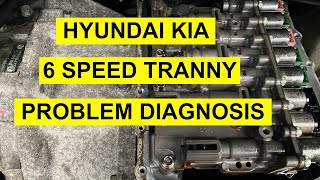
P0894 on a Hyundai Elantra indicates internal transmission slipping. The most common causes are low or burnt transmission fluid, a failing internal wiring harness in the 6-speed automatic, or a faulty transmission fluid temperature sensor. This is not a simple DIY fix and usually requires professional diagnosis.
- P0894 means your Elantra's transmission is slipping internally, which is a serious issue.
- The first and simplest check is the transmission fluid level and condition. Use only Hyundai-specified SP-IV fluid.
- On the common 6-speed automatic, a faulty internal wiring harness is a known weak point that can cause this code.
- This code is not a DIY-friendly repair. Continued driving can lead to complete transmission failure, so prompt professional diagnosis is recommended.
- 2020 models with the IVT have different known issues, some of which are covered by a Hyundai service campaign.
What's Unique About the 2011-2020 Hyundai Elantra
Most Elantras in this year range use Hyundai's A6GF1 6-speed automatic transmission, which is known to have issues with shift quality and a relatively high failure rate of the internal wiring harness and the transmission fluid temperature sensor integrated within it. This harness can degrade over time from heat and fluid exposure, causing erratic solenoid behavior and incorrect sensor readings that lead to slipping and codes like P0894. While low fluid is a common cause on any car, this internal harness is a specific weak point for this platform. Later 2020 models may have an IVT (Intelligent Variable Transmission), which has its own set of TSB-documented issues related to control module software.
Generation note: This range covers the 5th generation (2011-2016) and 6th generation (2017-2020) Elantra. Most models use the 6-speed automatic (A6GF1). However, some 2020 models were equipped with an Intelligent Variable Transmission (IVT), which has different internal components and known issues covered by separate service bulletins, such as TSB 20-01-028H.
Symptoms You May Notice
- Engine RPMs flare up during shifts or when accelerating, without a corresponding increase in vehicle speed.
- Harsh, delayed, or erratic gear shifting.
- A noticeable shudder or vibration during acceleration or at steady speeds.
- A strong burning smell from the transmission fluid.
- Reduced fuel economy.
- Vehicle may enter 'limp mode,' getting stuck in one gear.
- Illuminated Check Engine Light.
- Transmission overheating.
- Replacing only the TCC solenoid without checking the torque converter clutch itself or the valve body. The solenoid often works, but the mechanical part it controls is worn out or the hydraulic circuit is compromised.
Most Likely Causes
- Low, Burnt, or Incorrect Transmission Fluid 🔴 High Probability → Shop Transmission Assembly The A6GF1 transmission is sensitive to fluid level and condition. Leaks can develop over time, and fluid breakdown leads to poor hydraulic pressure and overheating, causing slippage.
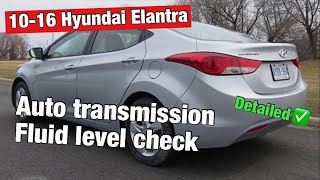
How to confirm: Check the transmission fluid level and condition via the dipstick (if equipped) or service plug. The fluid should be bright red and not smell burnt. Note: Many newer models do not have a dipstick and require a specific procedure to check the level at the correct temperature. 🎬 Watch: How to check the transmission fluid level on your Elantra.
Typical fix: Top off the fluid with Hyundai/Kia SP-IV specific fluid and inspect for leaks. If the fluid is dark, burnt, or contains debris, a transmission fluid flush may be attempted, but internal damage may already be present.
Est. part cost: $50-$150 for fluid - Failed Internal Transmission Wiring Harness / Temperature Sensor 🔴 High Probability → Shop Transmission Assembly The internal wiring harness for the A6GF1 transmission is a known failure point. The insulation can become brittle and crack from heat and fluid exposure, leading to short circuits for the solenoids and, critically, failure of the integrated transmission fluid temperature sensor. A bad temperature reading can cause the TCM to command incorrect line pressures, leading to slipping.
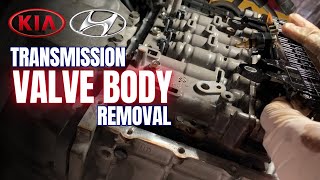
How to confirm: This requires removing the transmission oil pan and valve body to visually inspect the harness for damage. A mechanic may also test for electrical continuity and shorts at the transmission connector. A scan tool may show erratic or out-of-range temperature readings.
Typical fix: Replacement of the internal wiring harness.
Est. part cost: $150-$250 - Failing Shift Solenoid or Torque Converter Clutch (TCC) Solenoid 🟡 Medium Probability → Shop Automatic Transmission Torque Converter
How to confirm: A professional scan tool can monitor the command signals to each solenoid and their resulting effect on gear changes and TCC lockup. The solenoid's electrical resistance can also be tested with a multimeter after removing the transmission pan.
Typical fix: Replace the specific faulty solenoid or the entire solenoid pack. This is done by removing the transmission pan and valve body.
Est. part cost: $100-$400 for a solenoid pack - Worn Internal Components (Clutch Packs, Torque Converter) ⚪ Low Probability This is typically a secondary failure caused by prolonged driving with low fluid or slipping issues, which accelerates wear on mechanical parts like clutch friction material.
How to confirm: Confirmed by finding excessive metal shavings or friction material in the transmission pan. A road test showing severe, consistent slipping after fluid and electronic issues are ruled out also points to mechanical failure.
Typical fix: Requires a complete transmission rebuild or replacement.
Est. part cost: $2000-$4500+
Rare But Worth Checking
- Faulty Transmission Control Module (TCM): → Shop Transmission Assembly While rare, a failing TCM can send incorrect signals to the transmission. This should only be considered after all mechanical and electrical components within the transmission have been verified as good.
Diagnosis Steps
- Check the transmission fluid level and condition. If low, top it off and check for leaks. If burnt, note the smell and check for debris in the fluid.
- Use an OBD-II scanner to check for any other transmission-related codes that could provide more specific clues, especially temperature sensor codes.
- Connect a professional-grade scan tool to monitor live data, specifically TCC slip speed, commanded vs. actual gear, solenoid duty cycles, and transmission fluid temperature during a test drive.
- Inspect the external transmission wiring and connectors for any visible damage or corrosion.
- If electronic issues are suspected, remove the transmission oil pan to visually inspect the internal wiring harness for cracking, brittleness, or damage, paying close attention to the area around the temperature sensor.
- Test the resistance of individual solenoids to check for electrical failure.
- If all electronics and fluid are good, but slipping persists, the issue is likely a major internal mechanical failure (worn clutches, failing torque converter) requiring a transmission rebuild or replacement.
Parts You'll Likely Need
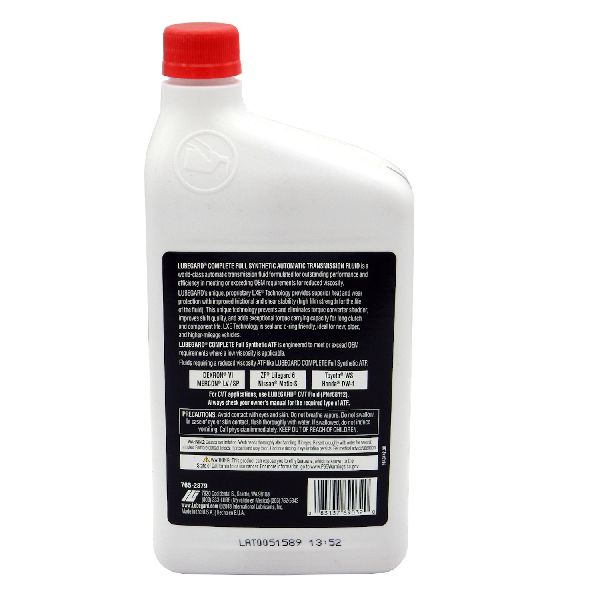
- Automatic Transmission Fluid
(OEM #00232-19045 (SP-IV))— The first step in any diagnosis. The transmission requires Hyundai/Kia SP-IV specific fluid. Using the wrong type can cause damage.
Trusted brands: Hyundai OE, Idemitsu TLS-LV (SP-IV equivalent)
OEM price range: $15-$25 per quart
Aftermarket price range: $10-$20 per quart - Internal Transmission Wiring Harness
(OEM #46307-3B650 (Verify by VIN, other numbers include 46307-2F000, 46307-3B610, 46307-3B620))— This is a known weak point on the A6GF1 6-speed transmission used in the Elantra, causing many electrical and slipping issues. It includes the often-problematic transmission fluid temperature sensor.
Trusted brands: Hyundai OE (Mobis)
OEM price range: $150-$250
Aftermarket price range: $100-$200 - Transmission Solenoid Kit — Solenoids control fluid flow for shifting and lockup. A failing solenoid is a common cause of slipping. Often replaced as a set when the valve body is accessed.
Trusted brands: Hyundai OE, Rostra
OEM price range: $300-$500
Aftermarket price range: $150-$300
Related Codes That Often Appear With This One
- P0741 — Torque Converter Clutch Circuit Performance or Stuck Off. This code is very specific to the TCC system and often appears with P0894 if the slipping is related to the torque converter.
- P07xx — Other transmission codes (e.g., for specific solenoids like P0753, P0758, or gear ratios) may accompany P0894, helping to pinpoint the location of the slip.
- P0711, P0712, P0713 — Codes related to the Transmission Fluid Temperature Sensor. Since this sensor is part of the internal wiring harness that is a common failure point, these codes strongly suggest the harness is the root cause.
Technical Service Bulletins (TSBs) & Recalls
- 20-01-028H: For 2020 Elantra models with IVT, addresses various DTCs including P0741 and P0867 through a software update and possible transmission replacement.
- 12-AT-016: For various 2011-2013 models, advises against replacing the e
Platform-Specific Known Issues
- The A6GF1 6-speed automatic transmission has a documented history of shift quality complaints, including slipping and harsh shifts, often related to the internal wiring harness and its integrated temperature sensor.
- For 2020 models with the IVT, Hyundai issued TSB 20-01-028H (Campaign T5B) for a TCU update and potential transmission replacement to fix issues that include codes for incorrect gear ratio (P0730, P0731) and low fluid pressure (P0867), which are functionally related to slipping.
Mechanic-Grade Diagnostic Values
- VFS (Variable Force Solenoid) Resistance — expected: 5.1 - 5.3 Ohms. Failure: Readings significantly higher or lower than the expected range, or an open circuit (infinite resistance).
- On/Off Shift Solenoid Resistance — expected: 10 - 11 Ohms. Failure: Readings outside this range indicate a failing solenoid coil.
- VFS (Variable Force Solenoid) Current — expected: 50 mA (low current) to 850 mA (high current). Failure: Current readings that do not correspond to the scan tool's commanded state can indicate a wiring or solenoid issue.
- Transmission Speed Sensor Input Voltage — expected: 9 Volts. Failure: Incorrect voltage at the sensor can indicate a wiring or TCM power supply issue.
Scan Tool Commands That Help
- Hyundai GDS (Global Diagnostic System) or equivalent professional scanner: Resetting Auto T/A Values / Resetting auto transmission adaptive values — This function is mandatory after replacing the transmission, valve body, solenoids, or TCM. It erases the learned shift adaptations stored in the control module. Failure to perform this reset will result in poor shift quality and may prevent the new parts from functioning correctly.
- Hyundai GDS (Global Diagnostic System) or equivalent: Adaptive Values Relearn Procedure — Immediately after performing the 'Resetting Auto T/A Values' function. It involves a specific drive cycle (e.g., accelerating slowly through all gears multiple times) while the transmission fluid is at operating temperature, allowing the TCM to learn the new hydraulic and mechanical characteristics of the transmission.
Wiring & Ground Locations
- Transmission Pass-Through Connector — The main electrical connector on the outside of the transmission case where the external vehicle harness connects to the internal transmission harness.. Allows for testing of solenoid circuits without removing the transmission oil pan. For example, for the TCC solenoid, Pin 10 is the power supply and Pin 2 is the ground control from the TCM. Testing for resistance and voltage here can quickly determine if a fault is internal or external.
Real Owner Repair Stories
- Reddit user /r/MechanicAdvice (2016 Hyundai Elantra 1.8L (A6GF1)) — Transmission failure, requiring replacement.
❌ Tried (didn't work) A used A6MF1 transmission from a junkyard was installed. It physically bolted up with minor modifications to a bracket, but it would slam when the torque converter tried to lock up and would go into 4th gear limp mode., Performing a TCU reset and relearn procedure did not fix the issue with the incorrect A6MF1 transmission.
✅ What actually fixed it Replacing the incorrect A6MF1 with the correct A6GF1 transmission. The user concluded that despite physical similarities, the gear ratios, shift points, and electronics were too different for the TCM to control properly.
OEM Part Supersession History
46307-3B610, 46307-3B620→46307-3B650— These are part numbers for the failure-prone internal transmission wiring harness. The latest part number (46307-3B650) is the recommended replacement.
Heads up: Always verify the part number with the vehicle's VIN, but 46307-3B650 is the most current revision for many A6GF1/A6MF1 applications.Varies by solenoid type→Varies— TCC Solenoid part numbers differ based on the transmission's oil pan material.
Heads up: Transmissions with a steel oil pan use a different TCC solenoid (p/n 46313-3B673) than A6GF/A6MF transmissions with a plastic pan (p/n 46313-3B073). Installing the wrong one will cause functionality issues.
Model Year Variations Within This Range
- 2011-2016 (approx.): These earlier models are typically equipped with a 'Generation 1' valve body which uses 8 solenoids.
- 2017-2020 (approx.): Later models, such as the Elantra (AD/ADa), use a 'Generation 2' valve body with only 7 solenoids. Hyundai TSB 19-AT-016H specifically addresses solenoid-related DTCs for this updated design and requires different parts.
Diagnostic Flowchart
Other Known Issues on This Vehicle
Issues unrelated to this code that are worth knowing about as an owner of this generation:
- Engine Failure (Theta II, Nu, Gamma GDI) 🔴 High — Widespread across multiple model years, leading to class-action lawsuits. Often presents as a knocking noise, excessive oil consumption, or sudden seizure. (Ref: Multiple recalls and Service Campaign 966 (TSB 22-01-028H-1) for a Knock Sensor Detection System update.)
- Steering Coupler Degradation 🟠 Medium — Very common on 5th gen (2011-2016) models. The flexible rubber coupler in the electronic power steering motor wears out, causing a distinct clicking or clunking noise in the steering wheel. (Ref: Hyundai extended the warranty for this part on some models (e.g., TSB 17-ST-002-1 for Sonata), but many Elantras are repaired out-of-pocket.)
- Engine Ticking Noise 🟠 Medium — Common on 1.8L Nu engines in the 2011-2016 Elantra. Can be caused by piston slap when cold or issues with the valvetrain/lifters.
- Ignition Coil Failure 🟡 Low — A frequently reported issue on 6th gen (2017-2020) models, leading to engine misfires and a flashing check engine light.
- Paint Delamination/Peeling 🟡 Low — Reported on various model years, particularly on light-colored vehicles. The clear coat and paint can peel, especially on the roof and hood.
Used vs. New Parts: Buying Guide for This Vehicle
When a used part is the smart pick: For this specific repair, using a complete used transmission is highly discouraged. The only scenario where a used part might be considered is for a hard part like the transmission case or a specific gearset, but not for electronic components or the entire assembly due to high failure rates and incompatibility risks.
Donor-vehicle mileage cap: roughly under 60000 miles for the part to have meaningful remaining life.
What to inspect on the donor part:
- Verify the transmission model code (e.g., A6GF1) etched on the case matches the original unit exactly.
- If possible, inspect the fluid from the donor unit. If it is dark, burnt, or contains metal, reject the part.
- Ask for the VIN of the donor vehicle to cross-reference its original engine and specifications to ensure compatibility.
OEM-only on this vehicle (don't cheap out):
- Internal Wiring Harness: This is the most common failure point due to material degradation from heat. A used harness will have the same vulnerability. Always buy a new OEM harness (PN 46307-3B650 or as per VIN) to get the latest revision.
- Transmission Control Module (TCM): If the TCM is diagnosed as faulty, a new or professionally remanufactured OEM unit is required due to the need for correct software and programming to the vehicle's VIN.
Aftermarket brands forum-validated for this vehicle:
- Rostra: Often cited as a reliable source for aftermarket transmission solenoids and kits.
- Sonnax: Does not make solenoids, but produces high-quality valve body repair kits and tools to address wear in the valve body bores, which can be a root cause of pressure loss leading to slipping.
Brands owners have reported issues with on this vehicle:
- Unbranded solenoid kits from online marketplaces (e.g., AliExpress, non-specialty eBay sellers) are a gamble. They may have incorrect resistance values or poor longevity, leading to a repeat failure.
Real Owner Stories
Aggregated from forums and TSBs cited above. Mileages and costs reflect what owners reported in those sources.
2020 Hyundai Elantra with IVT
Symptoms: Transmission was slipping, which triggered diagnostic trouble codes for incorrect gear ratio (P0730, P0731) and low fluid pressure (P0867).
What fixed it: The issue was resolved by a dealer performing a TCU (Transmission Control Unit) software update. In some cases, a full transmission replacement was required.
Source hint: TSB 20-01-028H
Related OBD-II Codes
Frequently Asked Questions
My 2020 Hyundai Elantra is slipping. Does TSB 20-01-028H apply to my car?
What is the most common cause for P0894 on the 2011-2020 Elantra?
What type of transmission fluid should I use in my Hyundai Elantra?
My mechanic says the transmission temperature sensor is bad. Is that a separate part?
Is it more likely that my transmission needs to be replaced or that it's a simpler fix?
Are other Hyundai or Kia models known for this same transmission problem?
Helpful Videos


We Have This Part in Stock

The information in this article is provided for general reference and educational purposes only. Vehicle specifications, procedures, and part compatibility can vary by production date, trim level, and region. Always consult your vehicle's factory service manual and verify part numbers before purchasing or performing repairs. Safety-critical components such as airbags, seat belts, and braking systems should be installed by a qualified professional.
- Hyundai Elantra:
- 🧭 Diagnostic Flowchart
- 🎬 Helpful Videos
- 🛍️ Shop This Part
- What's Unique About the 2011-2020 Hyundai Elantra
- Symptoms You May Notice
- Most Likely Causes
- Rare But Worth Checking
- Diagnosis Steps
- Parts You'll Likely Need
- Related Codes That Often Appear With This One
- Technical Service Bulletins (TSBs) & Recalls
- Platform-Specific Known Issues
- Mechanic-Grade Diagnostic Values
- Scan Tool Commands That Help
- Wiring & Ground Locations
- Real Owner Repair Stories
- OEM Part Supersession History
- Model Year Variations Within This Range
- Other Known Issues on This Vehicle
- Used vs. New Parts: Buying Guide for This Vehicle
- Real Owner Stories
- 2020 Hyundai Elantra with IVT
- Related OBD-II Codes
- Frequently Asked Questions
- 🎟️ Get 5% Off