

P0965 on 2012-2020 Chevrolet Sonic: Pressure Control Solenoid 'B' Circuit Fixes
This code indicates an electrical fault with the transmission's Pressure Control Solenoid 'B'. The most common fix is replacing the transmission solenoid body (which includes all solenoids) located inside the transmission oil pan. Expect to pay $200-$400 for the part.
- P0965 on a Sonic points to an electrical problem with the 'B' pressure control solenoid in the 6-speed automatic transmission.
- Symptoms are serious and include harsh shifting and the transmission entering limp mode; driving should be minimized.
- The most likely fix is replacing the entire transmission solenoid pack, which is located inside the oil pan.
- Before replacing parts, always check the transmission fluid level and condition, as low or dirty fluid can cause similar symptoms.
- This is a complex DIY repair; professional service is recommended due to the need to work inside the transmission and potentially program a new module.
What's Unique About the 2012-2020 Chevrolet Sonic
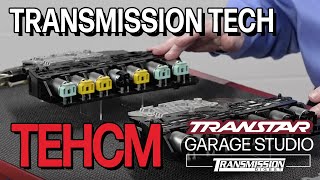
The Chevrolet Sonic uses a GM 6T30 or 6T40 6-speed automatic transmission. On this platform, the pressure control solenoids are not typically replaced individually. Instead, they are integrated into a single solenoid pack or block, which is mounted to the valve body inside the transmission. This entire solenoid assembly, and sometimes the entire Transmission Electro-Hydraulic Control Module (TEHCM), which is the solenoid pack and TCM as one unit, is the common point of failure and is often replaced as a unit to resolve this code. The TEHCM is located inside the hot transmission pan, making it susceptible to heat-related failures over time.
Symptoms You May Notice
- Harsh, abrupt, or delayed gear shifts
- Transmission slipping between gears
- Vehicle entering 'limp mode' (stuck in one gear)
- Check Engine Light is illuminated
- Reduced fuel economy
- Transmission overheating
- Engine RPMs flare without an increase in speed
- A bang or clunk when shifting gears
- Replacing only a single solenoid when the entire pack is the issue.
- Assuming a major internal transmission failure without first diagnosing the more common and accessible electronic components.
- Replacing the TEHCM without checking the wiring harness for corrosion or damage first.
Most Likely Causes
- Faulty Transmission Solenoid Pack/Body (TEHCM) 🔴 High Probability → Shop Transmission Assembly The solenoids in the 6T30/6T40 transmission are a known failure point. Internal electrical windings can fail, the laminate discs can delaminate, or the valve can stick, causing out-of-range electrical readings. The entire TEHCM (solenoid pack and control module) is often replaced as a unit.
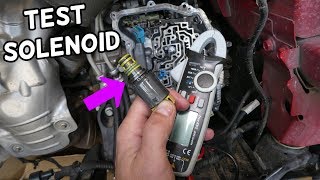
How to confirm: After confirming fluid is clean and wiring is intact, test the resistance of the solenoid. Access the solenoid connector and use a multimeter. 🎬 Watch: How to test the solenoid resistance with a multimeter. The pressure control solenoids should have a resistance between 3 and 5 ohms. A reading outside this range indicates a faulty solenoid. A professional scan tool can also command the solenoid and monitor its response.
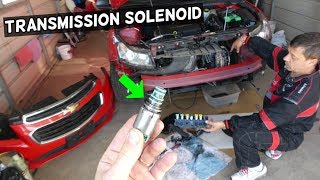
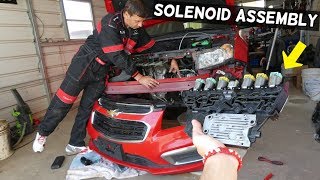
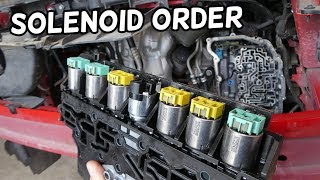
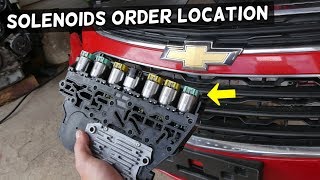
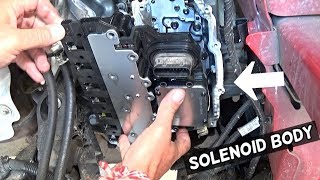
Typical fix: Replace the entire transmission solenoid pack/body (TEHCM). This part is located inside the transmission oil pan and is attached to the valve body. 🎬 See this video to identify the solenoid location and order. The new module must be programmed to the vehicle.
Est. part cost: $200 - $500 - Low or Degraded Transmission Fluid 🟡 Medium Probability → Shop Transmission Assembly The 6T30/6T40 transmission can be sensitive to fluid condition. Old, burnt, or low fluid can cause solenoids to operate erratically or clog their internal passages, leading to performance faults.
How to confirm: Check the transmission fluid level and condition. The fluid should be at the correct level, red in color, and not have a burnt smell. Dark, gritty, or burnt-smelling fluid indicates a problem.
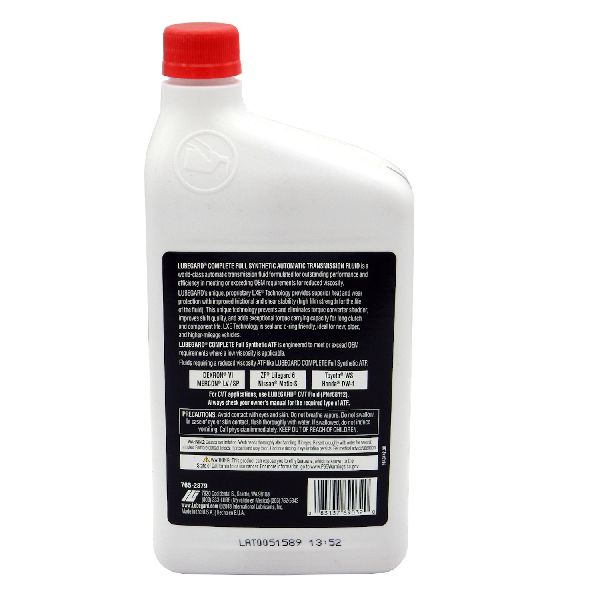
Typical fix: Perform a transmission fluid and filter change using the correct DEXRON-VI fluid. This may resolve the issue if it's caused by poor fluid quality, but often the damage to the solenoid has already been done.
Est. part cost: $60 - $120 - Damaged Wiring or Connectors ⚪ Low Probability
How to confirm: Visually inspect the wiring harness leading to the transmission case connector for any signs of fraying, corrosion, or loose pins. Test for continuity from the TCM connector to the transmission connector. Water intrusion into the main connector is a known issue.
Typical fix: Repair or replace the damaged section of the wiring harness or the connector itself.
Est. part cost: $20 - $100 - Faulty Transmission Control Module (TCM) ⚪ Low Probability → Shop Transmission Assembly On these models, the TCM is often part of the solenoid body assembly (TEHCM) inside the hot transmission pan, which can lead to heat-related failures over time. An internal short or open circuit in the TCM can trigger this code.
How to confirm: This is typically diagnosed by exclusion. If the solenoids, wiring, and fluid are all confirmed to be good, the TCM is the likely culprit. A high-end scan tool may be able to communicate directly with the TCM and identify internal faults.
Typical fix: Replace the entire TEHCM assembly. The new module will require programming to the vehicle using a J2534 pass-thru device and a subscription to GM's TIS2Web service.
Est. part cost: $300 - $700
Diagnosis Steps
- Check the transmission fluid level and condition. If it is low, dark, or smells burnt, a fluid and filter change is a good first step.
- Use a quality OBD-II scanner to check for other related transmission codes, especially P0700.
- Inspect the main transmission wiring harness and connector for any visible damage, corrosion, or loose connections. Pay close attention to signs of water intrusion.
- If wiring appears okay, disconnect the harness and test the resistance of the Pressure Control Solenoid 'B' circuit pins at the connector. A reading between 3-5 ohms is expected. A reading outside this range strongly suggests a faulty solenoid pack.
- If the resistance is out of specification, the solenoid body (TEHCM) inside the transmission is faulty and needs to be replaced.
- If the resistance is within specification, the issue may be with the wiring harness or the TCM itself. A more in-depth wiring continuity test from the TCM to the transmission connector is needed.
- If all wiring and solenoids test good, the TCM (as part of the TEHCM) is the most likely cause of the fault. Replacement and programming will be necessary.
Parts You'll Likely Need
- Transmission Control Module (TEHCM)
(OEM #24256523, 24260030, 24287419, 24256797, 24287421)— This is the most common failure point for code P0965 on the 6T30/6T40 transmission. It contains the faulty Pressure Control Solenoid 'B' and the TCM. Part numbers can vary by year and specific application, so confirming with a VIN is crucial.
Trusted brands: ACDelco (OEM), Dorman
OEM price range: $400 - $700
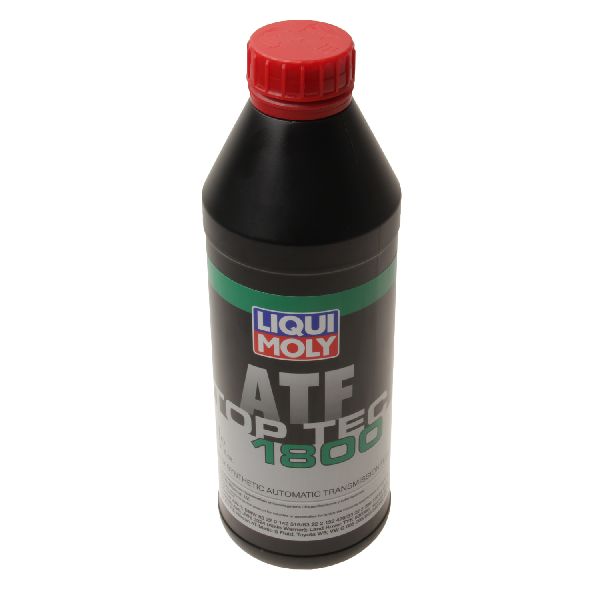
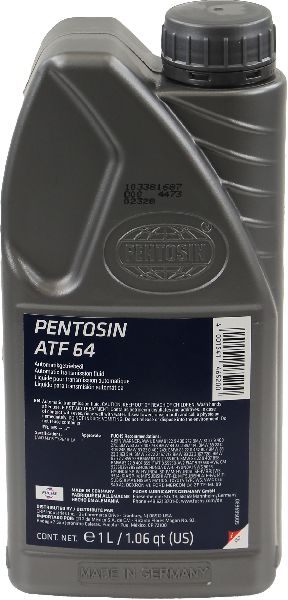
Aftermarket price range: $250 - $450 - DEXRON-VI Automatic Transmission Fluid — Required when replacing the solenoid body or performing a fluid service. Using the correct fluid is critical for transmission health.
Trusted brands: ACDelco, Valvoline, Castrol
OEM price range: $10 - $15 per quart
Aftermarket price range: $8 - $12 per quart - Transmission Oil Pan Gasket — Must be replaced anytime the transmission oil pan is removed to prevent leaks. However, some 6T40 pans use a reusable gasket.
Trusted brands: ACDelco, Fel-Pro
OEM price range: $25 - $40
Aftermarket price range: $15 - $30
Related Codes That Often Appear With This One
- P0700 — P0700 is a generic code that simply means the Transmission Control Module (TCM) has stored a fault code. It will almost always be present alongside a specific transmission code like P0965.
- P0964, P0966, P0967 — These are other codes related to the 'B' pressure control solenoid circuit (P0964: Circuit Low, P0966: Circuit High, P0967: Circuit Intermittent). They point to the same general problem area.
- P2714 — This code relates to Pressure Control Solenoid 'D' and indicates a similar fault on a different circuit, suggesting a potential systemic issue with the solenoid body.
Technical Service Bulletins (TSBs) & Recalls
- 14234 - Safety Recall for Transmission Turbine Shaft Fracture on 2012 models.
- 21-NA-003: For later model GM vehicles with CVTs, lists P0965 as a potential DTC caused by a sticking pressure regulator valve in the valve body.
- Bulletin #PI0893: This manufacturer bulletin provides specific diagnostic information for DTCs P0965, P2719, and P2728 on related GM platforms.
Platform-Specific Known Issues
- A safety recall (GM #14234) was issued for some 2012 Chevrolet Sonic models with the 1.8L engine and 6T30 transmission for a potential fracture of the transmission turbine shaft. While this does not directly cause code P0965, it highlights known durability issues with the transmission in early models.
- GM issued TSB 21-NA-003 for some 2019+ models with CVT transmissions (not the 6-speed in most Sonics) that lists P0965 as a possible code related to a sticking pressure regulator valve, showing it's a known issue across GM transmissions.
Mechanic-Grade Diagnostic Values
- Pressure Control Solenoid (PCS) Resistance — expected: 3 to 5 ohms. Failure: A reading outside this range (e.g., open circuit or short) indicates a failed solenoid coil.
- Shift Solenoid (On/Off type) Resistance — expected: 16 to 20 ohms. Failure: A reading outside this range indicates a failed shift solenoid. While not directly P0965, it's a useful value when testing the entire solenoid pack.
Scan Tool Commands That Help
- GDS2 (GM Tech II): Solenoid Cleaning Procedure — This automated function cycles the solenoids while the system is pressurized to dislodge small debris. It should be attempted before component replacement if a functional (performance) issue is suspected rather than a purely electrical one.
- GDS2 (GM Tech II) with DT-48616-10 adapter: Solenoid ON/OFF Test — With the TEHCM removed from the transmission, this allows a technician to command each solenoid individually while applying shop air to a test plate. This definitively confirms if a specific solenoid is mechanically stuck or leaking, isolating the fault to a single component on the board.
- J2534 Pass-Thru Device with GM TIS2Web Subscription: Replace and Reprogram ECU — This is a mandatory step after installing a new TEHCM. The function writes the vehicle's specific VIN and calibration files to the new module, allowing it to communicate with the ECM and other modules. Failure to perform this will result in a no-start condition or immediate transmission fault codes.
Wiring & Ground Locations
- Main Engine/Transmission Ground — On the chassis frame rail beneath the battery tray, in front of the transmission mount.. A forum user noted a design where the main engine block ground and the battery ground attach to two separate studs a few inches apart. A poor connection at either of these points can introduce electrical noise and resistance, potentially causing intermittent and difficult-to-diagnose electronic faults in modules like the TCM.
- Transmission Main Connector (14-way) — External connector on the transmission case where the main vehicle harness connects to the TEHCM.. This is the primary point for external electrical testing of the solenoid circuits. Technicians can test for resistance and continuity between the pins here and the TCM without opening the transmission, helping to differentiate between an internal (TEHCM) and external (wiring) fault.
Real Owner Repair Stories
- YouTube channel 'Think Build Test' (GMC Terrain with 6T40 transmission (same TEHCM as Sonic)) — Transmission failure symptoms, likely including harsh shifting or limp mode.
❌ Tried (didn't work) Purchasing aftermarket solenoids online, which were found to be used parts and did not work.
✅ What actually fixed it Temporarily, the owner removed the original solenoids from the TEHCM, cleaned them with mass air flow sensor cleaner to free up internal gunk, and reinstalled them. This restored function, though the owner advised this is a temporary fix and the proper solution is a new, programmed TEHCM from a transmission shop. - NHTSA ODI #11444866 — An owner of a related GM model reported the Check Engine Light appearing with the description "Pressure Control Solenoid 'B' Control Circuit Range/Performance" and codes P0965 and P0700, noting that many other owners have faced similar difficulties with this repair.
OEM Part Supersession History
24256523→24287419, 24256797, 24287421, and others.— Standard part evolution for reliability improvements and manufacturing changes.
Heads up: Part number 24256523 is a widely cited number for the Gen 1 TEHCM. Many other numbers are listed as compatible interchanges. It is critical to verify the correct TEHCM generation (Gen 1 vs. Gen 2) as they are not interchangeable. The 8th digit of the TEHCM ID can help identify the generation.
Model Year Variations Within This Range
- 2012-onward: The 6T30/6T40 family has multiple generations (Gen 1, Gen 2, Gen 3). While the Sonic primarily uses Gen 1 and Gen 2, the internal layout of the solenoids on the TEHCM changed between generations. For example, the physical locations of Pressure Control Solenoid 2 and 5 were swapped. Installing the wrong generation TEHCM will lead to catastrophic shifting behavior and codes.
Diagnostic Flowchart
Other Known Issues on This Vehicle
Issues unrelated to this code that are worth knowing about as an owner of this generation:
- PCV System Failure (1.4L Turbo) 🔴 High — Very common, especially after 60,000 miles. A failed PCV diaphragm in the valve cover or a clogged check valve in the intake manifold can cause oil consumption, rough idle, and codes like P0171. (Ref: GM TSB PIP5197)
- Cracked Plastic Thermostat Housing / Coolant Outlet 🔴 High — Extremely common on both 1.4L and 1.8L engines. The plastic becomes brittle and cracks, causing significant coolant leaks, often onto the transmission housing.
- Leaking Water Pump (1.4L Turbo) 🟠 Medium — Common, particularly on earlier 2012-2014 models. The pump can leak from its weep hole or shaft seal, leading to coolant loss and potential overheating. (Ref: GM Special Coverage #14371 (10 years/150,000 miles))
- Oil Leaks (Valve Cover, Oil Cooler, Oil Pan) 🟠 Medium — Frequent across all model years. The valve cover gasket, oil cooler seals, and oil pan gasket are common sources of engine oil leaks.
- Timing Belt Replacement (1.8L Engine) 🔴 High — This is a required maintenance item, not a failure. The belt must be replaced at 97,500 miles. Failure to do so will result in catastrophic engine damage.
Used vs. New Parts: Buying Guide for This Vehicle
When a used part is the smart pick: For the TEHCM, a used part is almost never a smart choice. These modules are a high-failure item and are VIN-locked to the donor vehicle. Standard dealer tools cannot reprogram a used TEHCM to a new car. The only viable path for a used module is through a specialized cloning service that can transfer the original module's data to the used one, which requires the original module to be communicable.
Donor-vehicle mileage cap: roughly under 50000 miles for the part to have meaningful remaining life.
What to inspect on the donor part:
- Verify the part number and generation match exactly.
- Ask for the donor vehicle's VIN to attempt to verify its history.
- Inspect the main electrical connector for any bent, corroded, or damaged pins.
- Avoid any unit that shows signs of being previously opened or tampered with.
OEM-only on this vehicle (don't cheap out):
- Transmission Control Module (TEHCM) - Due to the programming requirements and high failure rate of non-OEM units, a new ACDelco (OEM) part programmed by a professional is the most reliable repair.
Aftermarket brands forum-validated for this vehicle:
- ACDelco (OEM) - This is the gold standard and most recommended brand for the TEHCM.
- Dorman - Offers remanufactured TEHCMs, but quality and reliability can be inconsistent according to forum discussions.
Brands owners have reported issues with on this vehicle:
- Unbranded solenoids from online marketplaces (Amazon, eBay) - Many of these are sold as 'new' but are actually cleaned, used parts from junkyards and have an extremely high failure rate.
Real Owner Stories
Aggregated from forums and TSBs cited above. Mileages and costs reflect what owners reported in those sources.
2012 Chevrolet Sonic
Symptoms: After front-end work, the owner experienced a 'bang' from the transmission followed by a complete loss of drive.
What fixed it: The issue was caused by forgetting to refill the transmission fluid. This highlights the transmission's extreme sensitivity to low fluid levels, which can cause catastrophic failure.
Source hint: carjunky.com forum thread titled 'Sonic transmission bang-now no drive'
Chevrolet Sonic
Symptoms: General transmission problems, including harsh shifting and the Check Engine Light, leading to codes like P0965.
What fixed it: The common repair detailed is the complete replacement of the TEHCM (solenoid pack and control module), which must then be programmed to the vehicle's VIN.
Source hint: YouTube video titled 'Chevy Sonic With Transmission Problem Very Common TCM Programming and Replacement'
Related OBD-II Codes
Frequently Asked Questions
My 2012 Sonic has a P0965 code. Is this related to the transmission turbine shaft recall (GM #14234)?
What is the TEHCM and why is it a common cause for P0965 on my Chevrolet Sonic?
My mechanic says the TEHCM needs to be replaced. Does the new part need to be programmed?
Can I fix a P0965 code on my Sonic by just changing the transmission fluid?
How can I test the pressure control solenoid myself to confirm it's the problem?
I have a Chevy Cruze with code P0965. Is the information for the Sonic relevant?
Helpful Videos

We Have This Part in Stock

The information in this article is provided for general reference and educational purposes only. Vehicle specifications, procedures, and part compatibility can vary by production date, trim level, and region. Always consult your vehicle's factory service manual and verify part numbers before purchasing or performing repairs. Safety-critical components such as airbags, seat belts, and braking systems should be installed by a qualified professional.
- Chevrolet Sonic:
- 🧭 Diagnostic Flowchart
- 🎬 Helpful Videos
- 🛍️ Shop This Part
- What's Unique About the 2012-2020 Chevrolet Sonic
- Symptoms You May Notice
- Most Likely Causes
- Diagnosis Steps
- Parts You'll Likely Need
- Related Codes That Often Appear With This One
- Technical Service Bulletins (TSBs) & Recalls
- Platform-Specific Known Issues
- Mechanic-Grade Diagnostic Values
- Scan Tool Commands That Help
- Wiring & Ground Locations
- Real Owner Repair Stories
- OEM Part Supersession History
- Model Year Variations Within This Range
- Other Known Issues on This Vehicle
- Used vs. New Parts: Buying Guide for This Vehicle
- Real Owner Stories
- 2012 Chevrolet Sonic
- Chevrolet Sonic
- Related OBD-II Codes
- Frequently Asked Questions
- 🎟️ Get 5% Off