

P1052 on 2007-2012 BMW X3 3.0L: Valvetronic Motor Circuit Fault Causes and Fixes
On a BMW X3 with the N52 engine, code P1052 indicates a short or fault in the Valvetronic motor control circuit. This is almost always caused by a leaking eccentric shaft sensor, which drips oil onto the Valvetronic motor's wiring and causes it to fail. The fix typically involves replacing the Valvetronic motor, the eccentric shaft sensor, and the valve cover gasket.
- P1052 on an N52 engine is almost certainly a Valvetronic system fault, not a VANOS problem.
- The root cause is usually a leaking eccentric shaft sensor. Check its connector for oil first.
- For a permanent fix, you must replace the leaking sensor, the oil-damaged Valvetronic motor, and the valve cover gasket set at the same time.
- This repair requires removing the valve cover and is considered an advanced DIY job (4/5 difficulty).
What's Unique About the 2007-2012 BMW X3
The N52 engine's Valvetronic system is a known weak point. The primary issue is the eccentric shaft sensor, located under the valve cover, which is prone to leaking oil directly from its main seal. This oil often wicks down the wiring harness to the nearby Valvetronic motor connector, causing electrical shorts that trigger the P1052 code and lead to motor failure. This specific failure pattern of a leaking sensor causing the motor to fail is extremely common on this platform, as the sensor itself can leak oil internally through the connector pins.
Generation note: This year range covers the end of the first-generation X3 (E83, 2007-2010) and the beginning of the second-generation (F25, 2011-2012). Both generations used the N52 3.0L engine, and the causes and repair procedures for code P1052 are consistent across both.
Symptoms You May Notice
- Check Engine Light and/or 'EML' light is on.
- Reduced engine power (limp mode).
- Rough, unstable, or hunting idle.
- Engine may be slow to start or not start at all.
- Rattling, clicking, binding, or whirring noise from the top of the engine, especially on startup or when unlocking the car.
- Car may crank very fast but fail to start due to a lack of compression from the valves being in the wrong position.
- Replacing only the eccentric shaft sensor without replacing the oil-contaminated Valvetronic motor. If the motor has been shorted by oil, a new sensor will not fix the P1052 code.
- Replacing VANOS solenoids. This code is specific to the Valvetronic (valve lift) system, not the VANOS (valve timing) system. While VANOS faults are common on the N52, they are unrelated to P1052.
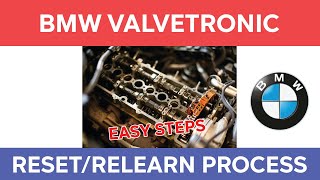
- Ignoring the Valvetronic motor re-learn procedure. After replacing the motor, the end stops must be re-learned, otherwise the system will not function correctly and may continue to throw faults.
Most Likely Causes
- Failed Valvetronic Motor (Servomotor) 🔴 High Probability The motor's electrical connector is highly susceptible to oil contamination from a leaking eccentric shaft sensor, which causes it to short out and fail. The motor can also fail internally from wear, causing it to bind.
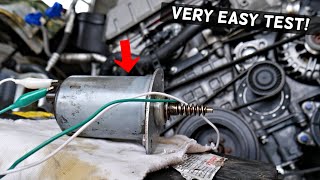
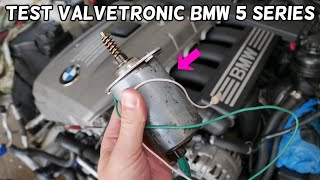
How to confirm: Unplug the Valvetronic motor's round electrical connector on the front of the valve cover. Inspect for engine oil inside the pins. If oil is present, the motor and its wiring are compromised and are the likely cause. A failed motor may also make a binding or clicking noise. A multimeter can be used to check for a short to ground from either of the two pins to the motor casing; a new motor will show no continuity (open circuit), while a failing motor may show some resistance.
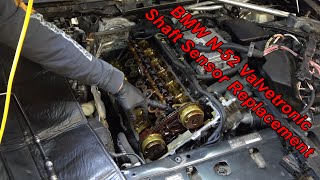
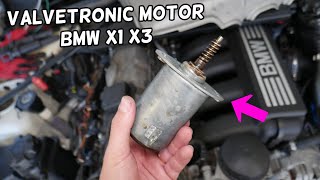
Typical fix: Replace the Valvetronic motor. This requires removing the valve cover. The eccentric shaft sensor and valve cover gasket should be replaced at the same time as a best practice. After replacement, a 're-learn' or 'adaptation' procedure must be performed using a scan tool or a specific key-on/pedal-press sequence. 🎬 Watch: How to perform the Valvetronic relearn and reset procedure.
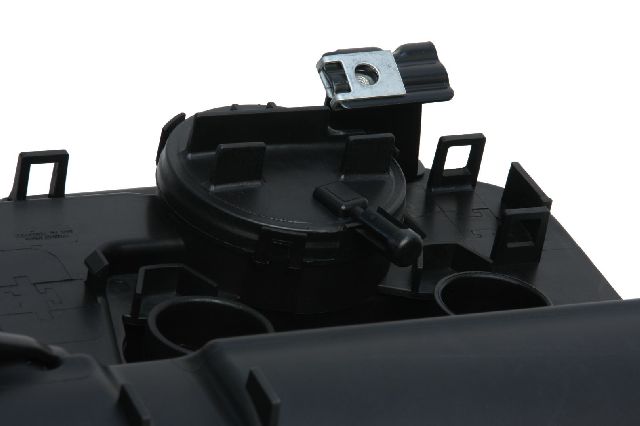
Est. part cost: $400-$800 - Leaking Eccentric Shaft Sensor 🔴 High Probability → Shop Engine Variable Valve Lift Eccentric Shaft Sensor The sensor's integrated gasket fails over time due to heat and age, allowing engine oil to seep out. More critically, the sensor can fail internally, leaking oil directly through its electrical pins, a common failure point even with a new external gasket.
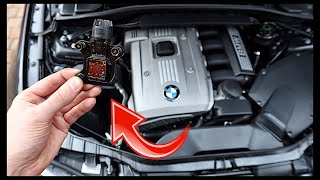
How to confirm: Remove the engine's plastic beauty cover. The eccentric shaft sensor connector is visible near the oil filler cap. Disconnect it and check for oil. Oil inside the connector confirms the sensor is leaking and is the root cause of the problem.
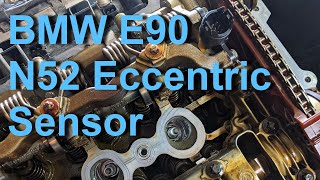
Typical fix: Replace the eccentric shaft sensor and its gasket. This is almost always done along with the Valvetronic motor and valve cover gasket, as it is the source of the failure. Using an OEM/VDO sensor is highly recommended 🎬 Watch: This must-watch guide for replacing the eccentric shaft sensor., as aftermarket sensors have a high failure rate.
Est. part cost: $300-$500 - Damaged Valvetronic Wiring Harness 🟡 Medium Probability Engine oil from the leaking eccentric shaft sensor wicks down the wires, degrading the insulation and causing shorts to ground. The harness can also become brittle from heat cycles.
How to confirm: Visually inspect the harness between the eccentric shaft sensor and the Valvetronic motor for brittle, cracked, or oil-soaked insulation. Check for continuity and shorts using a multimeter.
Typical fix: In some cases, the connector can be cleaned thoroughly with electrical contact cleaner and re-sealed. If the insulation is degraded, replacing the pigtail connector or repairing the affected wires with a BMW-approved wiring repair kit is necessary.
Est. part cost: $50-$150
Rare But Worth Checking
- Worn or Binding Eccentric Shaft: Over high mileage, the eccentric shaft itself can develop wear spots on its bearings, causing it to bind. This puts excessive strain on the Valvetronic motor, which can lead to motor failure and trigger a P1052. This is a much more involved and expensive repair.
- Faulty Engine Computer (DME): This is very rare. A shorted Valvetronic motor can theoretically damage the driver circuit in the DME, but the DME has protective measures to prevent this. The DME should only be considered after the motor, sensor, and wiring have been confirmed to be in good working order.
Diagnosis Steps
- Read all fault codes from the DME using a BMW-capable scan tool (like INPA/ISTA) to see if other Valvetronic-related codes are present.
- Perform a visual inspection. Remove the plastic engine cover.
- Disconnect the eccentric shaft sensor's electrical plug (near the oil cap). Check for any sign of engine oil inside the connector. If oil is present, the sensor is bad and is the root cause.
- Follow the wiring to the Valvetronic motor's round connector. Disconnect it and check for oil contamination as well. Oil here indicates the motor is likely compromised.
- If oil is found, the recommended repair is to replace the eccentric shaft sensor, the Valvetronic motor, and the valve cover gasket set all at once.
- If no oil is found, test the wiring harness between the DME and the Valvetronic motor for shorts to ground or open circuits using a multimeter. Also test the motor itself for an internal short to its casing.
- Using a BMW-specific scan tool, attempt to run the Valvetronic motor limit-learn procedure. If the procedure fails or the motor makes grinding/binding noises, it confirms a mechanical or electrical failure of the motor or eccentric shaft.
- Listen for the motor cycling when the ignition is turned on (without starting the engine). A healthy motor will run for a few seconds to find its limits. Absence of this sound can indicate a problem.
Parts You'll Likely Need
- Valvetronic Eccentric Shaft Sensor
(OEM #11377524879)— This is the root cause of the problem. Its internal seal fails, leaking oil through the pins that damages other components.
Trusted brands: VDO (OEM), Continental
OEM price range: $350-$500
Aftermarket price range: $150-$300 - Valvetronic Motor (Servomotor)
(OEM #11377548387)— This motor is the component that ultimately fails due to the oil contamination from the eccentric shaft sensor, triggering the P1052 code.
Trusted brands: VDO (OEM), Continental
OEM price range: $450-$600
Aftermarket price range: $250-$400 - Valve Cover Gasket Set
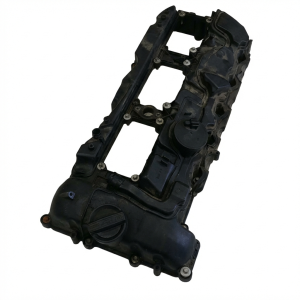
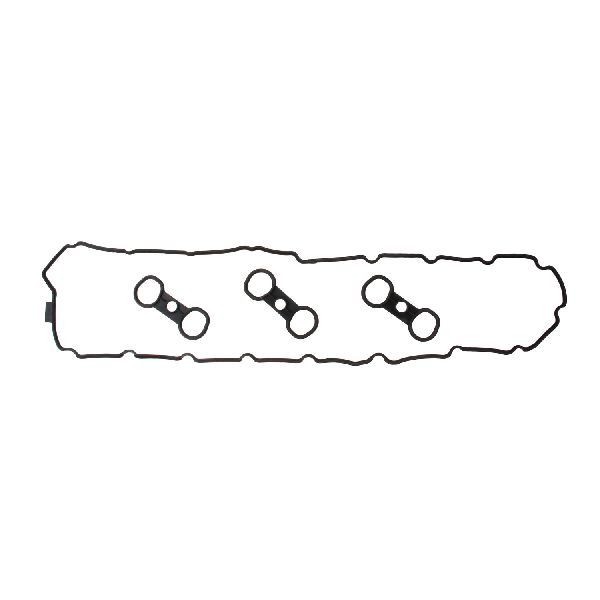
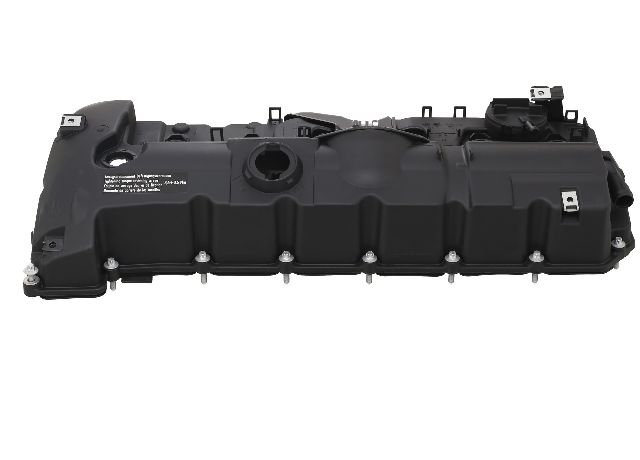
(OEM #11127581215)— The valve cover must be removed to access the sensor and motor. The gasket is a one-time use item and must be replaced. This set should include the main gasket and the spark plug tube seals.
Trusted brands: Elring, Victor Reinz
OEM price range: $50-$80
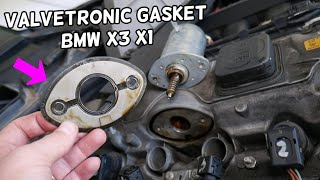
Aftermarket price range: $30-$60 - Valvetronic Motor Gasket
(OEM #11127552280)— A small, separate gasket that seals the Valvetronic motor against the valve cover. It should be replaced anytime the motor is removed.
Trusted brands: Elring, BMW
OEM price range: $10-$20
Aftermarket price range: $5-$15
Related Codes That Often Appear With This One
- P1030 / 2A38 — These are BMW-specific codes for Valvetronic actuator position control or sluggish movement, which directly relate to a failing Valvetronic motor or sensor.
- P1017 / 2A47 — These codes point directly to a fault or plausibility issue with the eccentric shaft sensor itself, which is the common root cause.
- 2A39 — This BMW code indicates 'Valvetronic, adjustment range', meaning the DME was unable to learn the stop limits of the eccentric shaft, often occurring after a repair if the re-learn procedure fails or isn't performed.
Platform-Specific Known Issues
- The N52 engine is well-known for the eccentric shaft sensor oil leak. The oil migrates down the wiring harness and shorts out the Valvetronic motor, making this a predictable and common repair.
- Owner experiences strongly suggest using only OEM (VDO/Continental) eccentric shaft sensors. Aftermarket sensors have a high rate of premature failure, sometimes within days or weeks, leading to a repeat of the original problem.
Mechanic-Grade Diagnostic Values
- Valvetronic Motor Internal Resistance — expected: Open circuit (infinite resistance) between either of the two pins and the metal motor housing.. Failure: Any measurable resistance (e.g., 2800 ohms) between a pin and the motor housing indicates an internal short, even if the motor still functions when powered directly.
- Valvetronic Motor Power Supply (Key On, Engine Off) — expected: Pulsed voltage during the initial key-on cycle as the DME attempts to move the motor.. Failure: No voltage present at the motor connector during the key-on cycle may indicate a wiring issue, a blown fuse/relay, or a fault in the DME's driver circuit. A test light connected across the two pins should illuminate briefly when the ignition is switched on.
Hidden / Shadow Codes Worth Checking
- 2A3F: Valvetronic servomotor, power supply: Indicates a problem with the power supply to the Valvetronic motor. This can be a fuse, relay, wiring, or DME issue. (see via BMW-specific scan tool like ISTA or INPA.)
- 2A41: Valvetronic, internal fault: A generic internal fault within the Valvetronic system detected by the DME. (see via BMW-specific scan tool like ISTA or INPA.)
- 2A43: Valvetronic, thermal overload protection: The DME has detected the Valvetronic motor is overheating, often due to excessive resistance from a binding eccentric shaft, and has cut power to protect it. (see via BMW-specific scan tool like ISTA or INPA.)
Scan Tool Commands That Help
- ISTA/INPA: Service Function: 'Learn Valvetronic limit positions' — This is the primary function to use after replacing the Valvetronic motor or eccentric shaft sensor. It commands the DME to cycle the motor from its minimum to maximum mechanical stops to learn the range of motion. The process is quick, often taking only a few seconds.
- ISTA/INPA: Service Function: 'Valvetronic startup' — This is a more comprehensive adaptation procedure used after major repairs like replacing the eccentric shaft itself. The engine must be running, and the process can take up to 20 minutes as the DME runs through hundreds of adjustment cycles to fine-tune the system.
- Manual Procedure (Key-on/Pedal-press): Ignition on (position 2), then within 15 seconds, press the accelerator pedal to the floor 10 times. — This is a widely cited but less reliable method to trigger the limit relearn procedure without a scan tool. It may work on some E-chassis models, but success is not guaranteed. Using a proper scan tool is the recommended method.
Wiring & Ground Locations
- Main Engine Ground Strap — Connects the engine block to the vehicle's chassis. On the N52, a primary strap is located on the driver's side, connecting the engine mount arm to the chassis rail, accessible from underneath the vehicle.. A corroded or broken main ground strap can cause a host of intermittent and difficult-to-diagnose electrical issues, including low voltage faults for various modules. While not a direct cause of P1052, a poor ground can contribute to the 'low input' condition and should be inspected, especially on high-mileage or salt-belt vehicles.
Real Owner Repair Stories
- Bimmerpost Forum User (2011 BMW X3 xDrive28i (F25) with N52 engine, 46k miles) — Crank, start, then immediate stall. Multiple Valvetronic codes including P1017.
❌ Tried (didn't work) Checking battery voltage, inspecting for oil in the sensor connector (it was clean).
✅ What actually fixed it The eccentric shaft sensor was faulty, even though it was not leaking oil. The user confirmed that after replacing the sensor, the issue was resolved. This highlights that the sensor can fail electrically without the common oil leak symptom. - Bimmerfest Forum User (BMW E90 with N52 engine) — Persistent Valvetronic fault codes after replacing the Valvetronic motor and eccentric shaft sensor with aftermarket parts.
❌ Tried (didn't work) Replacing the Valvetronic motor and eccentric shaft sensor.
✅ What actually fixed it The new aftermarket eccentric shaft sensor was defective out of the box. Replacing the faulty aftermarket sensor with a genuine VDO (OEM) sensor finally resolved the codes.
OEM Part Supersession History
11377509295→11377548387— Standard part revision and supplier change over the production run.
Heads up: The parts are generally interchangeable for N52 applications, but it is always best to use the latest part number (11377548387).11377506503→11377524879— Standard part revision.
Heads up: The latest part number (11377524879) should always be used. Older revisions are not recommended.
Model Year Variations Within This Range
- 2007-2012: The core N52 engine and Valvetronic II system are consistent across the E83 LCI (2007-2010) and early F25 (2011-2012) X3 models. The DME (engine computer) may be a different version (MSV70 vs MSV80), but this does not change the diagnosis or repair for code P1052.
Diagnostic Flowchart
Other Known Issues on This Vehicle
Issues unrelated to this code that are worth knowing about as an owner of this generation:
- Electric Water Pump and Thermostat Failure 🔴 High — Very common. Typically fails between 60,000 and 100,000 miles, often without warning.
- Oil Filter Housing Gasket (OFHG) Leak 🔴 High — Extremely common. Gasket hardens and leaks oil onto the serpentine belt, which can cause belt failure and potentially catastrophic engine damage if the belt is ingested by the main seal.
- Valve Cover and Gasket Leak 🟠 Medium — Very common. The plastic valve cover can warp or crack, and the gasket hardens over time, causing oil to leak onto the exhaust manifold (creating a burning smell) or into the spark plug wells.
- Transfer Case Actuator Gear Failure (xDrive models) 🟠 Medium — Common on E83 X3 models, typically between 90,000-120,000 miles. A plastic gear inside the actuator motor strips, causing 4x4, ABS, and Brake warning lights.
- DISA Valve Failure 🟠 Medium — Common on higher mileage N52s. The plastic components of the DISA valves (which control intake runner length) can break, causing rough idle, loss of power, and potentially sending debris into the engine.
Used vs. New Parts: Buying Guide for This Vehicle
When a used part is the smart pick: A used part is generally NOT recommended for this repair due to the high labor cost and common failure patterns. The only exception might be the mechanical eccentric shaft itself (not the sensor or motor) from a verified low-mileage, well-maintained donor engine, as it is a durable piece of hardware if not worn or damaged.
Donor-vehicle mileage cap: roughly under 70000 miles for the part to have meaningful remaining life.
What to inspect on the donor part:
- For a used eccentric shaft, manually check for smooth rotation with no binding or visible wear on the lobes and bearing journals.
- Avoid any electrical components (motor, sensor) from a donor vehicle, as their remaining lifespan is impossible to determine and they are known failure points.
OEM-only on this vehicle (don't cheap out):
- Valvetronic Eccentric Shaft Sensor
- Valvetronic Motor (Servomotor)
Aftermarket brands forum-validated for this vehicle:
- VDO / Continental (OEM supplier for the sensor and motor)
- Elring / Victor Reinz (For valve cover and motor gaskets)
Brands owners have reported issues with on this vehicle:
- Unbranded or unusually cheap eccentric shaft sensors and Valvetronic motors from online marketplaces are frequently reported on forums to be defective out of the box or fail very quickly.
Real Owner Stories
Aggregated from forums and TSBs cited above. Mileages and costs reflect what owners reported in those sources.
2008 BMW X3 N52 3.0L — ~110000 miles
Symptoms: The Check Engine Light and EML light came on, and the engine went into reduced power limp mode. Upon inspection, there was engine oil inside the electrical connectors for both the eccentric shaft sensor and the Valvetronic motor.
What fixed it: The issue was resolved by replacing the eccentric shaft sensor, the Valvetronic motor, and the valve cover gasket set all at the same time, followed by a motor re-learn procedure.
Source hint: vehicle_specific_issues section describing the common N52 eccentric shaft sensor oil leak
2009 BMW 128i N52 3.0L — ~95000 miles
Symptoms: Immediately after having the valve cover gasket (VCG) replaced, the car developed a rough, unstable idle and threw Valvetronic fault codes.
What fixed it: The problem was that the Valvetronic motor adaptation/re-learn procedure was not performed after the valve cover was reinstalled. Running the limit-learn procedure with a scan tool resolved the symptoms.
Source hint: Bimmerpost - N52 Valvetronic issues after VCG replacement
Related OBD-II Codes
Frequently Asked Questions
Is it safe to use a cheaper aftermarket eccentric shaft sensor for my 2009 BMW X3 to fix the P1052 code?
My X3 is making a whirring or clicking noise from the engine when I unlock the doors. Is this related to the P1052 code?
What is the very first thing I should check myself if my N52 engine shows a P1052 fault?
My mechanic found oil in the Valvetronic motor connector. Can I just clean it out and see if it works?
Do I need to do anything special after replacing the Valvetronic motor on my BMW X3?
My 2007 X3 cranks very fast but won't start, and I have a Check Engine Light. Could this be a Valvetronic problem?
Helpful Videos
Used OEM Parts in Stock
New Aftermarket Parts Available



The information in this article is provided for general reference and educational purposes only. Vehicle specifications, procedures, and part compatibility can vary by production date, trim level, and region. Always consult your vehicle's factory service manual and verify part numbers before purchasing or performing repairs. Safety-critical components such as airbags, seat belts, and braking systems should be installed by a qualified professional.
- BMW X3:
- 🧭 Diagnostic Flowchart
- 🎬 Helpful Videos
- 🛍️ Shop This Part
- What's Unique About the 2007-2012 BMW X3
- Symptoms You May Notice
- Most Likely Causes
- Rare But Worth Checking
- Diagnosis Steps
- Parts You'll Likely Need
- Related Codes That Often Appear With This One
- Platform-Specific Known Issues
- Mechanic-Grade Diagnostic Values
- Hidden / Shadow Codes Worth Checking
- Scan Tool Commands That Help
- Wiring & Ground Locations
- Real Owner Repair Stories
- OEM Part Supersession History
- Model Year Variations Within This Range
- Other Known Issues on This Vehicle
- Used vs. New Parts: Buying Guide for This Vehicle
- Real Owner Stories
- 2008 BMW X3 N52 3.0L — ~110000 miles
- 2009 BMW 128i N52 3.0L — ~95000 miles
- Related OBD-II Codes
- Frequently Asked Questions
- 🎟️ Get 5% Off