

P1052 on 2005-2013 Subaru Forester XT: AVCS Solenoid and Banjo Filter Guide
P1052 on your Forester XT almost always points to a problem with the AVCS (variable valve timing) system. The most common fixes are replacing a failed oil control valve (OCV) solenoid or cleaning/removing clogged banjo bolt filters that are starving the system of oil. Expect to pay $100-$150 for an OEM OCV.
- P1052 on your Forester XT is an AVCS timing system code, not an O2 sensor code.
- Before buying parts, check your oil level and condition. An oil change is the easiest first step.
- The most likely cause is either a clogged banjo bolt filter or a failed Oil Control Valve (OCV).
- It is highly recommended by the Subaru community to remove the tiny mesh filters from the AVCS banjo bolts to prevent future oil starvation issues.
- Ensure you buy the correct OCV for your specific model year, as part numbers differ between the SG (05-08) and SH (09-13) generations.
What's Unique About the 2005-2013 Subaru Forester XT
On the EJ255 turbo engine, the Active Valve Control System (AVCS) is highly sensitive to oil pressure and cleanliness. A notorious issue on this platform is the presence of tiny, screen-like filters inside the banjo bolts that feed oil to the AVCS solenoids and, critically, the turbocharger. Over time, these filters can become clogged with sludge and debris, restricting oil flow. This oil starvation can cause the OCV to malfunction and trigger codes like P1052, even if the solenoid itself is not faulty. Many Subaru specialists and enthusiasts recommend removing these filters as a preventative measure to avoid both AVCS issues and catastrophic turbo failure.
Generation note: The 2005-2013 range covers two Forester generations: the SG (2005-2008) and the SH (2009-2013). Both use the EJ255 engine with AVCS, and both are susceptible to this code and its causes. However, the part numbers for the Oil Control Valves (OCV) differ between these generations, so ensure you purchase the correct part for your specific model year.
Symptoms You May Notice
- Rough or unstable idle
- Engine hesitation or stumbling during acceleration
- Stalling, especially when coming to a stop or returning to idle
- Noticeable loss of power
- Decreased fuel economy
- Check Engine Light (CEL) illuminated
- Replacing the O2 sensor (A P1xxx code is manufacturer-specific, not a generic O2 sensor code).
- Replacing the camshaft position sensor (While related to timing, this sensor has its own set of codes and is less likely to be the cause for P1052 specifically).
- Assuming a major timing chain/belt failure without first checking the simpler AVCS components.
Most Likely Causes
- Clogged AVCS Banjo Bolt Filters 🔴 High Probability Subaru installed fine mesh filters in the union screws (banjo bolts) for the oil feed lines to the AVCS solenoids. These are known to clog with oil sludge and engine debris over time, starving the solenoid and causing it to malfunction. A separate, even more critical, filter exists in the banjo bolt for the turbo oil feed line, which can cause turbo failure if clogged.
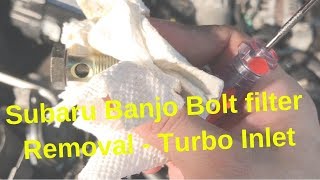
How to confirm: Locate and remove the banjo bolts for the AVCS oil lines on the front of the cylinder heads. Visually inspect the tiny mesh screens inside for clogging. Note that sometimes the screen can break free and fall into the oil passage, requiring you to fish it out.
Typical fix: The community- and expert-recommended fix is to remove the mesh filters entirely and reinstall the banjo bolts with new copper crush washers. This relies on the main engine oil filter to do its job and prevents future clogs.
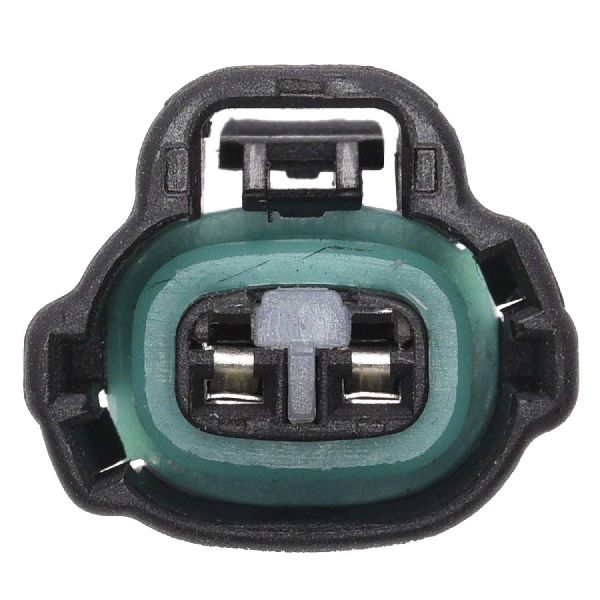
Est. part cost: $5-$15 for new crush washers. - Failed Oil Control Valve (OCV) / AVCS Solenoid 🔴 High Probability → Shop Engine Variable Valve Timing (VVT) Solenoid The solenoid can fail electrically, causing a short that leads to a 'circuit high' reading. It can also fail mechanically by getting stuck due to oil sludge or debris, especially if the banjo bolt filters are clogged. Internal seals can also fail, causing oil to leak into the electrical connector.
How to confirm: Test the solenoid's resistance with a multimeter. A healthy solenoid should read between 6.9 and 7.9 ohms (Subaru's general spec is 6-12 ohms). A reading outside this range indicates failure. You can also apply 12V power directly to the solenoid's terminals; you should hear a distinct 'click' as the valve actuates. No click or a sluggish response indicates failure. Also, check the wiring connector for oil contamination, a sign of internal seal failure.
Typical fix: Replace the failed oil control valve. They are specific to the left (Bank 2) and right (Bank 1) side and differ by model year.
Est. part cost: $100-$180 - Low or Dirty Engine Oil 🟡 Medium Probability The AVCS system is hydraulic and relies entirely on clean oil at the correct pressure. The EJ255 turbo engine is particularly hard on oil. Old, sludgy, or low-level oil can cause the OCV to operate erratically or stick, and contributes to clogging the banjo filters.
How to confirm: Check the oil level and condition on the dipstick. 🎬 Watch this video to learn how to fix common AVCS codes. If the oil is dark, thick, or below the 'low' mark, this could be the root cause.
Typical fix: Perform an oil and filter change using a quality full-synthetic oil of the correct viscosity (typically 5W-30 for the EJ255) and an OEM or equivalent quality oil filter.
Est. part cost: $40-$100 - Damaged Wiring or Connector ⚪ Low Probability Engine bay heat and vibrations can cause wiring to become brittle and crack over time. A 'Circuit High' code can be caused by the signal wire chafing and shorting to a 12V power source. Oil from a leaking OCV can also wick up the harness and cause electrical issues.
How to confirm: Visually inspect the wiring harness leading to the Bank 1 (right side/passenger side) OCV. Look for any signs of chafing, melting, or cracking. Use a multimeter to check for voltage on the signal wire at the connector with the key on, engine off; it should not have constant battery voltage.
Typical fix: Repair the damaged section of wire or replace the connector pigtail.
Est. part cost: $10-$30
Rare But Worth Checking
- Failing Engine Control Unit (ECU):
Diagnosis Steps
- Check Engine Oil: Verify the oil level is correct and the oil's condition is good. If low, top it off. If old or sludgy, perform an oil and filter change. This is the cheapest and easiest first step.
- Inspect Wiring: Visually inspect the wiring and connector for the Bank 1 (Passenger side) Oil Control Valve. Check for damage, corrosion, or oil saturation in the connector. A 'Circuit High' code specifically warrants checking for a short to a power source.
- Test the Oil Control Valve (OCV): Disconnect the OCV. Test its resistance with a multimeter. The reading should be between 6.9 and 7.9 Ohms (general spec is 6-12 Ohms). If it's out of spec, the solenoid is bad. Then, apply 12V power and a ground to the terminals to check for mechanical operation (a distinct 'click'). No click means it's mechanically seized.
- Inspect Banjo Bolt Filters: Locate the AVCS oil feed banjo bolts. For the Forester XT, there is one on the front of each cylinder head for the AVCS solenoids and a critical one for the turbo oil feed line near the back of the passenger-side head. Remove the bolt for Bank 1 and inspect the internal mesh filter for clogs or damage.
- Clean or Remove Filter: If the filter is clogged, the strongly recommended permanent solution is to remove the mesh screen and reinstall the banjo bolt with new crush washers.
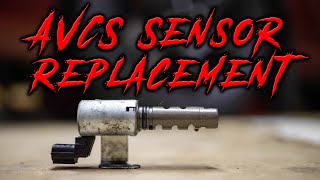
- If the OCV fails testing, replace the Oil Control Valve for Bank 1. 🎬 Watch this step-by-step guide on replacing the AVCS solenoid. Ensure you get the correct part number for your model year.
- Clear the code with a scan tool and perform a test drive to see if the code returns.
Parts You'll Likely Need
- Oil Control Valve / AVCS Solenoid (Bank 1, Right Side)
(OEM #10921AA020)— This is the most common part to fail electrically or mechanically. This part number is typically for the earlier SG generation (approx. 2004-2006) Forester XT and other EJ255 models.
Trusted brands: Subaru (OEM), Dorman, MOTIV8
OEM price range: $120-$180
Aftermarket price range: $50-$100 - Oil Control Valve / AVCS Solenoid (Bank 1, Right Side)
(OEM #10921AA080)— This is the OCV for the later SH generation (approx. 2007-2010). Always verify the correct part number for your specific year and VIN with a dealer or parts supplier.
Trusted brands: Subaru (OEM)
OEM price range: $110-$160
Aftermarket price range: $50-$90 - Banjo Bolt Crush Washer (Gasket)
(OEM #803912040)— These are single-use gaskets and MUST be replaced anytime a banjo bolt is loosened or removed to prevent oil leaks. Two are required per bolt.
Trusted brands: Subaru (OEM)
OEM price range: $2-$4 each
Aftermarket price range: $1-$2 each
Related Codes That Often Appear With This One
- P0011: 'Intake Camshaft Position - Timing Over-advanced or System Performance (Bank 1)' - Often appears alongside P1052 as it indicates a mechanical timing problem resulting from the electrical fault.
- P0021: 'Intake Camshaft Position - Timing Over-advanced or System Performance (Bank 2)' - If the oil is sludgy or low, it can affect both banks, potentially throwing codes for Bank 2 as well.
Technical Service Bulletins (TSBs) & Recalls
- 02-103-07R: 'Turbocharger Oil Supply Mesh Screen'. This TSB warns that the filter inside the banjo bolt for the turbo oil supply line can become clogged, restricting oil flow and causing turbo failure. It recommends checking the screen if oil condition is questionable.
- 02-97-05: 'Active Valve Control System (AVCS) union screw filter'. This bulletin addresses customer complaints of rough idle or poor acceleration due to a damaged or clogged AVCS filter on early turbo models.
Platform-Specific Known Issues
- Subaru issued service bulletins regarding the mesh filters in the banjo bolts for both the turbocharger oil feed line and the AVCS system. TSB 02-103-07R specifically addresses the turbo oil supply screen, which can get clogged and lead to turbo failure. Another TSB, 02-97-05, pertains to the AVCS union screw filter and associated rough running conditions.
Mechanic-Grade Diagnostic Values
- Oil Control Valve (OCV) Solenoid Resistance — expected: 6.0 - 12.0 Ohms (A more precise range of 6.9-7.9 Ohms is often cited). Failure: A reading of infinity (OL) indicates an open circuit; a reading near zero indicates a shorted solenoid.
- OCV Connector Voltage (Power Supply Pin) — expected: Approximately 10-12.6 Volts with key on, engine off.. Failure: No voltage indicates a problem with the power supply to the solenoid.
- OCV Connector Voltage (ECU Control Wire) — expected: Voltage should not be constant battery voltage with key on, engine off. The ECU pulses this wire to ground to control the solenoid.. Failure: For a P1052 'Circuit High' code, finding constant battery voltage on this control wire suggests it is shorted to a power source somewhere in the harness.
- ECM Pin for Bank 1 Intake OCV (Signal) — expected: Pin B136, terminal 6 on a 2006 Forester XT.. Failure: Used for advanced diagnosis to check continuity and voltage directly at the ECU.
Scan Tool Commands That Help
- Subaru Select Monitor (SSM) or equivalent professional scan tool: AVCS Solenoid Duty Cycle / Actuation Test — This bidirectional command allows a technician to manually activate the OCV solenoid. It can confirm if the solenoid is mechanically clicking and responding to ECU commands without having to remove it from the engine, helping to isolate a wiring issue from a failed solenoid.
Wiring & Ground Locations
- Bank 1 OCV Connector — On the front of the passenger side (right side) cylinder head, connected to the AVCS solenoid.. This is the primary connection point for testing. A 'Circuit High' code is often caused by the signal wire in the harness leading to this connector shorting to power, or by oil leaking from the solenoid and contaminating the connector pins.
- Engine Harness (general) — The wiring loom running from the OCV solenoids back to the main engine harness and eventually the ECU.. Per TSB 02-170-17R, a leaking OCV can cause engine oil to 'wick' through the wiring harness, traveling far from the solenoid itself. This can cause shorts or high resistance in other connectors down the line, making diagnosis difficult if only the solenoid is inspected.
- ECM Connector B136 — At the Engine Control Module (ECM), typically located in the passenger footwell area.. For a 2006 Forester XT, Pin 6 is the OCV signal and Pin 17 is the ground. Checking for signals here is the final step to confirm if the wiring is intact and whether the ECU's driver circuit is functioning, after ruling out the solenoid and harness near the engine.
Real Owner Repair Stories
- Reddit user 'Chippy569' on r/WRX (Subaru STI (EJ257 engine, similar AVCS system)) — Check Engine Light with code P000D ('B' Camshaft Position Slow Response Bank 2)
❌ Tried (didn't work) Initial diagnosis was unclear.
✅ What actually fixed it The user identified the code as relating to the left-hand (driver's side) exhaust performance and concluded the most likely issue was a failing OCV solenoid, described as being on the bottom of the engine with a blue connector. - YouTube channel 'KMX Cars' (2014 Subaru GR STI (EJ257 engine)) — Check Engine Light with code P2090 (Exhaust OCV Circuit Open Bank 1)
❌ Tried (didn't work) The owner had previously, and incorrectly, replaced an intake solenoid for a different exhaust-related code (P0024) which coincidentally fixed the issue at the time.
✅ What actually fixed it For the P2090 open circuit code, the fault was traced to the passenger side (Bank 1) exhaust OCV solenoid. The owner swapped the passenger and driver side exhaust OCVs, which caused the fault code to move to the other bank, confirming the solenoid itself was the failed component. He noted this specific solenoid was the most difficult of the four to access.
OEM Part Supersession History
10921AA020→10921AA080 (for later model years)— Model year update (SG to SH generation change).
Heads up: The parts are physically different and not interchangeable. 10921AA020 is for early SG Foresters (~04-06) and 10921AA080 is for later SH models (~07-13).10917AA070 (Exhaust OCV Assembly)→N/A— Cost-saving tip: For some exhaust OCVs that are sold as a complete assembly with a metal holder, the solenoid itself is identical to 10921AA020. Owners can sometimes buy just the solenoid and swap it into their existing holder.
Heads up: This tip is primarily for exhaust-side OCVs on certain EJ engines (like the STI) and requires reusing the original metal 'holder'. It may not apply to all intake/exhaust positions.
Model Year Variations Within This Range
- 2005-2013: Subaru TSB 02-103-07R clarifies the distinction between the AVCS banjo bolt filters and the separate, critical turbocharger oil feed banjo bolt filter. This filter is located in the banjo bolt (PN 14445-AA090) securing the oil line to the back of the right-side cylinder head. The TSB recommends checking this screen for clogs, especially if oil change history is unknown, to prevent catastrophic turbo failure.
- 2006-2007 (approximate changeover): The part number for the intake OCV solenoid changes from 10921AA020 to 10921AA080 between the SG and SH Forester generations. VIN verification is the most reliable way to ensure the correct part is ordered.
Diagnostic Flowchart
Other Known Issues on This Vehicle
Issues unrelated to this code that are worth knowing about as an owner of this generation:
- Piston Ringland Failure 🔴 High — More common on modified engines, but can occur on stock vehicles, especially with aggressive driving or sub-optimal tuning. Failure can happen at any mileage but becomes a higher risk with age.
- Turbocharger Oil Starvation 🔴 High — A frequent and well-documented issue, often caused by a clogged banjo bolt filter in the turbo oil feed line. Can lead to catastrophic turbo failure. (Ref: TSB 02-103-07R)
- Valve Cover and Cam Carrier Oil Leaks 🟠 Medium — Common on engines over 100,000 miles. Valve cover gaskets are a typical wear item, while cam carrier leaks are more involved to repair.
- Cracked Stock Oil Pickup Tube 🔴 High — The brazed joint on the factory oil pickup tube is a known weak point that can crack from vibration, leading to oil pressure loss and catastrophic engine failure.
Used vs. New Parts: Buying Guide for This Vehicle
When a used part is the smart pick: A used OCV solenoid is generally not recommended for this repair. The failure is often caused by oil contamination or sludge, meaning a part from a junkyard vehicle may have the same issues or a very limited lifespan. It should only be considered as a last resort or for temporary diagnosis, and only if it comes with a warranty.
Donor-vehicle mileage cap: roughly under 60000 miles for the part to have meaningful remaining life.
What to inspect on the donor part:
- Ask for the service history of the donor car, specifically oil change intervals.
- Avoid parts from a vehicle with a known engine failure (e.g., spun bearing), as metal debris will have contaminated the entire oil system, including the OCVs.
- Inspect the connector pins on the used solenoid for any signs of oil, indicating a leaking internal seal.
- Test the resistance with a multimeter before purchase to ensure it's within the 6-12 Ohm spec.
OEM-only on this vehicle (don't cheap out):
- Oil Control Valve (OCV) / AVCS Solenoid
Aftermarket brands forum-validated for this vehicle:
- No specific aftermarket brands have a strong, consistent reputation for reliability in forum discussions; OEM is highly preferred.
Brands owners have reported issues with on this vehicle:
- Generic, unbranded parts from online marketplaces are a significant gamble due to the critical function of the AVCS system.
Real Owner Stories
Aggregated from forums and TSBs cited above. Mileages and costs reflect what owners reported in those sources.
Subaru Forester XT EJ255
Symptoms: The owner was experiencing rough running conditions and poor acceleration, prompting an inspection of the AVCS system.
What fixed it: Upon removing the AVCS banjo bolts, the owner discovered the mesh filters had broken apart and fallen out, getting stuck inside the oil passage. The fix involved fishing the broken screen material out of the passage and reinstalling the banjo bolts without the problematic filters.
Source hint: LegacyGT.com - 'How to Remove All Banjo Filters'
Subaru Baja Turbo EJ255
Symptoms: Customer complaints of a persistent rough idle and poor acceleration.
What fixed it: Following Subaru's diagnostic guidance, the issue was traced to a damaged or clogged AVCS union screw filter. Addressing the filter resolved the performance issues.
Source hint: TSB 02-97-05: 'Active Valve Control System (AVCS) union screw filter'
Related OBD-II Codes
Frequently Asked Questions
I've heard about problematic banjo bolt filters on my Forester XT. What are they and what should I do about them?
Are there any official Subaru Technical Service Bulletins (TSBs) for this banjo filter issue?
How can I test the AVCS solenoid (Oil Control Valve) on my EJ255 engine myself?
The code P1052 is for Bank 1. Which side of the engine is that on my Forester XT?
What kind of engine oil is best to prevent AVCS problems in my turbocharged Forester?
I found oil inside the electrical connector for my AVCS solenoid. What does this mean?
Do other Subarus with the EJ255 engine, like the WRX or Legacy GT, have this same P1052 issue?
Helpful Videos
We Have This Part in Stock


The information in this article is provided for general reference and educational purposes only. Vehicle specifications, procedures, and part compatibility can vary by production date, trim level, and region. Always consult your vehicle's factory service manual and verify part numbers before purchasing or performing repairs. Safety-critical components such as airbags, seat belts, and braking systems should be installed by a qualified professional.
- Subaru Forester XT:
- 🧭 Diagnostic Flowchart
- 🎬 Helpful Videos
- 🛍️ Shop This Part
- What's Unique About the 2005-2013 Subaru Forester XT
- Symptoms You May Notice
- Most Likely Causes
- Rare But Worth Checking
- Diagnosis Steps
- Parts You'll Likely Need
- Related Codes That Often Appear With This One
- Technical Service Bulletins (TSBs) & Recalls
- Platform-Specific Known Issues
- Mechanic-Grade Diagnostic Values
- Scan Tool Commands That Help
- Wiring & Ground Locations
- Real Owner Repair Stories
- OEM Part Supersession History
- Model Year Variations Within This Range
- Other Known Issues on This Vehicle
- Used vs. New Parts: Buying Guide for This Vehicle
- Real Owner Stories
- Subaru Forester XT EJ255
- Subaru Baja Turbo EJ255
- Related OBD-II Codes
- Frequently Asked Questions
- 🎟️ Get 5% Off