

P1068 on 2008-2012 Audi S5 4.2L V8: Intake Air Switch-Over Valve Fault Explained
P1068 on an Audi S5 4.2L V8 almost always means the Intake Air Switch-Over Valve (N335) is electrically disconnected. The most likely cause is a loose or unplugged connector, often found on the back of the passenger-side airbox. Check this connection before replacing any parts, as it is frequently disturbed during air filter changes or carbon cleaning.
- P1068 is an electrical fault, not a mechanical one. Focus on the wiring and connector for the N335 valve first.
- The most likely fix is free and simple: locating the N335 valve on the back of the passenger airbox and reconnecting its plug.
- This code frequently appears after major engine service like carbon cleaning, so if work was recently done, a forgotten connector is the prime suspect.
What's Unique About the 2008-2012 Audi S5
The 4.2L V8 (CAUA) engine uses a complex, two-stage variable intake manifold to achieve its broad powerband. This system relies on several components, including vacuum lines, position sensors, and the N335 electrical solenoid. Due to the location of the N335 valve's connector on the rear of the passenger side (US) airbox, it is commonly disconnected or forgotten during routine maintenance like air filter replacement or more involved jobs like carbon cleaning, making this specific 'open circuit' fault more common than the valve itself failing.
Symptoms You May Notice
- Check Engine Light is on
- Rough or unstable idle
- Hesitation or stumbling when accelerating or revving the engine.
- Noticeable loss of engine power, particularly at certain RPMs
- Increased fuel consumption
- Flashing Check Engine Light during misfires.
- Replacing the intake manifold runner position sensors (G336). These sensors report the position of the flaps and typically set different codes (like P2006/P2007) for mechanical or position faults, not an electrical open circuit.
- Replacing the entire intake manifold. While manifold issues like carbon buildup or broken linkages are common on this engine, P1068 is an electrical fault specific to the N335 valve circuit.
Most Likely Causes
- Disconnected N335 Solenoid Connector 🔴 High Probability The connector is located on the back of the passenger side air filter housing and can be easily missed or knocked loose during maintenance, especially air filter changes or intake manifold removal for carbon cleaning. 🎬 See this walkthrough for removing the vacuum-actuated intake manifold.
How to confirm: Visually inspect the Intake Air Switch-Over Valve (N335), located on the back side of the US passenger side airbox. Confirm its electrical connector is plugged in securely.
Typical fix: Reconnect the electrical connector.
Est. part cost: $0 - Damaged Wiring or Connector 🟡 Medium Probability Engine bay heat and vibration can make wires brittle over time. Rodents can also chew through wiring harnesses. Wires can also be damaged during other repairs in the crowded engine bay.
How to confirm: With the connector unplugged, inspect the wiring harness for breaks, fraying, or corrosion on the connector pins. Use a multimeter to check for continuity from the ECU to the connector if the wiring looks suspect. Check for 12V power at one pin with the key on.
Typical fix: Repair the damaged section of wire or replace the connector pigtail.
Est. part cost: $5-$50 - Failed Intake Air Switch-Over Valve (N335) ⚪ Low Probability While the solenoid can fail internally, it is less common than a simple wiring or connection issue for an 'open circuit' fault. It is a common part used across many VW/Audi applications.
How to confirm: Disconnect the valve's electrical connector and measure the resistance between the two pins on the valve itself using a multimeter. According to service data for a similar system, the reading should be between 25-35 Ohms. An infinite resistance reading (OL) indicates an open circuit and a failed valve.
Typical fix: Replace the N335 solenoid valve.
Est. part cost: $40-$90
Rare But Worth Checking
- Engine Control Module (ECM) Fault: → Shop Engine Control Module (ECM) This is extremely rare. The ECM's internal driver for the N335 circuit could fail, though this is more likely if multiple 'open circuit' faults are present for different components. This should only be considered after all other possibilities have been exhaustively ruled out by a professional.
Diagnosis Steps
- Read the fault codes with an OBD-II scanner to confirm P1068 is present. Note any other codes like P2006 or P2007.
- Turn off the vehicle and open the hood.
- Locate the Intake Air Switch-Over Valve (N335). It is a small black solenoid mounted to a bracket on the back of the passenger side (US) air filter housing.
- Firmly press on the electrical connector to ensure it is fully seated. It's common to find it completely unplugged. If it was loose or unplugged, reconnect it, clear the codes, and start the engine to see if the fault returns.
- If the code returns, disconnect the connector and visually inspect the pins on both the valve and the harness side for corrosion, bending, or damage.
- Inspect the visible portion of the wiring harness leading to the connector for any signs of breaks, chafing, or heat damage.
- If the wiring and connection appear intact, use a multimeter to test the resistance of the N335 valve itself. A reading between 25-35 Ohms is expected. If the reading is infinite (OL), the valve has failed and needs replacement.
- If the valve's resistance is good, check for power at the harness. With the ignition on, one of the two pins in the connector should have 12V. If not, the issue is further up the harness or in the fuse/relay box.
- If power is present and the valve's resistance is good, the final check is for continuity on the ground/signal wire back to the ECM, which may require professional assistance and wiring diagrams.
Parts You'll Likely Need
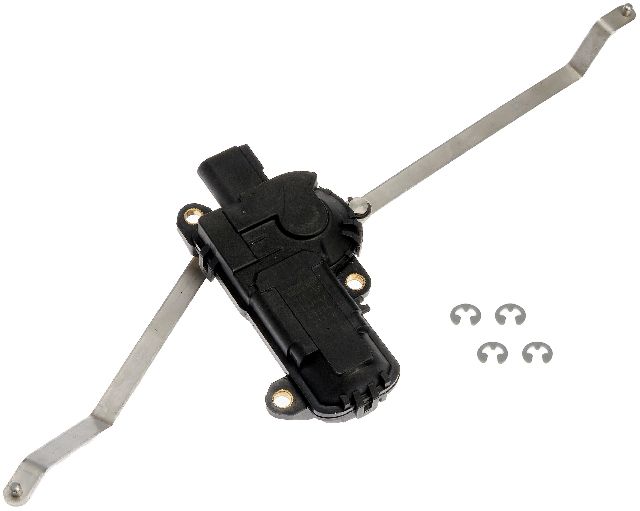
- Intake Manifold Runner Control Valve / Solenoid (N335)
(OEM #037906283C)— This is the solenoid that fails or whose circuit is compromised, directly causing the P1068 code. This part is also used for other functions like the EVAP purge system on other VW/Audi vehicles.
Trusted brands: Bosch, Pierburg, Genuine Audi/VW
OEM price range: $70-$155
Aftermarket price range: $40-$70
Related Codes That Often Appear With This One
- P2006 — This code means 'Intake Manifold Runner Control Stuck Closed, Bank 1'. If the N335 valve has an open circuit (P1068), it cannot supply vacuum to actuate the flaps, causing the ECU to see that they have not moved from their default closed position.
- P2007 — This code means 'Intake Manifold Runner Control Stuck Closed, Bank 2'. It often appears with P2006 for the same reason: the failed N335 circuit prevents the flaps from moving.
Technical Service Bulletins (TSBs) & Recalls
- TSB 2030192/2: While this TSB directly addresses codes P2015 and P2020 related to sticking intake flaps from a deformed potentiometer seal, it is highly relevant as it involves the same intake manifold runner system and components on the S5.
Platform-Specific Known Issues
- Carbon buildup on the intake valves and manifold runners is a very common issue for the 4.2L FSI engine, typically requiring cleaning every 60,000 miles or so. 🎬 Watch: Full carbon cleaning and maintenance overhaul for the 4.2L. While this typically causes P2006/P2007 codes for stuck flaps, the maintenance to fix it (intake manifold removal) is a primary reason the N335 connector is left unplugged, triggering P1068.
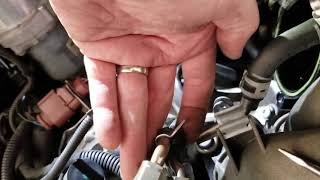
- A YouTube video by 'Home DiY Garage' documented a 2008 S5 with P1068, P2006, and P2007. The cause for P1068 was explicitly shown to be the N335 sensor connector being disconnected and hanging loose in the engine bay. 🎬 Watch: See how a disconnected N335 solenoid causes these codes.
Mechanic-Grade Diagnostic Values
- N335 (037906283C) Solenoid Coil Resistance — expected: 25-35 Ohms (as per general VAG solenoid specs). A similar EVAP solenoid (same part number) was measured between 12.5-13.5 Ω.. Failure: Infinite resistance (OL) indicates an open circuit inside the solenoid.
- Voltage at N335 Harness Connector (Key On) — expected: Approximately 12V (battery voltage) at one of the two pins.. Failure: 0V indicates a break in the power supply wire from the relay/fuse box.
- Continuity of N335 Signal Wire to ECM — expected: Max 1.5 Ohms.. Failure: Infinite resistance (OL) indicates a broken wire between the N335 connector and the ECM.
Scan Tool Commands That Help
- VCDS (Ross-Tech): Engine -> Output Tests — This function allows you to cycle various engine components, including the intake manifold runner control motors. While it doesn't directly test the N335 solenoid's vacuum switching, observing the runner actuators attempt to move can help confirm if the overall system is receiving commands. If the runners don't move and you have P1068, it further points to the N335 circuit as the root cause.
- VCDS (Ross-Tech): Engine -> Basic Settings -> Group 200 — This procedure is used to run an adaptation/check of the intake manifold runners. It requires holding the brake and throttle pedals to activate. This is typically used after replacing mechanical parts of the runner system, but can be useful to verify function after fixing an electrical fault like P1068.
Wiring & Ground Locations
- ECM (J623) Location — In the plenum chamber (the area under the windshield wipers) on the left (driver's) side of the engine bay.. The signal wire for the N335 solenoid terminates here. A continuity test from the N335 connector to the corresponding pin at the ECM connector is the definitive way to check for a broken wire.
- Engine Block Ground — Typically a braided strap or thick wire from the engine block or cylinder head to the chassis frame rail or firewall.. A poor main engine ground can cause a host of intermittent and strange electrical issues, including faults in sensor and actuator circuits. While not a direct cause of a specific open circuit, it should be checked and cleaned if multiple electrical faults are present.
- Chassis Ground Point (Engine Bay) — There are several ground posts on the chassis. A key one is often located on the left front long member/frame rail in the engine compartment, sometimes designated as point (12).. The ECM and its related circuits rely on clean, secure chassis grounds. Verifying these connections are tight and corrosion-free is a crucial step in diagnosing any electrical fault.
Real Owner Repair Stories
- YouTube channel 'Home DiY Garage' (2008 Audi S5 4.2L V8) — Check Engine Light with codes P1068, P2006, and P2007.
❌ Tried (didn't work) The video immediately identifies the likely cause before trying other fixes.
✅ What actually fixed it The electrical connector for the N335 solenoid, located on the back of the airbox, was found completely disconnected and hanging in the engine bay. Plugging the connector back in was the fix for the P1068 code.
OEM Part Supersession History
Not applicable, 037906283C is a long-standing part number.→037906283C remains the current part number.— This part is a widely used solenoid across many VW and Audi platforms for various functions (EVAP purge, intake runner control), so the part number has remained stable.
Model Year Variations Within This Range
- 2008-2012 (B8.0): The S5 Coupe used the 4.2L V8 engine. However, the S5 Cabriolet (convertible) model from 2010-2012 used a 3.0L supercharged V6, which has a different intake manifold design. This P1068 guide is specific to the V8 Coupe.
Diagnostic Flowchart
Other Known Issues on This Vehicle
Issues unrelated to this code that are worth knowing about as an owner of this generation:
- Intake Valve Carbon Buildup 🔴 High — Very common on FSI engines. Typically requires cleaning via walnut blasting every 50,000-70,000 miles to restore performance and prevent misfires.
- Front Control Arm Bushing Failure 🟠 Medium — The rubber bushings in the multi-link front suspension wear out, causing clunking noises over bumps, vague steering, and uneven tire wear. Often noticeable around 70,000 miles. (Ref: A TSB was issued for the lower front control arms on early 2008-2009 models due to a design issue.)
- Timing Chain Tensioner Rattle 🟠 Medium — Unlike the previous generation S4, the B8 S5's timing chains are robust. However, the hydraulic tensioners can lose oil pressure when parked, causing a brief 1-2 second rattle on cold startup. While Audi has a TSB stating this is not harmful, it is a common owner concern. Prolonged rattling can indicate a failing tensioner. (Ref: TSB 15 15 26 2039995/1 (for the later 3.0T engine, but a similar principle applies) addresses startup rattle, claiming it is not damaging.)
- Thermostat Failure 🟡 Low — The thermostat can fail, typically getting stuck open. This results in the engine not reaching full operating temperature, leading to poor fuel economy and potentially a check engine light. It is not a catastrophic failure.
- Coolant Leaks 🟠 Medium — Leaks can develop from various plastic components in the cooling system, such as the water pump, thermostat housing, and crossover pipes, which become brittle with age and heat cycles.
Used vs. New Parts: Buying Guide for This Vehicle
When a used part is the smart pick: A used N335 solenoid from a junkyard is a reasonable choice for this repair. It is a simple, common, and robust electro-mechanical part, not a complex electronic module. Since the most common cause of P1068 is a disconnected plug, the original solenoid is often perfectly fine, making a used replacement a low-risk, cost-effective option if the original truly has failed.
Donor-vehicle mileage cap: roughly under 120000 miles for the part to have meaningful remaining life.
What to inspect on the donor part:
- Visually inspect the plastic housing for cracks or heat damage.
- Ensure the electrical connector pins are straight and free of corrosion.
- If possible, test the resistance with a multimeter before purchase; it should read between ~12 and 35 Ohms.
- Ask for the donor vehicle's mileage to ensure it's within a reasonable range.
OEM-only on this vehicle (don't cheap out):
- Engine Control Module (ECM)
Aftermarket brands forum-validated for this vehicle:
- Pierburg (often the OEM supplier)
- Bosch
Brands owners have reported issues with on this vehicle:
- No-name, unbranded parts from online marketplaces should be avoided, as their internal coil windings and sealing materials may not meet OEM durability standards.
Real Owner Stories
Aggregated from forums and TSBs cited above. Mileages and costs reflect what owners reported in those sources.
2008-2012 Audi S5 4.2L V8 (CAUA)
Symptoms: A rough idle and stumbling when revving the engine, accompanied by a Check Engine Light for P1068.
What fixed it: The owner discovered the electrical connector on the back side of the passenger airbox was unplugged, likely missed during reinstallation of the intake. Plugging it back in resolved all symptoms.
Source hint: common_causes: real_world_story from AudiWorld forums
2008 Audi S5 4.2L V8 (CAUA)
Symptoms: Check Engine Light with codes P1068, P2006, and P2007 stored.
What fixed it: The cause for the P1068 code was the N335 sensor connector being completely disconnected and hanging loose in the engine bay. Reconnecting it cleared the fault.
Source hint: vehicle_specific_issues: YouTube video by 'Home DiY Garage'
Audi S8 V10
Symptoms: Check Engine Light with fault code P1068 after reinstalling the intake.
What fixed it: The fix was finding the N335 valve connector unplugged on the back side of the passenger air box.
Source hint: forum_citations: AudiWorld Forums - 'N335 valve where?'
Related OBD-II Codes
Frequently Asked Questions
I just had my 2009 S5's intake manifold off for carbon cleaning and now I have a P1068 code. Are these related?
Where is the Intake Air Switch-Over Valve (N335) located on my S5's 4.2L V8?
Is the N335 valve itself likely broken if I have a P1068 code?
How can I test the N335 solenoid on my Audi S5?
My scanner shows codes P2006 and P2007 along with P1068. What does this combination mean?
Does TSB 2030192/2 apply to the P1068 code?
Helpful Videos
We Have This Part in Stock



The information in this article is provided for general reference and educational purposes only. Vehicle specifications, procedures, and part compatibility can vary by production date, trim level, and region. Always consult your vehicle's factory service manual and verify part numbers before purchasing or performing repairs. Safety-critical components such as airbags, seat belts, and braking systems should be installed by a qualified professional.
- Audi S5:
- 🧭 Diagnostic Flowchart
- 🎬 Helpful Videos
- 🛍️ Shop This Part
- What's Unique About the 2008-2012 Audi S5
- Symptoms You May Notice
- Most Likely Causes
- Rare But Worth Checking
- Diagnosis Steps
- Parts You'll Likely Need
- Related Codes That Often Appear With This One
- Technical Service Bulletins (TSBs) & Recalls
- Platform-Specific Known Issues
- Mechanic-Grade Diagnostic Values
- Scan Tool Commands That Help
- Wiring & Ground Locations
- Real Owner Repair Stories
- OEM Part Supersession History
- Model Year Variations Within This Range
- Other Known Issues on This Vehicle
- Used vs. New Parts: Buying Guide for This Vehicle
- Real Owner Stories
- 2008-2012 Audi S5 4.2L V8 (CAUA)
- 2008 Audi S5 4.2L V8 (CAUA)
- Audi S8 V10
- Related OBD-II Codes
- Frequently Asked Questions
- 🎟️ Get 5% Off