

P1098 on 2008-2016 Audi A4 2.0T: Intake Manifold Runner Sensor Causes and Fixes
On a 2008-2016 Audi A4 2.0T, code P1098 almost always means the entire intake manifold assembly has failed due to an internal sensor fault. The most common and reliable fix is to replace the complete intake manifold with the latest revised part and perform a carbon cleaning of the intake ports simultaneously. Expect to pay $250-$500 for a revised OEM or quality aftermarket part.
- P1098 on your Audi A4 almost always points to a failed intake manifold, not just a simple sensor.
- The most reliable fix is to replace the entire intake manifold assembly with an updated part (06H133201AT).
- While replacing the manifold, it is crucial to have the intake ports and valves cleaned of carbon buildup.
- After the repair, the new manifold sensor must be calibrated to the vehicle's computer using a 'Basic Setting' procedure with a compatible scan tool.
- Always replace the fuel injector seals when doing this job to prevent future leaks.
What's Unique About the 2008-2016 Audi A4
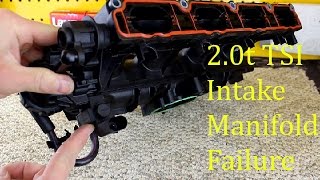
The 2.0L TFSI/TSI engine (EA888 Gen 2) used in the B8 generation Audi A4 is notorious for intake manifold failures. The original plastic manifolds have several weak points, including the runner flap mechanism, the vacuum actuator arm, and the integrated position sensor (G336) that triggers code P1098. The failure rate was so high that Volkswagen/Audi issued an extended warranty (documented in bulletins like VWP-20-03 and 24-15-05) covering the intake manifold for 10 years or 120,000 miles on many of these vehicles. While most warranties have now expired due to time, it highlights that this is a well-documented, common problem for this specific engine platform.
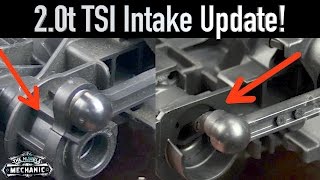
Generation note: The 2008-2016 year range covers the entire B8 generation of the Audi A4, which includes the pre-facelift (2008-2012) and facelift or 'B8.5' (2013-2016) models. The 2.0T TFSI engine in these cars (engine codes CAEB, CDNC, etc.) is known for this issue across the entire generation. Newer replacement manifolds, such as part number 06H133201AT, feature design improvements 🎬 Watch: See the design updates in the latest revised manifold. to address the original flaws. The B8.5 facelift introduced the CPM engine code for flex-fuel capability, which used a metal intake manifold instead of the plastic one found on the CAEB engine; this metal manifold has different failure modes and does not typically set P1098.
Symptoms You May Notice
- Check Engine Light is on
- Rough or unstable idle
- Noticeable loss of power, especially at lower RPMs
- Reduced fuel economy
- Hesitation during acceleration
- Engine may feel like it is in 'limp mode'
- Audible vacuum leak hiss if the actuator arm has created a leak
- Replacing only the external vacuum actuator. While this part can fail, the P1098 code specifically points to the position sensor circuit, which is internal to the manifold. The actuator failing usually sets a different code related to mechanical performance (e.g., P2015).
- Installing a 'linkage arm repair kit'. These metal kits are designed to fix a broken actuator arm, which typically causes code P2015. They do not fix the internal electrical sensor failure that triggers P1098.
Most Likely Causes
- Failed Intake Manifold Assembly 🔴 High Probability → Shop Engine Intake Manifold The original equipment plastic manifold has multiple documented failure points. The actuator arm can break, the position sensor can fail electrically (causing P1098), or the flaps can bind due to carbon buildup, causing stress on the entire system. Heat cycles and material degradation of the plastic components are the primary culprits.
How to confirm: Visually inspect the actuator arm on the side of the manifold; if it has popped off, the manifold has failed. Use a scan tool (like VCDS) to monitor Measuring Value Block (MVB) 142. Compare the specified vs. actual position of the runner flaps. If they don't match, the reading is erratic, or the sensor voltage is out of spec, the manifold/sensor assembly is faulty.
Typical fix: Replace the entire intake manifold assembly with the latest revised part (e.g., 06H133201AT). It is highly recommended to perform a manual carbon cleaning of the intake ports and valves at the same time, as buildup is a primary contributor to the failure.
Est. part cost: $250-$500 - Wiring or Connector Fault ⚪ Low Probability The engine bay is a harsh environment. Wires can become brittle and crack from heat cycles, and connectors can be contaminated by oil from nearby leaks (e.g., PCV valve, valve cover).
How to confirm: Inspect the wiring harness and 5-pin connector going to the intake manifold position sensor for any signs of damage, corrosion, oil saturation, or loose pins. Perform a continuity test from the sensor connector back to the ECM to check for an open circuit or a short to power. Check for 5V reference voltage at the connector with the key on.
Typical fix: Repair the damaged section of the wiring harness or replace the faulty connector pigtail.
Est. part cost: $20-$75
Diagnosis Steps
- Read the fault codes with an OBD-II scanner to confirm P1098 and note any other codes present, especially P2015.
- Inspect the wiring harness and 5-pin connector at the intake manifold for any visible damage, chafing, or corrosion. Ensure the connector is seated properly. Check for oil contamination.
- Visually inspect the intake manifold runner actuator arm, located on the driver's side of the manifold. If the round, black plastic arm has popped off its linkage, the manifold has failed and must be replaced.
- If the wiring and linkage appear intact, use an advanced scan tool (like VCDS by Ross-Tech) to monitor Measuring Value Block 142. Observe the specified vs. actual sensor readings while operating the throttle (engine off). If the sensor fails to report a smooth and complete sweep, or if the values are nonsensical, the sensor/manifold assembly is defective.
- If the above steps point to a faulty manifold, the recommended repair is to replace the entire intake manifold assembly with the latest revision part.
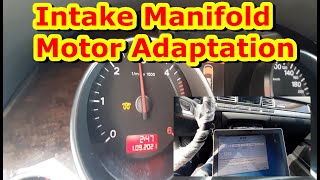
- After installing a new manifold, it is critical to perform the 'Basic Setting' procedure using a scan tool. For VCDS, this is done in [01-Engine] -> [Basic Settings - 04] -> Group 1 🎬 Watch: How to perform the intake manifold runner adaptation.42. Failure to do so will likely cause the code to return immediately or throw a new code for basic settings not performed (e.g., P3138).
Parts You'll Likely Need
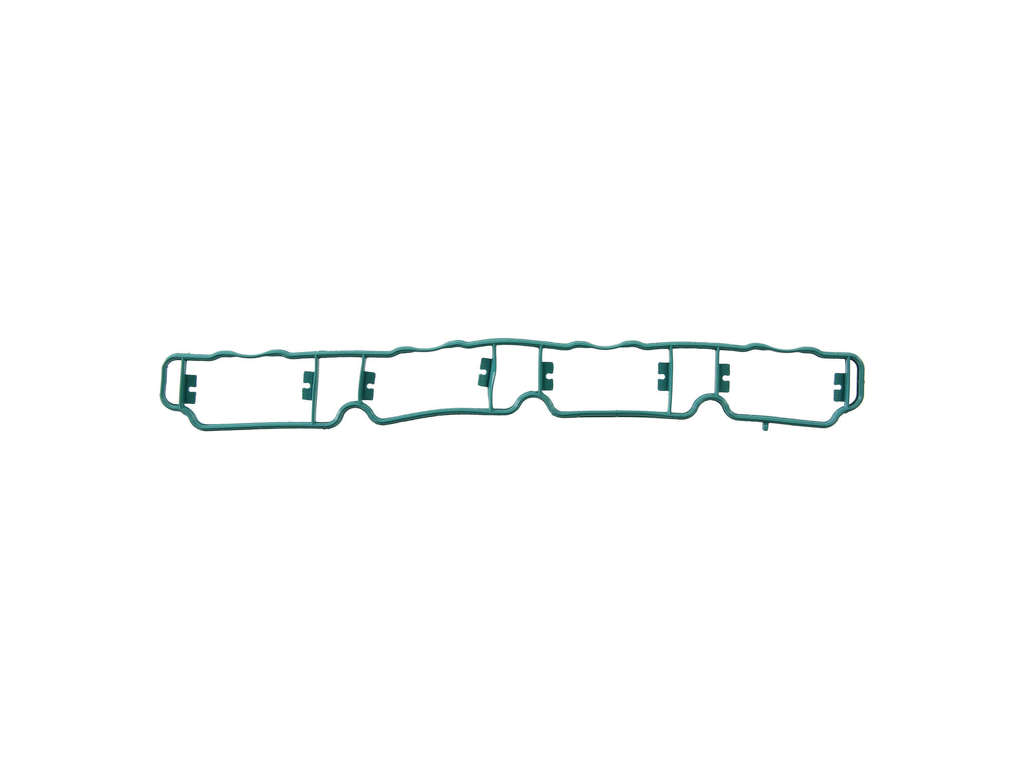
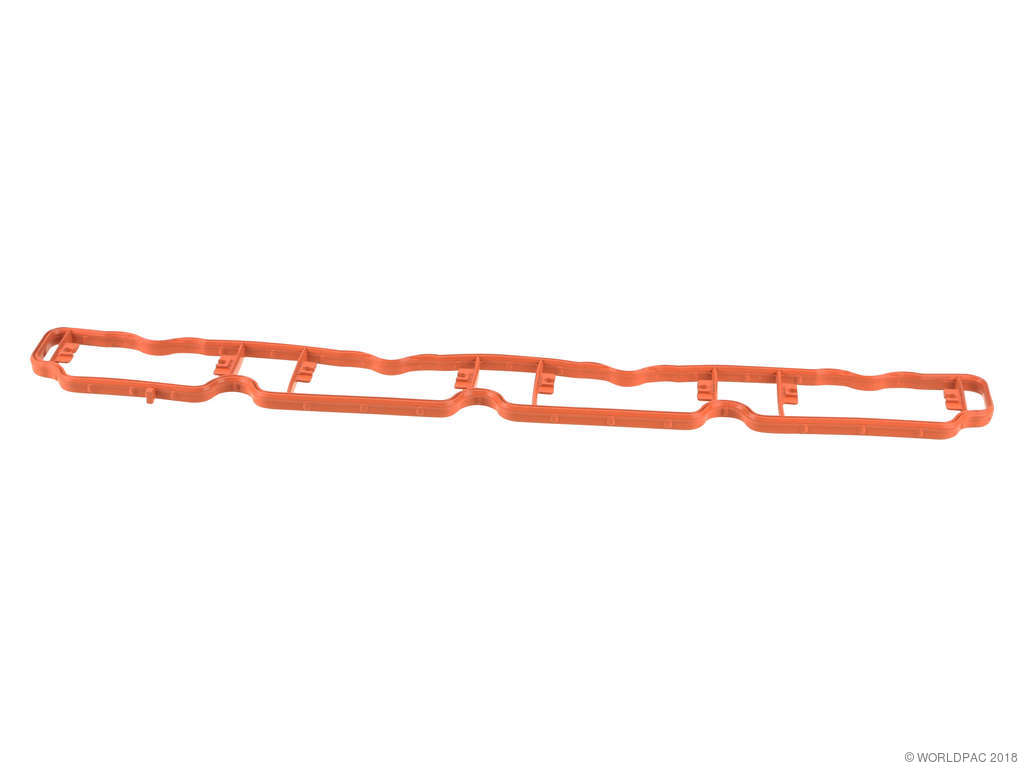
- Intake Manifold Assembly
(OEM #06H133201AT (Latest Revision))— This is the most common failure. The position sensor (G336) is integrated into the manifold and is not sold separately. The assembly includes new flaps, linkage, sensor, and gaskets. Using the latest revision ensures you have the most durable design.
Trusted brands: Audi (Genuine OEM), INA, Vaico, URO Parts
OEM price range: $400-$500
Aftermarket price range: $250-$350 - Fuel Injector Seal Kit
(OEM #06J998907B)— The fuel injectors must be removed to replace the intake manifold. It is mandatory to replace the single-use Teflon seals and O-rings to prevent fuel and vacuum leaks. A special tool is recommended for installation.
Trusted brands: Bosch, Elring
OEM price range: $60-$80
Aftermarket price range: $30-$50
Related Codes That Often Appear With This One
- P2015 — This code ('Intake Manifold Runner Position Sensor/Switch Circuit Range/Performance') is often seen with P1098. It indicates a mechanical problem with the flaps' movement, such as being stuck or having a broken linkage, which is often the root cause of the electrical P1098 fault.
- P0300-P0304 — Random or specific cylinder misfire codes can occur due to the incorrect airflow caused by the malfunctioning runner flaps, leading to an improper air/fuel mixture and unstable combustion.
- P2004 — This code ('Intake Manifold Runner Control Stuck Open') can appear alongside P1098, indicating the flaps are mechanically jammed in the open position, which the faulty sensor may also be reporting.
Technical Service Bulletins (TSBs) & Recalls
- VWP-20-03 / Audi 24-15-05: Details the extended warranty for the intake manifold to 10 years/120,000 miles due to high failure rates.
- Audi TSB 24-08-10 (2016868/2): Mentions P1098 is not a listed code but discusses related intake flap motor (V157) and sensor (G336) failures, ECM software updates, and the need to perform basic settings via channel 142.
Platform-Specific Known Issues
- Audi/VW issued an extended warranty (10 years / 120,000 miles) for the intake manifold on many vehicles with this engine due to the high failure rate. Check with a dealer to see if your specific vehicle's VIN had this coverage, though most will now be expired by time. The relevant TSBs are often cited as 24-15-05 for Audi and VWP-20-03 for VW.
- Carbon buildup on the intake valves is extremely common on this direct-injection engine and is a major contributing factor to runner flap binding and eventual manifold failure. It is considered best practice to perform a walnut-blasting or manual cleaning of the intake ports whenever the manifold is removed.
Mechanic-Grade Diagnostic Values
- G336 Sensor Connector - Voltage Supply — expected: Approximately 5V between Pin 1 (5V reference) and Pin 3 (ground) with key on, engine off.. Failure: No voltage or significantly lower voltage points to a wiring issue or a problem with the ECM's 5V reference circuit.
- G336 Sensor Connector - Wiring Continuity — expected: Less than 1.5 Ω between the sensor connector pins and their corresponding pins at the ECM connector.. Failure: Resistance higher than 1.5 Ω indicates an open circuit or high resistance in the harness. Infinite resistance means a broken wire.
- VCDS Measuring Value Block 142 - Position — expected: At idle, 'Specified' and 'Actual' position should both be near 0%. When actuated via basic settings or by revving over ~3000 RPM, both should move towards ~99% and match closely.. Failure: If 'Actual' value is stuck, does not follow 'Specified', or reads 'ERROR' during the basic settings adaptation, it confirms a fault in the manifold/sensor system.
Hidden / Shadow Codes Worth Checking
- 17506: This is the VAG-specific fault number that corresponds to the generic P1098 code. It may be displayed by more advanced scan tools like VCDS. (see via VCDS by Ross-Tech or other VAG-specific diagnostic tools.)
- P3138: Intake Manifold Runner Control: Basic Setting Not Performed. This code often appears with P1098 if a new manifold has been installed but the adaptation procedure was skipped or failed. (see via OBD-II scanner after a failed repair attempt.)
Scan Tool Commands That Help
- VCDS (VAG-COM): [01-Engine] -> [Measuring Blocks - 08] -> Group 142 — Use this to monitor the live specified vs. actual position of the intake runner flaps in real-time. This is the primary diagnostic screen to verify if the sensor is responding to commands.
- VCDS (VAG-COM): [01-Engine] -> [Basic Settings - 04] -> Group 142 — This command initiates the adaptation (re-learn) procedure. It is mandatory after replacing the intake manifold. The system will cycle the flaps from fully closed to fully open to learn the end stops. If this procedure results in an 'ERROR', it confirms a persistent mechanical or electrical fault.
Wiring & Ground Locations
- G336 Connector (T5k) — A 5-pin connector located on the driver's side of the plastic intake manifold, connecting to the integrated position sensor.. This is the direct connection for the sensor. P1098 indicates an 'Open or Short to Plus' in the circuits connected here. Pin 1 is 5V reference, Pin 3 is sensor ground, and other pins are signal wires back to the ECM.
- Engine Block Ground Stud — Typically located on the engine block near the ignition coils or on the cylinder head. Look for a stud with multiple brown wires bolted to it.. A poor engine ground can cause floating voltages and erratic sensor readings throughout the engine management system, including the G336 sensor. Ensuring this connection is clean and tight is a crucial step in diagnosing any electrical fault.
- ECM Ground Point — The main ground for the ECM is often located in the plenum area (under the windshield cowl) or at a chassis ground point in the engine bay.. The G336 sensor is grounded through the ECM. If the ECM itself has a poor ground, it can cause incorrect readings and codes like P1098.
Real Owner Repair Stories
- Ross-Tech Forums (2009 Audi TTS (CDLB engine, similar to CAEB)) — Hunting idle, followed by codes 012599 (basic setting missing) and 004248 (P1098 equivalent - Position Sensor open or short).
❌ Tried (didn't work) Cleaning contacts on the original sensor/actuator unit., Replacing the external actuator motor (06F133482E)., Repeatedly trying the Basic Settings procedure in VCDS, which kept failing with an 'ERROR' message.
✅ What actually fixed it The user had replaced the manifold but the code persisted. The final fix was discovering a wiring issue between the sensor connector and the ECM. After repairing the harness, the Basic Settings procedure completed successfully and the code was resolved. This highlights that even with a new part, a wiring fault can be the underlying cause.
OEM Part Supersession History
06H133201AF, 06H133201AN, 06H133201AA, 06H133201J→06H133201AT— The original designs were prone to failure of the internal flap mechanism, actuator linkage, and position sensor. The 'AT' revision incorporates design improvements for durability.
Model Year Variations Within This Range
- 2013-2016 (B8.5): Some B8.5 models, particularly those with the CPM engine code, were equipped with a metal intake manifold for Flex Fuel (E85) compatibility. This metal manifold does not have the same integrated sensor and flap design as the plastic manifold and is not prone to the P1098 failure. The plastic manifold was still used on non-Flex Fuel models (e.g., engine code CAEB) during this period.
Diagnostic Flowchart
Used vs. New Parts: Buying Guide for This Vehicle
When a used part is the smart pick: Almost never. Given that the original plastic intake manifold is a well-documented, high-failure part due to design flaws, installing a used one is highly likely to result in the same failure in a short time. A used part carries the same risks of worn flap bushings, a failing internal sensor, and a brittle actuator arm.
Donor-vehicle mileage cap: roughly under 20000 miles for the part to have meaningful remaining life.
What to inspect on the donor part:
- If forced to consider a used part, only select one from a very low-mileage vehicle.
- Verify the part number is the latest revision (06H133201AT). Do not use any of the superseded part numbers.
- Inspect the actuator arm for any signs of stress or cracking.
- Attempt to move the runner flap linkage by hand; it should move smoothly with no binding or excessive play.
OEM-only on this vehicle (don't cheap out):
- Intake Manifold Assembly
Aftermarket brands forum-validated for this vehicle:
- INA (often the Original Equipment Manufacturer for VAG)
- Vaico (VEMO)
- Some owners opt for cast aluminum 'flapper delete' manifolds from brands like Integrated Engineering or BAR-TEK for performance applications, but this requires an ECU tune to disable the runner flap system and avoid fault codes.
Brands owners have reported issues with on this vehicle:
- Unnamed, no-brand parts from online marketplaces. Many users report these failing quickly or being defective out of the box, often failing the Basic Settings procedure.
Real Owner Stories
Aggregated from forums and TSBs cited above. Mileages and costs reflect what owners reported in those sources.
2005.5 audi a4 quattro 2.0T — 156647 miles
Symptoms: Check engine light came on, multiple fault codes including P1098 were present, and the car would not start.
What fixed it: The owner was still diagnosing the issue after working near the back of the motor. They suspected a wiring or ground problem, but the final fix was not reported in the source thread.
Source hint: Ross-Tech Forums
Audi A4 2.0L TFSI
Symptoms: Check Engine Light with an 'Intermittent Open Circuit' code (P1098) even after fixing the broken mechanical actuator arm.
What fixed it: This case demonstrated that the mechanical failure (broken arm) and the electrical failure (internal sensor circuit) can be separate issues, reinforcing that the entire manifold assembly usually needs to be replaced to fix the electrical fault.
Source hint: AudiWorld Forums (Thread on audiworld.com)
Audi A4 2.0L TFSI
Symptoms: Check Engine Light on with code P1098, even after installing a brand new intake manifold.
What fixed it: The problem was resolved by properly performing the 'Basic Setting' adaptation procedure using VCDS in Measuring Value Block 142. This highlights the necessity of this software calibration step after the physical repair.
Source hint: Ross-Tech Forums (Thread on ross-tech.com)
Related OBD-II Codes
Frequently Asked Questions
Was there an extended warranty for the intake manifold on my 2008-2016 Audi A4?
Is it really necessary to clean the intake valves when replacing the manifold for a P1098 code?
What is the 'Basic Setting' procedure and why is it important after replacing the intake manifold?
How can I visually check if my intake manifold has failed?
I also have a P2015 code along with P1098. Are they related?
Could my P1098 code be caused by something other than the manifold itself?
What is the recommended replacement part for the faulty intake manifold?
Helpful Videos
Used OEM Parts in Stock
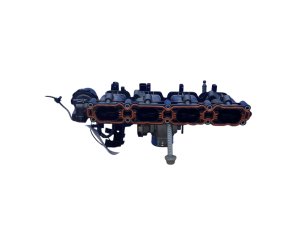
New Aftermarket Parts Available



The information in this article is provided for general reference and educational purposes only. Vehicle specifications, procedures, and part compatibility can vary by production date, trim level, and region. Always consult your vehicle's factory service manual and verify part numbers before purchasing or performing repairs. Safety-critical components such as airbags, seat belts, and braking systems should be installed by a qualified professional.
- Audi A4:
- 🧭 Diagnostic Flowchart
- 🎬 Helpful Videos
- 🛍️ Shop This Part
- What's Unique About the 2008-2016 Audi A4
- Symptoms You May Notice
- Most Likely Causes
- Diagnosis Steps
- Parts You'll Likely Need
- Related Codes That Often Appear With This One
- Technical Service Bulletins (TSBs) & Recalls
- Platform-Specific Known Issues
- Mechanic-Grade Diagnostic Values
- Hidden / Shadow Codes Worth Checking
- Scan Tool Commands That Help
- Wiring & Ground Locations
- Real Owner Repair Stories
- OEM Part Supersession History
- Model Year Variations Within This Range
- Used vs. New Parts: Buying Guide for This Vehicle
- Real Owner Stories
- 2005.5 audi a4 quattro 2.0T — 156647 miles
- Audi A4 2.0L TFSI
- Audi A4 2.0L TFSI
- Related OBD-II Codes
- Frequently Asked Questions
- 🎟️ Get 5% Off