

P1128 on 1996-2008 Audi A4: Causes and Fixes for Lean Fuel Trim
For the 1996-2008 Audi A4, code P1128 almost always indicates a lean fuel condition caused by vacuum leaks from cracked hoses or a faulty Mass Airflow (MAF) sensor. Expect to pay $20-$100 for replacement hoses or around $150-$250 for a quality replacement MAF sensor.
- P1128 on an Audi A4 means the engine is running too lean on Bank 1.
- Do not immediately replace the O2 sensor. The most likely cause is a vacuum leak from an old, cracked PCV hose.
- A smoke test is the best method to quickly and accurately find intake and vacuum leaks.
- If no vacuum leaks are found, the next most likely cause is a dirty or failed Mass Airflow (MAF) sensor.
- If you have a V8 and also see code P1130, look for a problem that affects both engine banks, like the MAF sensor or fuel pump.
What's Unique About the 1996-2008 Audi A4
On the B5, B6, and B7 generation Audi A4s, particularly the 1.8T models, the engine bay is filled with numerous plastic and rubber vacuum hoses for the PCV (Positive Crankcase Ventilation) system. Over years of heat cycles, these hoses become extremely brittle and are the number one cause of unmetered air entering the engine, directly triggering the P1128 code. Specific failure points include the suction jet pump, the 'L-hose' at the back of the engine, and various check valves. While a MAF sensor is a common failure point on many cars, on this specific platform, vacuum leaks are a near-certainty and should always be investigated first.
Generation note: This range covers the B5 (1996-2001), B6 (2002-2005), and B7 (2005.5-2008) generations. The primary causes, especially brittle vacuum/PCV hoses and MAF sensor failure, are common across all three generations and apply to both the 1.8T and 4.2L V8 engines.
Symptoms You May Notice
- Check Engine Light is on
- Rough or unstable idle, sometimes hunting up and down.
- Hesitation or stumbling during acceleration.
- Reduced fuel economy.
- Failed emissions test.
- Engine feels sluggish or down on power
- A whistling or sucking sound at idle, indicating a vacuum leak
- Replacing the front oxygen (O2) sensor first. The O2 sensor is typically the messenger, not the cause. The problem is almost always unmetered air (vacuum leak) or improperly metered air (bad MAF).
Most Likely Causes
- Cracked or disconnected vacuum and PCV hoses 🔴 High Probability The plastic and rubber hoses used in the complex PCV and vacuum systems become brittle from engine heat and age, leading to cracks and leaks. This is the most common failure point for this code on these engines. Common culprits on the 1.8T include the suction jet pump (a common source of large leaks), 🎬 See why you shouldn't overlook the suction jet pump. the PCV valve (aka 'pancake valve'), and the various breather hoses under the intake manifold.
How to confirm: Perform a smoke test on the intake system. Smoke will visibly escape from any cracked hoses or bad gaskets. A visual inspection may reveal obvious breaks, especially in hoses connected to the valve cover and intake manifold. Pay close attention to the 'L-hose' on the back of the engine, which is hard to see and often torn on the underside.
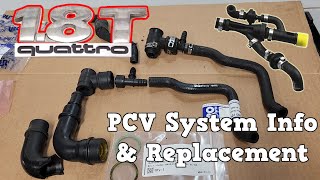
Typical fix: Replace all affected hoses. It is often recommended to buy a complete PCV hose kit, 🎬 Watch this complete PCV system replacement walkthrough. as multiple hoses are usually degraded. Individual problem hoses like the suction jet pump (e.g., OEM P/N 058133753B for 1.8T) can also be replaced.
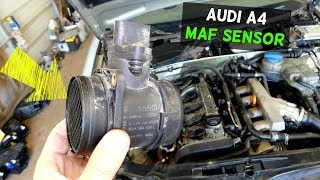
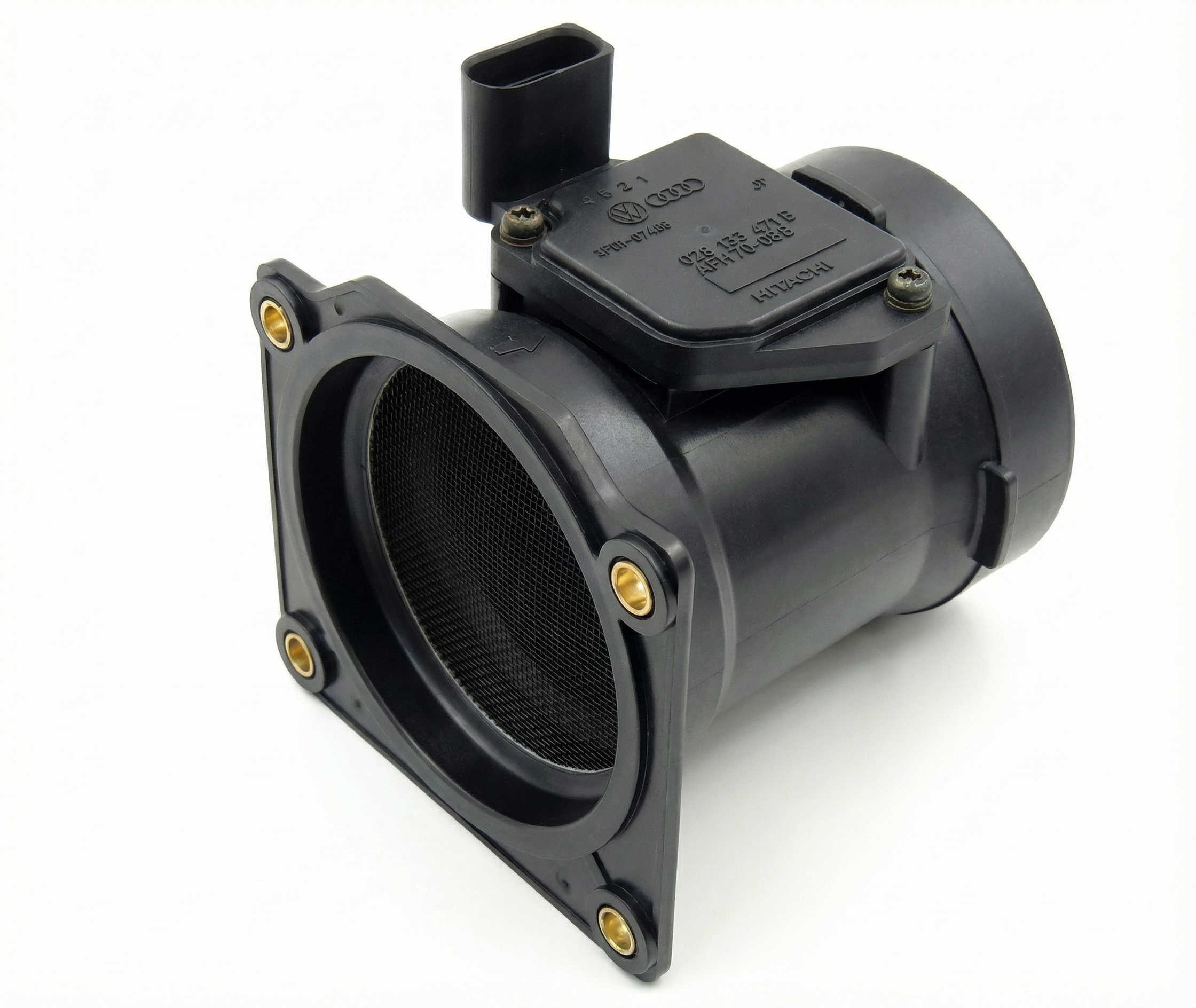
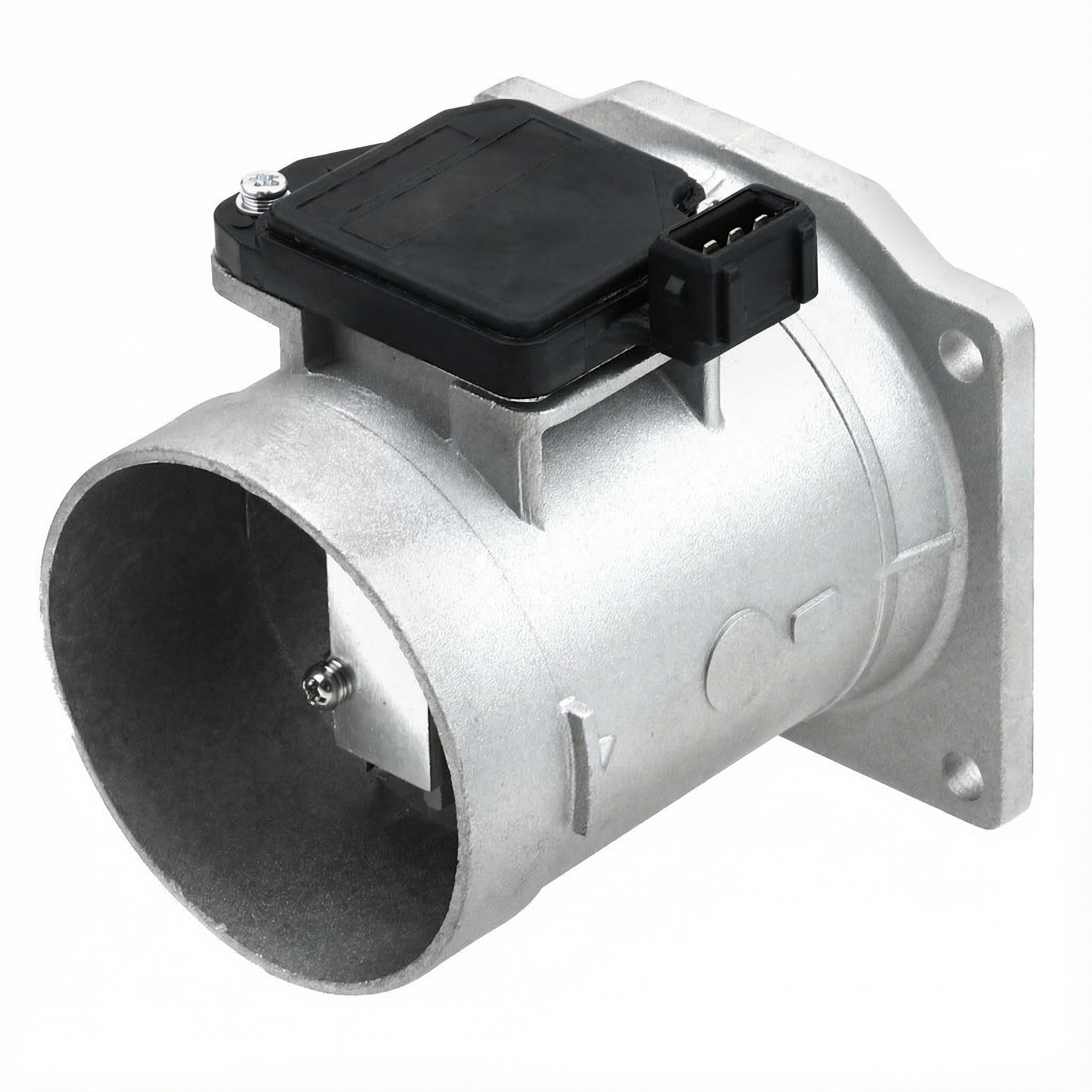
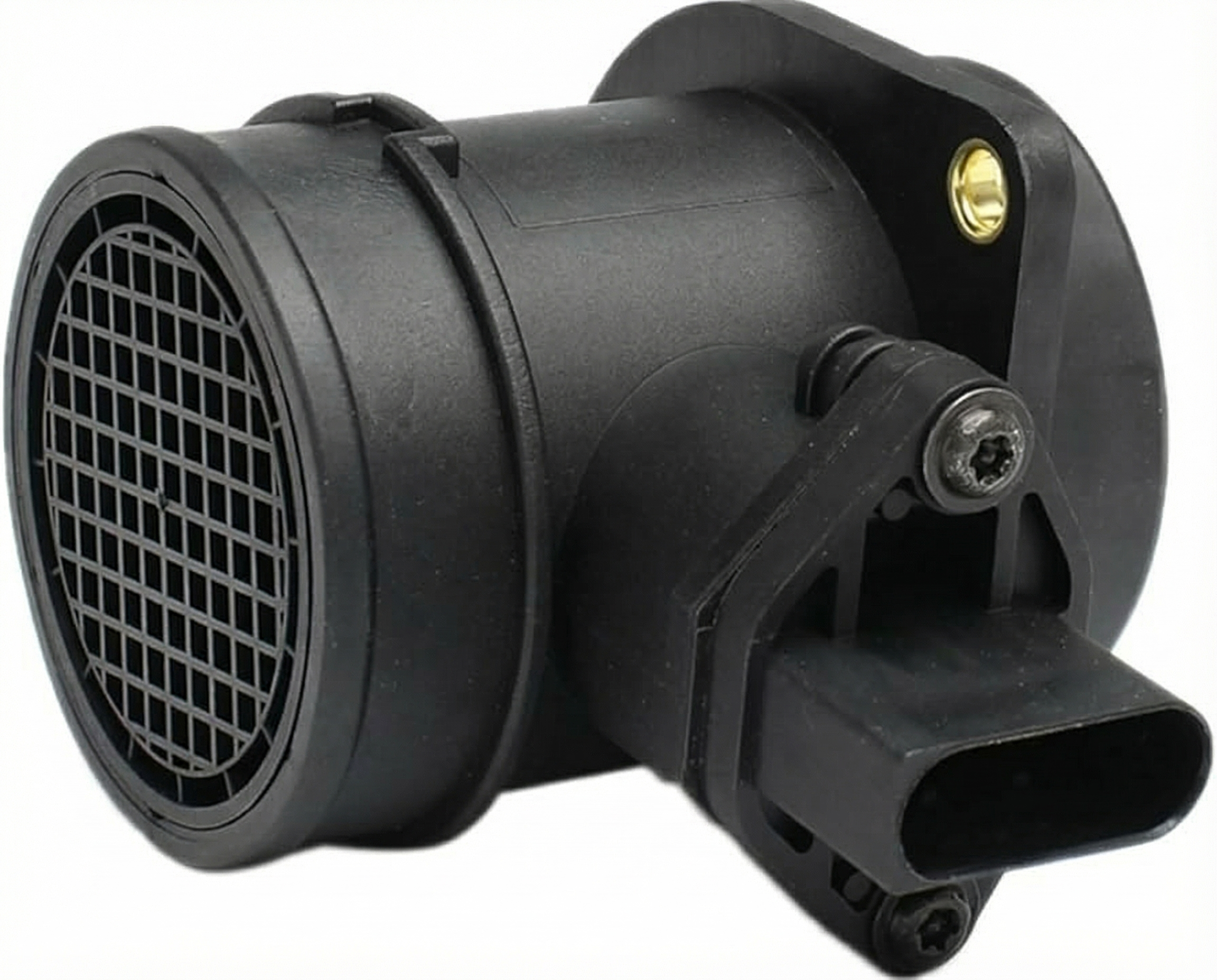
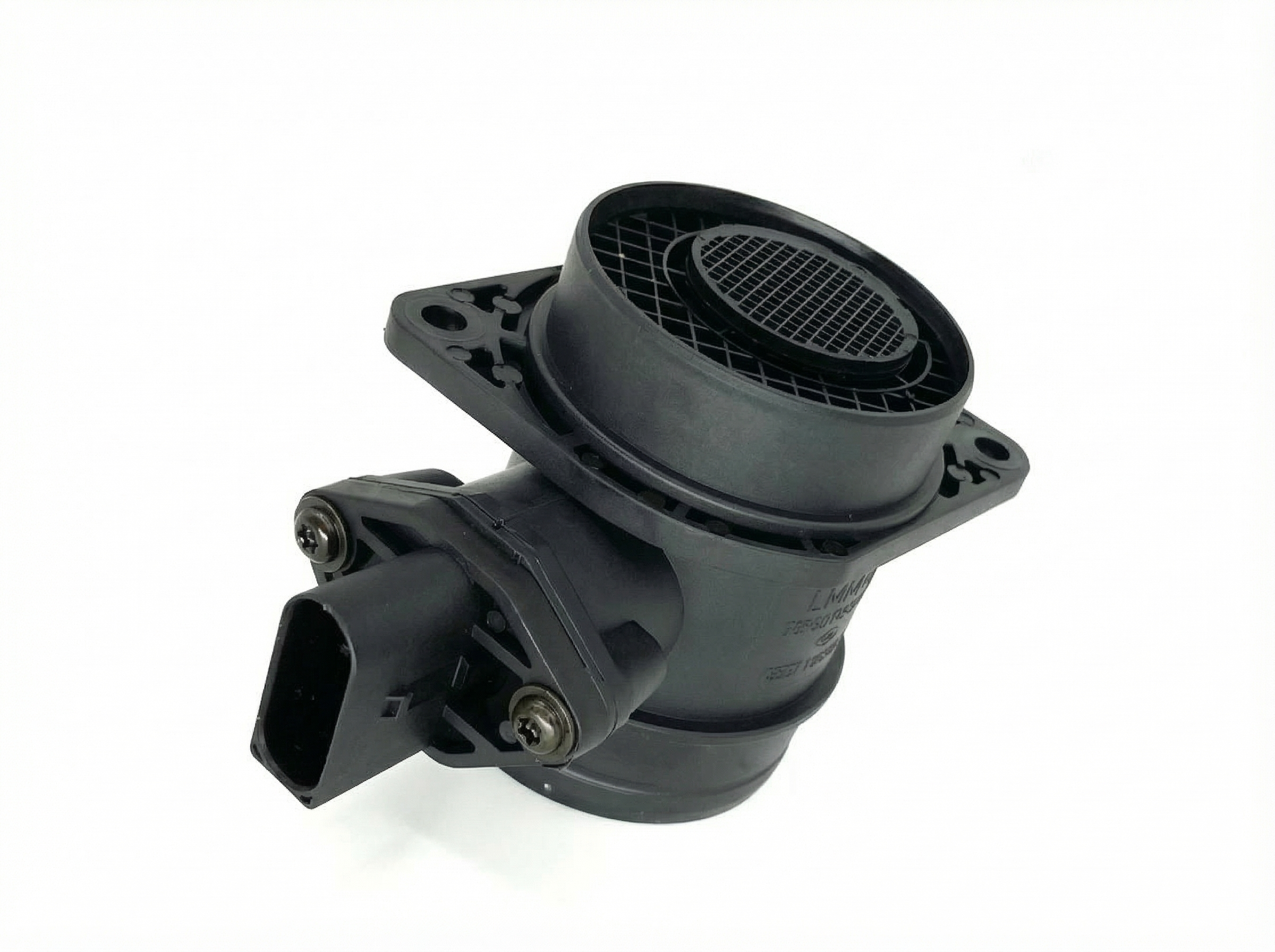
Est. part cost: $20-$120 - Faulty Mass Airflow (MAF) Sensor 🟡 Medium Probability → Shop Fuel Injection Air Flow Meter The MAF sensor can become contaminated (especially if an oiled air filter is used) or simply fail with age, causing it to under-report airflow to the ECU. The ECU then commands less fuel, resulting in a lean condition.
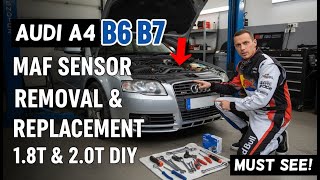
How to confirm: With the engine running, unplug the MAF sensor. If the idle smooths out, the MAF is likely faulty. A more definitive test is to use a diagnostic tool (like VCDS) to monitor airflow readings in measuring block 002 at idle (should be 2-4 g/s) and under load to see if they are within spec. Cleaning with dedicated MAF cleaner can be attempted, but often fails if the sensor is 🎬 Watch: How to remove and replace your MAF sensor. electronically faulty.
Typical fix: Replace the MAF sensor. It is highly recommended to use an OEM or high-quality brand like Bosch. Using cheap, unbranded sensors often leads to persistent problems.
Est. part cost: $150-$250 - Fuel Delivery Issue (Filter or Pump) ⚪ Low Probability
How to confirm: Connect a fuel pressure gauge to the fuel rail test port. Check that the pressure is within the manufacturer's specification (typically around 4.0 Bar/58 PSI at idle for the 1.8T). If pressure is low, the fuel filter may be clogged or the fuel pump may be failing.
Typical fix: Replace the clogged fuel filter first, as it is a routine maintenance item. If pressure is still low, replace the fuel pump. Audi issued TSB 01-11-34 for low fuel pressure issues on some 2005-2008 models.
Est. part cost: $20-$60 for a filter, $150-$400 for a pump
Rare But Worth Checking
- Leaking Intake Manifold Gasket: Less common than hose leaks, but a smoke test will reveal a leak between the intake manifold and the cylinder head.
- Faulty Front Oxygen (O2) Sensor: → Shop Oxygen Sensor The O2 sensor is usually doing its job by correctly reporting the lean condition. However, in rare cases, the sensor itself can fail and send incorrect lean signals. This is usually a last resort after checking for vacuum leaks and verifying MAF function.
- Exhaust leak before the O2 sensor: → Shop Oxygen Sensor A crack in the exhaust manifold or a bad gasket/flex pipe can suck in fresh air, tricking the O2 sensor into reporting a lean condition.
- Faulty Engine Coolant Temperature (ECT) Sensor: A faulty ECT sensor can report to the ECU that the engine is cold when it is not, causing incorrect fuel mapping that can contribute to lean or rich conditions and rough running.
Diagnosis Steps
- Read all fault codes to see if other codes are present, such as misfires or codes for other sensors.
- Visually inspect the engine bay for any obviously disconnected, broken, or collapsed vacuum hoses, particularly around the valve cover and intake manifold.
- Perform a smoke test. This is the most effective way to find small cracks in the vacuum/PCV system that are not visible to the naked eye.
- If no vacuum leaks are found, use a diagnostic tool (VCDS/VAG-COM) to check fuel trims in measuring block 032. High positive values (e.g., >10%) confirm the lean condition.
- While connected, check MAF sensor readings in measuring block 002. At idle, a healthy 1.8T should read between 2-4 g/s. Unplug the MAF sensor while the engine is idling to see if the idle quality improves. If it does, the MAF is likely bad.
- If the above steps do not resolve the issue, test the fuel pressure at the fuel rail to rule out a weak fuel pump or clogged filter.
- As a final step, inspect the exhaust manifold for cracks and consider testing the front O2 sensor's operation with a scan tool.
Parts You'll Likely Need
- PCV Breather Hose Kit
(OEM #06B103213G (example kit for B6 A4 1.8T))— This is the most common cause. Multiple hoses in the PCV system often fail at the same time due to age and heat.
Trusted brands: Rein, Vaico, URO Parts
OEM price range: $80-$150
Aftermarket price range: $20-$70 - Mass Airflow (MAF) Sensor
(OEM #Bosch 0280218063 (for AWM engine code), Bosch 0280218340 / VAG 06A906461L (for AMB, BEX engine codes).)— The second most likely culprit after vacuum leaks. A faulty MAF provides incorrect airflow data, leading to a lean mixture.
Trusted brands: Bosch (OEM), Hitachi
OEM price range: $200-$300
Aftermarket price range: $75-$180 - Fuel Filter
(OEM #4B0201511A (example for B5/B6))— A clogged fuel filter can restrict fuel flow, causing low pressure and a lean condition. It's an inexpensive and good maintenance item to replace during diagnosis.
Trusted brands: Bosch, Mann-Filter, Mahle
OEM price range: $40-$70
Aftermarket price range: $20-$40
Related Codes That Often Appear With This One
- P0171 — P0171 is the generic OBD-II code for 'System Too Lean (Bank 1)'. P1128 is the manufacturer-specific version that often precedes or accompanies it, indicating the same fundamental problem.
- P1130 — On the 4.2L V8 engine, P1130 is 'Long Term Fuel Trim, Bank 2 System Too Lean'. Seeing P1128 and P1130 together points to a cause common to both banks, such as a faulty MAF sensor, a major vacuum leak at the intake boot, or a fuel delivery problem.
- P0300, P0301, etc. — These are misfire codes. A severe lean condition can cause the air/fuel mixture to fail to ignite properly, leading to misfires.
- P1136 — This code is for 'Additive' fuel trim being too lean at idle, whereas P1128 is for 'Multiplicative' trim under load. Seeing them together strongly points to a significant vacuum leak.
Technical Service Bulletins (TSBs) & Recalls
- TSB 01-11-34 / 2027417/2: Addresses MIL on for low fuel pressure codes (P0087, P310B, etc.) on 2005-2008 A4 models. While not directly for P1128, a fuel pressure problem can be a root cause, making this TSB relevant.
Platform-Specific Known Issues
- 1.8T - The 'Suction Jet Pump' Failure: On 1.8T engines, a plastic valve assembly called the 'suction jet pump' (part of the brake booster vacuum system) is a very common failure point. It cracks and creates a large vacuum leak, often causing P1128 and P1136 codes. It's located under the intake manifold and can be difficult to access, but is a prime suspect. One owner on a forum noted that after replacing it, their lean codes were resolved.
- 4.2L V8 - Brake Booster Suction Pump Leak: On the 4.2L V8 found in the S4, a common source for lean codes on both banks (P1128 & P1130) is a leak at the suction pump connected to the brake booster line. The plastic pump itself can malfunction or the seals can degrade over time, creating a significant vacuum leak.
- Real Owner Experience: Chasing P1128: A u
Mechanic-Grade Diagnostic Values
- Long Term Fuel Trims (VCDS Measuring Block 032) — expected: Field 1 (Additive/Idle) and Field 2 (Multiplicative/Load) should be within +/- 5%.. Failure: P1128 is set when the Multiplicative value in Field 2 exceeds a positive limit, often +25%, indicating the ECU is adding maximum fuel to compensate for a lean condition under load. High positive values (>10%) in either field confirm a lean condition.
- Mass Airflow (MAF) Sensor Reading at Idle (VCDS Block 002) — expected: 2.0 to 4.0 grams/second (g/s) for a healthy 1.8T engine at normal operating temperature.. Failure: Readings significantly outside this range, or readings that are erratic, suggest a faulty MAF sensor. A failing sensor may also provide plausible idle readings but fail to report correctly under load (e.g., only 90 g/s at WOT).
- Fuel Pressure at Fuel Rail — expected: Approximately 4.0 Bar (~58 PSI) at idle for 1.8T models.. Failure: Significantly lower pressure indicates a clogged fuel filter, a failing fuel pressure regulator, or a weak fuel pump.
- Mass Airflow (MAF) Sensor Reading at Wide-Open-Throttle (WOT) — expected: Approximately 170 g/s on a chipped 1.8T. Stock vehicles will be lower but should show a strong, linear increase with RPM.. Failure: A peak reading significantly lower than expected (e.g., 90-100 g/s) indicates the MAF is under-reporting airflow, causing a lean condition under load.
Scan Tool Commands That Help
- VCDS (VAG-COM): Measuring Blocks (MVB) 002, 032, 034 — This is the primary diagnostic method. Block 002 shows live MAF readings, Block 032 shows idle (additive) and load (multiplicative) fuel trims to confirm the lean condition, and Block 034 shows O2 sensor activity.
- VCDS (VAG-COM): Basic Settings - Group 060 (Throttle Body Adaptation) — After repairs like cleaning the throttle body or fixing major vacuum leaks, the idle may be unstable. Running a Throttle Body Adaptation (TBA) forces the ECU to relearn the throttle plate's home position, which can help stabilize the idle. It is not a direct fix for P1128 but is a common related procedure.
Wiring & Ground Locations
- G12 — Located at the center of the firewall in the engine bay.. This is a primary ground point for the Engine Control Module (ECM). A poor connection here could cause erratic behavior from the ECM and incorrect sensor readings, although it is a rare cause.
- G11 — The main chassis-to-battery ground, located next to the battery under the plastic cowl cover.. This is the most important ground for the entire vehicle's electrical system. Corrosion or a loose connection here can cause a host of unpredictable issues, including sensor and module faults.
- G43 / G44 — Located behind the passenger side (G43) and driver side (G44) kick panels inside the cabin.. These ground points serve numerous modules, including the instrument cluster and body control module. While not a direct cause, electrical issues stemming from these grounds can sometimes create confusing symptoms that overlap with engine performance problems.
Real Owner Repair Stories
- AudiWorld Forums user 'dutchablaze' (2000 A4 Quattro 1.8T) — Check Engine Light with P1128 and four other codes.
❌ Tried (didn't work) Replacing the MAF sensor, O2 sensor, and EVAP purge valve (N80) fixed other codes but P1128 remained.
✅ What actually fixed it The user was advised to check the 'L-hose' on the back of the engine, as it is commonly torn on the underside where it is not visible, causing a persistent vacuum leak. While the user didn't post a final confirmation, this is a classic fix for this exact scenario. - AudiSRS.com user 'StavFC' (Audi S4 (B5) 4.2L V8 with mods) — P1128 and P1130 (lean on both banks).
❌ Tried (didn't work) Cleaning the MAF sensor, replacing the MAF sensor with a brand new Bosch unit did NOT fix the problem.
✅ What actually fixed it The issue was not resolved in the thread, but the next diagnostic steps recommended by other users were to perform a boost/vacuum leak test focusing on pre-turbo intake piping and to test fuel pressure, suspecting a weak fuel pump or faulty regulator. This story is valuable as it shows the MAF is not always the culprit, even with classic symptoms. - AudiForums.com user 'ee99ee' (Audi A4 1.8T) — P1128 code, very rough idle for 30-60 seconds after clearing codes, which then stabilizes before the CEL returns.
❌ Tried (didn't work) Changing the fuel filter and spark plugs. The user's MAF was only a year old and read a normal ~3 g/s at idle.
✅ What actually fixed it Another user in the same thread with a 2.0L engine reported that replacing a specific vacuum hose kit (OEM P/N 06B 133 751 AT) resolved their identical lean code, reinforcing that hidden hose leaks are the primary cause.
"I Checked Everything" — The Actual Cause
- A cracked oil dipstick tube or a missing/degraded orange o-ring on the dipstick handle is a very common source of a small vacuum leak that is often missed by smoke tests.
- Leaking fuel injector o-rings can allow unmetered air to enter the intake ports. This may not show up on a smoke test that pressurizes the system from the throttle body.
- A hairline crack in the plastic valve cover itself, especially near the integrated PCV hose connection port, can create a vacuum leak that is difficult to pinpoint with a smoke test.
- A leak in the brake booster or the check valve in its vacuum line can cause a lean condition and is not always checked during a standard intake smoke test.
When the Usual Fixes Don't Work
- While a faulty MAF sensor is a common cause, it should not be replaced without testing. In one documented case on an Audi S4, a user replaced the MAF with a new OEM Bosch part, which did not resolve the P1128 and P1130 codes. This highlights that even when symptoms strongly point to the MAF, the root cause can still be a persistent vacuum leak (e.g., pre-turbo intake boot) or a fuel delivery problem (weak pump/regulator), which should be ruled out definitively.
OEM Part Supersession History
Varies by engine code (e.g., 06A906461L)→Often superseded by newer revisions from Bosch.— Minor updates to sensor calibration or construction.
Heads up: It is critical to use the exact Bosch part number specified for the vehicle's engine code (e.g., AWM, AMB). Using a MAF for a different engine code, even if it physically plugs in, can result in incorrect airflow readings and persistent lean or rich codes.
Model Year Variations Within This Range
- 1996-2000 vs 2000.5+: The 1.8T engine block design changed from the '058' type to the '06A' type around mid-2000. This affects the entire PCV and breather system design. PCV replacement kits are specific to this split. 058 blocks have an external water pump and an intermediate shaft for the oil pump, while 06A blocks have a timing-belt driven water pump and a chain-driven oil pump.
- 2002-2005 (B6) vs 2005.5-2008 (B7): For the 4.2L V8 S4 models, the B6 and B7 generations are mechanically very similar but have cosmetic differences. Some owners report that early B6 models (2004-2005) had more electrical 'gremlins' and potential oil consumption issues not as prevalent in the later B7s. However, the causes for P1128/P1130, like the brake booster suction pump, are common to both.
Diagnostic Flowchart
Other Known Issues on This Vehicle
Issues unrelated to this code that are worth knowing about as an owner of this generation:
- 1.8T Engine Oil Sludge 🔴 High — Common on 1997-2004 models, especially if oil change intervals were extended or non-synthetic oil was used. Can lead to turbo failure or complete engine seizure. (Ref: A class-action lawsuit settlement extended warranties for affected vehicles. Audi issued TSB C17-04-03 to address diagnosis and repair.)
- Front Multi-Link Control Arm Failure 🟠 Medium — Extremely common across all B5/B6/B7 models, with bushings often failing as early as 40,000-60,000 miles. Results in clunking/creaking from the front suspension, poor alignment, and uneven tire wear.
- 4.2L V8 (BHF) Timing Chain Guide Wear 🔴 High — A notorious and very expensive issue on the B6/B7 S4. The plastic guides for the rear-mounted timing chains become brittle and break, typically after 80,000 miles. Causes a rattling noise on startup, and if ignored, can lead to catastrophic engine failure. Repair requires engine removal.
- 1.8T Timing Belt Maintenance 🔴 High — Not a failure, but a critical maintenance item. The timing belt has a recommended replacement interval (typically 75,000-90,000 miles). If it breaks, it will cause catastrophic engine damage. The water pump and tensioner are always replaced at the same time.
- Instrument Cluster LCD Pixel Failure 🟡 Low — Very common on B5 and B6 models. The central red LCD screen in the instrument cluster loses pixels, making it difficult or impossible to read.
Used vs. New Parts: Buying Guide for This Vehicle
When a used part is the smart pick: For this repair, used parts are generally not recommended for the primary suspects. However, structural components like a replacement intake manifold or a valve cover (if thoroughly inspected for cracks) could be sourced from a reputable salvage yard.
Donor-vehicle mileage cap: roughly under 80000 miles for the part to have meaningful remaining life.
What to inspect on the donor part:
- For any plastic or rubber parts, inspect for brittleness, cracking, or oil saturation.
- Check for a clean, low-mileage donor vehicle without signs of front-end damage or fire.
- When pulling a part like a valve cover, check the inside for signs of heavy oil sludge, which indicates poor maintenance.
OEM-only on this vehicle (don't cheap out):
- Mass Airflow (MAF) Sensor: This is critical. Aftermarket MAF sensors, especially cheap unbranded units, are notoriously unreliable and a common cause of recurring, difficult-to-diagnose running issues. Stick with Bosch, the original equipment manufacturer.
Aftermarket brands forum-validated for this vehicle:
- Rein: For PCV and vacuum hose kits, Rein is a well-regarded brand that produces parts to OEM specifications.
- 034Motorsport / ECS Tuning: Offer silicone 'upgrade' kits for the PCV system that are more durable than stock plastic, though some users have reported idle issues with certain billet aftermarket PCV valves.
Brands owners have reported issues with on this vehicle:
- Unbranded 'eBay' MAF Sensors: These are almost universally cited in forums as a waste of money that often perform worse than the failing part they are meant to replace.
- Cheap, no-name PCV hose kits: These often use inferior rubber that can collapse under vacuum or degrade from oil and heat even faster than the original parts.
Real Owner Stories
Aggregated from forums and TSBs cited above. Mileages and costs reflect what owners reported in those sources.
1999 Audi A4 1.8T
Symptoms: Had a persistent P1128 code even after replacing the MAF sensor and EVAP purge valve.
What fixed it: Found the 'L hose' at the back of the engine was torn on the underside where it wasn't visible. Replacing the hose fixed the code.
Source hint: AudiWorld Forums - Thread 'P1128 Long Term Fuel Trim mult. Bank1 System too Lean'
2000 Audi A4 1.8T
Symptoms: Check Engine Light with fault code P1128. Noted that an oiled air filter had been used on the car.
What fixed it: The owner concluded the oiled air filter 'killed' the Mass Airflow (MAF) sensor. Replacing the MAF sensor resolved the issue.
Source hint: AudiForums.com - Thread 'Fault code P1128 Long Term Fuel Trim Bank1 System too Lean'
2004 Audi A4 1.8T
Symptoms: Check Engine Light was on for lean codes, including P1128 and P1136.
What fixed it: The owner replaced the plastic 'suction jet pump' located under the intake manifold, which had cracked and was causing a large vacuum leak.
Source hint: vehicle_specific_issues: 1.8T - The 'Suction Jet Pump' Failure
2001 Audi A4 1.8T
Symptoms: Vehicle had a P1128 lean code.
What fixed it: The owner repaired a cracked vacuum line that was connected to the diverter valve.
Source hint: AudiForums.com - Thread 'Fault code P1128 Long Term Fuel Trim Bank1 System too Lean'
Related OBD-II Codes
Frequently Asked Questions
What is the very first thing I should check on my 1.8T for a P1128 code?
I hear a whistling or sucking sound at idle. Is this related to my P1128 Check Engine Light?
How can I test the Mass Airflow (MAF) sensor on my Audi A4 before replacing it?
What is the 'suction jet pump' and could it be causing P1128 on my 1.8T?
I have a 4.2L V8 S4, not a 1.8T. What's a common cause for P1128 on my engine?
I recently installed an oiled air filter and now have a P1128 code. Are these related?
Does Audi TSB 01-11-34 for low fuel pressure apply to my P1128 code?
Helpful Videos
We Have This Part in Stock

The information in this article is provided for general reference and educational purposes only. Vehicle specifications, procedures, and part compatibility can vary by production date, trim level, and region. Always consult your vehicle's factory service manual and verify part numbers before purchasing or performing repairs. Safety-critical components such as airbags, seat belts, and braking systems should be installed by a qualified professional.
- Audi A4:
- 🧭 Diagnostic Flowchart
- 🎬 Helpful Videos
- 🛍️ Shop This Part
- What's Unique About the 1996-2008 Audi A4
- Symptoms You May Notice
- Most Likely Causes
- Rare But Worth Checking
- Diagnosis Steps
- Parts You'll Likely Need
- Related Codes That Often Appear With This One
- Technical Service Bulletins (TSBs) & Recalls
- Platform-Specific Known Issues
- Mechanic-Grade Diagnostic Values
- Scan Tool Commands That Help
- Wiring & Ground Locations
- Real Owner Repair Stories
- "I Checked Everything" — The Actual Cause
- When the Usual Fixes Don't Work
- OEM Part Supersession History
- Model Year Variations Within This Range
- Other Known Issues on This Vehicle
- Used vs. New Parts: Buying Guide for This Vehicle
- Real Owner Stories
- 1999 Audi A4 1.8T
- 2000 Audi A4 1.8T
- 2004 Audi A4 1.8T
- 2001 Audi A4 1.8T
- Related OBD-II Codes
- Frequently Asked Questions
- 🎟️ Get 5% Off