

P1247 on 2015-2019 Ford Transit 3.2L Power Stroke: Turbo Boost Pressure Low Causes and Fixes
On the 2015-2019 Transit 3.2L, P1247 is almost always caused by a water-saturated engine air filter choking the turbo. A design flaw in the cowl allows water to pour onto the airbox. The fix is to replace the filter and install an updated water deflector shield per Ford TSB 19-2091, costing around $75-$250 in parts.
- For a 2015-2019 Transit 3.2L, P1247 almost always means your air filter is wet.
- Before buying any parts, open the airbox and check the filter. This is a free, five-minute check.
- The permanent fix is to install the updated water deflector and airbox lid from Ford's TSB 19-2091, especially for vans built on or before July 24, 2018.
- Do not replace the turbocharger unless all other possibilities, especially the wet air filter and boost leaks, have been ruled out.
What's Unique About the 2015-2019 Ford Transit
On most vehicles, this code points to boost leaks or a failing turbo. However, on the 2015-2019 Ford Transit with the 3.2L engine, P1247 is overwhelmingly caused by a design issue that allows water to leak from the cowl area at the base of the windshield directly into the air filter housing. This saturates the air filter, creating a massive air restriction that prevents the turbo from producing boost. This issue is so prevalent on models built on or before July 24, 2018, that Ford released a technical service bulletin (TSB 19-2091) with a redesigned water shield and air cleaner cover to correct the problem. Forum users note the cowl drain can be overwhelmed in heavy rain or if the van is parked on an incline, causing water to spill directly onto the airbox.
Symptoms You May Notice
- Significant loss of engine power and sluggish acceleration
- Check Engine Light is on
- Vehicle enters 'limp mode', especially after heavy rain or a car wash
- Engine may run rough or misfire
- Decreased fuel economy
- Difficulty starting the engine, or engine cuts out and won't restart
- Engine rattles when shut down
- Replacing the turbocharger without first checking for a wet air filter or boost leaks. This is an expensive and often unnecessary repair for this specific code on this vehicle.
- Replacing the MAP sensor when the root cause is the massive air restriction from a wet filter.
Most Likely Causes
- Water-Saturated Engine Air Filter 🔴 High Probability → Shop Air Cleaner Assembly A design flaw in the cowl panel on models built before July 24, 2018 allows water to bypass the drain and drip directly onto the airbox, soaking the air filter. This is a widely documented issue for this specific vehicle.
How to confirm: Open the air filter housing and physically inspect the air filter. Look for moisture, water stains, ice (in cold weather), or a collapsed/deformed filter element. A soggy or disintegrating filter is definitive proof.
Typical fix: Replace the air filter and install the updated water management hardware (deflector shield, seals, and revised cover) as detailed in Ford TSB 19-2091.
Est. part cost: $75-$250 - Cracked or Loose Charge Air Cooler (CAC) Hoses 🟡 Medium Probability The rubber and plastic components of the boost plumbing can degrade over time from heat and pressure cycles, leading to cracks or loose connections. Some owners have noted that the hoses can blow apart, especially if they become oil-saturated.
How to confirm: Visually inspect all hoses and clamps from the turbo to the intercooler and from the intercooler to the intake manifold. Look for cracks, splits, or signs of oil mist (which indicates a leak). A smoke test of the intake system is the most definitive way to find small leaks.
Typical fix: Tighten loose clamps or replace the damaged hose section.
Est. part cost: $50-$200
Rare But Worth Checking
- Faulty Manifold Absolute Pressure (MAP) Sensor: → Shop Manifold Absolute Pressure Sensor The MAP sensor tells the PCM how much boost is being produced. If the sensor provides an inaccurate low reading, it can trigger P1247 even if the turbo is working correctly. This is a possible cause if the air filter is dry and no boost leaks are found.
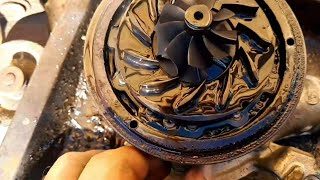
- Failing Turbocharger: → Shop Turbocharger While possible, this is a less likely cause on this platform compared to the water intrusion issue. A failing turbo might be indicated by unusual noises (whining, grinding, rattling on shutdown) or excessive smoke.
Diagnosis Steps
- Check the Check Engine Light with an OBD-II scanner to confirm P1247 is the active code. Note any other codes present, such as P1548, P00BD, or P2280.
- CRITICAL FIRST STEP: Open the air filter housing and inspect the engine air filter. If it is wet, damp, deformed, or frozen, this is the most likely cause. The filter may even be disintegrating.
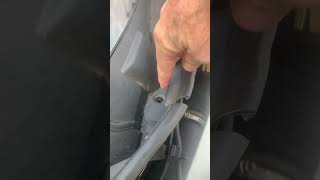
- If the filter is wet, replace it and install the updated water deflector shield (Ford Part CK4Z-6102408-AA) and revised air cleaner cover (JK4Z-9661-B) per TSB 19-2091 to prevent recurrence. 🎬 Watch: How water leaks onto the filter and how to fix it The TSB also lists other small parts like seals.
- If the filter is dry, proceed to inspect the charge air system for leaks. Check all hoses, pipes, and clamps between the turbocharger and the intake manifold for cracks, loose connections, or oil residue. Pay attention to connections that may have blown apart.
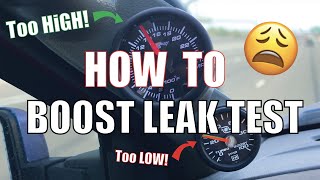
- Perform a boost leak test (smoke test) to pressurize the system and identify any hard-to-see leaks. 🎬 Watch: How to perform a boost leak test
- If no leaks are found, inspect the MAP sensor and its electrical connector for damage or corrosion. With the key on and engine off, the MAP sensor should have a 5-volt reference from the PCM.
- If all other possibilities are exhausted, the issue may be with the turbocharger itself, indicated by noises like rattling or whining. This requires professional inspection.
Parts You'll Likely Need
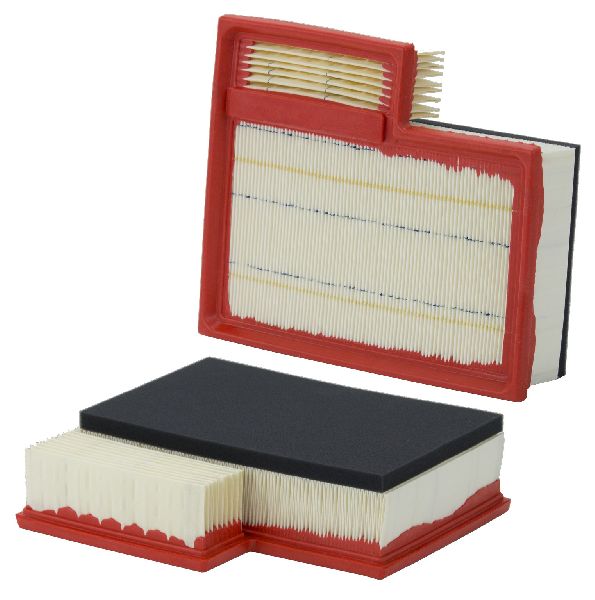
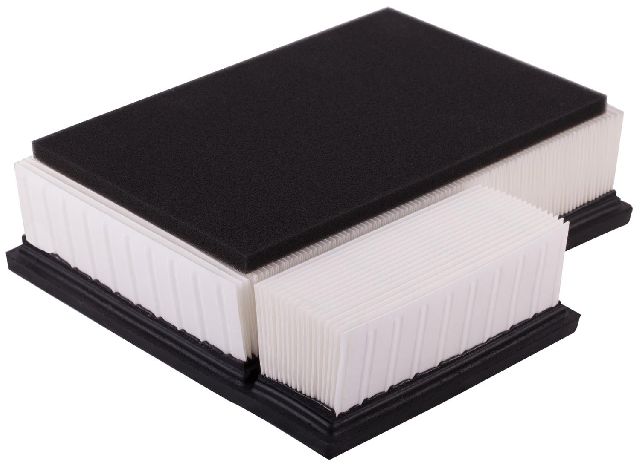
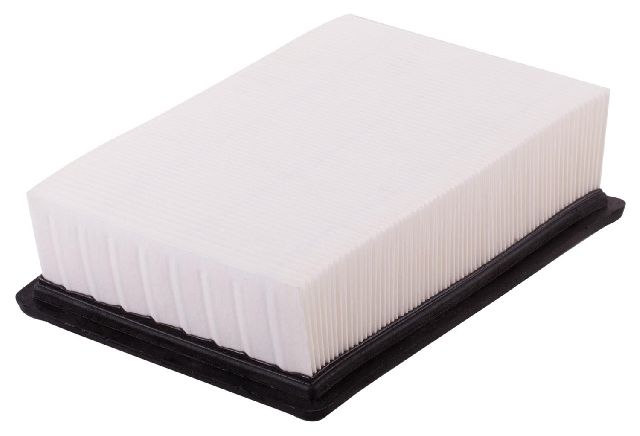
- Engine Air Filter
(OEM #CK4Z-9601-A)— This is the most common failure point, becoming saturated with water and restricting airflow, which triggers the P1247 code. It is a mandatory replacement part for the TSB 19-2091 fix.
Trusted brands: Motorcraft
OEM price range: $30-$50
Aftermarket price range: $20-$40 - Air Inlet Water Deflector Shield
(OEM #CK4Z-6102408-AA)— This is the official Ford fix (part of TSB 19-2091) to prevent water from dripping onto the airbox and saturating the filter.
Trusted brands: Ford
OEM price range: $50-$80 - Revised Air Cleaner Cover
(OEM #JK4Z-9661-B)— This is the updated airbox lid for the 3.2L engine that works with the new deflector shield as part of the TSB 19-2091 fix.
Trusted brands: Ford
OEM price range: $100-$150
Related Codes That Often Appear With This One
- P00BD — This code for 'Mass or Volume Air Flow 'A' Circuit Range/Performance - Air Flow Too High' is also mentioned in TSB 19-2091 as a possible result of the water intrusion issue, potentially from a contaminated MAF sensor.
- P2280 — This code for 'Air Flow Restriction/Air Leak Between Air Filter and MAF' can also be triggered by a saturated, restrictive air filter.
- P1548 — This code for 'Engine Air Filter Restriction' is another direct symptom of a water-soaked and clogged air filter, and is cited in the same TSBs.
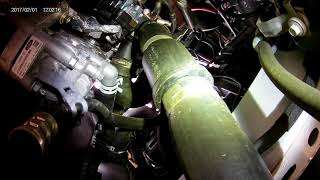
- P0299 — A general 'Turbo/Supercharger Underboost' code that is functionally very similar to P1247 and can be caused by the same wet air filter issue. 🎬 See this step-by-step diagnosis of a Transit underboost code
Technical Service Bulletins (TSBs) & Recalls
- TSB 19-2091: Supersedes TSB 18-2321. Addresses drivability concerns, including DTCs P1247, P00BD, P1548 and many others, on vehicles built on or before 24-Jul-2018. The cause is identified as 'undesired water entry into the engine compartment'. The fix involves installing an updated water deflector, seals, and a revised air cleaner cover.
Platform-Specific Known Issues
- The primary vehicle-specific issue is the design of the cowl panel on models built on or before July 24, 2018, which allows water to drain onto the air filter housing during heavy rain or car washes, leading to a saturated filter and the P1247 code. This is addressed by Ford TSB 19-2091.
Mechanic-Grade Diagnostic Values
- MAP Sensor Signal Voltage (Key On, Engine Off) — expected: Approximately 3.9V to 4.5V at sea level, corresponding to atmospheric pressure. Must match the BARO sensor reading.. Failure: A significant difference between the MAP and BARO sensor readings at KOEO, or a voltage that is stuck low (e.g., <2.0V).
- MAP Sensor Signal Voltage (At Idle) — expected: Voltage should drop to 1.0V - 2.5V due to engine vacuum.. Failure: Voltage remains high (near atmospheric reading) at idle, indicating the sensor is not responding to vacuum.
- MAP Sensor 5V Reference — expected: A steady 5 volts from the PCM with the key on.. Failure: Voltage is absent or significantly lower than 5V, indicating a wiring or PCM issue.
- MAP Sensor Ground Circuit — expected: Less than 100 millivolts (0.10V) when tested with a multimeter.. Failure: Voltage higher than 0.10V indicates a poor ground connection, which can skew sensor readings.
Scan Tool Commands That Help
- Ford IDS (Integrated Diagnostic System): Datalogger: Monitor 'Manifold Absolute Pressure' (MAP) vs. 'Desired MAP' PIDs — Use during a test drive to confirm if the actual boost pressure is failing to meet the PCM's commanded pressure, which is the core condition for P1247. This helps differentiate a true underboost from a sensor fault.
- Ford IDS (Integrated Diagnostic System): Power Balance Test — If the P1247 code is accompanied by rough running or misfire symptoms, this test can help isolate which cylinder is weak, pointing towards issues that might indirectly contribute to low power, though it doesn't directly diagnose the boost issue.
Wiring & Ground Locations
- Main Engine/Gearbox Ground Strap — Typically runs from the transmission case or engine block to the chassis frame rail or inner wing.. A corroded or loose engine ground can cause erratic sensor readings, including the MAP sensor, leading to false trouble codes. A voltage drop test from the engine block to the negative battery terminal should show less than 0.2V.
- Main Battery Ground — Located under the driver's seat, connecting the negative battery terminal to the seat support structure and chassis.. This is the primary ground for the entire vehicle. Corrosion here is a known issue on Transits and can cause a wide range of electrical faults, including PCM and sensor issues that could trigger P1247.
- PCM Connector C175B — The forward-most large electrical connector on the Powertrain Control Module, located in the engine bay near the passenger side headlight.. This connector houses the main power and sensor input pins for the PCM. It is highly susceptible to water ingress from the same cowl leak that saturates the air filter, potentially causing corrosion and connection issues for the MAP sensor circuit.
Real Owner Repair Stories
- FordTransitUSAForum.com user (2016 Ford Transit 3.2L Power Stroke) — Vehicle went into limp mode with a P1247 code.
❌ Tried (didn't work) Initial diagnosis from a third party suggested a potential turbo failure.
✅ What actually fixed it The owner inspected the air filter and found it completely saturated with water. After replacing the air filter and installing the parts from TSB 19-2091 (cowl shield, etc.), the problem was permanently resolved.
OEM Part Supersession History
TSB 17-0014 and TSB 18-2321→TSB 19-2091— Ford updated the service procedure and potentially the parts list to more effectively address the water intrusion issue.Unknown older version→JK4Z-9661-B— This is the revised air cleaner cover for the 3.2L engine designed to work with the new water deflector shield as part of the TSB 19-2091 fix.
Heads up: Using the old style cover with the new deflector may not provide a complete seal against water intrusion.
Model Year Variations Within This Range
- 2015 - 2018 (built on or before July 24, 2018): These vehicles were built with the original cowl and airbox design that is prone to the water leak described in TSB 19-2091. Vehicles built after this date should have the updated design from the factory.
Diagnostic Flowchart
Other Known Issues on This Vehicle
Issues unrelated to this code that are worth knowing about as an owner of this generation:
- Driveshaft Flexible Coupling Failure 🔴 High — Common enough to trigger multiple recalls (17V408000, 19S38) for 2015-2017 models. Can fail after 30,000-40,000 miles. (Ref: Recall 19S38 (supersedes 17S15). The final repair involves replacing the flexible coupling with a mechanical U-joint.)
- Internal EGR Cooler Leak 🔴 High — A known issue where the cooler cracks internally, causing coolant loss, white smoke, and overheating. (Ref: Ford Customer Satisfaction Program 21M03 extends warranty coverage for the EGR cooler to 11 years/120,000 miles. SSM 48543 specifies replacement with revised part CK4Z-9U433-B.)
- Door Wiring Harness Failure 🟠 Medium — Wires in the flexible boot between the door and A-pillar (especially the driver's side) are known to fatigue and break from repeated opening/closing, causing issues with windows, locks, and mirrors.
- Sliding Door Mechanical/Electrical Problems 🟠 Medium — Common issues include misalignment causing difficult closing, and failure of the electrical contact pins or wiring track, preventing central locking from working on that door.
- Premature Rear Brake Wear 🟡 Low — Some owners report unusually fast wear on rear brake pads, sometimes requiring replacement as early as 25,000-35,000 miles on heavily used vans.
- Fuel System Issues (2015 models) 🟠 Medium — Some anecdotal reports suggest early (2015) models had issues with the high-pressure fuel system, though this is less documented than other problems.
Used vs. New Parts: Buying Guide for This Vehicle
When a used part is the smart pick: For this specific P1247 repair, using used parts is generally not recommended. The primary fix involves installing updated parts (water deflector, air cleaner cover) designed to correct a factory flaw. A used part from a salvage yard will almost certainly be the old, flawed design, leading to a repeat failure.
What to inspect on the donor part:
- If sourcing a general component like a MAP sensor, ensure the donor vehicle is from a dry climate to minimize corrosion risk.
- For charge air cooler hoses, visually inspect for any signs of dry rot, cracking, or oil saturation before purchasing.
OEM-only on this vehicle (don't cheap out):
- Air Inlet Water Deflector Shield (CK4Z-6102408-AA)
- Revised Air Cleaner Cover (JK4Z-9661-B)
Aftermarket brands forum-validated for this vehicle:
- Motorcraft (for the replacement air filter)
Brands owners have reported issues with on this vehicle:
- Unknown/no-name brands for the air filter. A poorly constructed filter could disintegrate if it gets wet, sending debris into the turbocharger.
Real Owner Stories
Aggregated from forums and TSBs cited above. Mileages and costs reflect what owners reported in those sources.
2016 Ford Transit 3.2L Power Stroke
Symptoms: The vehicle entered limp mode and threw code P1247. Upon inspection, the air filter was found to be completely saturated with water.
What fixed it: Replaced the air filter and performed the TSB 19-2091 fix (updated water management hardware) as a DIY repair.
Source hint: FordTransitUSAForum.com - Real Owner Experience
2018 Ford Transit 3.2L Power Stroke
Symptoms: Significant power loss accompanied by a rattling sound specifically when the engine was shut down.
What fixed it: The turbocharger itself was identified as the failure point and required replacement.
Source hint: 2CarPros Forum - Turbo Failure Diagnosis
Related OBD-II Codes
Frequently Asked Questions
My 2017 Transit 3.2L loses power after heavy rain. Does TSB 19-2091 apply to my vehicle?
What specific parts are needed to fix the water intrusion issue on a 2015-2018 Transit?
Is there a known issue with the 3.2L Power Stroke engine's cooling system that I should watch for?
My Transit makes a rattling sound when I shut the engine down; could this be related to P1247?
Can a bad air filter really cause my Transit to enter limp mode and throw a P1247 code?
Are there any recalls for the 2015-2017 Transit that I should be aware of while fixing engine codes?
Helpful Videos

We Have This Part in Stock


The information in this article is provided for general reference and educational purposes only. Vehicle specifications, procedures, and part compatibility can vary by production date, trim level, and region. Always consult your vehicle's factory service manual and verify part numbers before purchasing or performing repairs. Safety-critical components such as airbags, seat belts, and braking systems should be installed by a qualified professional.
- Ford Transit:
- 🧭 Diagnostic Flowchart
- 🎬 Helpful Videos
- 🛍️ Shop This Part
- What's Unique About the 2015-2019 Ford Transit
- Symptoms You May Notice
- Most Likely Causes
- Rare But Worth Checking
- Diagnosis Steps
- Parts You'll Likely Need
- Related Codes That Often Appear With This One
- Technical Service Bulletins (TSBs) & Recalls
- Platform-Specific Known Issues
- Mechanic-Grade Diagnostic Values
- Scan Tool Commands That Help
- Wiring & Ground Locations
- Real Owner Repair Stories
- OEM Part Supersession History
- Model Year Variations Within This Range
- Other Known Issues on This Vehicle
- Used vs. New Parts: Buying Guide for This Vehicle
- Real Owner Stories
- 2016 Ford Transit 3.2L Power Stroke
- 2018 Ford Transit 3.2L Power Stroke
- Related OBD-II Codes
- Frequently Asked Questions
- 🎟️ Get 5% Off