

P1326 on 2005-2015 Volkswagen Jetta TDI: Knock Control Limit Attained
P1326 on a VW Jetta TDI almost always means 'Cylinder 2 Knock Control Limit Attained'. This is confirmed by VW-specific tools like VCDS. It indicates the ECU has maxed out its adjustments for a knock detected in cylinder 2, most often due to a faulty Knock Sensor (G66) or its wiring. Do NOT confuse this with the severe P1326 engine failure code on Hyundai/Kia vehicles.
- The meaning of P1326 on a VW Jetta TDI is 'Cylinder 2 Knock Control Limit Attained'. Do not trust generic scan tool definitions.
- This code is NOT the same as the severe P1326 code on Hyundai and Kia vehicles.
- Diagnosis requires a VW-specific scan tool (like VCDS) to read the manufacturer-specific fault description.
- The most likely cause is a faulty Knock Sensor 2 (G66) or its associated wiring, not a major mechanical engine problem.
- Due to the uncertainty of generic tools, professional diagnosis or use of VCDS is strongly recommended before purchasing any parts.
What's Unique About the 2005-2015 Volkswagen Jetta
Unlike many other manufacturers, particularly Hyundai and Kia where P1326 indicates a critical engine bearing failure detected by the Knock Sensor Detection System (KSDS), this code does not have a well-established, severe meaning for the VW Jetta TDI. Its rarity on this platform means there are no common failure patterns or widely known fixes discussed in enthusiast communities. The diagnostic process must start from scratch without relying on common knowledge, as the code's meaning itself is the first question to solve.
Generation note: This year range covers the Jetta A5 (Mk5, 2005.5-2010) and A6 (Mk6, 2011-2015). The TDI engines changed across these generations (e.g., 1.9L PD BRM, 2.0L CR CJAA). The specific knock sensor part number and location will differ between these engines, but the meaning of the P1326 fault code remains consistent.
Symptoms You May Notice
- Check Engine Light is on
- Audible engine knocking or pinging (less common, but possible if a true mechanical issue exists)
- Reduced engine performance or rough running
- Slight decrease in fuel economy
- Assuming the code means the same as it does on Hyundai/Kia vehicles, which would incorrectly point to catastrophic engine failure.
- Replacing glow plugs or the glow plug relay based on generic scan tool definitions, which is unrelated to the actual fault on a VW TDI.
- Purchasing and replacing a Camshaft Position Sensor based on incorrect parts catalog data for part number 038906433A, which is often misidentified as a knock sensor.
Most Likely Causes
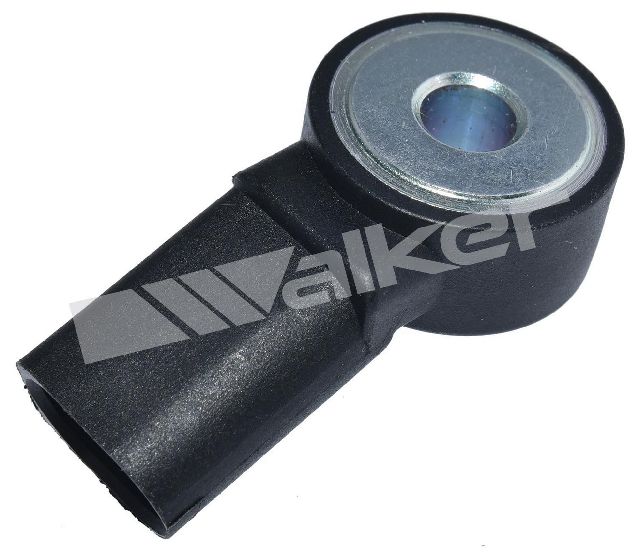
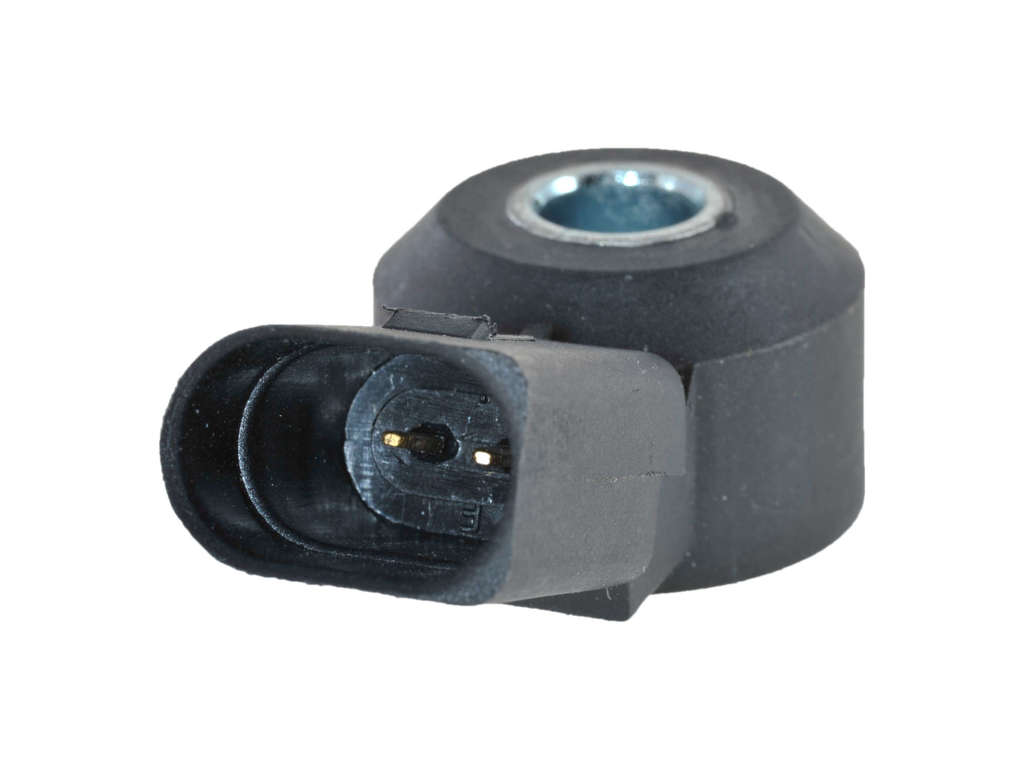
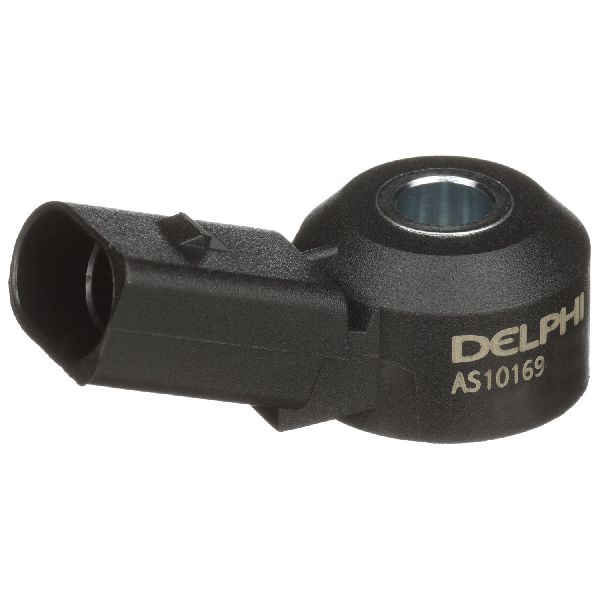
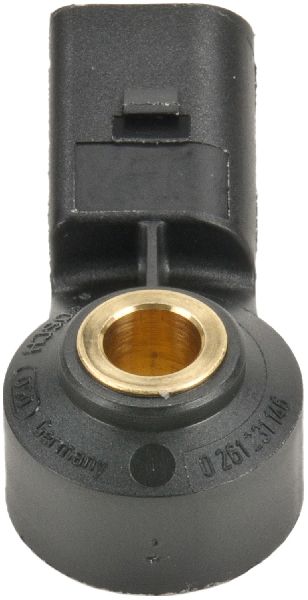
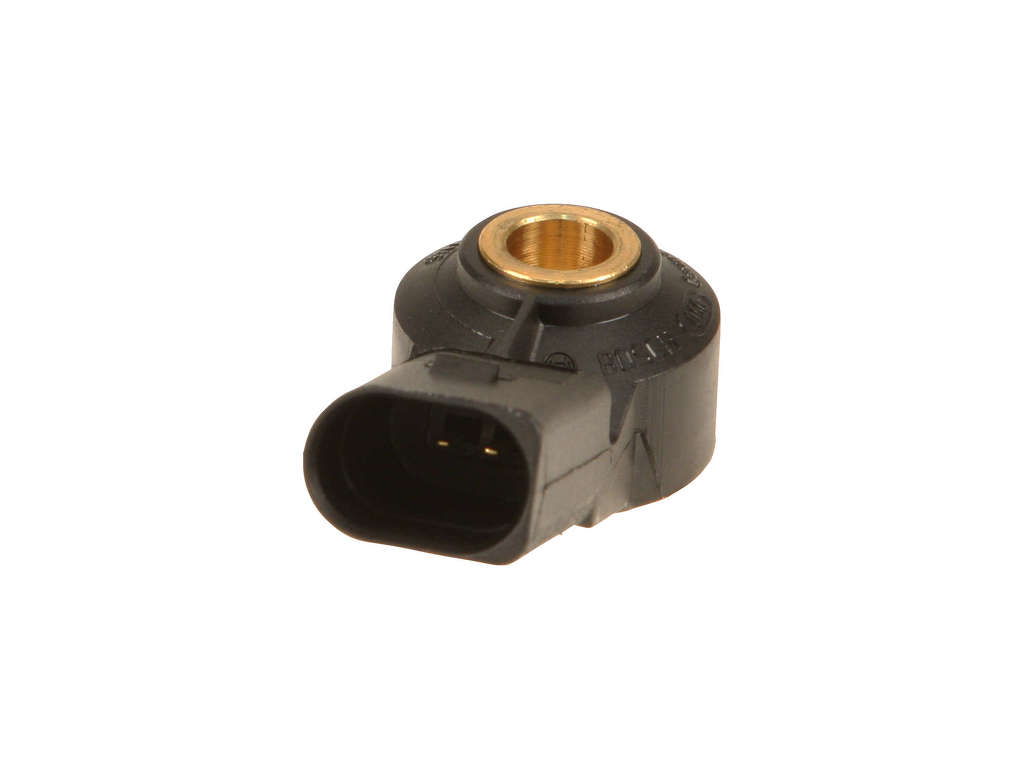
- Faulty Knock Sensor 2 (G66) 🔴 High Probability → Shop Ignition Knock (Detonation) Sensor Knock sensors are piezoelectric microphones that can fail over time due to heat cycles and vibration, leading to incorrect or noisy signals.
How to confirm: Use a VW-specific scan tool to monitor knock sensor readings in real-time. Check the sensor's wiring and connector for damage. A common diagnostic step is to swap Knock Sensor 1 and 2 to see if the fault code changes to P1325 (Cylinder 1 Knock Control), which would confirm a bad sensor.
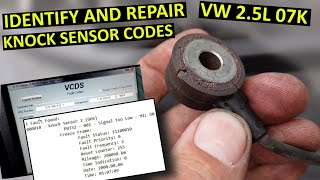
Typical fix: Replace the faulty knock sensor 🎬 Watch: Step-by-step walkthrough of a VW knock sensor replacement. and ensure the mounting bolt is torqued to the correct specification (typically 20 Nm / 15 ft-lbs).
Est. part cost: $40-$150 - Knock Sensor Wiring or Connector Issue 🟡 Medium Probability → Shop Ignition Knock (Detonation) Sensor Engine bay wiring is exposed to heat, oil, and vibration, which can cause connectors to become brittle or wires to chafe over time.
How to confirm: Visually inspect the wiring harness leading to Knock Sensor 2. Check for breaks, chafing against the engine block, or corrosion in the connector. Use a multimeter to test for continuity and shorts in the circuit.
Typical fix: Repair the damaged section of the wiring harness or replace the connector pigtail.
Est. part cost: $15-$50
Rare But Worth Checking
- Incorrect Knock Sensor Torque: → Shop Ignition Knock (Detonation) Sensor
- Actual Mechanical Engine Knock:
Diagnosis Steps
- CRITICAL: Do not proceed based on generic information. Use a VW-specific scan tool like VCDS (VAG-COM) to confirm the fault is 'Cylinder 2 Knock Control Limit Attained'.
- Scan the vehicle and save the full auto-scan log. Pay close attention to the fault code description provided by the VW-specific software.
- If the code is confirmed as 'Knock Control Limit Attained' for Cylinder 2:
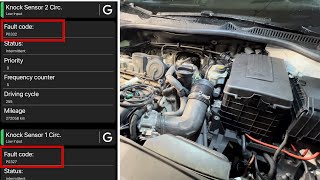
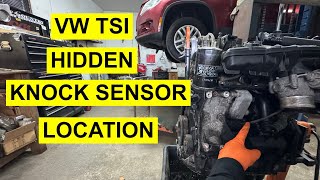
- - Locate Knock Sensor 2 (G66) on the engine block. Its position varies by engine code (BRM vs. CJAA). 🎬 See this guide for locating sensors on VW turbo engines.
- - Inspect the wiring and connector for the Knock Sensor 2 (G66) for any visible damage, chafing, or corrosion.
- - Check the sensor's mounting bolt to ensure it is torqued to specification (typically 20 Nm or 15 ft-lbs). A loose or over-tightened sensor can give false readings.
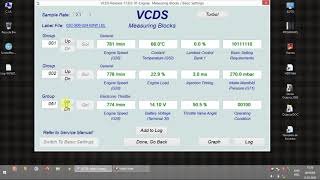
- - Use the scan tool to monitor knock sensor readings in real-time measuring blocks. Specifically, observe Measuring Block Group 026, which shows individual cylinder knock sensor voltage. While VAG provides no official acceptable voltage range, compare the reading for cylinder 2 to the other cylinders. A significantly different reading (either high or low) points to a problem in that circuit.
- - Consider swapping the physical locations of Knock Sensor 1 and Knock Sensor 2. Clear codes and run the engine. If the fault returns as P1325 (Cylinder 1), the sensor is faulty and needs replacement.
- - If the fault remains P1326 after the swap, the issue is likely in the wiring to the cylinder 2 sensor location or, rarely, a mechanical problem with cylinder 2.
- If a generic tool shows 'Glow Relay Stuck', ignore it and re-scan with a VAG-specific tool to get the true code definition before proceeding.
Parts You'll Likely Need
- Knock Sensor (G66)
(OEM #03G906433 (for 1.9L PD BRM), 06E905377J (for 2.0L CR CJAA) - CRITICAL: Always verify by VIN. The part number 038906433A is a Camshaft Position Sensor and is incorrect for this repair.)— This is the most common cause for the P1326 code, as the sensor itself fails and sends erroneous data to the ECU.
Trusted brands: Bosch, OE VW/Audi, FAE
OEM price range: $80-$150
Aftermarket price range: $40-$90 - Knock Sensor Bolt
(OEM #N91076601)— This is a torque-critical bolt (M8x30) and is often recommended for replacement, especially if the old one is corroded or has been over-torqued.
Trusted brands: OE VW/Audi
OEM price range: $3-$5
Aftermarket price range: $1-$3
Related Codes That Often Appear With This One
- P1325 (Knock-Control: Cylinder 1 Regulation Limit Exceeded)
- P1327 (Knock-Control: Cylinder 3 Regulation Limit Exceeded)
- P1328 (Knock-Control: Cylinder 4 Regulation Limit Exceeded)
Mechanic-Grade Diagnostic Values
- Knock Sensor Mounting Bolt Torque — expected: 20 Nm (15 ft-lbs). Failure: A loose bolt will not transmit vibrations correctly. An over-tightened bolt can damage the piezoelectric crystal inside the sensor. Both can cause fault codes.
- VCDS Measuring Block Group 026 - Knock Sensor Voltage — expected: No official specification exists from VW. In a healthy engine, voltages for all cylinders should be relatively low and similar at idle and under load.. Failure: One cylinder (in this case, Cylinder 2) showing a voltage that is consistently and significantly higher or lower than the other cylinders points to a fault in that sensor's circuit or the sensor itself.
- Knock Sensor Wiring Harness Continuity — expected: Approx. 0.1 - 1.5 ohms. Failure: High resistance or an open circuit (OL) indicates a break in the wire. A reading of 0 ohms between the signal wire and ground indicates a short.
Scan Tool Commands That Help
- VCDS (VAG-COM): Measuring Blocks - Group 026 🎬 Watch: How to navigate VCDS measuring blocks for live data. — This is the primary function for live data diagnosis. It allows the technician to view the real-time voltage signal from each cylinder's knock sensor side-by-side to identify an outlier.
- VCDS (VAG-COM): Switch to Basic Settings — While available, this is generally not used for knock sensor diagnosis. It is not necessary to perform a Basic Settings procedure after replacing a knock sensor.
Wiring & Ground Locations
- Knock Sensor Connector — On the engine block, position varies between BRM and CJAA engines. It is a 3-pin connector.. The connector itself can corrode or the wiring pigtail can become brittle and fail. The 3 pins are typically Pin 1: Ground, Pin 2: Signal, Pin 3: Shield. The shield must be properly grounded at the ECU side to prevent interference.
- ECU Knock Sensor Inputs — At the main Engine Control Module connector.. For advanced wiring checks, you must test continuity from the sensor connector to the ECU. For example, on some VW ECUs, Knock Sensor 1 (G61) and 2 (G66) might use pins 106 and 107, with a shared sensor ground at pin 108. This pinout varies by ECU, so a specific diagram is required.
- Main Engine Ground Strap — A large gauge wire running from the negative battery terminal to the chassis, and then to a bolt on the transmission bell housing.. A poor main engine ground can cause floating voltages and erratic behavior from multiple sensors, including the knock sensors. All sensor grounds ultimately rely on this main connection.
OEM Part Supersession History
038906433A→N/A— Part is commonly mis-cataloged.
Heads up: This part number is for a CAMSHAFT Position Sensor, not a knock sensor. It will not work for this repair.
Model Year Variations Within This Range
- 2005.5-2006: These Jettas use the 1.9L 'BRM' Pumpe Düse TDI engine. The knock sensor is part number 03G906433 (verify by VIN).
- 2009-2015: These Jettas use the 2.0L 'CJAA' Common Rail TDI engine. The knock sensor is a different part number (e.g., 06E905377J, verify by VIN) and is in a different location on the engine block.
Diagnostic Flowchart
Other Known Issues on This Vehicle
Issues unrelated to this code that are worth knowing about as an owner of this generation:
- Premature Camshaft Lobe and Lifter Wear (PD Engines) 🔴 High — Common on 1.9L BRM engines (2005.5-2006), especially if incorrect oil (non-505.01 spec) was used. Often occurs between 100,000-150,000 miles.
- High-Pressure Fuel Pump (HPFP) Failure (Common Rail Engines) 🔴 High — Catastrophic failure common on 2.0L CJAA engines (2009-2015). Can happen at any mileage. Sends metal fragments through the entire fuel system, requiring a very expensive repair. (Ref: VW Extended Warranty (10 years/120,000 miles) was issued for this issue.)
- DSG Mechatronic Unit Failure 🔴 High — Affects vehicles with the Direct-Shift Gearbox (DSG). Can cause harsh shifting, loss of gears, or transmission failure. More common on vehicles with missed fluid service intervals.
- Intercooler Icing (Common Rail Engines) 🟠 Medium — In cold, humid climates, condensation can freeze in the intercooler on CJAA engines, blocking airflow or being ingested by the engine on startup, potentially causing hydrolock. (Ref: VW issued a TSB and a 'cold weather intercooler kit' (Service Action 21H3) as a fix, though with mixed results.)
- Intake Manifold Flap Motor Failure 🟡 Low — The motor for the intake manifold runner flap can fail, causing a check engine light (commonly P2015). It's a frequent issue but doesn't typically cause driveability problems. (Ref: An extended warranty was issued for this component on some models.)
Used vs. New Parts: Buying Guide for This Vehicle
When a used part is the smart pick: A used knock sensor is generally NOT recommended. It is a sensitive piezoelectric device, and its remaining lifespan is unknown. Given the labor involved in accessing it on some engines, the cost savings of a used part are often not worth the risk of premature failure. A used part should only be considered as a last resort or for temporary diagnostic purposes (like swapping to see if a code follows the sensor).
Donor-vehicle mileage cap: roughly under 50000 miles for the part to have meaningful remaining life.
What to inspect on the donor part:
- Ensure the plastic connector housing is not cracked or brittle.
- Check that the wiring pigtail is flexible and not hardened or frayed.
- The metal body of the sensor should be free of significant corrosion or physical damage.
- If possible, source from a vehicle that was not in a front-end collision.
OEM-only on this vehicle (don't cheap out):
- While not strictly 'OEM-only', using a reputable OE-supplier brand is highly advised for this part.
Aftermarket brands forum-validated for this vehicle:
- Bosch (often the original OE supplier)
- NTK
Brands owners have reported issues with on this vehicle:
- Unnamed, no-brand 'white box' parts from online marketplaces should be avoided due to inconsistent quality control for this sensitive part.
Real Owner Stories
Aggregated from forums and TSBs cited above. Mileages and costs reflect what owners reported in those sources.
2003 VW Golf
Symptoms: VCDS scan showed multiple knock control regulation limit exceeded faults.
What fixed it: The owner used VCDS to identify that the knock control regulation limit was exceeded for multiple cylinders, confirming the code definitions for P1325, P1326, and P1327.
Source hint: Ross-Tech Forums: 2003 Golf Codes Meaning and how to fix
Related OBD-II Codes
Frequently Asked Questions
My generic scan tool says 'Glow Relay Stuck' for P1326 on my Jetta TDI, is that correct?
Can I use a used knock sensor from a donor car to fix my 2012 Jetta CJAA?
What is the correct torque spec for the Knock Sensor 2 (G66) on a Jetta TDI?
Is there a specific measuring block in VCDS to check if my Cylinder 2 knock sensor is failing?
Could my 2006 Jetta's camshaft wear issue be related to this knock code?
Which aftermarket brands are safe to use for replacing the G66 sensor?
Helpful Videos
We Have This Part in Stock


The information in this article is provided for general reference and educational purposes only. Vehicle specifications, procedures, and part compatibility can vary by production date, trim level, and region. Always consult your vehicle's factory service manual and verify part numbers before purchasing or performing repairs. Safety-critical components such as airbags, seat belts, and braking systems should be installed by a qualified professional.
- Volkswagen Jetta:
- 🧭 Diagnostic Flowchart
- 🎬 Helpful Videos
- 🛍️ Shop This Part
- What's Unique About the 2005-2015 Volkswagen Jetta
- Symptoms You May Notice
- Most Likely Causes
- Rare But Worth Checking
- Diagnosis Steps
- Parts You'll Likely Need
- Related Codes That Often Appear With This One
- Mechanic-Grade Diagnostic Values
- Scan Tool Commands That Help
- Wiring & Ground Locations
- OEM Part Supersession History
- Model Year Variations Within This Range
- Other Known Issues on This Vehicle
- Used vs. New Parts: Buying Guide for This Vehicle
- Real Owner Stories
- 2003 VW Golf
- Related OBD-II Codes
- Frequently Asked Questions
- 🎟️ Get 5% Off